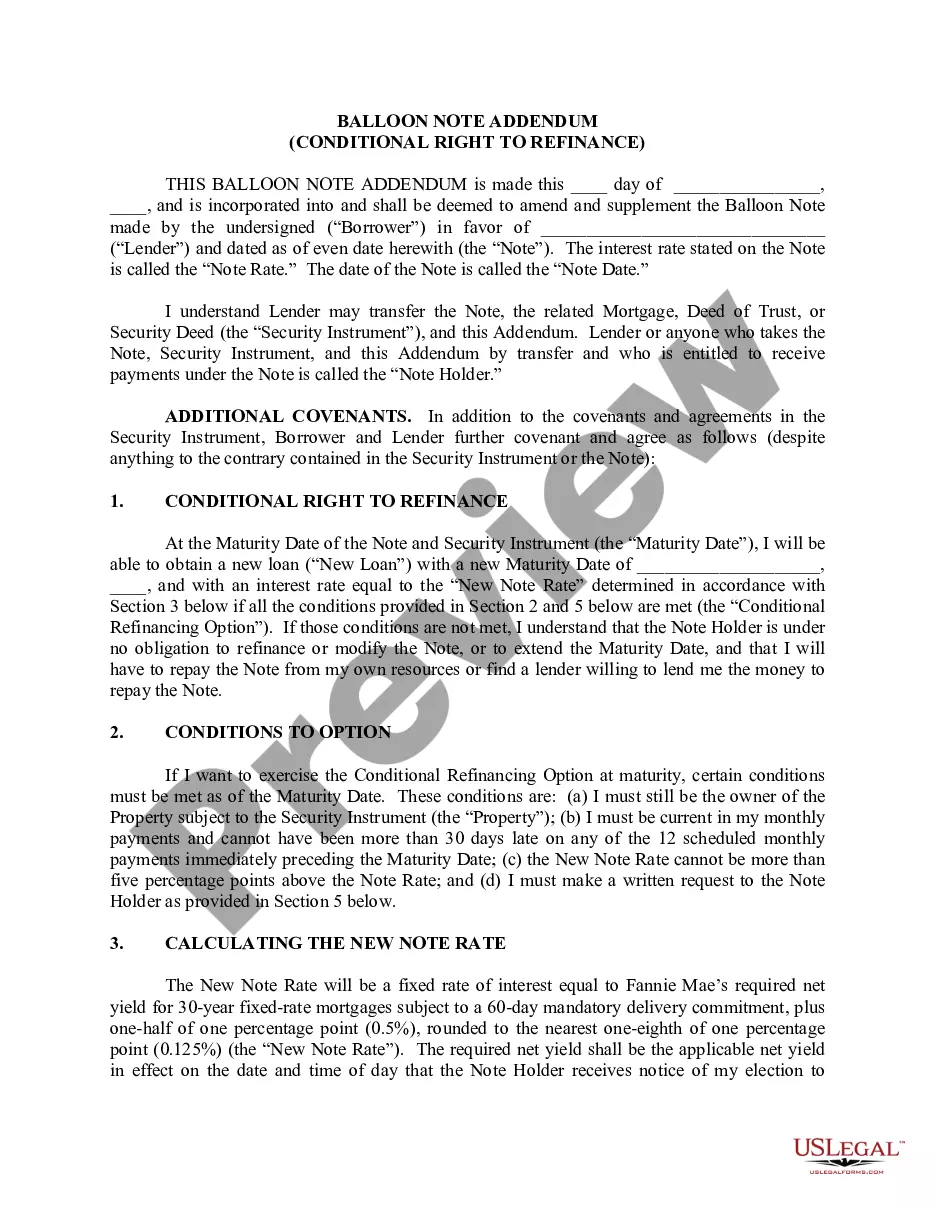
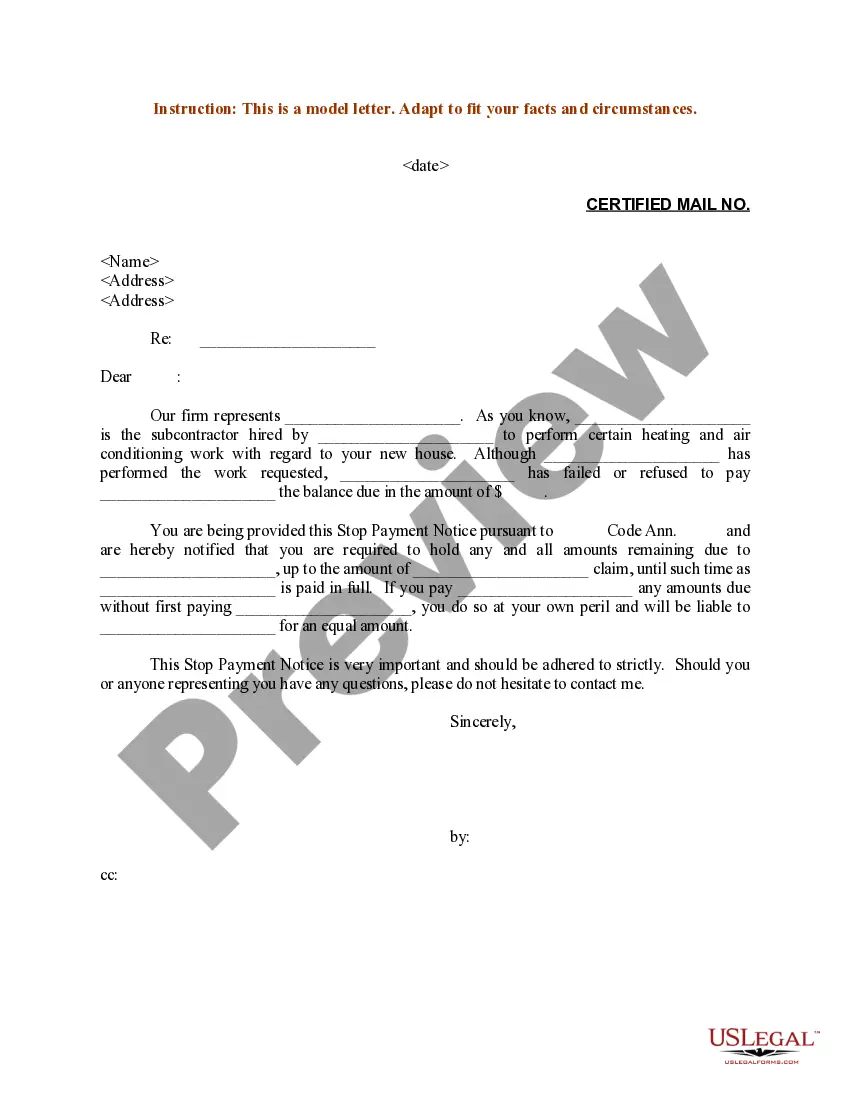
Connecticut Sample Letter concerning Stop Payment Notice
Description

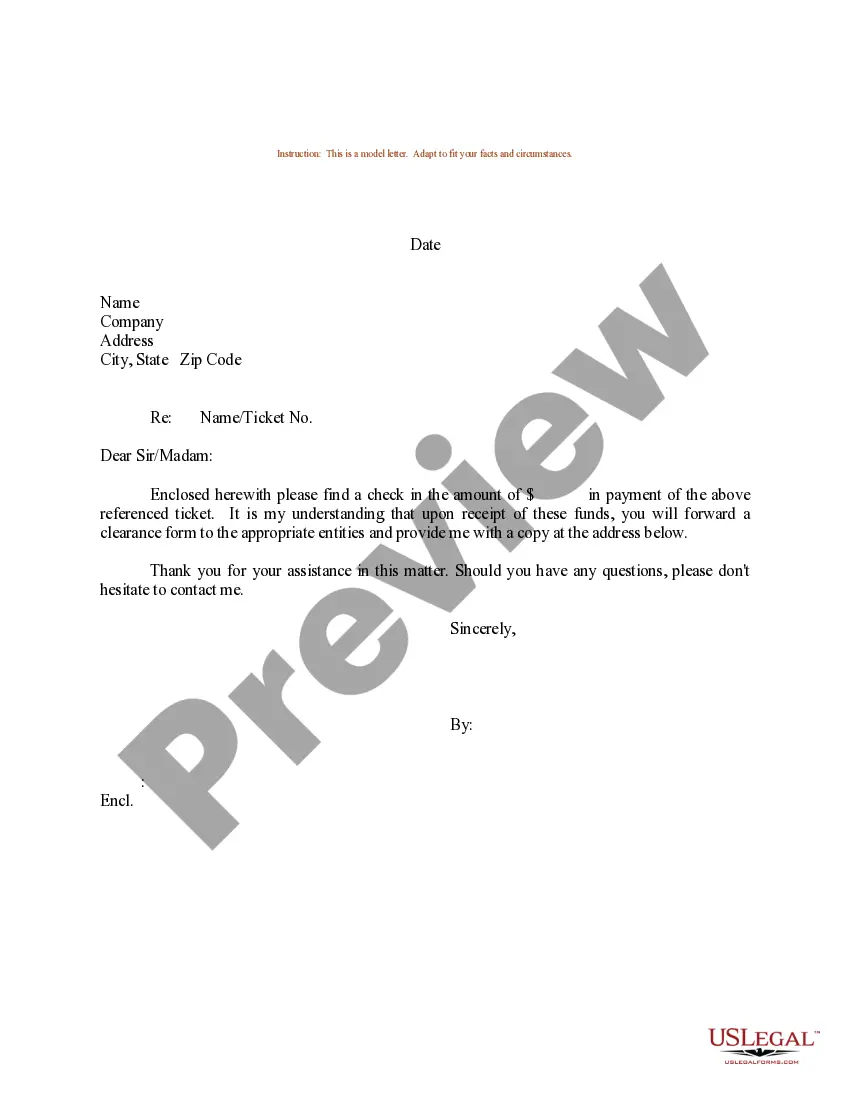
How to fill out Sample Letter Concerning Stop Payment Notice?
Finding the appropriate legal document template can be a challenge.
Certainly, there are numerous templates accessible online, but how do you locate the legal form you require.
Utilize the US Legal Forms website. The service offers thousands of templates, including the Connecticut Sample Letter regarding Stop Payment Notice, which you can utilize for business and personal purposes. All the forms are reviewed by experts and comply with federal and state regulations.
If the form does not meet your requirements, use the Search field to find the suitable form. Once you are certain that the form is correct, click the Buy now button to obtain the form. Choose the payment method you prefer and enter the necessary information. Create your account and place an order using your PayPal account or credit card. Select the file format and download the legal document template to your device. Finally, modify, print, and sign the obtained Connecticut Sample Letter regarding Stop Payment Notice. US Legal Forms is the largest repository of legal forms where you can find numerous document templates. Use the service to obtain professionally crafted documents that meet state regulations.
- If you are already registered, Log In to your account and click the Download button to access the Connecticut Sample Letter regarding Stop Payment Notice.
- Use your account to browse the legal documents you have purchased previously.
- Go to the My documents section of your account and download another copy of the documents you need.
- If you are a new user of US Legal Forms, here are some basic instructions to follow.
- First, ensure you have selected the correct form for your region/area.
- You can review the form using the Preview button and read the form description to confirm it is the right one for you.
Form popularity
FAQ
A Connecticut 3-day notice to quit, also known as court form JD-HM-7, is a letter used when the tenant fails to pay rent on time per the terms of the rental agreement. In the State of Connecticut, a tenant has nine (9) days to pay their rent before it is considered late.
It gives the date that the tenant must voluntarily leave the apartment and the reason for the commencement for the eviction. Landlords must give tenants a notice to quit at least three days before terminating a lease agreement. This requirement can be waived if included in the lease (CGS § 47a-25).
You must respond by submitting court papers no later than 2 days after the return date listed on the court summons. If your deadline falls on a day the court clerk's office is closed (Saturday, Sunday, and Legal Holidays), you can file your court papers the next day the court clerk's office is open.
It is against the law for your landlord to change the locks on your apartment, keep your belongings, or do anything else to keep you out of your apartment. For more information, see the following legal aid booklets: Evictions and Lockouts.
In Connecticut, this process is called a summary process. Before a property owner or landlord can evict you, they must give you a written notice (called a notice to quit) and get a court order. If a landlord tries to evict you without a court order or simply changes the locks, it's an illegal eviction.
The Family Support Magistrate may order a variety of things including lump sum payments to make up the missed payments and, in the most serious cases, jail for the non-paying parent until the child support is paid.
No, in Connecticut, a landlord cannot legally evict a tenant without cause. Grounds for eviction include not paying rent on time, staying after the lease ends, violating the terms of the lease, or engaging in illegal activity. However, proper notice must be given before ending the tenancy.
Your landlord can try to evict you, but they must get the court's permission first. If your landlord starts an eviction against you, you will get notice of the court hearing and a chance to go to court to defend yourself against the eviction.