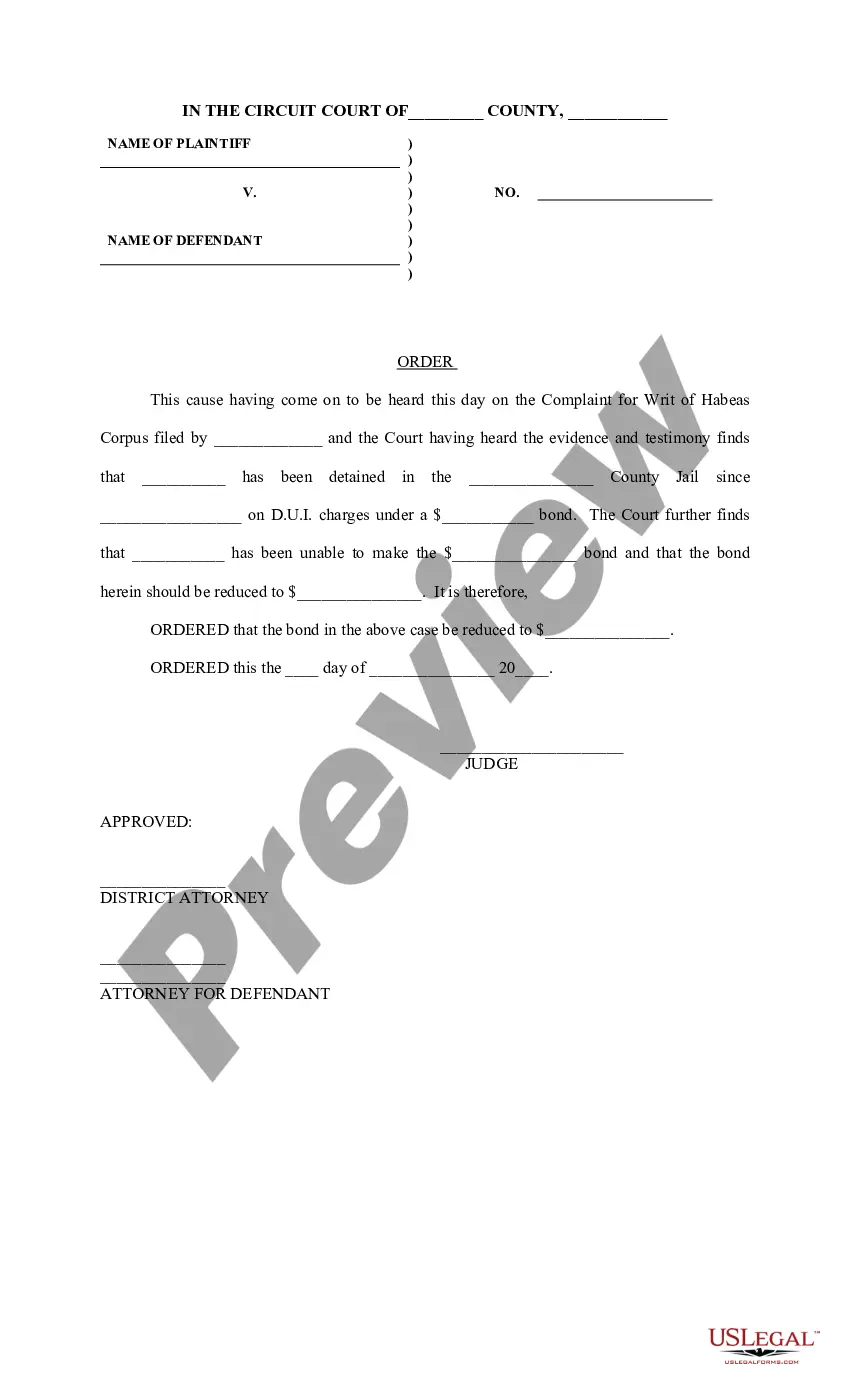
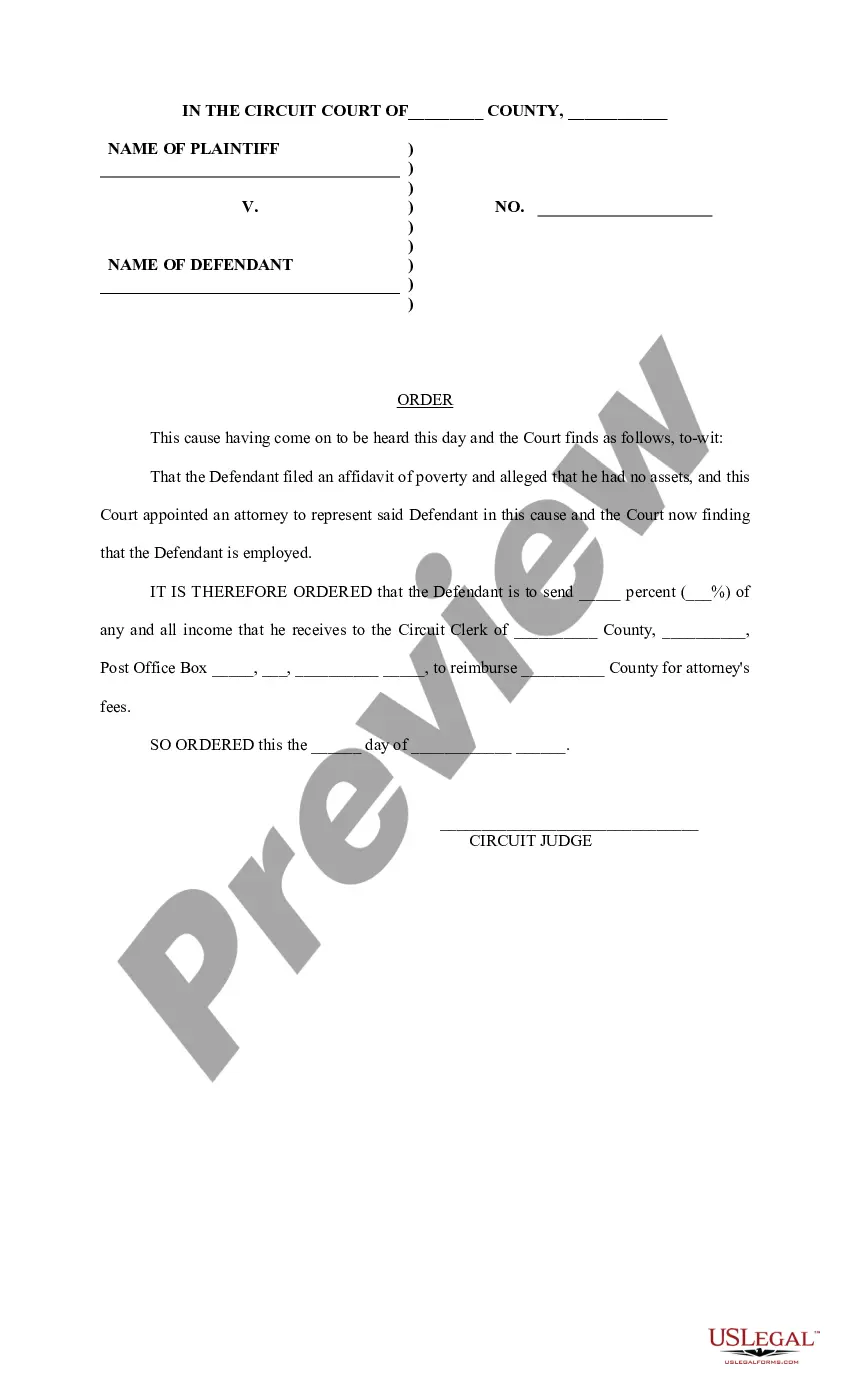
Connecticut Order - Writ of Habeas Corpus
Description

Get your form ready online
Our built-in tools help you complete, sign, share, and store your documents in one place.
Make edits, fill in missing information, and update formatting in US Legal Forms—just like you would in MS Word.
Download a copy, print it, send it by email, or mail it via USPS—whatever works best for your next step.
Sign and collect signatures with our SignNow integration. Send to multiple recipients, set reminders, and more. Go Premium to unlock E-Sign.
If this form requires notarization, complete it online through a secure video call—no need to meet a notary in person or wait for an appointment.
We protect your documents and personal data by following strict security and privacy standards.

Make edits, fill in missing information, and update formatting in US Legal Forms—just like you would in MS Word.

Download a copy, print it, send it by email, or mail it via USPS—whatever works best for your next step.

Sign and collect signatures with our SignNow integration. Send to multiple recipients, set reminders, and more. Go Premium to unlock E-Sign.

If this form requires notarization, complete it online through a secure video call—no need to meet a notary in person or wait for an appointment.

We protect your documents and personal data by following strict security and privacy standards.
Looking for another form?

How to fill out Order - Writ Of Habeas Corpus?
US Legal Forms - one of the most extensive collections of legal documents in the USA - offers a broad selection of legal document templates that you can download or print. While using the website, you can find numerous forms for business and personal purposes, organized by categories, states, or keywords. You can access the latest versions of forms like the Connecticut Order - Writ of Habeas Corpus within moments.
If you already have an account, Log In and download the Connecticut Order - Writ of Habeas Corpus from the US Legal Forms library. The Download button will appear on every form you view. You can access all previously acquired forms in the My documents section of your account.
To use US Legal Forms for the first time, here are some simple steps to help you get started: Make sure you have selected the correct form for your region/area. Click the Review button to check the form’s content. Read the form description to confirm that you have chosen the right form. If the form does not meet your needs, use the Search box at the top of the page to find one that does. If you are satisfied with the form, confirm your choice by clicking the Buy now button. Then, select the pricing plan you prefer and provide your details to register for an account. Process the payment. Use your credit card or PayPal account to complete the purchase. Choose the format and download the form to your device. Make modifications. Fill out, edit, and print and sign the downloaded Connecticut Order - Writ of Habeas Corpus. Every template you added to your account has no expiration date and is yours indefinitely. So, if you need to download or print another copy, just go to the My documents section and click on the form you need.
- Access the Connecticut Order - Writ of Habeas Corpus with US Legal Forms, the most comprehensive collection of legal document templates.
- Utilize a multitude of professional and state-specific templates that address your business or personal needs and requirements.
Form popularity
FAQ
Description. A writ of habeas corpus orders the custodian of an individual in custody to produce the individual before the court to make an inquiry concerning his or her detention, to appear for prosecution (ad prosequendum) or to appear to testify (ad testificandum).
?The principal purpose of the writ of habeas corpus is to serve as 'a bulwark against convictions that violate ?fundamental fairness.?'? Bunkley v. Commissioner , 222 Conn.
The ?Great Writ? of habeas corpus is a fundamental right in the Constitution that protects against unlawful and indefinite imprisonment. Translated from Latin it means ?show me the body.? Habeas corpus has historically been an important instrument to safeguard individual freedom against arbitrary executive power.
?Habeas corpus? is a Latin term meaning ?bring us the body.? It is a legal petition filed to challenge Immigration and Customs Enforcement's (ICE) ability to detain a person. There are many different types of habeas corpus petitions.
Habeas Corpus is a royal prerogative writ involving a petition made to the sovereign, in Canada in the form of her Superior Court Justices, that if granted would compel a prison official to "produce the body" and justify authority for why a person is being detained.
In Jones v. Hendrix, decided on June 22, 2023, the Supreme Court resolved a circuit split over a provision of 28 U.S.C. § 2255, the statutory habeas corpus alternative permitting federal prisoners to raise post- conviction challenges to their convictions or sentences.
In its simplest form a writ of habeas corpus requires that a person who is in custody be brought before a judge or court and that they be able to challenge that custody. The writ of habeas corpus is used to attack an unlawful detention or illegal imprisonment.