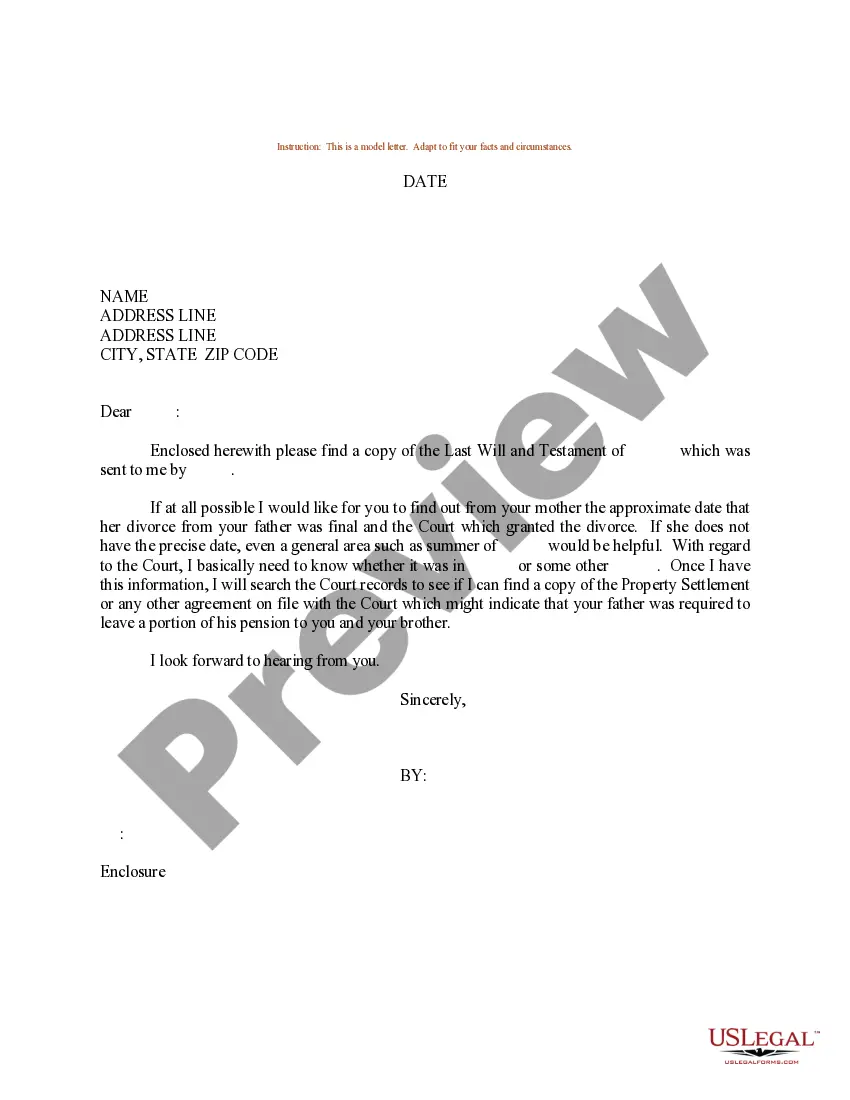
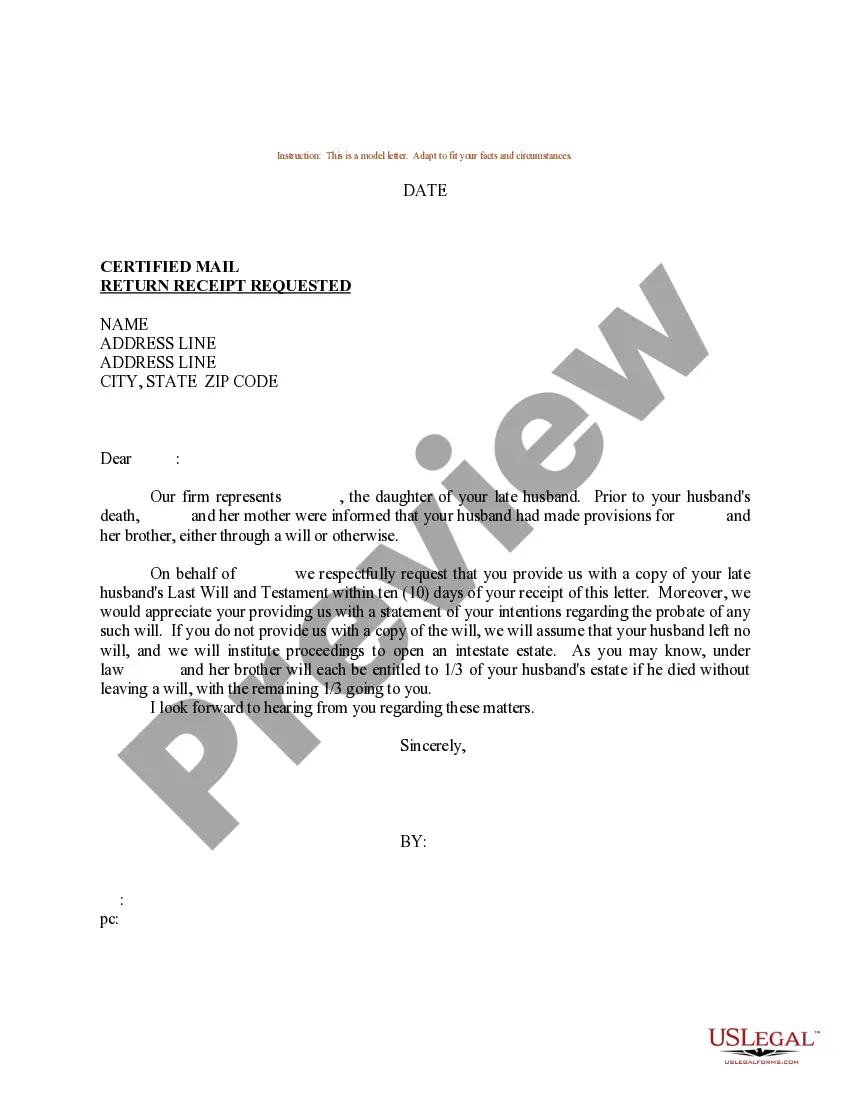
Connecticut Sample Letter transmitting Last Will and Testament of Decedent
Description
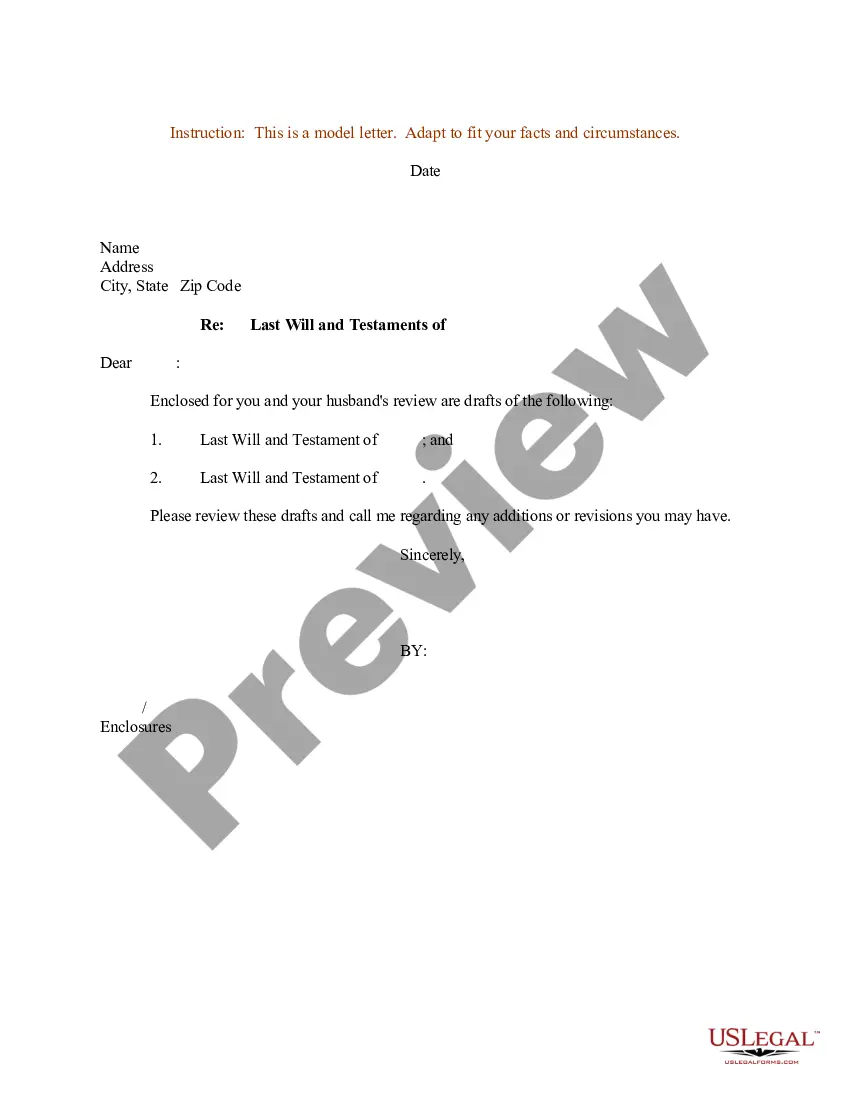
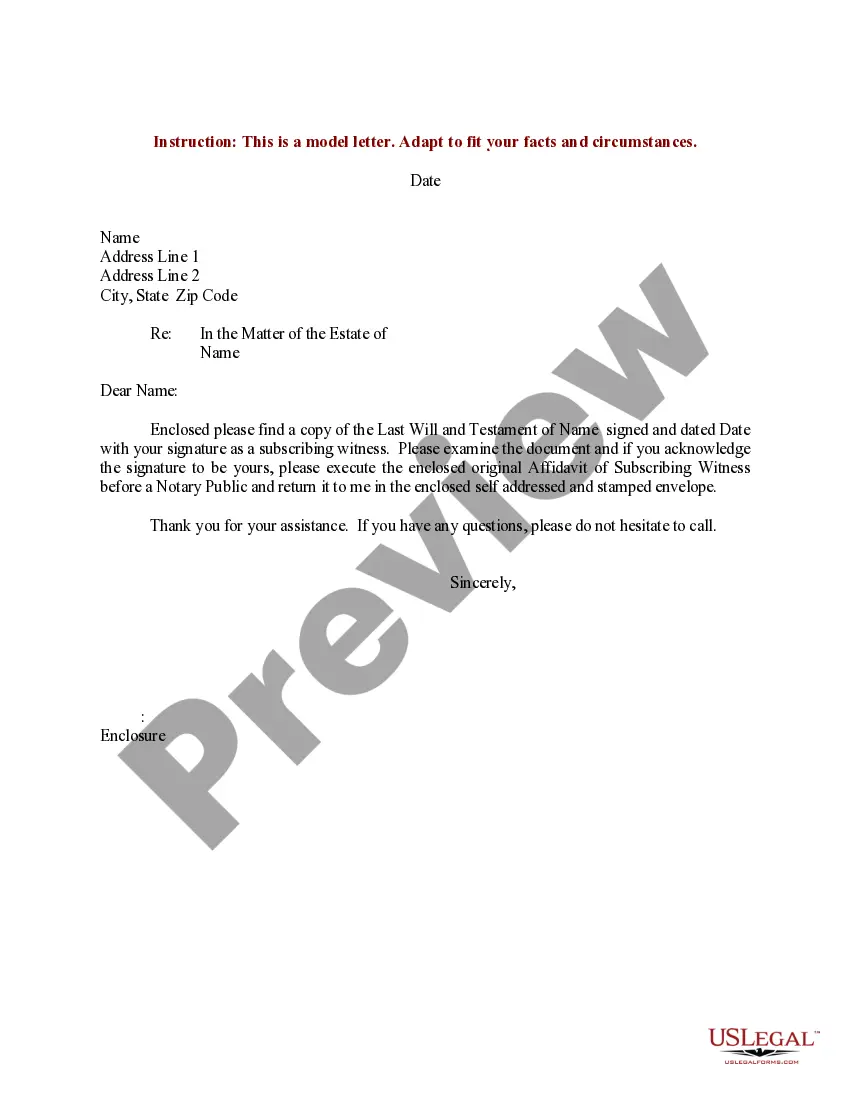
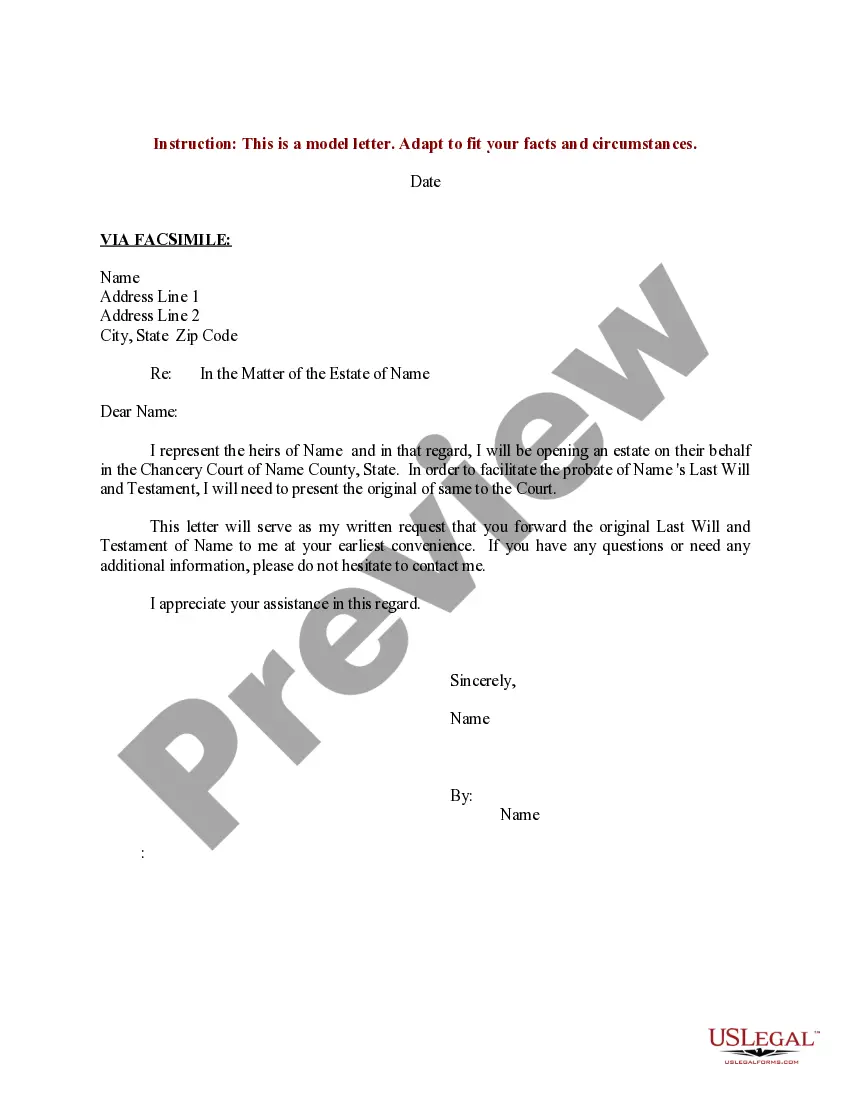
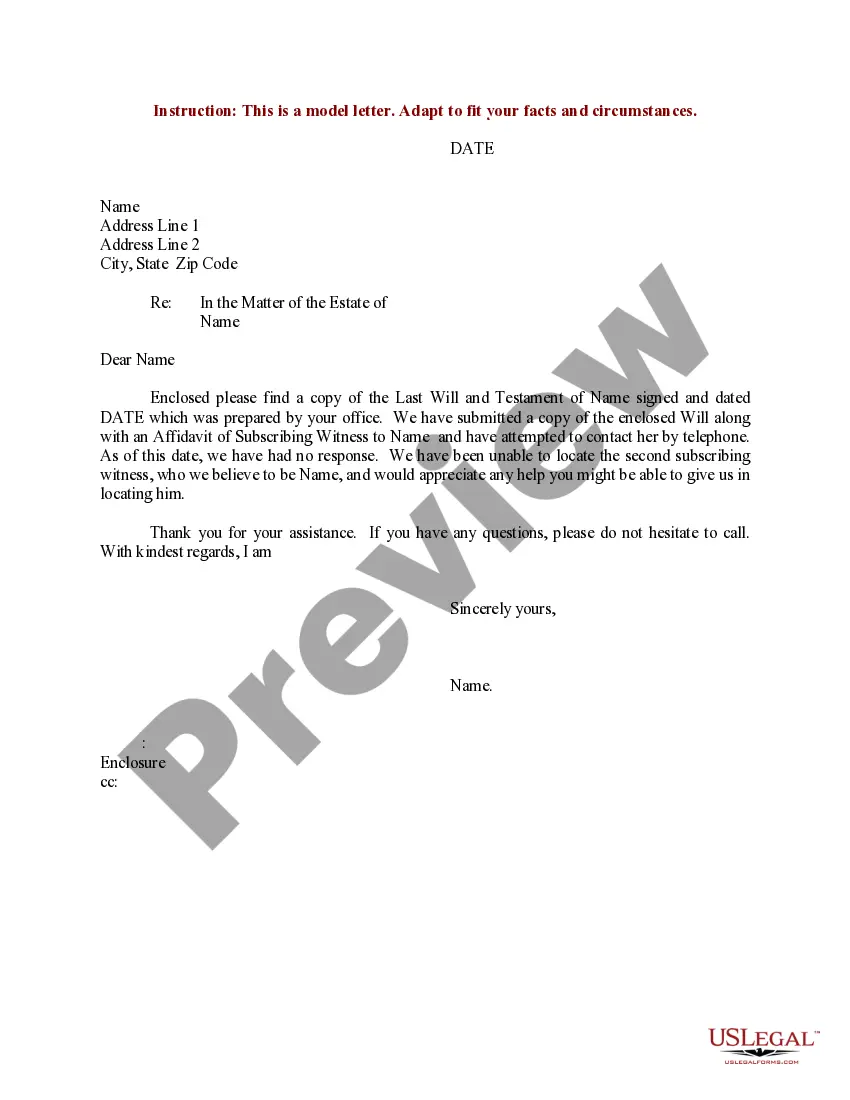
How to fill out Sample Letter Transmitting Last Will And Testament Of Decedent?
It is feasible to spend time online looking for the valid document template that meets the federal and state requirements you will need. US Legal Forms offers thousands of legal forms that can be reviewed by professionals.
You can download or print the Connecticut Sample Letter transmitting Last Will and Testament of Decedent from our services. If you already have a US Legal Forms account, you can Log In and click the Acquire button. After that, you can complete, modify, print, or sign the Connecticut Sample Letter transmitting Last Will and Testament of Decedent.
Every legal document template you purchase is yours permanently. To obtain an additional copy of the purchased form, visit the My documents tab and click the corresponding button. If you are using the US Legal Forms website for the first time, follow the simple instructions below: First, ensure you have selected the correct document template for the area/city of your choice. Review the form details to confirm you have chosen the right form. If available, use the Preview button to view the document template as well.
- To find another version of the form, utilize the Search field to locate the template that meets your needs.
- Once you have found the template you desire, click Buy now to proceed.
- Select the pricing plan you want, enter your information, and register for an account on US Legal Forms.
- Complete the transaction. You can use your credit card or PayPal account to pay for the legal form.
- Select the format of the document and download it to your device.
- Make any necessary adjustments to the document. You can complete, modify, sign, and print the Connecticut Sample Letter transmitting Last Will and Testament of Decedent.
- Obtain and print thousands of document templates using the US Legal Forms website, which offers the largest collection of legal forms. Utilize professional and state-specific templates to address your business or personal needs.
Form popularity
FAQ
There are several legal requirements when you make a will in Connecticut ? notarization isn't one of them. ?For a will to be legally binding in Connecticut, it needs to be: In writing. Created by a testator (the person making the will) who is of sound mind and at least 18 years old.
Steps to Create a Will in Connecticut Decide what property to include in your will. Decide who will inherit your property. Choose an executor to handle your estate. Choose a guardian for your children. Choose someone to manage children's property. Make your will. Sign your will in front of witnesses.
A will is a legal document that sets forth your wishes regarding the distribution of your property and the care of any minor children. If you die without a will, those wishes may not be carried out.
A Will, also known as a Last Will and Testament, is a legally prepared and bound document that states your intentions for the distribution of your assets and wealth after your death. In the event you have children, a valid Will also allows you to designate who will care for them.
A will is a legal document that sets forth your wishes regarding the distribution of your property and the care of any minor children. If you die without a will, those wishes may not be carried out.
Some assets will need to go through a legal probate process to determine who will inherit them, while a non-probate asset with a named beneficiary can be transferred directly to its new owner. The executor (or administrator) of your loved one's estate is responsible for the distribution of probate assets.
Probate is when the court supervises the processes that transfer legal title of property from the estate of the person who has died (the "decedent") to his or her beneficiaries.
The Court, giving him or her the legal authority to take actions on behalf of the estate, will issue a ?Letters Testamentary? to the Executor. The Executor is then charged with gathering and inventorying all of the estate's assets. His Report (?Inventory?) must be submitted to the Court early on in the process.