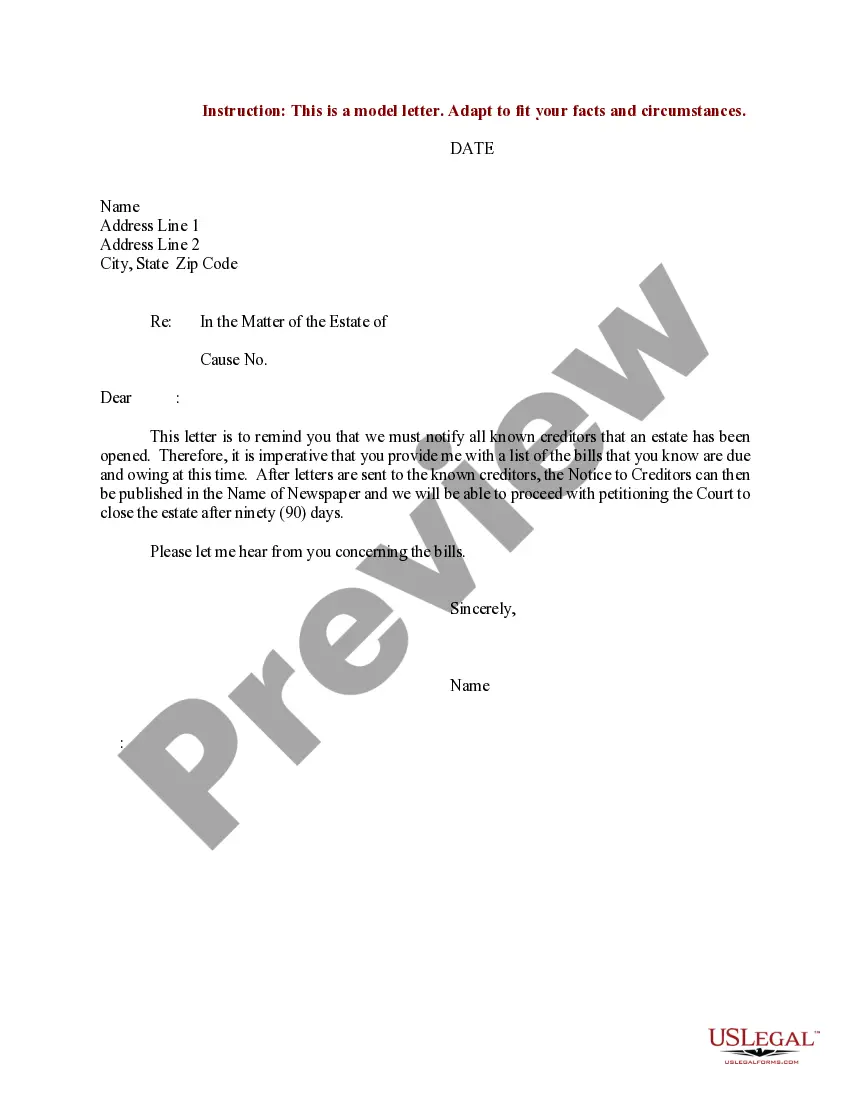
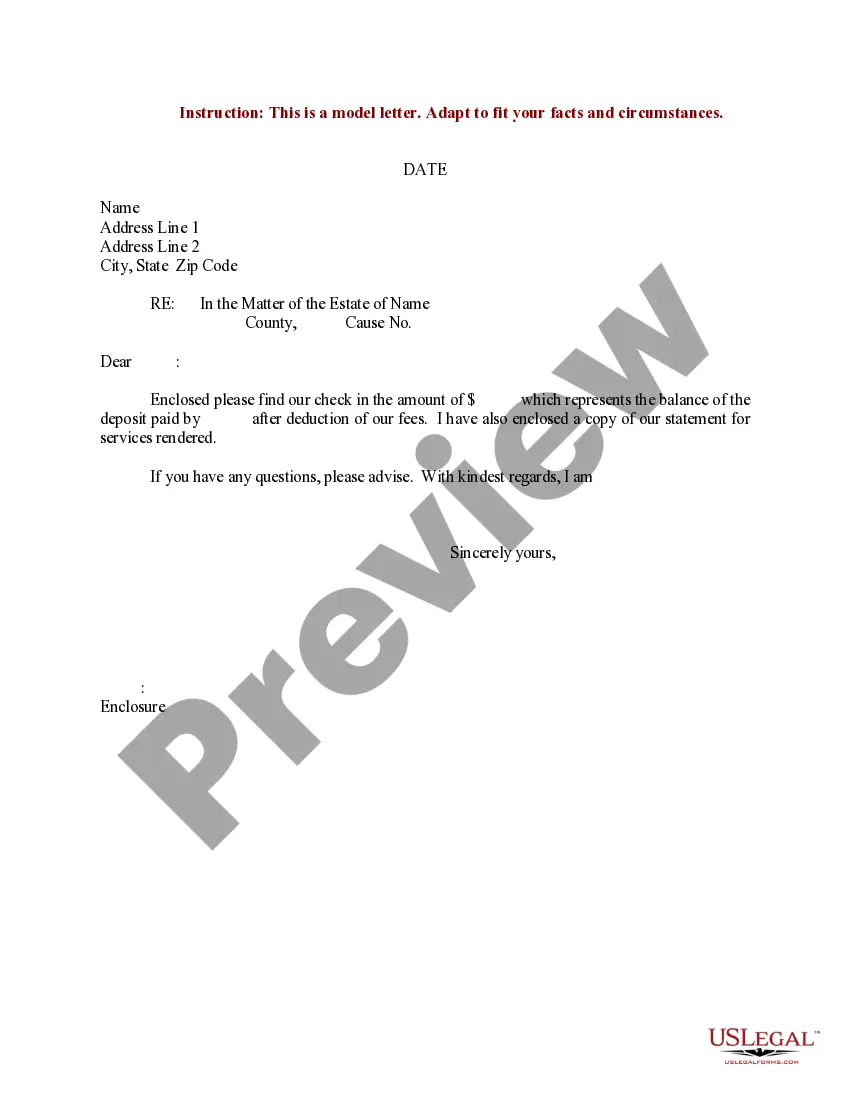
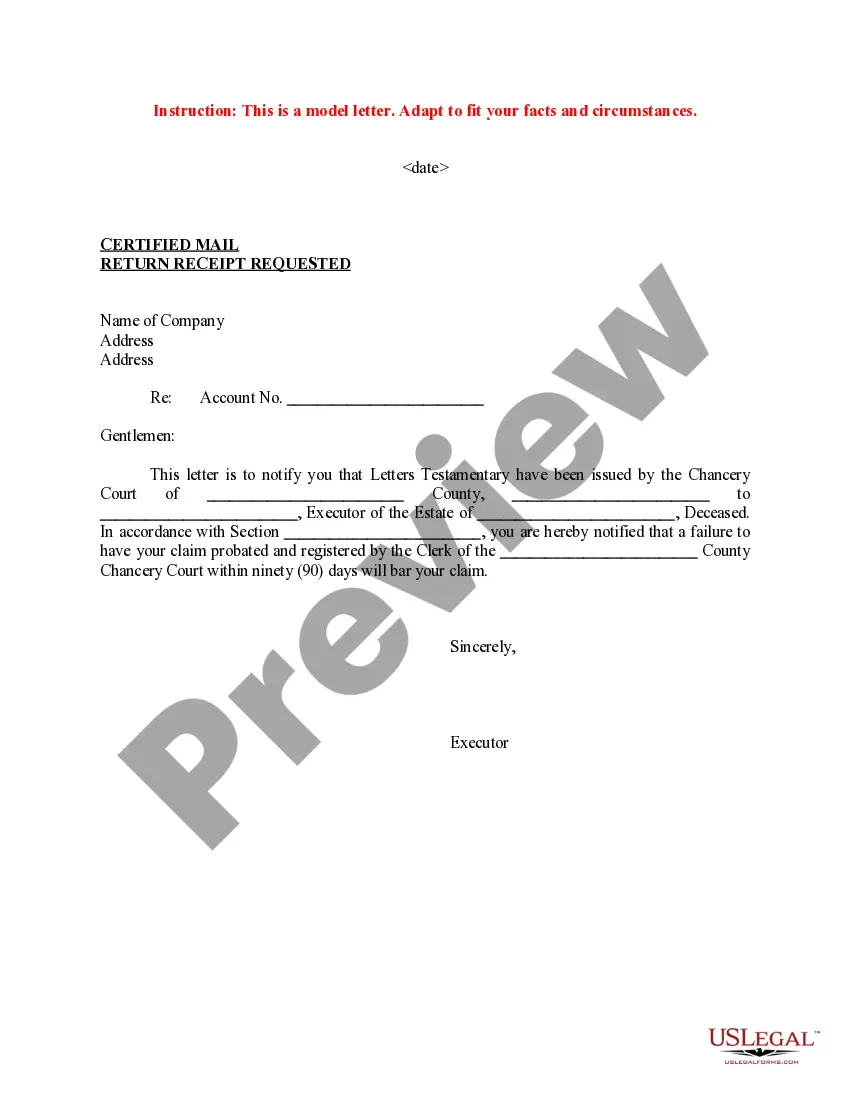
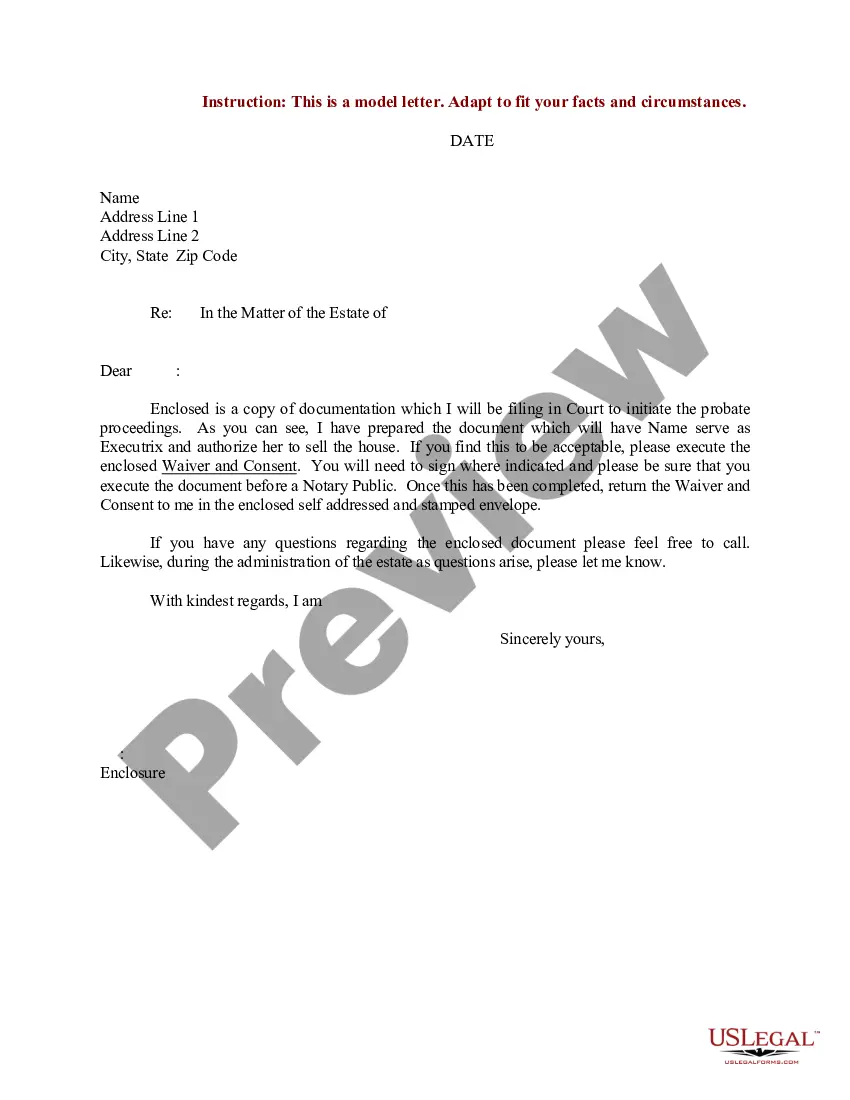
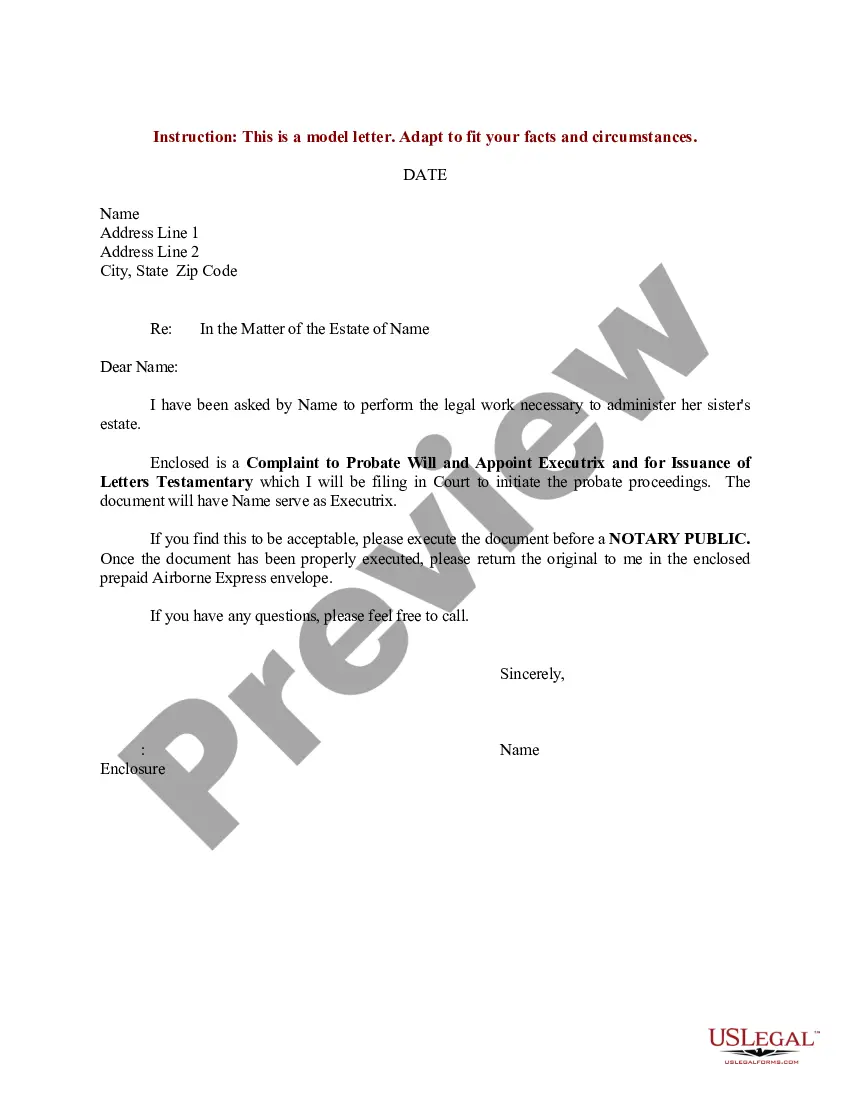
Connecticut Sample Letter for Creditor Notification of Estate Opening
Description
Get your form ready online
Our built-in tools help you complete, sign, share, and store your documents in one place.
Make edits, fill in missing information, and update formatting in US Legal Forms—just like you would in MS Word.
Download a copy, print it, send it by email, or mail it via USPS—whatever works best for your next step.
Sign and collect signatures with our SignNow integration. Send to multiple recipients, set reminders, and more. Go Premium to unlock E-Sign.
If this form requires notarization, complete it online through a secure video call—no need to meet a notary in person or wait for an appointment.
We protect your documents and personal data by following strict security and privacy standards.

Make edits, fill in missing information, and update formatting in US Legal Forms—just like you would in MS Word.

Download a copy, print it, send it by email, or mail it via USPS—whatever works best for your next step.

Sign and collect signatures with our SignNow integration. Send to multiple recipients, set reminders, and more. Go Premium to unlock E-Sign.

If this form requires notarization, complete it online through a secure video call—no need to meet a notary in person or wait for an appointment.

We protect your documents and personal data by following strict security and privacy standards.
Looking for another form?
How to fill out Sample Letter For Creditor Notification Of Estate Opening?
Discovering the right lawful document design can be a struggle. Obviously, there are a variety of layouts accessible on the Internet, but how will you get the lawful kind you need? Use the US Legal Forms website. The assistance offers thousands of layouts, such as the Connecticut Sample Letter for Creditor Notification of Estate Opening, that can be used for enterprise and personal requires. All of the forms are checked by specialists and meet state and federal requirements.
In case you are already registered, log in in your bank account and click the Down load button to find the Connecticut Sample Letter for Creditor Notification of Estate Opening. Utilize your bank account to check through the lawful forms you have purchased formerly. Visit the My Forms tab of your bank account and obtain one more version from the document you need.
In case you are a brand new user of US Legal Forms, listed here are basic instructions that you should adhere to:
- First, ensure you have selected the correct kind for your personal city/region. It is possible to examine the shape using the Review button and look at the shape outline to make sure this is basically the best for you.
- In case the kind fails to meet your requirements, take advantage of the Seach field to find the proper kind.
- When you are certain the shape would work, click the Get now button to find the kind.
- Opt for the costs plan you need and enter the essential details. Design your bank account and pay for an order using your PayPal bank account or bank card.
- Select the submit structure and acquire the lawful document design in your product.
- Complete, revise and print out and indication the obtained Connecticut Sample Letter for Creditor Notification of Estate Opening.
US Legal Forms is definitely the largest library of lawful forms for which you can see various document layouts. Use the company to acquire skillfully-produced documents that adhere to express requirements.
Form popularity
FAQ
Section 5.5 Form of appearance (a) An appearance of an attorney shall: (1) list in the heading the name of the matter, the name of the Probate Court and the date of the appearance; (2) contain the name and mailing address of the client represented by the attorney; (3) be signed by the attorney making the appearance (4) ...
The Estate Settlement Timeline: Although Connecticut law does not specify a particular deadline for this, it is generally advisable to do so within a month to avoid unnecessary delays in the probate process.
The Connecticut statute of limitations for a claim against a decedent's estate is the earlier of the (i) date the applicable statute of limitations for such claim expires, or (ii) two years from the date of the decedent's death if such claim is or could have been asserted during the decedent's lifetime, or two years ...
Connecticut has a six-year statute of limitations for debt collection actions resulting from simple and implied contracts (CGS § 52-576; attachment 1). Medical bills generally are simple or implied contracts and thus the SOL is six years.
Creditors have 150 days to file a claim in a Connecticut estate going through probate unless the Executor sends the creditor the letter described above. A creditor can't just ignore the Executor and march into any court other than the probate court and get a judgment for payment.
Probate or administration is not granted after ten years from the decedent's death unless either: ? On a petition to the court, the court allows it. of limitations may be extended to allow one year after the minor reaches majority to begin a probate or an administration.
The Court, giving him or her the legal authority to take actions on behalf of the estate, will issue a ?Letters Testamentary? to the Executor. The Executor is then charged with gathering and inventorying all of the estate's assets. His Report (?Inventory?) must be submitted to the Court early on in the process.
7 Steps for Settling an Estate in Connecticut Prepare and file the Petition/Administration or Probate of Will. ... Collect the Decedent's Property. ... Prepare and file the Inventory. ... Pay Claims. ... Prepare and file tax returns. ... Prepare and file a Decedent's Estate Administration Account or Financial Report.