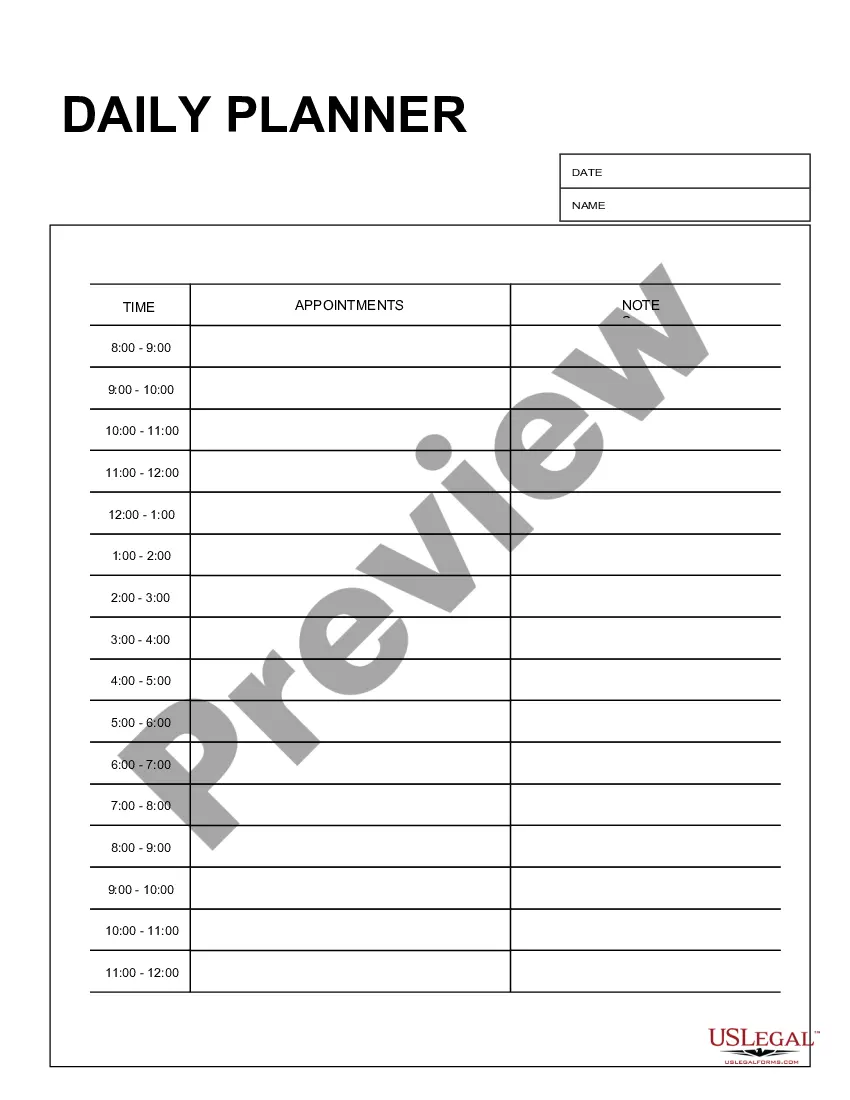
Connecticut Mutual Release Agreement between Corporate Employer and Executive upon Termination of Employment
Description
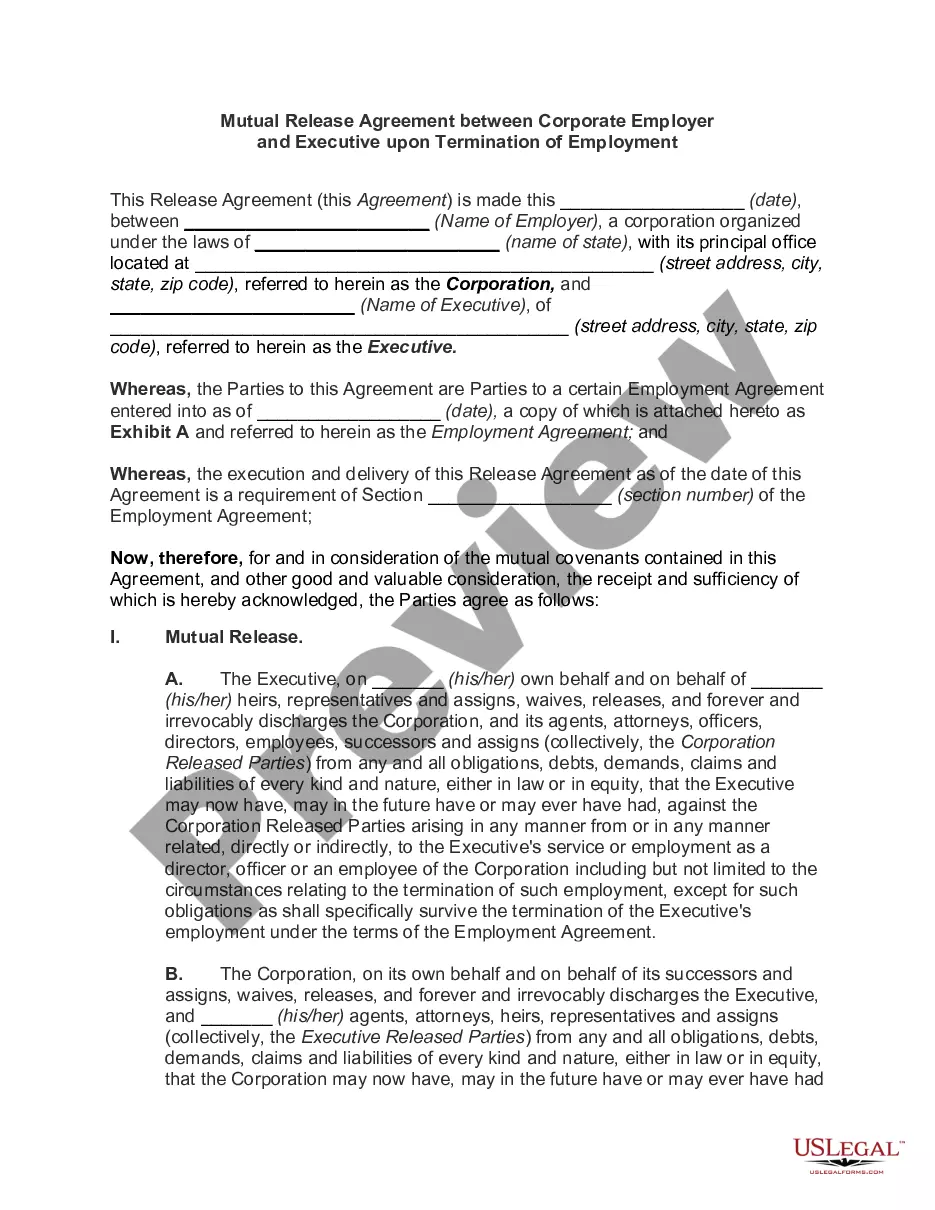
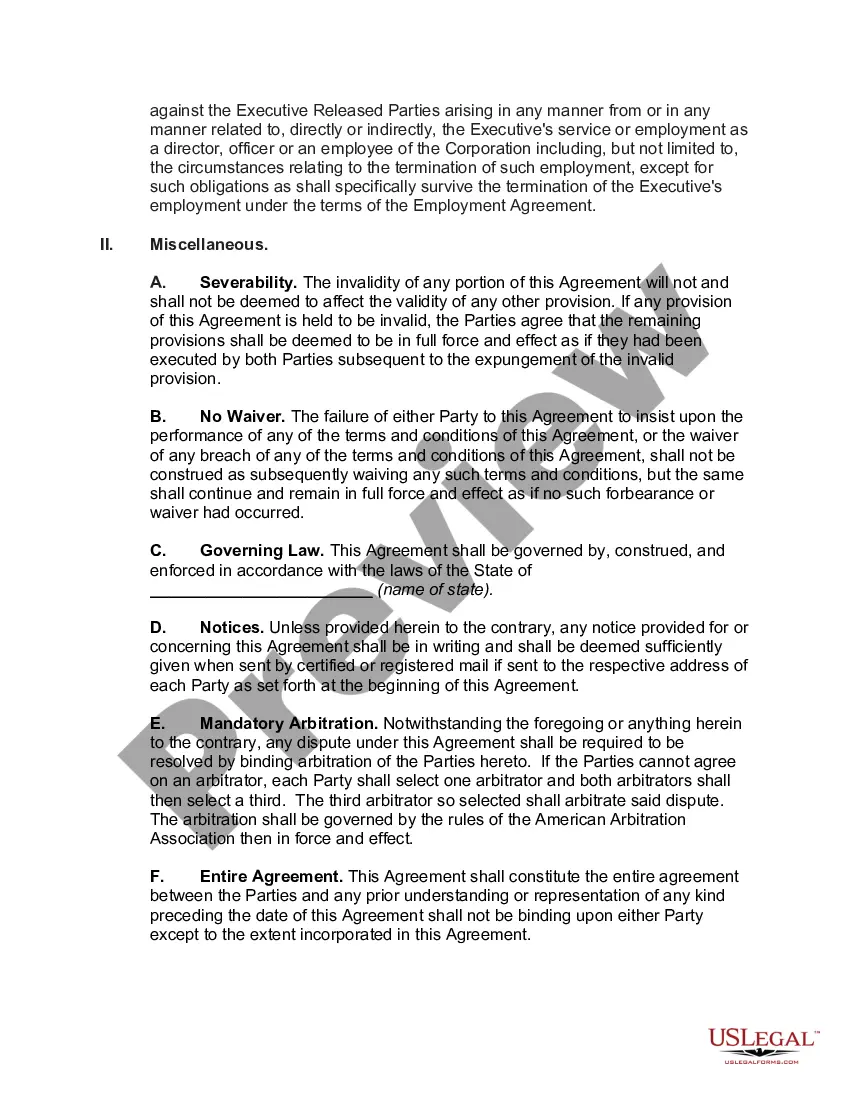
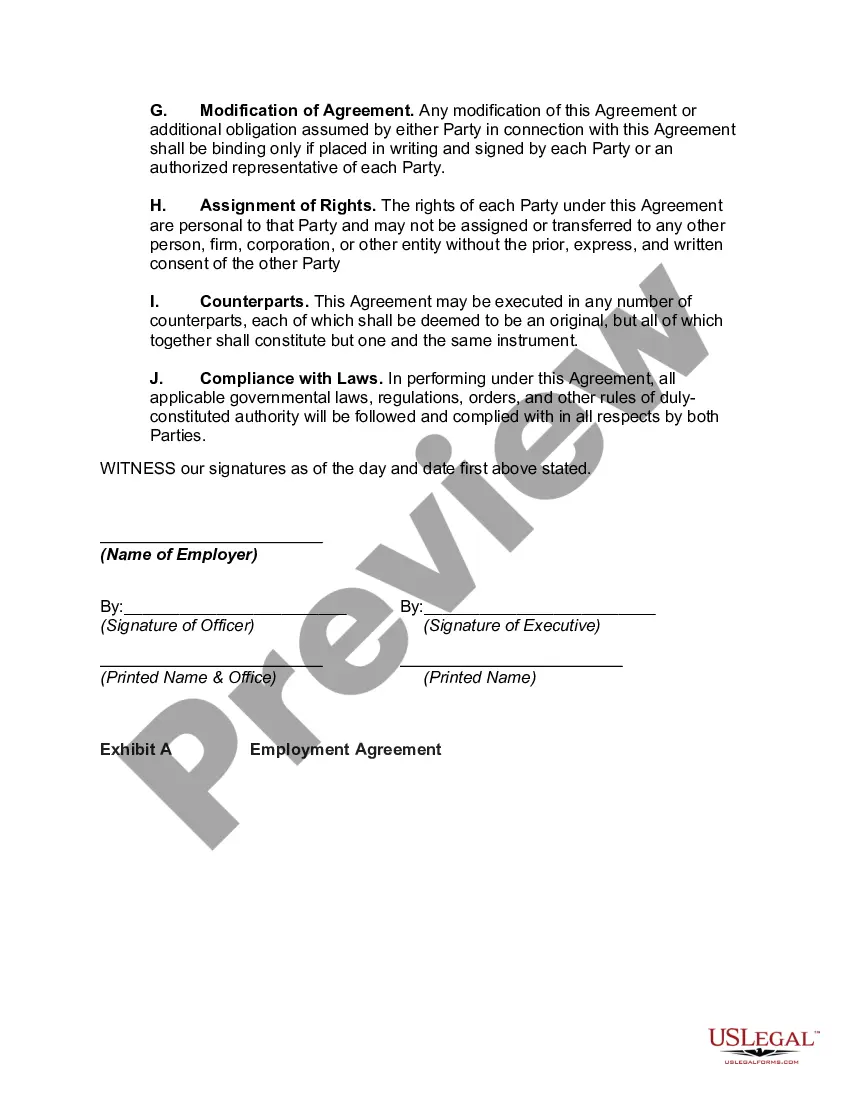

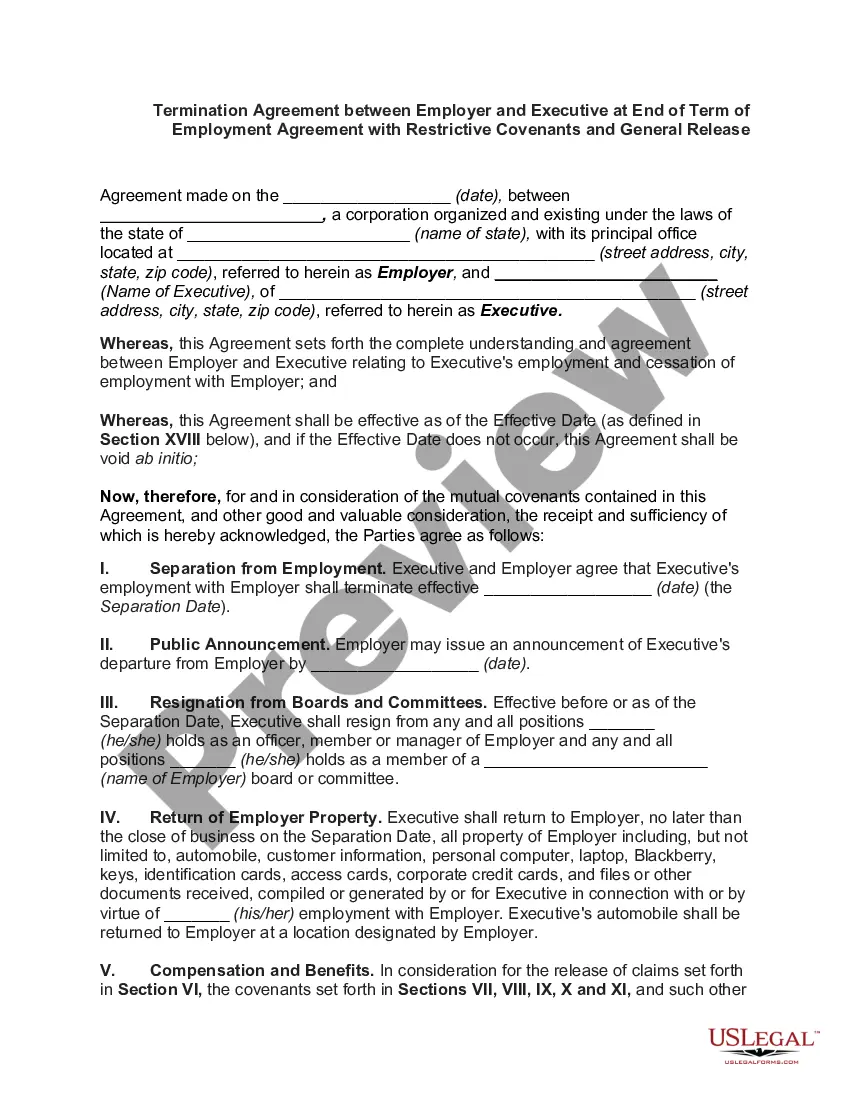
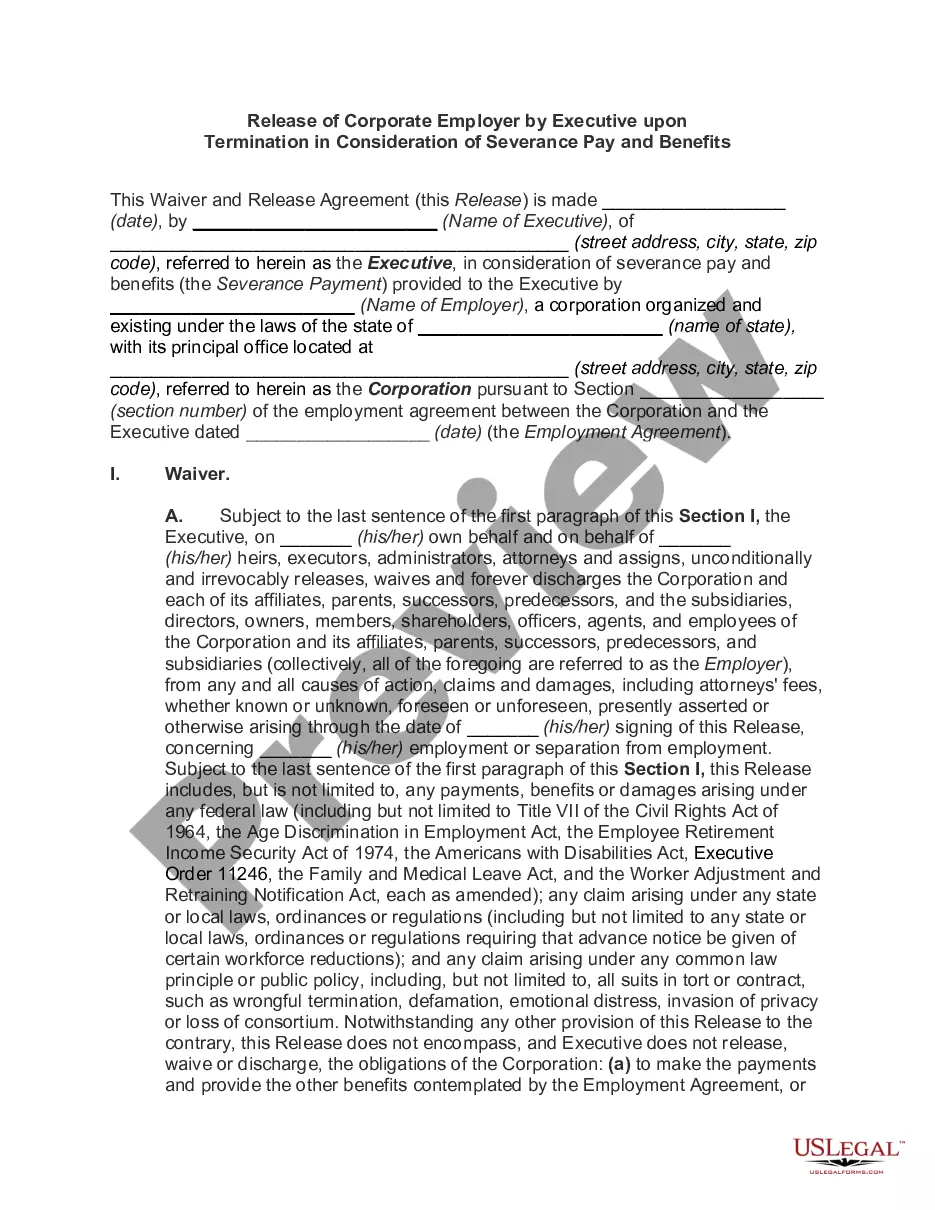
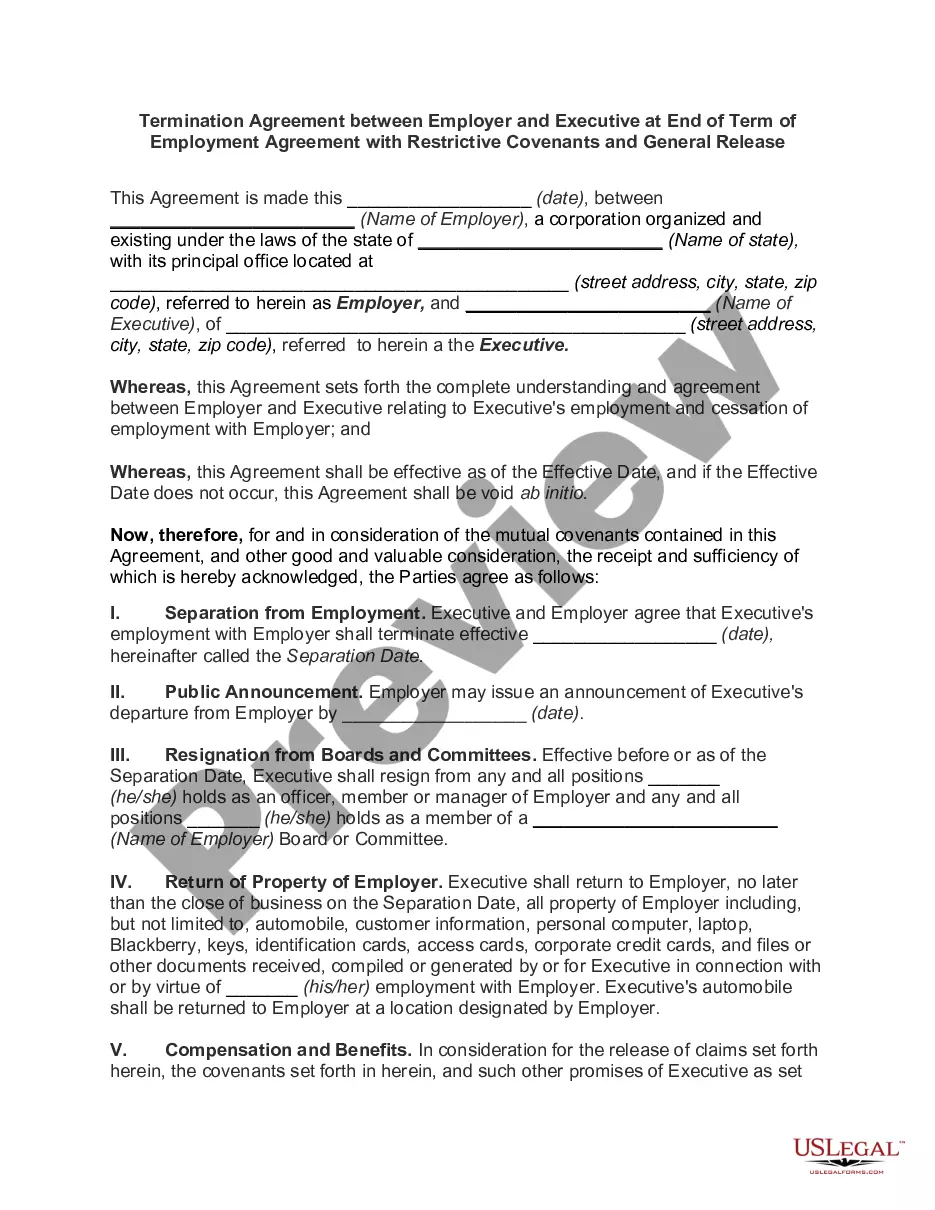

How to fill out Mutual Release Agreement Between Corporate Employer And Executive Upon Termination Of Employment?
US Legal Forms - one of the largest collections of legal documents in the United States - offers a variety of legal document templates that you can download or print.
By using the website, you can find thousands of forms for business and personal purposes, organized by categories, states, or keywords. You can quickly obtain the latest versions of forms like the Connecticut Mutual Release Agreement between Corporate Employer and Executive upon Termination of Employment.
If you currently hold a monthly subscription, Log In to download the Connecticut Mutual Release Agreement between Corporate Employer and Executive upon Termination of Employment from the US Legal Forms library. The Download button will appear on every document you view. You have access to all previously acquired forms in the My documents tab of your account.
Process the payment. Use a credit card or PayPal account to complete the transaction.
Choose the format and download the document to your device. Edit. Fill out, modify, and print and sign the obtained Connecticut Mutual Release Agreement between Corporate Employer and Executive upon Termination of Employment. Every template added to your account has no expiration date and is yours indefinitely. Therefore, if you wish to download or print another copy, simply go to the My documents section and click on the document you need. Access the Connecticut Mutual Release Agreement between Corporate Employer and Executive upon Termination of Employment with US Legal Forms, the most extensive library of legal document templates. Utilize thousands of professional and state-specific templates that meet your business or personal needs.
- If you are using US Legal Forms for the first time, here are a few simple steps to help you get started.
- Ensure you have selected the correct form for your municipality/region. Click the Review button to examine the form's content.
- Read the form description to make sure you have chosen the right document.
- If the form does not meet your requirements, utilize the Search section at the top of the screen to find one that does.
- If you are satisfied with the form, confirm your selection by clicking the Get now button.
- Then, select the payment plan you prefer and provide your information to register for the account.
Form popularity
FAQ
A common feature of a deed of release is a mutual release. It involves both parties agreeing to release each other from all: future claims; demands; debts; or.
Termination of contract by mutual consent takes place when a contract is no longer being followed, if the contract can no longer be performed, or the parties involved ceased operating the business. When these situations occur, the parties can formally terminate the agreement in writing.
A mutual release agreement occurs between two parties that are involved in a legal dispute. By agreeing to mutually release, each party agrees to give up any claims against the other. This includes known claims as well as those that aren't yet known.
Updated October 28, 2020: Termination of contract by mutual consent takes place when a contract is no longer being followed, if the contract can no longer be performed, or the parties involved ceased operating the business. When these situations occur, the parties can formally terminate the agreement in writing.
A mutual release agreement is a legal contract that effectively "releases" both parties from claims, obligations, and/or liabilities between them.
If both parties agree to waive the right to hold each other legally responsible for injuries, losses, and damages, it is a mutual release agreement. A Release of Liability Form is also known as a: Liability waiver form. Release of liability waiver.
A mutual release is a document designed to be signed by both the buyers and sellers to cancel an agreement of purchase and sale. When executed, this document cancels the agreement and releases all parties from any future liabilities or claims.
Release clauses, also called buyout clauses, definitively free one party from breach of contract, bad faith, or negligence liabilities. The idea is to protect an individual from absorbing someone else's liability in specific situations.
A release clause, or simply, a release, is an agreement between parties stating that one of the parties will forfeit their rights to a legal claim. It generally states that the party is relinquishing or giving up their right to sue or bring a lawsuit against the other party.
Section 2: Mutual Release of Liability.Discharges both parties of any liabilities that could arise from the original agreement. In other words, you both agree that you will not sue the other party for some unfinished obligation or fees.