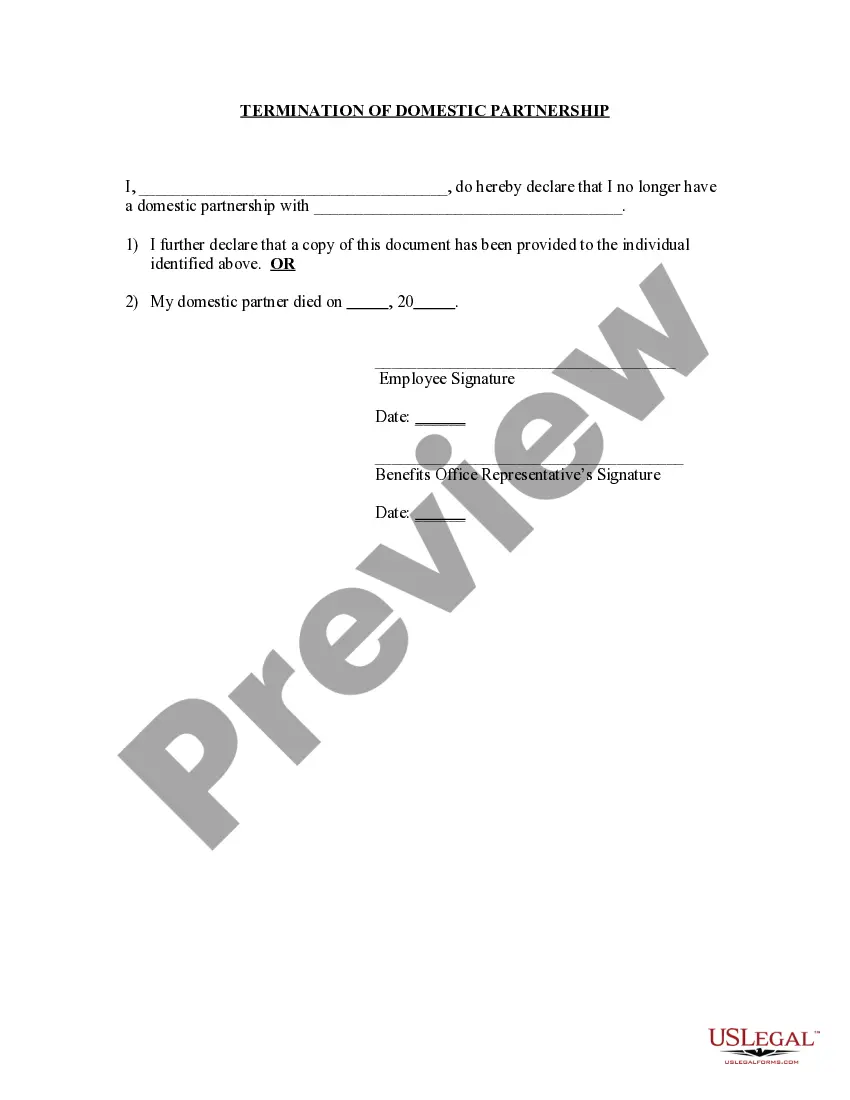
Connecticut Termination of Domestic Partnership
Description
Get your form ready online
Our built-in tools help you complete, sign, share, and store your documents in one place.
Make edits, fill in missing information, and update formatting in US Legal Forms—just like you would in MS Word.
Download a copy, print it, send it by email, or mail it via USPS—whatever works best for your next step.
Sign and collect signatures with our SignNow integration. Send to multiple recipients, set reminders, and more. Go Premium to unlock E-Sign.
If this form requires notarization, complete it online through a secure video call—no need to meet a notary in person or wait for an appointment.
We protect your documents and personal data by following strict security and privacy standards.

Make edits, fill in missing information, and update formatting in US Legal Forms—just like you would in MS Word.

Download a copy, print it, send it by email, or mail it via USPS—whatever works best for your next step.

Sign and collect signatures with our SignNow integration. Send to multiple recipients, set reminders, and more. Go Premium to unlock E-Sign.

If this form requires notarization, complete it online through a secure video call—no need to meet a notary in person or wait for an appointment.

We protect your documents and personal data by following strict security and privacy standards.
Looking for another form?
How to fill out Termination Of Domestic Partnership?
Are you currently in a situation where you require documents for both business or personal purposes almost all the time.
There are numerous legal document templates accessible online, but finding trustworthy ones can be challenging.
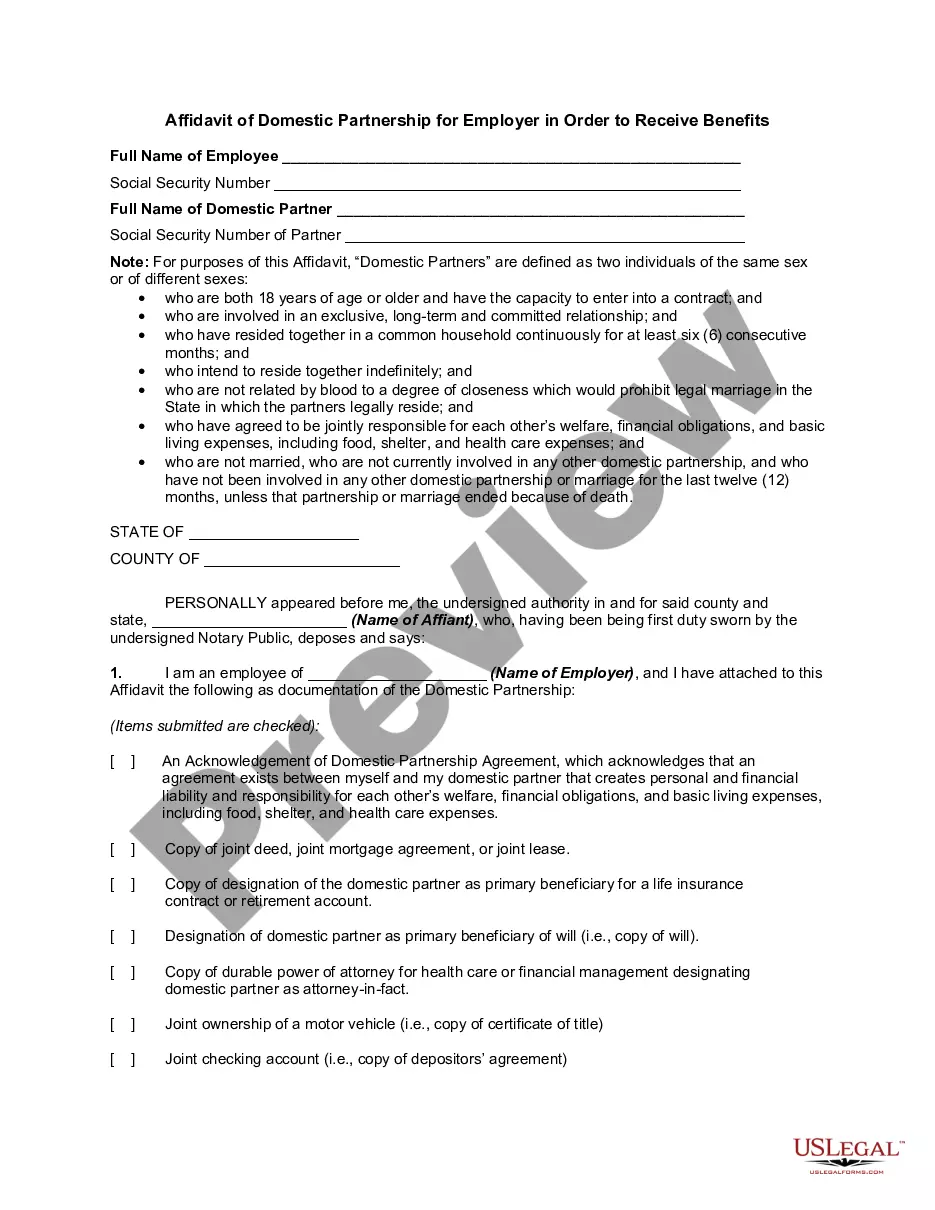
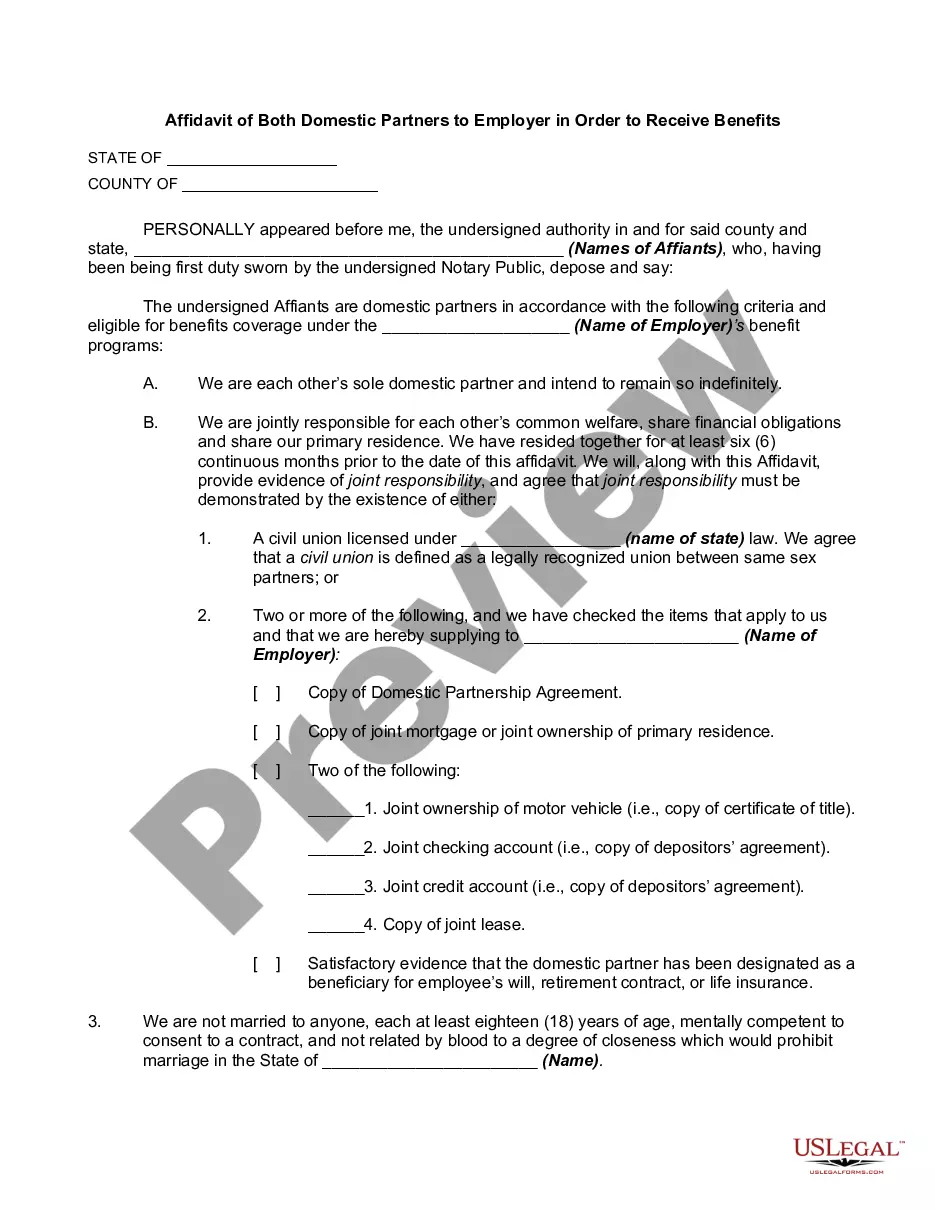
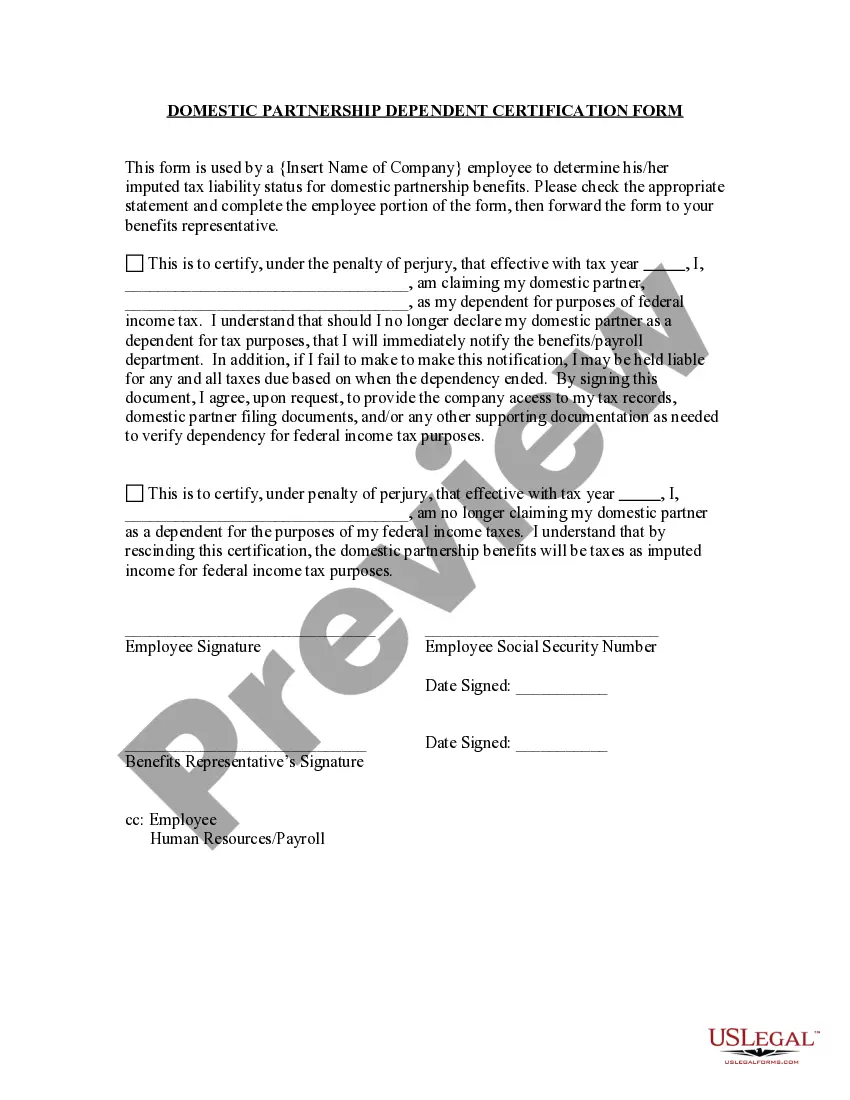
US Legal Forms offers thousands of form templates, including the Connecticut Termination of Domestic Partnership, which are designed to meet federal and state regulations.
You can find all the document templates you have purchased in the My documents section. You can obtain another copy of the Connecticut Termination of Domestic Partnership at any time, if needed. Just select the desired form to download or print the document template.
Utilize US Legal Forms, one of the most comprehensive collections of legal forms, to save time and avoid mistakes. The service offers professionally crafted legal document templates that can be used for a variety of purposes. Create an account on US Legal Forms and start making your life easier.
- If you are already acquainted with the US Legal Forms website and have an account, simply Log In.
- Following that, you can download the Connecticut Termination of Domestic Partnership template.
- If you do not have an account and wish to start using US Legal Forms, follow these steps.
- Obtain the form you need and ensure it is for the correct municipality.
- Use the Review button to assess the form.
- Check the details to confirm that you have chosen the correct form.
- If the form is not what you're seeking, utilize the Lookup field to find the form that meets your needs.
- Once you have the correct form, click on Get now.
- Choose your desired pricing plan, complete the required information to create your account, and make a purchase using PayPal or credit card.
- Select a convenient paper format and download your copy.
Form popularity
FAQ
Connecticut law does not recognize common-law marriages. But, a common-law marriage entered into in a state that recognizes such marriages will be recognized in Connecticut if it was valid under the other state's law.
The process for terminating a domestic partnership varies between states. In some jurisdictions, ending a domestic partnership is as simple as filing a Notice of Termination with the Secretary of State. In other jurisdictions, domestic partners must dissolve their relationship through divorce or annulment proceedings.
(C) Not be married. (4) Domestic partnership means the relationship between 2 persons who become domestic partners by registering in accordance with § 32-702(a) or whose relationship is recognized under A§ 32-702(i). (4) Is in a committed relationship with the other person.
One major change that was not enforced before the new law is that domestic partners are now financially responsible for each other's debts, both during and after the partnership.
Yes. For example, Hartford has a domestic partnership ordinance providing a means for couples to register as domestic partners (Hartford, CT Municipal Code, Chap.
What Qualifies As A Domestic Partner? In general, we can define domestic partners as an unrelated and unmarried person who resides with or shares living accommodations with a work colleague and whom the state of origin defines differently than marriage.
A Petition for Dissolution of Domestic Partnership and Marriage is a formal request by one partner/spouse to a California Superior Court to dissolve both the domestic partnership and the marriage in a single proceeding. A judgment issued by the court in this case will end both the domestic partnership and the marriage.
Does Ct Recognize Domestic Partners? There are no references in Connecticut or federal law to a domestic partner.. Neither Hawaii nor Massachusetts includes in its laws mention domestic partnerships, though both mention them.
Connecticut law does not recognize common-law marriages. But, a common-law marriage entered into in a state that recognizes such marriages will be recognized in Connecticut if it was valid under the other state's law.
People who are already married or in a domestic partnership with someone else (people who are in a domestic partnership with each other can later get married without dissolving the partnership)