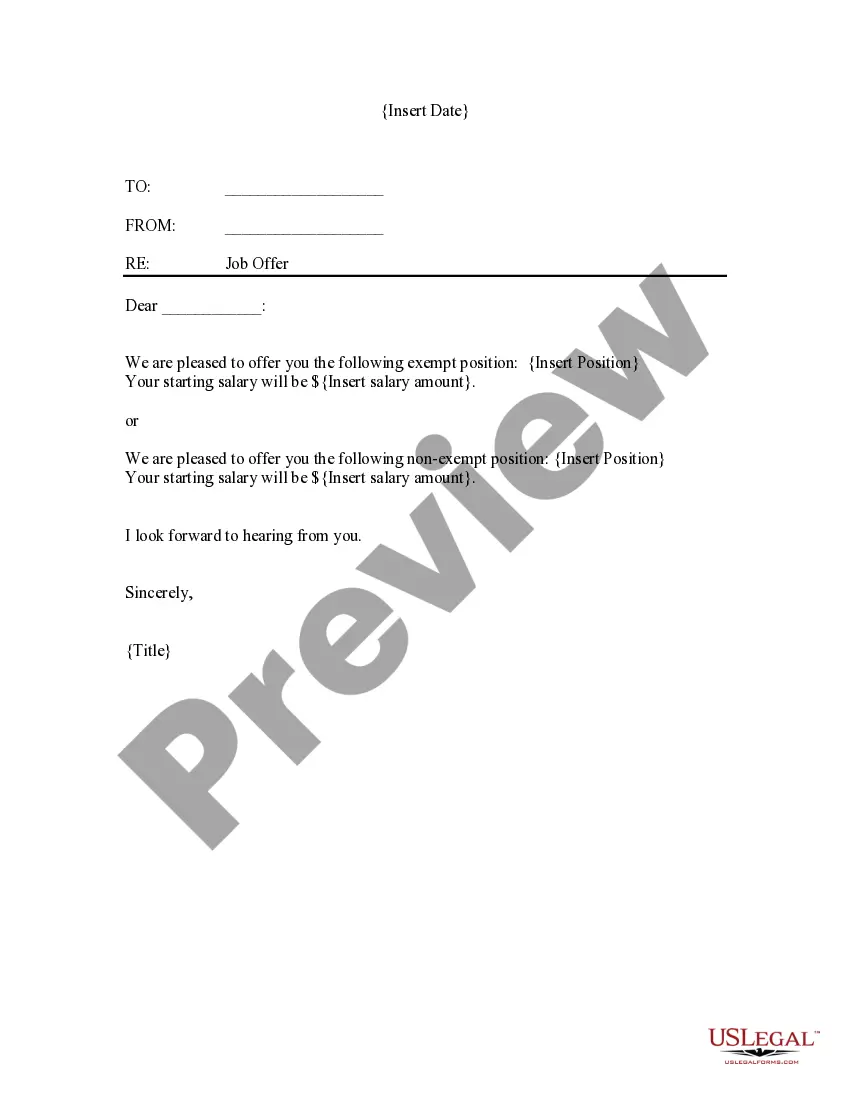
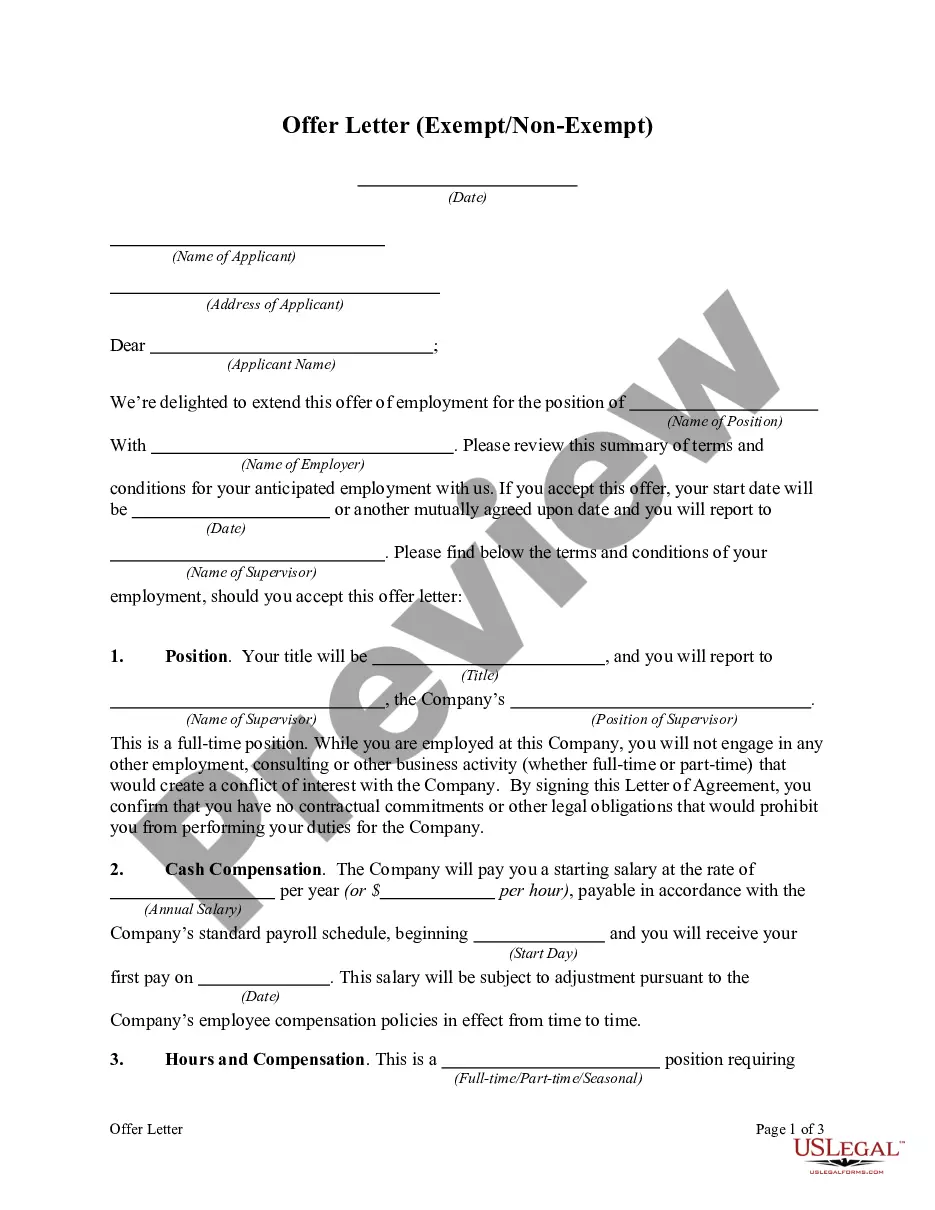
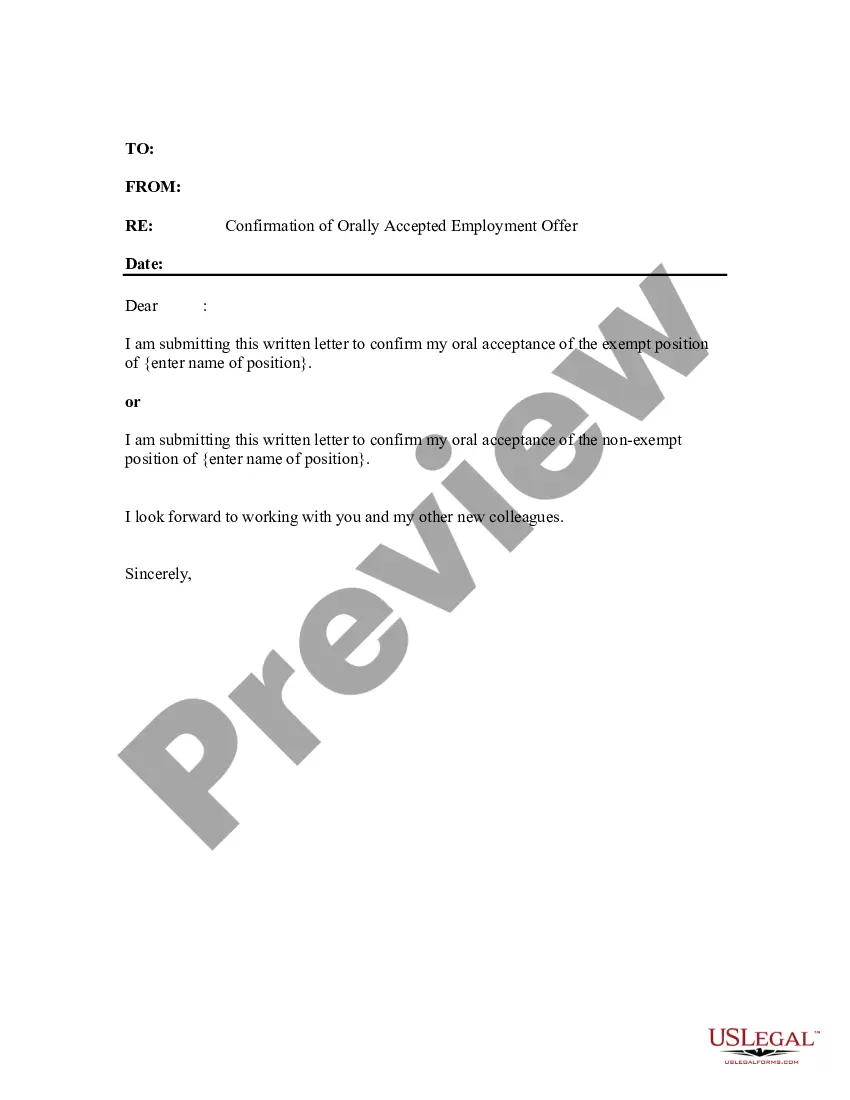
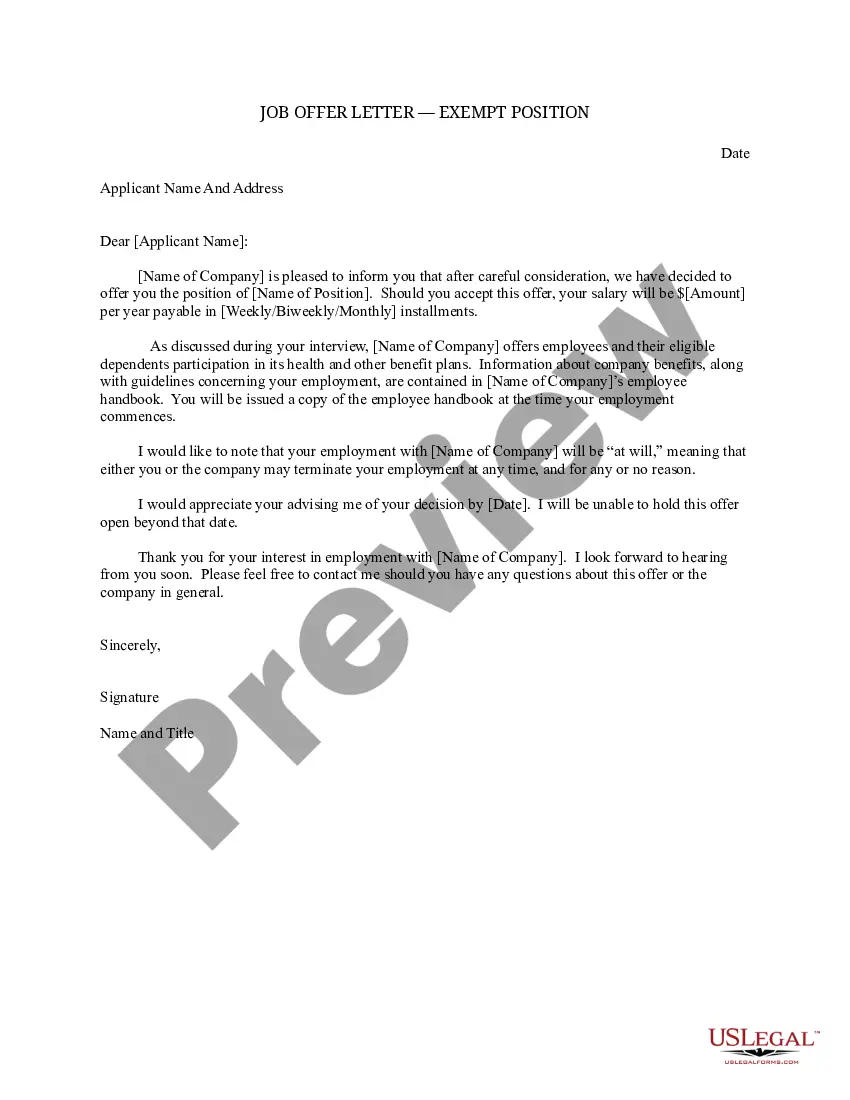
Connecticut Job Offer Letter - Exempt or Nonexempt Position
Description
Get your form ready online
Our built-in tools help you complete, sign, share, and store your documents in one place.
Make edits, fill in missing information, and update formatting in US Legal Forms—just like you would in MS Word.
Download a copy, print it, send it by email, or mail it via USPS—whatever works best for your next step.
Sign and collect signatures with our SignNow integration. Send to multiple recipients, set reminders, and more. Go Premium to unlock E-Sign.
If this form requires notarization, complete it online through a secure video call—no need to meet a notary in person or wait for an appointment.
We protect your documents and personal data by following strict security and privacy standards.

Make edits, fill in missing information, and update formatting in US Legal Forms—just like you would in MS Word.

Download a copy, print it, send it by email, or mail it via USPS—whatever works best for your next step.

Sign and collect signatures with our SignNow integration. Send to multiple recipients, set reminders, and more. Go Premium to unlock E-Sign.

If this form requires notarization, complete it online through a secure video call—no need to meet a notary in person or wait for an appointment.

We protect your documents and personal data by following strict security and privacy standards.
Looking for another form?
How to fill out Job Offer Letter - Exempt Or Nonexempt Position?
If you need to compile, obtain, or print legal document templates, utilize US Legal Forms, the largest repository of legal forms available online.
Take advantage of the website's straightforward and user-friendly search feature to find the documents you require.
A selection of templates for business and personal purposes are organized by categories, states, or keywords.
Step 3. If you are not satisfied with the form, utilize the Lookup area at the top of the screen to discover alternative versions of your legal form template.
Step 4. Once you have found the form you need, click the Acquire now button. Select your preferred payment plan and enter your details to create an account.
- Use US Legal Forms to acquire the Connecticut Job Offer Letter - Exempt or Nonexempt Position within a few clicks.
- If you are an existing US Legal Forms user, Log In to your account and click the Acquire button to obtain the Connecticut Job Offer Letter - Exempt or Nonexempt Position.
- You can also access forms you previously downloaded from the My documents tab in your account.
- If this is your first time using US Legal Forms, follow the steps provided below.
- Step 1. Ensure you have selected the form for the correct city/state.
- Step 2. Use the Preview option to review the content of the form. Don’t forget to check the details.
Form popularity
FAQ
The offer was sent from a personal email The biggest giveaway is the email address that the job offer has been sent from. If it's been sent from a free e-mail account like 'google.com or hotmail.com' then you should know that it's fake. Authentic job offers are sent from company registered e-mails.
A letter of employment, also known as an employment verification letter, is a document that confirms an individual's working status. Professionals may need to write these on behalf of their team members to provide financial information for third-party organizations, such as mortgage lenders and landlords.
While the specific criteria for duties vary somewhat depending on whether exempt status is claimed as an Executive, Administrative, and/or Professional employee, examples of exempt duties include hiring and firing employees, scheduling employees, determining credit policies, formulating personnel policies, assessing
Some important details about an offer letter are: It is NOT a legally binding contract. It does NOT include promises of future employment or wages. It includes an employment at-will statement.
Exempt Employees in Connecticut For an employee to be classified as an exempt employee they must pass both the duties and the salary tests, under both Connecticut and Federal law. Duties Test - Under the Duties Test, the employee's primary duty must require that they act with discretion and independent judgment.
Whereas an offer letter is unofficial (avoiding statements that promise future wages or employment), an employment contract is exactly the opposite, setting wages and length of employment in legally binding stone.
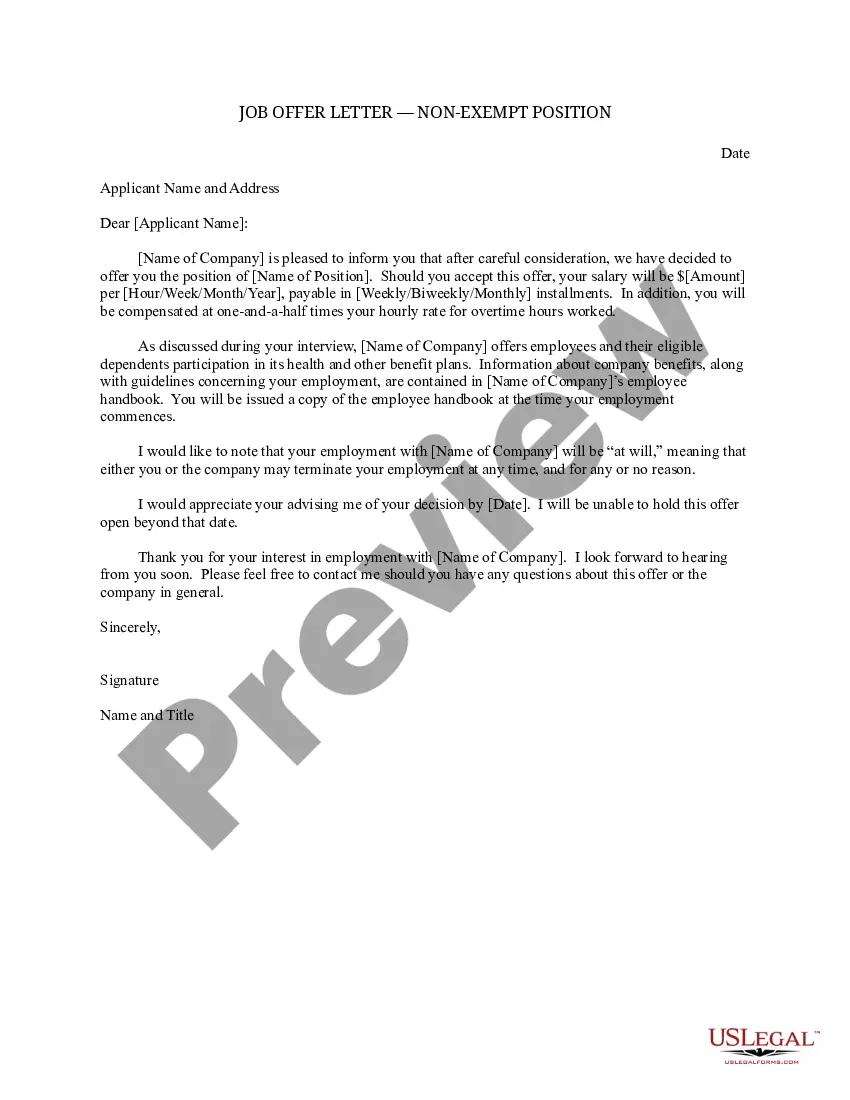
With that, every job offer letter should include the following terms:A job title and description.Important dates.Compensation, benefits, and terms.Company policies and culture.A statement of at-will employment.An employee confidentiality agreement and noncompete clause.A list of contingencies.
The offer letter should provide details on the salary and pay periods. Employee compensation should be stated in an hourly, a weekly or a per-pay-period salary amount to avoid the expectation of receiving the full annual salary if the employee is terminated midyear.
Exempt/Nonexempt Classification. Offer letters to nonexempt employees should state that they must record their hours worked and they will be paid overtime (as pre-approved by their supervisor), and describe available meal and rest periods.
In general, offer letters are less formal than employment contracts, which typically set terms and conditions of employment that are legally binding. It's also vital for employers to understand that they aren't required by federal law to send an offer letter to new hires.