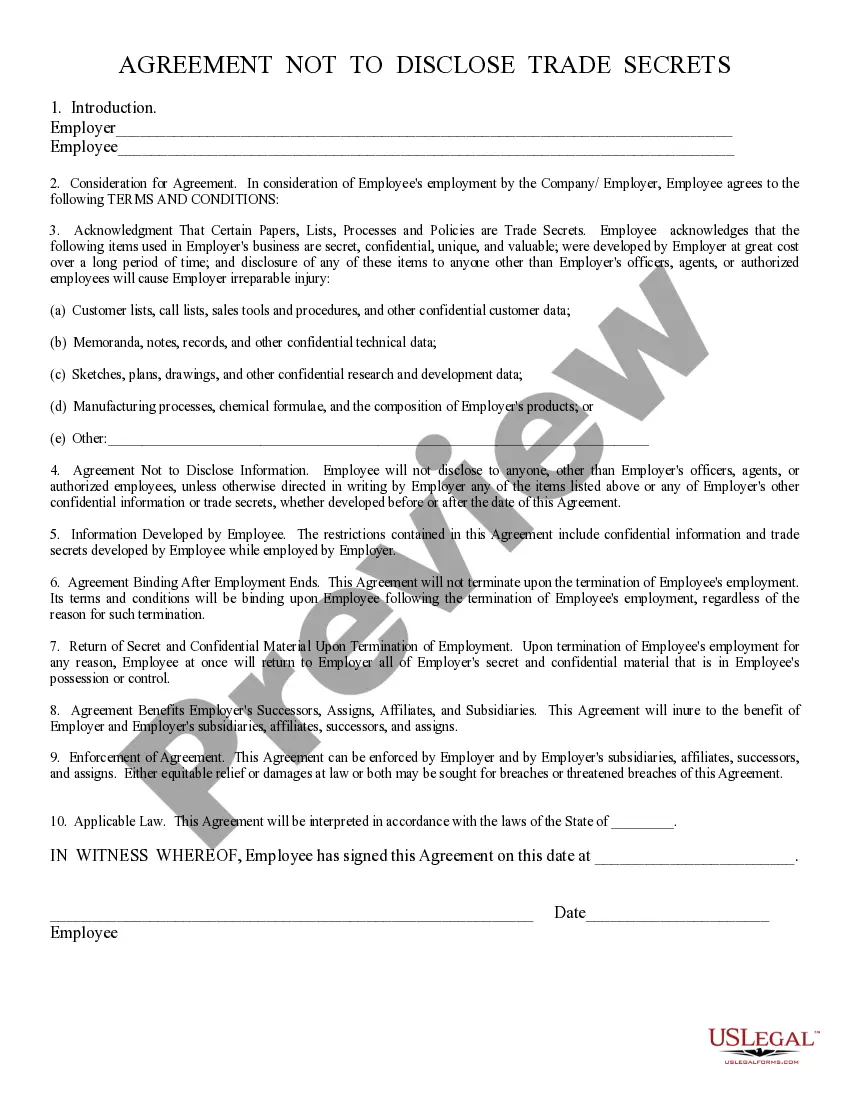
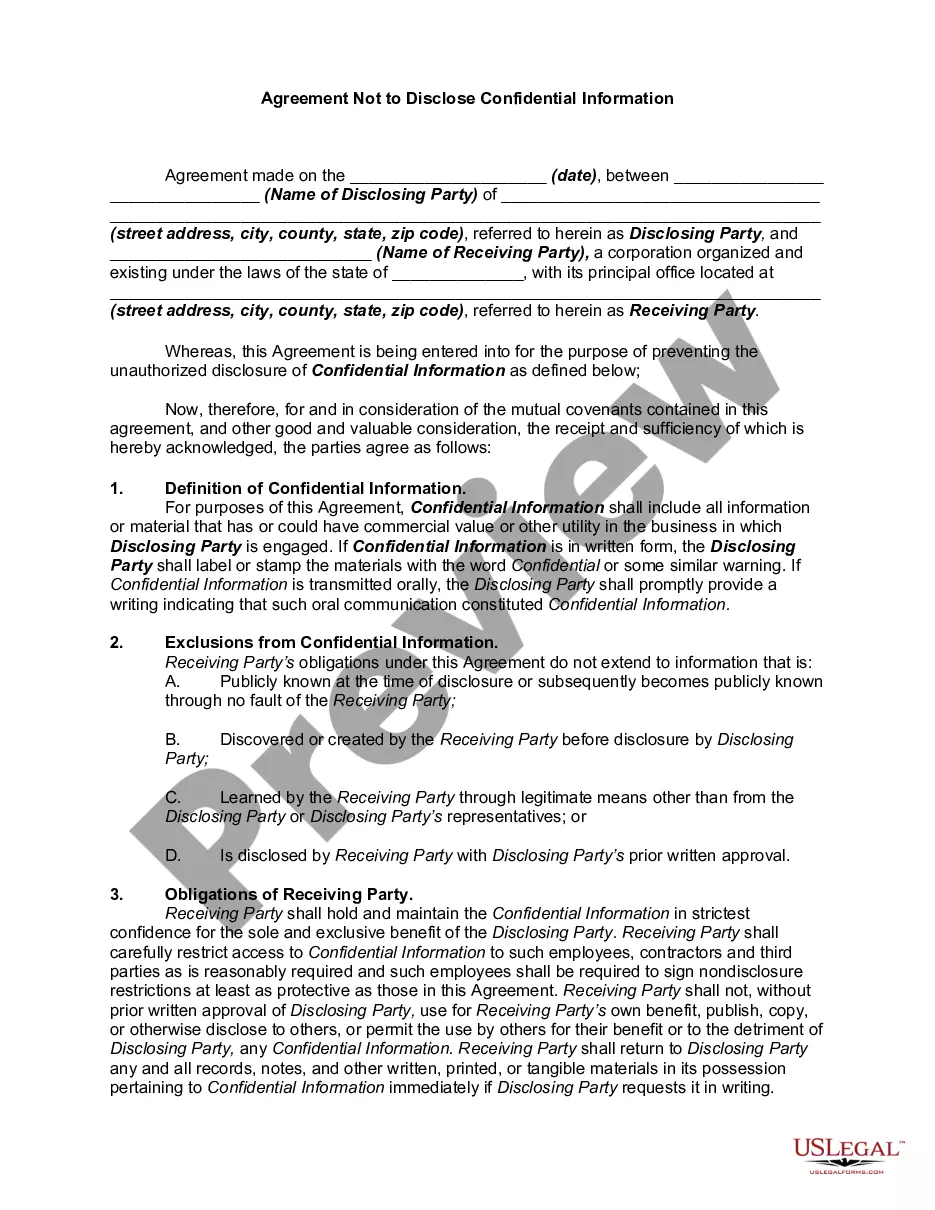
Connecticut Agreement Not to Disclose Trade Secrets
Description
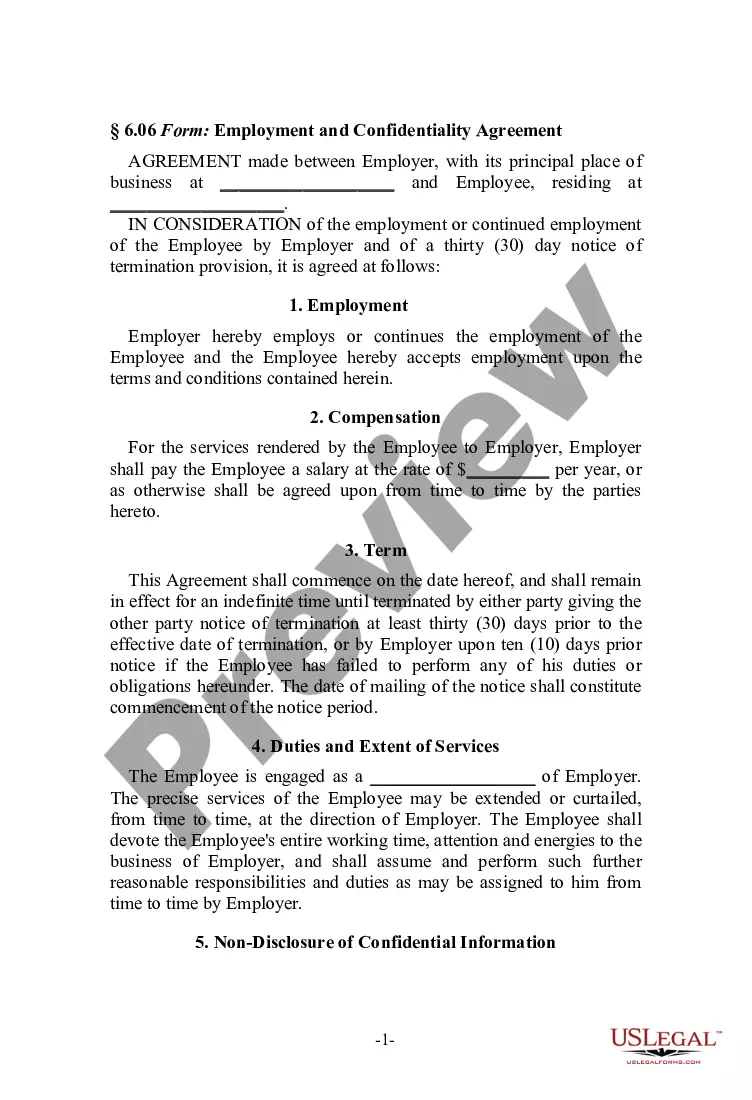
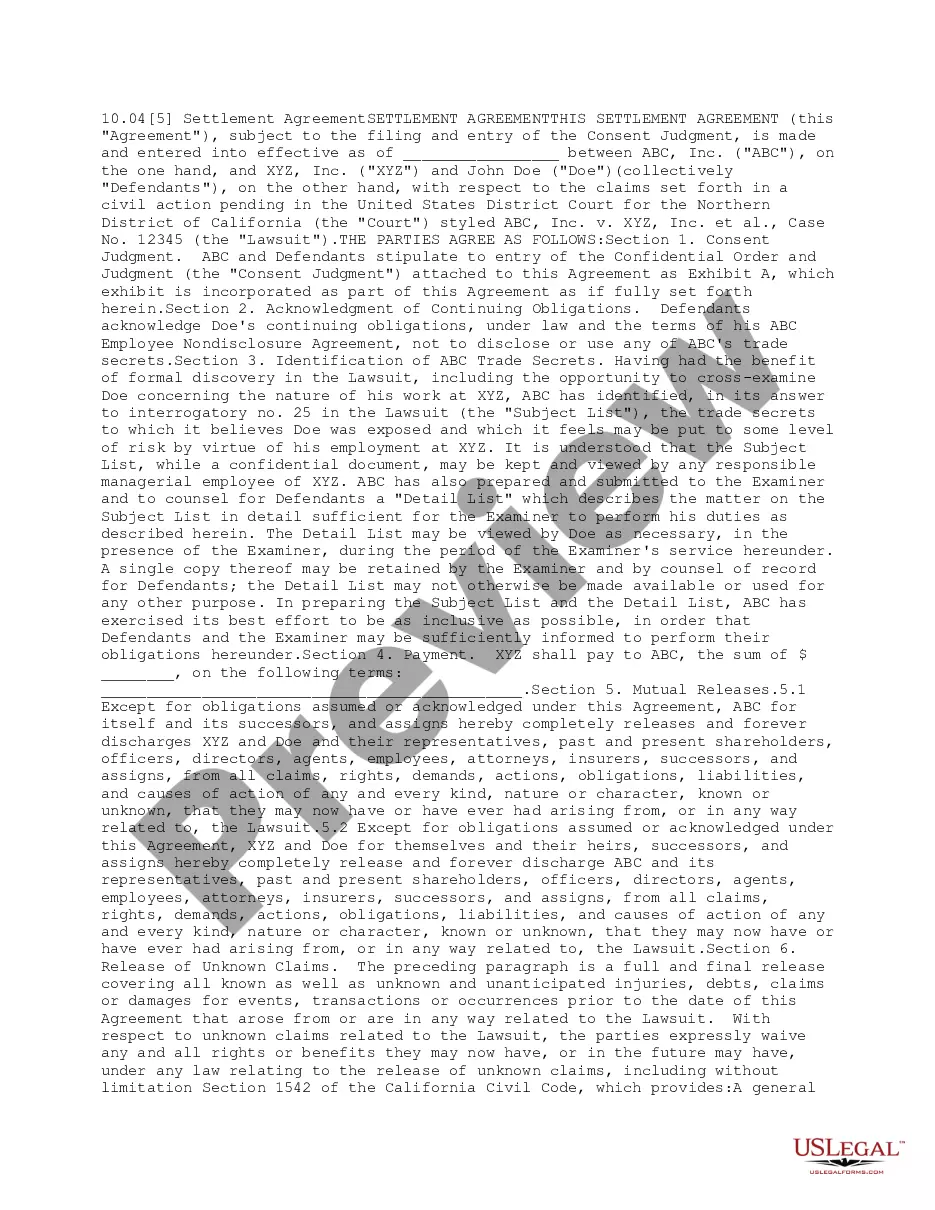
Get your form ready online
Our built-in tools help you complete, sign, share, and store your documents in one place.
Make edits, fill in missing information, and update formatting in US Legal Forms—just like you would in MS Word.
Download a copy, print it, send it by email, or mail it via USPS—whatever works best for your next step.
Sign and collect signatures with our SignNow integration. Send to multiple recipients, set reminders, and more. Go Premium to unlock E-Sign.
If this form requires notarization, complete it online through a secure video call—no need to meet a notary in person or wait for an appointment.
We protect your documents and personal data by following strict security and privacy standards.

Make edits, fill in missing information, and update formatting in US Legal Forms—just like you would in MS Word.

Download a copy, print it, send it by email, or mail it via USPS—whatever works best for your next step.

Sign and collect signatures with our SignNow integration. Send to multiple recipients, set reminders, and more. Go Premium to unlock E-Sign.

If this form requires notarization, complete it online through a secure video call—no need to meet a notary in person or wait for an appointment.

We protect your documents and personal data by following strict security and privacy standards.
Looking for another form?
How to fill out Agreement Not To Disclose Trade Secrets?
Have you found yourself in a scenario where you require documents for either business or personal reasons nearly every day.
There are numerous legal document templates available online, but locating forms you can trust isn’t simple.
US Legal Forms provides a wide array of template forms, such as the Connecticut Agreement Not to Disclose Trade Secrets, which are designed to meet federal and state regulations.
Choose the payment plan you prefer, fill in the necessary details to create your account, and complete the order using your PayPal or credit card.
Select a convenient file format and download your version. You can find all the document templates you have purchased in the My documents section. You can obtain an additional copy of the Connecticut Agreement Not to Disclose Trade Secrets anytime, if necessary. Click on the required form to download or print the document template. Use US Legal Forms, the most extensive library of legal forms, to save time and avoid mistakes. This service offers accurately created legal document templates that can be used for various purposes. Create an account on US Legal Forms and start simplifying your life.
- If you are already familiar with the US Legal Forms website and have an account, simply Log In.
- Then, you can download the Connecticut Agreement Not to Disclose Trade Secrets template.
- If you do not possess an account and wish to utilize US Legal Forms, adhere to these steps.
- Locate the form you need and ensure it is for the correct city/county.
- Utilize the Preview feature to examine the form.
- Review the description to confirm you have selected the right form.
- If the form isn’t what you are looking for, use the Search field to find the form that meets your needs and requirements.
- When you find the appropriate form, click on Purchase now.
Form popularity
FAQ
Trade secret protection lasts for as long as the secret is kept confidential without any statutory limitations period. However, once a trade secret is made available to the public, trade secret protection ends.
This is a relatively simple legal agreement between a company and a counter-party of that company to exchange information, for the purpose of a project, marketing campaign, R&D or sourcing, etc.
Trade secrets may be disclosed during meetings between parties. Ideally, such disclosures are made under a confidential disclosure or nondisclosure agreement, and should always reveal only as much trade secret information as is required under the circumstances.
A trade secret can also be revealed legally, and you have no recourse in this case, even if it was not your intention to reveal it. Illegal disclosure may be made by people who: Used illegal means, such as theft or bribery, to obtain the information.
Since trade secrets are not made public, unlike patents, they do not provide defensive protection, as being prior art.
Contrary to patents, trade secrets are protected without registration, that is, trade secrets require no procedural formalities for their protection. A trade secret can be protected for an unlimited period of time, unless it is discovered or legally acquired by others and disclosed to the public.
To be legally considered a trade secret in the United States, a company must make a reasonable effort in concealing the information from the public; the secret must intrinsically have economic value, and the trade secret must contain information. Trade secrets are a part of a company's intellectual property.
The most common and most effective way to protect trade secrets is through use of nondisclosure agreements (NDAs). Courts have repeatedly reiterated that the use of nondisclosure agreements is the most important way to maintain the secrecy of confidential information.
The trade secret holder cannot be compelled to identify the alleged trade secrets until there is a confidential protective order in place. It is mandatory for a trial court to preserve the secrecy of an alleged trade secret.
Unlike other forms of IP, trade secrets do not need to be legally registered to be legally protected. Instead, you should use internal classification systems to avoid the public disclosure associated with patents and other forms of IP protection.