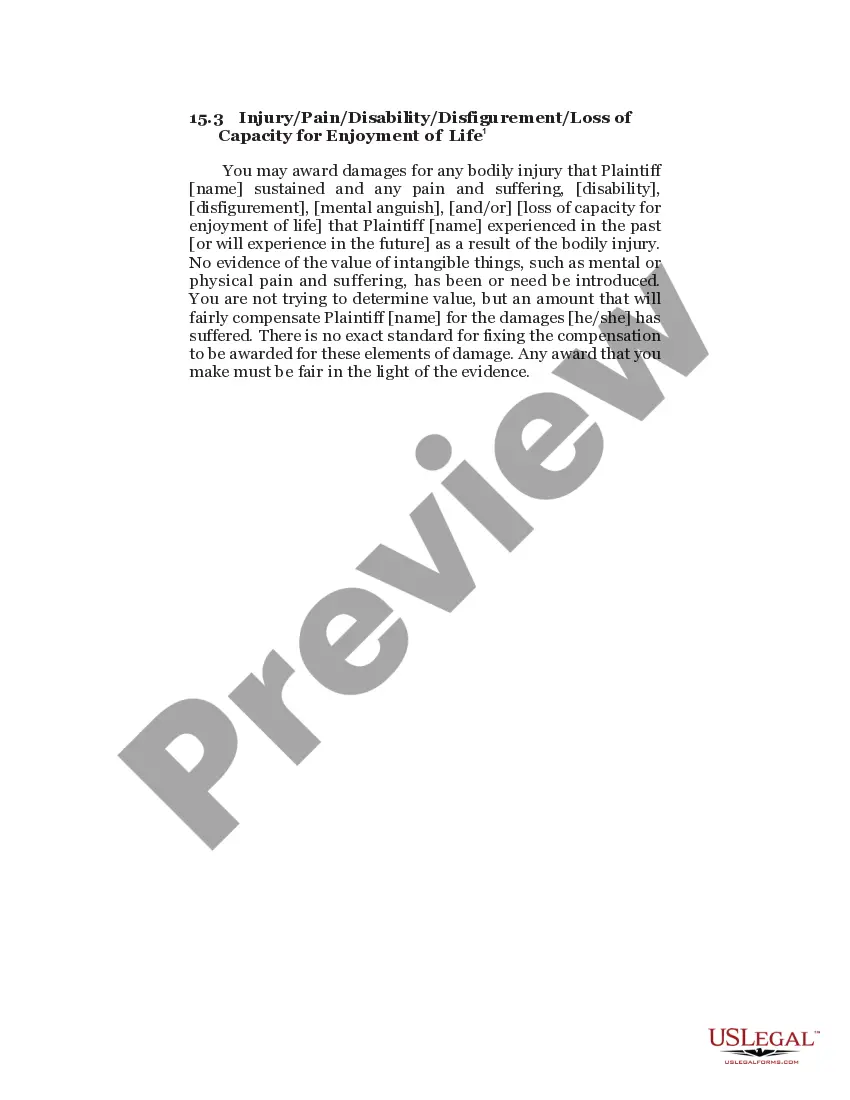
District of Columbia Complaint for Declaratory Judgment and Interpleader Action or Burial Policy
Description
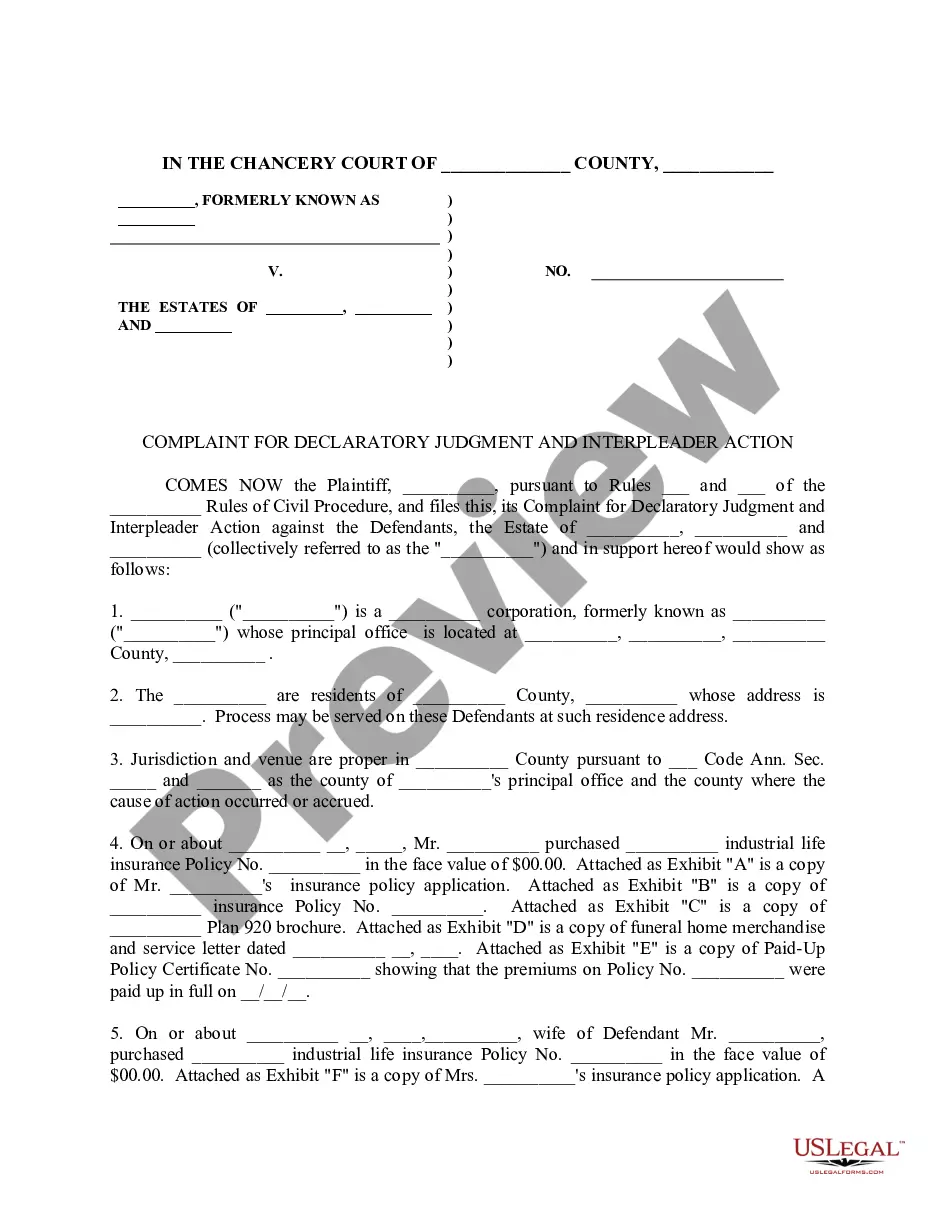
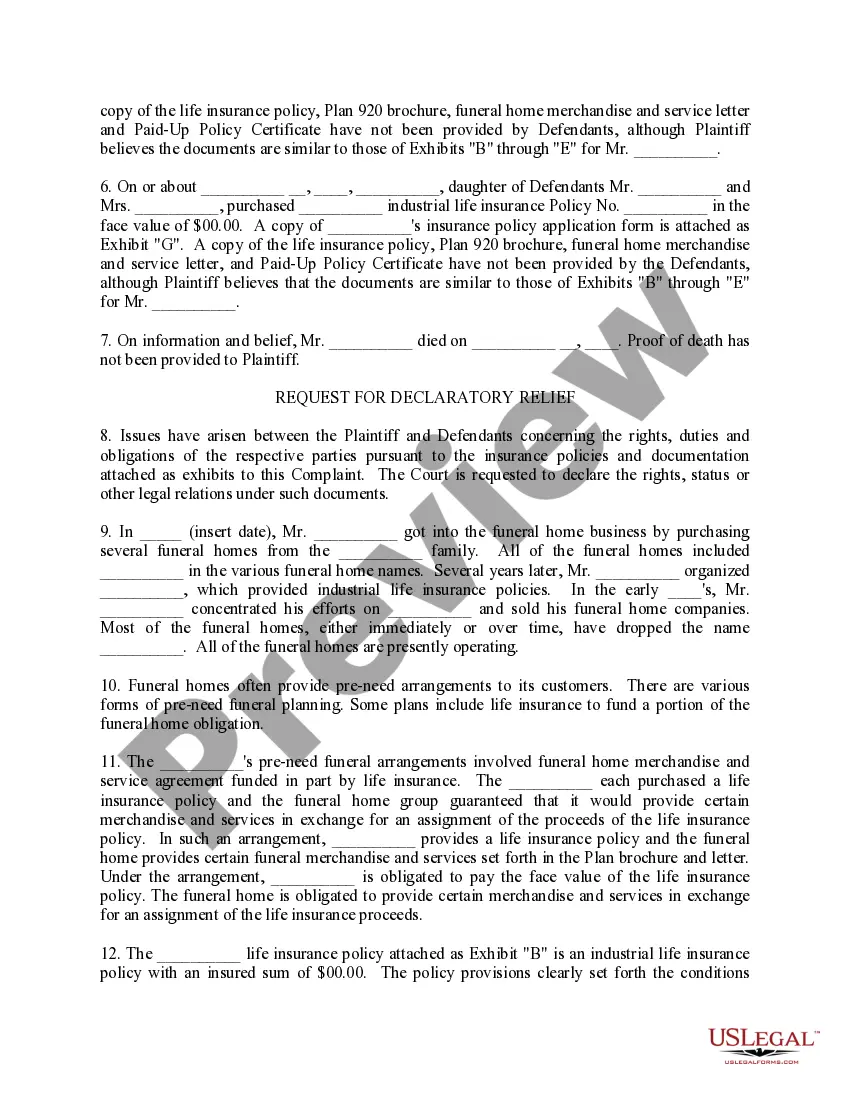
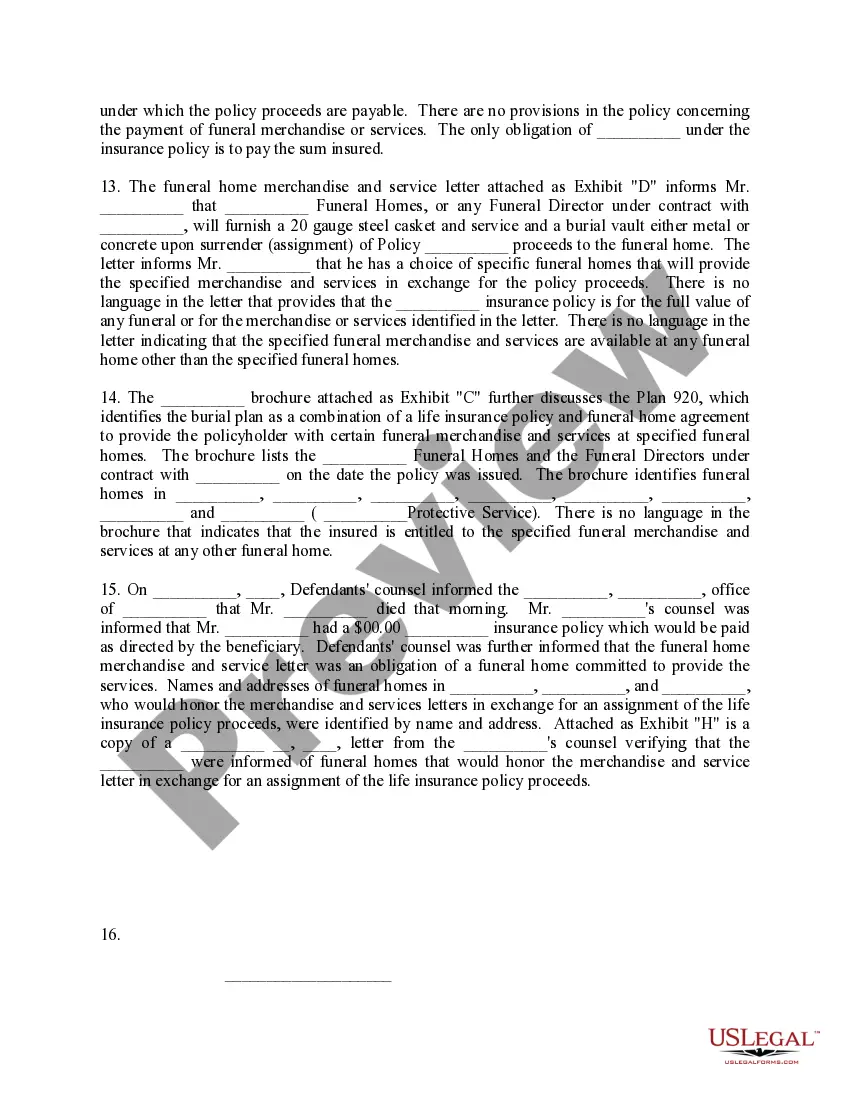
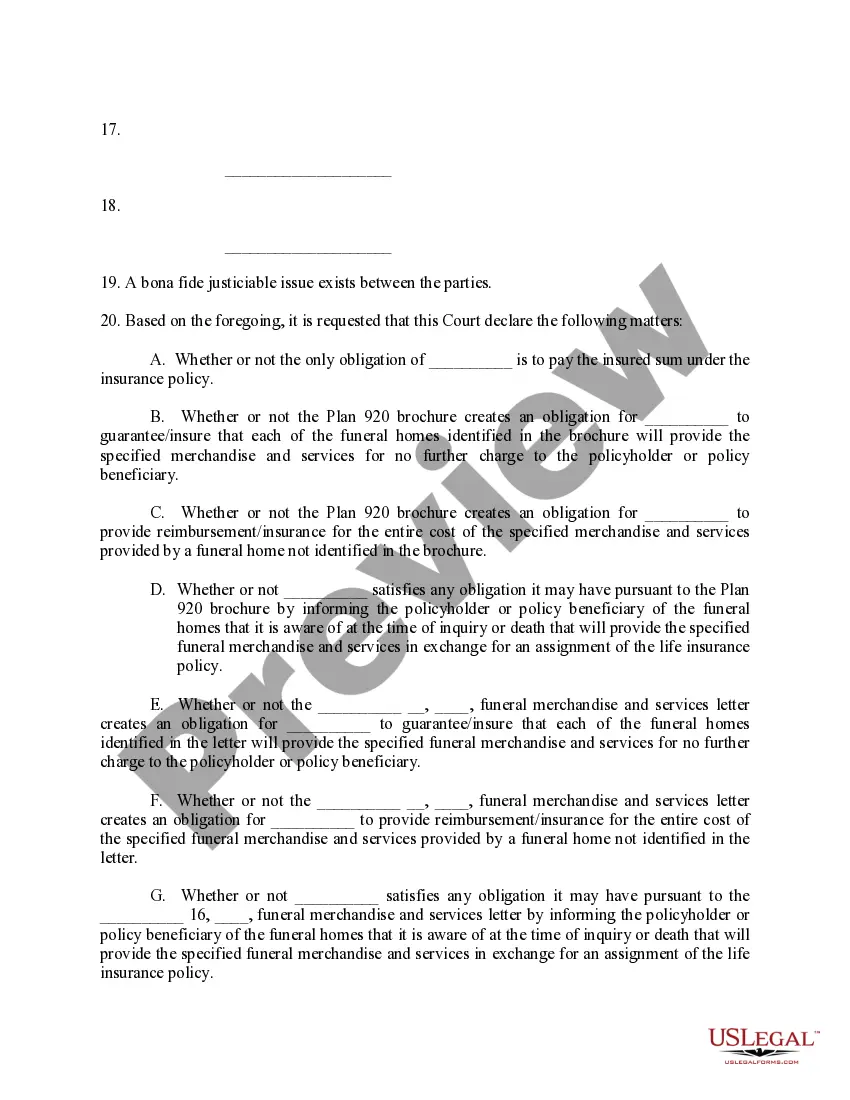
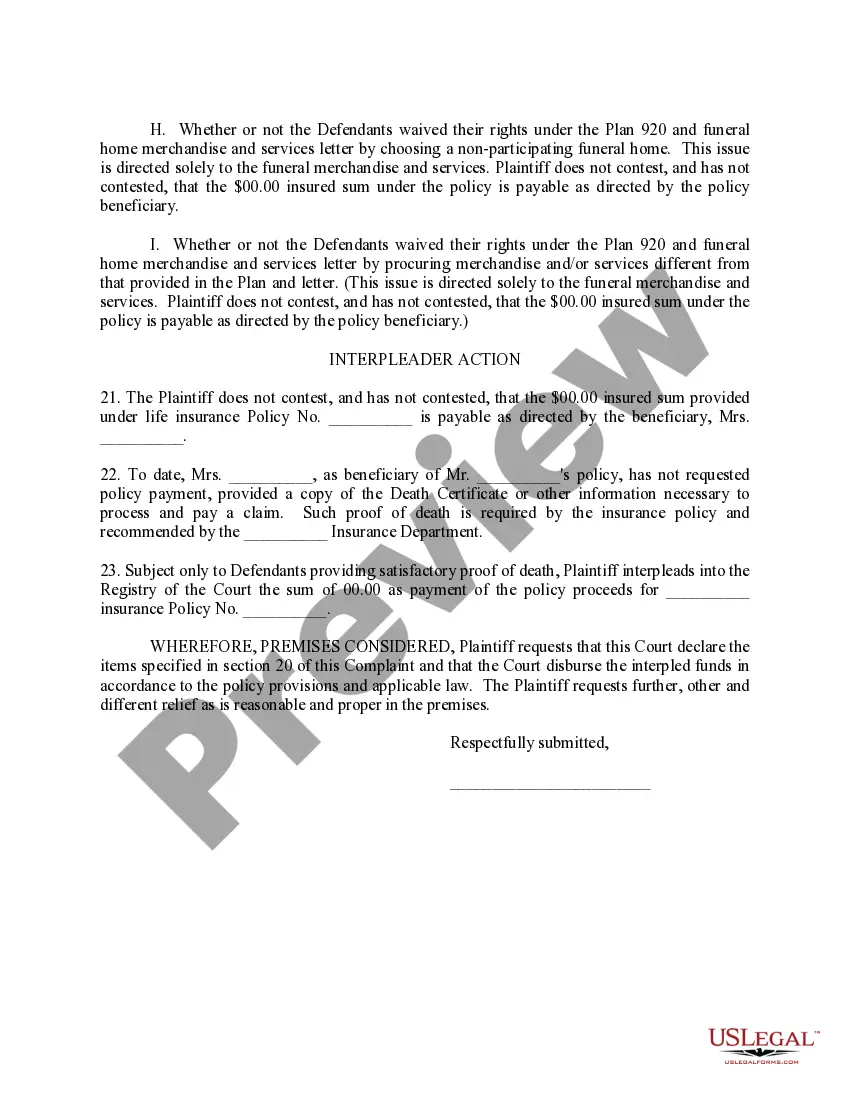
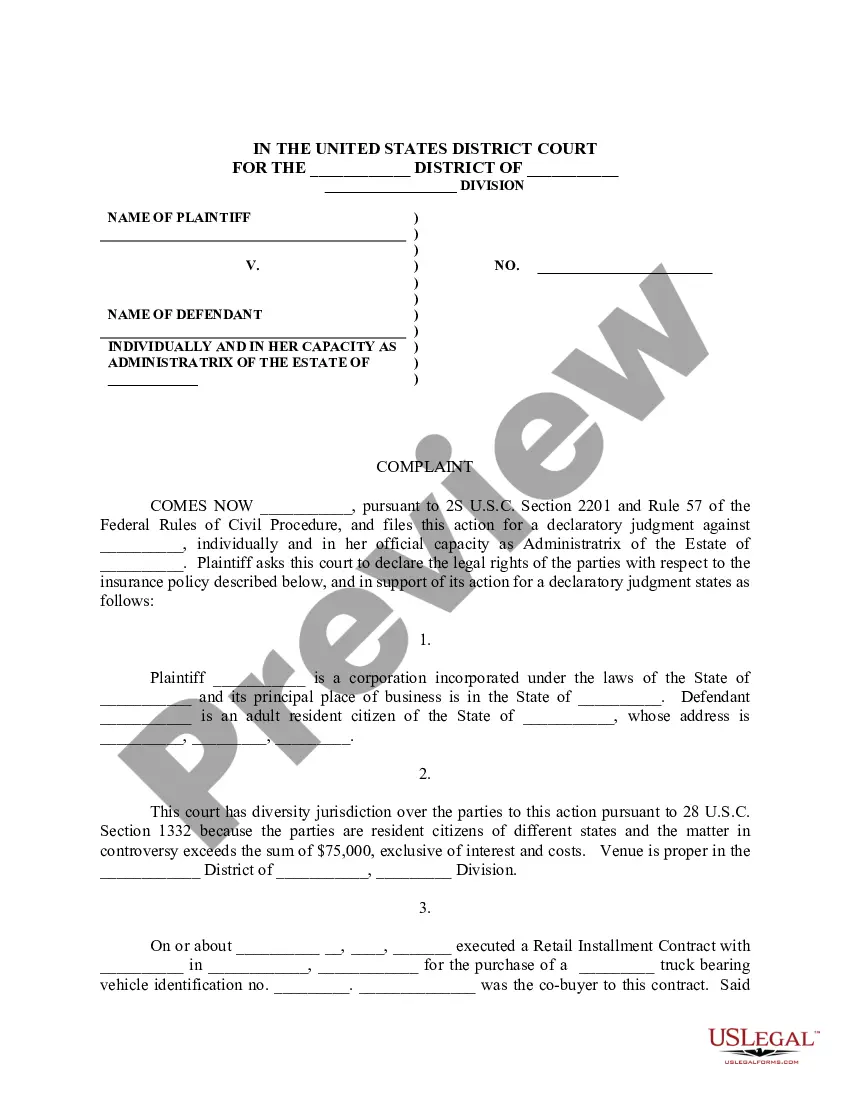


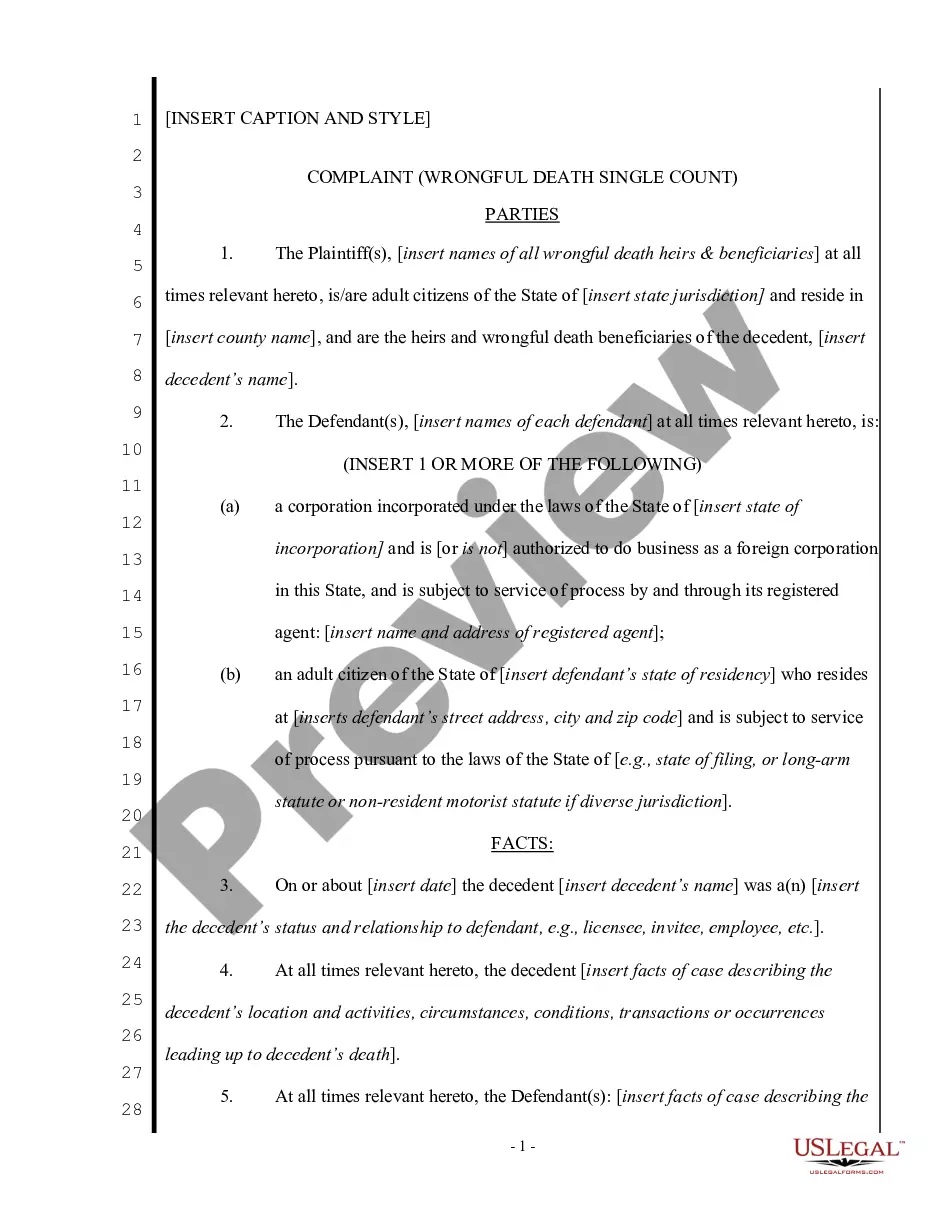




How to fill out Complaint For Declaratory Judgment And Interpleader Action Or Burial Policy?
If you want to finish, download, or print authorized document templates, utilize US Legal Forms, the largest selection of legal forms available online. Use the site's straightforward and convenient search to locate the files you need.
A range of templates for business and personal applications are organized by categories and states, or keywords. Access US Legal Forms to find the District of Columbia Complaint for Declaratory Judgment and Interpleader Action or Burial Policy in just a few clicks.
If you are currently a US Legal Forms user, Log In to your account and click the Acquire button to obtain the District of Columbia Complaint for Declaratory Judgment and Interpleader Action or Burial Policy. You can also retrieve forms you previously downloaded in the My documents section of your account.
Every legal document template you acquire is yours permanently. You will have access to every form you downloaded in your account. Select the My documents section and choose a form to print or download again.
Be proactive and download, and print the District of Columbia Complaint for Declaratory Judgment and Interpleader Action or Burial Policy with US Legal Forms. There are millions of professional and state-specific forms you can utilize for your business or personal requirements.
- Step 1. Ensure you have selected the form for the correct region/state.
- Step 2. Use the Preview option to review the content of the form. Don’t forget to check the description.
- Step 3. If you are not satisfied with the form, use the Search area at the top of the screen to find other versions in the legal form template.
- Step 4. Once you have found the form you desire, select the Acquire now button. Choose the pricing plan you prefer and enter your information to register for an account.
- Step 5. Process the transaction. You can use your Visa or MasterCard or PayPal account to complete the transaction.
- Step 6. Choose the format of the legal form and download it to your device.
- Step 7. Complete, modify, and print or sign the District of Columbia Complaint for Declaratory Judgment and Interpleader Action or Burial Policy.
Form popularity
FAQ
By bringing an interpleader action, a stakeholder can have claimants litigate among themselves, determine which claimants have a rightful claim to the property, and avoid multiple liability. For example, A holds one million dollars. B and C each claim to be the sole owner of the money that A possesses.
Pros and Cons of Interpleader Actions Court rules on ownership: The process relieves the stakeholder of the burden of deciding which claimant should receive the money or property. Since the law allows the plaintiff to file a claim for attorney and court fees, the stakeholder can also recoup costs caused by the dispute.
Interpleader Action Under 28 U.S.C. § 1335 In order for this court to have jurisdiction over this action, at least two defendants must be citizens of different States as defined in 28 U.S.C. § 1332(a) or (c), and the value of the property in controversy must be at least $500.
For example, a declaratory judgment action could be brought to determine party rights and obligations under a contract or to establish the validity of a patent. Under Article III of the U.S. Constitution, a federal court may only issue a declaratory judgment when there is an actual controversy.
By bringing an interpleader action, a stakeholder can have claimants litigate among themselves, determine which claimants have a rightful claim to the property, and avoid multiple liability. For example, A holds one million dollars. B and C each claim to be the sole owner of the money that A possesses.
Verb (used without object),in·ter·plead·ed, in·ter·plead·ing. Law. to litigate with each other in order to determine which of two parties is the rightful claimant against a third party. to bring two or more claimants before a court to determine which of them is entitled to a claim that a third party recognizes.
An original bill, like a complaint, filed by a party against two or more people who claim a right to the party's same debt or duty. The filing party asks the court to compel the claimants to litigate and establish their rights to this debt or the duty.
In an interpleader action, a party who knows two or more other parties are making a claim on some asset controlled by the party can ask the court to decide who has what rights to the asset, deposit the asset into the custody of the court or a third party and remove itself from the litigation.