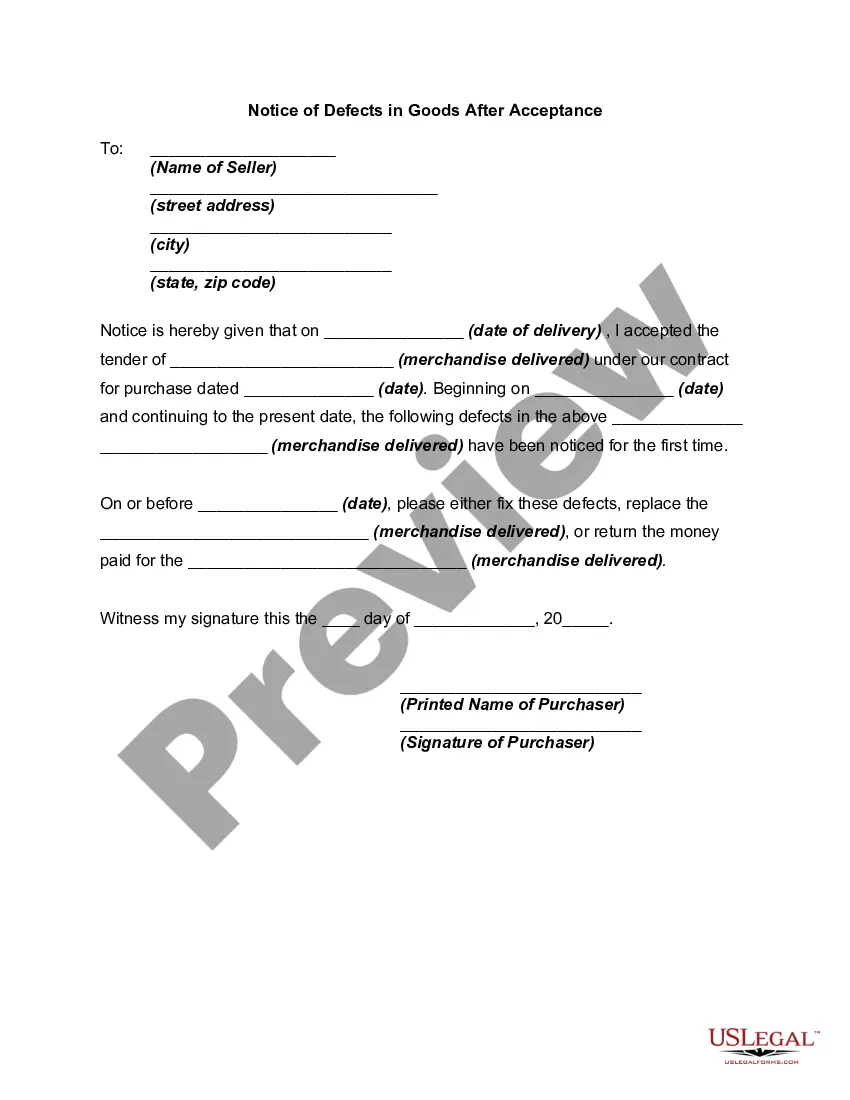
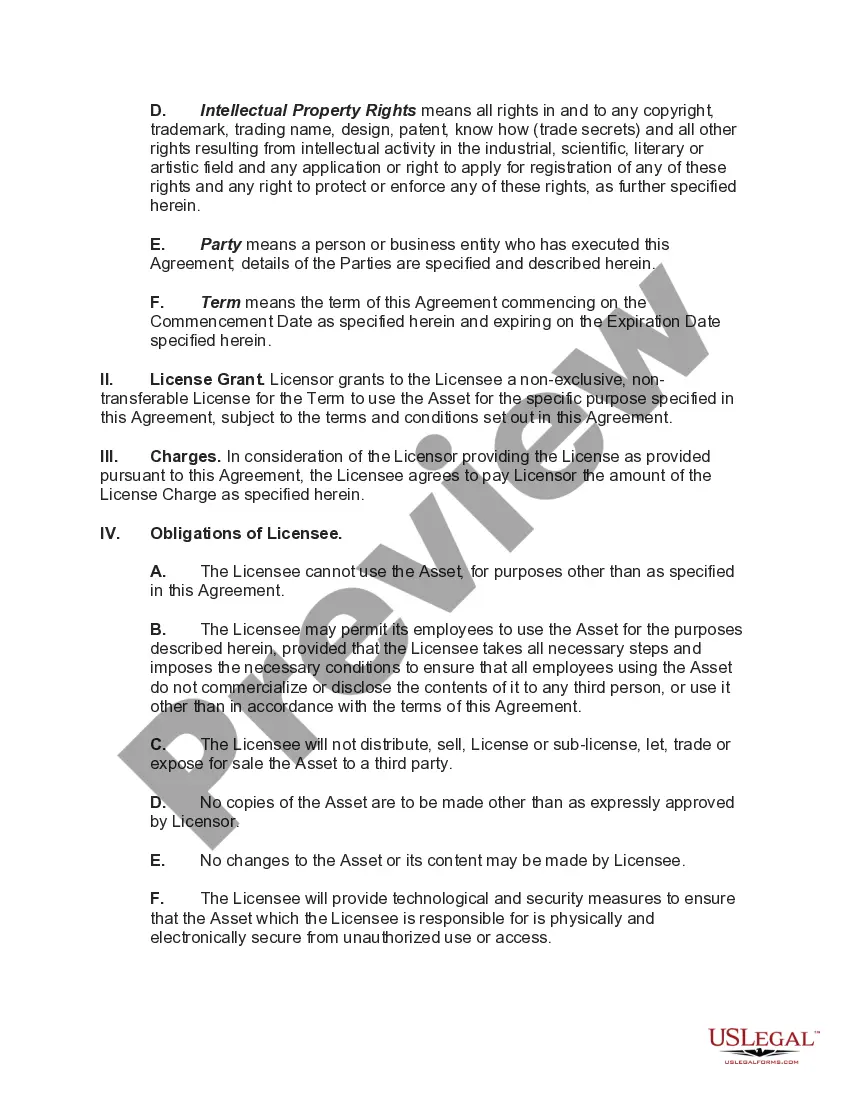
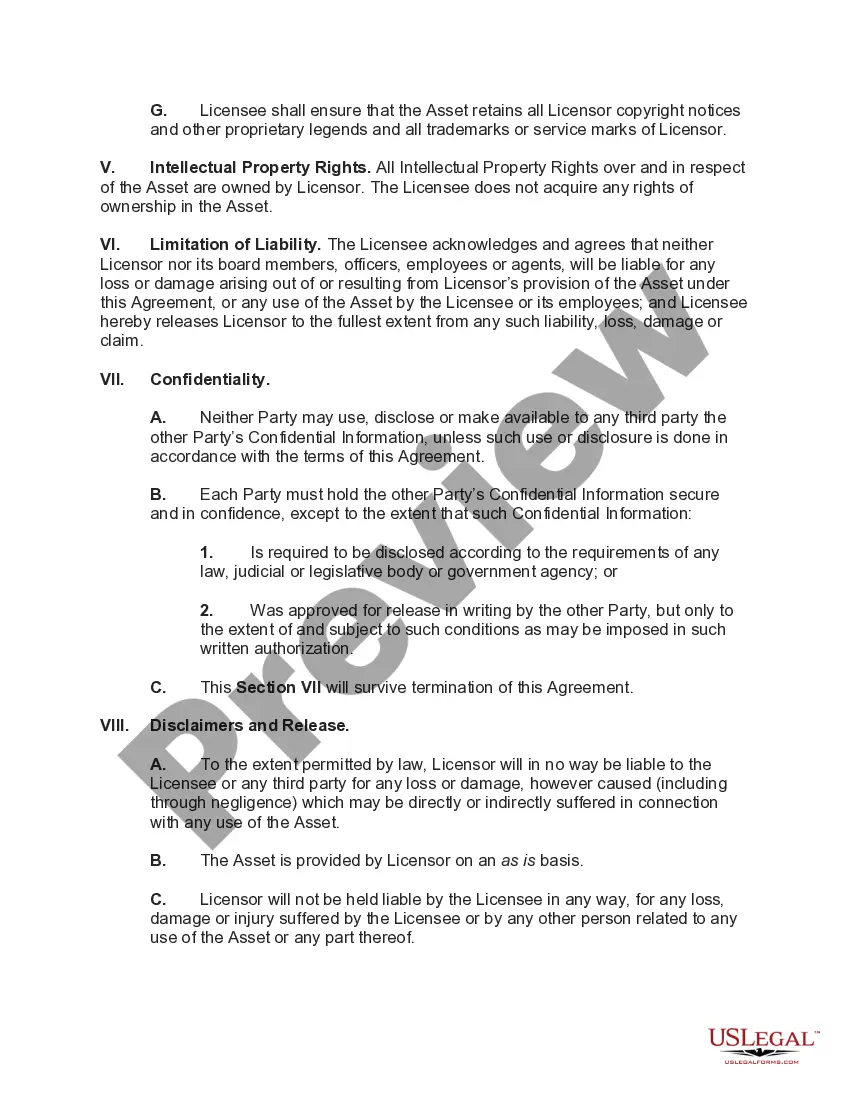
District of Columbia Non-exclusive and Non-transferable License Agreement for a Product
Description
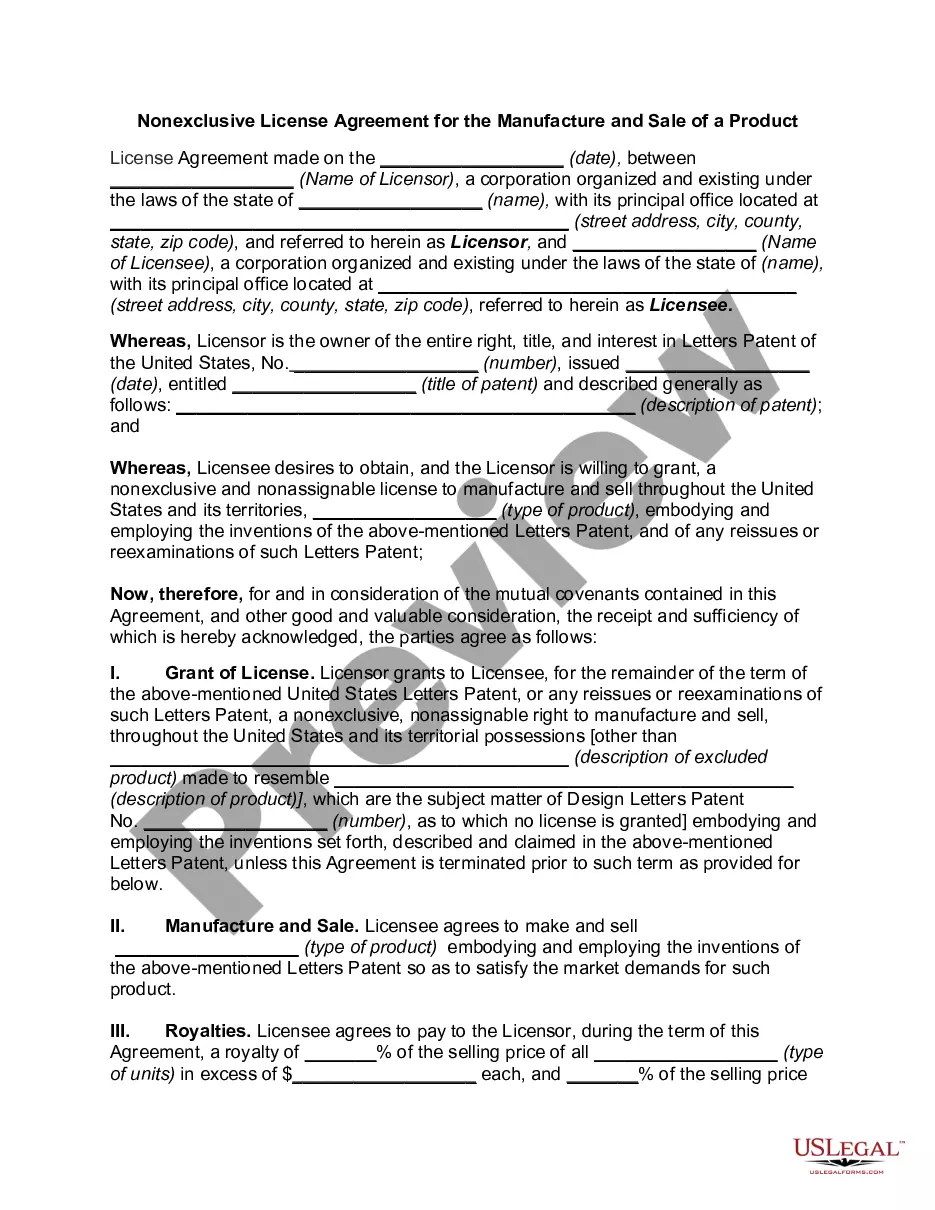
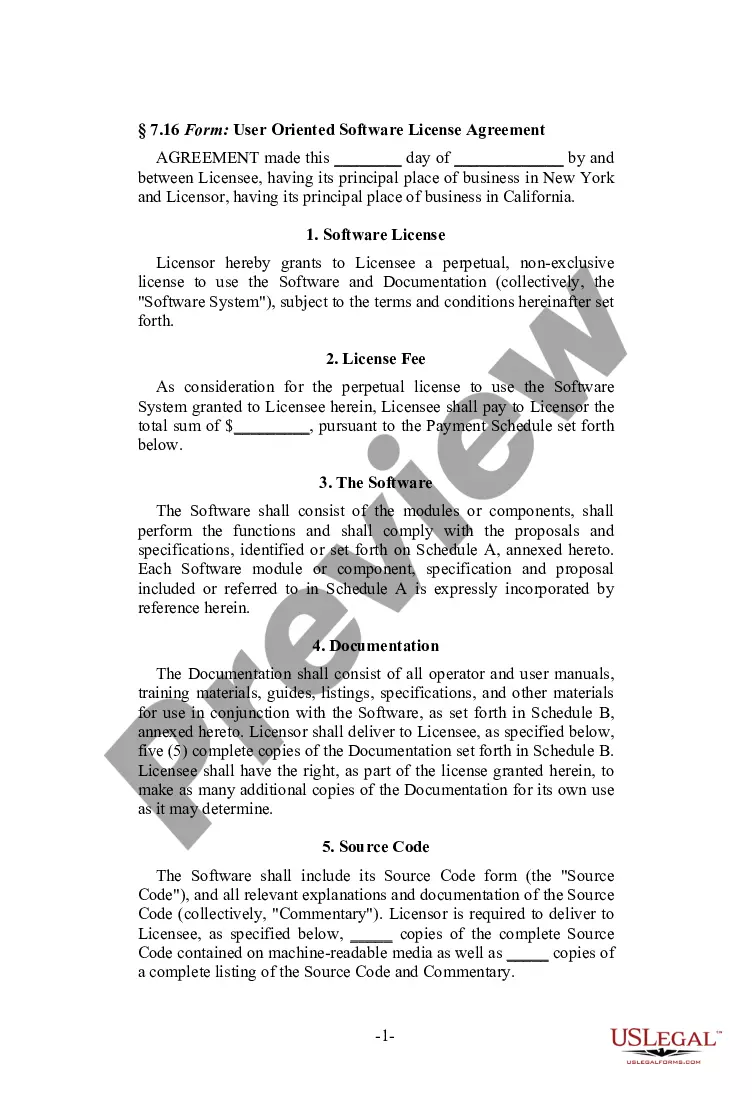
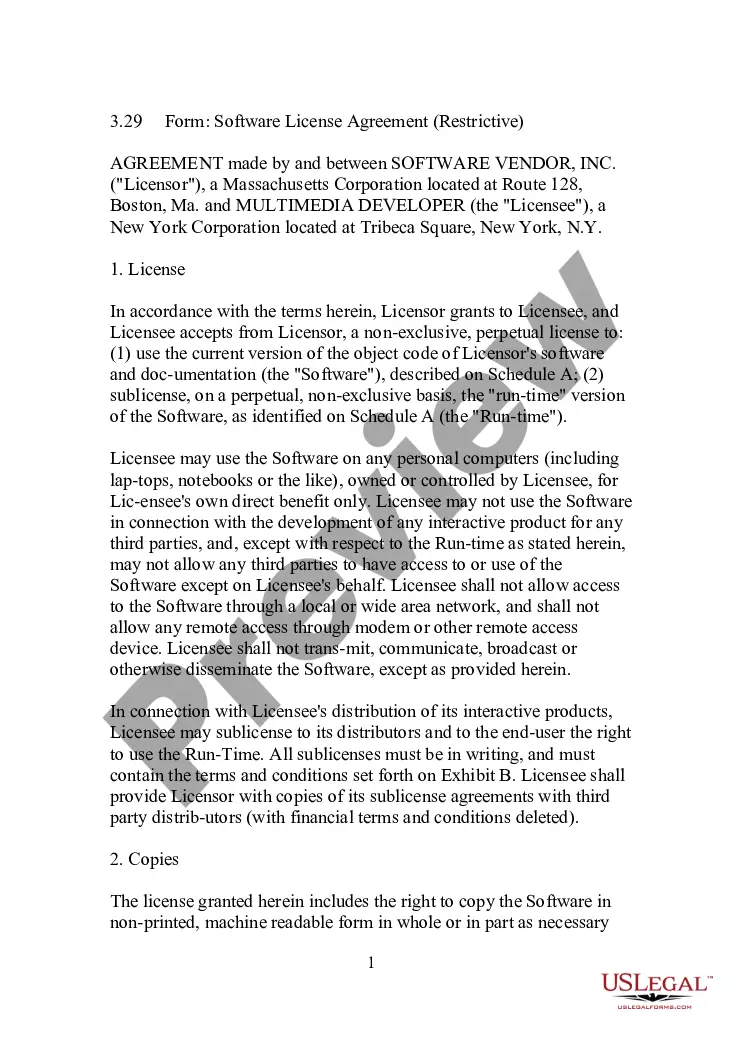
Get your form ready online
Our built-in tools help you complete, sign, share, and store your documents in one place.
Make edits, fill in missing information, and update formatting in US Legal Forms—just like you would in MS Word.
Download a copy, print it, send it by email, or mail it via USPS—whatever works best for your next step.
Sign and collect signatures with our SignNow integration. Send to multiple recipients, set reminders, and more. Go Premium to unlock E-Sign.
If this form requires notarization, complete it online through a secure video call—no need to meet a notary in person or wait for an appointment.
We protect your documents and personal data by following strict security and privacy standards.

Make edits, fill in missing information, and update formatting in US Legal Forms—just like you would in MS Word.

Download a copy, print it, send it by email, or mail it via USPS—whatever works best for your next step.

Sign and collect signatures with our SignNow integration. Send to multiple recipients, set reminders, and more. Go Premium to unlock E-Sign.

If this form requires notarization, complete it online through a secure video call—no need to meet a notary in person or wait for an appointment.

We protect your documents and personal data by following strict security and privacy standards.
Looking for another form?
How to fill out Non-exclusive And Non-transferable License Agreement For A Product?
Finding the appropriate legal document template can be a challenge.
There are obviously numerous templates available online, but how can you obtain the legal form you need.
Utilize the US Legal Forms website.
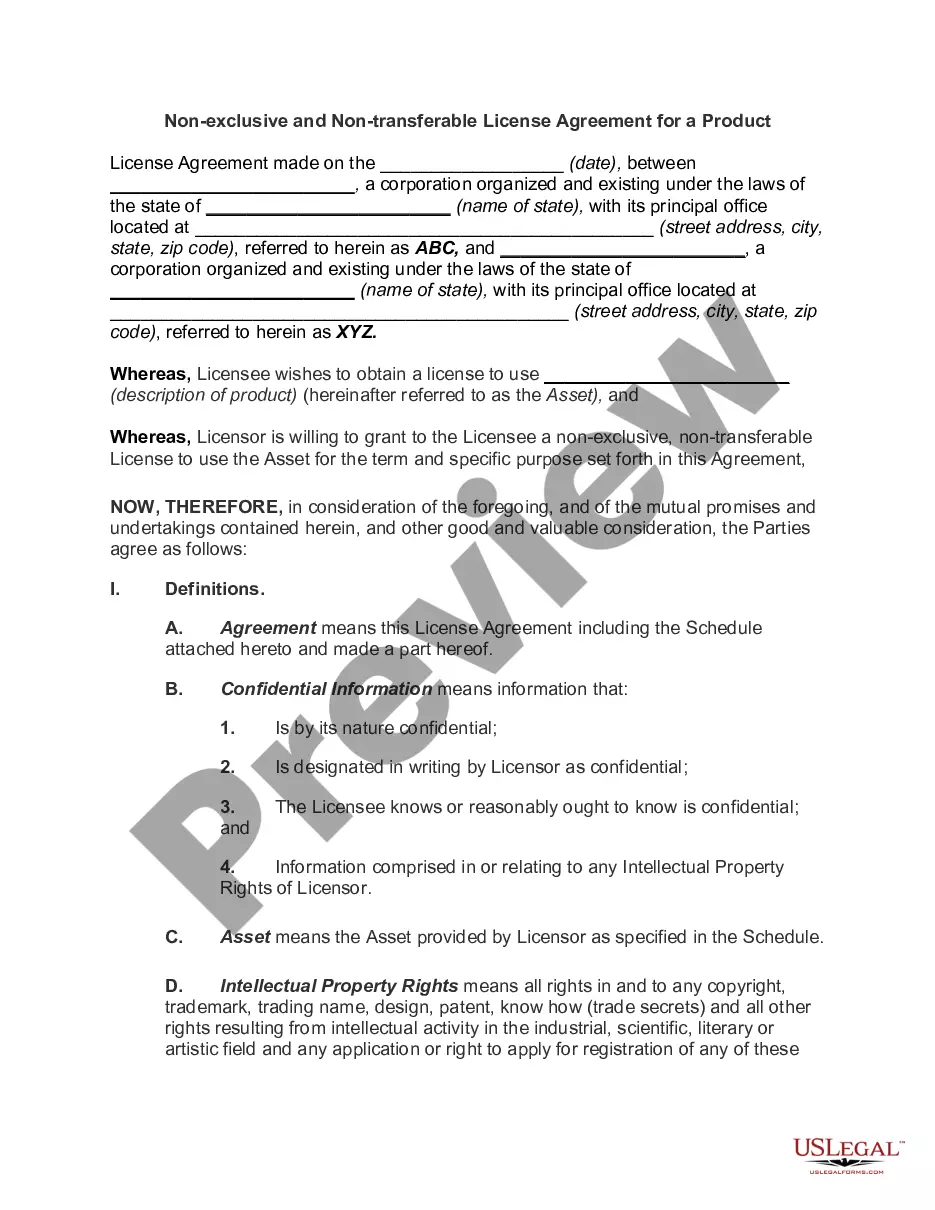
If you are already registered, Log In to your account and click the Download button to access the District of Columbia Non-exclusive and Non-transferable License Agreement for a Product. Use your account to browse the legal forms you have previously ordered. Navigate to the My documents tab of your account and obtain another copy of the document you need. If you are a new user of US Legal Forms, here are simple steps for you to follow: First, ensure you have selected the appropriate form for your city/state. You can review the form using the Preview button and read the form description to confirm it is the correct one for you. If the form does not meet your requirements, use the Search field to find the right form. Once you are sure that the form is suitable, click the Purchase now button to acquire the form. Choose the pricing plan you desire and enter the necessary information. Create your account and complete the purchase using your PayPal account or a Visa or Mastercard. Select the file format and download the legal document template to your device. Complete, edit, and print and sign the finalized District of Columbia Non-exclusive and Non-transferable License Agreement for a Product. US Legal Forms is the largest collection of legal forms where you can find various document templates. Use this service to download professionally created documents that comply with state requirements.
- This service offers thousands of templates, including the District of Columbia Non-exclusive and Non-transferable License Agreement for a Product, which can be utilized for both business and personal purposes.
- All forms are reviewed by professionals and comply with federal and state requirements.
Form popularity
FAQ
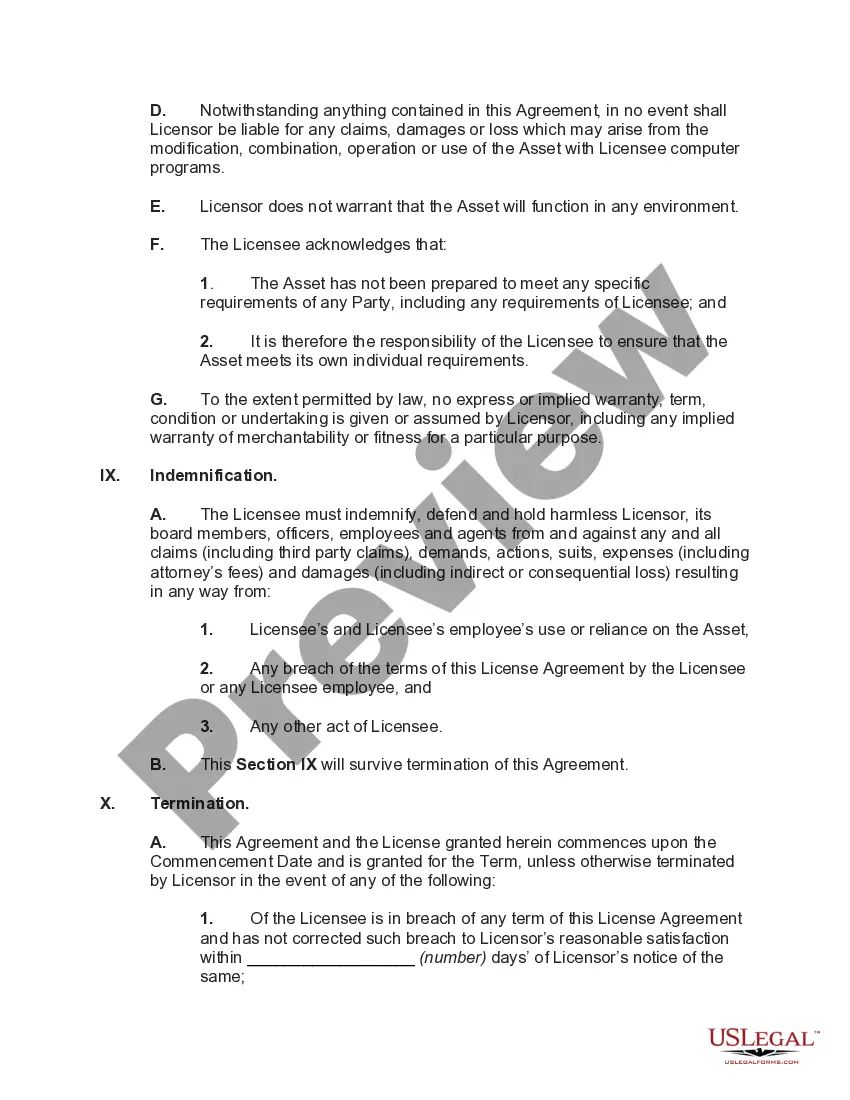
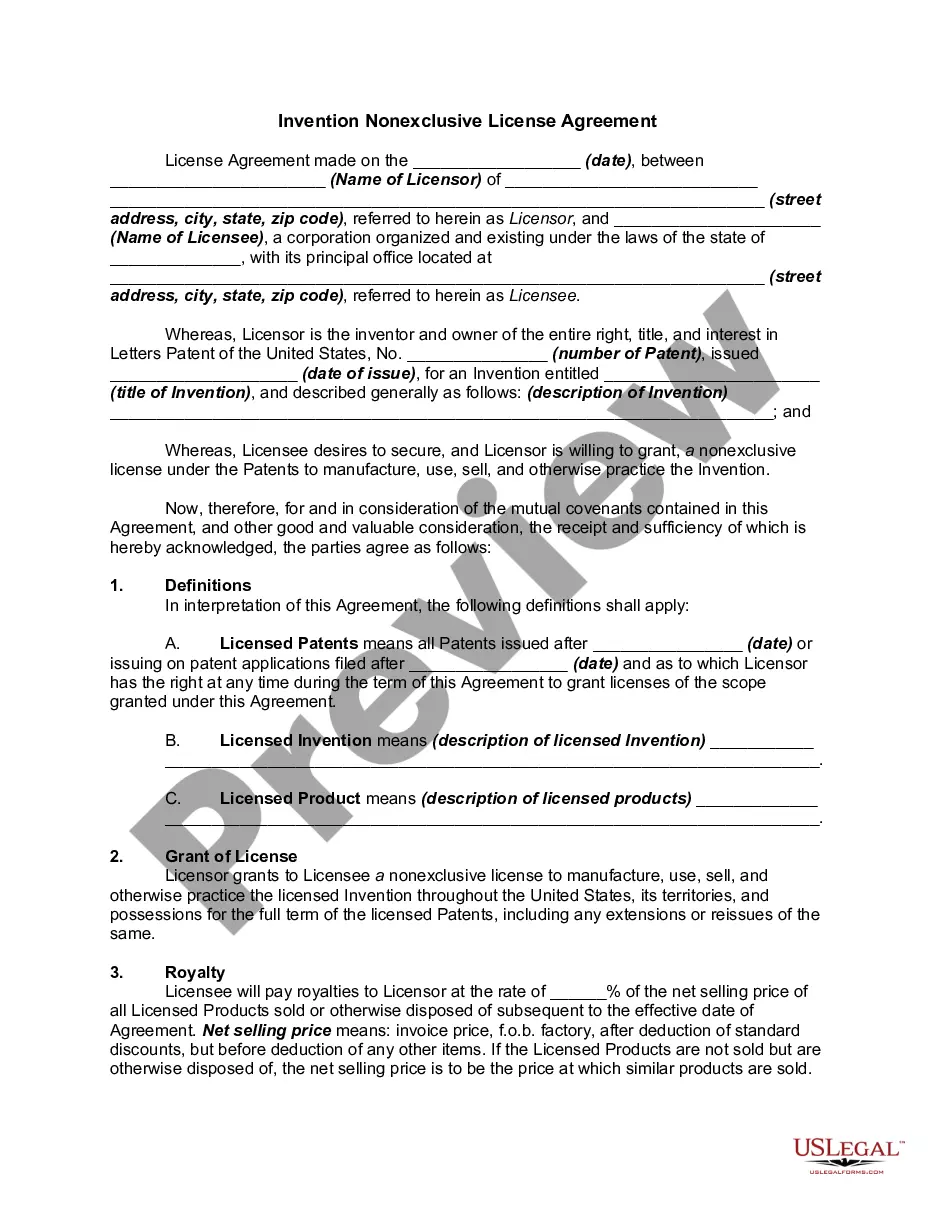
The term non-exclusive non-transferable refers to a type of license that allows the licensee to use a product but prevents them from granting those rights to others. In the context of the District of Columbia Non-exclusive and Non-transferable License Agreement for a Product, this means that only the original licensee can utilize the product under the terms set forth. Such licenses help maintain control and ownership for the licensor.
An exclusive license agreement grants only one party the right to use, sell, or distribute a certain product or service. This type of contract can secure a competitive advantage in the market. In contrast, the District of Columbia Non-exclusive and Non-transferable License Agreement for a Product allows multiple users, which can encourage broader access and use.
LAW. not limited to only one person or organization, or to one group of people or organizations: a non-exclusive agreement/deal/licence They have entered into a non-exclusive distribution agreement. The licence grants them the non-exclusive right to use the technology in their products.
exclusive license grants the licensee the right to use the intellectual property, but the government remains free to grant any number of other licensees the same rights to make, use, or sell the technology.
A copyright exclusive license is one in which ownership in one or more rights is transferred by the copyright owner. A copyright nonexclusive license occurs when the owner retains ownership of the copyright and/or may license the same right to others.
The difference between exclusive and non-exclusive agreement refers to how vendors and partners work with each other. Exclusive agreements exclude competitors for a set period of time, while non-exclusive agreements allow for competitors, often as motivating tools.
Exclusive license allows a licensor to share intellectual property with a licensee for a specific period of time that usually binds the licensor to not share the property with anyone else.
Exclusive agreements limit a party's ability to work with another, meaning that the exclusive party offers services or products not provided elsewhere. Non-exclusive indicates that the non-exclusive party can work with anyone, including employees, competing products, and customers.
Exclusive agreements limit a party's ability to work with another, meaning that the exclusive party offers services or products not provided elsewhere. Non-exclusive indicates that the non-exclusive party can work with anyone, including employees, competing products, and customers.
In an exclusive license, only the licensee has the right to make use of the intellectual property. By contrast, in a sole license, the licensor agrees not to grant any additional licenses but retains the right to make use of the intellectual property.