District of Columbia Transfer on Death Deed or TOD - Beneficiary Deed for Husband and Wife to Two Individuals
What this document covers
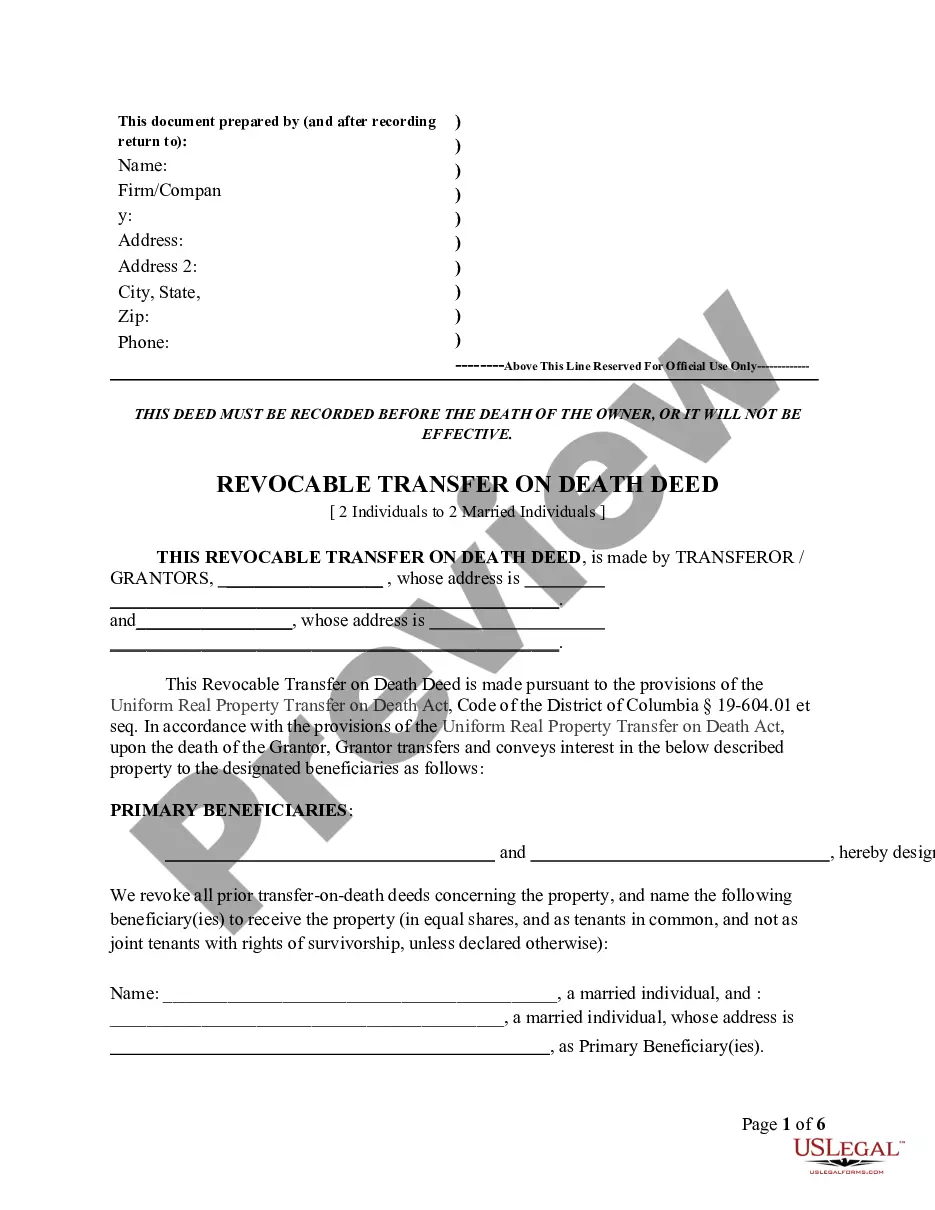
The Transfer on Death Deed, commonly referred to as a TOD or beneficiary deed, allows a husband and wife to transfer ownership of a property to designated individuals upon their death. This deed does not transfer any present ownership interest in the property and can be revoked at any time during the owners' lifetime. It serves as a straightforward way to ensure that property bypasses probate, making the transfer more efficient and less costly for the beneficiaries.
What’s included in this form
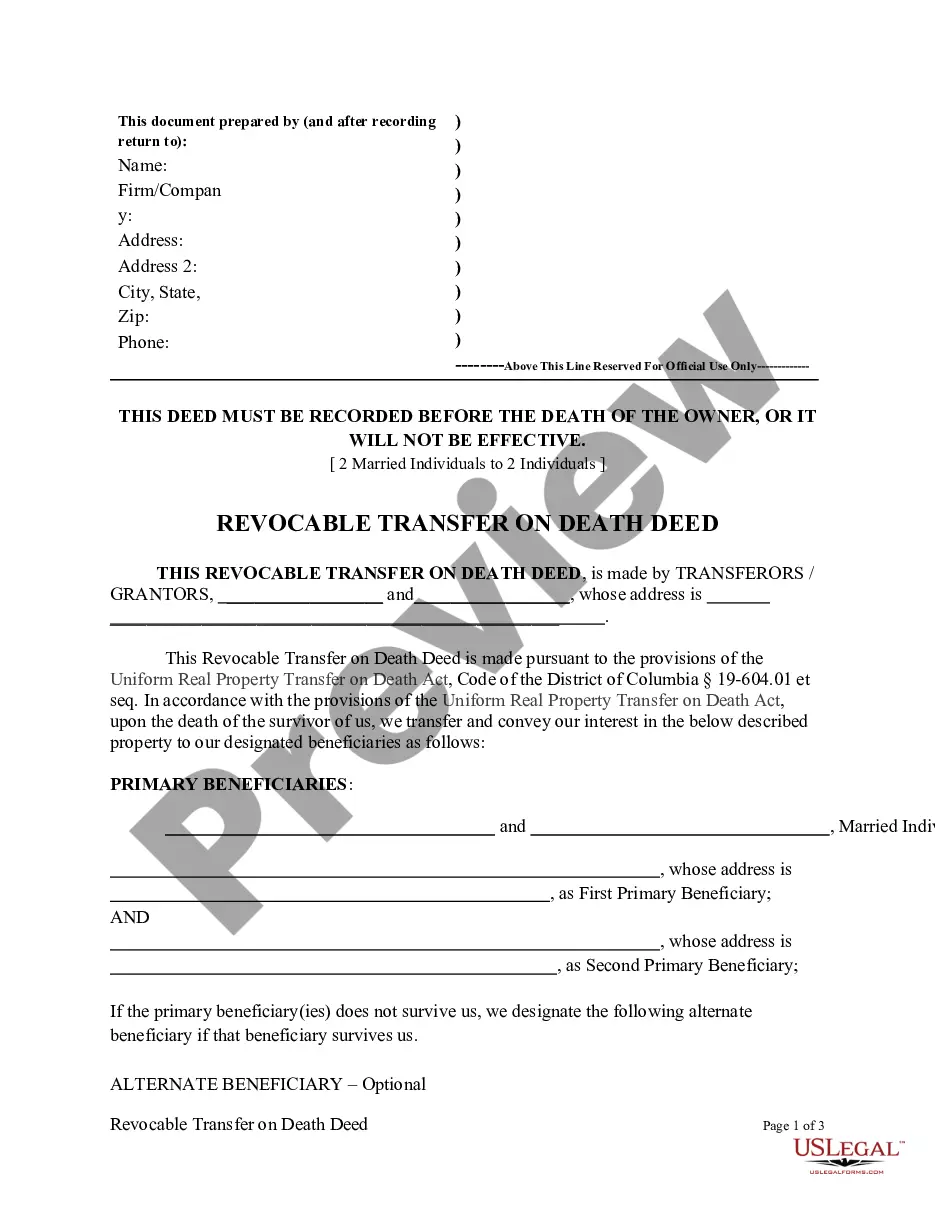
- Grantors' names and address
- Primary and optional alternate beneficiaries' names and addresses
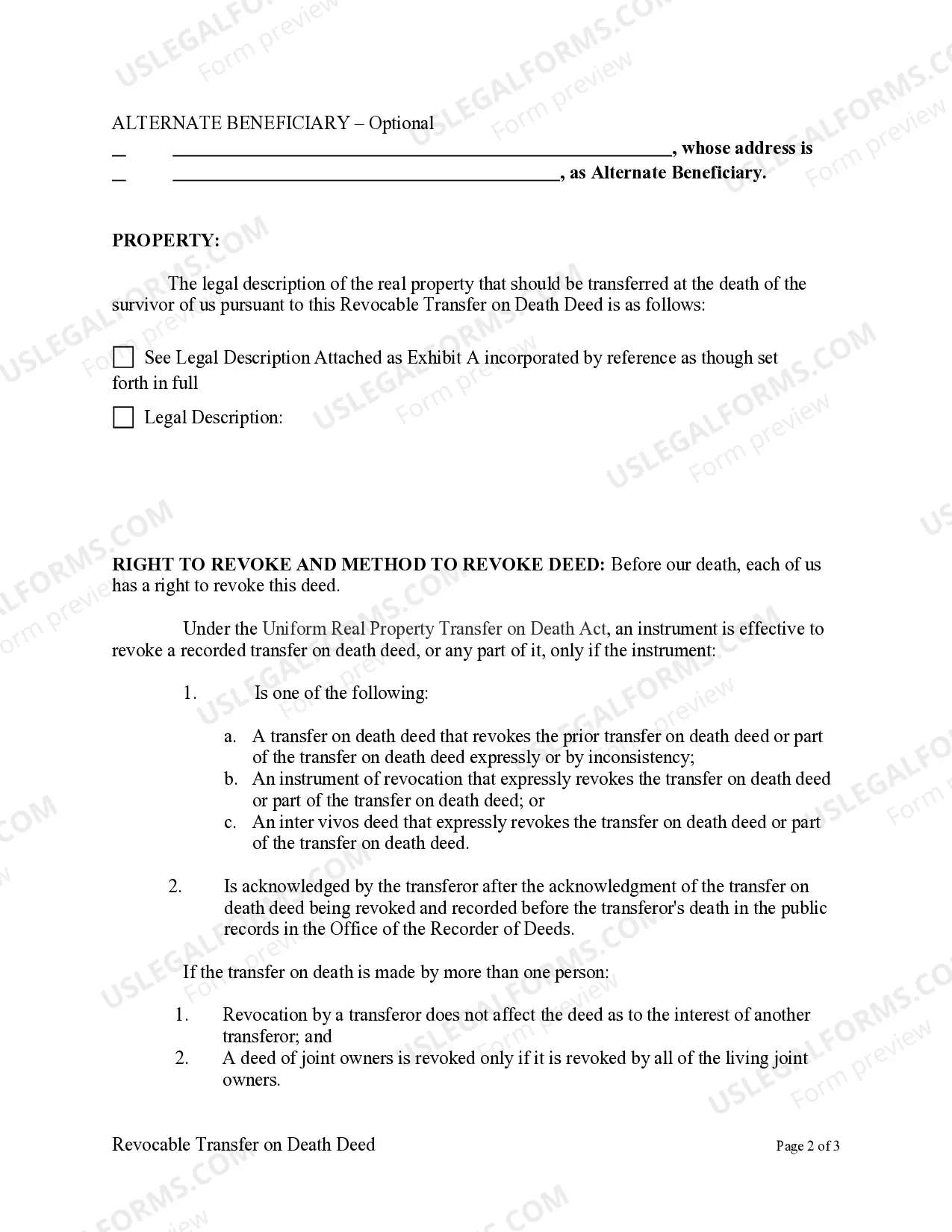
- Legal description of the property to be transferred
- Right to revoke and instructions for revocation
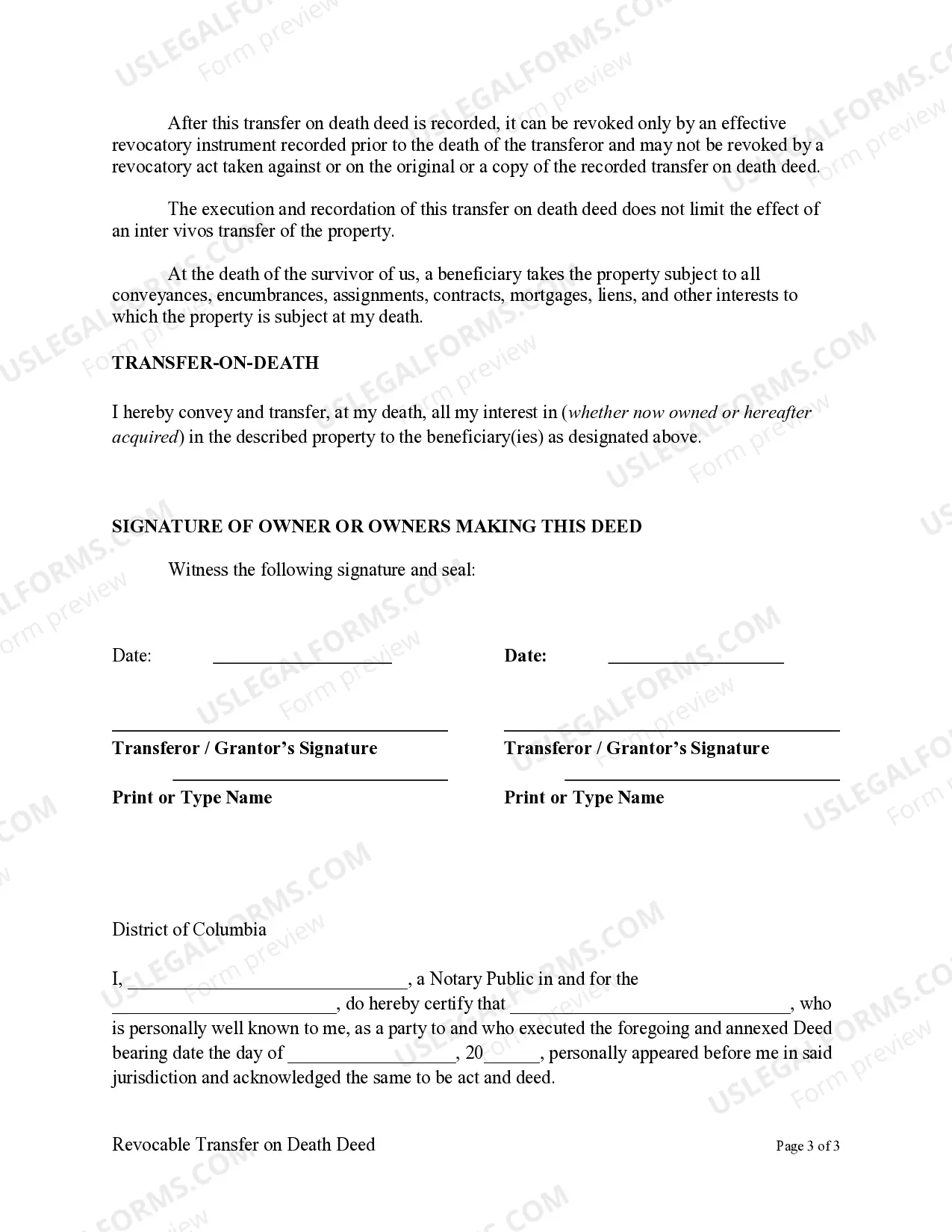
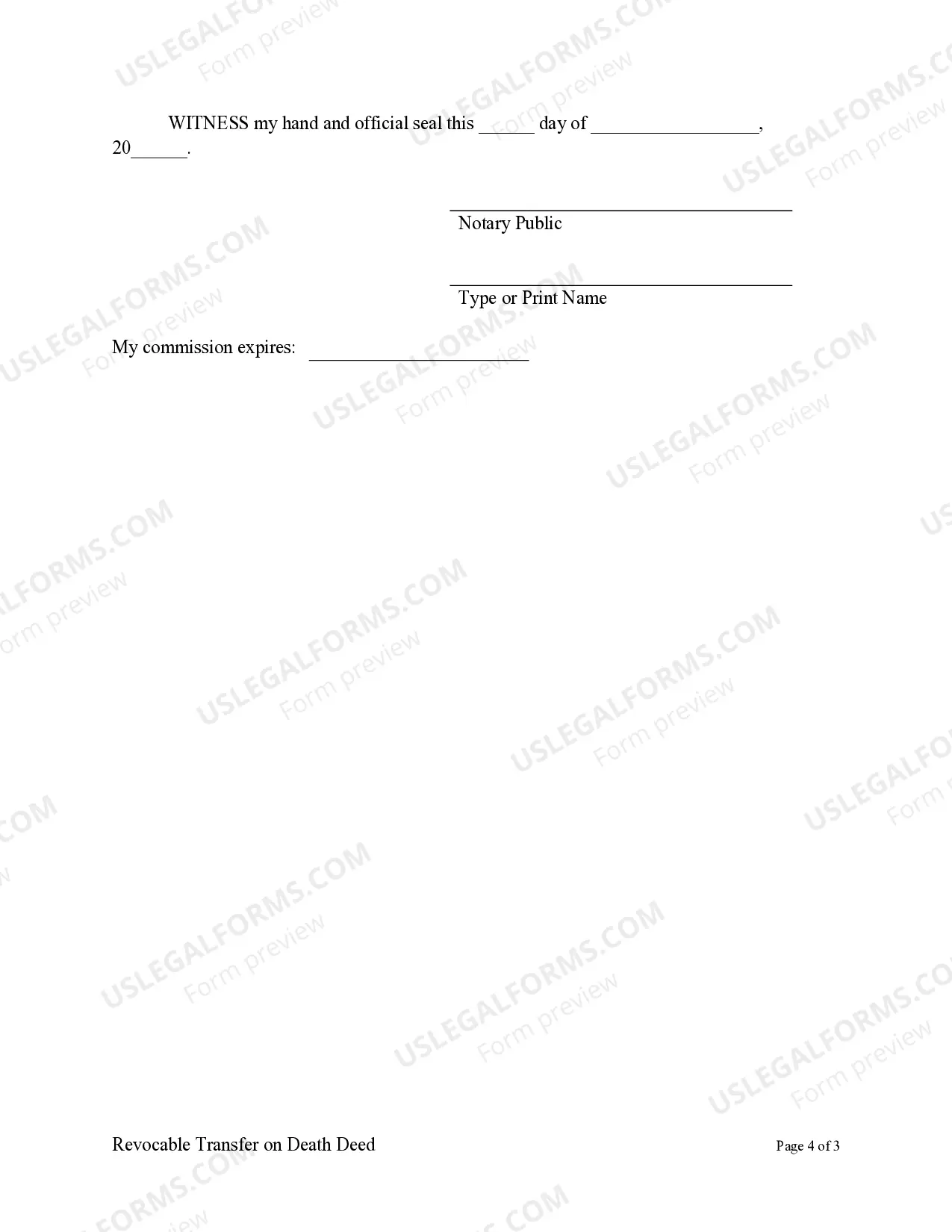
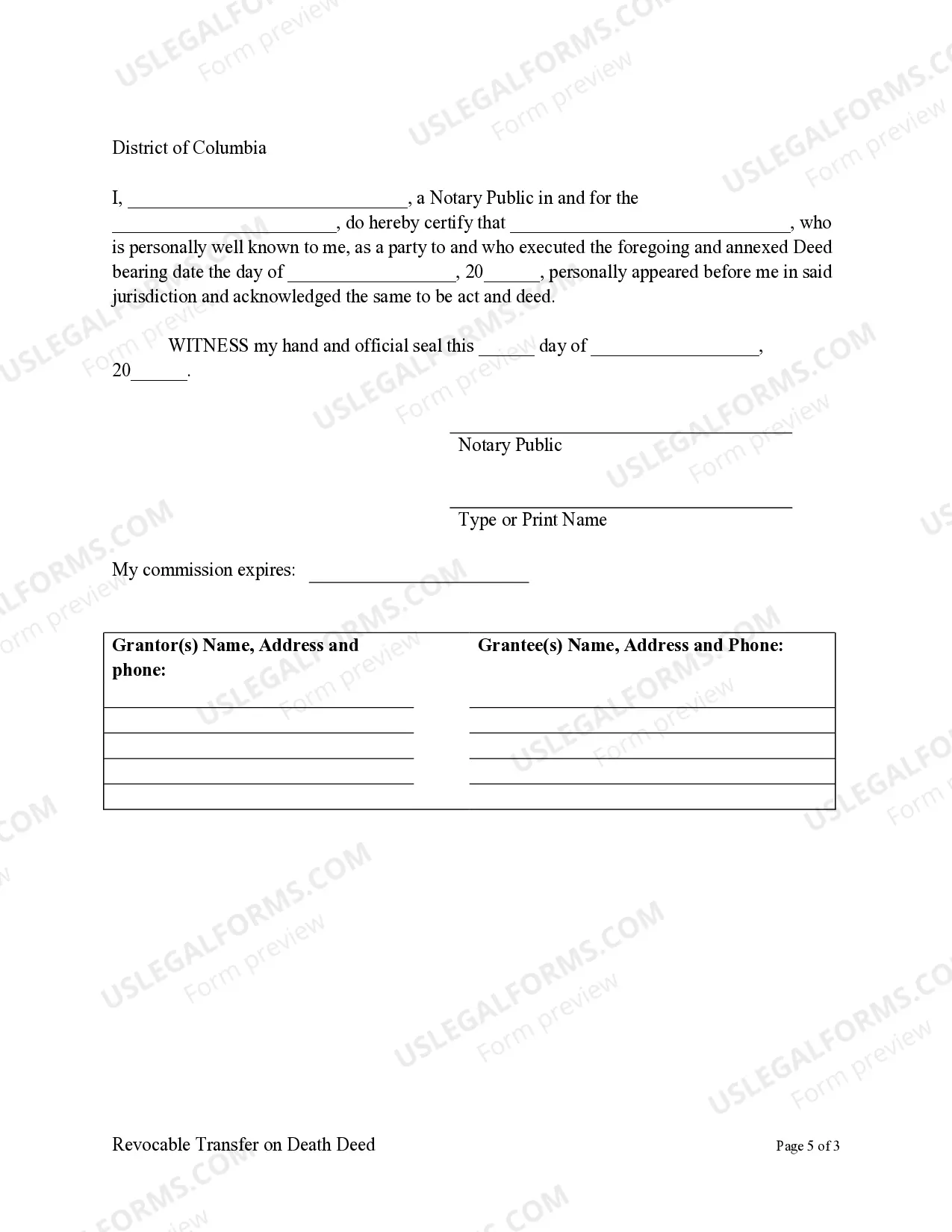
- Signatures of both grantors and notarization requirements





When this form is needed
This form is useful when a married couple wishes to ensure their property is directly transferred to specific individuals (beneficiaries) upon the death of the surviving spouse. It is especially beneficial for estate planning, helping to avoid probate delays and costs associated with property transfer after death.
Who this form is for
- Married couples who jointly own property
- Individuals who want to designate beneficiaries for their property posthumously
- Those looking to plan their estate efficiently to avoid probate
How to prepare this document
- Identify the grantors by entering their names and address at the beginning of the deed.
- List the primary beneficiaries' names and addresses in the designated sections.
- If desired, specify an alternate beneficiary in the optional section.
- Provide a legal description of the property, ensuring it is accurate and complete.
- Both grantors must sign the deed in the presence of a notary public to ensure its validity.
Does this form need to be notarized?
Yes, this form must be notarized to be legally valid. Both grantors should sign the deed in the presence of a notary public to ensure proper execution and to comply with local laws.
Get your form ready online
Our built-in tools help you complete, sign, share, and store your documents in one place.
Make edits, fill in missing information, and update formatting in US Legal Forms—just like you would in MS Word.
Download a copy, print it, send it by email, or mail it via USPS—whatever works best for your next step.
Sign and collect signatures with our SignNow integration. Send to multiple recipients, set reminders, and more. Go Premium to unlock E-Sign.
If this form requires notarization, complete it online through a secure video call—no need to meet a notary in person or wait for an appointment.
We protect your documents and personal data by following strict security and privacy standards.

Make edits, fill in missing information, and update formatting in US Legal Forms—just like you would in MS Word.

Download a copy, print it, send it by email, or mail it via USPS—whatever works best for your next step.

Sign and collect signatures with our SignNow integration. Send to multiple recipients, set reminders, and more. Go Premium to unlock E-Sign.

If this form requires notarization, complete it online through a secure video call—no need to meet a notary in person or wait for an appointment.

We protect your documents and personal data by following strict security and privacy standards.
Avoid these common issues
- Failing to properly notarize the deed before submission.
- Omitting the legal description of the property.
- Not revoking previous deeds if a new transfer on death deed is executed.
Benefits of using this form online
- Convenience of downloading and printing the form at your convenience.
- Editability allows you to customize the form to fit your specific needs easily.
- Reliability of having a template drafted by licensed attorneys, ensuring legal compliance.
Looking for another form?
Form popularity
FAQ
To transfer a death deed to two beneficiaries using the District of Columbia Transfer on Death Deed or TOD - Beneficiary Deed for Husband and Wife to Two Individuals, you must first prepare the deed with both beneficiaries' names included. Next, sign the deed in front of a notary public to make it legally binding. Finally, file the deed with the appropriate District of Columbia office to ensure its validity. This simple process helps you effectively pass your property to your chosen beneficiaries without the need for probate.
While Transfer on Death deeds provide a streamlined transfer process, they also have potential downsides. For instance, they do not protect assets from creditors after the property owner's death, which could pose risks to beneficiaries. Furthermore, making changes to the deed can be complex, highlighting the importance of understanding the implications of a District of Columbia Transfer on Death Deed or TOD - Beneficiary Deed for Husband and Wife to Two Individuals before proceeding.
Filling out a Transfer on Death designation affidavit requires specific information, such as the property details and the beneficiaries' names. It's essential to follow your state's guidelines carefully to ensure the affidavit is valid and enforceable. Utilizing platforms like USLegalForms can provide templates and guidance on completing a District of Columbia Transfer on Death Deed or TOD - Beneficiary Deed for Husband and Wife to Two Individuals correctly.
The primary difference between a Transfer on Death (TOD) deed and a beneficiary deed lies in their usage. A TOD deed allows a property owner to designate beneficiaries who will receive the property upon their death, effectively avoiding probate. In comparison, a beneficiary deed serves a similar purpose but may have certain limitations based on state laws. Understanding the nuances of the District of Columbia Transfer on Death Deed or TOD - Beneficiary Deed for Husband and Wife to Two Individuals can help you make informed decisions regarding property transfer.
Yes, the District of Columbia does permit the use of a Transfer on Death Deed. This legal mechanism allows property owners to designate beneficiaries who will receive the property upon their death without going through probate. If you are considering a District of Columbia Transfer on Death Deed or TOD - Beneficiary Deed for Husband and Wife to Two Individuals, platforms like USLegalForms can provide the necessary forms and guidance.
Generally, a TOD does not avoid capital gains tax on the appreciation of the property during the owner's lifetime. Upon sale, the beneficiaries of a District of Columbia Transfer on Death Deed or TOD - Beneficiary Deed for Husband and Wife to Two Individuals may still be responsible for capital gains tax if the property has increased in value. Consulting a tax professional can give you additional insights.
Some drawbacks include the potential for disputes among heirs and the lack of control over the property during the owner’s lifetime. Additionally, a District of Columbia Transfer on Death Deed or TOD - Beneficiary Deed for Husband and Wife to Two Individuals does not address issues like creditors or tax implications on the property post-transfer. Be sure to weigh these considerations carefully.
One disadvantage of a TOD deed is that it does not provide access to the property before the owner's death. Additionally, if you change your mind about the beneficiaries, you will need to update the deed accordingly. It’s important to consider all factors regarding a District of Columbia Transfer on Death Deed or TOD - Beneficiary Deed for Husband and Wife to Two Individuals before proceeding.
A TOD deed can be a smart choice for transferring property upon death without going through probate. It simplifies the process, allowing your beneficiaries to inherit your property directly. Keep in mind, when considering a District of Columbia Transfer on Death Deed or TOD - Beneficiary Deed for Husband and Wife to Two Individuals, it's essential to evaluate your family situation and financial goals.
You are not required to hire a lawyer for a District of Columbia Transfer on Death Deed or TOD - Beneficiary Deed for Husband and Wife to Two Individuals. However, consulting a legal professional can provide peace of mind and ensure your documents are completed correctly. Many people choose to use online platforms like USLegalForms for guidance and support in creating these deeds.