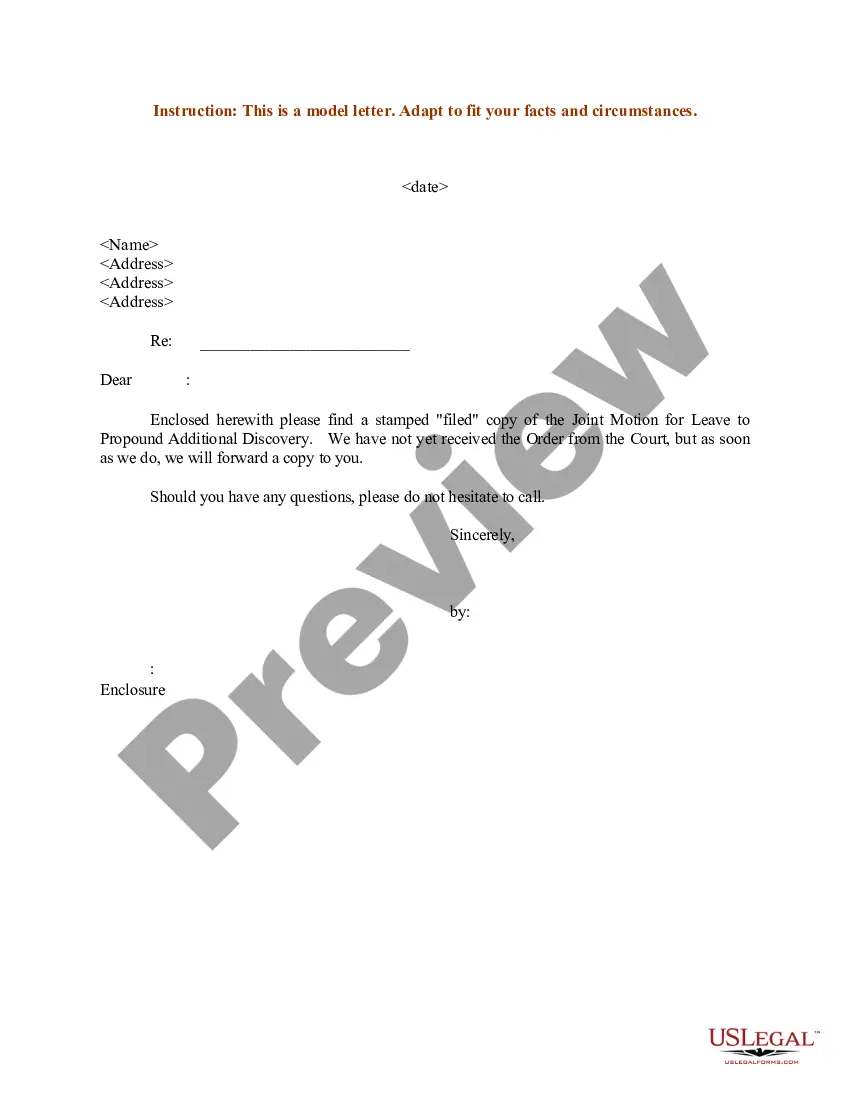
Delaware Sample Letter conveying Joint Motion for Leave to Propound Additional Discovery
Description

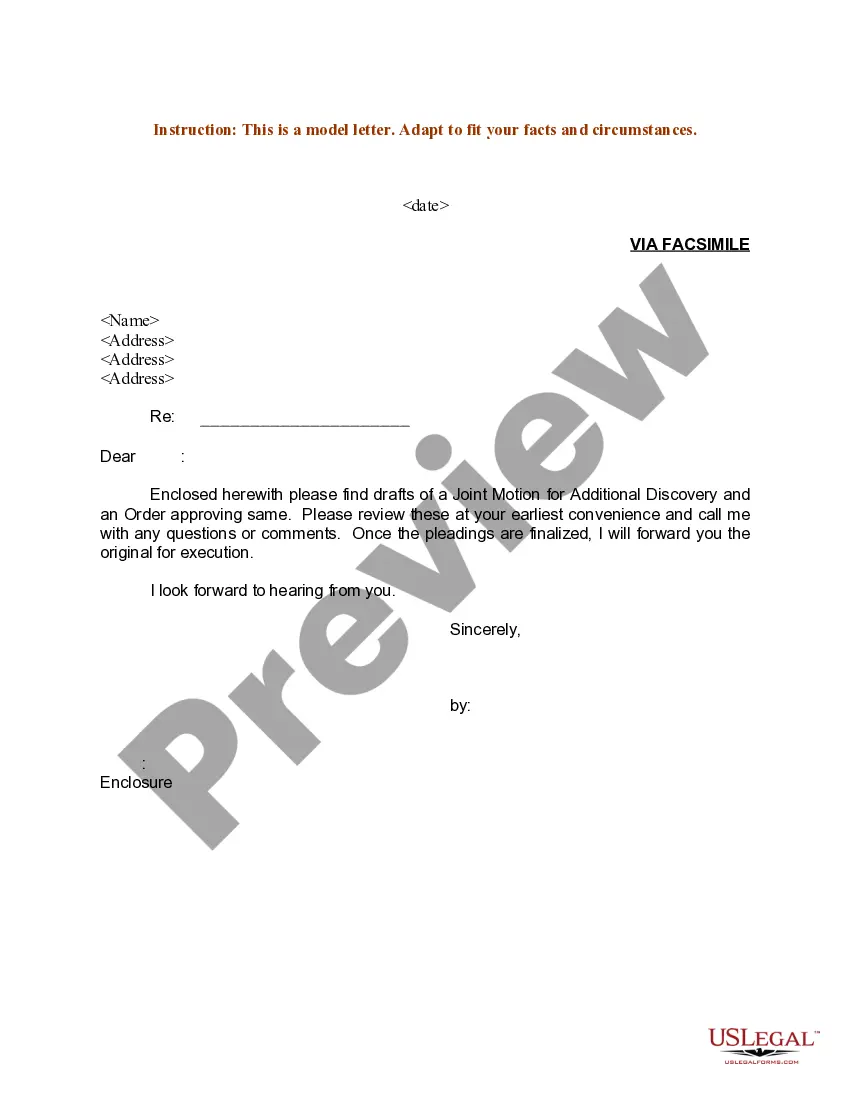
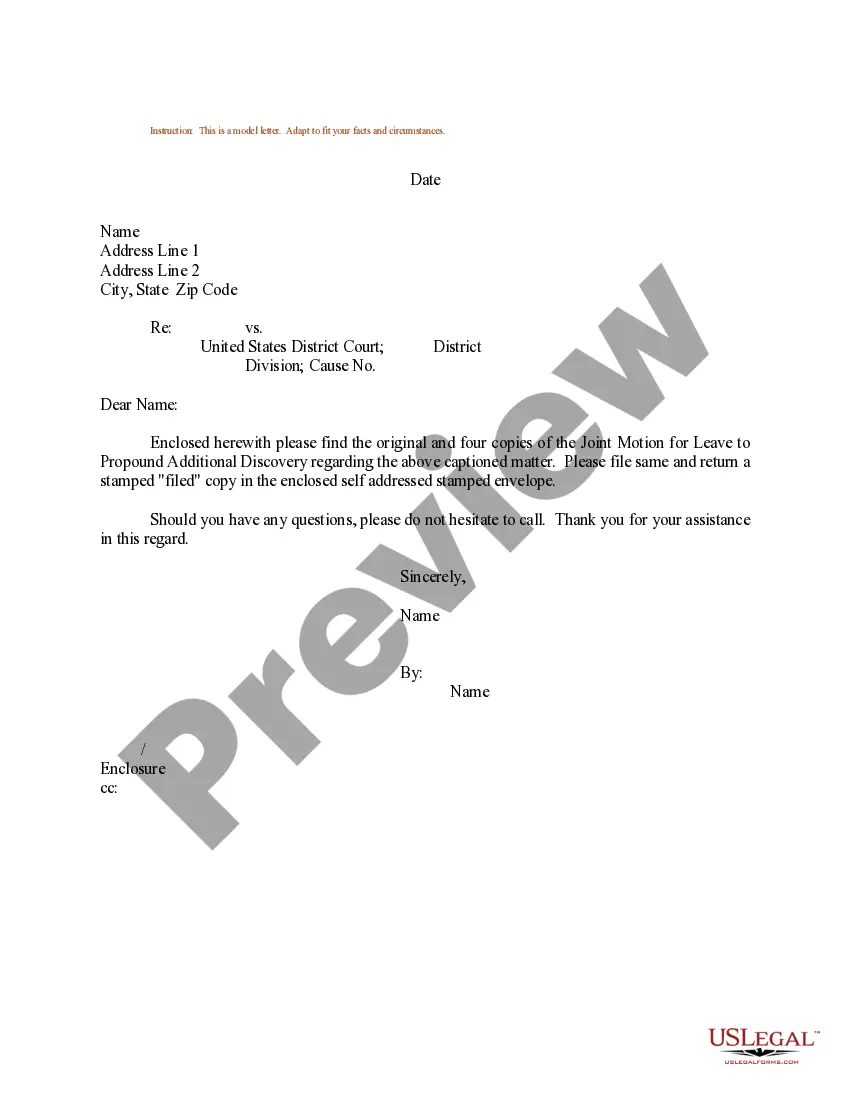
How to fill out Sample Letter Conveying Joint Motion For Leave To Propound Additional Discovery?
You might spend hours online trying to locate the appropriate legal document template that meets the federal and state requirements you need.
US Legal Forms provides a vast array of legal forms that can be examined by professionals.
You can easily download or print the Delaware Sample Letter for Joint Motion for Leave to Propound Additional Discovery from their service.
Check the form description to make sure you have chosen the right form. If available, use the Review button to view the document template as well. If you want to find another version of the form, use the Search area to locate the template that suits you and your needs. Once you have found the template you want, click Acquire now to proceed. Select the pricing plan you prefer, enter your details, and create an account on US Legal Forms. Complete the transaction. You may use your credit card or PayPal account to pay for the legal document. Choose the format of the file and download it to your device. Make changes to your document if necessary. You can fill out, edit, sign, and print the Delaware Sample Letter for Joint Motion for Leave to Propound Additional Discovery. Download and print thousands of document templates using the US Legal Forms website, which offers the largest selection of legal forms. Utilize professional and state-specific templates to address your business or personal needs.
- If you already have a US Legal Forms account, you can Log In and click on the Download button.
- After that, you can complete, edit, print, or sign the Delaware Sample Letter for Joint Motion for Leave to Propound Additional Discovery.
- Every legal document template you purchase is yours permanently.
- To obtain another copy of any purchased form, go to the My documents tab and click on the appropriate button.
- If you are using the US Legal Forms website for the first time, follow the simple instructions below.
- First, ensure you have selected the correct document template for the area/region of your choice.
Form popularity
FAQ
Discovery means you send the other side questions and requests for information or items (like documents) in writing. The other side must respond to your question or request in writing.
This letter is often called a good faith letter. And it is needed under many courts' rules before you can file a motion to compel discovery if the other party ignores your requests or provides evasive responses or move for sanctions if your opponent refuses to comply with the court's discovery order.
If you object to a discovery request, generally you have to let the other side know that you are not giving him/her documents that s/he has asked for.
Good faith is a legal term that describes the intention of the party or parties in a contract to deal in an honest manner with each other. In contracts, the parties signing abide by and uphold the contract. It requires people to act honestly without taking advantage of others.
Failure of United States to Participate in Good Faith in Discovery. Rule 37 authorizes the court to direct that parties or attorneys who fail to participate in good faith in the discovery process pay the expenses, including attorney's fees, incurred by other parties as a result of that failure.