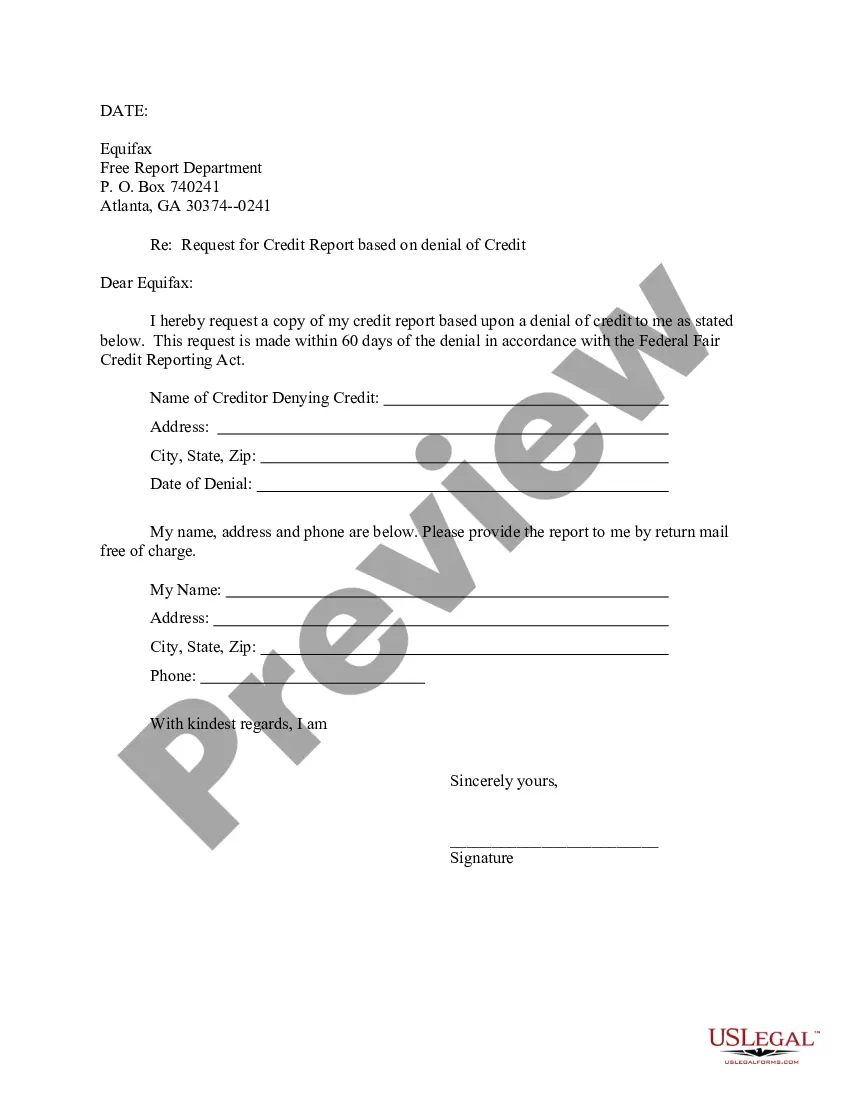
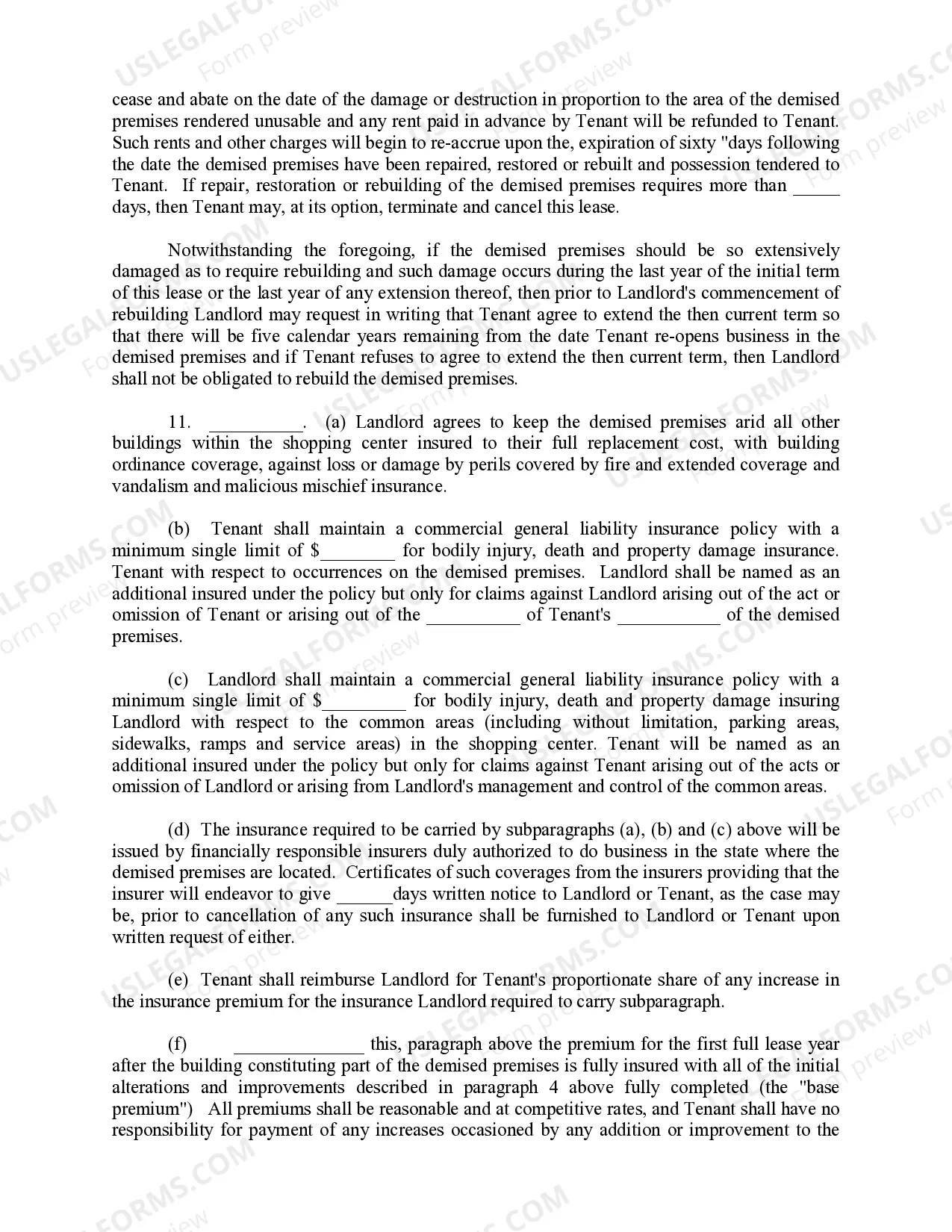
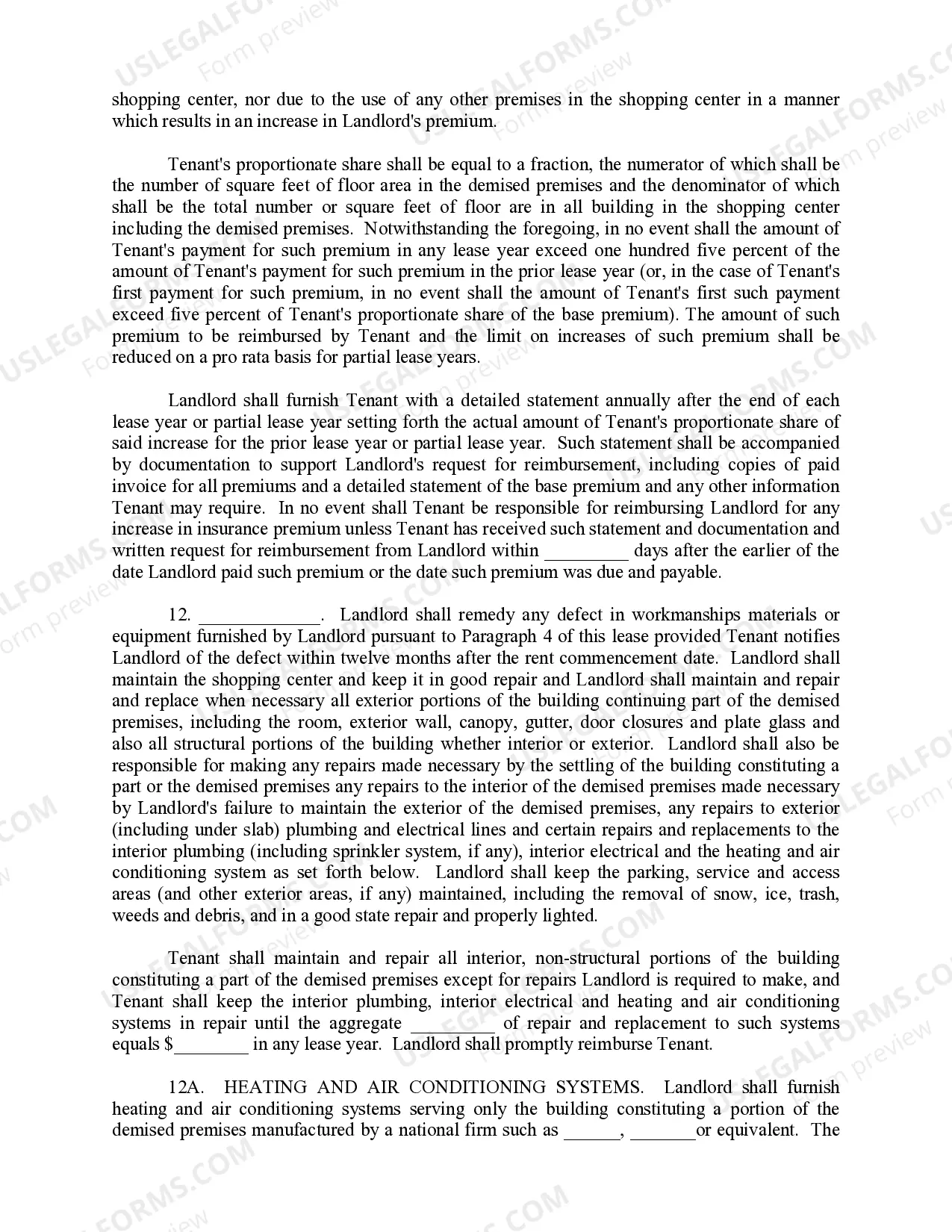
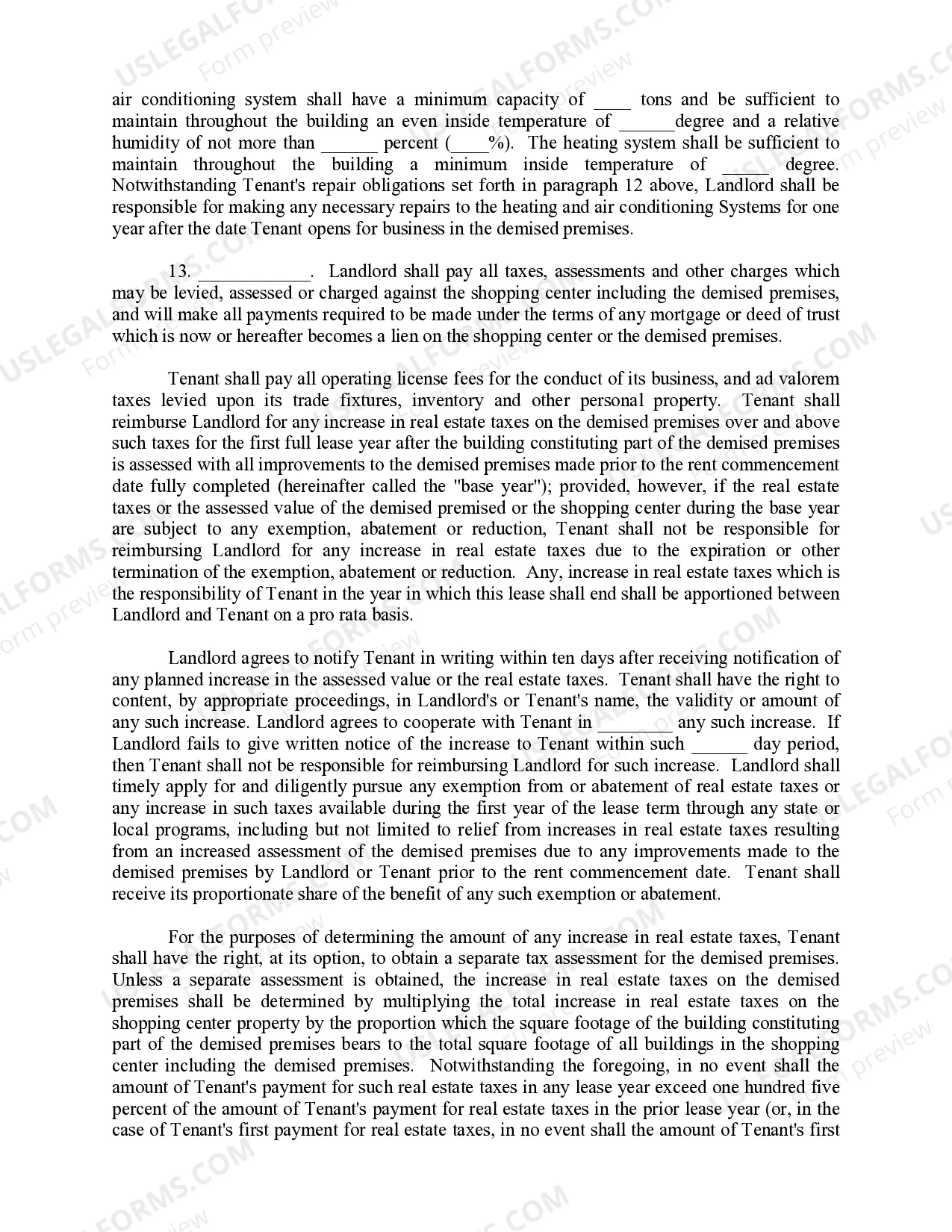
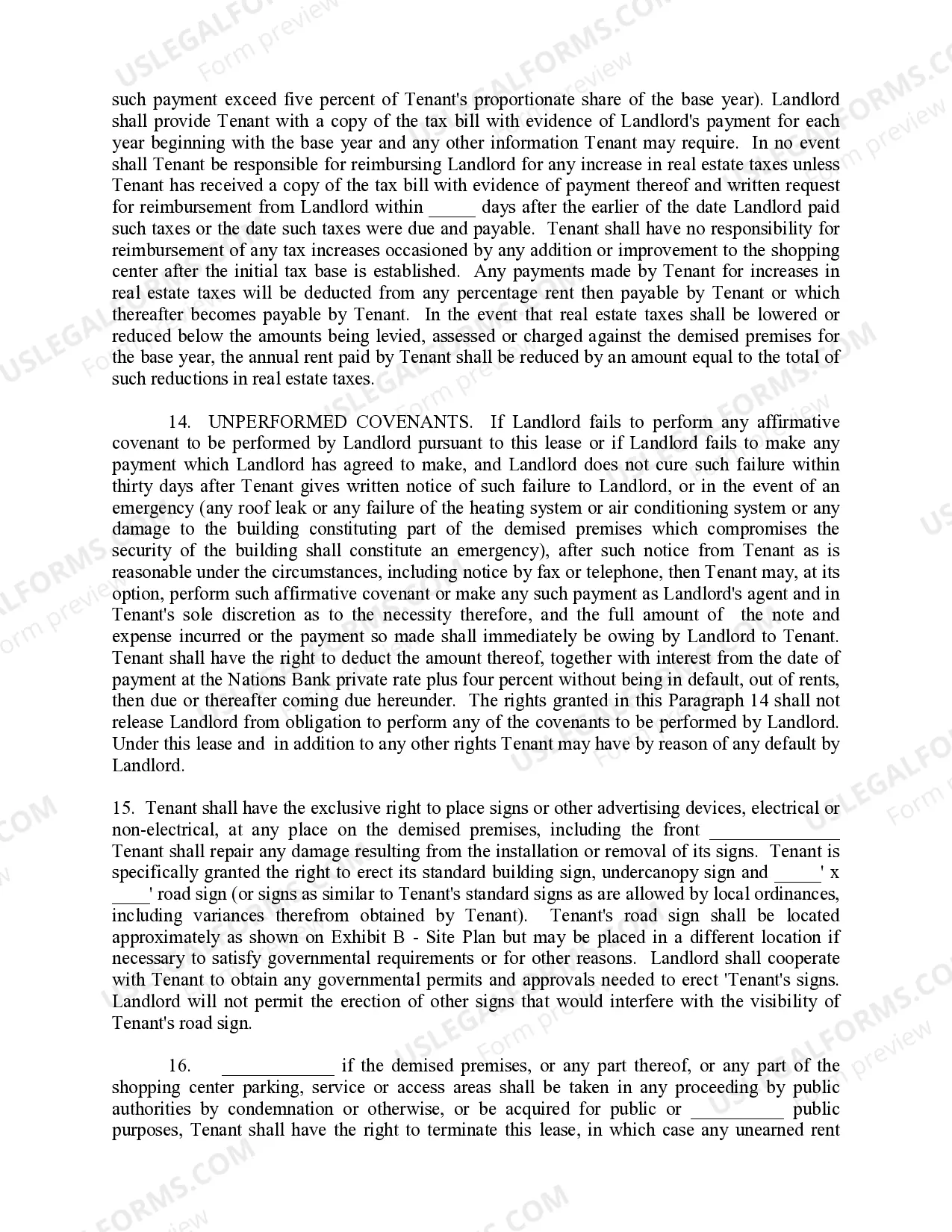
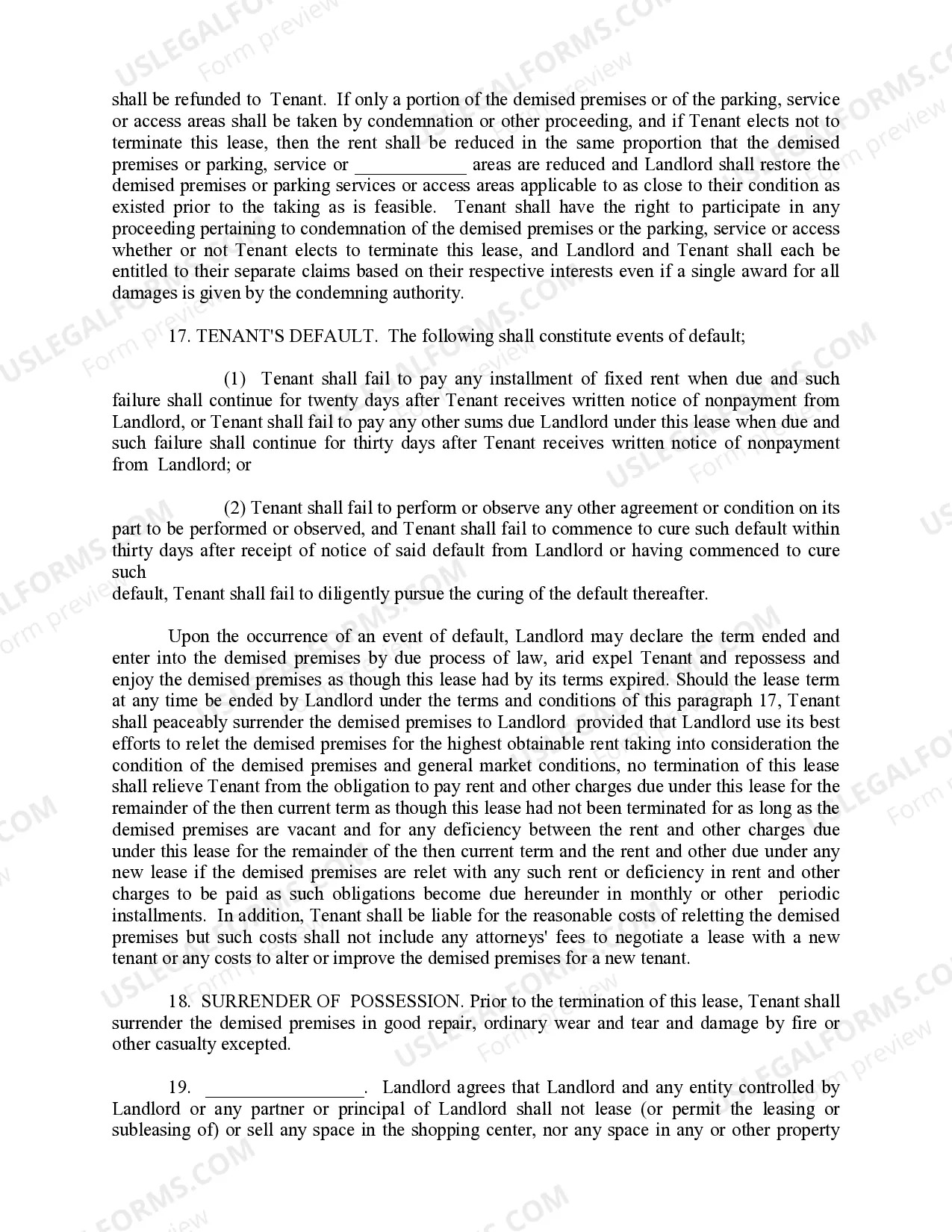
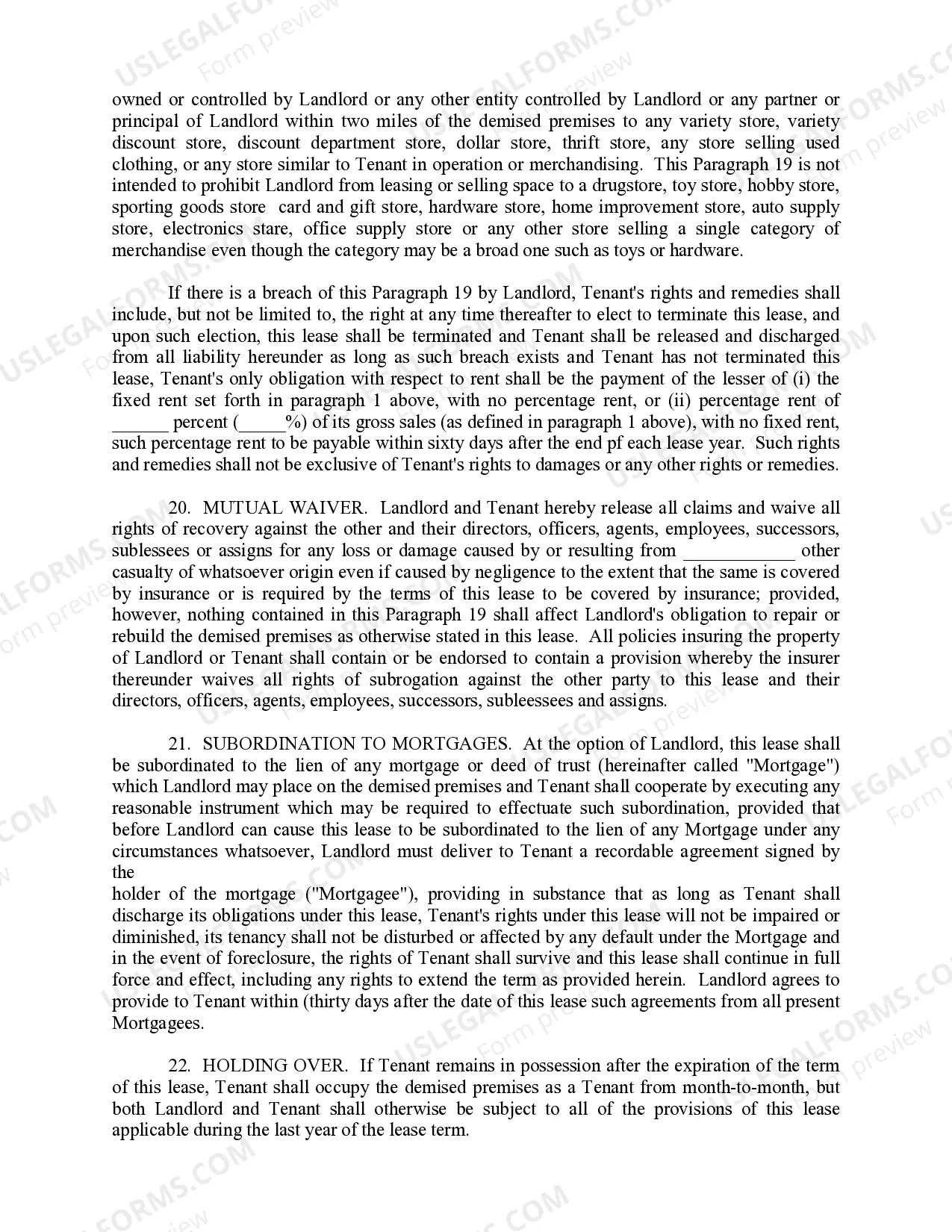
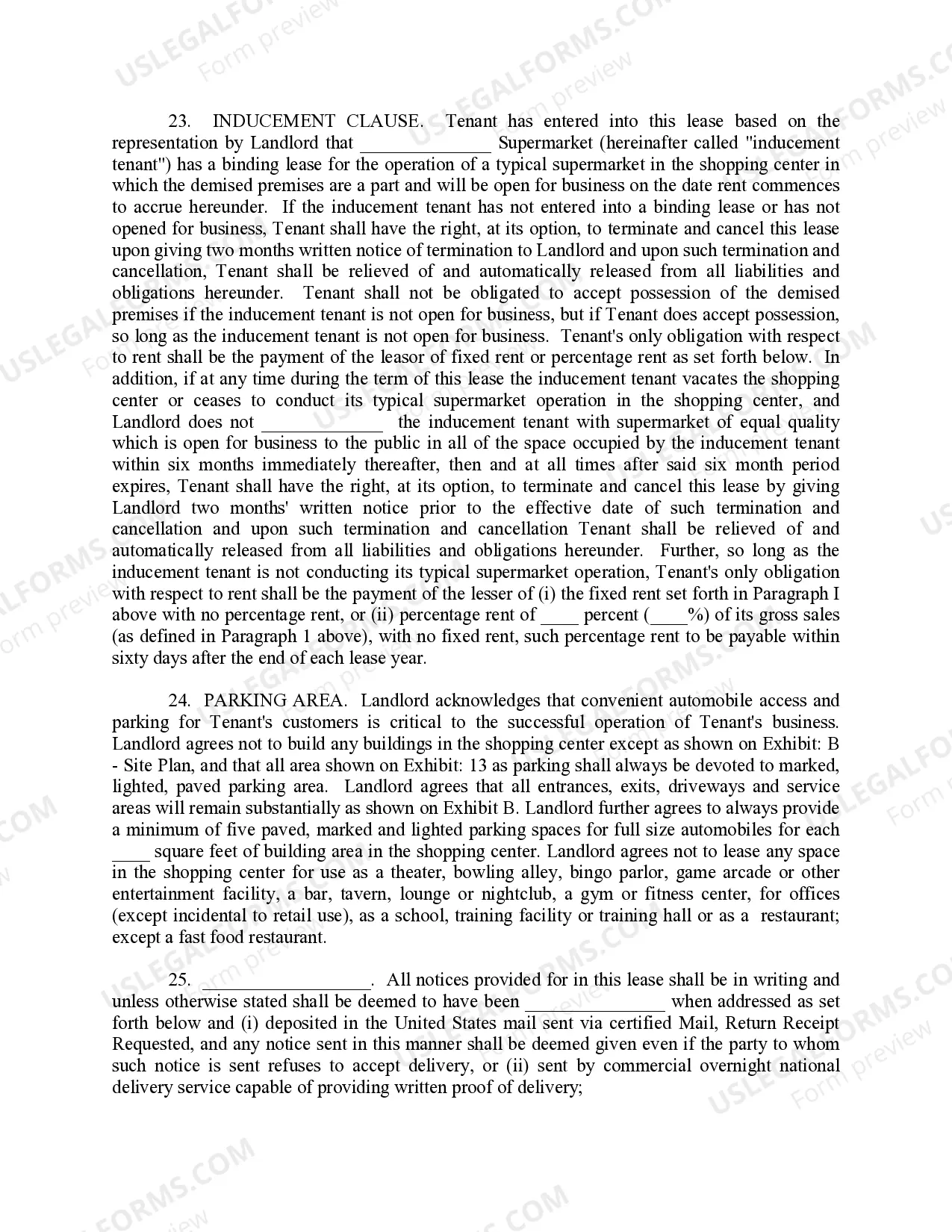
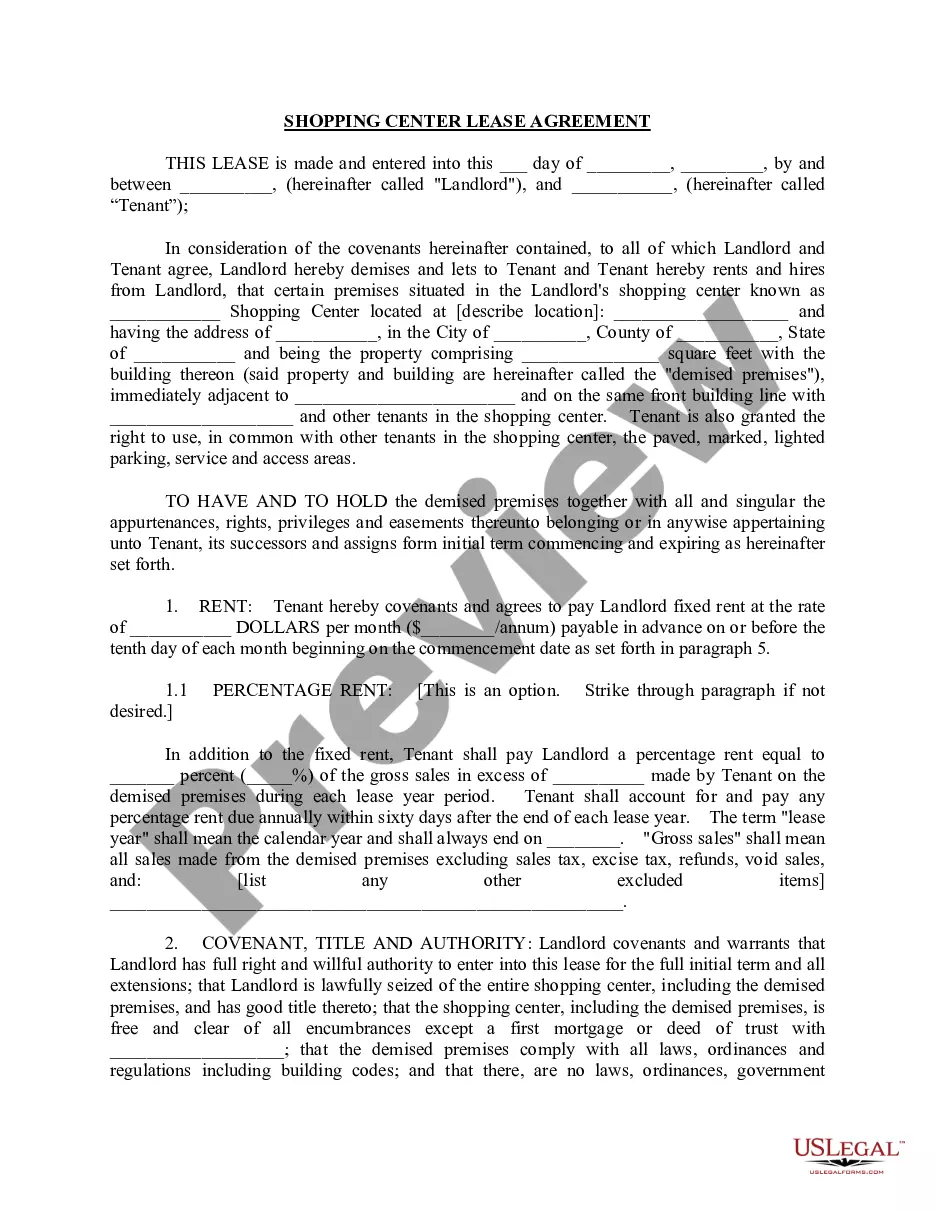
This form is for the lease of property to be used as a shopping center. The landlord warrants that the demised premises may be used, but not limited to such use, by tenant, among others, for the conduct of a mercantile business of the type and kind known as a variety store, discount store, dollar store or variety discount store.
Delaware Percentage Shopping Center Lease Agreement
State:
Multi-State
Control #:
US-01626
Format:
Word;
Rich Text
Instant download
Description
Free preview
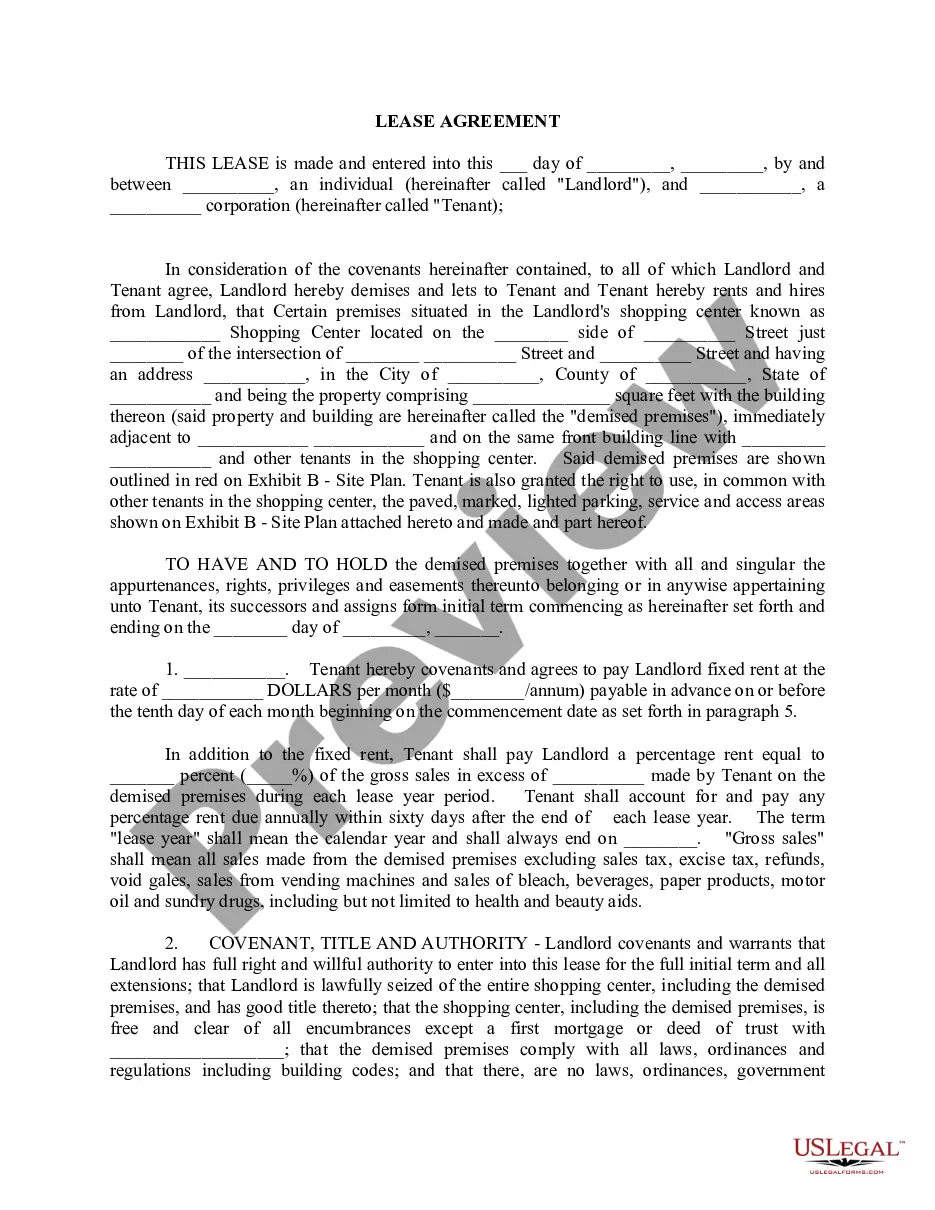
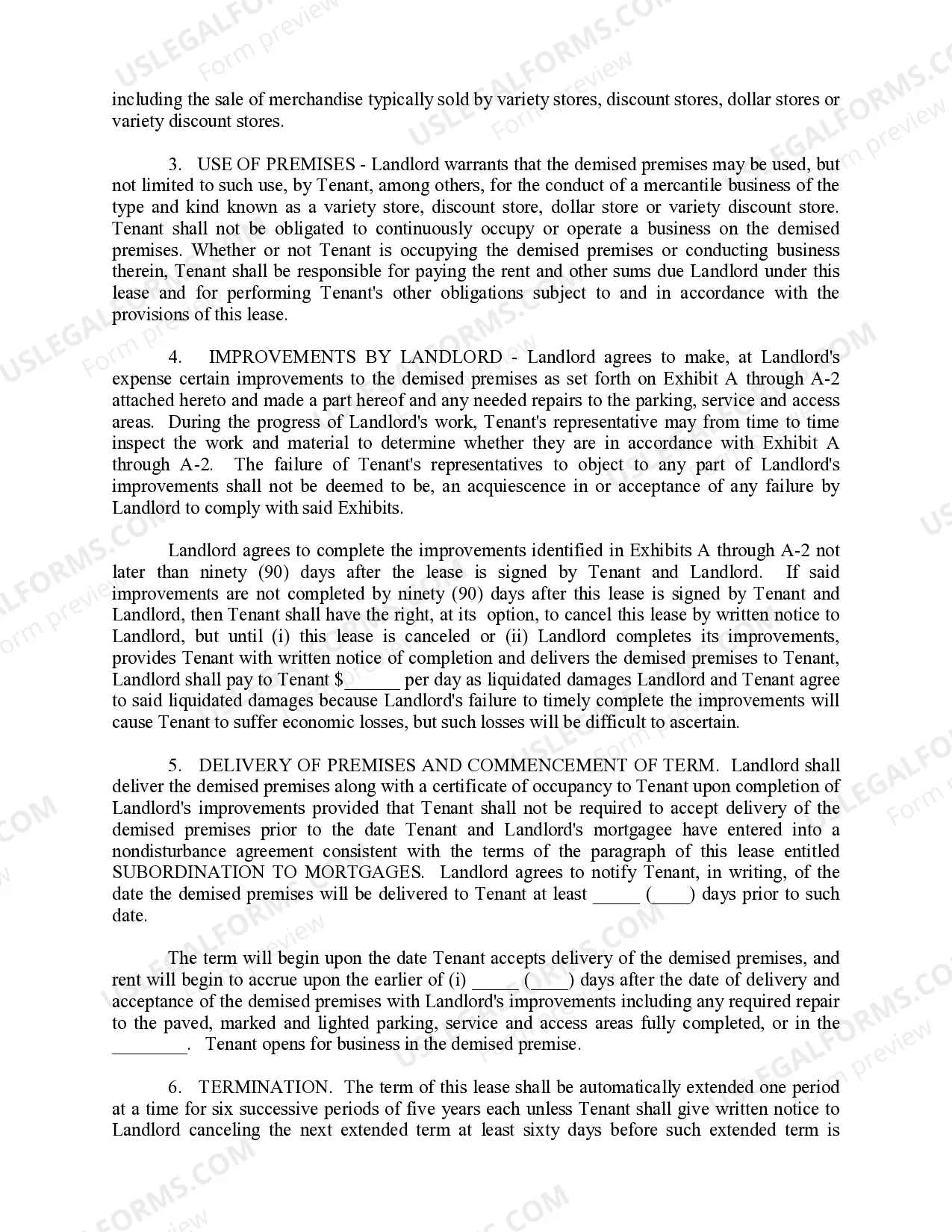
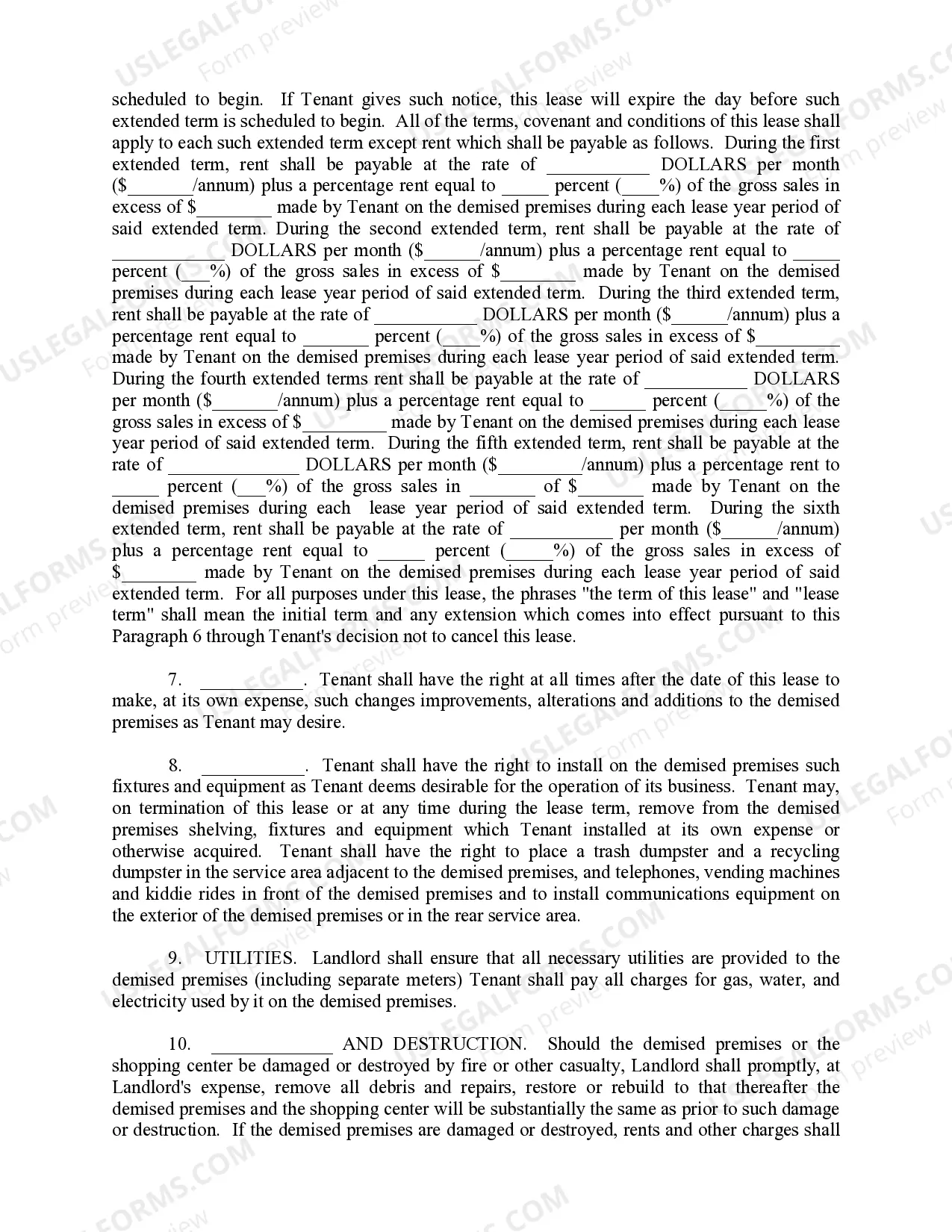

How to fill out Percentage Shopping Center Lease Agreement?
It is feasible to spend hours online looking for the legal document template that meets the federal and state requirements you need.
US Legal Forms provides a vast array of legal forms that can be reviewed by professionals.
You can easily download or print the Delaware Percentage Shopping Center Lease Agreement from our platform.
If available, utilize the Preview button to review the document template as well. In order to find another version of the form, use the Search field to locate the template that suits your needs and requirements.
- If you already have a US Legal Forms account, you can Log In and then click the Download button.
- After that, you are able to complete, modify, print, or sign the Delaware Percentage Shopping Center Lease Agreement.
- Every legal document template you acquire is yours indefinitely.
- To get an additional copy of any purchased form, go to the My documents section and click the corresponding button.
- If you're using the US Legal Forms website for the first time, follow the simple instructions below.
- First, ensure that you have selected the correct document template for your desired state/city.
- Review the form description to ensure you have selected the appropriate form.
Form popularity
FAQ
To calculate a percentage lease in a Delaware Percentage Shopping Center Lease Agreement, start with the tenant's gross sales, then determine the agreed-upon percentage to be used. Multiply the gross sales by this percentage to calculate the rent due. Utilizing professional resources, such as the uslegalforms platform, can help clarify and streamline this process, ensuring accuracy in calculations.
Commercial rent percentages can vary widely, but generally, a percentage between 5% and 10% of a tenant's gross sales is common in Delaware Percentage Shopping Center Lease Agreements. This percentage depends on numerous factors, including location, the type of business, and overall market conditions. Understanding these dynamics is essential for both parties to achieve a fair lease agreement.
To calculate the rent percentage in a Delaware Percentage Shopping Center Lease Agreement, you take the annual rent and divide it by the tenant's gross sales, then multiply by 100 to get a percentage. This formula helps landlords assess how much rent a business can afford while ensuring that the tenant's operations remain viable. It's a crucial aspect of negotiating lease terms in commercial real estate.
To calculate the lease ratio in a Delaware Percentage Shopping Center Lease Agreement, you need to divide the leased space's square footage by the total area of the shopping center. This ratio helps determine how much of the space you are occupying compared to the entire property. Understanding this ratio is vital for both landlords and tenants as it influences rental agreements and responsibilities.
The percentage of sales that should constitute commercial rent may vary widely depending on the industry and lease type. Generally, most experts suggest that the percentage should align with market trends, often falling between 5% and 10%. For those establishing a Delaware Percentage Shopping Center Lease Agreement, it is wise to conduct market research and gather insights on comparable properties to set the right percentage.
The percentage rent lease clause outlines the specifics of how rent is calculated based on sales performance. In a Delaware Percentage Shopping Center Lease Agreement, this clause typically details the base rent, the applicable percentage of sales, and any reporting requirements for the tenant. Understanding this clause is crucial for ensuring transparent and fair rental agreements.
A good sales to rent ratio often hovers between 10% to 15% of sales for retail businesses. However, this ratio can fluctuate based on the type of business and local market conditions. In a Delaware Percentage Shopping Center Lease Agreement, achieving a favorable ratio can enhance stability and profitability for both tenants and landlords.
The percentage of sales on a commercial lease typically varies based on industry norms and specific lease negotiations. In a Delaware Percentage Shopping Center Lease Agreement, landlords might set this percentage anywhere from 5% to 10% based on location and property type. This flexibility helps ensure that the agreement suits the tenant’s revenue potential.
A lease as a percentage of sales is an agreement where rent is determined based on a specified percentage of a tenant's sales revenue. Under a Delaware Percentage Shopping Center Lease Agreement, this structure incentivizes tenants to maximize their sales while providing landlords with a fair return based on business performance. Both parties benefit from a collaborative growth perspective.
Percentage rent in a commercial lease refers to a rental payment structure where the tenant pays a base rent plus a percentage of their gross sales. This model is commonly used in retail spaces, such as those outlined in a Delaware Percentage Shopping Center Lease Agreement. This agreement not only fits tenants with varying sales volumes but also aligns landlords' earnings with the performance of their tenants.