Florida Warranty Deed from Three Individuals to Four Individuals
Overview of this form
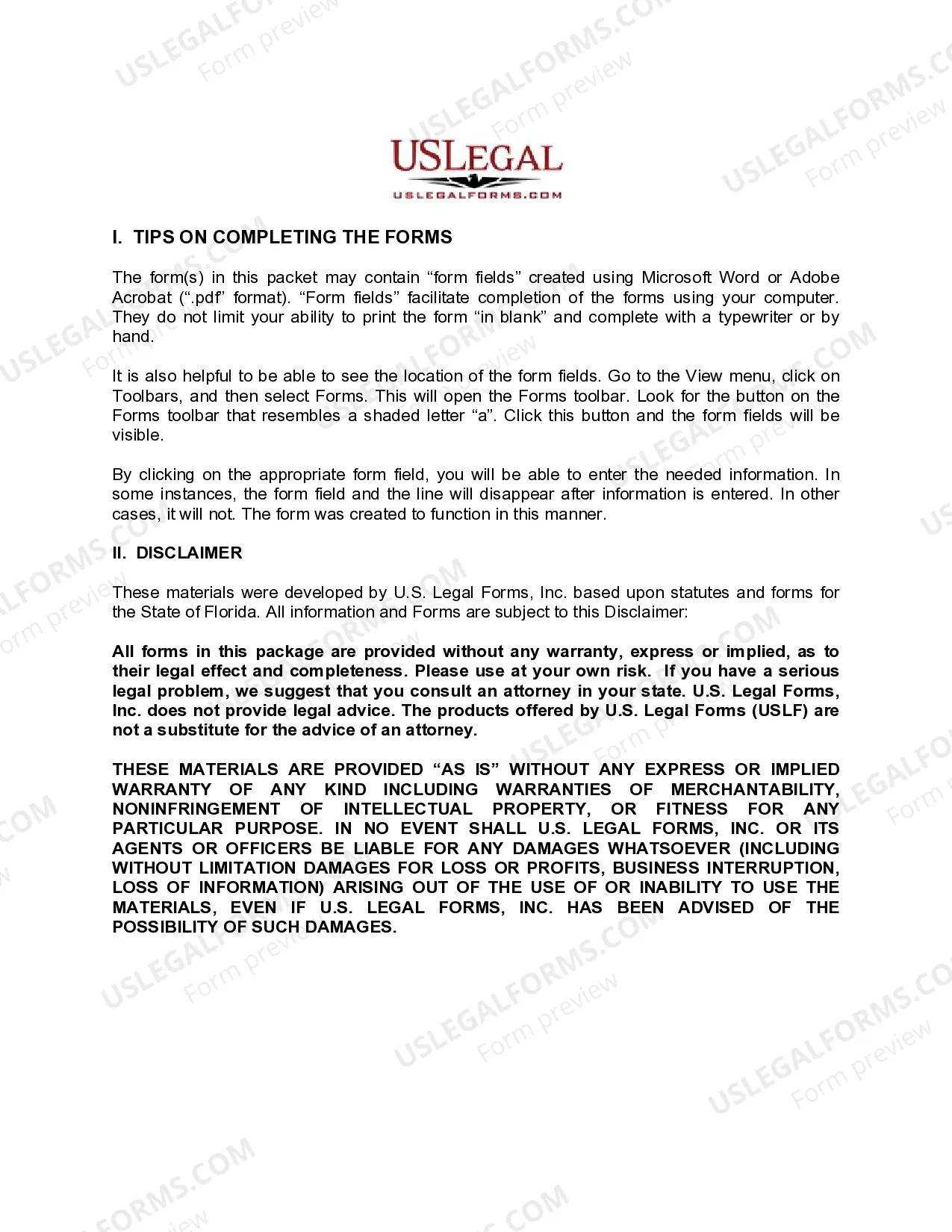
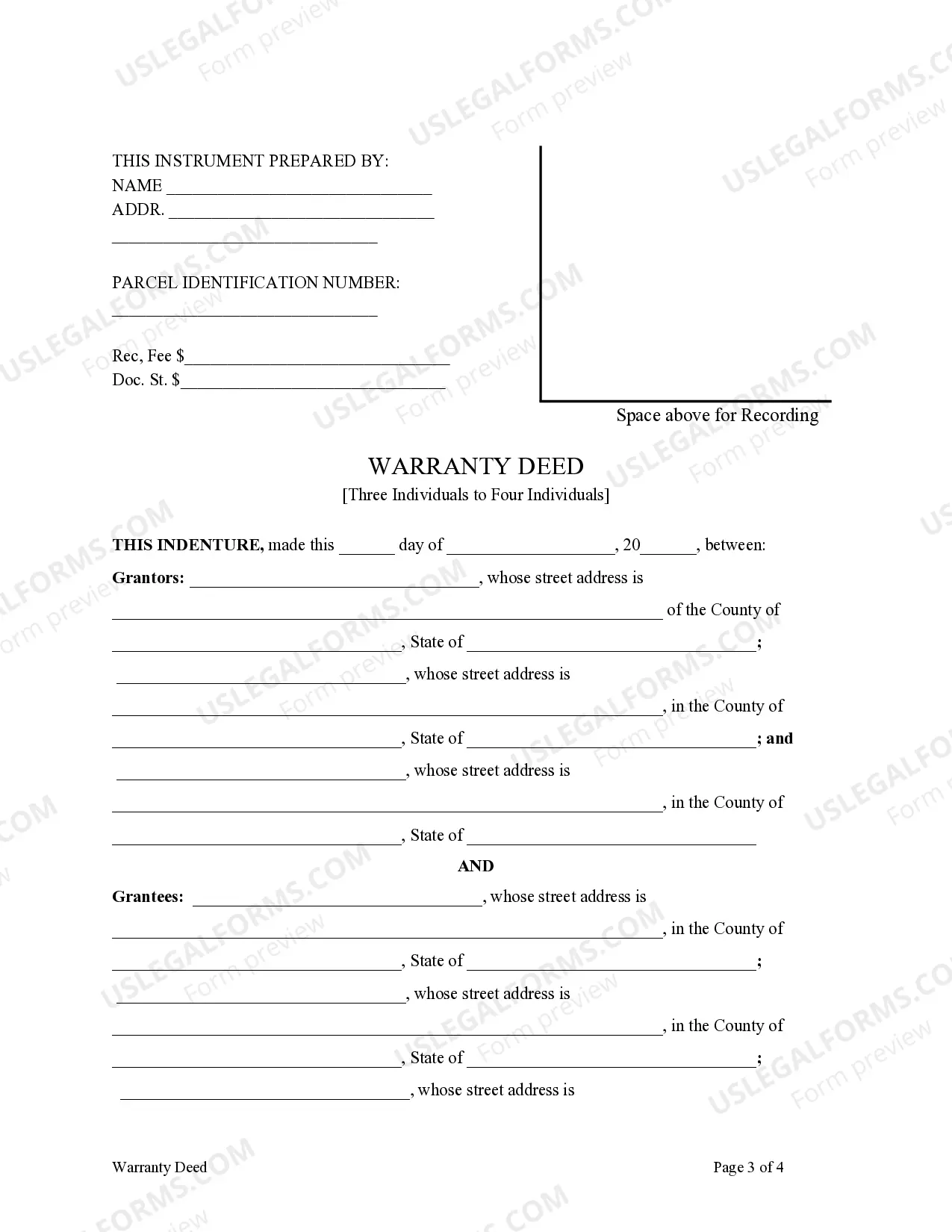
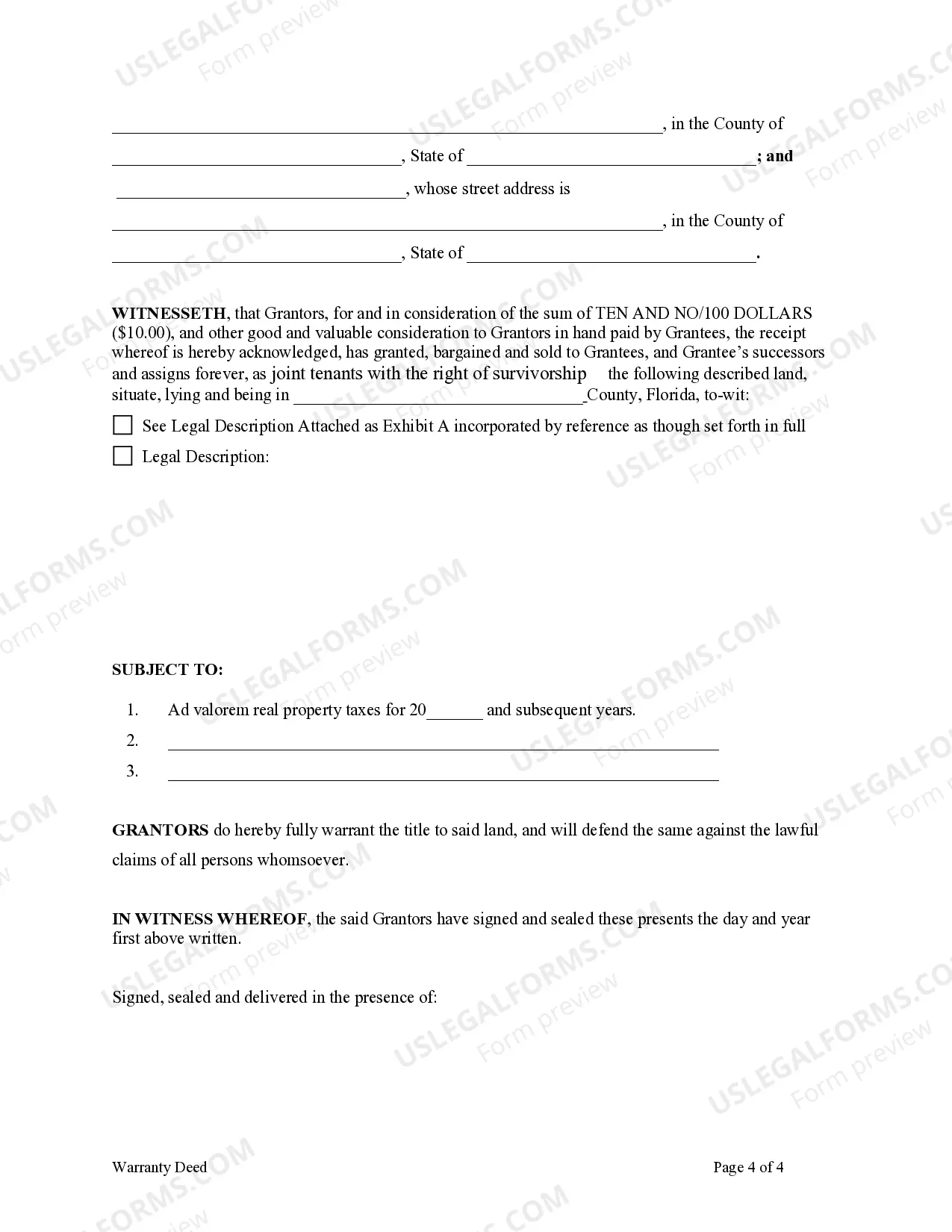
The Warranty Deed from Three Individuals to Four Individuals is a legal document that allows three grantors to convey property ownership to four grantees. This deed ensures that the grantees hold title either as tenants in common or joint tenants with the right of survivorship. Unlike other deeds, a warranty deed provides a guarantee that the property title is free of any claims, offering extra protection and assurance to the new owners. It complies with all statutory laws in the state of Florida.
Key parts of this document
- Identification of grantors and grantees, including their contact details.
- Legal description of the property being conveyed.
- Consideration amount, typically a nominal sum like ten dollars.
- Warranties provided by the grantors regarding the title of the property.
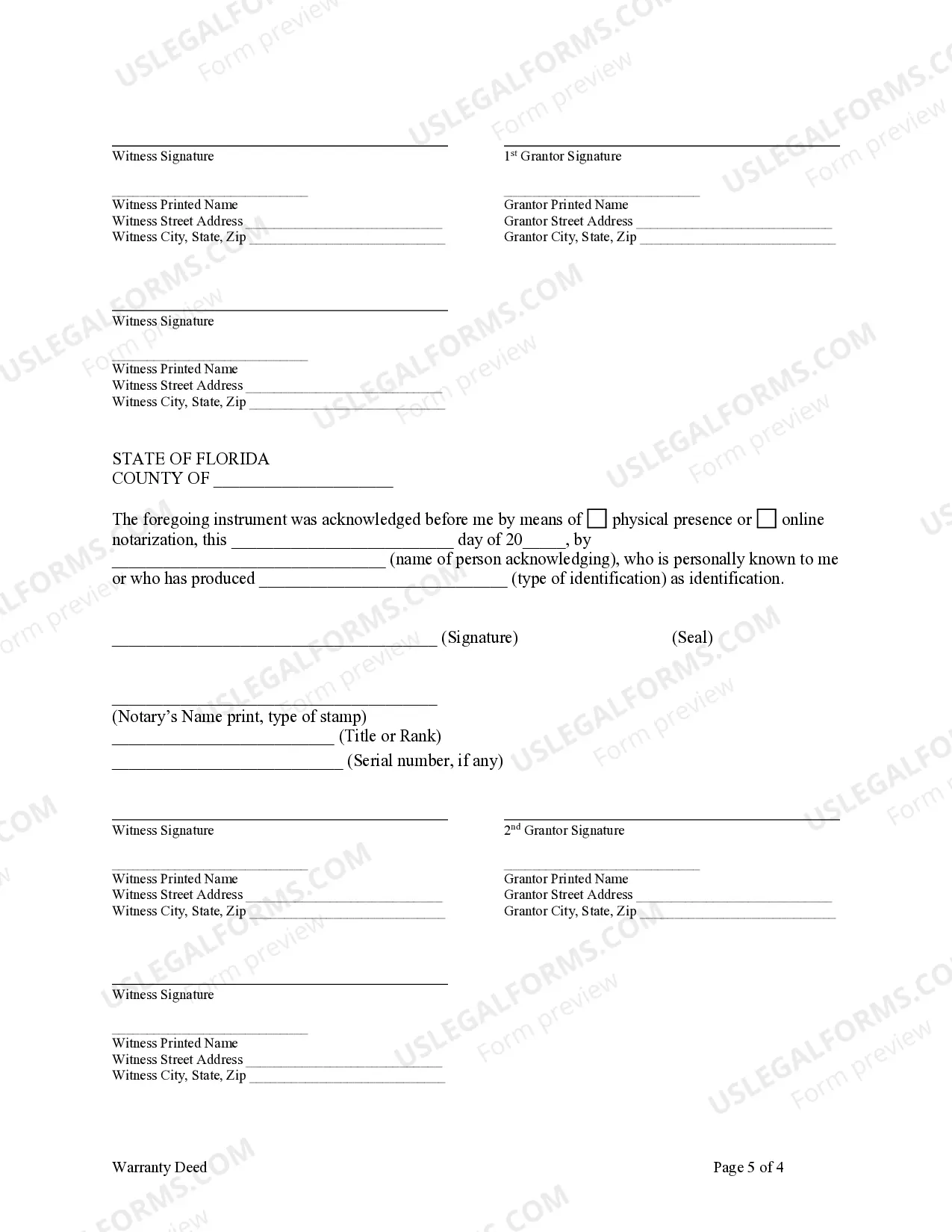
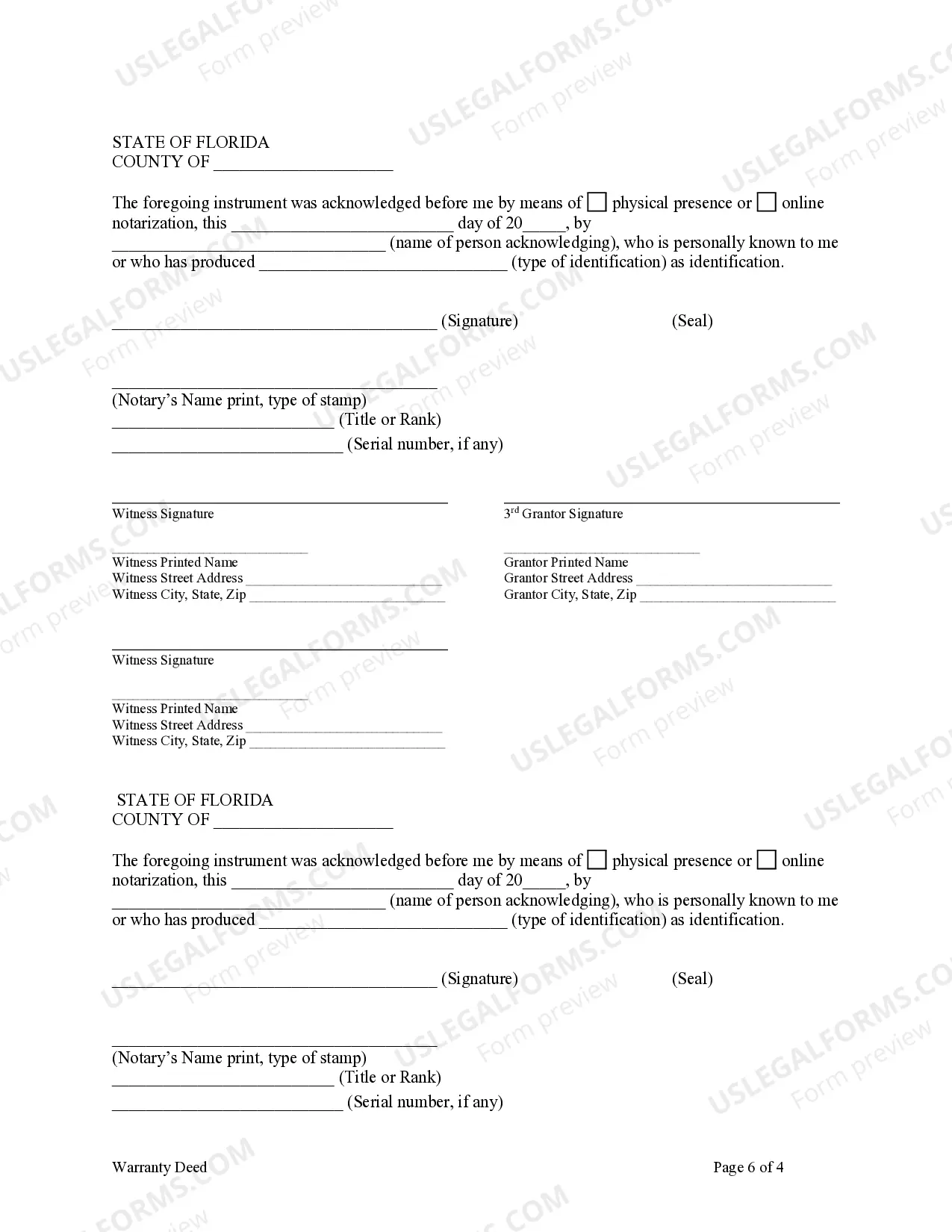
- Need for signatures from witnesses and grantors for validation.
- Notary acknowledgment to ensure legality and authenticity of the document.





When to use this form
This warranty deed should be used when three individuals wish to transfer ownership of a property to four individuals, ensuring all parties understand their ownership rights. Common scenarios include family property transfers, joint investments in real estate, or when multiple parties inherit property together. It is a vital legal tool for accurately documenting these changes in property ownership.
Intended users of this form
- Individuals looking to transfer property ownership among multiple parties.
- Real estate investors who are pooling resources for property purchases.
- Families managing inherited property among several members.
- Anyone needing a legally binding document that ensures ownership rights are protected.
How to prepare this document
- Identify all parties involved, including full names and addresses for the grantors and grantees.
- Provide a legal description of the property being transferred.
- Fill in the consideration amount, typically a nominal amount like ten dollars.
- Ensure all parties sign the deed in the presence of witnesses.
- Obtain notarization to validate the deed legally.
Does this document require notarization?
Yes, this form must be notarized to be legally valid. Notarization serves as a guarantee that the identities of the signers have been verified, which is crucial for the legitimacy of the property transfer. You can utilize US Legal Formsâ integrated online notarization services for convenience and security at any time.
Get your form ready online
Our built-in tools help you complete, sign, share, and store your documents in one place.
Make edits, fill in missing information, and update formatting in US Legal Forms—just like you would in MS Word.
Download a copy, print it, send it by email, or mail it via USPS—whatever works best for your next step.
Sign and collect signatures with our SignNow integration. Send to multiple recipients, set reminders, and more. Go Premium to unlock E-Sign.
If this form requires notarization, complete it online through a secure video call—no need to meet a notary in person or wait for an appointment.
We protect your documents and personal data by following strict security and privacy standards.

Make edits, fill in missing information, and update formatting in US Legal Forms—just like you would in MS Word.

Download a copy, print it, send it by email, or mail it via USPS—whatever works best for your next step.

Sign and collect signatures with our SignNow integration. Send to multiple recipients, set reminders, and more. Go Premium to unlock E-Sign.

If this form requires notarization, complete it online through a secure video call—no need to meet a notary in person or wait for an appointment.

We protect your documents and personal data by following strict security and privacy standards.
Common mistakes
- Failing to include complete legal descriptions of the property.
- Overlooking the need for witness signatures.
- Not notarizing the document, which can affect its validity.
- Leaving out essential party information, such as addresses.
Benefits of using this form online
- Quick and convenient access to legally sound forms without needing to visit a lawyer.
- Editability allows you to fill in your information correctly.
- 24/7 access, providing flexibility to complete your forms at your pace.
- Secure and reliable, ensuring your information is protected.
What to keep in mind
- This warranty deed provides strong assurances regarding property ownership rights.
- Proper completion and notarization are critical for legality.
- Understand the differences between tenants in common and joint tenants with the right of survivorship.
Looking for another form?
Form popularity
FAQ
Yes, you can add someone to the deed of your house in Florida. This process requires completing a new warranty deed that includes the additional individual. Furthermore, be mindful of how adding someone may affect ownership rights and financial responsibilities. Utilizing resources from uslegalforms can ensure a smooth and compliant process for this adjustment.
Adding a name to a deed may complicate ownership rights and create potential legal issues, such as the need for consent to sell or refinance the property. Additionally, doing so can impact taxes, estate planning, and liability. It is crucial to weigh these factors carefully before proceeding. Consider consulting with a legal expert to understand the full implications.
Similar to other deeds, a house deed in Florida can have multiple individuals named. There is no strict limit on the number of owners, which allows you to include all relevant parties in the homeownership arrangement. Ensure that the rights and responsibilities are clearly defined in the deed. This clarity helps prevent misunderstandings in the future.
In Florida, a warranty deed can include as many individuals as you need, provided all parties agree to the terms and sign the deed. This flexibility allows you to structure ownership in a way that best fits your situation. However, it is crucial to consider the implications of shared ownership when drafting the deed. Always consult a legal professional to ensure proper documentation.
Indeed, two people can hold ownership on a warranty deed in Florida. This is a common arrangement for couples or business partners. Both individuals will have rights to the property, and how those rights are allocated will depend on how the warranty deed is drafted. Clear communication between both parties is essential to avoid future conflicts.
Yes, multiple people can be on one warranty deed in Florida. This allows for various ownership arrangements, such as tenants in common or joint tenants. When drafting the warranty deed, specify how the individuals will share ownership. Keep in mind, ownership rights can vary depending on how the deed is structured.
To transfer a warranty deed in Florida, you must first complete the deed form with accurate information regarding all parties involved. You will then sign the document in the presence of a notary public. After that, file the completed deed with the appropriate county recorder's office. Following these steps ensures that the warranty deed from three individuals to four individuals is legally recognized.
Yes, a warranty deed can be transferred, including a Florida Warranty Deed from Three Individuals to Four Individuals. This type of deed allows property ownership to change hands securely and with clear title assurances. It is important to follow legal requirements during the transfer process to ensure the deed is valid and enforceable. Utilizing tools from USLegalForms can help guide you through these necessary steps effectively.
Transferring a Florida Warranty Deed from Three Individuals to Four Individuals typically involves several key steps. First, you must complete the warranty deed form with accurate information regarding all parties involved. Next, you have to sign the document in the presence of a notary public and then submit the deed to the county clerk's office for recording. Using resources from USLegalForms can streamline this process, ensuring you have the correct forms and instructions.
You do not necessarily need a lawyer to transfer a Florida Warranty Deed from Three Individuals to Four Individuals; it can be a straightforward process. However, having legal guidance can help ensure all documents are correctly prepared and submitted. Moreover, a lawyer can assist in addressing any unique circumstances or complications that might arise during the transfer. For those who prefer a simplified approach, utilizing platforms like USLegalForms can provide valuable resources and templates.