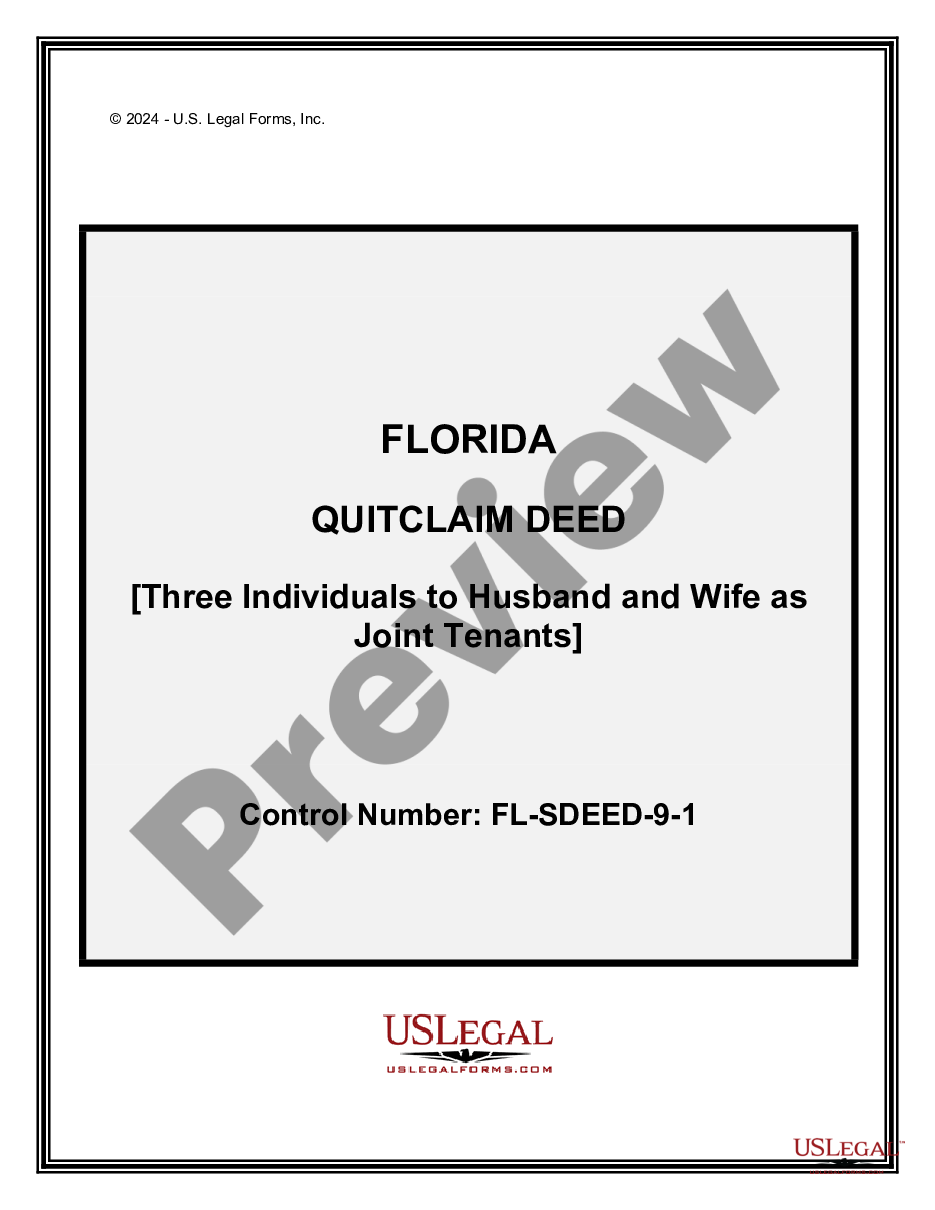
Florida Quitclaim Deed - Three Individuals to Husband and Wife as Joint Tenants
Overview of this form
The Quitclaim Deed is a legal form used to transfer ownership of real estate from three individuals to a husband and wife as joint tenants. Unlike other deed types, a quitclaim deed conveys whatever interest the grantors have in the property without guaranteeing the title's legality. This form is particularly useful when a family member or friend wishes to transfer property without a sale, as it simplifies the process by eliminating the requirement for a title search or warranty of title.
What’s included in this form
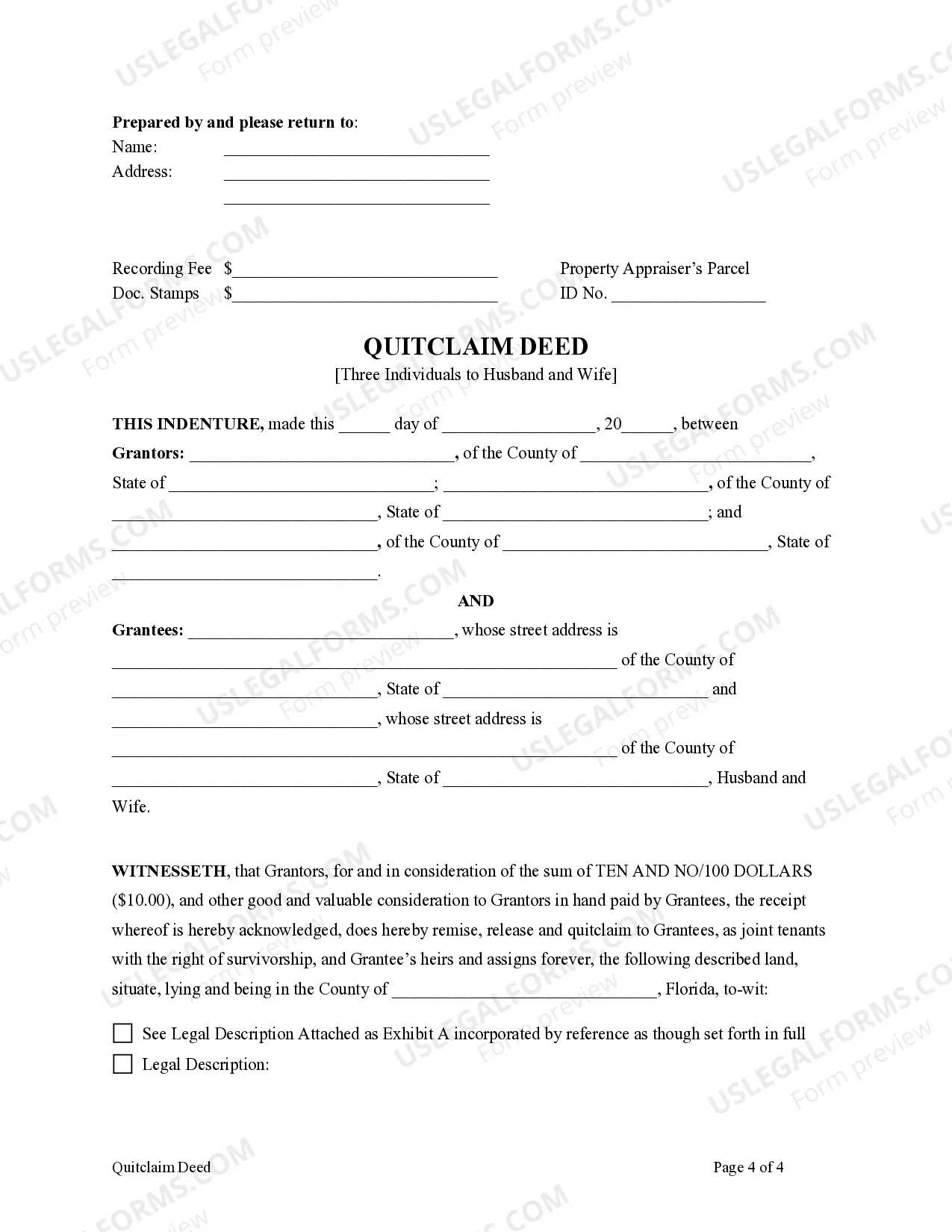
- Grantor names and addresses: Identifies the individuals transferring the property.
- Grantee names and addresses: Identifies the husband and wife receiving the property.
- Consideration amount: Specifies the nominal amount exchanged, often set at ten dollars.
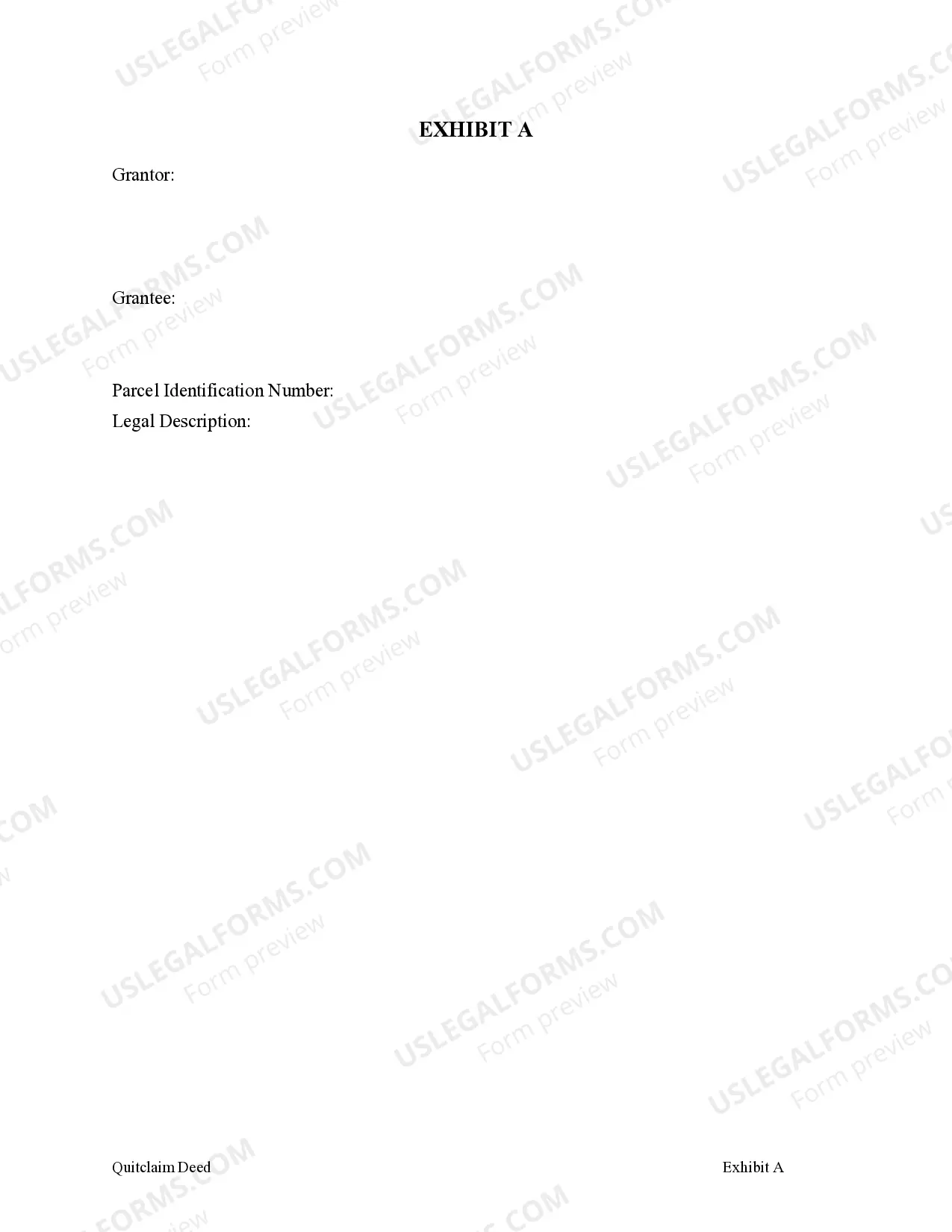
- Property description: Detailed legal description of the real estate being transferred.
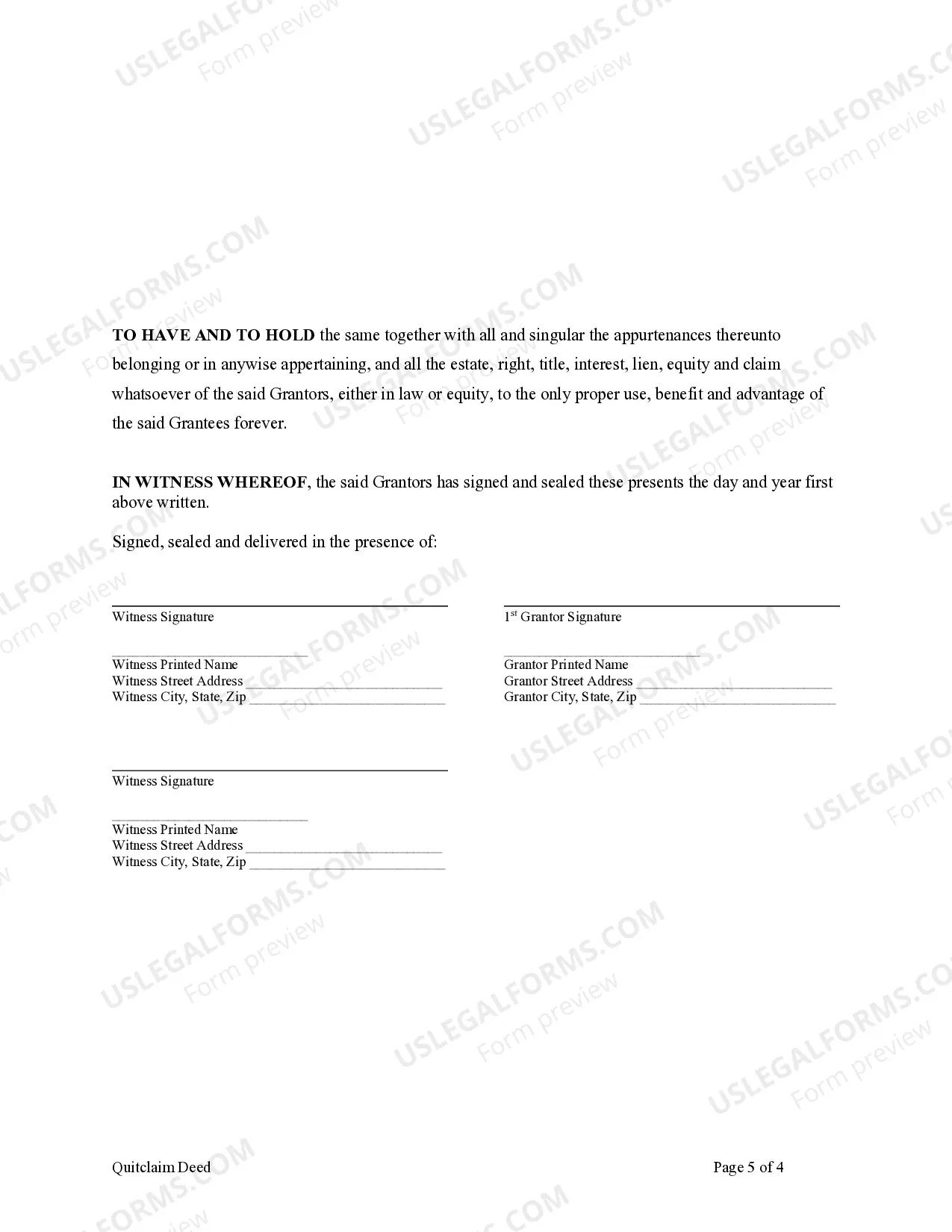
- Witness signatures: Requires signatures of two witnesses and the grantor's signature.
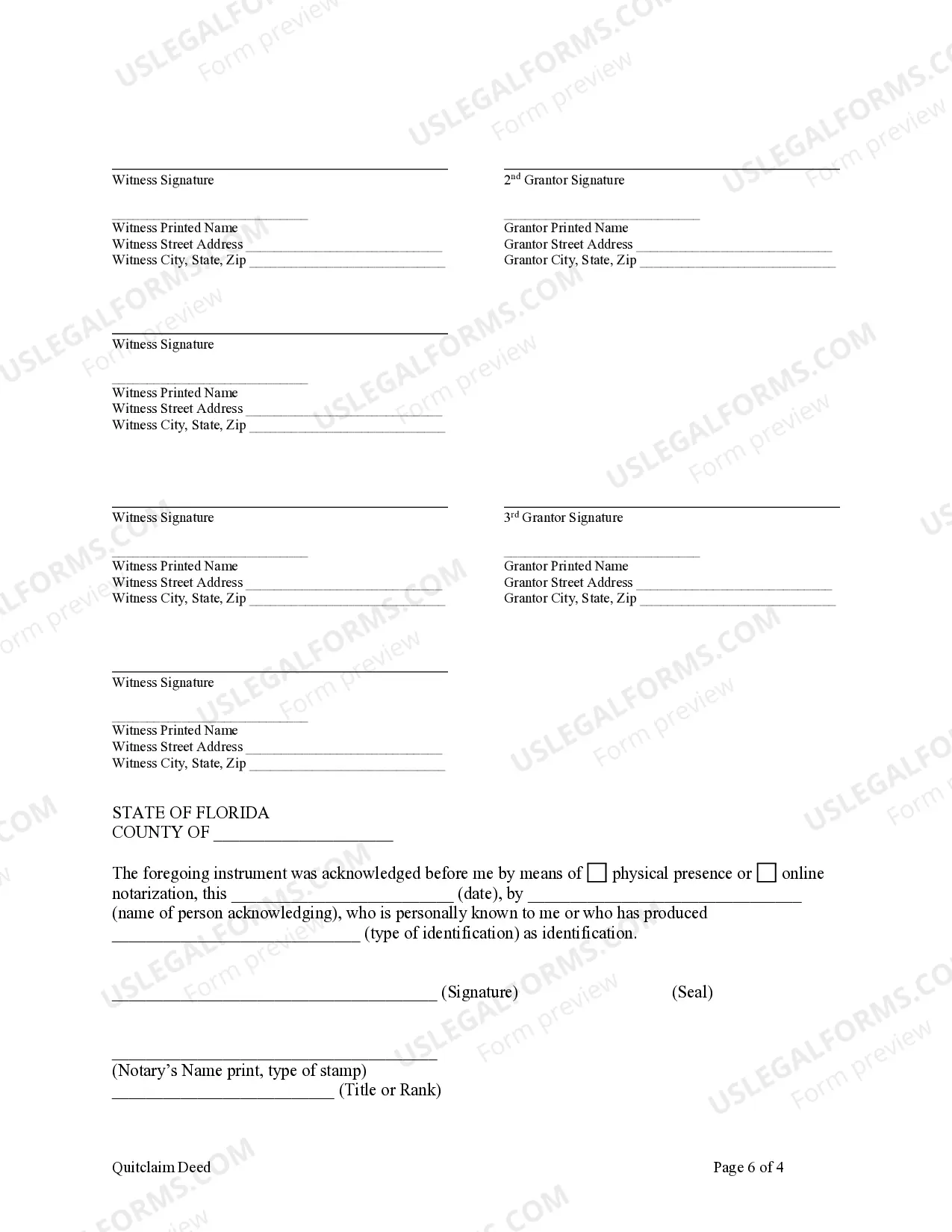
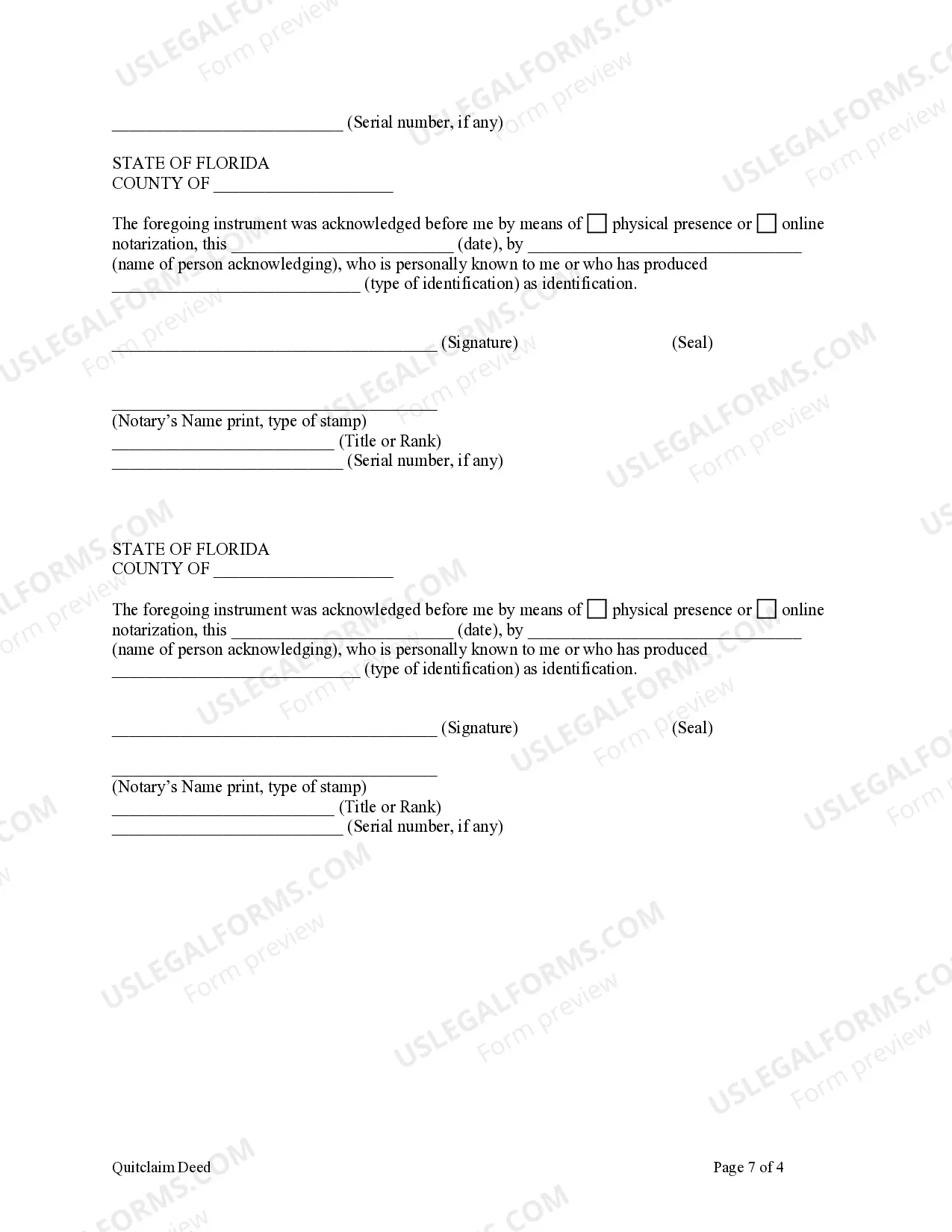
- Notary acknowledgment: Ensures the document is legally recognized by a notary public.




When this form is needed
This form is commonly used when three individuals want to transfer property to a husband and wife without the complexities of a sale. It is appropriate in situations such as family property transfers, estate planning, or when consolidating ownership among family members. It can also be used to clear up title issues when ownership is being clarified or streamlined.
Intended users of this form
- Individuals looking to transfer real estate ownership to a spouse.
- Family members involved in property disputes seeking a solution.
- Homeowners wanting to simplify title ownership.
- Estate executors managing property transfers after a relative's passing.
Steps to complete this form
- Identify the grantors: Fill in the names and addresses of the three individuals transferring the property.
- Specify the grantees: Enter the husband and wife's names along with their addresses.
- Fill in the consideration: State the nominal amount being exchanged, usually ten dollars.
- Describe the property: Provide a legal description of the property being transferred in the designated area.
- Obtain signatures: Have all grantors and witnesses sign the form in the appropriate sections.
- Complete notarization: Schedule a notary public to acknowledge the signatures for legal validity.
Is notarization required?
Yes, this form must be notarized to be legally valid. This added step ensures that the signatures on the form are verified by a notary public, minimizing the risk of fraud. U.S. Legal Forms offers online notarization services, available 24/7 via secure video calls, making this process simple and convenient.
Get your form ready online
Our built-in tools help you complete, sign, share, and store your documents in one place.
Make edits, fill in missing information, and update formatting in US Legal Forms—just like you would in MS Word.
Download a copy, print it, send it by email, or mail it via USPS—whatever works best for your next step.
Sign and collect signatures with our SignNow integration. Send to multiple recipients, set reminders, and more. Go Premium to unlock E-Sign.
If this form requires notarization, complete it online through a secure video call—no need to meet a notary in person or wait for an appointment.
We protect your documents and personal data by following strict security and privacy standards.

Make edits, fill in missing information, and update formatting in US Legal Forms—just like you would in MS Word.

Download a copy, print it, send it by email, or mail it via USPS—whatever works best for your next step.

Sign and collect signatures with our SignNow integration. Send to multiple recipients, set reminders, and more. Go Premium to unlock E-Sign.

If this form requires notarization, complete it online through a secure video call—no need to meet a notary in person or wait for an appointment.

We protect your documents and personal data by following strict security and privacy standards.
Common mistakes
- Failing to include all grantors' names and signatures.
- Not providing a complete legal description of the property.
- Omitting witness signatures or notarization, which can invalidate the form.
- Incorrectly stating the consideration amount.
Why complete this form online
- Convenience: Easily access and complete the form from home.
- Editability: Make changes quickly and accurately before finalizing.
- Reliability: Receive forms drafted to comply with Floridaâs legal standards.
- Prompt access: Download immediately without waiting for physical copies.
Looking for another form?
Form popularity
FAQ
Yes, you can add someone to a deed without a lawyer by using a quitclaim deed. This process is straightforward as you can find templates and guidance online. Just ensure that you fill out the form accurately and follow local filing procedures. However, consider using platforms like USLegalForms for easy access to templates and clear instructions to ensure your compliance with Florida laws.
Adding someone to a deed in Florida can be achieved by using a quitclaim deed. This process involves drafting a new deed that specifies the current owners and the individual being added. Make sure to review all necessary details and legal requirements, like obtaining signatures and notarization. Once completed, file the deed with the county clerk's office to ensure your records are updated.
To add a person to a property deed in Florida, you may want to use a quitclaim deed. This allows you to convey interest in the property to another individual effectively. Ensure that you include the names of both individuals and describe the property accurately in the document. It is advisable to submit the new deed to your local county clerk’s office for proper recording.
Filling out a Florida quitclaim deed involves several important steps. First, clearly write the names of all three individuals and indicate their ownership as husband and wife, joint tenants. Next, provide a legal description of the property and include the parcel number if available. Finally, be sure to sign the document in front of a notary public, and file it with the appropriate county office to finalize the process.
Individuals often use a quitclaim deed in Florida to transfer ownership quickly and without the need for extensive legal proceedings. Common situations include divorce settlements, gift transfers, or adding a spouse to a title. This method provides a simple, clear way to convey interests in property, especially for those considering the Florida Quitclaim Deed - Three Individuals to Husband and Wife as Joint Tenants. Utilizing the right platforms can help streamline the process further.
One significant disadvantage of the right of survivorship is that it can prevent property from being passed according to one's wishes after death. If you would prefer to leave your share to someone other than your co-owner, you cannot do so using this arrangement. Additionally, since all co-owners have equal rights, any disputes among them can complicate ownership. Understand these aspects well while exploring the Florida Quitclaim Deed - Three Individuals to Husband and Wife as Joint Tenants.
A quitclaim deed with rights of survivorship grants co-owners the privilege of jointly owning property while ensuring that upon death, the remaining owner automatically receives full ownership. This type of deed differs from standard deeds as it eliminates the need for probate, making the transfer of property quicker and easier. For those thinking about the Florida Quitclaim Deed - Three Individuals to Husband and Wife as Joint Tenants, this arrangement can enhance your estate planning efficiency.
The quit claim deed right of survivorship in Florida allows co-owners, such as a husband and wife, to automatically inherit each other's share of property upon one owner's death. This means that when one spouse passes away, their interest in the property transfers directly to the surviving spouse. This process protects the ownership rights and simplifies the transition of property. If you’re considering a Florida Quitclaim Deed - Three Individuals to Husband and Wife as Joint Tenants, this feature ensures clarity in ownership.
It is not mandatory for your wife to be on the deed in Florida. However, including her name on a Florida Quitclaim Deed - Three Individuals to Husband and Wife as Joint Tenants can protect her interest in the property. This approach fosters joint ownership and can prevent legal challenges or confusion in the future.
Yes, a married person can own property separately in Florida. One spouse can acquire property without including the other on the deed. However, using a Florida Quitclaim Deed - Three Individuals to Husband and Wife as Joint Tenants can help secure shared ownership, providing security and clarity for both spouses.