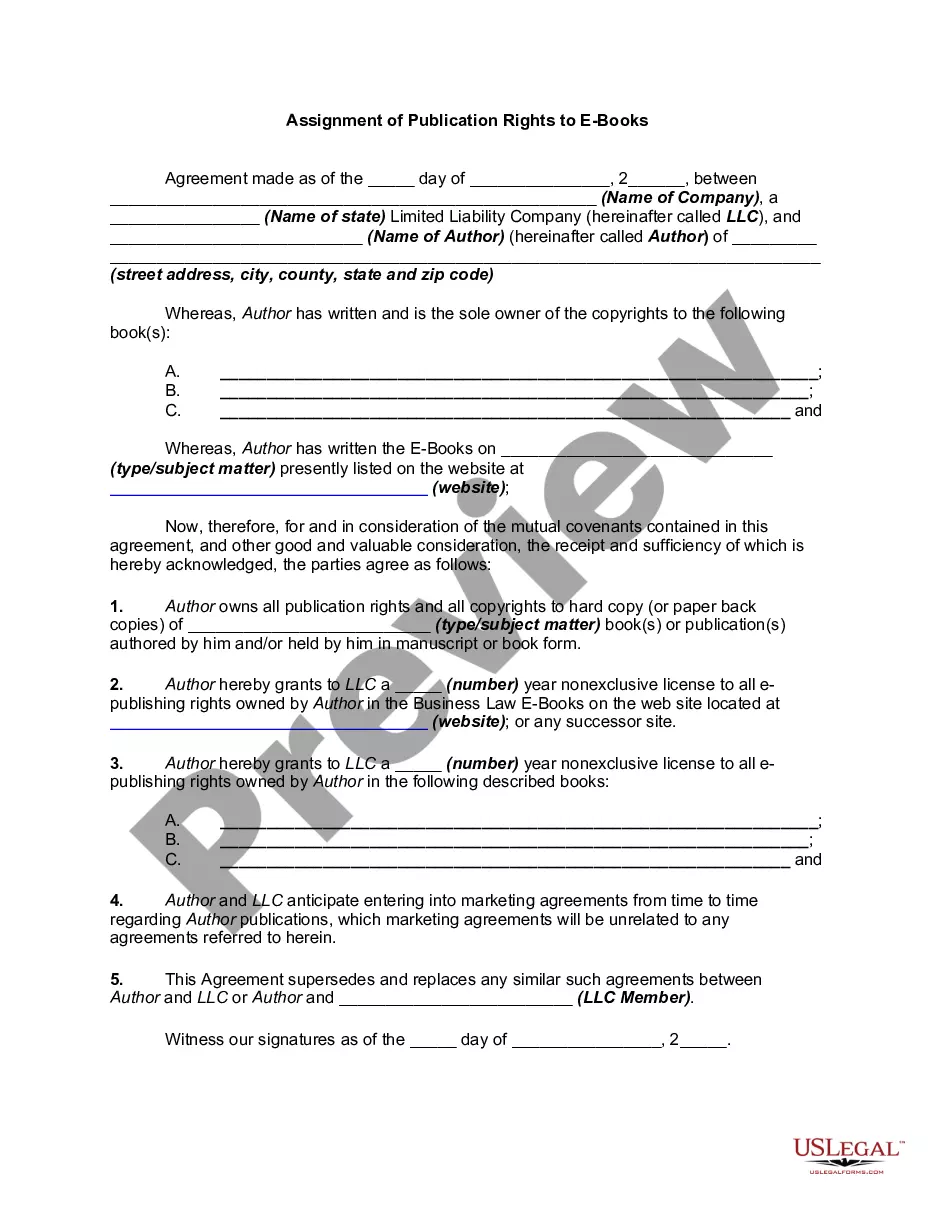
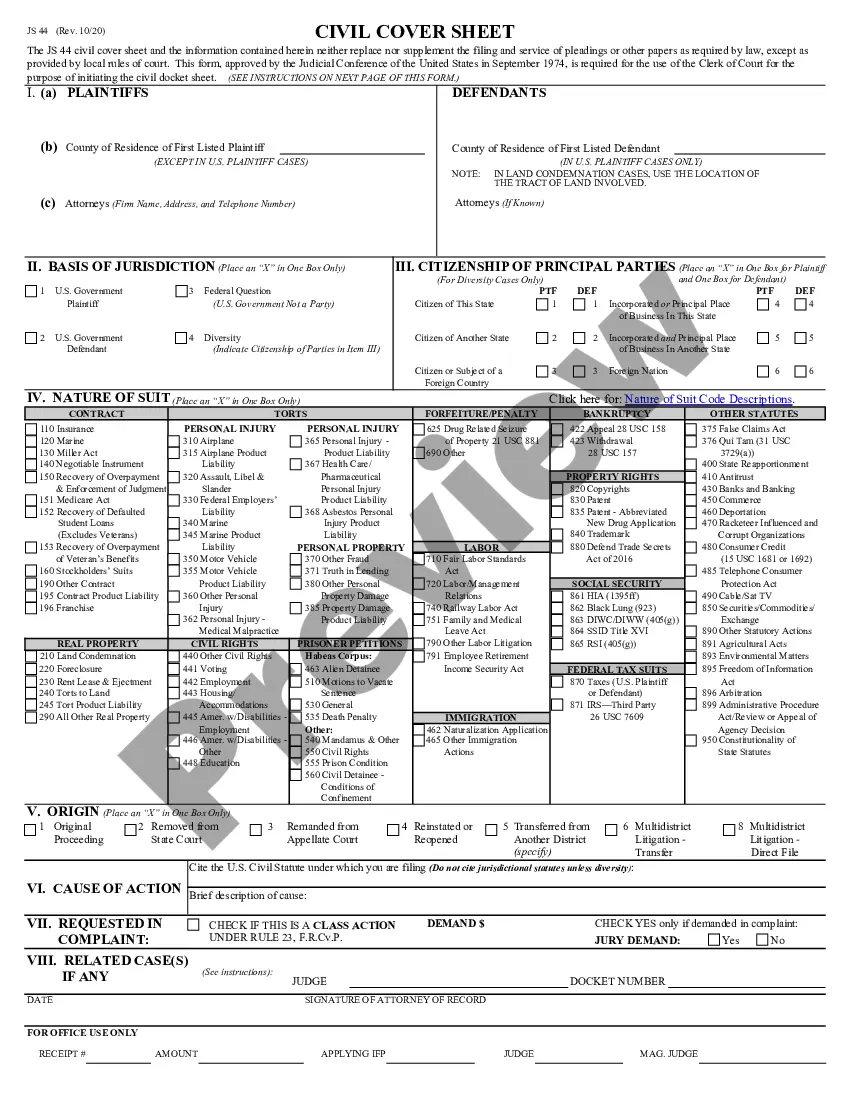
The Florida Civil Cover Sheet (FLED) is a standardized form used in Florida for filing civil lawsuits. It is a one-page document that provides basic information about the parties involved in the lawsuit and the claims being brought by the plaintiff. It must be filed at the beginning of the lawsuit in order to initiate the court process. The information provided on the form will help the court determine which court to assign the case to and who will be responsible for paying court costs. There are two types of Florida Civil Cover Sheet (FLED): the General Civil Cover Sheet (FLSD-CV) and the Small Claims Cover Sheet (FLSD-SC). The General Civil Cover Sheet (FLSD-CV) is used for all civil cases other than small claims, while the Small Claims Cover Sheet (FLSD-SC) is used for small claims cases. Both forms require the same information, including the name of the county where the lawsuit will be filed, the type of case, the attorneys representing each party, the total amount of damages sought, and any special affidavit required.
Florida Civil Cover Sheet (FLSD)
Description



How to fill out Florida Civil Cover Sheet (FLSD)?
What amount of time and resources do you generally allocate for creating official documentation.
There’s a more efficient method to obtain such forms than employing legal professionals or investing hours searching the internet for an appropriate template.
Another advantage of our service is that you can access previously downloaded documents that are securely stored in your profile under the My documents tab. Retrieve them anytime and re-fill your forms as often as needed.
Save time and effort in completing official paperwork with US Legal Forms, one of the most reliable online services. Join us today!
- Browse through the form content to ensure it aligns with your state laws. You can verify this by checking the form description or utilizing the Preview option.
- If your legal template does not fulfill your needs, search for an alternative using the search bar at the top of the page.
- If you're already signed up for our service, Log In and download the Florida Civil Cover Sheet (FLSD). If not, follow the next steps.
- Click Buy now once you locate the appropriate blank. Select the subscription plan that best fits your requirements to access the complete features of our library.
- Create an account and complete your subscription payment. Transactions can be made using your credit card or PayPal - our service is completely secure for that.
- Download your Florida Civil Cover Sheet (FLSD) to your device and complete it either on a printed hard copy or electronically.
Form popularity
FAQ
Yes, you can sue without a lawyer in Florida. Many individuals represent themselves in civil cases by completing necessary documents, including the Florida Civil Cover Sheet (FLSD). Familiarize yourself with court procedures before filing your case. Platforms like uslegalforms can help simplify the document preparation process, providing the forms you need to take action.
To initiate a lawsuit without a lawyer, start by determining the correct court for your case. You will need to complete the Florida Civil Cover Sheet (FLSD) and other relevant forms. Filing these documents with the court helps you start the legal process. Additionally, consider using resources from uslegalforms, which provide guidance and templates to ensure you don’t miss any essential steps.
The duration a civil case can remain open in Florida varies based on several factors, including the complexity of the case and the court's schedule. Generally, cases can extend for months or even years if there are multiple motions or appeals. To keep your case on track, use the Florida Civil Cover Sheet (FLSD) properly and stay proactive about any required filings or deadlines.
In Florida, the maximum amount you can sue for in civil court varies depending on the type of court. In small claims court, the limit is typically $8,000, while in circuit court, you can pursue amounts over $30,000. It's important to select the right court based on your claims and to utilize the Florida Civil Cover Sheet (FLSD) accurately, ensuring it reflects the amount you seek.
A civil docket sheet is a public record that lists all the filings and proceedings in a civil lawsuit. It provides a chronological overview of a case, including motions, orders, and judgments. This sheet is essential for tracking the progress of your case and can be referenced alongside your Florida Civil Cover Sheet (FLSD) to keep the court informed of your actions.
The fact information sheet in Florida is a document used to collect key financial information from parties in civil cases. Under Florida Rule of Civil Procedure, this sheet serves to ensure transparency and assist the court in resolving financial aspects of a case. It's often necessary for obtaining judgments or during other legal processes, making it vital for litigants to understand its purpose alongside the Florida Civil Cover Sheet (FLSD).
To file a civil suit in Florida, start by drafting your complaint, which outlines the claims against the defendant. You'll need to complete the Florida Civil Cover Sheet (FLSD) and submit both documents to the appropriate court with jurisdiction over your case. After filing, you must serve the defendant with the complaint and cover sheet, ensuring they receive notice of your claims.
In Florida, the burden of proof in a civil case typically lies with the plaintiff. This means the person bringing the lawsuit must provide sufficient evidence to support their claims. A judge or jury will evaluate whether the evidence meets the necessary standard, which is usually 'preponderance of the evidence.' Understanding how the Florida Civil Cover Sheet (FLSD) fits into this process is crucial for effectively presenting your case.
In Florida, the time limit to file a civil lawsuit generally falls under the statute of limitations, which varies depending on the type of case. Most personal injury claims must be filed within four years, while contracts typically have a five-year limit. Understanding these timelines is essential to protect your rights and ensure your case proceeds. To help navigate these requirements, consider exploring USLegalForms for comprehensive information and downloadable forms.
The 120 day Rule requires that after you file a civil case in Florida, you must serve the defendant within 120 days. If you do not complete service within this timeline, the court may dismiss your case unless you show good cause for the delay. This rule emphasizes the importance of timely legal action, ensuring that all parties are informed and able to respond. For assistance, you can visit USLegalForms to access relevant documents and tips for effective service.