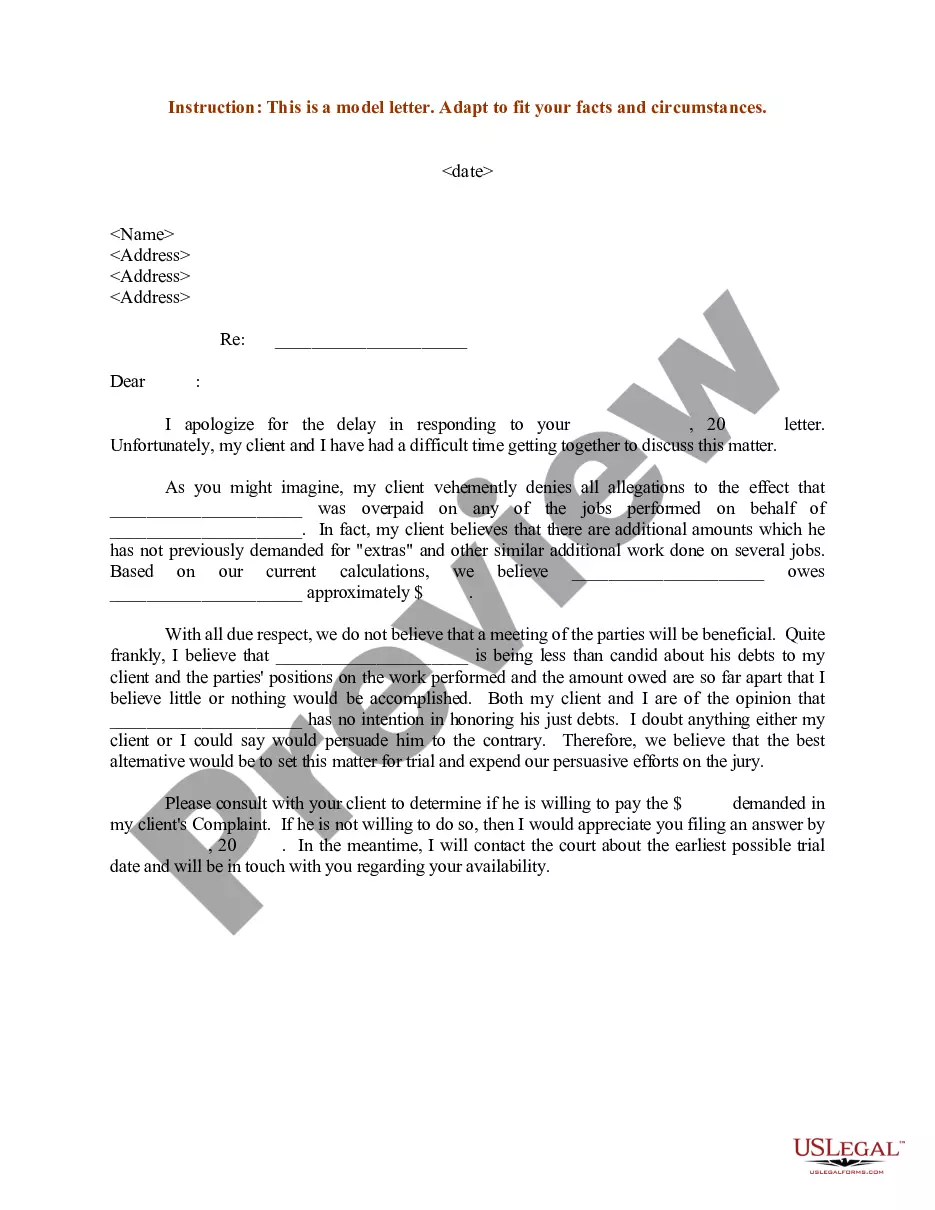
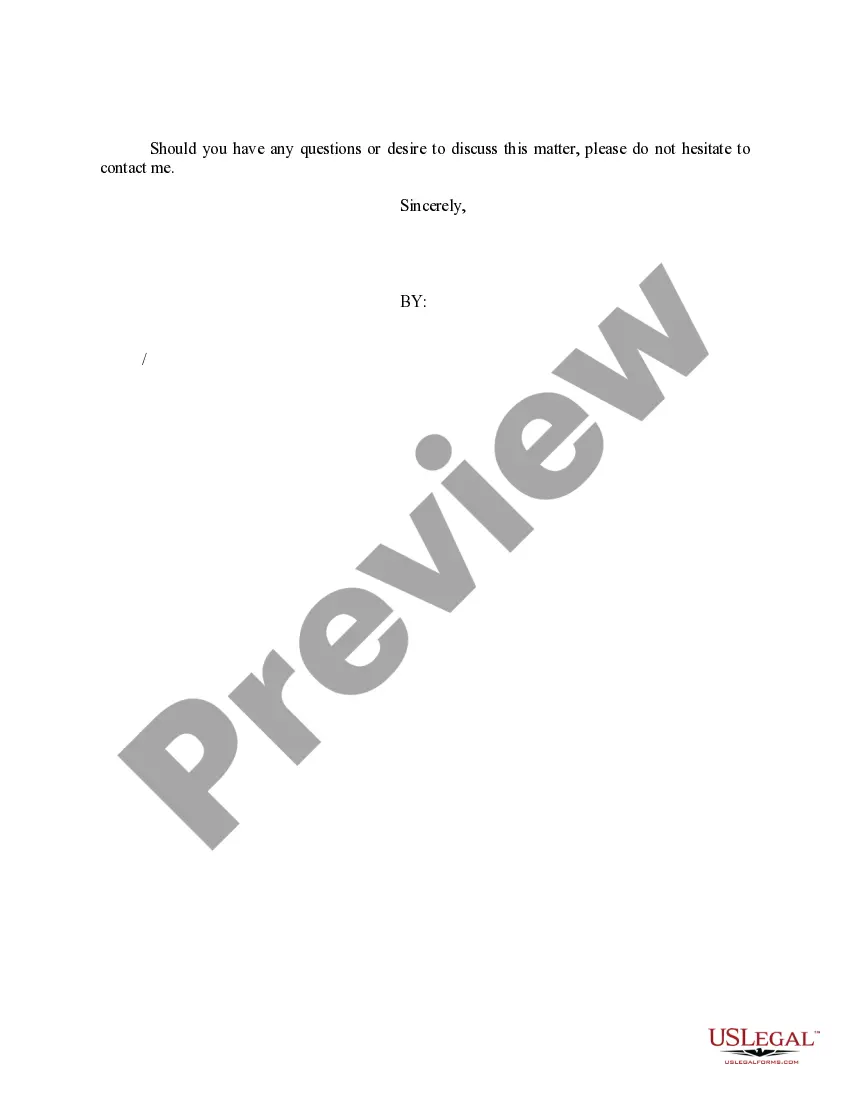
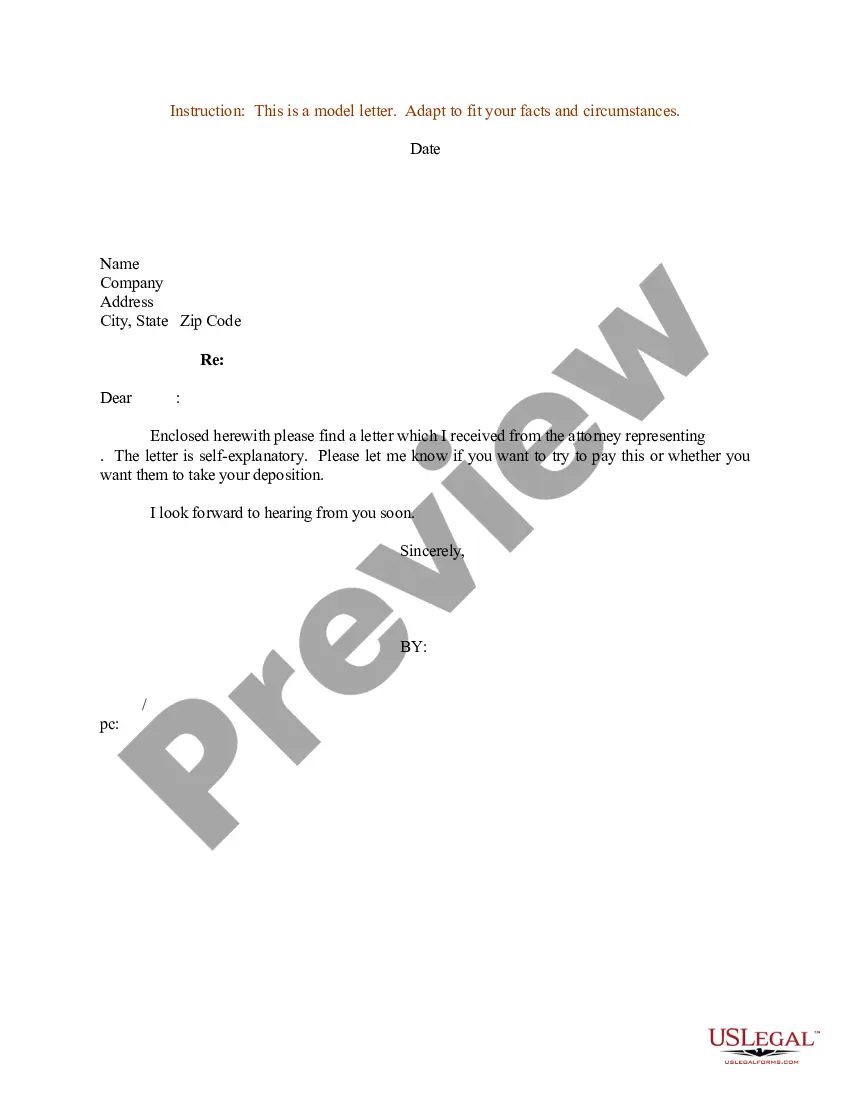
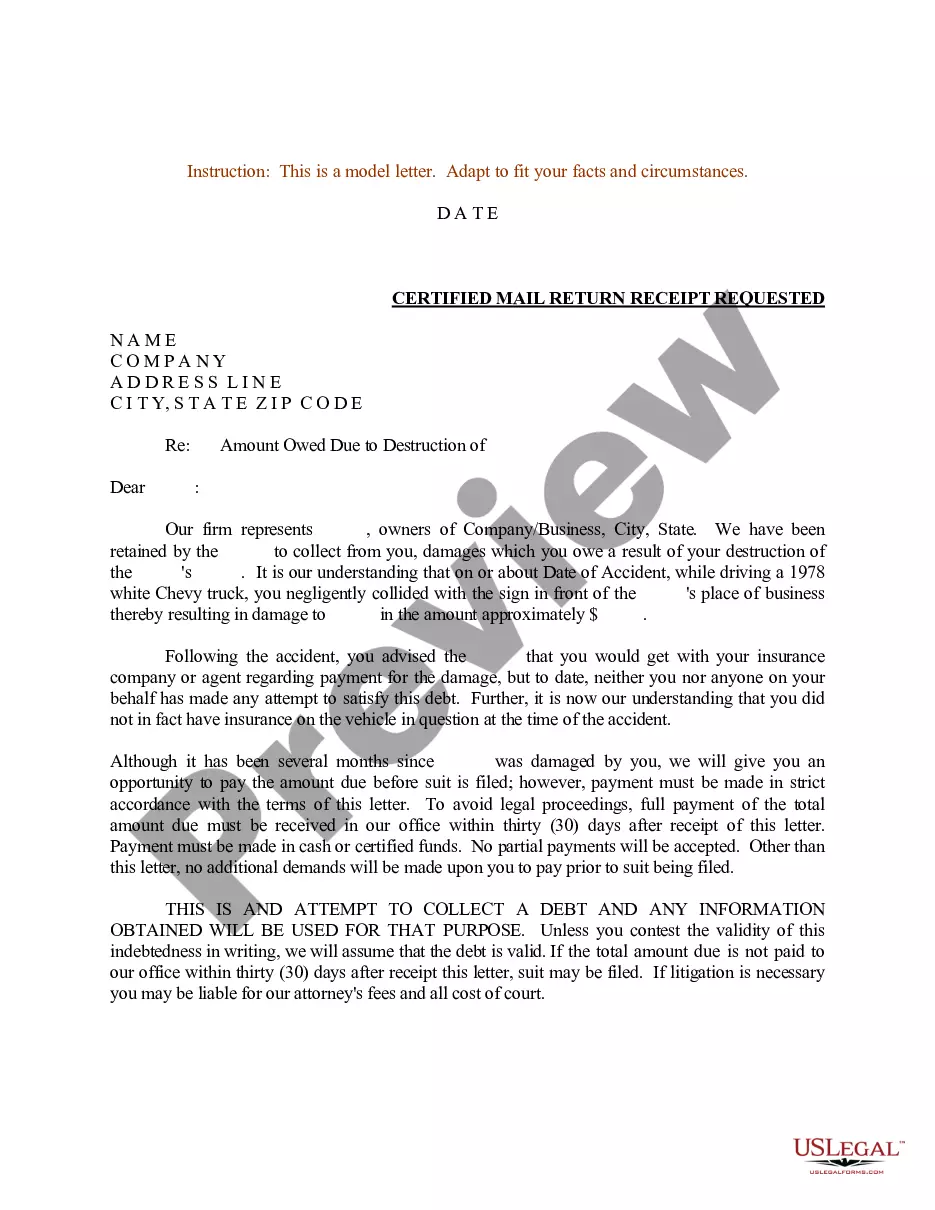
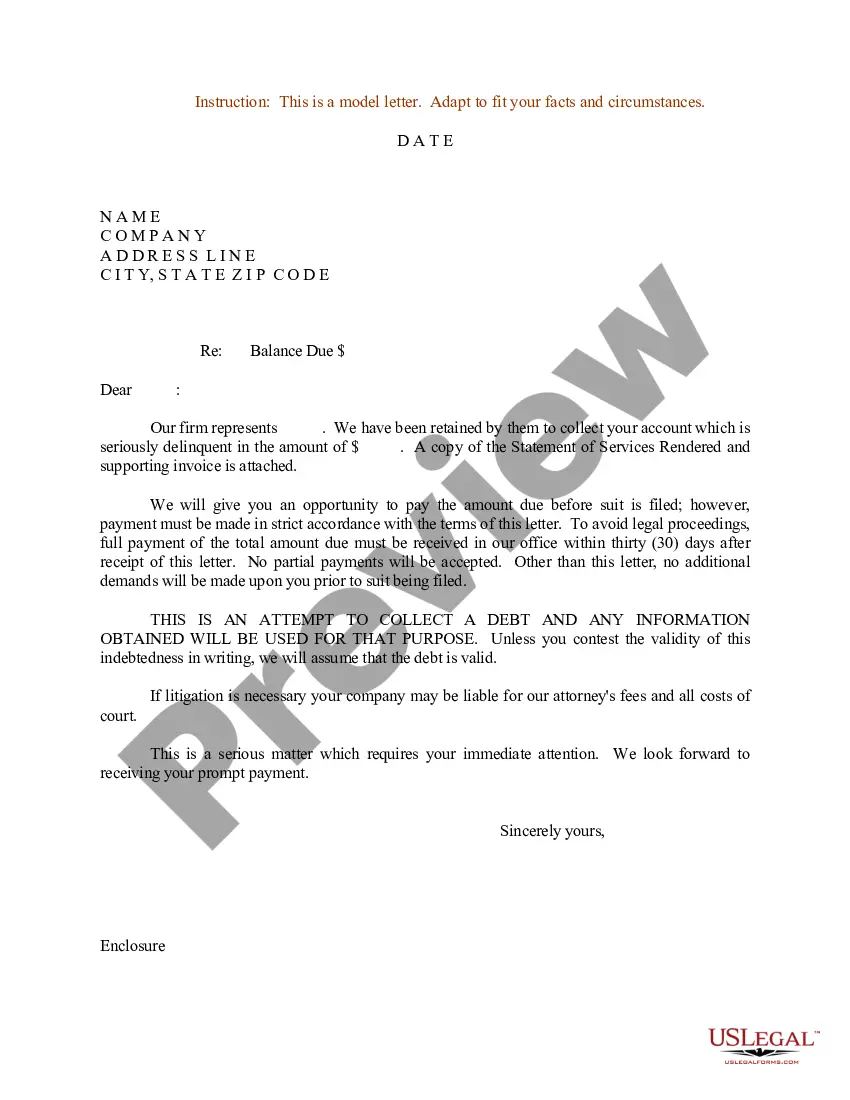
Florida Sample Letter for Alleged Payments Due from Defendant
Description
Get your form ready online
Our built-in tools help you complete, sign, share, and store your documents in one place.
Make edits, fill in missing information, and update formatting in US Legal Forms—just like you would in MS Word.
Download a copy, print it, send it by email, or mail it via USPS—whatever works best for your next step.
Sign and collect signatures with our SignNow integration. Send to multiple recipients, set reminders, and more. Go Premium to unlock E-Sign.
If this form requires notarization, complete it online through a secure video call—no need to meet a notary in person or wait for an appointment.
We protect your documents and personal data by following strict security and privacy standards.

Make edits, fill in missing information, and update formatting in US Legal Forms—just like you would in MS Word.

Download a copy, print it, send it by email, or mail it via USPS—whatever works best for your next step.

Sign and collect signatures with our SignNow integration. Send to multiple recipients, set reminders, and more. Go Premium to unlock E-Sign.

If this form requires notarization, complete it online through a secure video call—no need to meet a notary in person or wait for an appointment.

We protect your documents and personal data by following strict security and privacy standards.
Looking for another form?
How to fill out Sample Letter For Alleged Payments Due From Defendant?
US Legal Forms - one of the largest collections of legal documents in the United States - offers a variety of legal document templates that you can obtain or create. By using the site, you can access thousands of forms for business and personal purposes, organized by categories, states, or keywords. You can find the latest forms like the Florida Sample Letter for Alleged Payments Due from Defendant within moments.
If you already have a monthly subscription, Log In and download the Florida Sample Letter for Alleged Payments Due from Defendant from the US Legal Forms library. The Download button will appear on every form you view. You can access all previously downloaded forms from the My documents tab in your account.
To use US Legal Forms for the first time, here are some simple instructions to help you get started: Ensure you have selected the correct form for your city/state. Click the Preview button to examine the form's content. Review the form details to confirm you have chosen the right form. If the form does not meet your needs, utilize the Search field at the top of the screen to find one that does. Once you are satisfied with the form, confirm your selection by clicking the Purchase now button. Then, choose the pricing plan you prefer and provide your information to register for an account.
- Process the transaction. Use your credit card or PayPal account to complete the transaction.
- Select the format and download the form to your device.
- Make modifications. Complete, edit, print, and sign the downloaded Florida Sample Letter for Alleged Payments Due from Defendant.
- Each template you added to your account has no expiration date and is yours indefinitely. Therefore, if you need to download or print another copy, just go to the My documents section and click on the form you want.
- Access the Florida Sample Letter for Alleged Payments Due from Defendant with US Legal Forms, the most comprehensive library of legal document templates.
- Utilize thousands of professional and state-specific templates that meet your business or personal needs and requirements.
Form popularity
FAQ
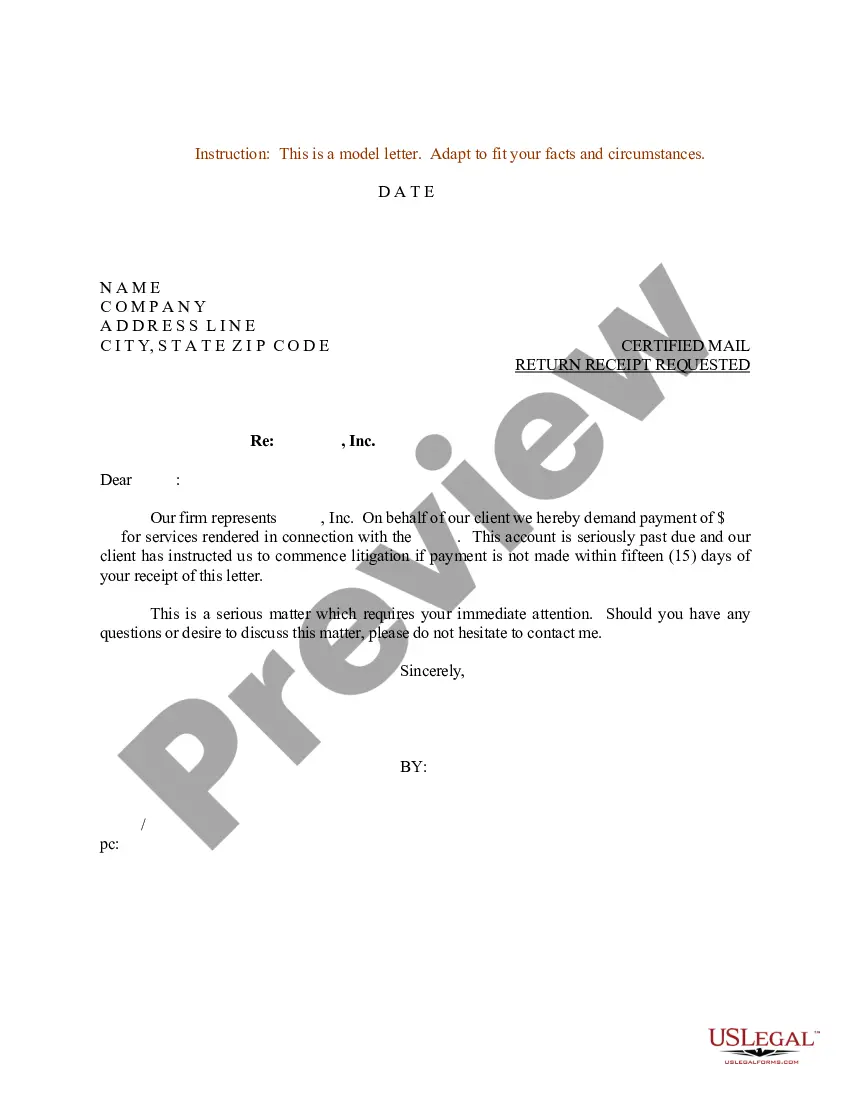
A demand letter for payment is a request for money owed that is commonly the last notice given by the creditor. The party owed should include language that motivates the debtor to make payment. Examples include giving a discount if the debtor decides to pay or threatening to send the debt to collections.
Before you draft your own demand letter and fire it off thinking your actions will result in getting paid, getting the services you contracted for, demanding the satisfaction that you were expecting, consider that writing your own demand letter can backfire badly!
If you simply ignore the letter, the plaintiff's next step will almost certainly be to file a lawsuit. If that happens, your cost to resolve the suit?be it through a settlement, a win at trial, or a loss at trial?will rise dramatically.
A demand letter should always be polite. Using abusive or threatening language will not work in your favor ? not only will it make the defendant less likely to want to settle your claim, it could even cause damage to your actual case.
Address the issues raised in the demand letter: Your response should directly address the issues raised in the demand letter. Provide a detailed explanation of any relevant information or documentation that supports your position, and explain why you agree or disagree with the demands being made.
Here are five points to keep in mind when drafting a pre-litigation demand letter: Clearly state the nature of your demand. ... Stick to the facts and avoid inflammatory language. ... Consider the applicable ethical constraints. ... Follow the requirements of any applicable contracts or statutes.
The purpose of a demand letter is to begin the negotiation process that will hopefully result in dispute resolution to avoid filing a claim in court if it is possible to resolve the issue without litigation.
Frequently Asked Questions (FAQ) Type your letter. ... Concisely review the main facts. ... Be polite. ... Write with your goal in mind. ... Ask for exactly what you want. ... Set a deadline. ... End the letter by stating you will promptly pursue legal remedies if the other party does not meet your demand. Make and keep copies.