Florida Indemnification Agreement for Personal Property
Description
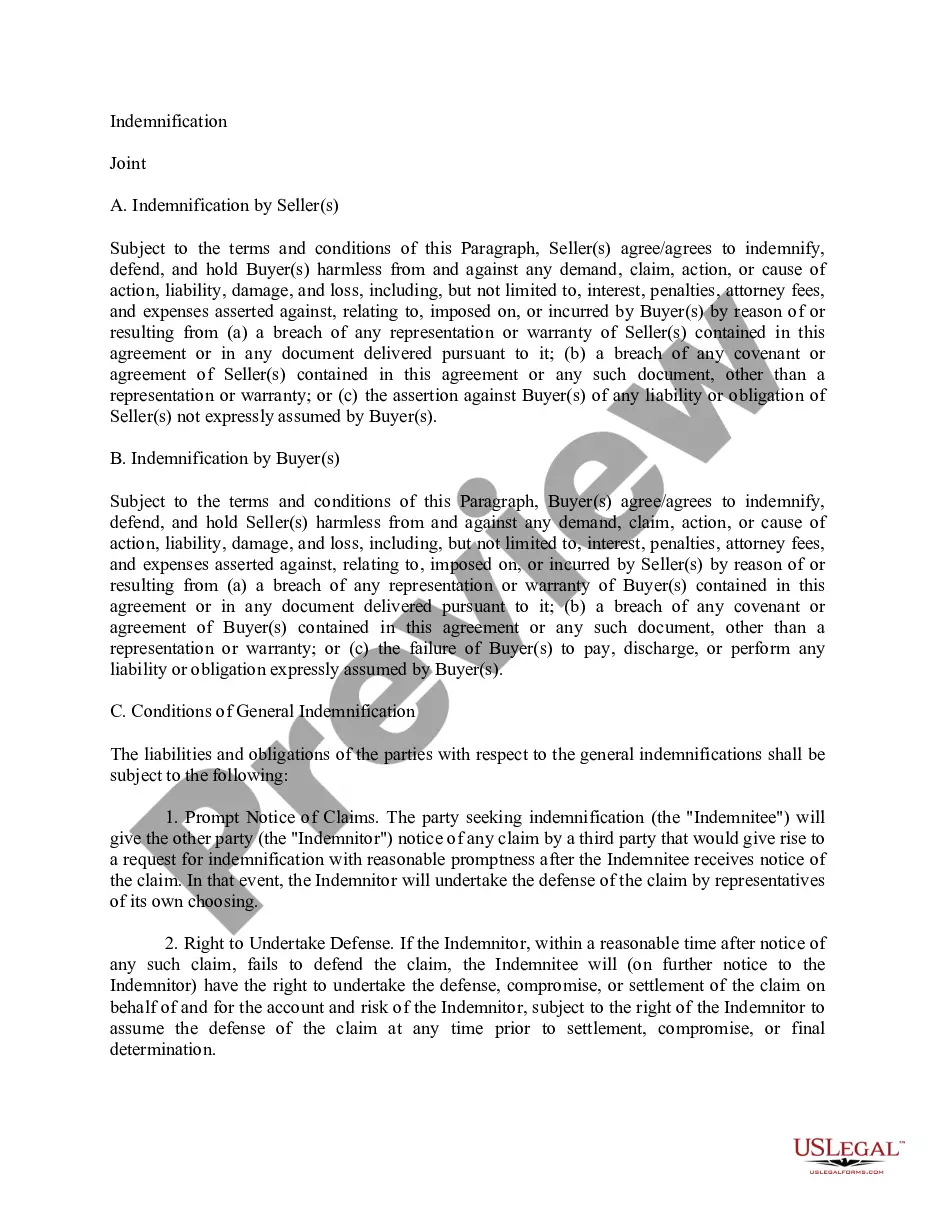
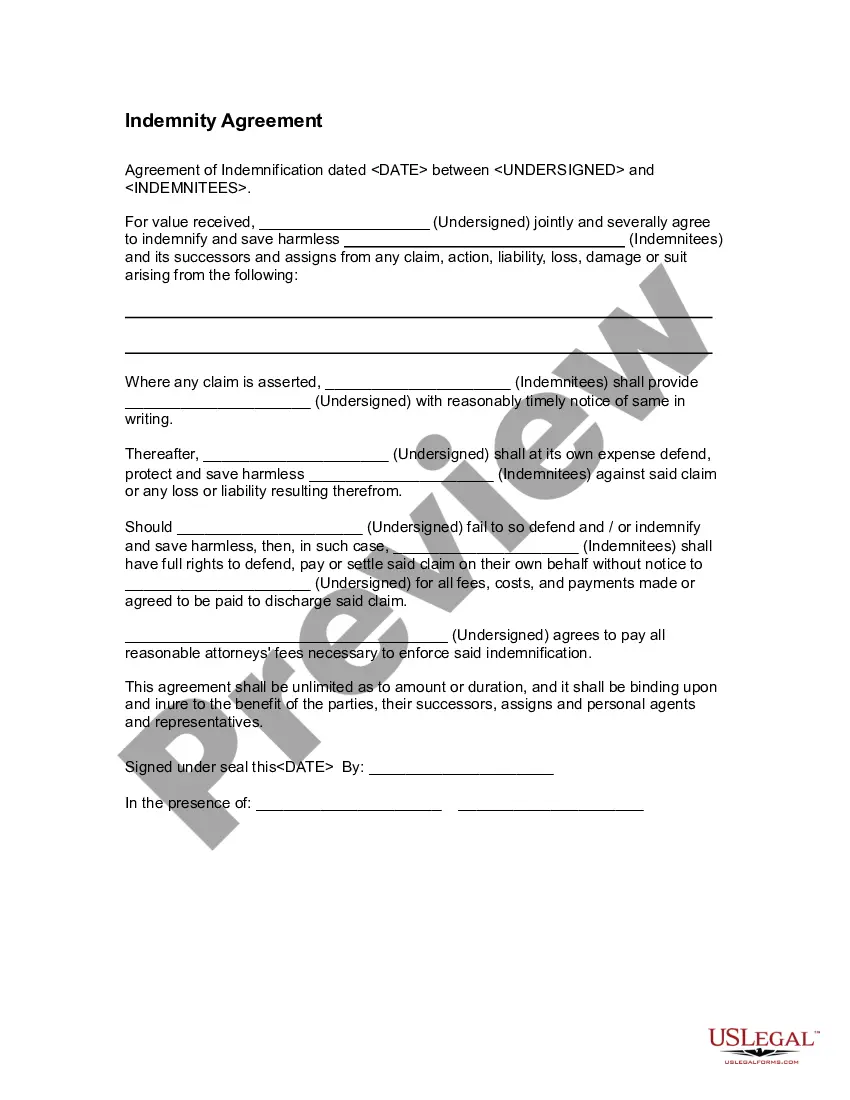
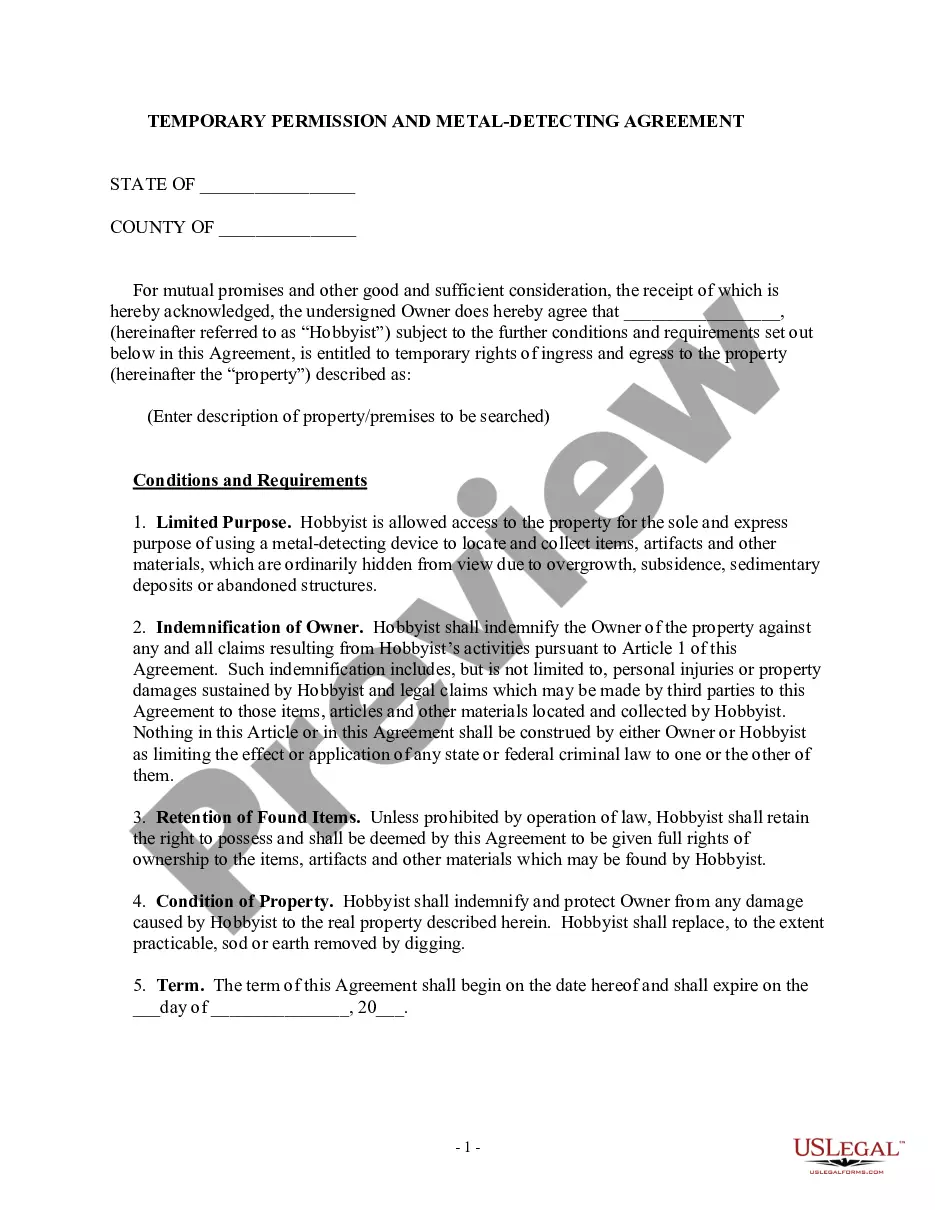


How to fill out Indemnification Agreement For Personal Property?
If you need to finish, retrieve, or print legal document templates, utilize US Legal Forms, the most extensive compilation of legal forms available online.
Make use of the website's straightforward and user-friendly search function to acquire the documents you require.
A variety of templates for business and personal purposes are organized by categories and states, or keywords.
Step 4. Once you have found the form you need, click on the Download now button. Choose your preferred pricing plan and submit your information to register for an account.
Step 5. Complete the payment. You can use your credit card or PayPal account to finalize the transaction.
- Use US Legal Forms to get the Florida Indemnification Agreement for Personal Property in just a few clicks.
- If you are already a US Legal Forms user, Log In to your account and click on the Download button to obtain the Florida Indemnification Agreement for Personal Property.
- You can also access forms you previously obtained under the My documents section of your account.
- If you are using US Legal Forms for the first time, follow the guidelines below.
- Step 1. Ensure you have selected the form for the correct city/state.
- Step 2. Utilize the Preview feature to review the form’s content. Don't forget to read the description.
- Step 3. If you are not satisfied with the form, use the Search box at the top of the screen to find other versions of the legal type template.
Form popularity
FAQ
Indemnification provisions are generally enforceable. There are certain exceptions however. Indemnifications that require a party to indemnify another party for any claim irrespective of fault ('broad form' or 'no fault' indemnities) generally have been found to violate public policy.
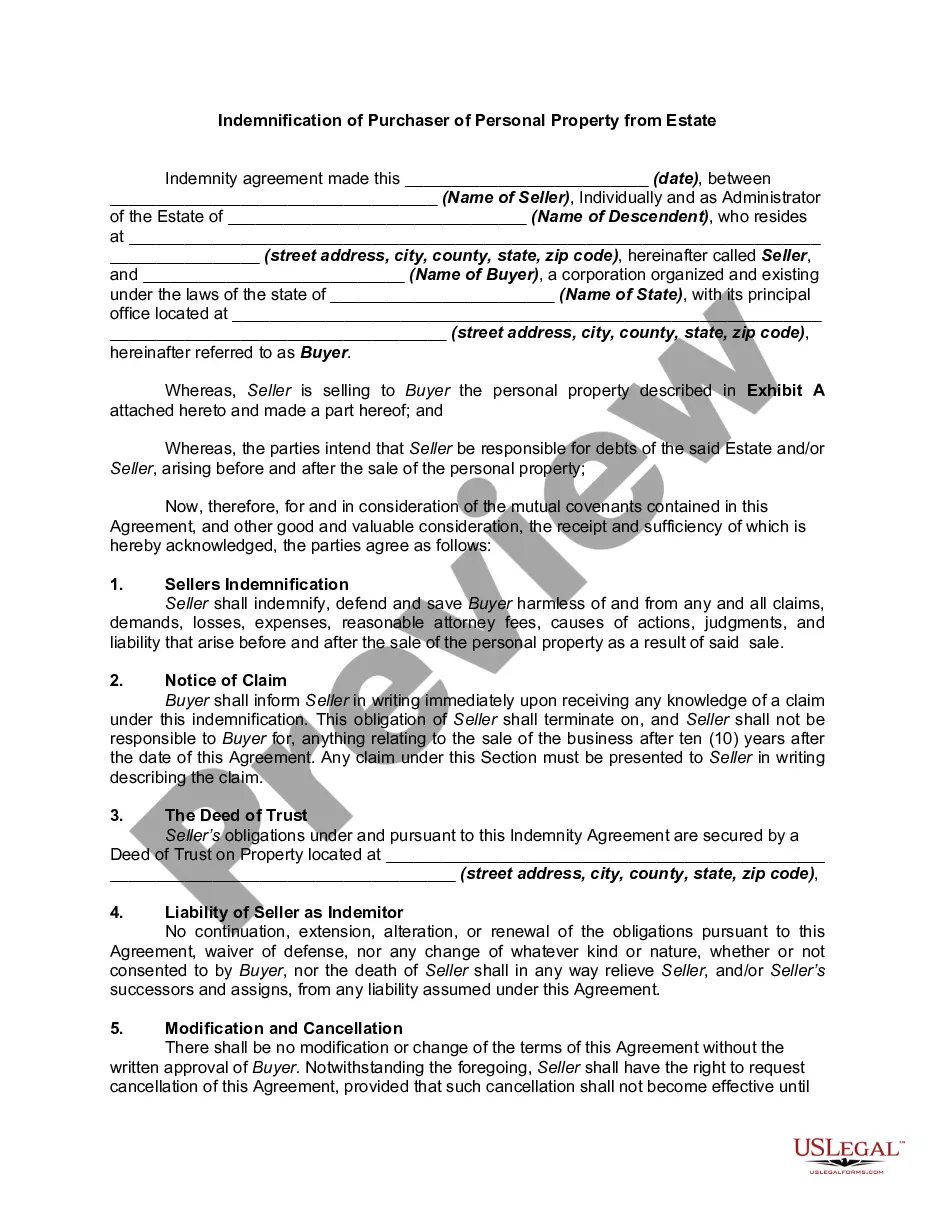
Letters of indemnity should include the names and addresses of both parties involved, plus the name and affiliation of the third party. Detailed descriptions of the items and intentions are also required, as are the signatures of the parties and the date of the contract's execution.
An indemnity agreement is a contract that protect one party of a transaction from the risks or liabilities created by the other party of the transaction. Hold harmless agreement, no-fault agreement, release of liability, or waiver of liability are other terms for an indemnity agreement.200c
An Indemnity Agreement is a contract between two parties that protects one party from liabilities, losses, claims, and damages during their involvement in an activity.
Tips for Enforcing Indemnification ProvisionsIdentify Time Periods for Asserting Indemnification Rights.Provide Notice in a Timely Fashion.Notify All Concerned Parties.Understand Limitations on Recovery.Exclusive Remedy.Scope of Damages.Claims Process/Dispute Resolution.
A common example of indemnification happens with reagrd to insurance transactions. This often happens when an insurance company, as part of an individual's insurance policy, agrees to indemnify the insured person for losses that the insured person incurred as the result of accident or property damage.
Sellers should also limit the survival period for most indemnification claims to just a short time after closing, i.e., six months to two years (although certain "fundamental" claims or particularly risky claims typically survive for much longer periods).
Company/Business/Individual Name shall fully indemnify, hold harmless and defend and its directors, officers, employees, agents, stockholders and Affiliates from and against all claims, demands, actions, suits, damages, liabilities, losses, settlements, judgments, costs and expenses (including but not
Essentially, a hold harmless agreement is a contract or clause in a contract between two parties that stipulates that one party will not hold the other liable for damages in the event of an injury or other loss.
California courts have held that indemnify and hold harmless confer distinct rights: (1) Indemnify is an offensive right, allowing the indemnified party to seek indemnification from the indemnifying party; (2) Hold harmless is a defensive right, protecting the indemnified party from being bothered by the other