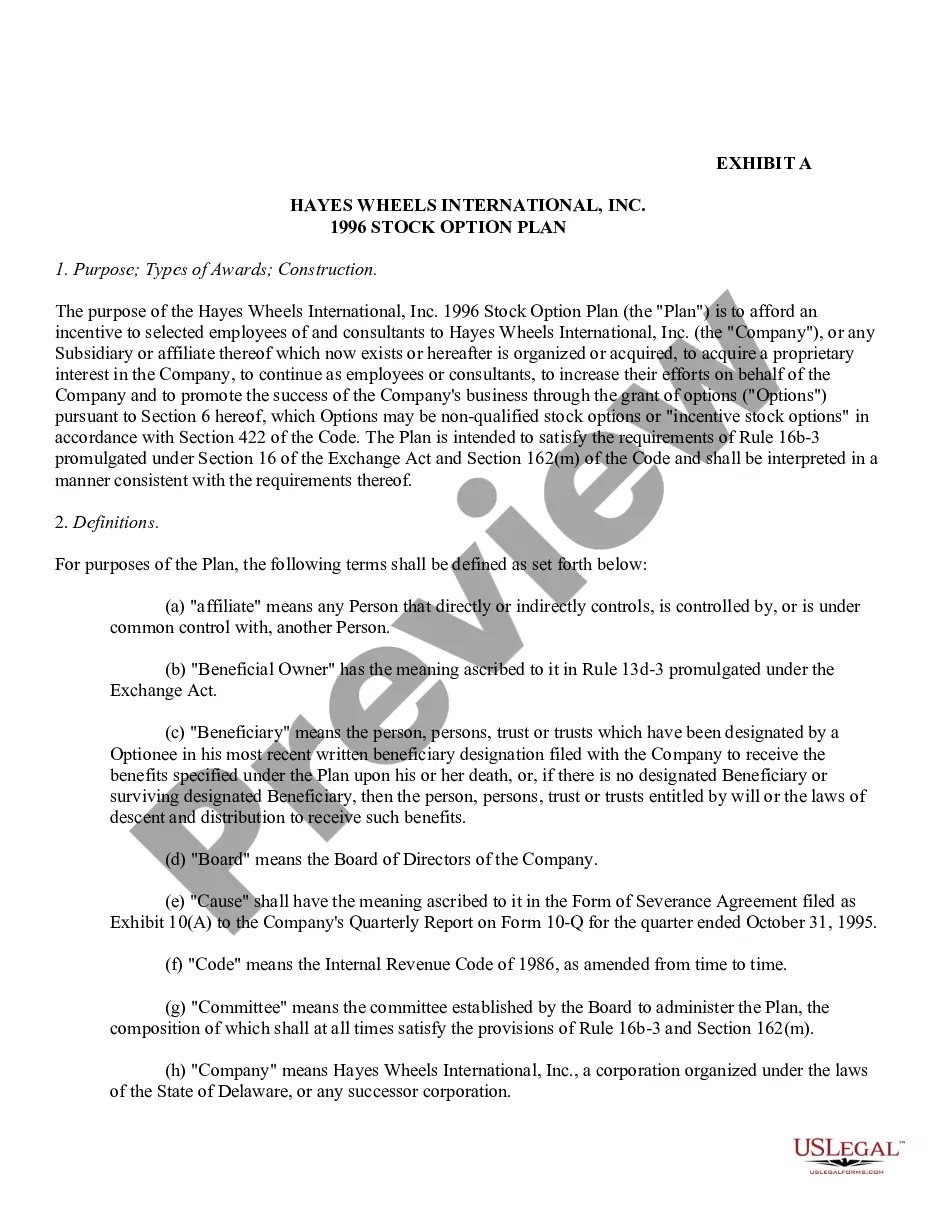
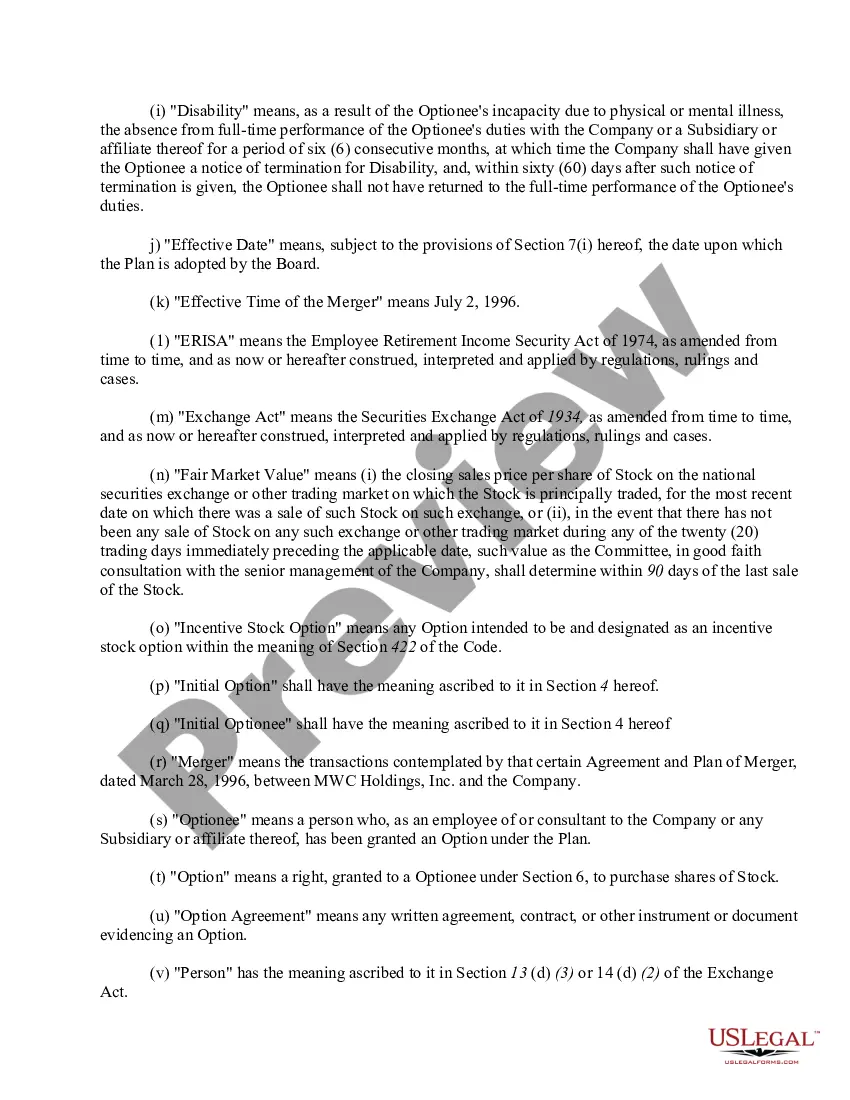
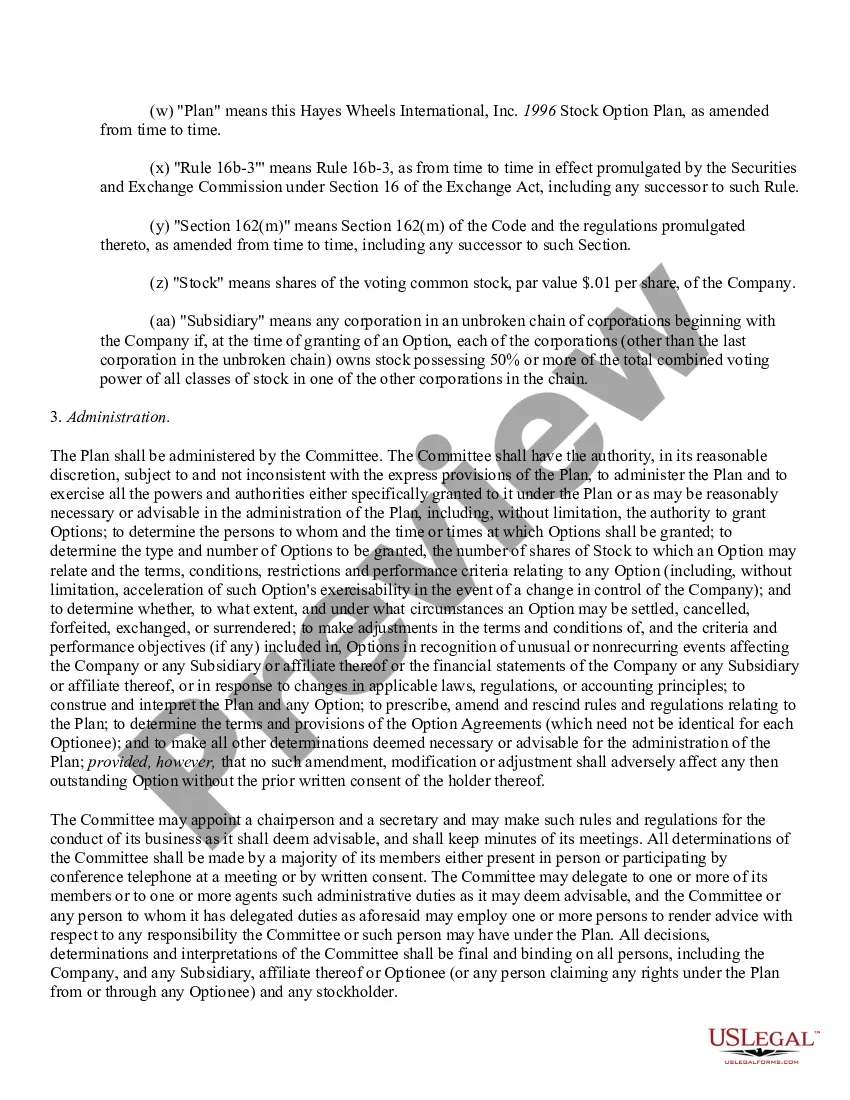
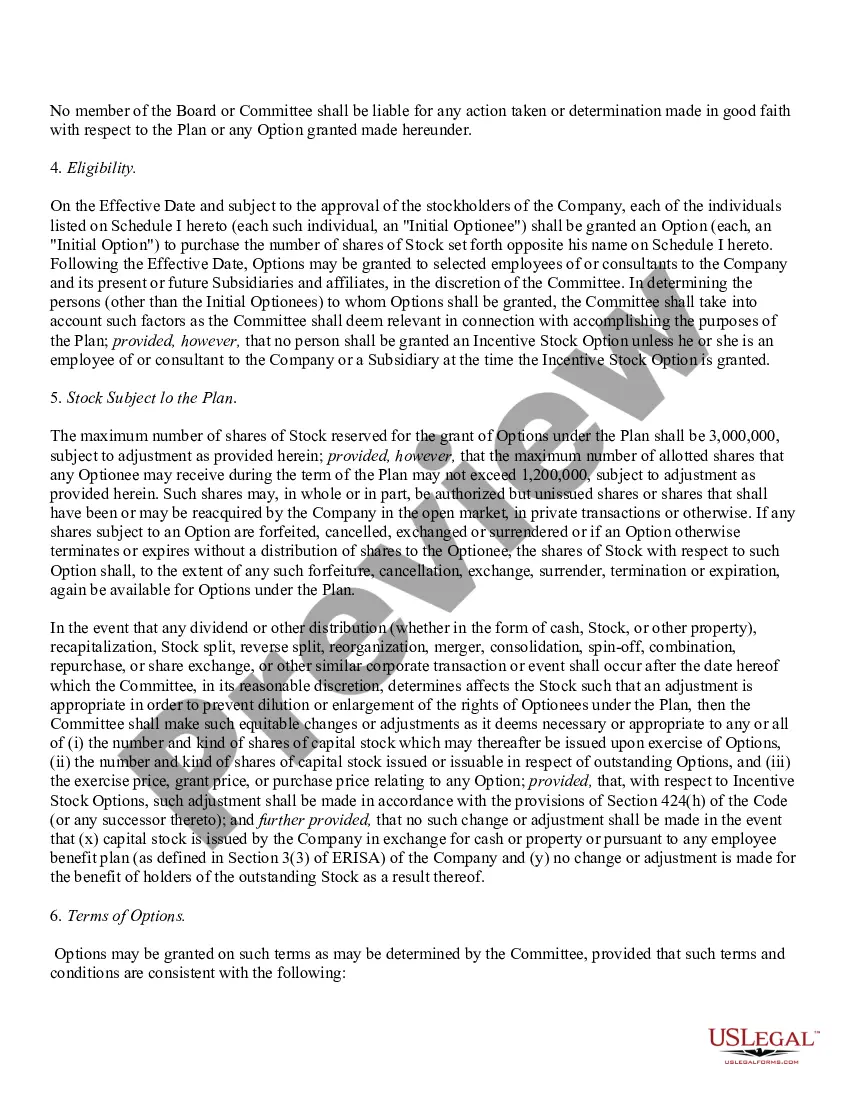
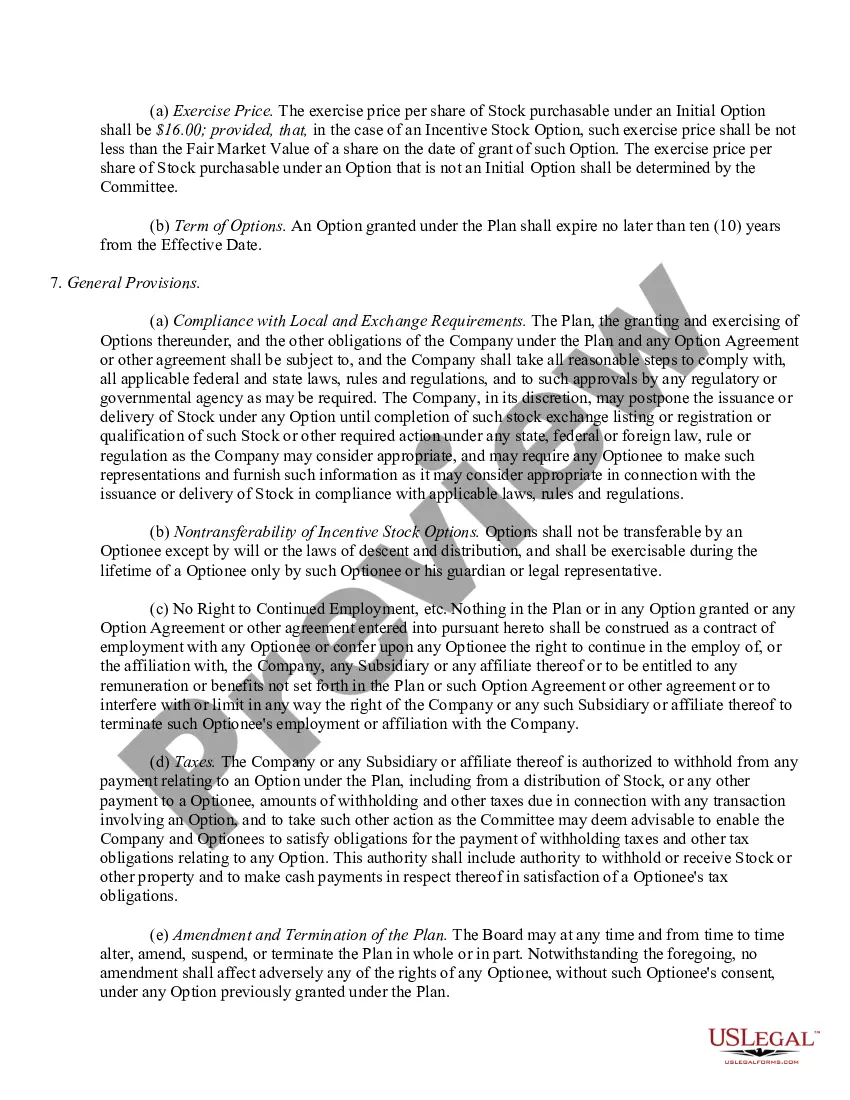
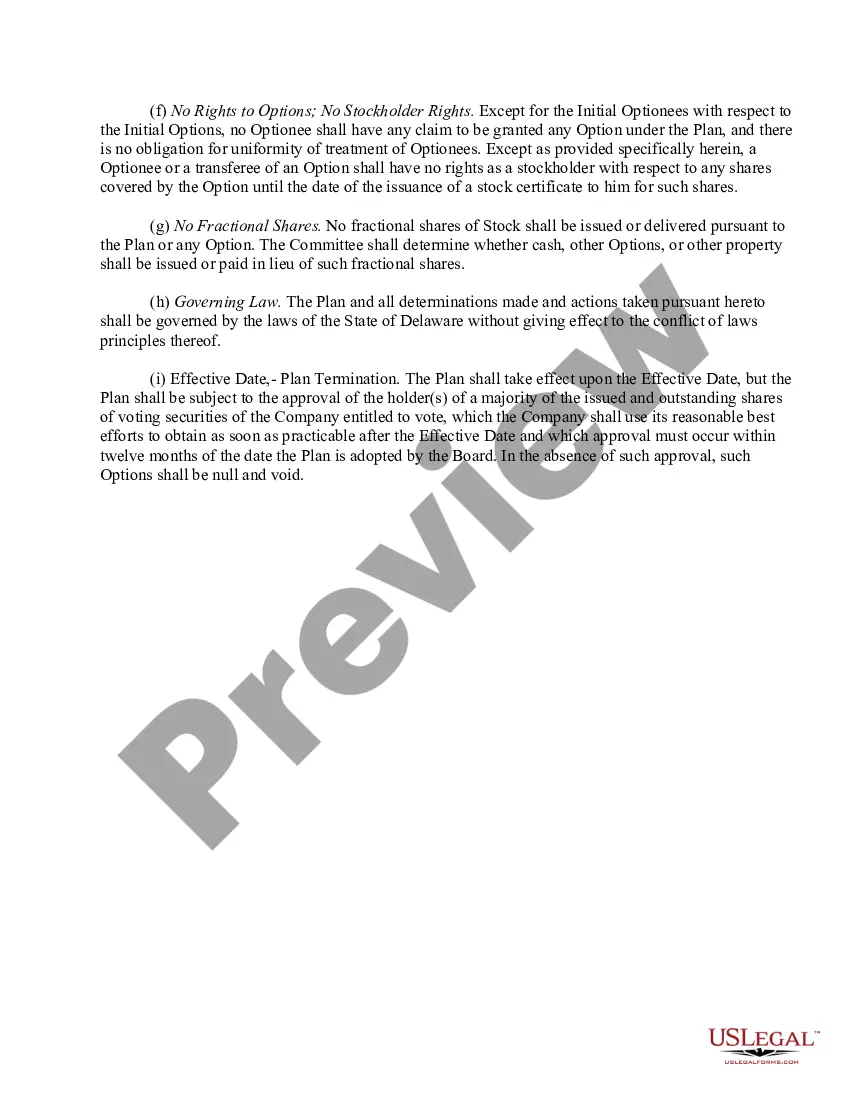
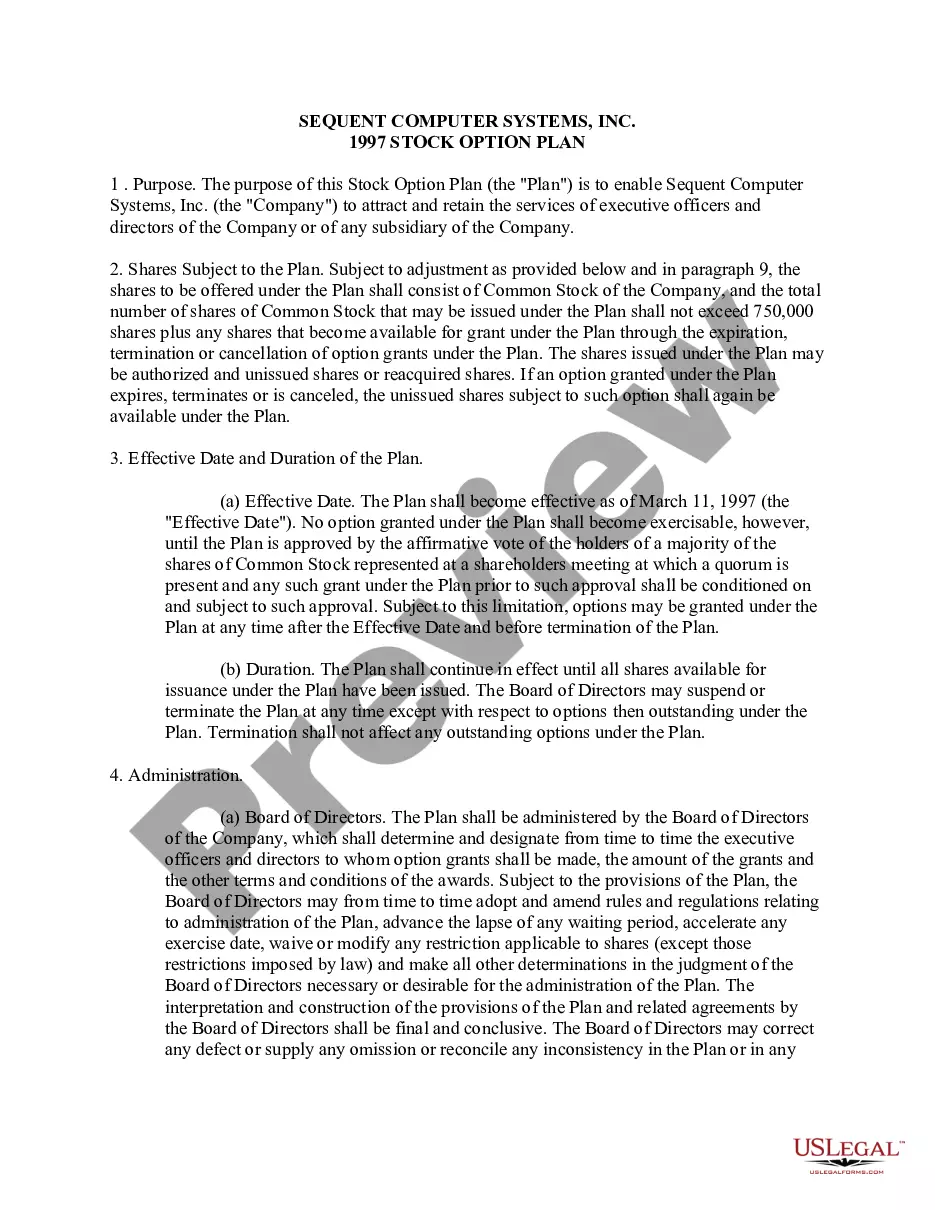
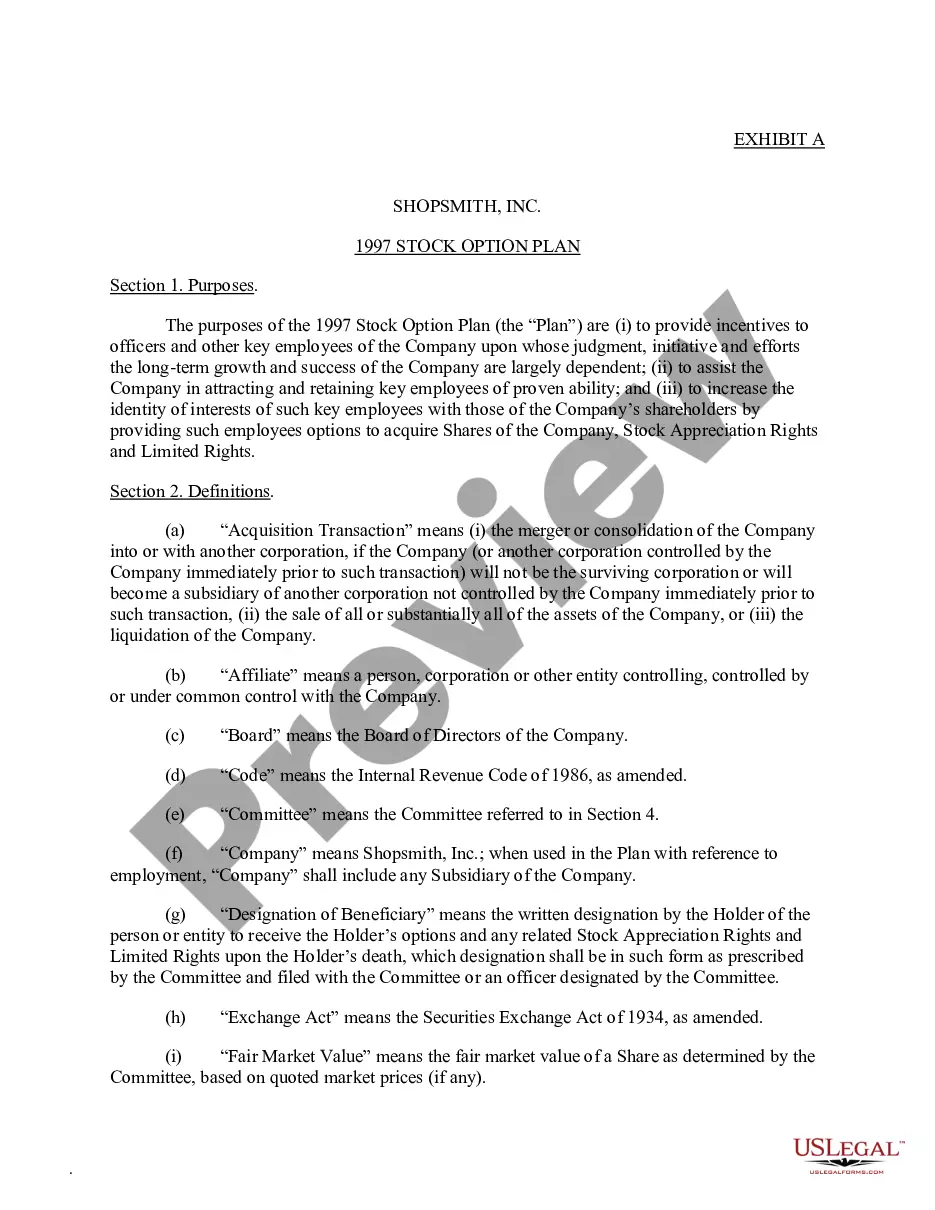
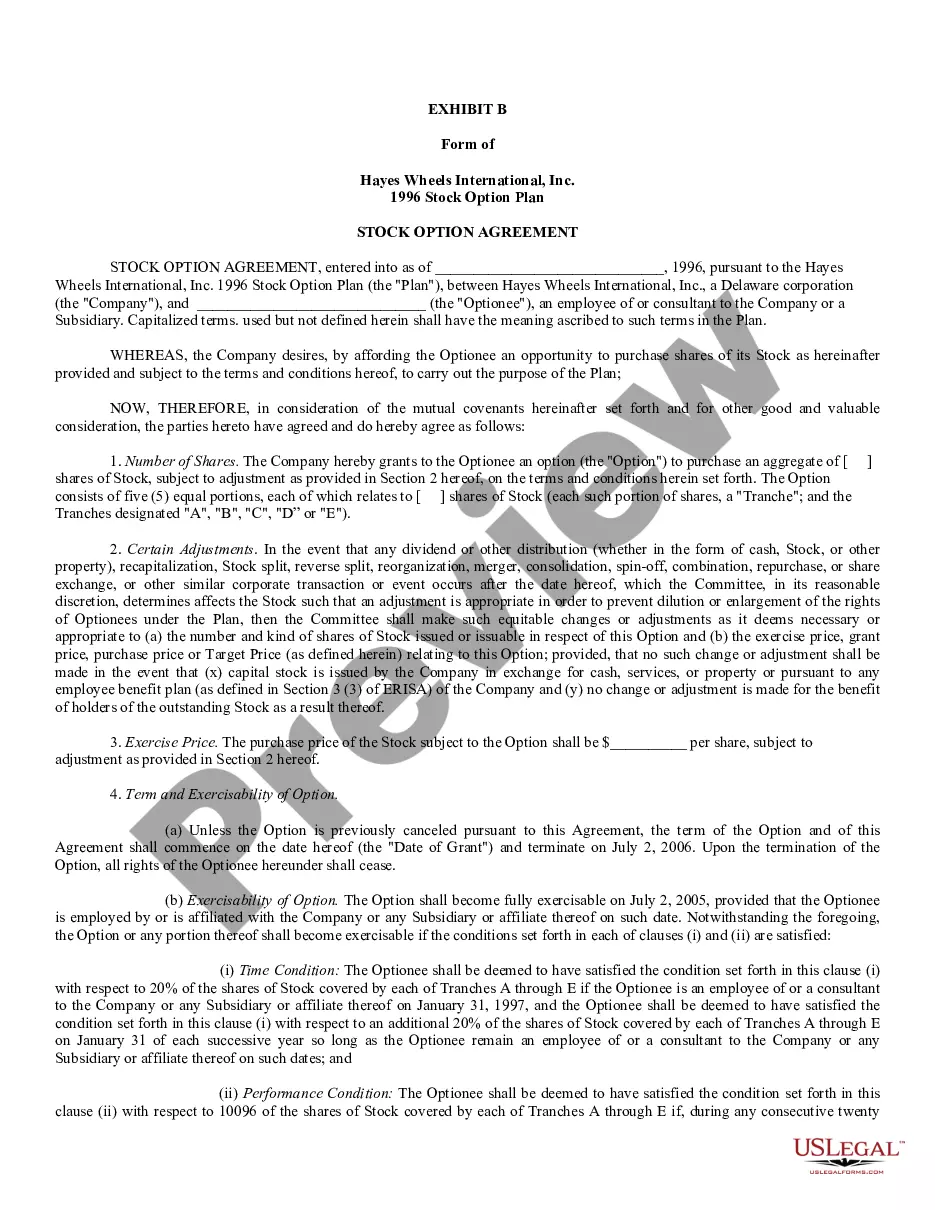
18-345E 18-345E . . . Stock Option Plan which provides for grant of Incentive Stock Options and Non-qualified Stock Options and (b) initial option grants to certain named officers, employees and consultants which contain specific Time Conditions and Performance Conditions as follows: number of shares underlying each option grant is divided into five equal portions which are designated Tranche A through Tranche E. Twenty percent of shares included in each of Tranches A through E shall satisfy Time Condition if optionee is employee or consultant on January 31, 1997 and on each January 31 thereafter. One hundred percent of shares included in each of Tranches A through E satisfy Performance Condition if average per share price of common stock for any consecutive twenty trading days on principal exchange on which common stock is traded equals or exceeds following prices: Tranche A - $16 per share, Tranche B - $32 per share, Tranche C - $48 per share, Tranche D - $64 per share, Tranche E - $80 per share. Notwithstanding above, Initial Grants become fully exercisable on ninth anniversary of date of grant
Florida Stock Option Plan of Hayes Wheels International, Inc., which provides for grant of Incentive Stock Options and Nonqualified Stock Options
Category:
State:
Multi-State
Control #:
US-CC-18-345E
Format:
Word;
Rich Text
Instant download
Description
Free preview








How to fill out Stock Option Plan Of Hayes Wheels International, Inc., Which Provides For Grant Of Incentive Stock Options And Nonqualified Stock Options?
Have you been within a situation where you need to have papers for sometimes business or individual functions virtually every day time? There are plenty of legal papers templates available online, but finding versions you can trust is not straightforward. US Legal Forms offers 1000s of type templates, like the Florida Stock Option Plan of Hayes Wheels International, Inc., which provides for grant of Incentive Stock Options and Nonqualified Stock Options, that happen to be composed to meet federal and state specifications.
Should you be currently familiar with US Legal Forms site and also have your account, merely log in. Following that, you may download the Florida Stock Option Plan of Hayes Wheels International, Inc., which provides for grant of Incentive Stock Options and Nonqualified Stock Options web template.
Unless you provide an profile and want to begin to use US Legal Forms, adopt these measures:
- Get the type you will need and ensure it is for that appropriate area/county.
- Take advantage of the Preview option to analyze the form.
- Browse the information to ensure that you have selected the correct type.
- If the type is not what you are seeking, utilize the Look for discipline to get the type that fits your needs and specifications.
- When you discover the appropriate type, click Acquire now.
- Opt for the costs program you desire, submit the specified details to generate your bank account, and purchase the transaction utilizing your PayPal or charge card.
- Pick a convenient file formatting and download your copy.
Locate each of the papers templates you have bought in the My Forms menus. You can aquire a further copy of Florida Stock Option Plan of Hayes Wheels International, Inc., which provides for grant of Incentive Stock Options and Nonqualified Stock Options anytime, if needed. Just go through the required type to download or printing the papers web template.
Use US Legal Forms, probably the most extensive variety of legal forms, to save lots of efforts and stay away from blunders. The service offers professionally produced legal papers templates which you can use for a variety of functions. Generate your account on US Legal Forms and commence creating your way of life a little easier.
Form popularity
FAQ
Taxation. The main difference between ISOs and NQOs is the way that they are taxed. NSOs are generally taxed as a part of regular compensation under the ordinary federal income tax rate. Qualifying dispositions of ISOs are taxed as capital gains at a generally lower rate.
Some employers use Incentive Stock Options (ISOs) as a way to attract and retain employees. While ISOs can offer a valuable opportunity to participate in your company's growth and profits, there are tax implications you should be aware of.
Statutory stock options are usually not taxed until the taxpayer disposes of the options and any gains on the disposition are taxed as capital gains. In contrast, nonstatutory stock options, governed by the rules of IRC § 83, are not given favorable tax treatment.
Non-qualified Stock Options (NSOs) are stock options that, when exercised, result in ordinary income under US tax laws on the difference, calculated on the exercise date, between the exercise price and the fair market value of the underlying shares.
Nonqualified: Employees generally don't owe tax when these options are granted. When exercising, tax is paid on the difference between the exercise price and the stock's market value. They may be transferable. Qualified or Incentive: For employees, these options may qualify for special tax treatment on gains.
Nonstatutory stock options are a type of stock option granted by an employer to an employee that allows the employee to buy the company's stock at a preset price at a later date. Unlike statutory stock options, nonstatutory stock options are not part of an employee stock purchase plan or incentive stock option plan.
Only employees can receive ISOs, whereas NSOs may be granted to any service providers (e.g., employees, directors, consultants, and advisors). ISOs must be exercised within three months following termination of employment (even if the holder continues providing services in some other capacity).
Incentive stock options (ISOs) are a form of equity compensation that allows you to buy company shares for a specific exercise price. ISOs are a type of stock option?they are not actual shares of stock; you must exercise (buy) your options to become a shareholder.
