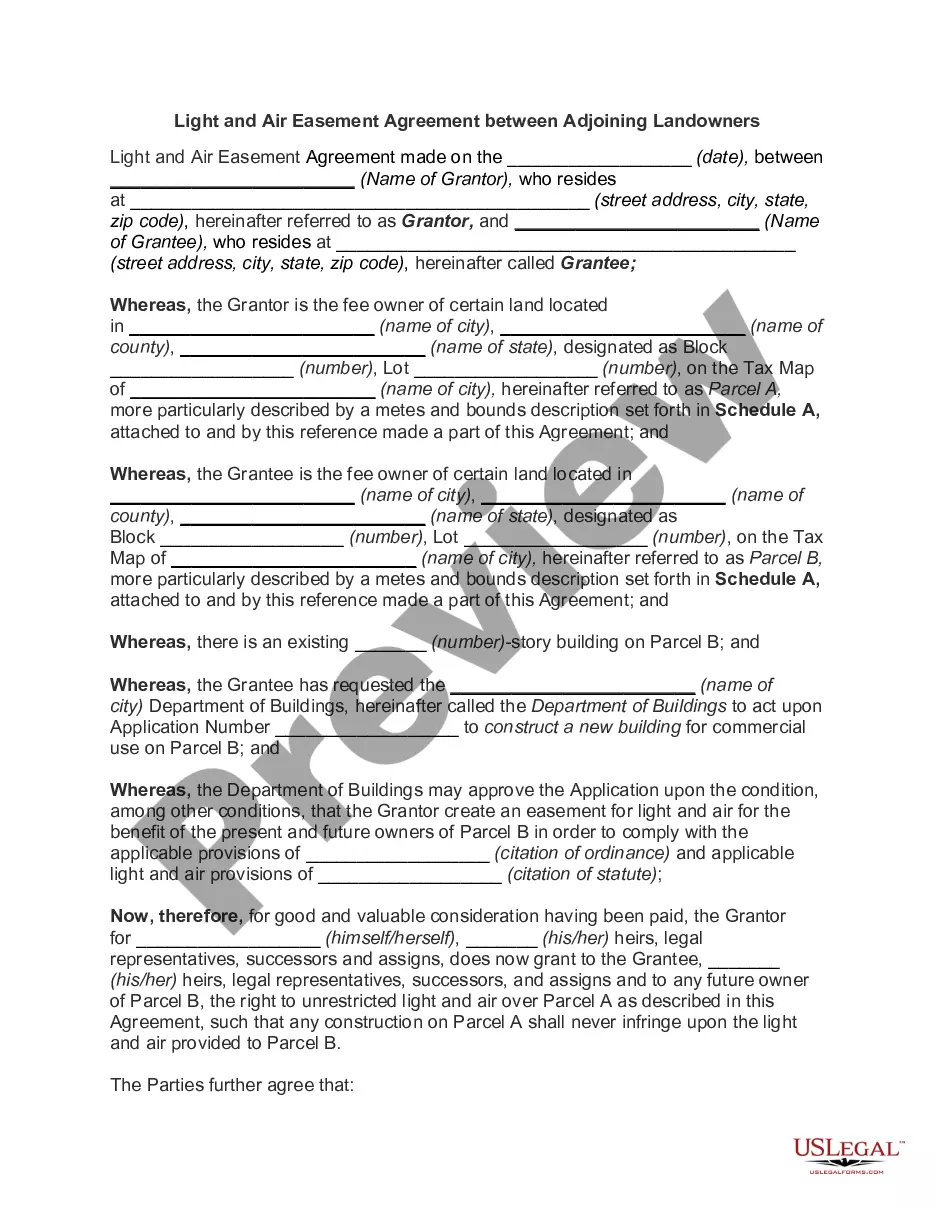
Georgia Reciprocal Easement Agreement with Consent of Mortgagee
About this form
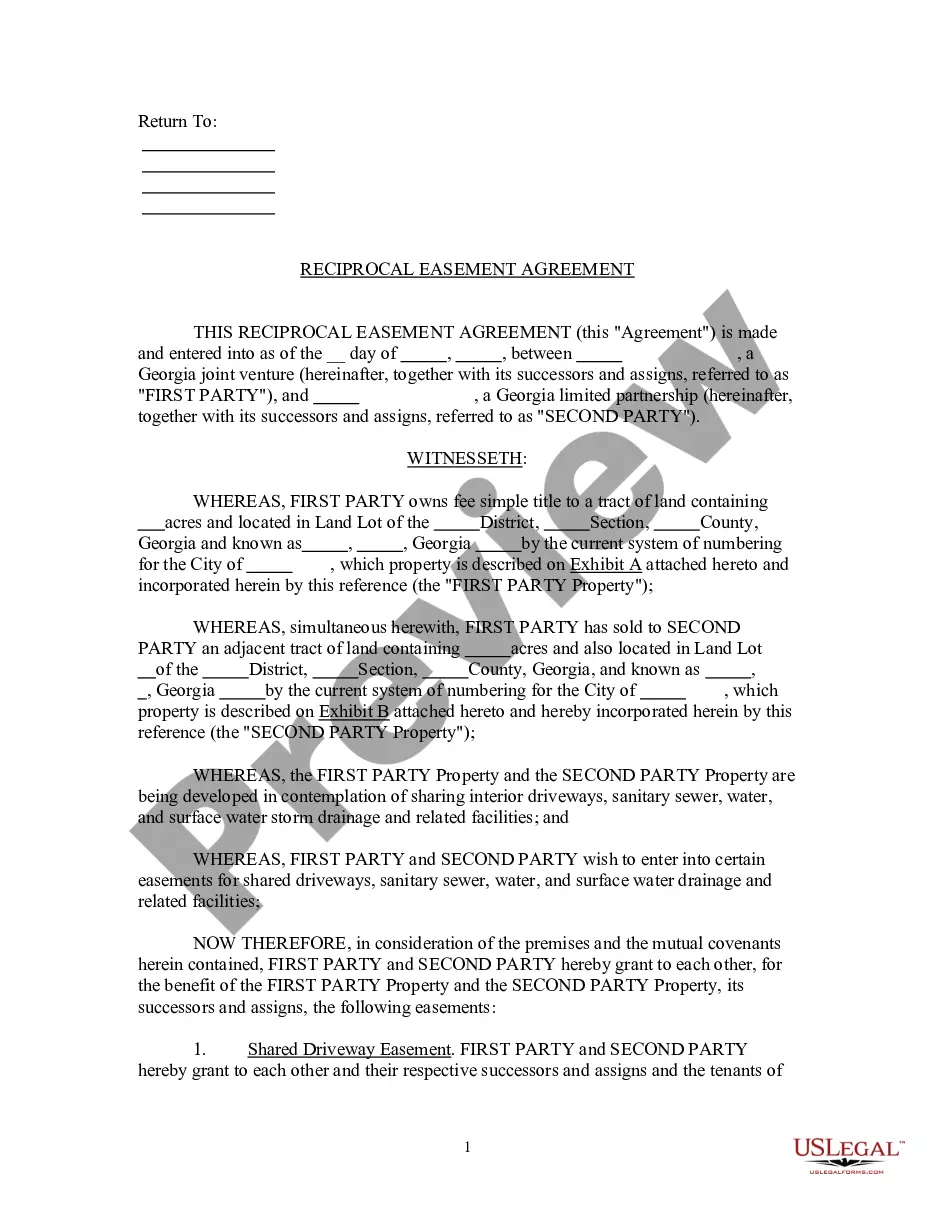
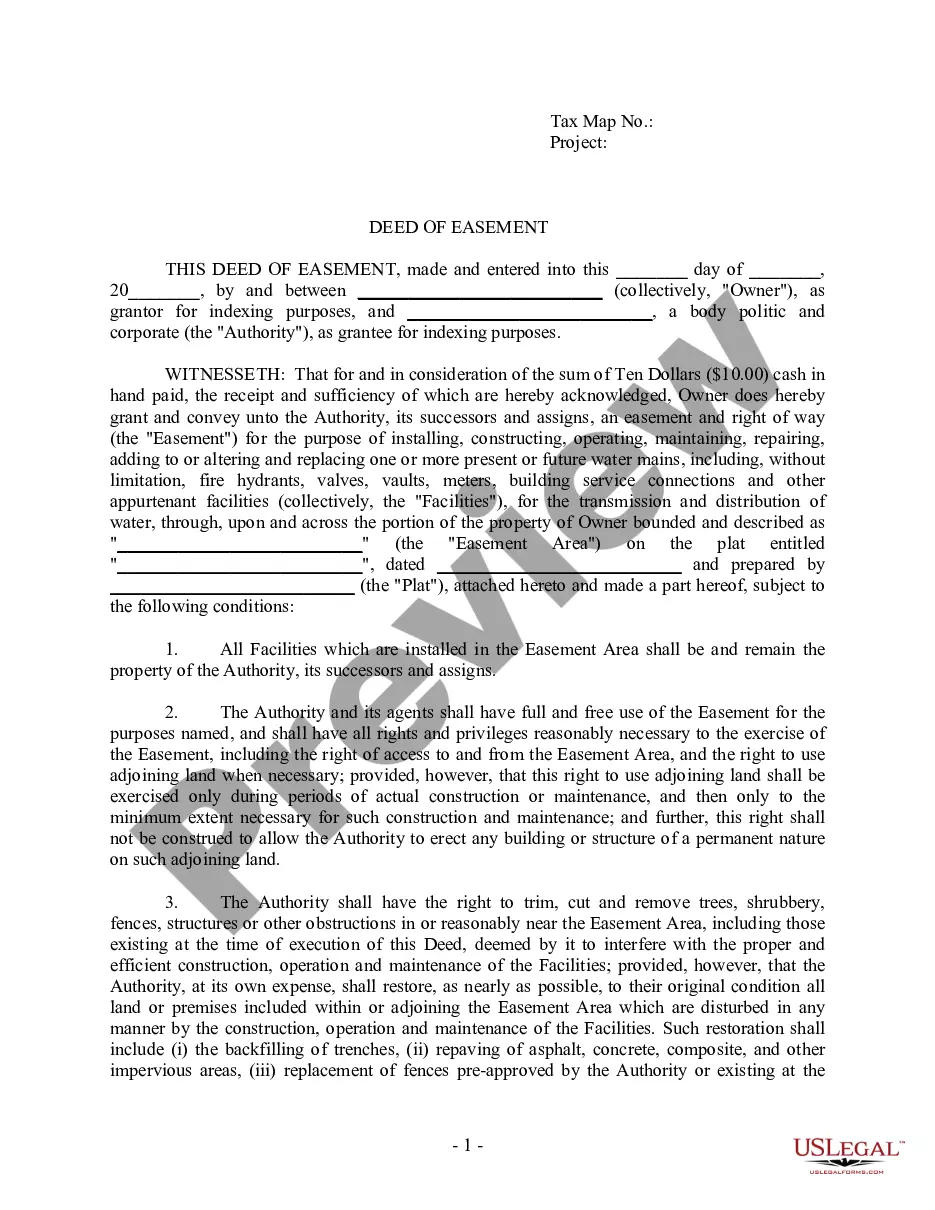
The Reciprocal Easement Agreement with Consent of Mortgagee is a legal document that establishes easements allowing two parties to share access to and use of designated parts of their properties. This form is specific because it includes consent from a mortgagee, ensuring that all parties, including lenders, agree to the easements outlined. It can be vital for development purposes where multiple properties need to share driveways, utilities, or drainage systems.
What’s included in this form
- Identification of the parties involved, including the First Party and Second Party.
- Detailed description of the properties affected by the easement.
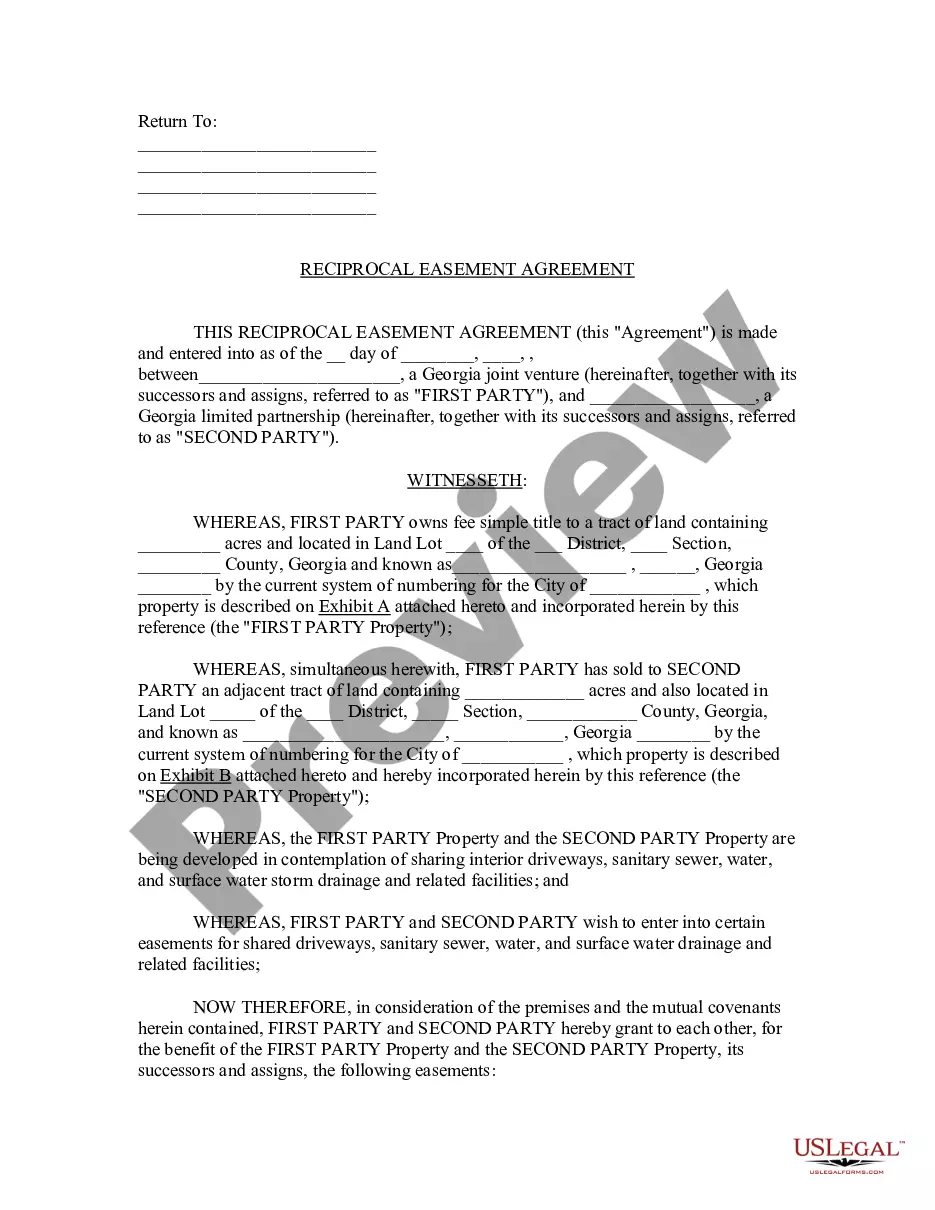
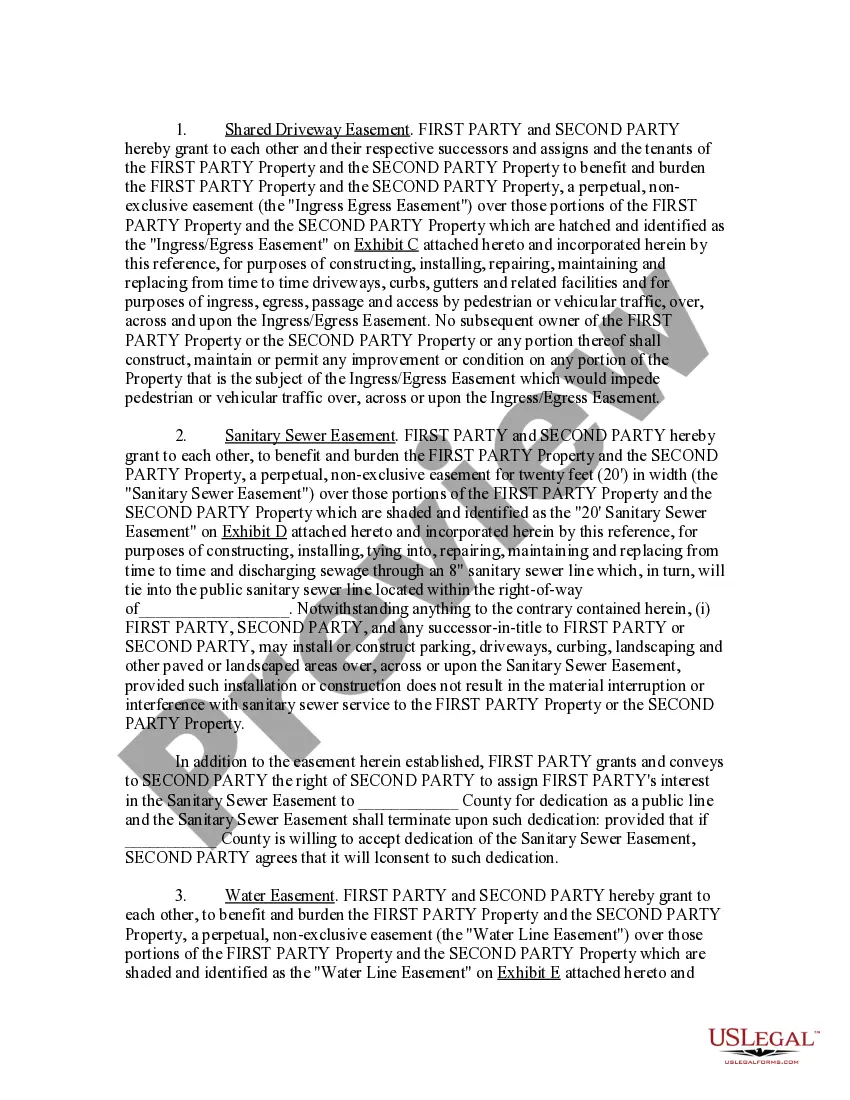
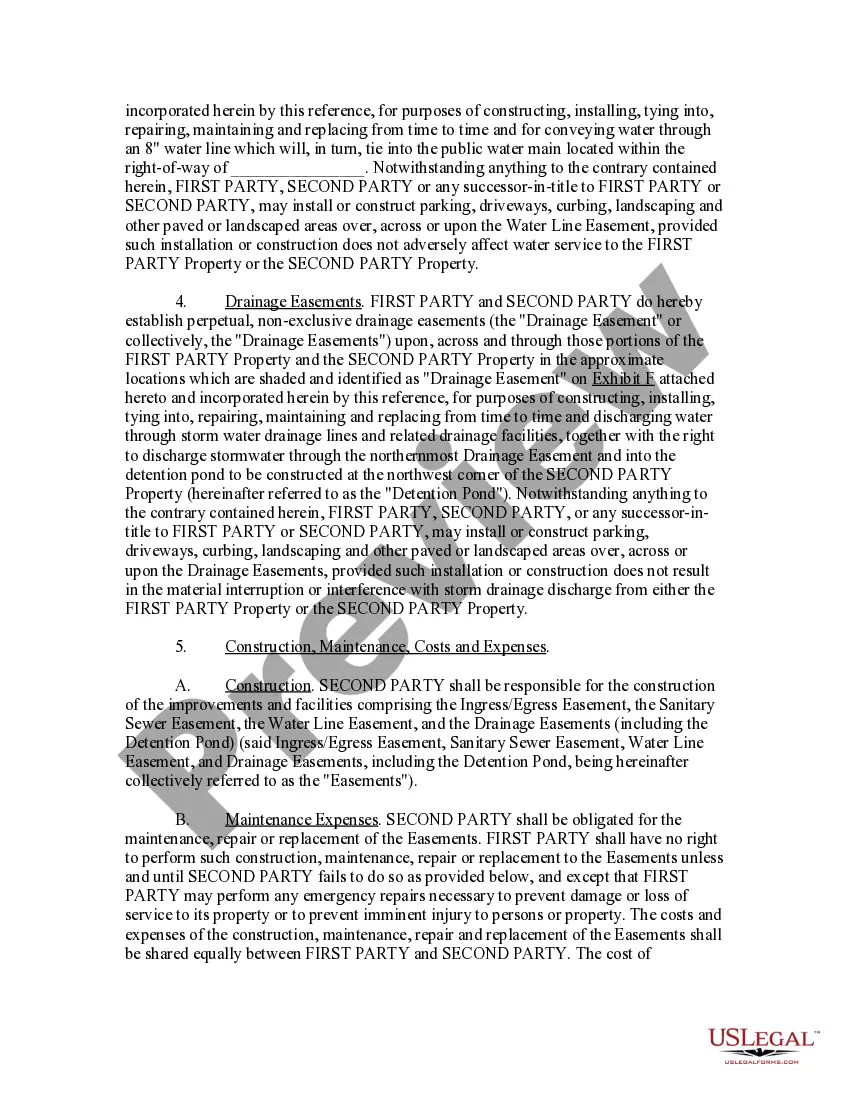
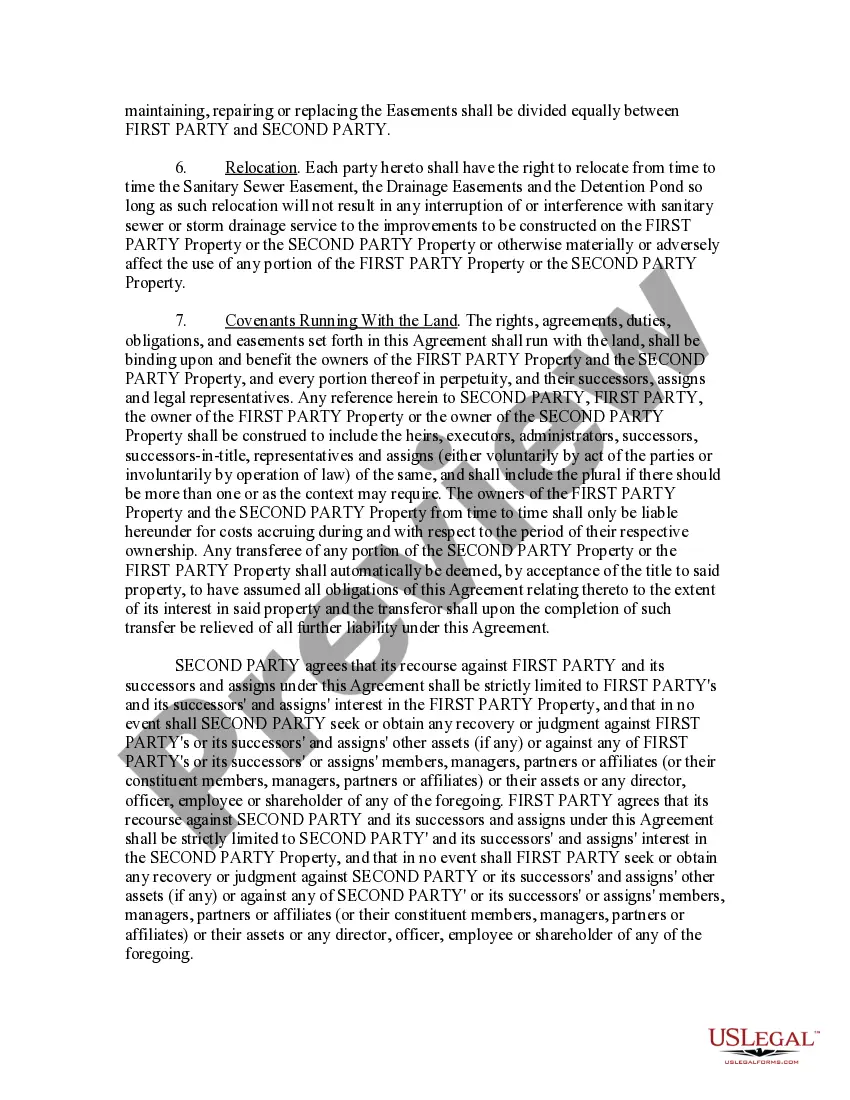
- Specific easements granted, including those for shared driveways, sanitary sewer, water lines, and drainage.
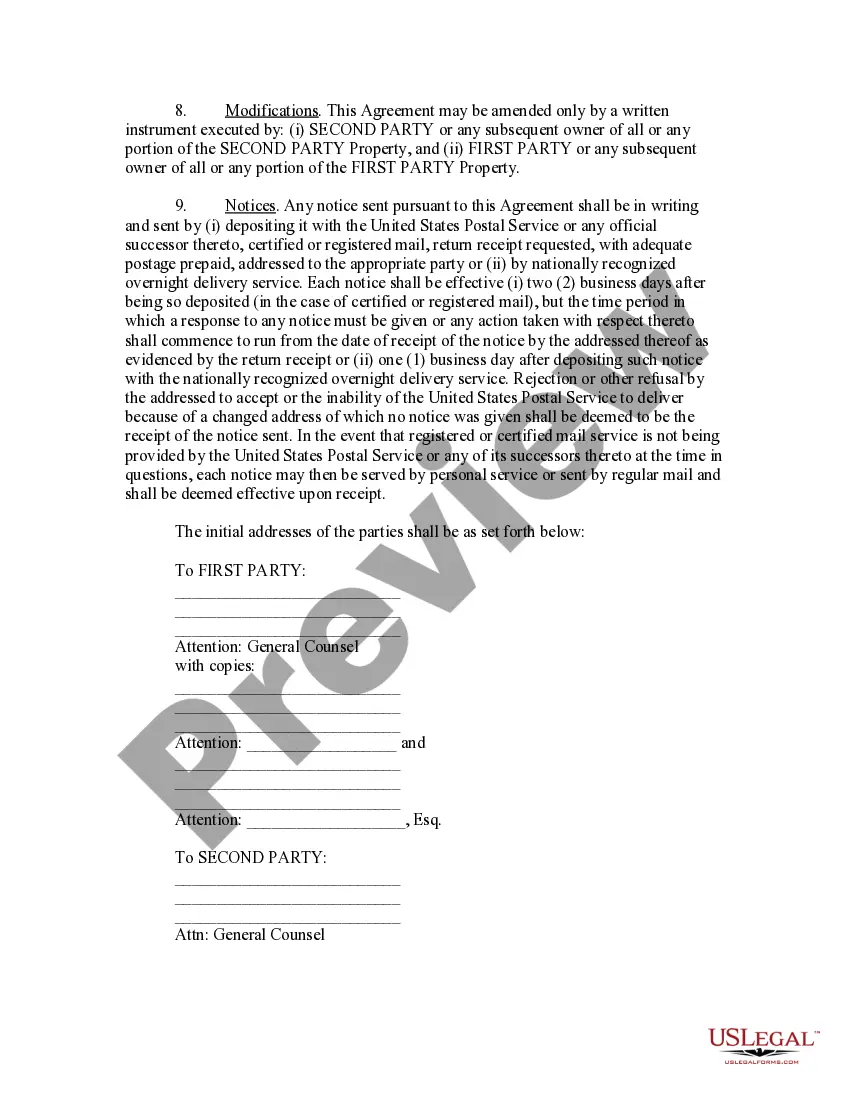
- Maintenance responsibilities and costs related to the easements.
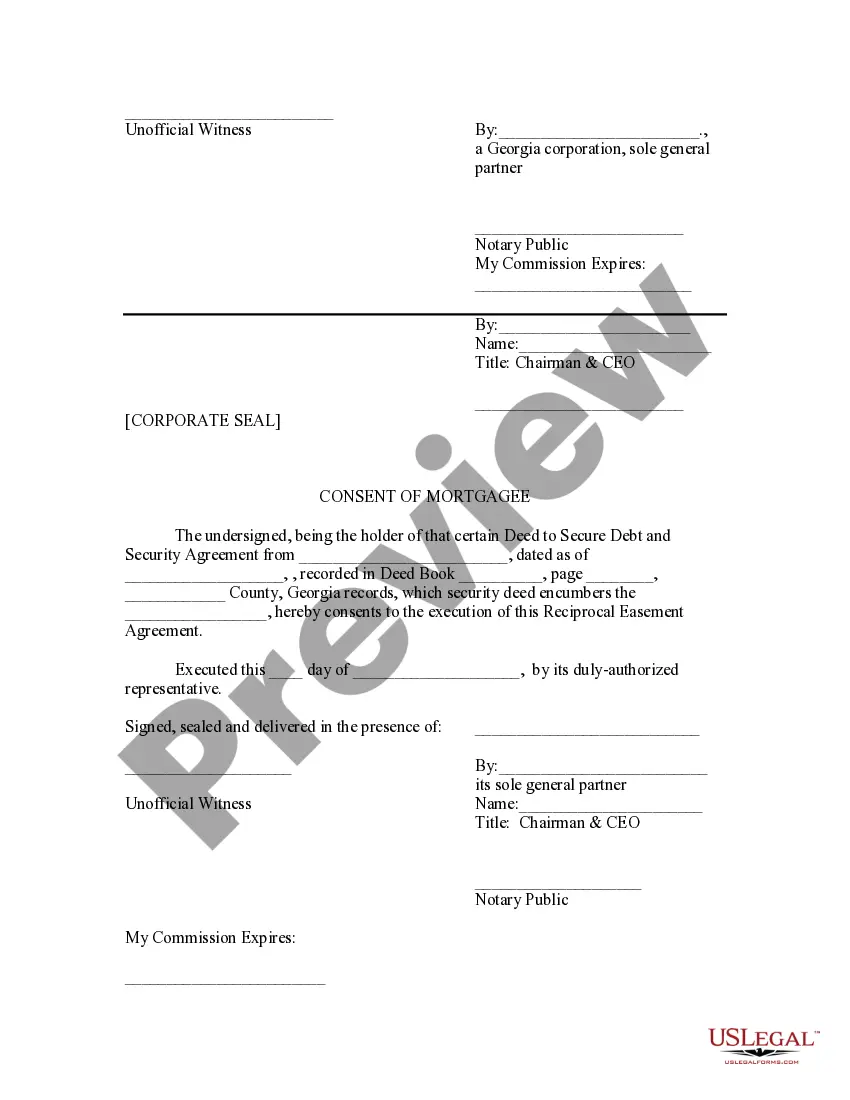
- Consent section for mortgage holders to protect the rights of all parties involved.
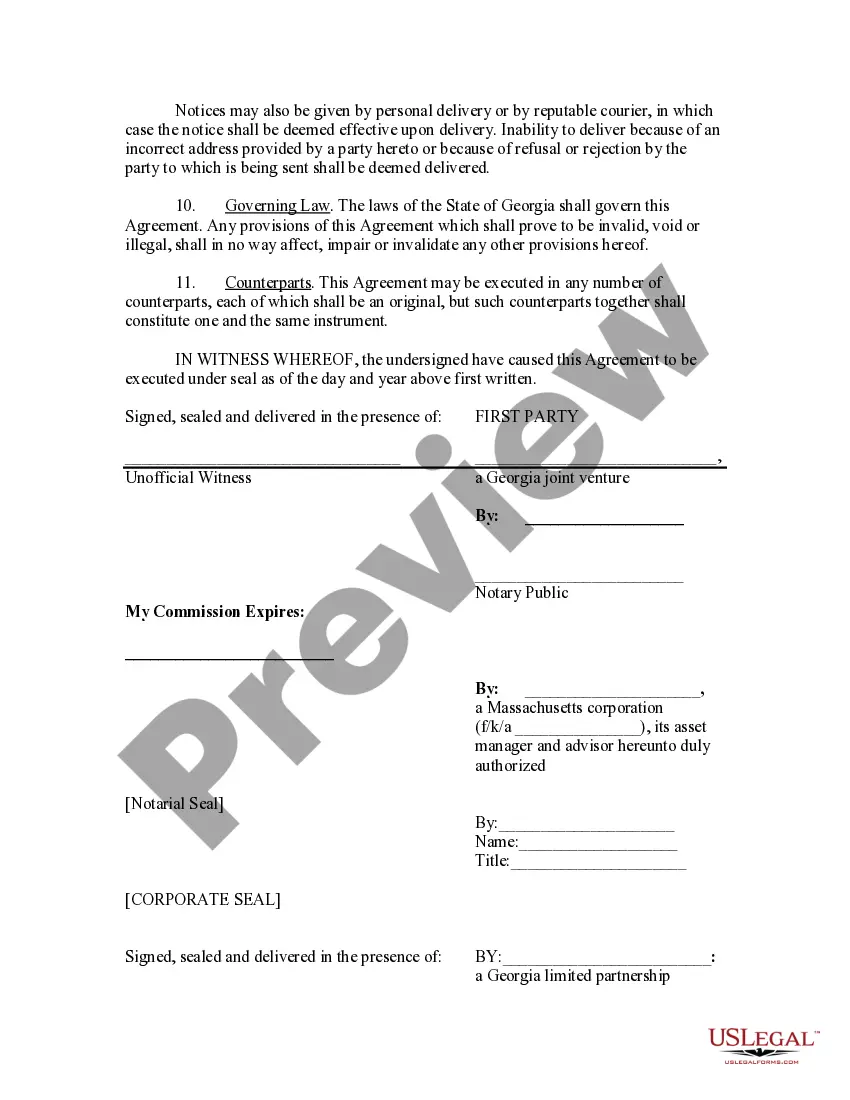
- Governing law clause stating that Georgia law applies.
When to use this form
This form should be used when two property owners wish to share access to their properties through mutual easements, particularly when both properties are adjacent and require shared infrastructure. It is common in residential developments, commercial complexes, or any scenario where access and utilization of shared facilities such as driveways or utilities is necessary. Additionally, using this form ensures that any mortgage rights are respected throughout the agreement.
Who should use this form
- Property owners looking to establish easements with neighboring properties.
- Developers involved in creating residential or commercial developments that require shared access.
- Mortgage holders who need to provide consent for easements affecting their security interests.
- Attorneys facilitating property agreements in commercial or real estate transactions.
Steps to complete this form
- Identify the parties by entering their full names and property details at the beginning of the document.
- Clearly define each easement's purpose and location as specified, referring to the attached exhibits for clarity.
- Include the necessary consents from mortgage holders, ensuring their agreement is documented in the proper section.
- Obtain signatures from all parties involved, along with any required notary acknowledgments.
- Ensure the completed form is filed with the appropriate local government office if required by local laws.
Notarization guidance
Yes, this form must be notarized to be legally valid. The notarization process ensures that the identities of the signers are verified and that the agreement is executed properly. US Legal Forms offers an online notarization service that is available around the clock, making it easy to complete your form securely via video call without needing to travel in person.
Get your form ready online
Our built-in tools help you complete, sign, share, and store your documents in one place.
Make edits, fill in missing information, and update formatting in US Legal Forms—just like you would in MS Word.
Download a copy, print it, send it by email, or mail it via USPS—whatever works best for your next step.
Sign and collect signatures with our SignNow integration. Send to multiple recipients, set reminders, and more. Go Premium to unlock E-Sign.
If this form requires notarization, complete it online through a secure video call—no need to meet a notary in person or wait for an appointment.
We protect your documents and personal data by following strict security and privacy standards.

Make edits, fill in missing information, and update formatting in US Legal Forms—just like you would in MS Word.

Download a copy, print it, send it by email, or mail it via USPS—whatever works best for your next step.

Sign and collect signatures with our SignNow integration. Send to multiple recipients, set reminders, and more. Go Premium to unlock E-Sign.

If this form requires notarization, complete it online through a secure video call—no need to meet a notary in person or wait for an appointment.

We protect your documents and personal data by following strict security and privacy standards.
Avoid these common issues
- Failing to include necessary consents from mortgage holders.
- Not clearly defining the boundaries of each easement.
- Omitting signature lines or not providing sufficient space for signatures.
- Neglecting to attach required exhibits illustrating the properties and easements.
Advantages of online completion
- Convenience of downloading and editing the form to fit specific needs.
- Access to legal forms drafted by licensed attorneys, ensuring compliance with current laws.
- Easy filing process, with clear instructions for completion included.
- Availability of customer support for any questions that arise during the completion process.
What to keep in mind
- A Reciprocal Easement Agreement is crucial for defining mutual property rights and responsibilities.
- Obtaining mortgagee consent is an essential part of completing this agreement.
- Following local laws and guidelines will enhance the enforceability of the document.
Looking for another form?
Form popularity
FAQ
To obtain an easement in Georgia, you should first identify the type of easement you need. A Georgia Reciprocal Easement Agreement with Consent of Mortgagee is one common option, allowing property owners to share access or utilities across adjoining lands. Next, consult with legal experts to draft the agreement, ensuring it includes necessary details about consent from all mortgagees involved. Using platforms like US Legal Forms can provide you with the templates and guidance needed to navigate this process effectively.
Reciprocal access refers to the mutual right of property owners to use each other's land for specific purposes, typically defined in a reciprocal easement agreement. In a Georgia Reciprocal Easement Agreement with Consent of Mortgagee, both parties can enjoy access while ensuring that certain conditions are met. This arrangement promotes cooperation between neighbors and helps maintain property values. For customized legal documents, US Legal Forms offers a variety of templates that cater to your unique needs.
Your neighbor cannot legally block your easement if it is established and recorded properly. If you have a Georgia Reciprocal Easement Agreement with Consent of Mortgagee, this document protects your right to access your property as agreed. In cases where a dispute arises, it is advisable to consult legal guidance to understand your rights and explore possible resolutions. Utilizing services from US Legal Forms can provide you with templates and documents to support your case.
A reciprocal easement is a type of agreement between two property owners that grants each person certain rights to use portions of the other's property. This often includes access for driveways, landscaping, or utilities. When creating a Georgia Reciprocal Easement Agreement with Consent of Mortgagee, it is crucial to clearly outline these rights to avoid future conflicts. Using a reliable resource like US Legal Forms can help you draft a comprehensive agreement that meets legal standards.
A property owner cannot block an easement without just cause or clear legal permission. The rights granted through a Georgia Reciprocal Easement Agreement with Consent of Mortgagee protect against unauthorized blocking. Understanding these rights is essential to maintaining access and avoiding legal issues.
Generally, you cannot deny access to a landlocked property if an easement exists. A Georgia Reciprocal Easement Agreement with Consent of Mortgagee can serve as important documentation that affirms access rights. This agreement provides legal clarity and ensures that landlocked property owners are not left without necessary access.
While using an easement, you cannot alter the property or use it for purposes not outlined in the agreement. For instance, using the easement area for storage can violate the terms. A Georgia Reciprocal Easement Agreement with Consent of Mortgagee clearly defines usage rights to prevent misuse.
A reciprocal easement agreement allows multiple property owners to access each other's land under specified conditions. This type of agreement is particularly relevant in real estate situations. In Georgia, such an agreement with consent from the mortgagee is crucial for ensuring all parties enjoy their rights without conflict.
A property owner cannot generally block access to a granted easement without legal grounds. If you have a Georgia Reciprocal Easement Agreement with Consent of Mortgagee, it legally protects your right to access. Those agreements reinforce your rights and prevent possible obstruction.
An easement agreement outlines the terms of access between parties, while an easement deed is a legal document that officially grants the easement. In the context of Georgia Reciprocal Easement Agreements with Consent of Mortgagee, the deed serves as a record of the rights established. Clarity in both documents is vital to avoid misunderstandings.