Georgia Declaration of Covenants, Conditions, Restrictions and Easements for a Subdivision
What is this form?
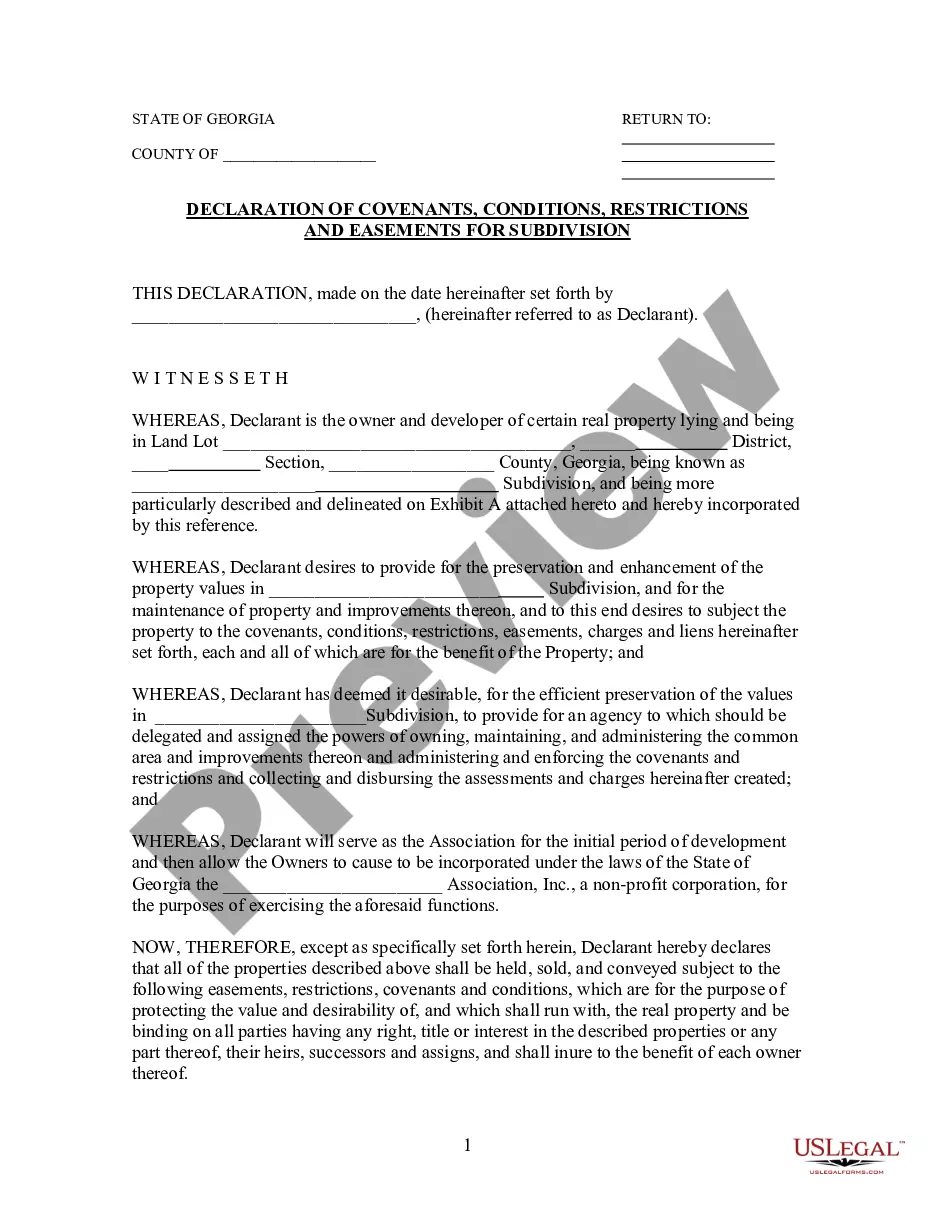
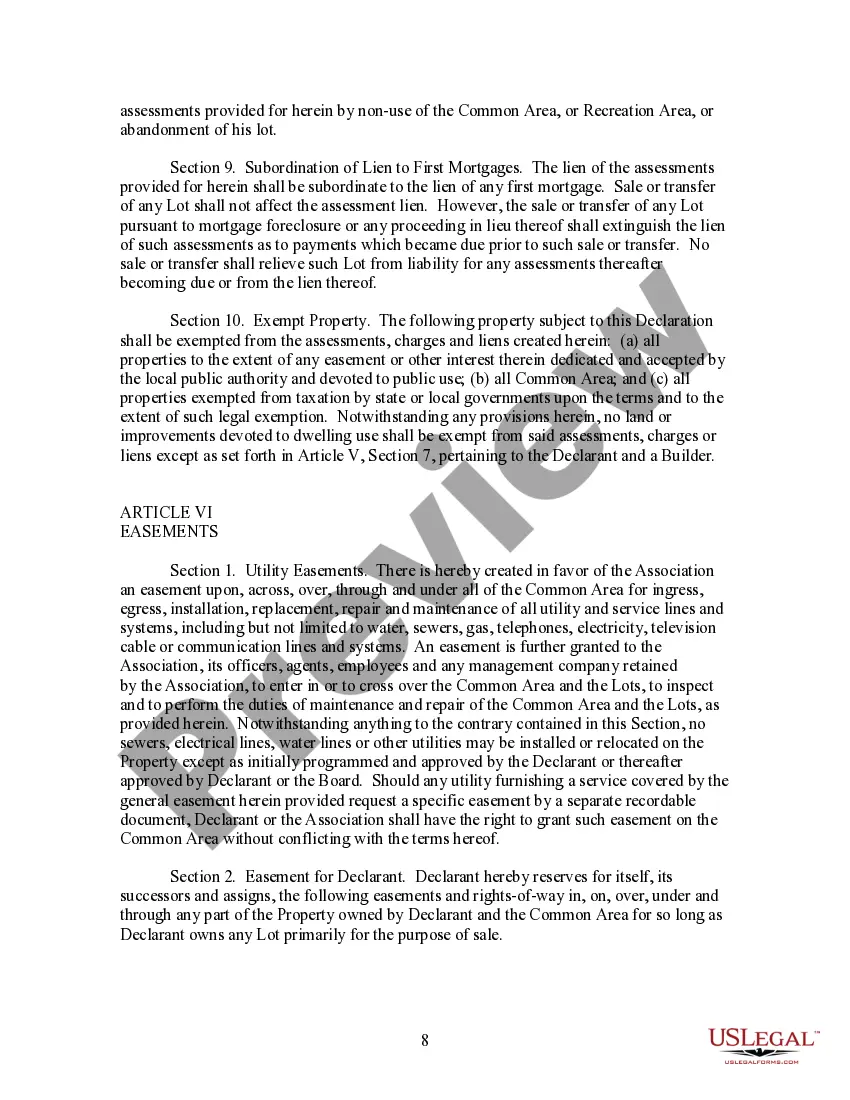
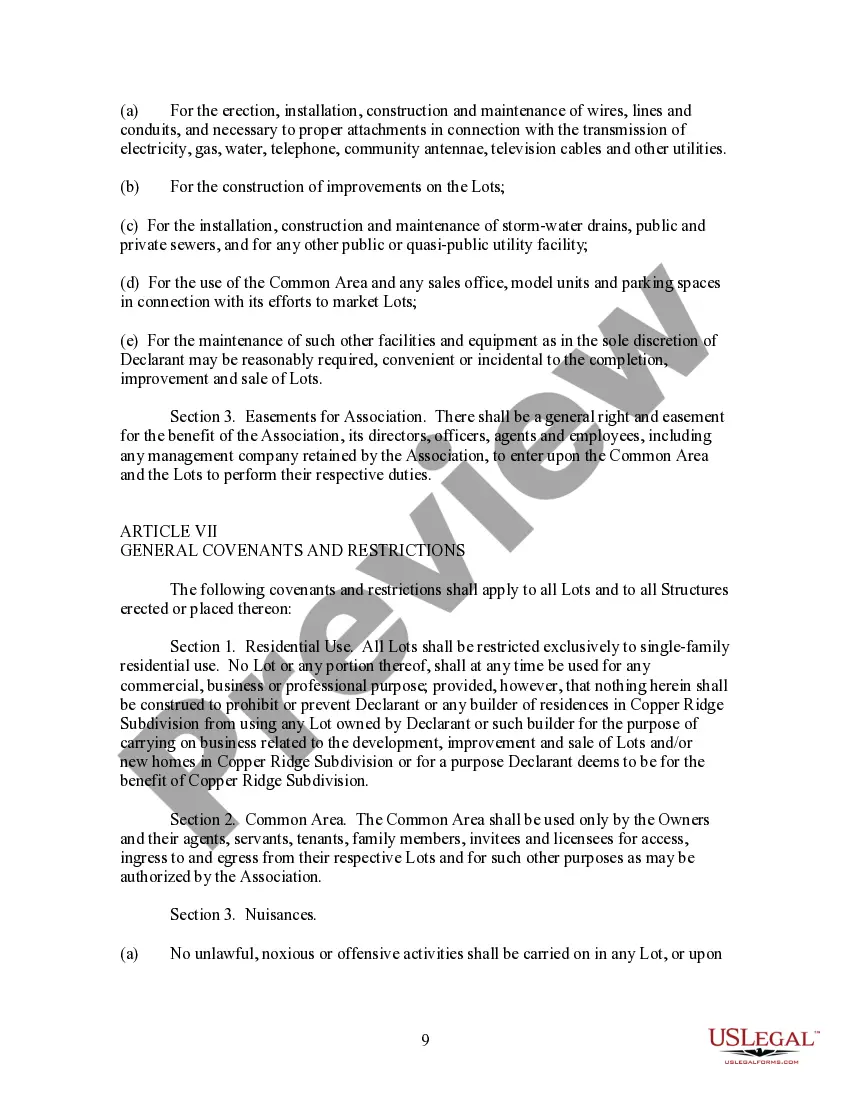
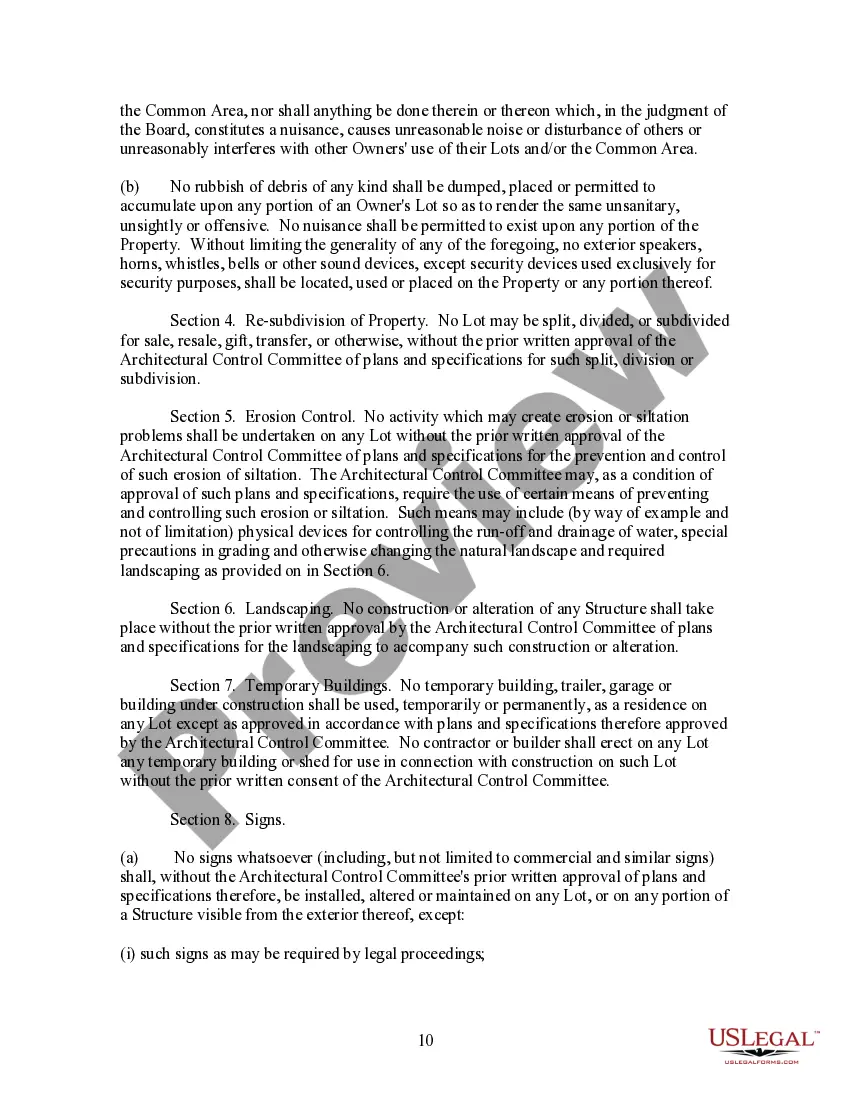
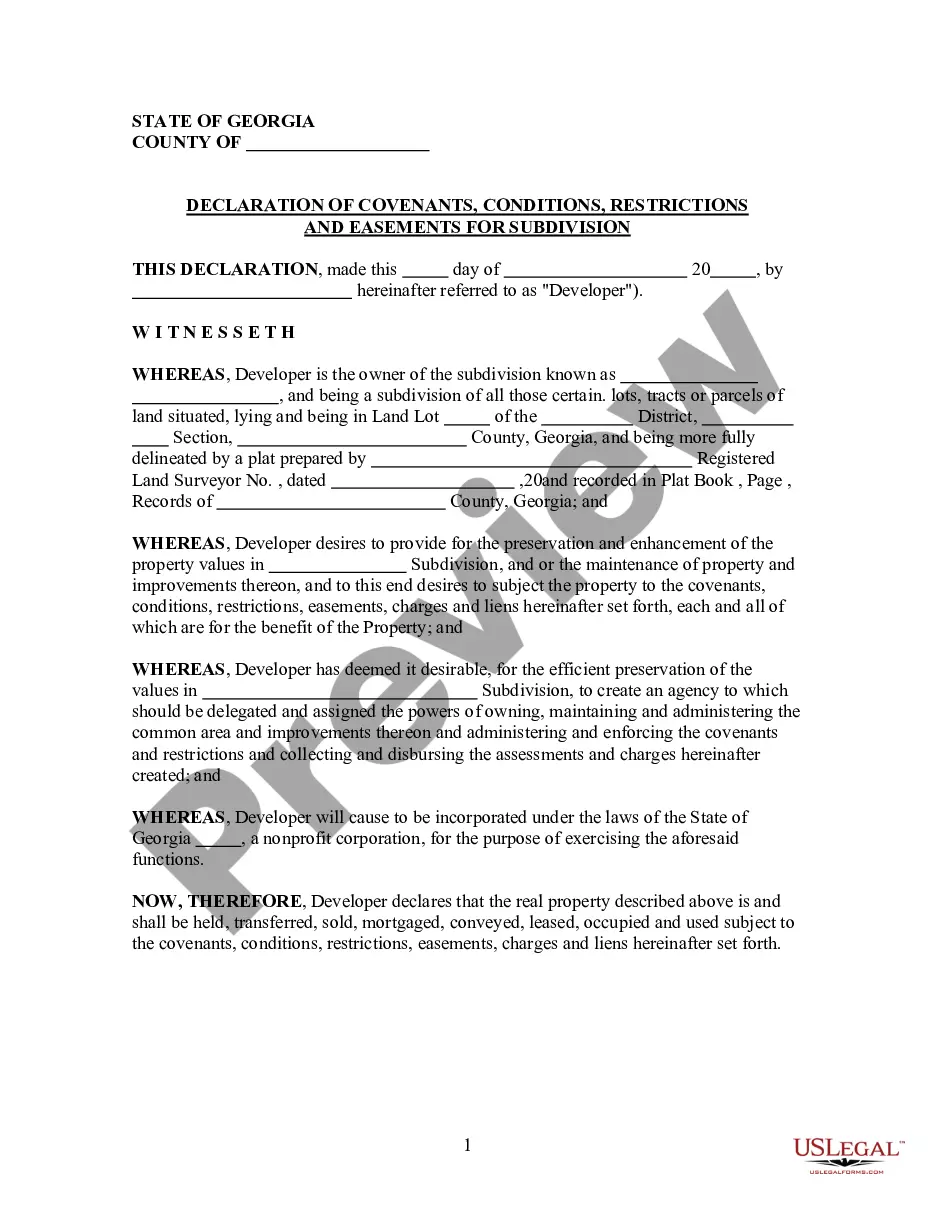
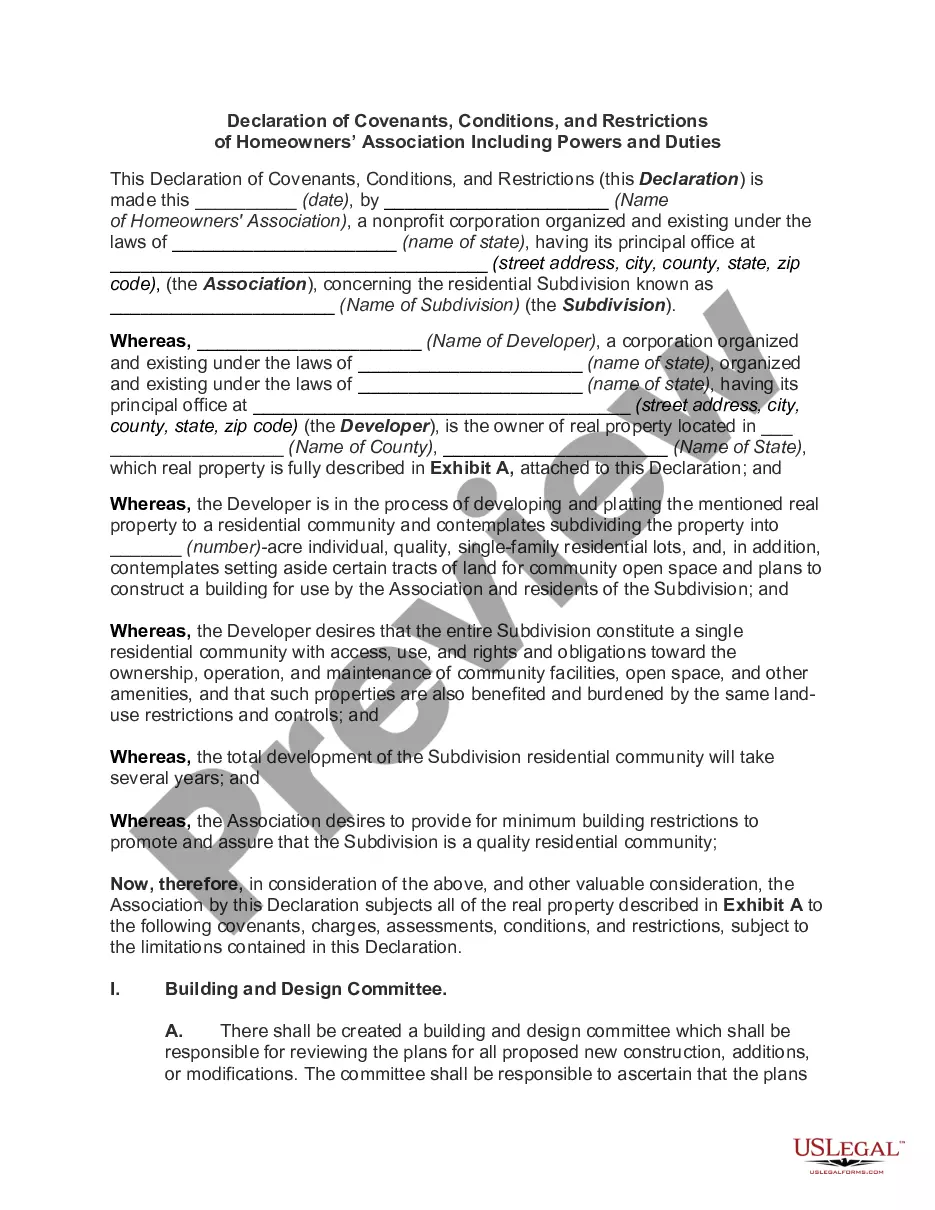
The Declaration of Covenants, Conditions, Restrictions and Easements for a Subdivision is a legal document that outlines the rules and restrictions for property owners within a specific subdivision. Its primary purpose is to protect property values and enhance the desirability of the neighborhood by stipulating guidelines for property usage, architectural control, and maintenance responsibilities. Unlike other property documents, this declaration includes specific provisions that govern common areas and easements, ensuring a cohesive community environment.
Form components explained
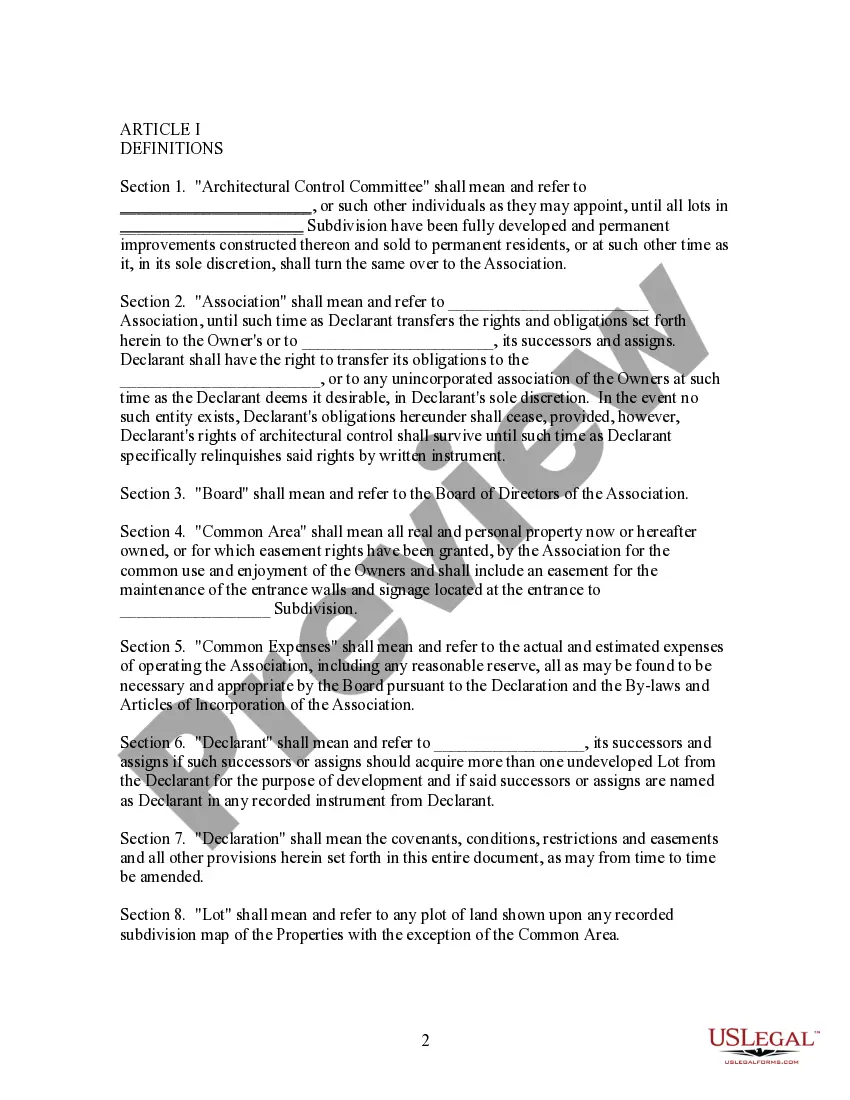
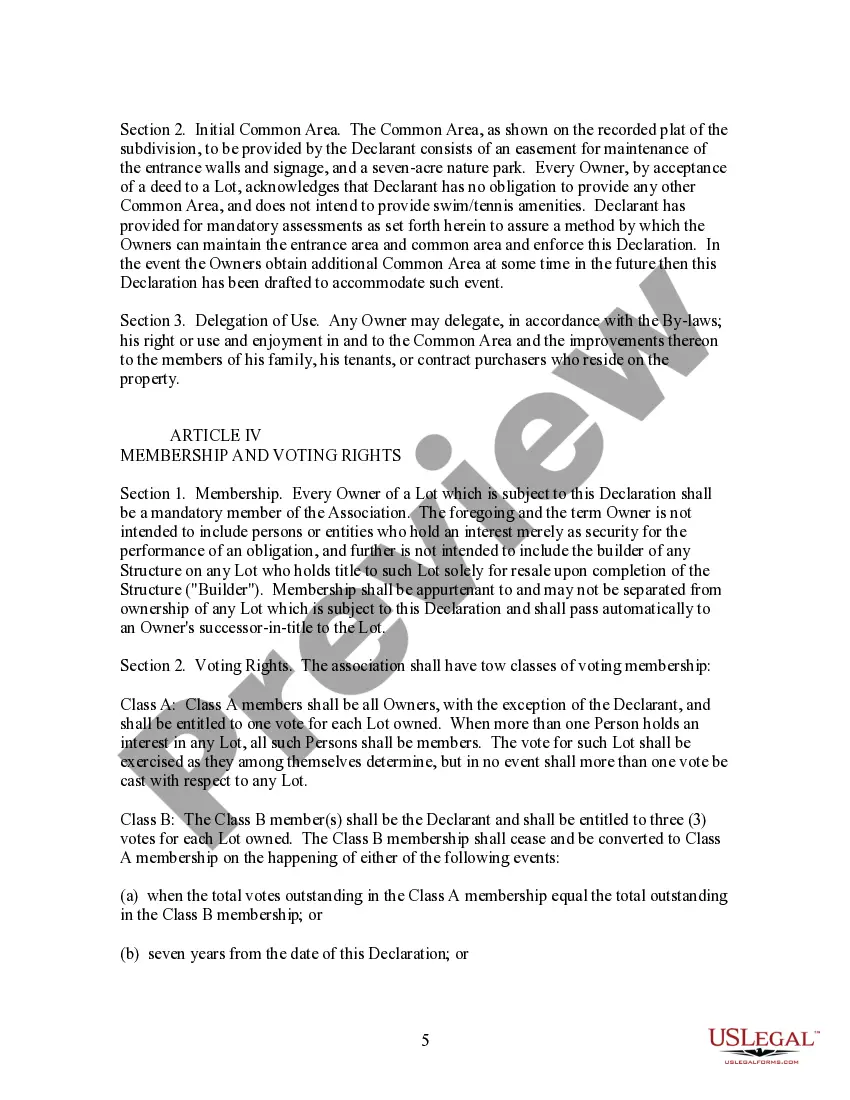
- Definitions section clarifying terms such as "Owner," "Common Area," and "Declarant."
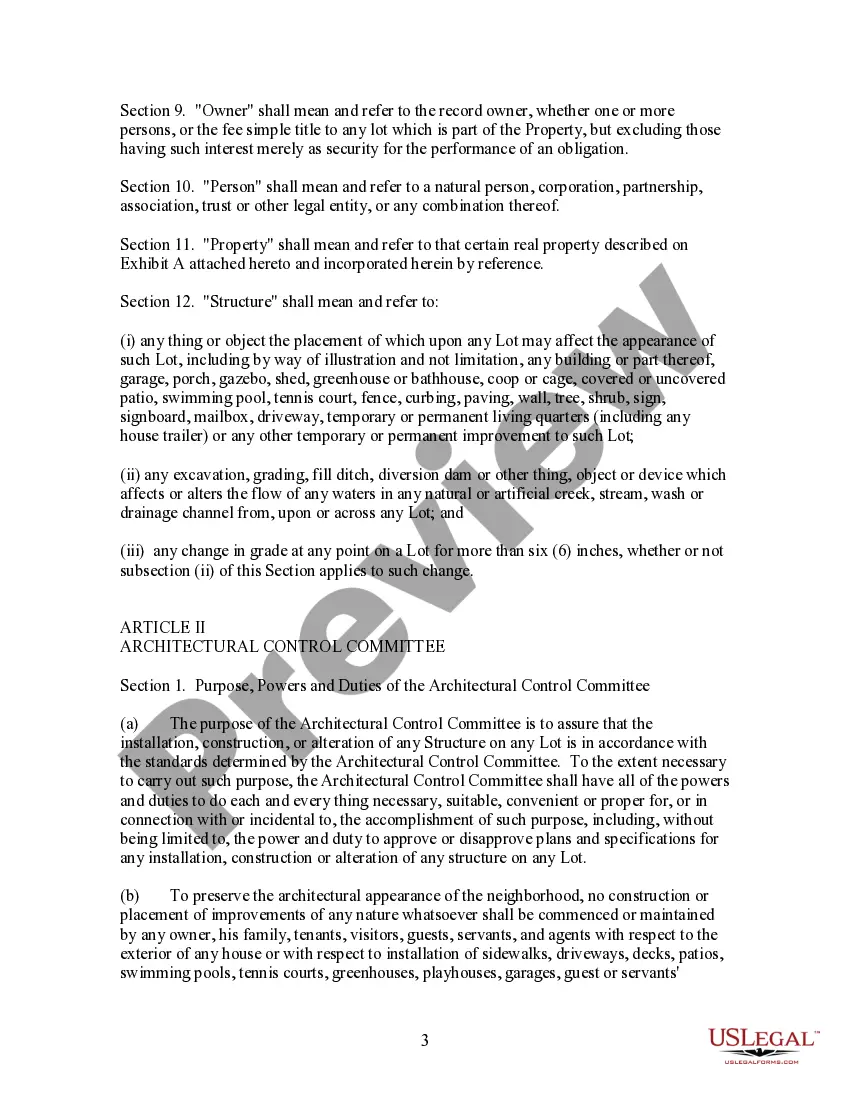
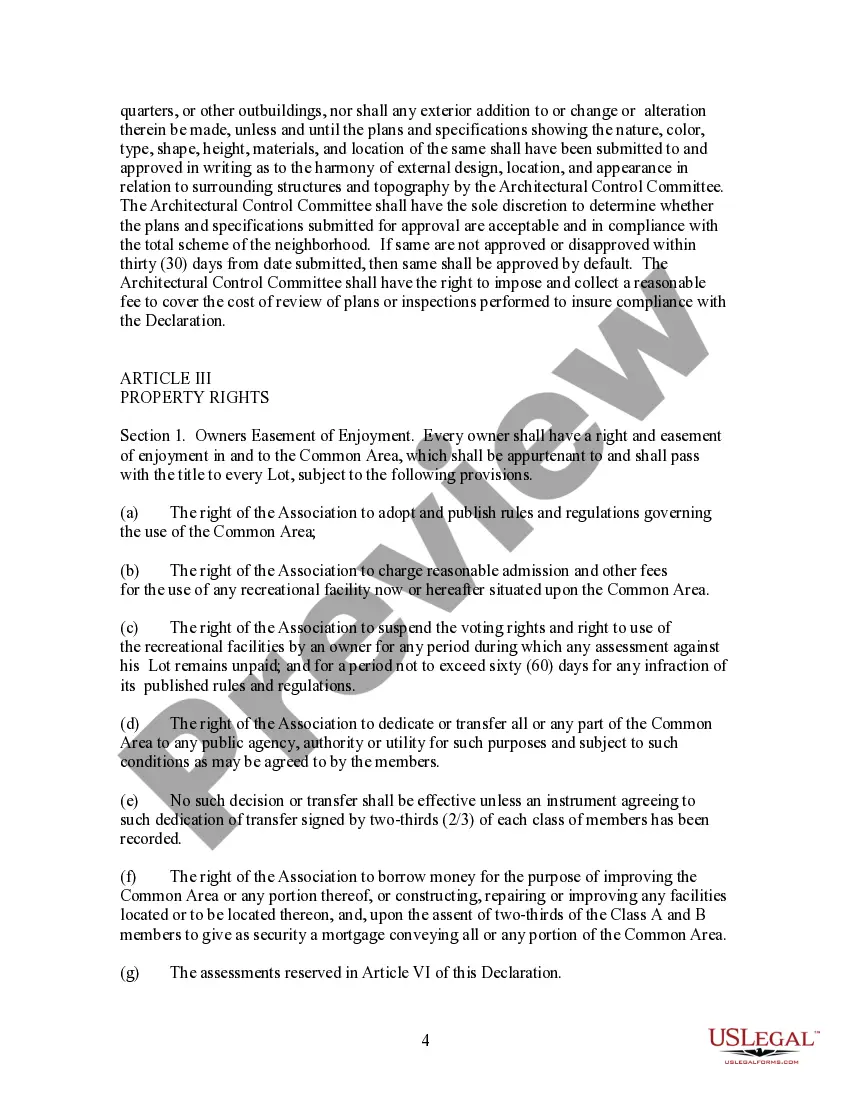
- Articles detailing architectural control guidelines, including construction approvals and prohibitions.
- Property rights that grant easements and define common expenses among property owners.
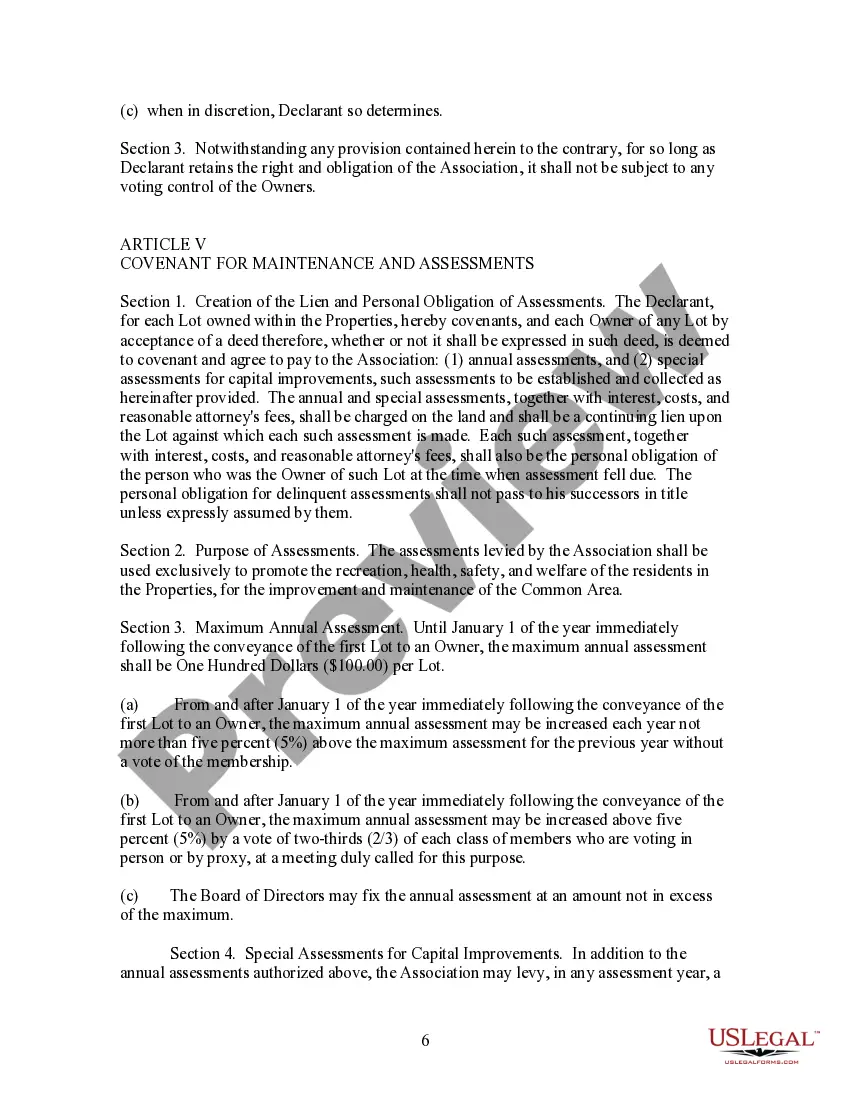
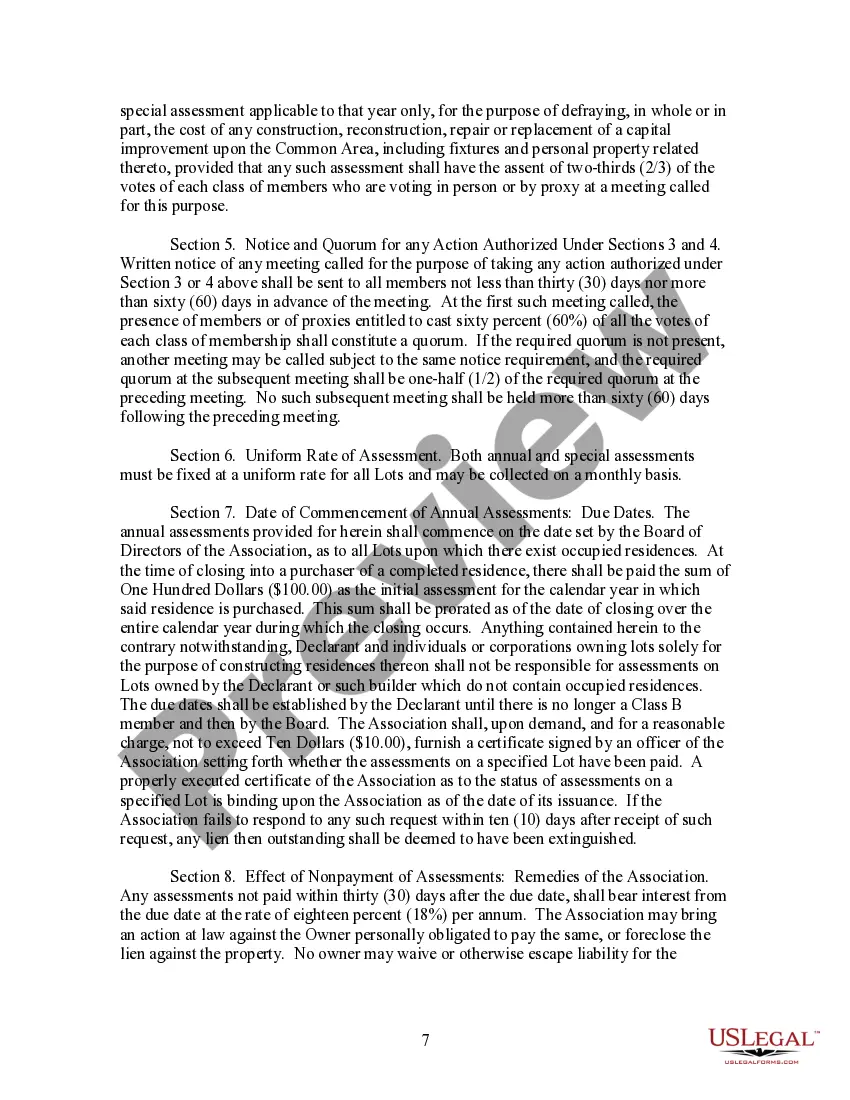
- Covenants for maintenance and assessments, establishing the financial obligations of each property owner.
- Enforcement provisions allowing owners to uphold the rules outlined in the declaration.

When to use this form
This form is needed when establishing a subdivision to ensure that all property owners understand the rules governing their properties. It is particularly useful during the development phase or when new lots are sold, as it helps to clearly define the expectations for property usage and community standards. Utilizing this declaration can prevent disputes among residents and maintain the overall aesthetic and functionality of the subdivision.
Who needs this form
- Developers planning a new subdivision who need to set clear community rules.
- Existing homeowner associations looking to formalize or update their governing documents.
- Property owners in a subdivision wanting clarity on their rights and responsibilities.
Steps to complete this form
- Identify the declarant and the subdivision name at the beginning of the document.
- Clearly define the boundaries and properties subject to the covenants.
- Specify the rights and duties of the association and its members regarding the common areas.
- Detail the assessment process for homeowners, including the types of fees and payment responsibilities.
- Include a comprehensive list of covenants and restrictions that homeowners must abide by.
Does this document require notarization?
This form needs to be notarized to ensure legal validity. US Legal Forms provides secure online notarization powered by Notarize, allowing you to complete the process through a verified video call, available anytime.
Get your form ready online
Our built-in tools help you complete, sign, share, and store your documents in one place.
Make edits, fill in missing information, and update formatting in US Legal Forms—just like you would in MS Word.
Download a copy, print it, send it by email, or mail it via USPS—whatever works best for your next step.
Sign and collect signatures with our SignNow integration. Send to multiple recipients, set reminders, and more. Go Premium to unlock E-Sign.
If this form requires notarization, complete it online through a secure video call—no need to meet a notary in person or wait for an appointment.
We protect your documents and personal data by following strict security and privacy standards.

Make edits, fill in missing information, and update formatting in US Legal Forms—just like you would in MS Word.

Download a copy, print it, send it by email, or mail it via USPS—whatever works best for your next step.

Sign and collect signatures with our SignNow integration. Send to multiple recipients, set reminders, and more. Go Premium to unlock E-Sign.

If this form requires notarization, complete it online through a secure video call—no need to meet a notary in person or wait for an appointment.

We protect your documents and personal data by following strict security and privacy standards.
Mistakes to watch out for
- Failing to define key terms clearly, leading to confusion among homeowners.
- Neglecting to include provisions for the enforcement of covenants, which can lead to disputes.
- Ignoring local laws that may impact the validity of the declarations.
Benefits of using this form online
- Convenience: Download and complete the form at your own pace from any location.
- Editability: Easily fill in specific details relevant to your subdivision.
- Reliability: Access professionally drafted forms to ensure legal compliance.
Looking for another form?
Form popularity
FAQ
While an easement and a restrictive covenant both relate to property use, they are not the same. An easement grants specific rights to use another property, whereas a restrictive covenant imposes limits on how a property can be used. For clarity on these terms, the Georgia Declaration of Covenants, Conditions, Restrictions and Easements for a Subdivision provides essential definitions and examples.
An easement is not typically classified as a restrictive covenant; they serve different purposes. An easement allows for specific use of a property, such as access to utilities, while a restrictive covenant limits how property owners can use their land. To navigate these distinctions effectively, reviewing the Georgia Declaration of Covenants, Conditions, Restrictions and Easements for a Subdivision is advisable.
Yes, property owners can potentially block an easement, but they must demonstrate that the easement is unnecessary or improperly established. The legal pathways can vary depending on local laws and the specific details of the easement in question. Understanding the Georgia Declaration of Covenants, Conditions, Restrictions and Easements for a Subdivision can guide homeowners through this process.
In Pennsylvania, a property owner may challenge or seek to block an easement if they believe it is not being used as intended or if they have valid grounds under the law. However, the specific conditions and rights regarding easement use can be complex. For those navigating these issues, reviewing the Georgia Declaration of Covenants, Conditions, Restrictions and Easements for a Subdivision can provide necessary insights.
Restrictive covenants are legally binding provisions that dictate how property owners can use their land. They often include limitations on noise levels, landscaping choices, and even the number of vehicles on a property. For subdivisions, understanding these covenants can help ensure compliance with the Georgia Declaration of Covenants, Conditions, Restrictions and Easements for a Subdivision, fostering community harmony.
In any subdivision, typical deed restrictions often include limitations on the types of structures that can be built, setbacks for buildings, and rules regarding property maintenance. These restrictions are designed to maintain a certain aesthetic and functionality within the community. When businesses or homeowners seek clarity about these rules, they often refer to the Georgia Declaration of Covenants, Conditions, Restrictions and Easements for a Subdivision.
The key difference between an easement and a restrictive covenant lies in their function. An easement grants a right to use someone else’s property for a specific purpose, like a walkway or utility access, whereas a restrictive covenant sets guidelines on how a property can be used or constructed upon. Understanding these terms in the context of the Georgia Declaration of Covenants, Conditions, Restrictions and Easements for a Subdivision ensures compliance with local laws. For assistance in managing these agreements effectively, consider utilizing resources from USLegalForms.
Easements and deed restrictions are not the same. An easement allows someone to use a portion of another's property, while deed restrictions, often outlined in the Georgia Declaration of Covenants, Conditions, Restrictions and Easements for a Subdivision, impose specific limitations on how property can be used or developed. To protect property values and community standards, these two elements work together but serve different purposes in real estate law. It’s important for property owners to recognize these distinctions to avoid legal complications.
To write a property easement, start by clearly defining the location and boundaries of the easement area. Next, specify the purpose of the easement, such as access or utility usage, and include any restrictions or obligations on the easement holder. When navigating the complexities of the Georgia Declaration of Covenants, Conditions, Restrictions and Easements for a Subdivision, using a platform like USLegalForms can simplify the process. It offers templates and guidance to help ensure your easement is legally sound and effective.
Covenants are promises written into property deeds that dictate what a property owner can or cannot do on their land, serving to maintain the character of the neighborhood. On the other hand, easements grant a non-owner the right to use part of the property for a specific purpose, such as access for utilities. Understanding the differences in the Georgia Declaration of Covenants, Conditions, Restrictions and Easements for a Subdivision can guide homeowners in adhering to local regulations. Each serves distinct roles in land use, ensuring clarity in property ownership.