Georgia Demand for Notice of Aggravating and for Disclosure of Evidence Supporting Mitigating Circumstances
Description
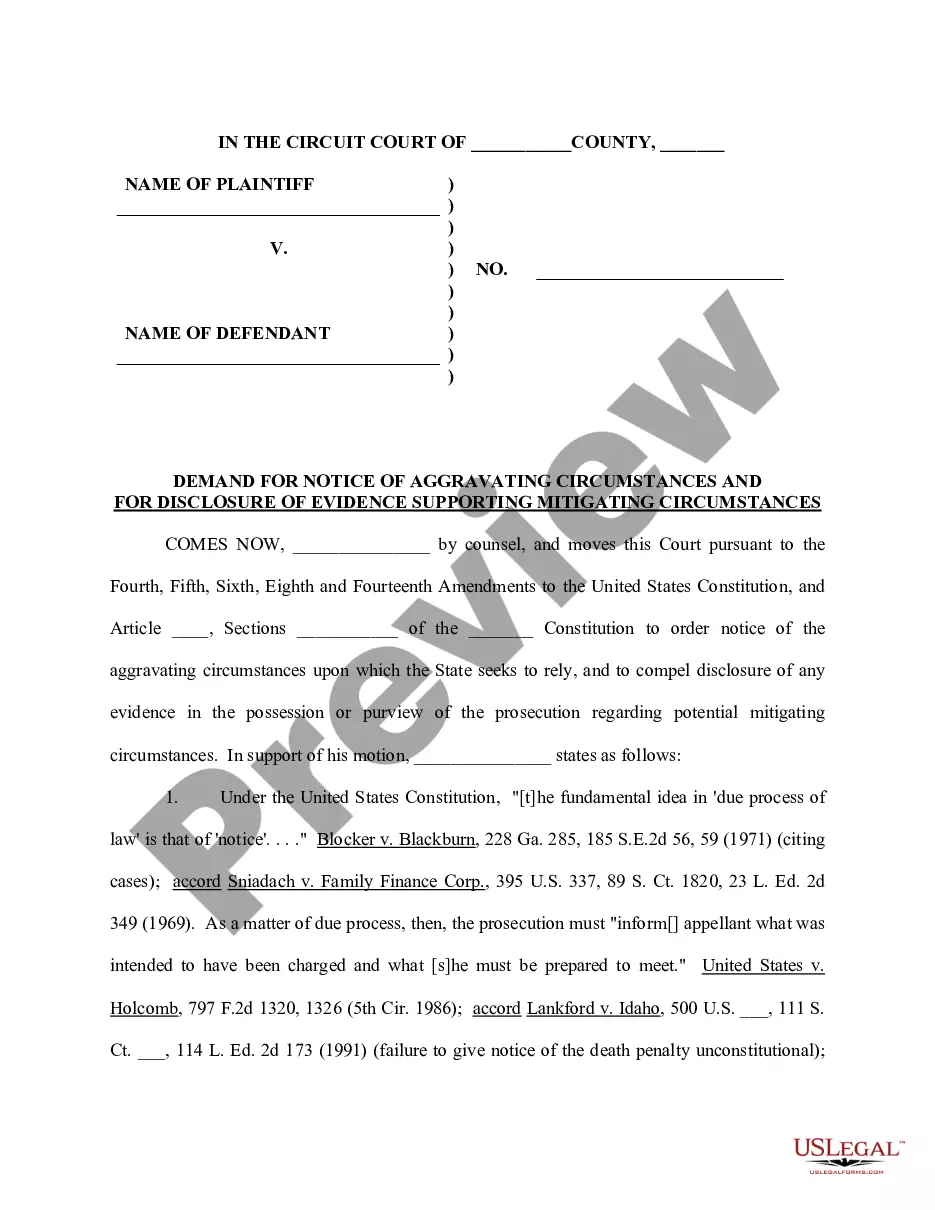
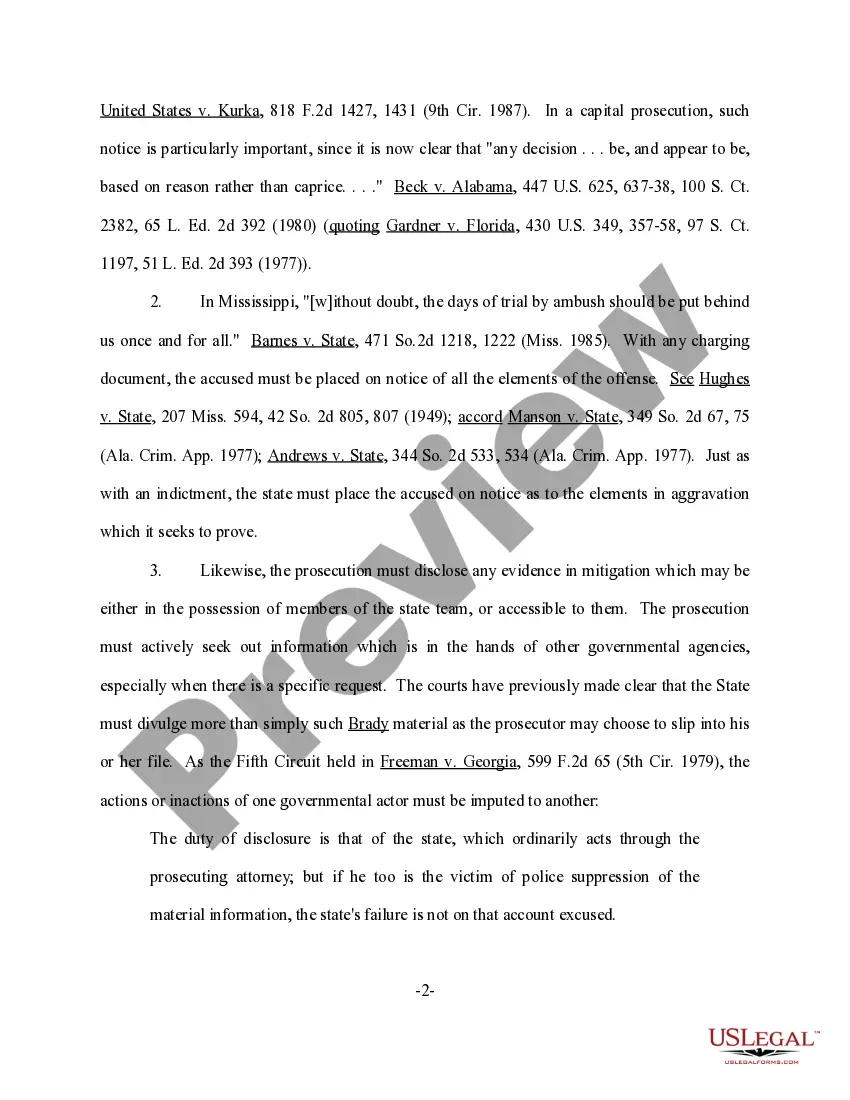
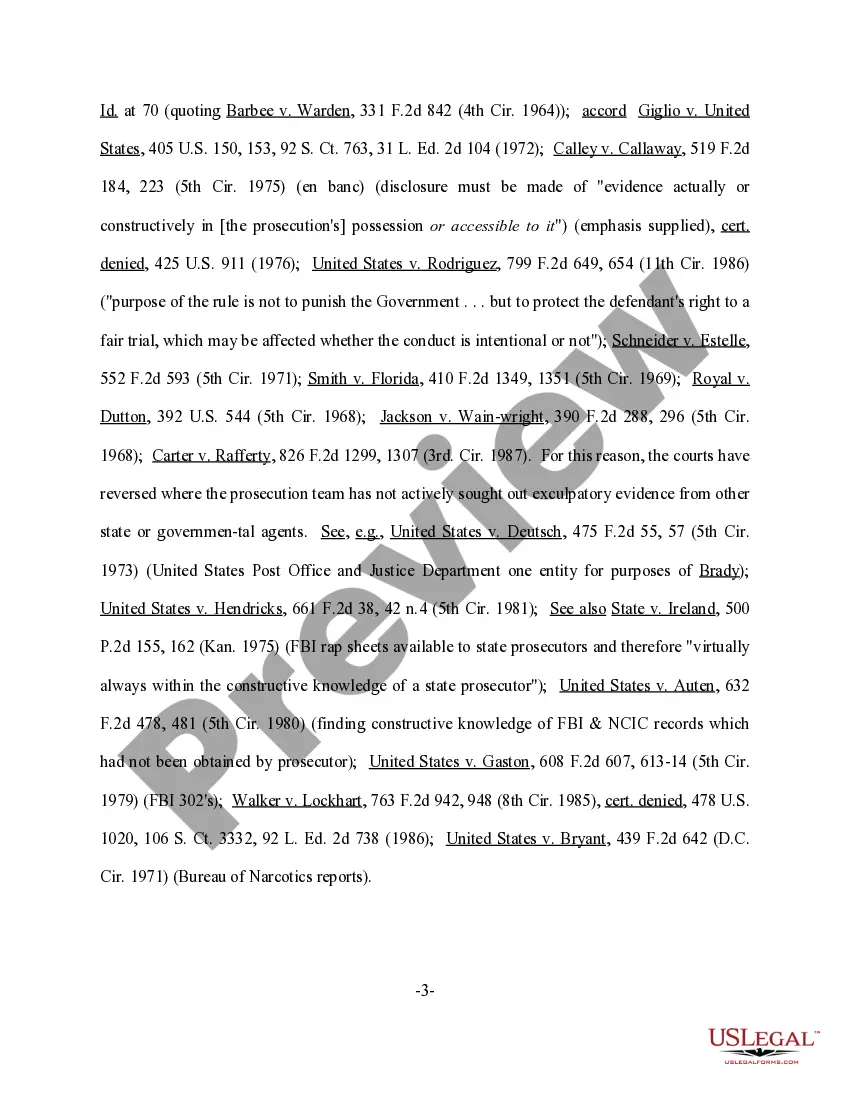
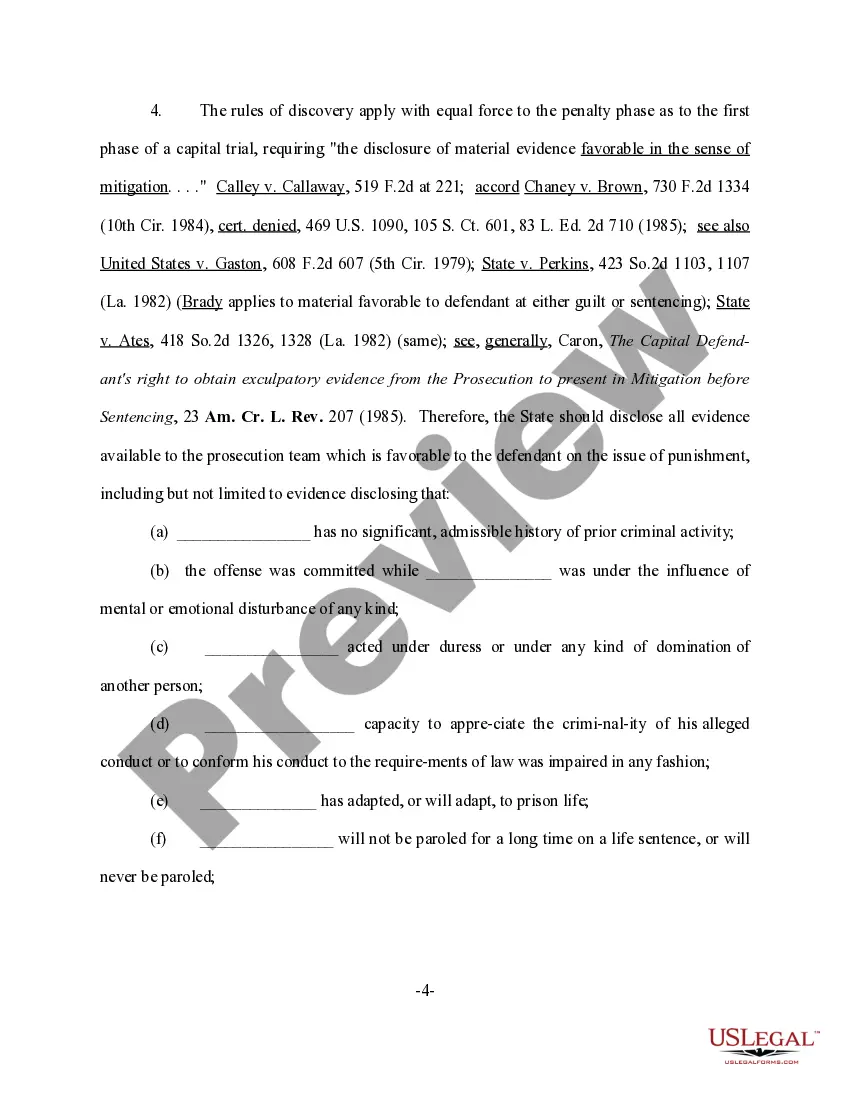
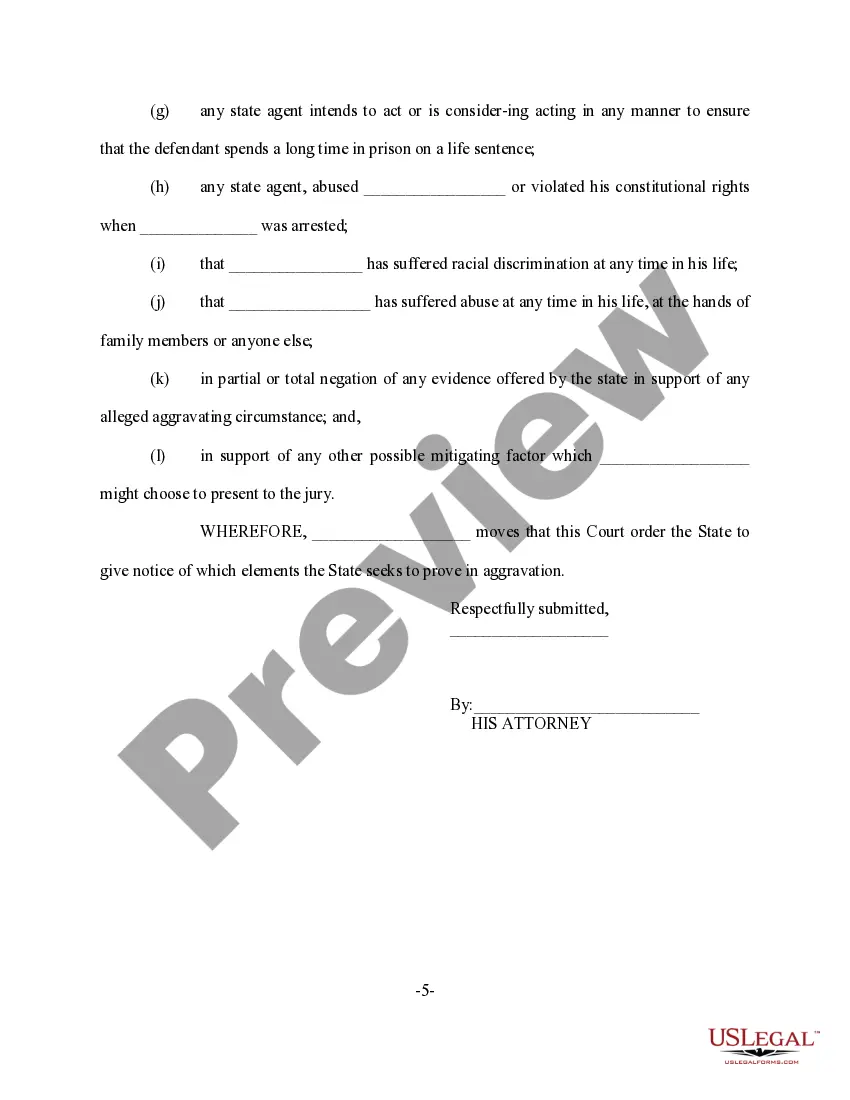
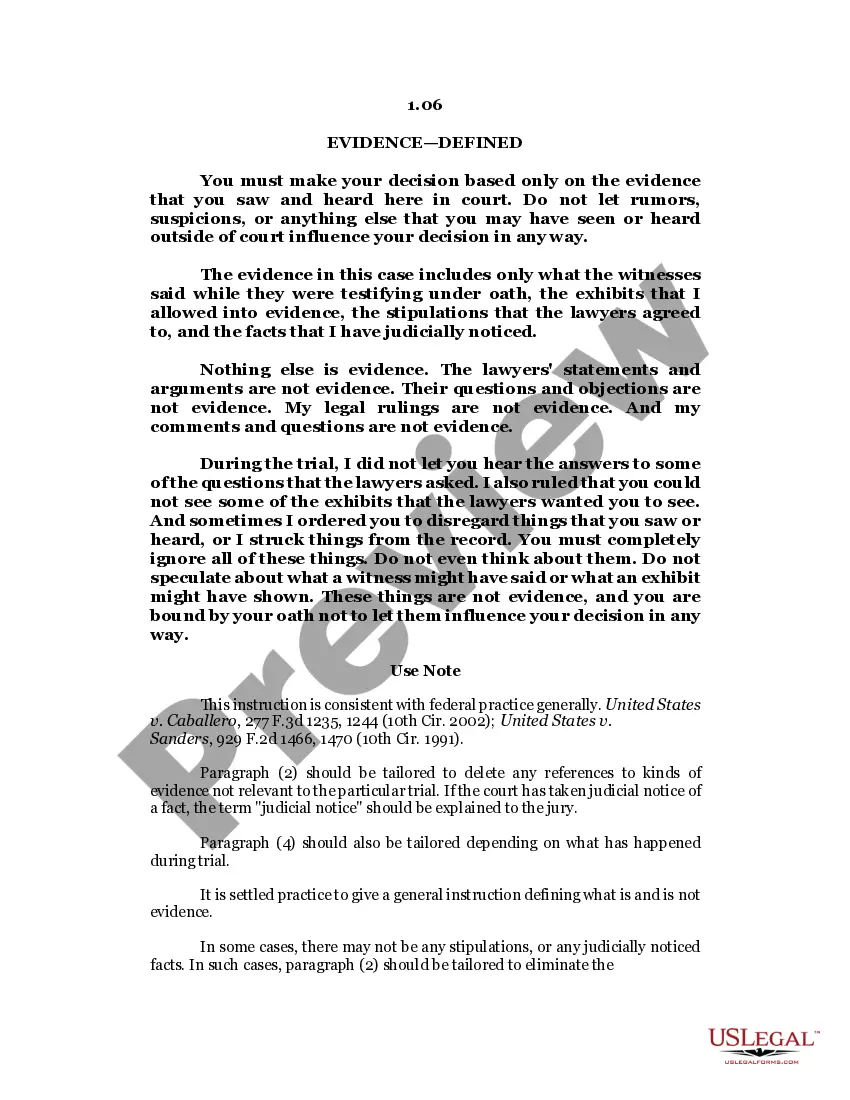
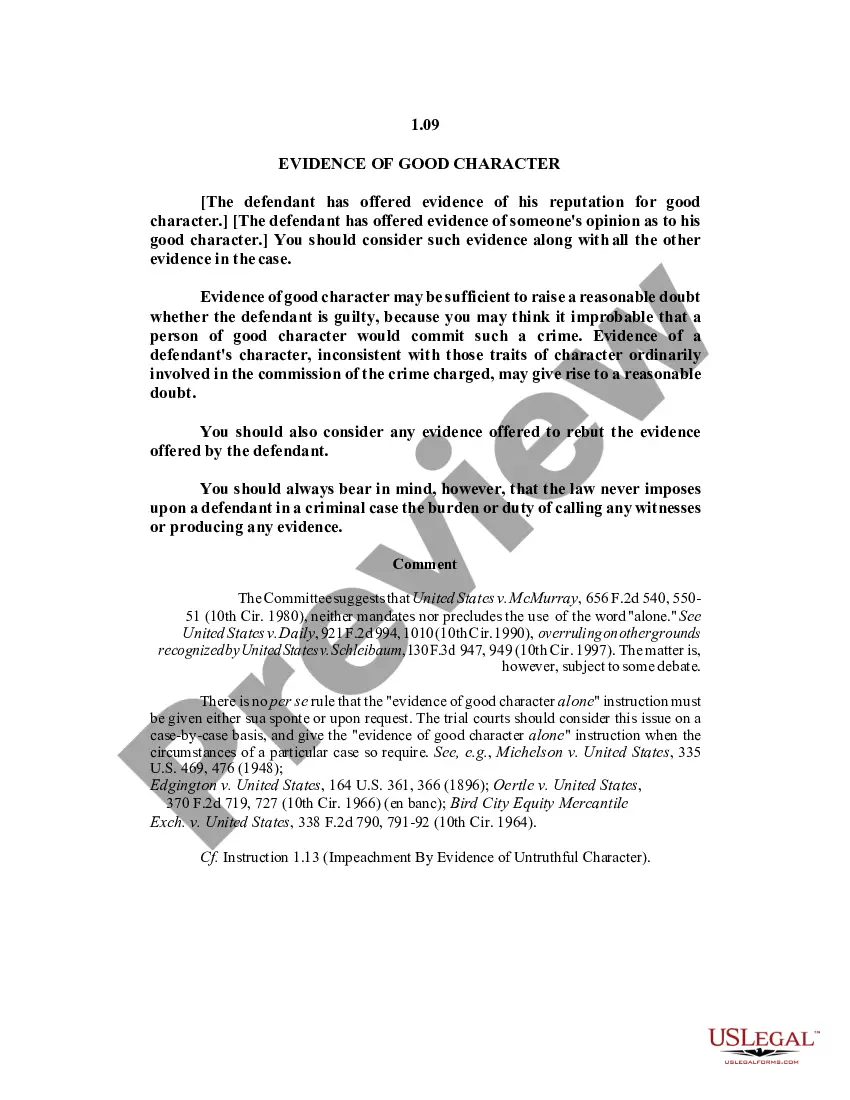
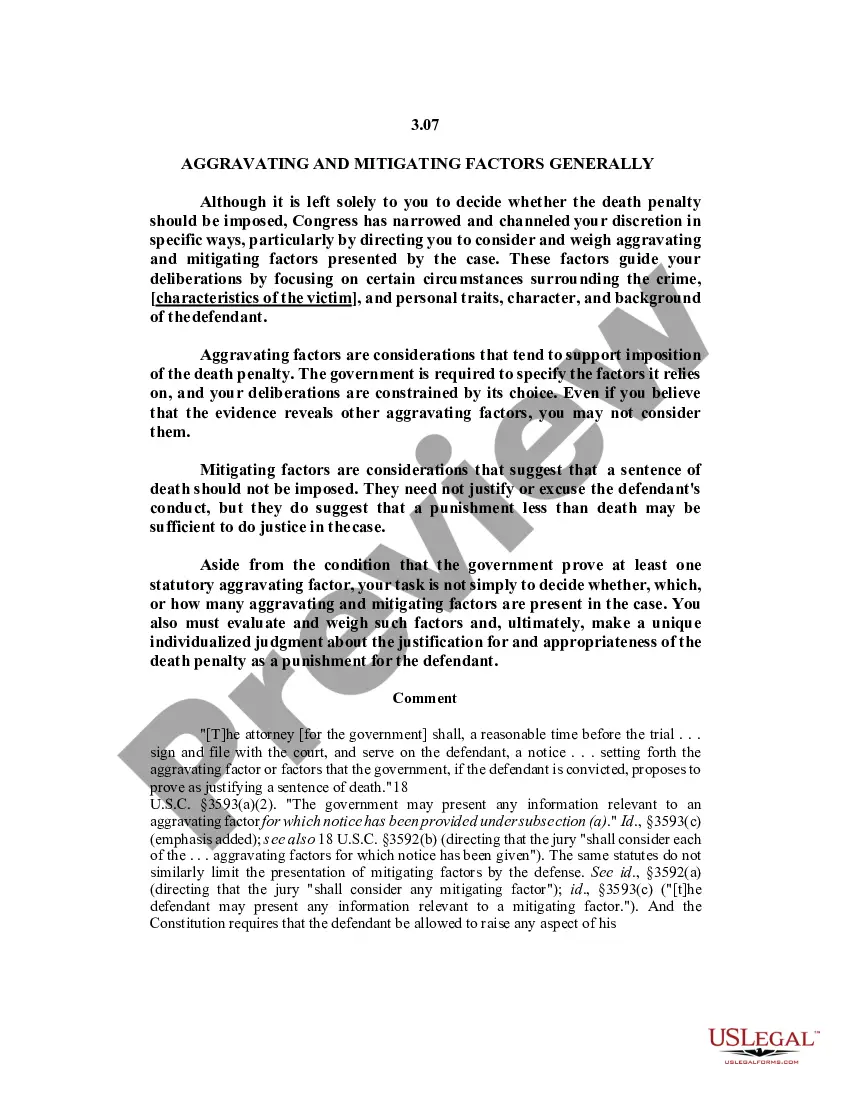

How to fill out Demand For Notice Of Aggravating And For Disclosure Of Evidence Supporting Mitigating Circumstances?
US Legal Forms - one of the most important collections of legal documents in the United States - offers a range of legal document templates that you can download or print. By using the website, you can access thousands of forms for business and personal use, organized by categories, states, or keywords. You can find the latest versions of forms such as the Georgia Demand for Notice of Aggravating and for Disclosure of Evidence Supporting Mitigating Circumstances in just minutes.
If you have a subscription, Log In and download the Georgia Demand for Notice of Aggravating and for Disclosure of Evidence Supporting Mitigating Circumstances from the US Legal Forms library. The Acquire button will appear on every form you view. You have access to all previously downloaded forms in the My documents section of your account.
To use US Legal Forms for the first time, here are simple instructions to get you started: Ensure you have selected the correct form for your city/region. Click on the Review button to check the form's content. Review the form description to confirm that you have chosen the right form. If the form does not meet your needs, utilize the Search field at the top of the screen to find the one that does. Once you are satisfied with the form, confirm your choice by clicking the Purchase now button. Then, select your preferred payment plan and provide your details to register for an account. Process the purchase. Use your credit card or PayPal account to complete the transaction. Choose the format and download the form to your device. Make adjustments. Fill out, modify, and print and sign the downloaded Georgia Demand for Notice of Aggravating and for Disclosure of Evidence Supporting Mitigating Circumstances. Every template you added to your account has no expiration date and is yours permanently. To download or print another version, simply visit the My documents section and click on the form you need.
- Access the Georgia Demand for Notice of Aggravating and for Disclosure of Evidence Supporting Mitigating Circumstances with US Legal Forms, the most extensive collection of legal document templates.
- Utilize thousands of professional and state-specific templates that cater to your business or personal needs and requirements.
Form popularity
FAQ
For instance, the defence may want one as a last hope that it will find some mitigating circumstance, and it may actually succeed in that object. I use that as a mitigating circumstance. The court upheld their fatigue due to spending 52 hours working as a mitigating circumstance.
Mitigating circumstances are factors in the commission of a crime that lessen or reduce its moral and legal consequences. During sentencing, these mitigating factors are weighed against aggravating factors that may increase the penalty for a crime.
A mitigating factor, also called a mitigating circumstance or extenuating circumstance, is any fact or circumstance that lessens the defendant's severity or culpability of a criminal offense. Unlike justification or excuse defenses, mitigating factors only affect the defendant's sentence.
A mitigating circumstance is anything that is used to explain why a defendant should receive a lesser sentence. For example, if an individual with severe combat PTSD attacks another, the fact that they are suffering from a mental illness is considered a mitigating circumstance.
An aggravating circumstance is something that makes a crime more serious, such as burgling someone's house while they are asleep in bed. A mitigating circumstance is something that may reduce your sentence, such as having problems in your personal life that have affected your behaviour.
Aggravating factors offence committed whilst on bail for other offences; failure to respond to previous sentences; offence was racially or religiously aggravated; offence motivated by, or demonstrating, hostility to the victim based on his or her sexual orientation (or presumed sexual orientation);
Overview of Aggravating and Mitigating Factors Judges have some discretion with regard to sentencing, and a sentencing hearing allows both prosecutors and defendants the chance to present evidence for the court to consider. Aggravating factors may increase a sentence, while mitigating factors may decrease a sentence.
Mitigating factors are extenuating circumstances that might lead to a reduced sentence. Aggravating factors are circumstances that increase the defendant's culpability and could lead to an enhanced or maximum sentence.