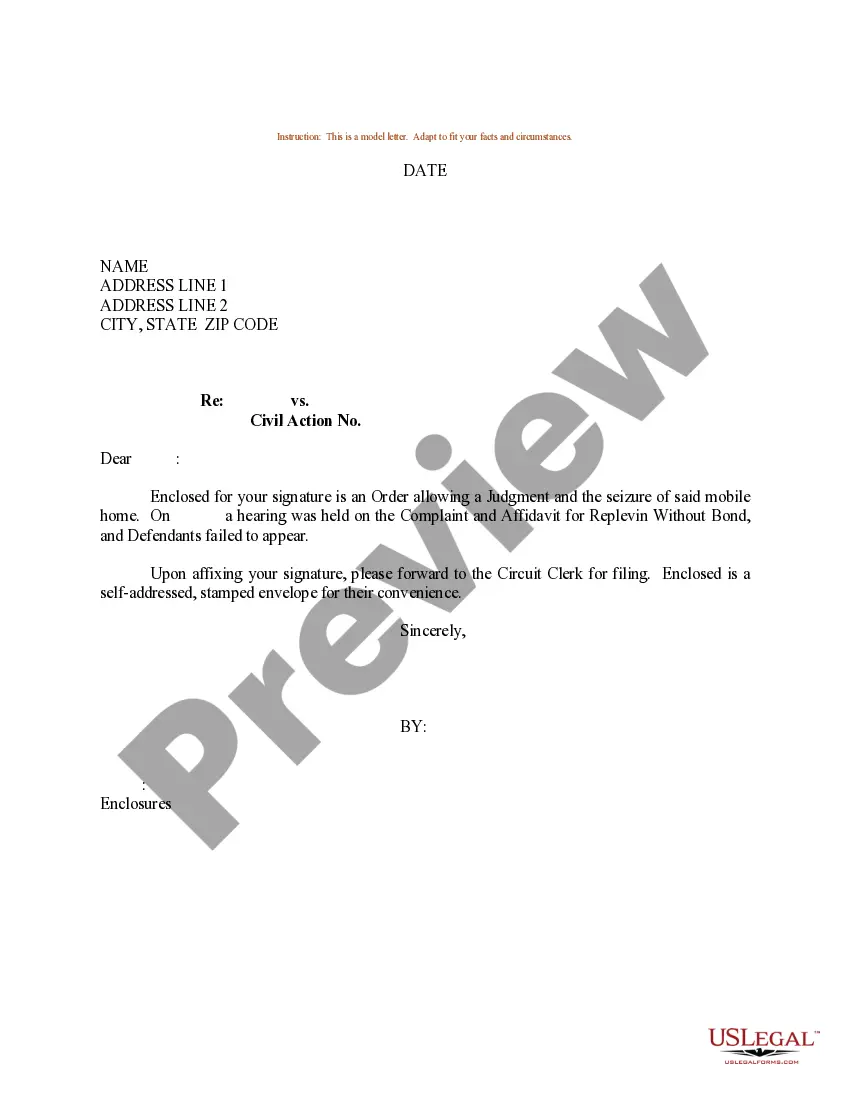
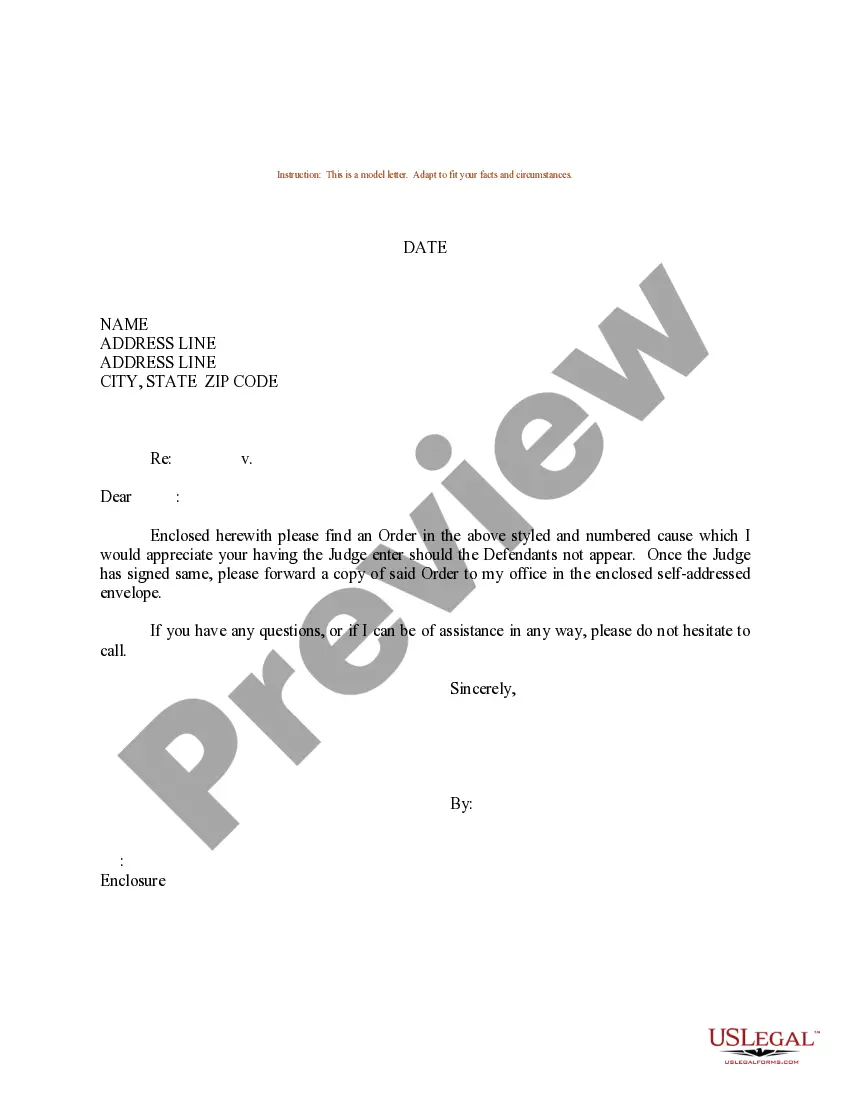
Georgia Sample Letter to Judge concerning Order for Seizure of a Mobile
Description


Get your form ready online
Our built-in tools help you complete, sign, share, and store your documents in one place.
Make edits, fill in missing information, and update formatting in US Legal Forms—just like you would in MS Word.
Download a copy, print it, send it by email, or mail it via USPS—whatever works best for your next step.
Sign and collect signatures with our SignNow integration. Send to multiple recipients, set reminders, and more. Go Premium to unlock E-Sign.
If this form requires notarization, complete it online through a secure video call—no need to meet a notary in person or wait for an appointment.
We protect your documents and personal data by following strict security and privacy standards.

Make edits, fill in missing information, and update formatting in US Legal Forms—just like you would in MS Word.

Download a copy, print it, send it by email, or mail it via USPS—whatever works best for your next step.

Sign and collect signatures with our SignNow integration. Send to multiple recipients, set reminders, and more. Go Premium to unlock E-Sign.

If this form requires notarization, complete it online through a secure video call—no need to meet a notary in person or wait for an appointment.

We protect your documents and personal data by following strict security and privacy standards.
Looking for another form?
How to fill out Sample Letter To Judge Concerning Order For Seizure Of A Mobile?
Are you currently in a position where you require documents for both professional or personal purposes nearly every workday.
There are numerous legal document templates accessible online, but finding ones you can rely on isn't simple.
US Legal Forms provides a vast array of form templates, such as the Georgia Sample Letter to Judge regarding Order for Seizure of a Mobile, that are created to comply with state and federal regulations.
Once you find the correct form, simply click Buy now.
Select the pricing plan you prefer, fill in the necessary information to create your account, and complete the purchase with your PayPal or credit card.
- If you are already acquainted with the US Legal Forms website and have an account, simply Log In.
- Then, you can download the Georgia Sample Letter to Judge regarding Order for Seizure of a Mobile template.
- If you do not possess an account and wish to start using US Legal Forms, follow these steps.
- Obtain the form you require and ensure it is for the correct city/region.
- Utilize the Review button to examine the form.
- Read the description to confirm that you have selected the appropriate form.
- If the form isn't what you are looking for, use the Search field to find the form that suits your requirements.
Form popularity
FAQ
A search or seizure is reasonable if the police have a warrant from a judge based on probable cause to believe that a suspect has committed a crime. Also, a search may be reasonable without a warrant if an exception applies under the circumstances.
An unreasonable search and seizure is a search and seizure executed 1) without a legal search warrant signed by a judge or magistrate describing the place, person, or things to be searched or seized or 2) without probable cause to believe that certain person, specified place or automobile has criminal evidence or 3) ...
What Is the Right Against Unlawful Search and Seizure? The Fourth Amendment to the Constitution protects against unreasonable search and seizures. This makes a search and seizure unlawful if the police did not have a valid search or arrest warrant or probable cause to suspect that a crime was being committed.
The circumstances under which a warrantless search, seizure, or arrest is deemed reasonable generally fall within seven categories: Felony Arrest in a Public Place. ... Searches Directly Related to a Lawful Arrest. ... Traffic Stops for Reasonable Suspicion. ... Suspects of Ongoing Criminal Activity. ... Exigent Circumstances.
The right of the people to be secure in their persons, houses, papers, and effects, against unreasonable searches and seizures, shall not be violated, and no Warrants shall issue, but upon probable cause, supported by Oath or affirmation, and particularly describing the place to be searched, and the persons or things ...
While in general, on a motion to suppress, the defendant has the burden of proving, by a preponderance of the evidence, that the material in question was seized in violation of his constitutional rights, there are several situations where the burden shifts to the government. United States v.
A search or seizure is generally reasonable if made pursuant to a warrant issued by a judge based on "probable cause" and describing the person and place to be searched or property to be seized with particularity. A search or seizure made with your consent is permissible, and what is taken may be used against you.
For example, if a driver is driving erratically, swerving between lanes, and failing to stop for traffic signals, a police officer may have reasonable suspicion that the driver is drunk.