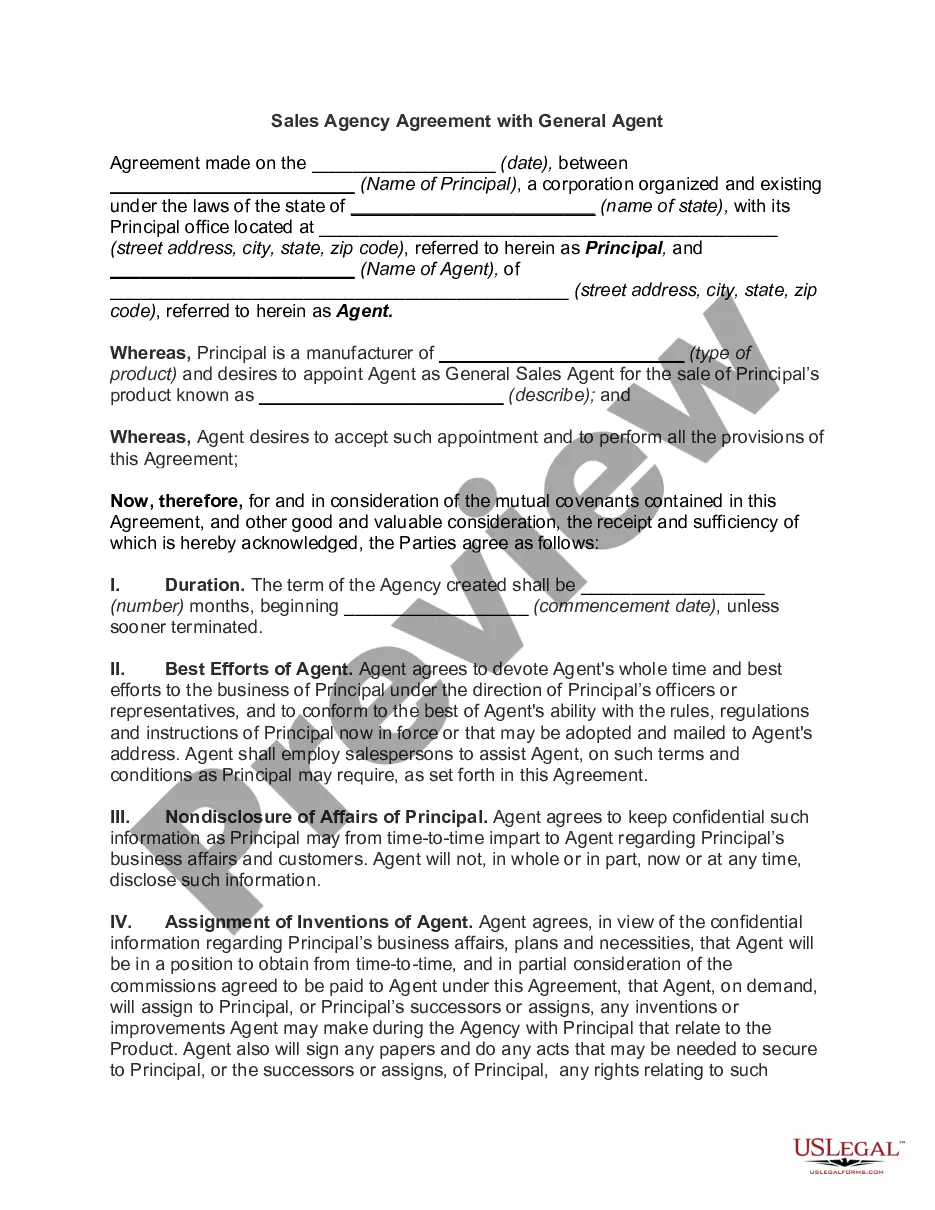
Georgia Sales Consultant Agreement with Consultant Operating as Independent Contractor in a Defined Territory
Description
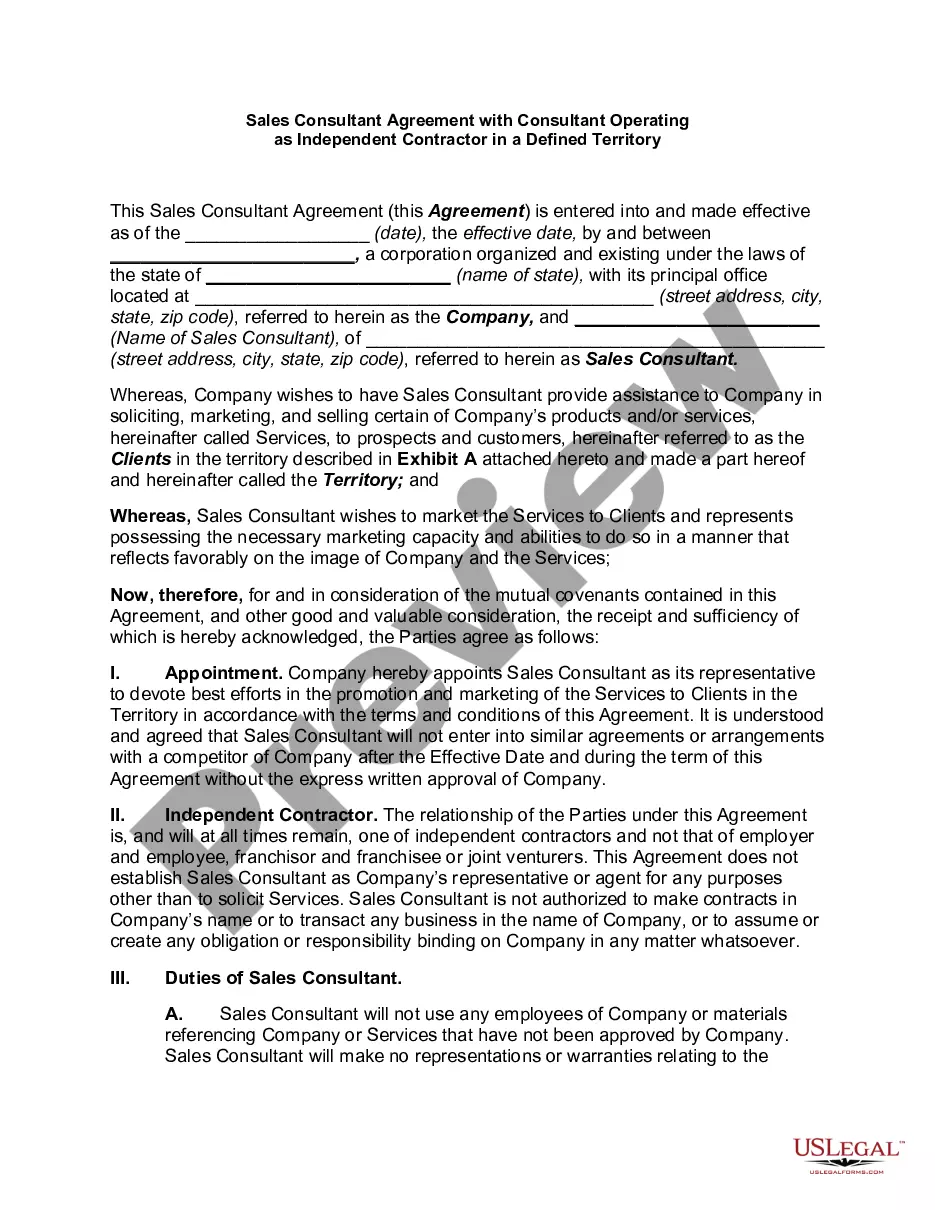
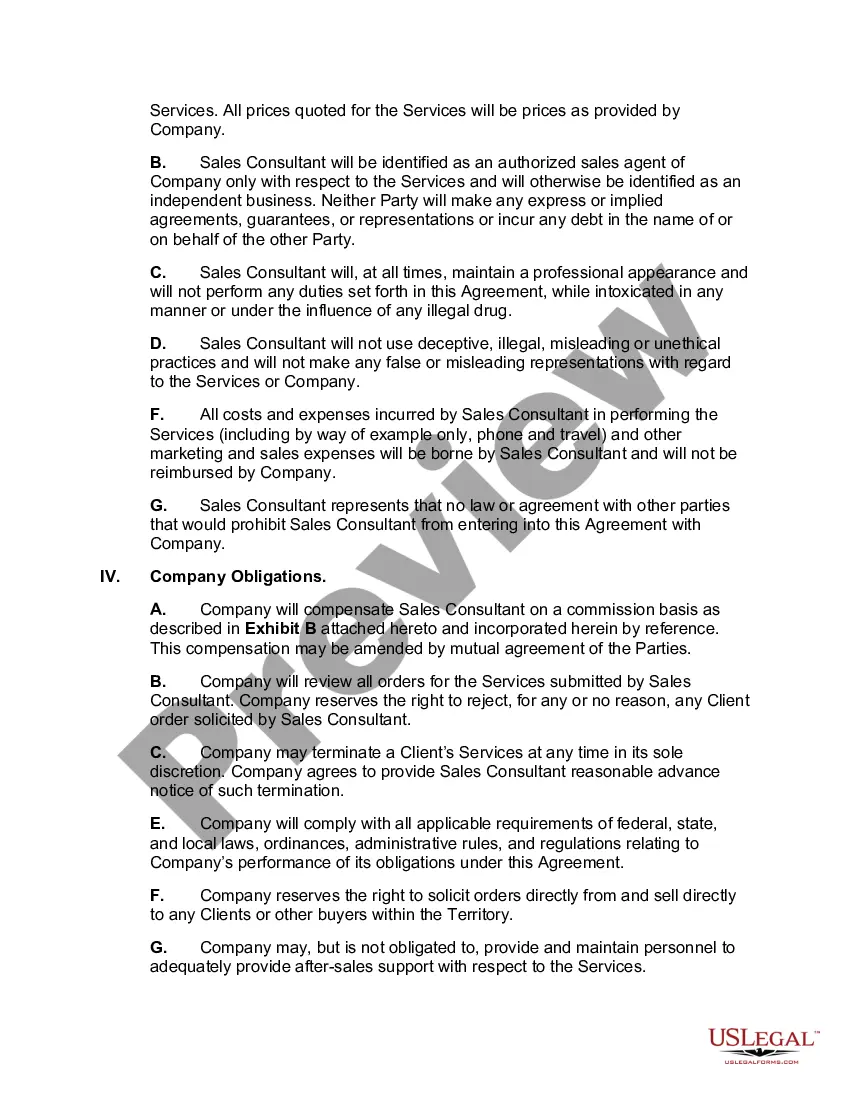
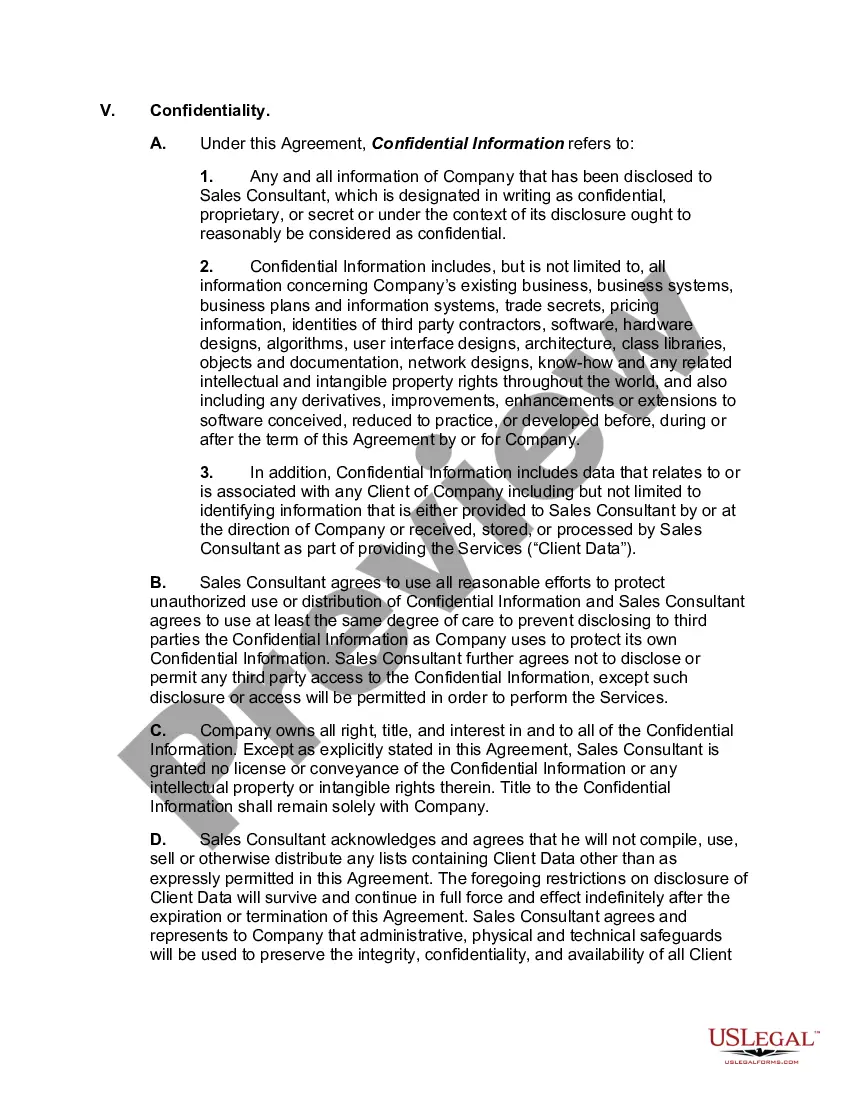
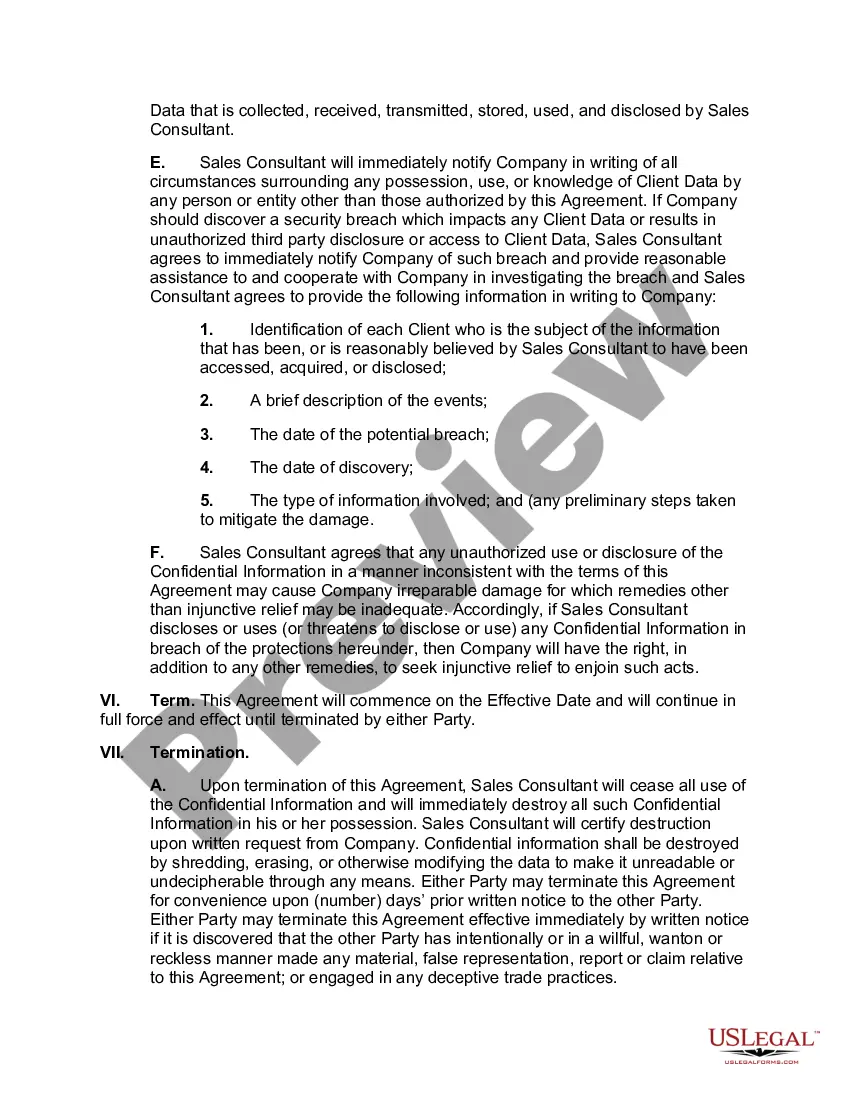
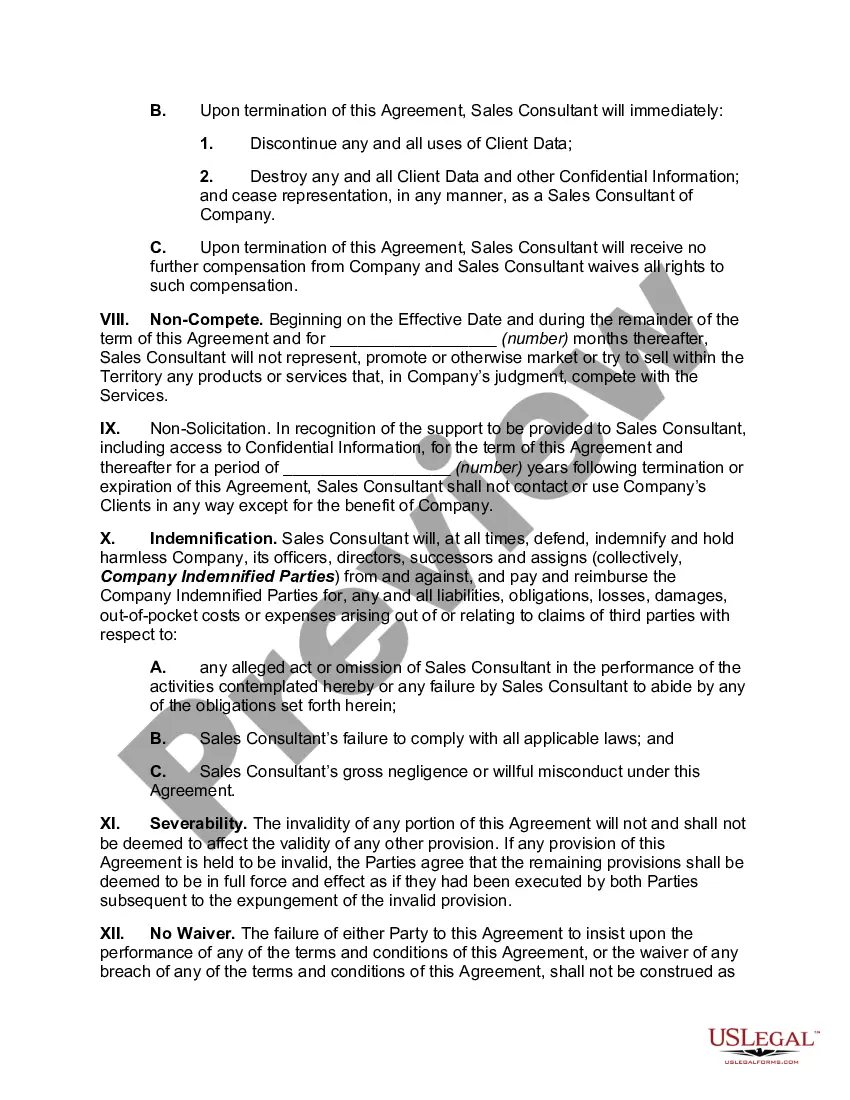
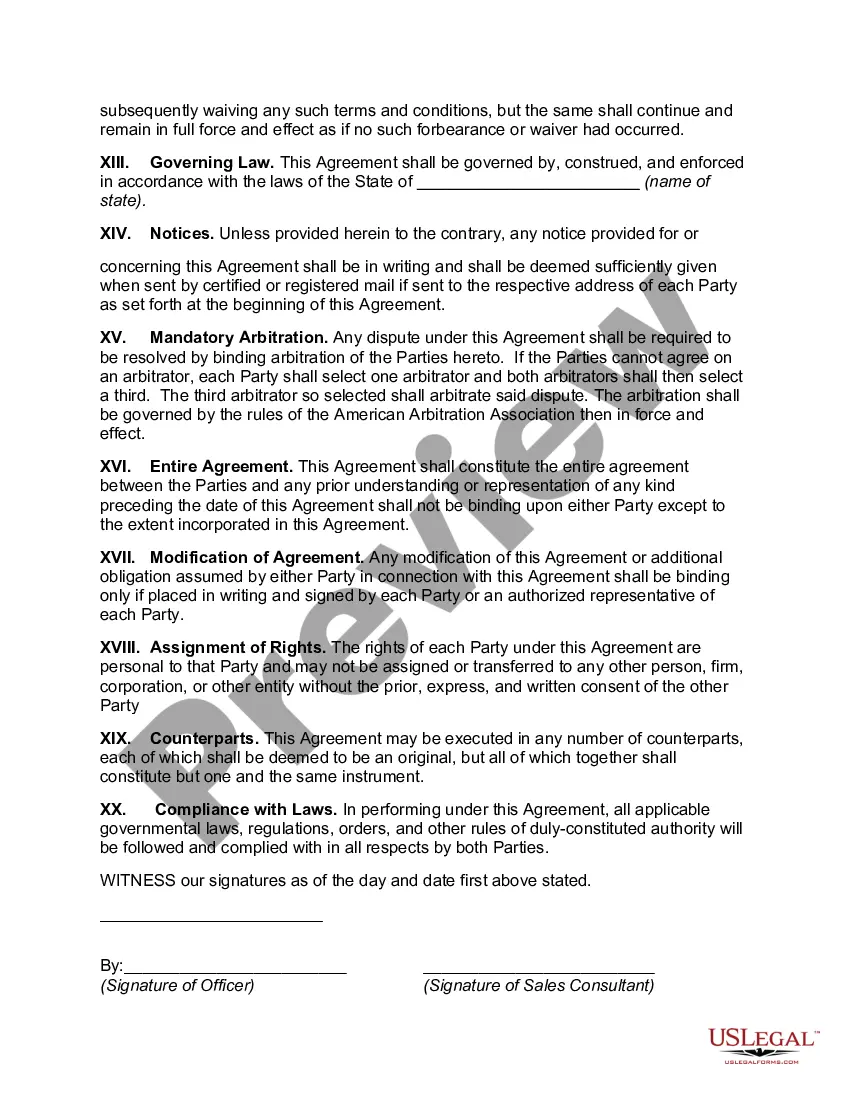
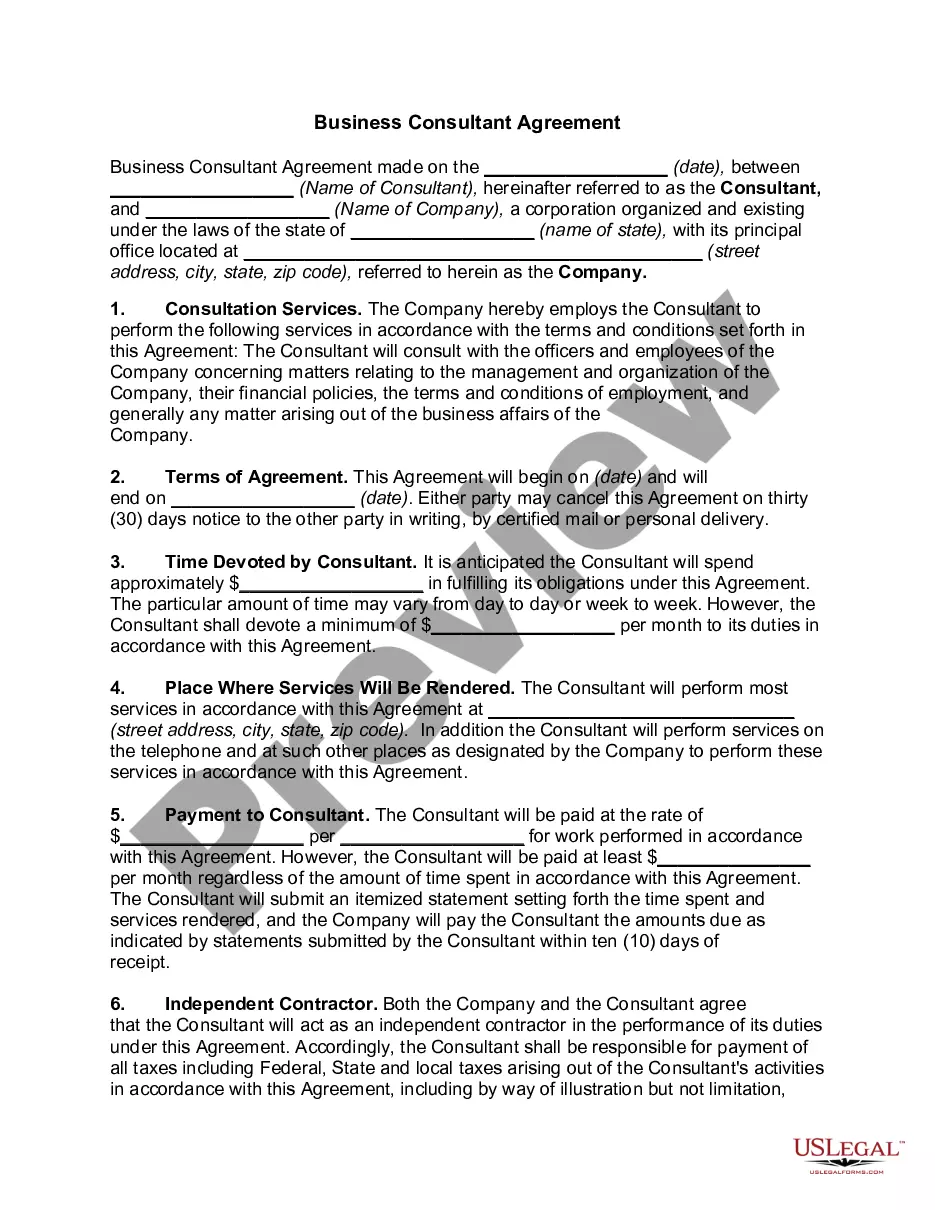
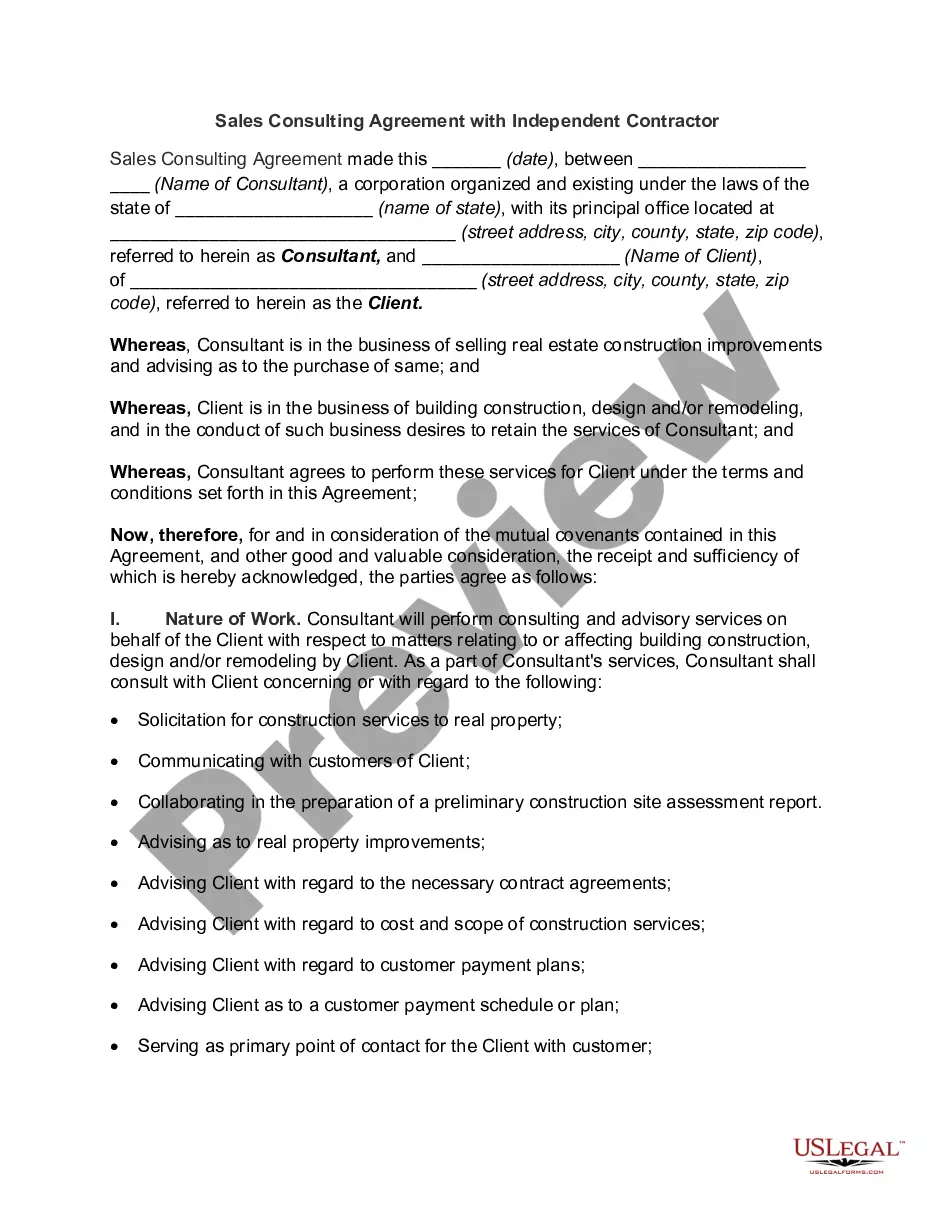
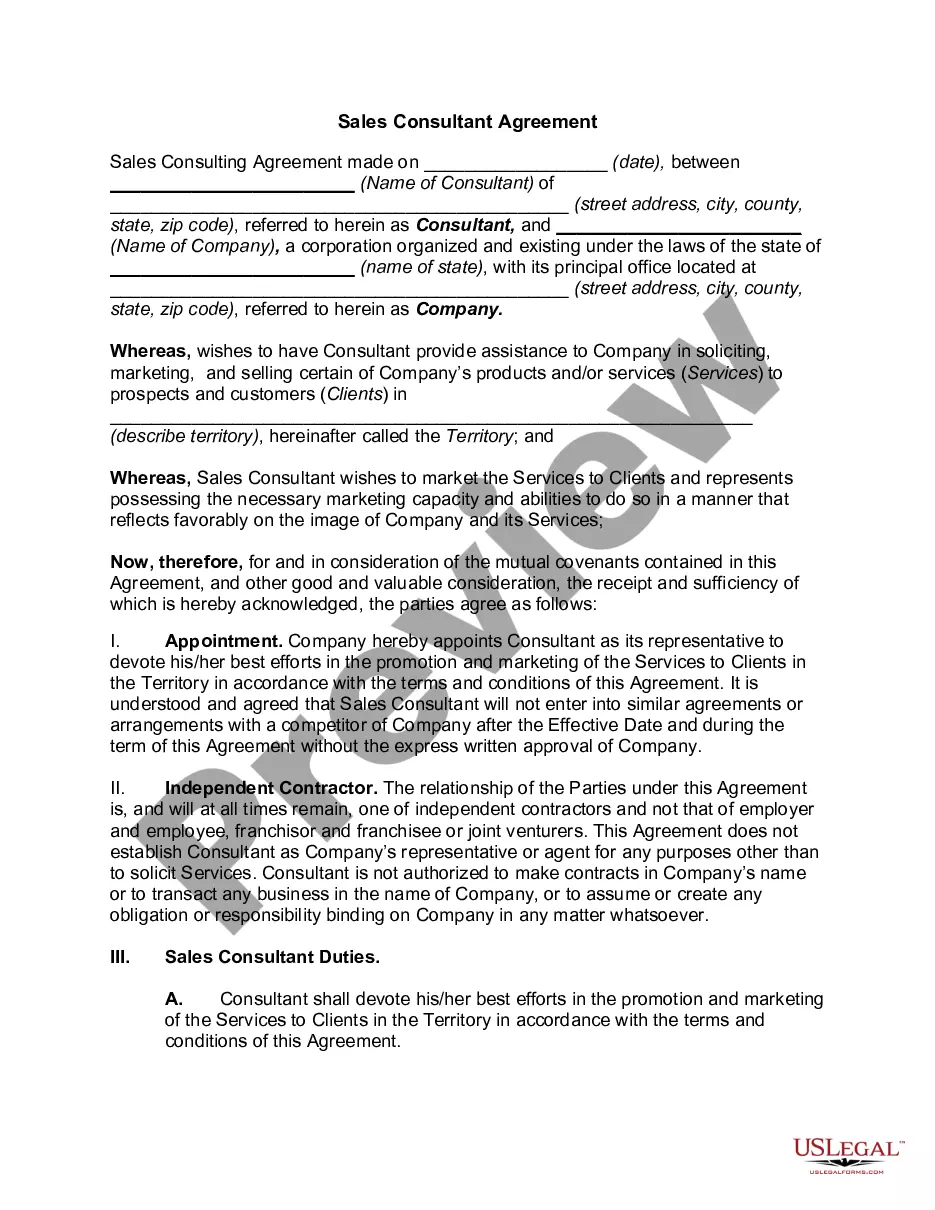
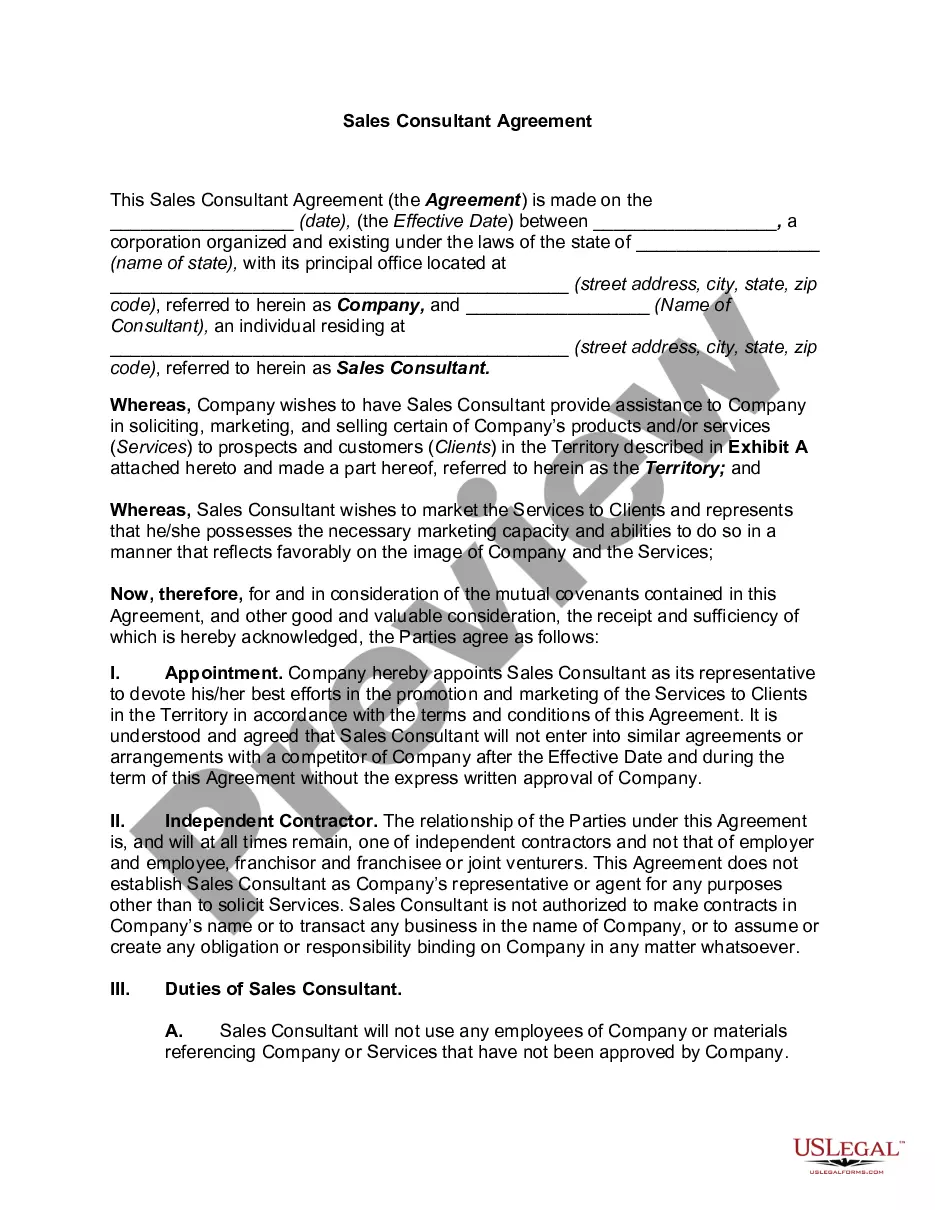
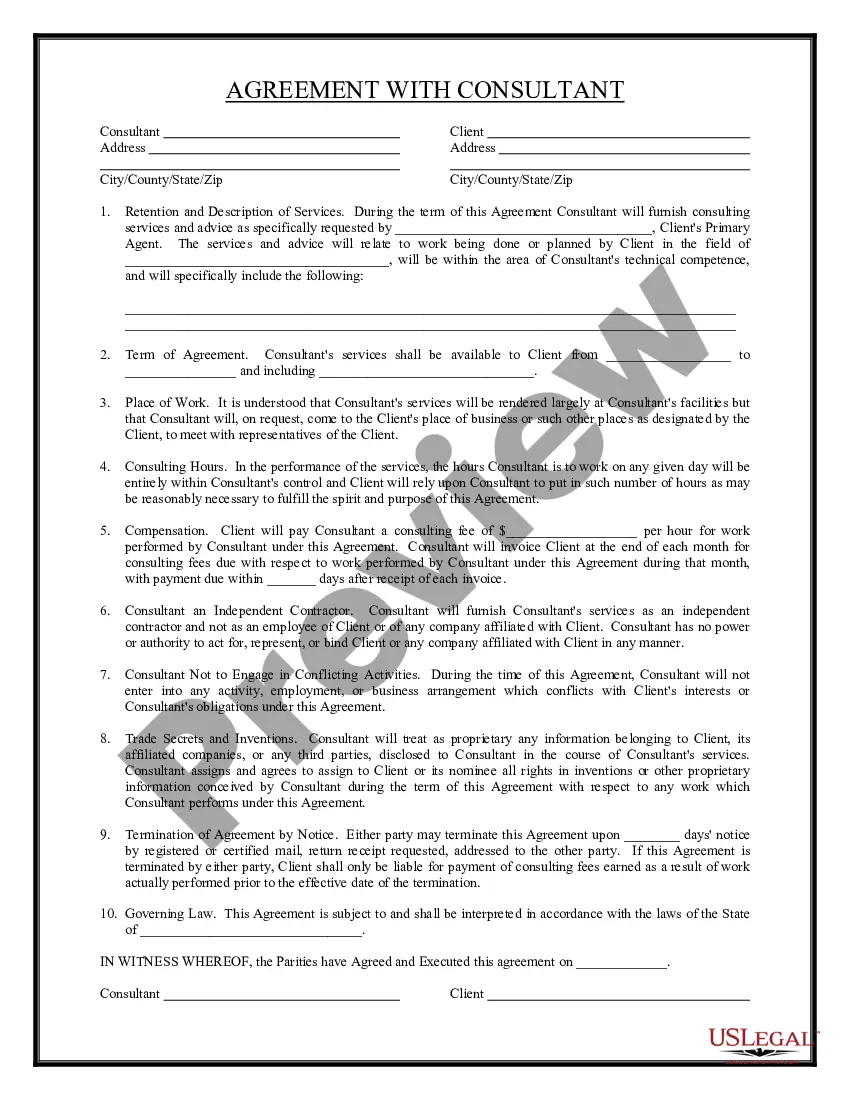
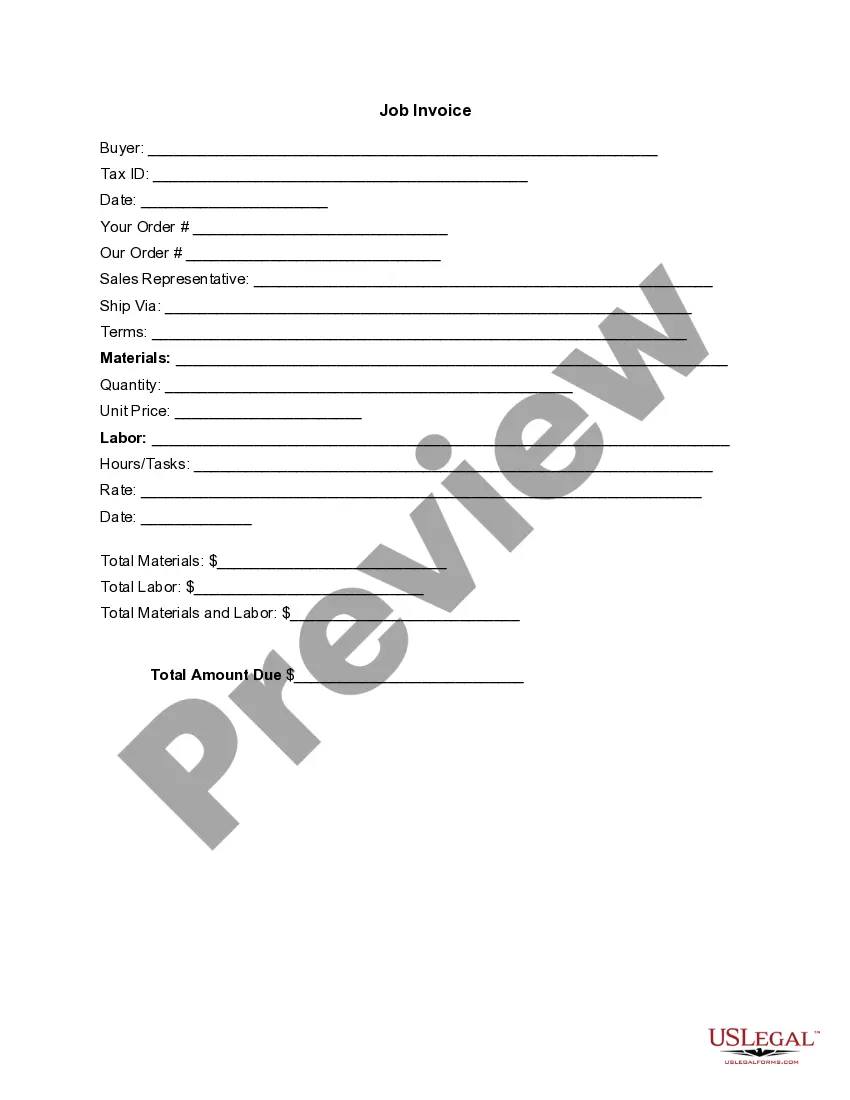



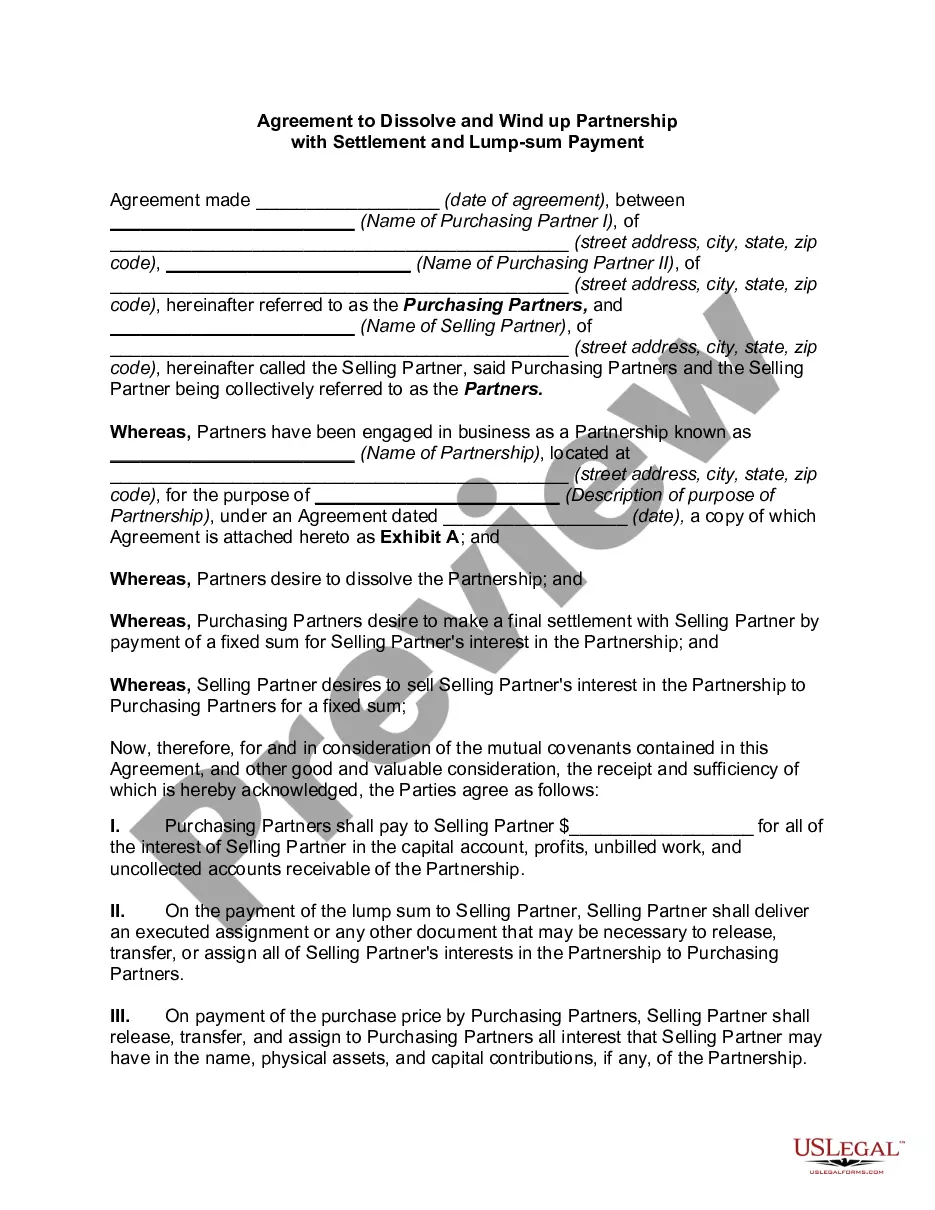
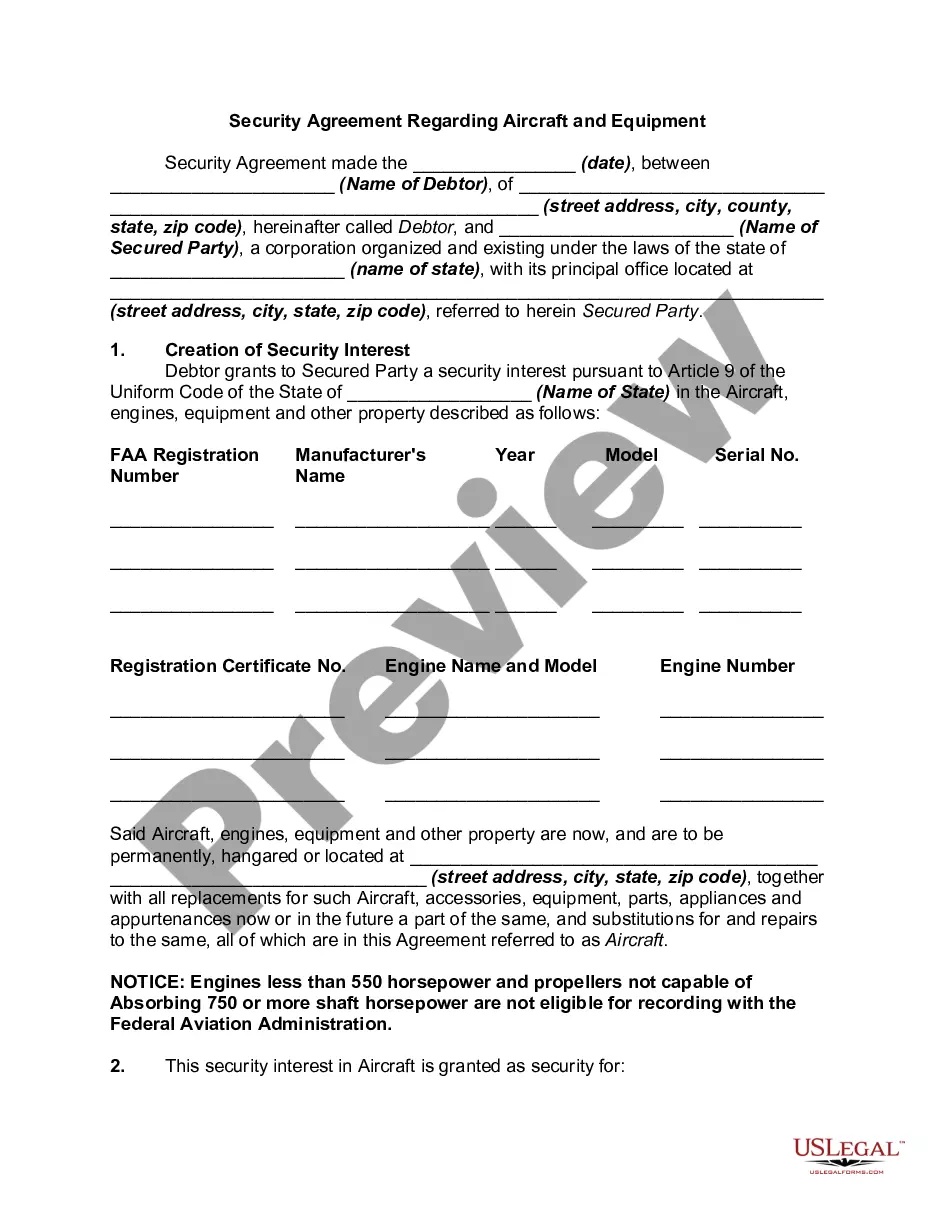
How to fill out Sales Consultant Agreement With Consultant Operating As Independent Contractor In A Defined Territory?
Are you presently in a circumstance where you require documents for either business or personal purposes nearly every day.
There is a multitude of legal document templates accessible online, but locating ones you can rely on is challenging.
US Legal Forms provides thousands of form templates, including the Georgia Sales Consultant Agreement with Consultant Acting as Independent Contractor in a Designated Area, which can be tailored to meet federal and state requirements.
Once you find the appropriate form, click Buy now.
Choose the payment plan you desire, fill out the necessary information to create your account, and complete the purchase using your PayPal or Visa or Mastercard.
- If you are already acquainted with the US Legal Forms website and have an account, simply Log In.
- Once logged in, you can download the Georgia Sales Consultant Agreement with Consultant Acting as Independent Contractor in a Designated Area template.
- If you do not have an account and wish to start using US Legal Forms, follow these steps.
- Select the form you need and ensure it is suitable for the correct region/state.
- Utilize the Review button to examine the form.
- Check the description to confirm you have selected the correct form.
- If the form does not match your requirements, use the Lookup section to find the form that fits your needs.
Form popularity
FAQ
The contractor isn't an employee of the company but works independently. The contractor provides services to the client under an Independent Contractor Agreement.
Generally, a Consultant is a self-employed independent businessperson who has a special field of expertise or skill.
In general, the difference is that the consultant's role is to evaluate a client's needs and provide expert advice and opinions on what needs to be done, while the contractors role is generally to evaluate the client's needs and actually perform the work.
How do I create an Independent Contractor Agreement?State the location.Describe the type of service required.Provide the contractor's and client's details.Outline compensation details.State the agreement's terms.Include any additional clauses.State the signing details.
What is the difference between a Consultant and a Contractor? The short answer is that the Consultants role is evaluate a client's needs and provide expert advice and opinion on what needs to be done while the Contractors role is generally to evaluate the client's needs and actually perform the work.
Consultants Are Usually Self-Employed According to the IRS, you're self-employed if you're a business owner or contractor who provides services to other businesses. To remain a contractor rather than an employee, you must: Have the right to direct or control the work you perform.
Contractors, freelancers, and consultants are self-employed individuals who work alone or as part of other businesses. These terms cause a great deal of confusion because they are often used interchangeably when discussing self-employment.
Freelancers and consultants are known as "independent contractors" in legal terms. An independent contractor (IC) is a person who contracts to perform services for others without having the legal status of an employee.
If you are an independent contractor, then you are self-employed. The earnings of a person who is working as an independent contractor are subject to self-employment tax. To find out what your tax obligations are, visit the Self-Employed Individuals Tax Center.
When you do consulting work in the U.S., you can be paid two different ways: as an employee on a W-2 tax basis, or on a 1099 tax basis as an independent contractor. As a consultant, being paid on a 1099 tax basis is a huge plus for two key reasons: You save more for retirement.