Guam Guide for Protecting Deceased Persons from Identity Theft
Description
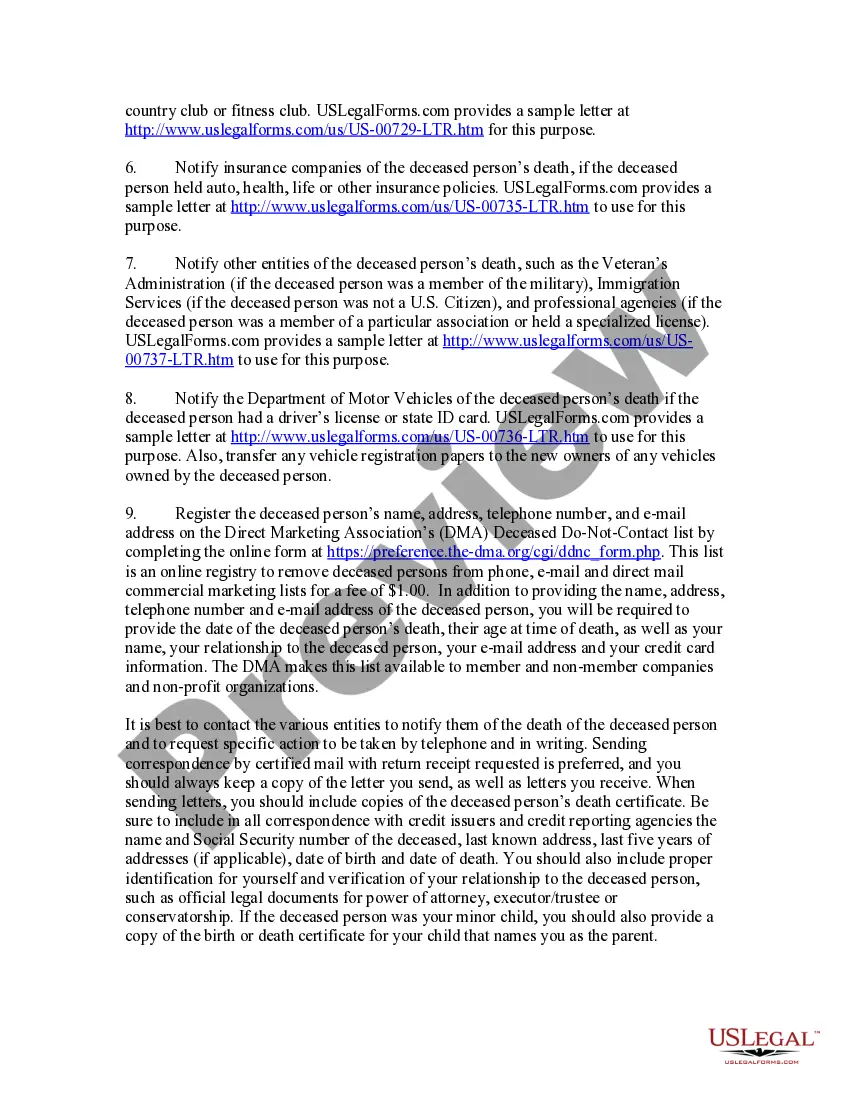
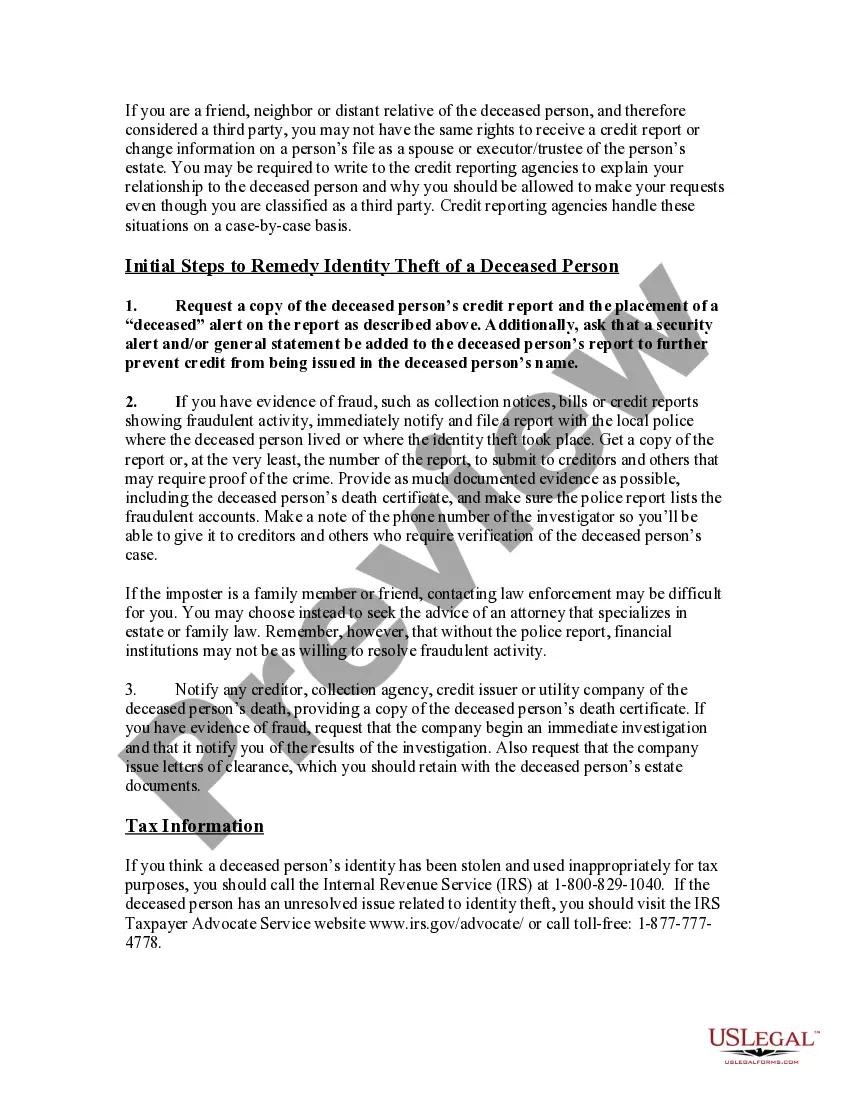
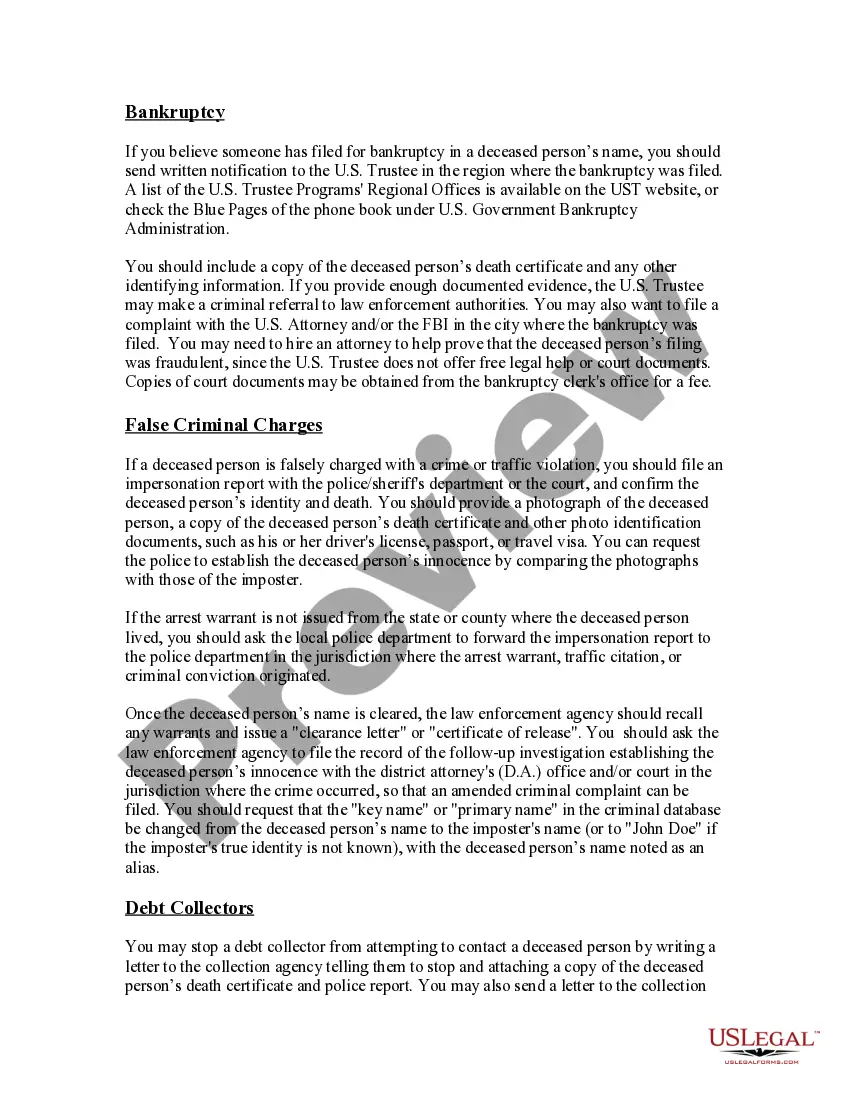
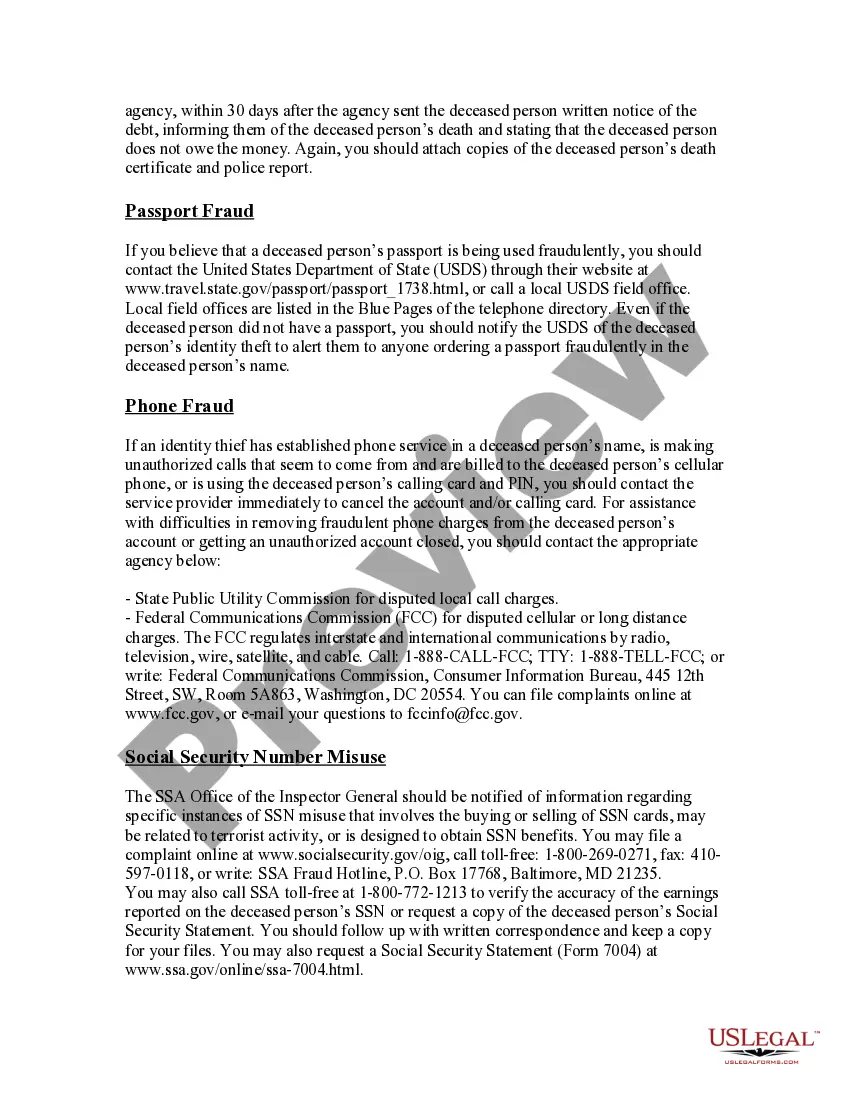
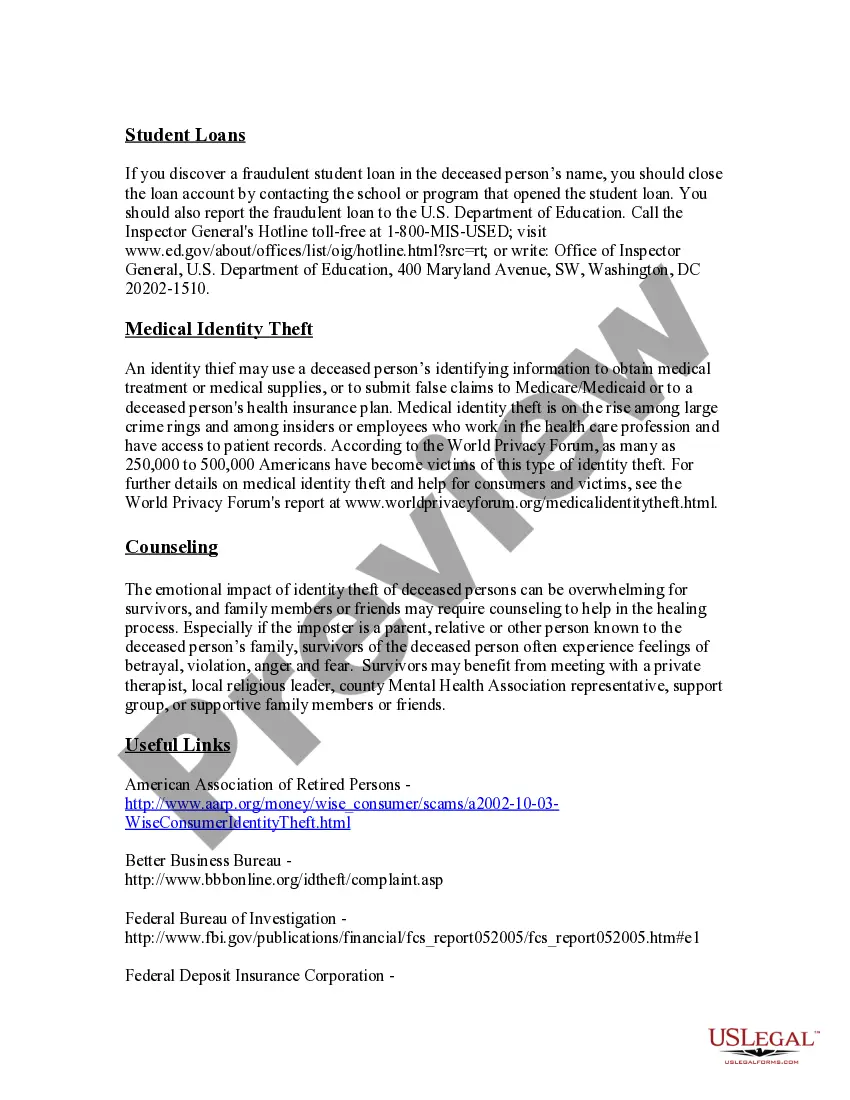
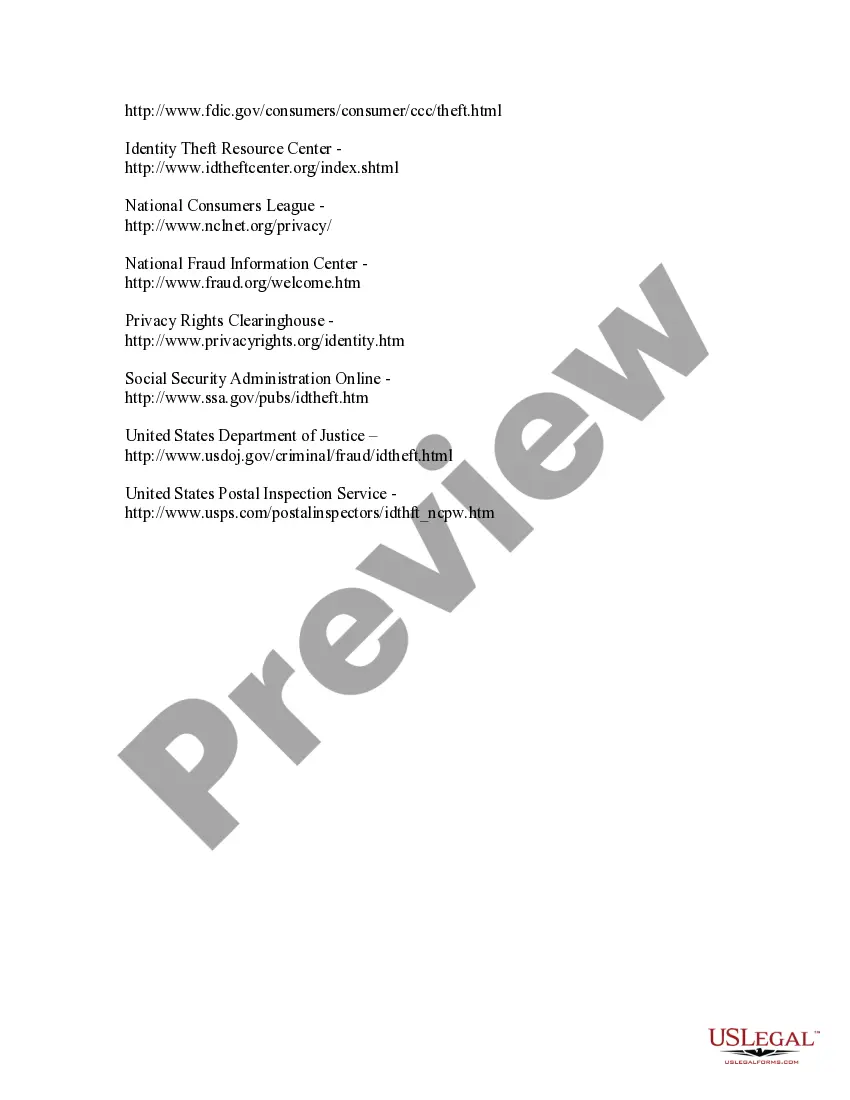
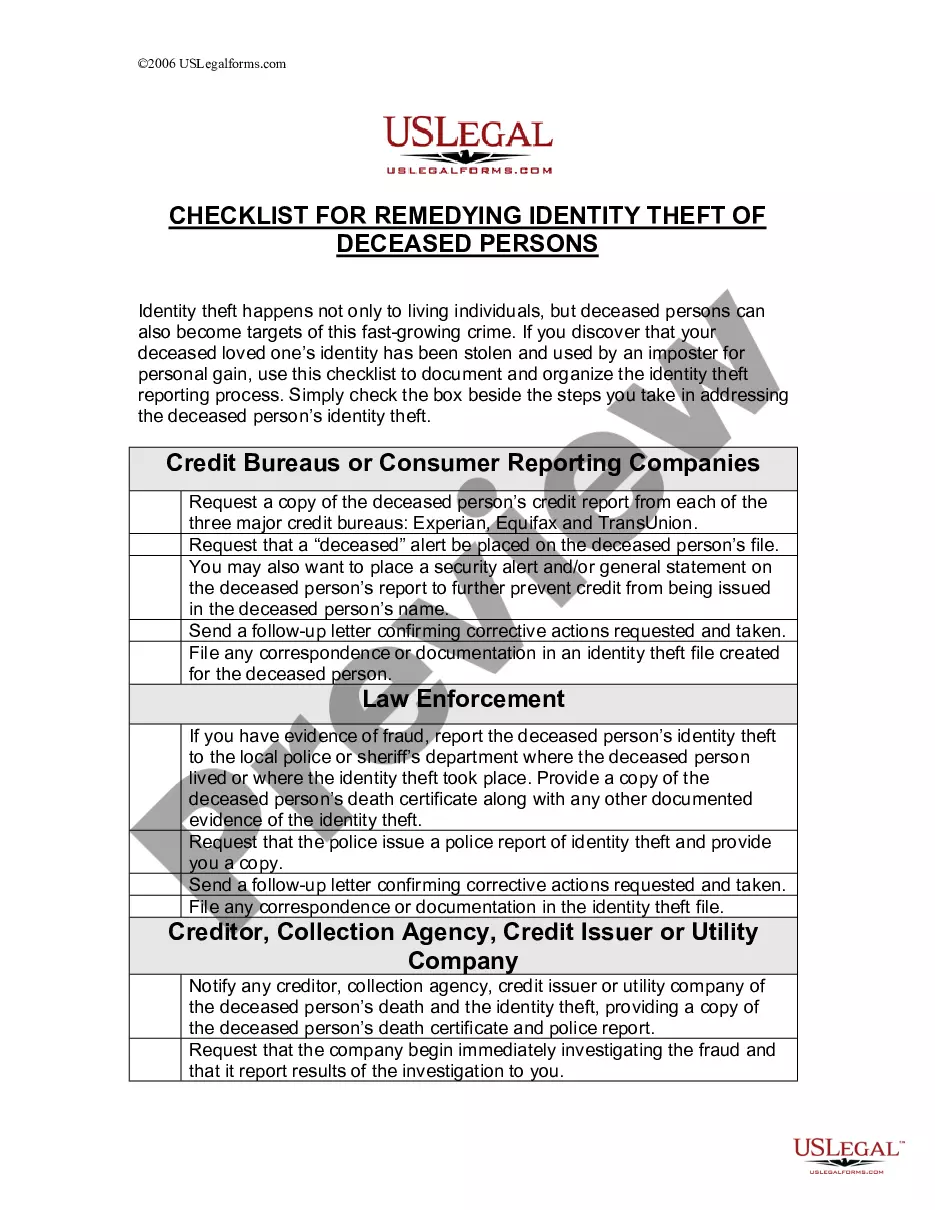
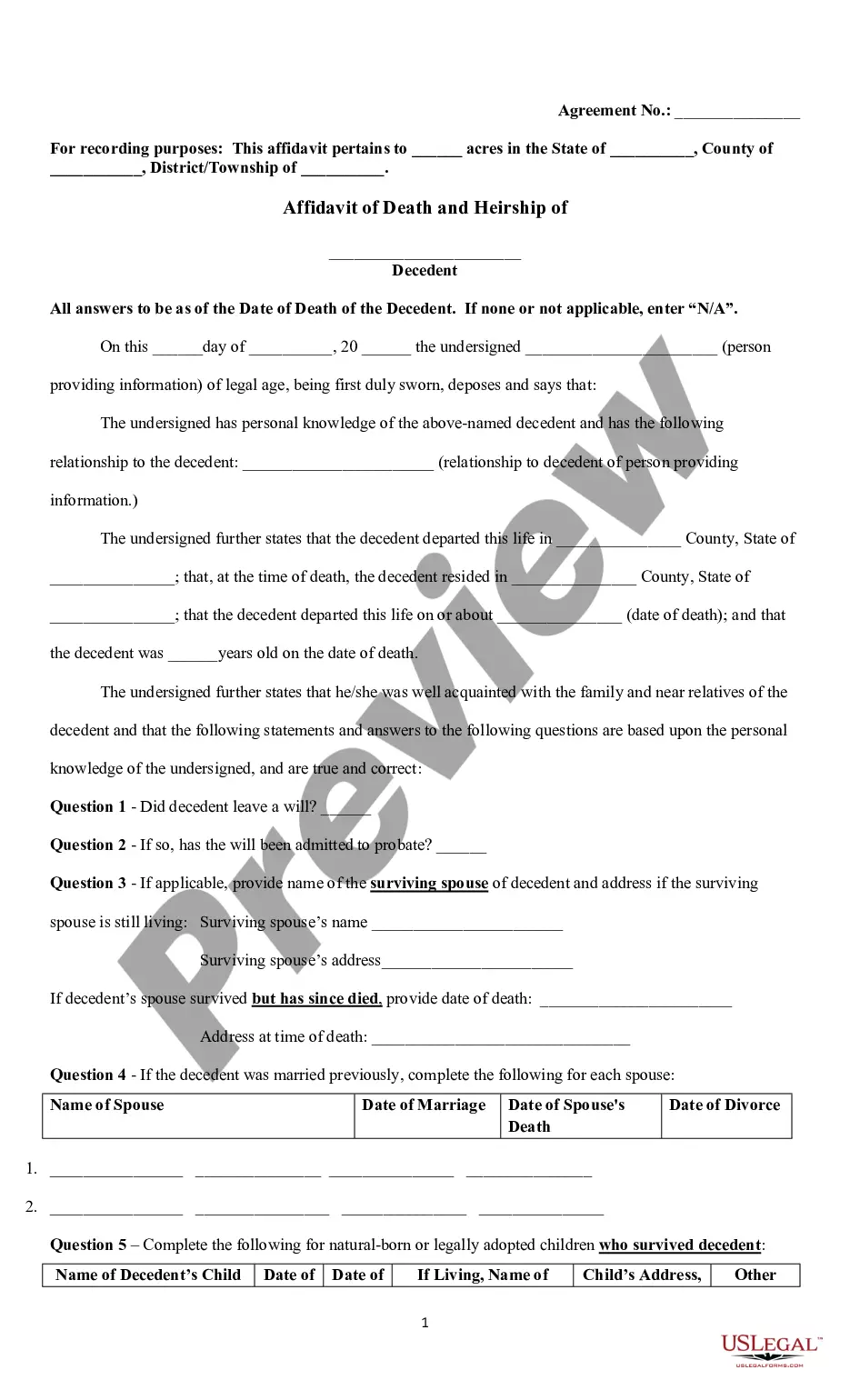





How to fill out Guide For Protecting Deceased Persons From Identity Theft?
You can spend time online searching for the legal document template that meets the state and federal standards you require. US Legal Forms offers thousands of legal forms that are vetted by professionals.
It is easy to download or print the Guam Guide for Safeguarding Deceased Individuals from Identity Theft from your services.
If you have a US Legal Forms account, you can Log In and click the Download button. After that, you can fill out, modify, print, or sign the Guam Guide for Safeguarding Deceased Individuals from Identity Theft. Each legal document template you purchase is yours indefinitely. To obtain an additional copy of any purchased form, go to the My documents tab and click the respective button.
Complete the transaction. You can use your credit card or PayPal account to purchase the legal form. Choose the format of the document and download it to your device. Make changes to your document if possible. You can fill out, modify, sign, and print the Guam Guide for Safeguarding Deceased Individuals from Identity Theft. Download and print thousands of document templates using the US Legal Forms website, which offers the largest selection of legal forms. Utilize professional and state-specific templates to address your business or personal requirements.
- If you are using the US Legal Forms website for the first time, follow the simple instructions below.
- First, ensure that you have selected the correct document template for the county/city of your choice.
- Review the form description to confirm that you have chosen the right form.
- If available, use the Review button to look at the document template as well.
- If you want to find another model of the form, use the Search field to locate the template that fits your needs and specifications.
- Once you have found the template you desire, click on Purchase now to proceed.
- Select the pricing plan you want, enter your details, and register for an account on US Legal Forms.
Form popularity
FAQ
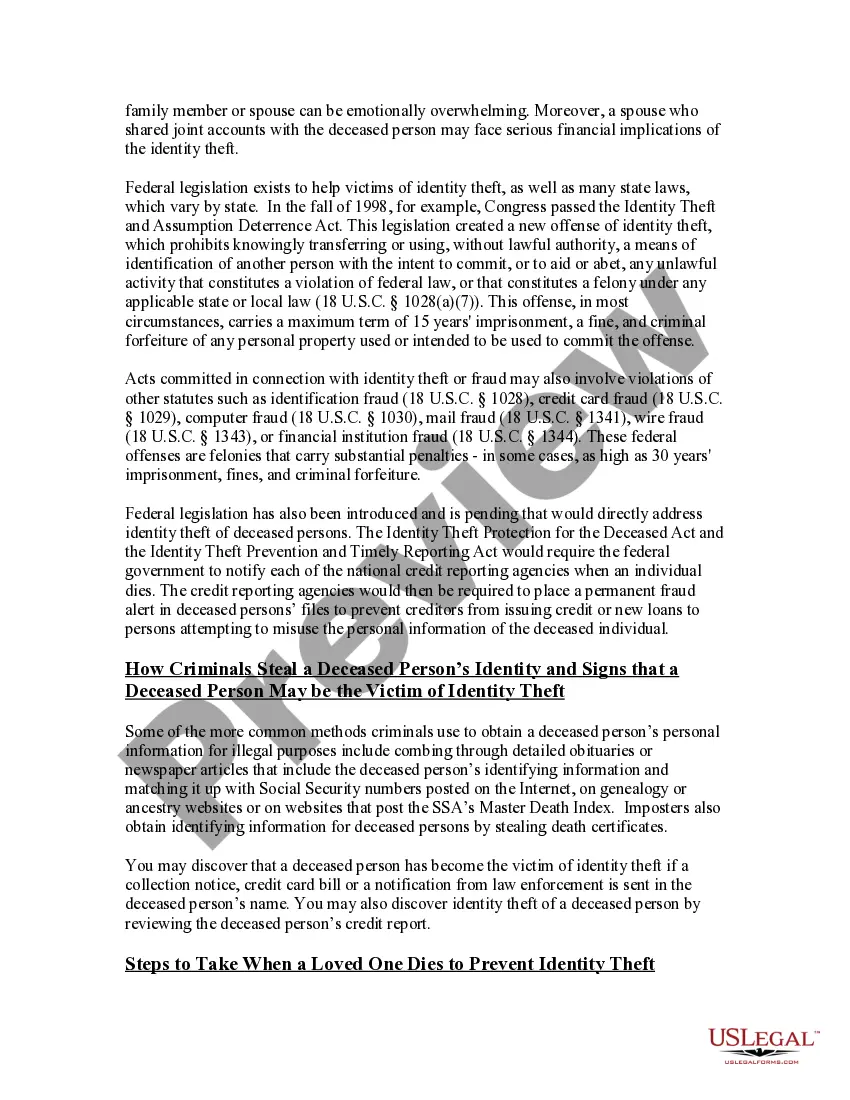
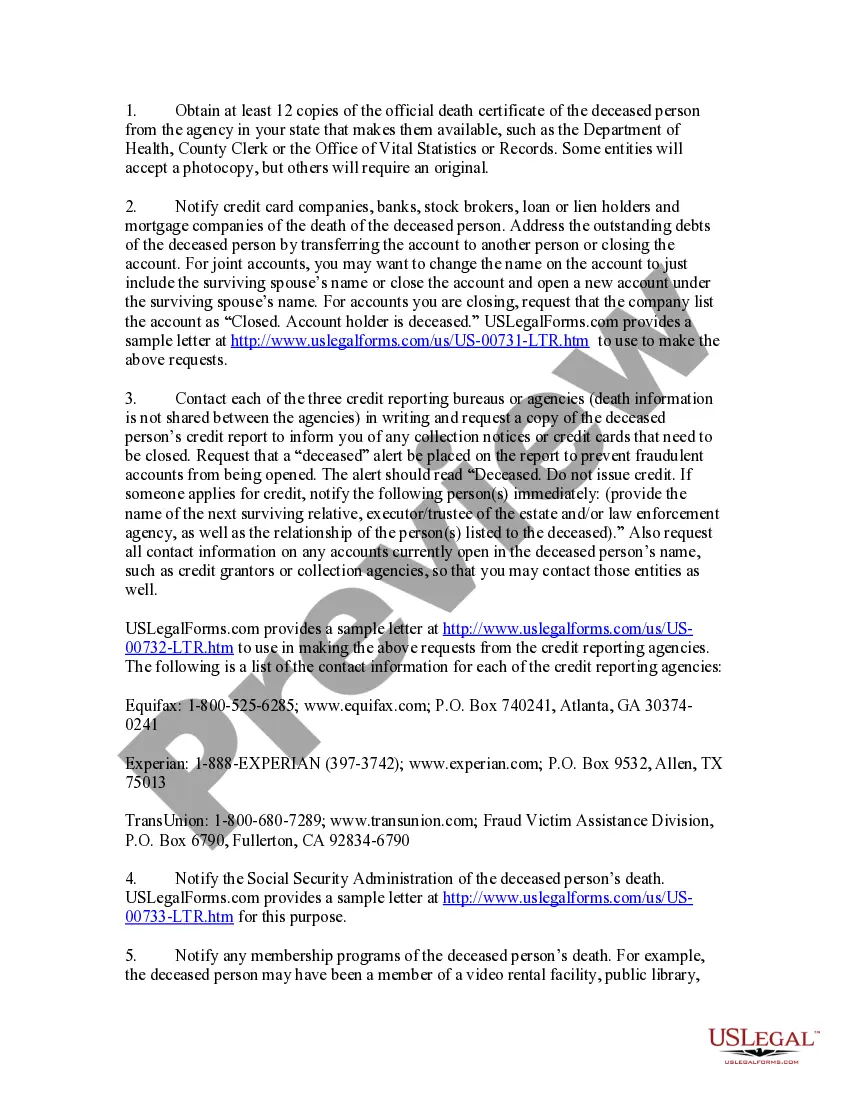
Contact banks, credit unions, credit card companies, and other financial institutions that hold accounts in your loved one's name, and notify those companies of your family member's death. This way, the system can flag any attempts to use the deceased person's identity via their financial accounts.
The IRS doesn't need a copy of the death certificate or other proof of death. Usually, the representative filing the final tax return is named in the person's will or appointed by a court.
Deceased family member identity theft, also known as ghosting, occurs when someone uses the personal information of a deceased person to commit fraud. This can include opening new credit accounts, applying for loans or making other financial transactions in the deceased person's name.
Follow these tips to reduce the risk of a deceased person from having their identity stolen: Send copies of the death certificate to each credit reporting bureau, asking them to put a ?deceased alert? on the credit reports. Review the deceased taxpayer's credit report for questionable credit card activity.
Identity thieves can strike even after death. An identity thief's use of a deceased person's Social Security number may create problems for family members. This type of identity theft also victimizes merchants, banks, and other businesses that provide goods and services to the thief.
Follow these tips to reduce the risk of a deceased person from having their identity stolen: Send copies of the death certificate to each credit reporting bureau, asking them to put a ?deceased alert? on the credit reports. Review the deceased taxpayer's credit report for questionable credit card activity.
Even after someone dies, it's still possible for criminals to use their information to illegally open credit cards, apply for loans, file fraudulent tax returns, and buy goods and services. In some cases, thieves intentionally steal the identity of someone who has died ? a practice known as ghosting.