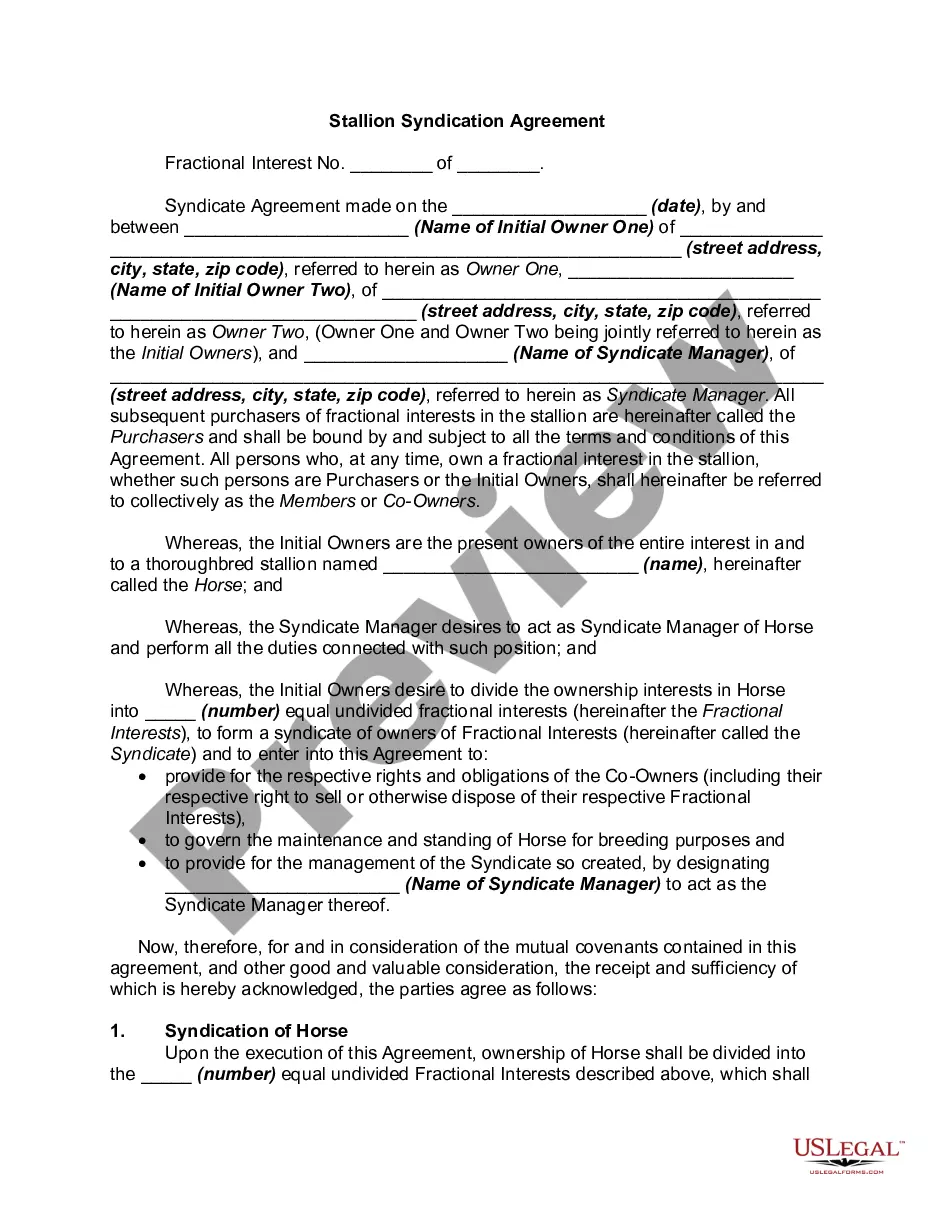
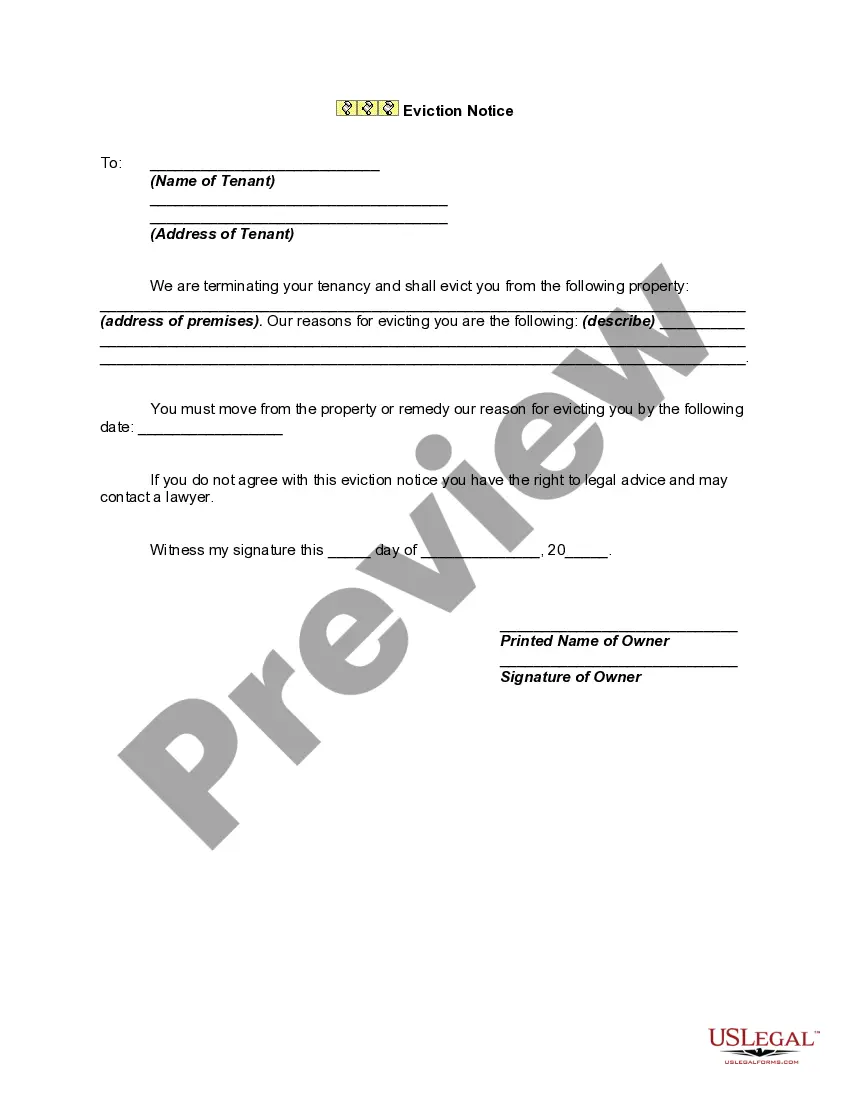
Guam Eviction Notice for Spouse
Description
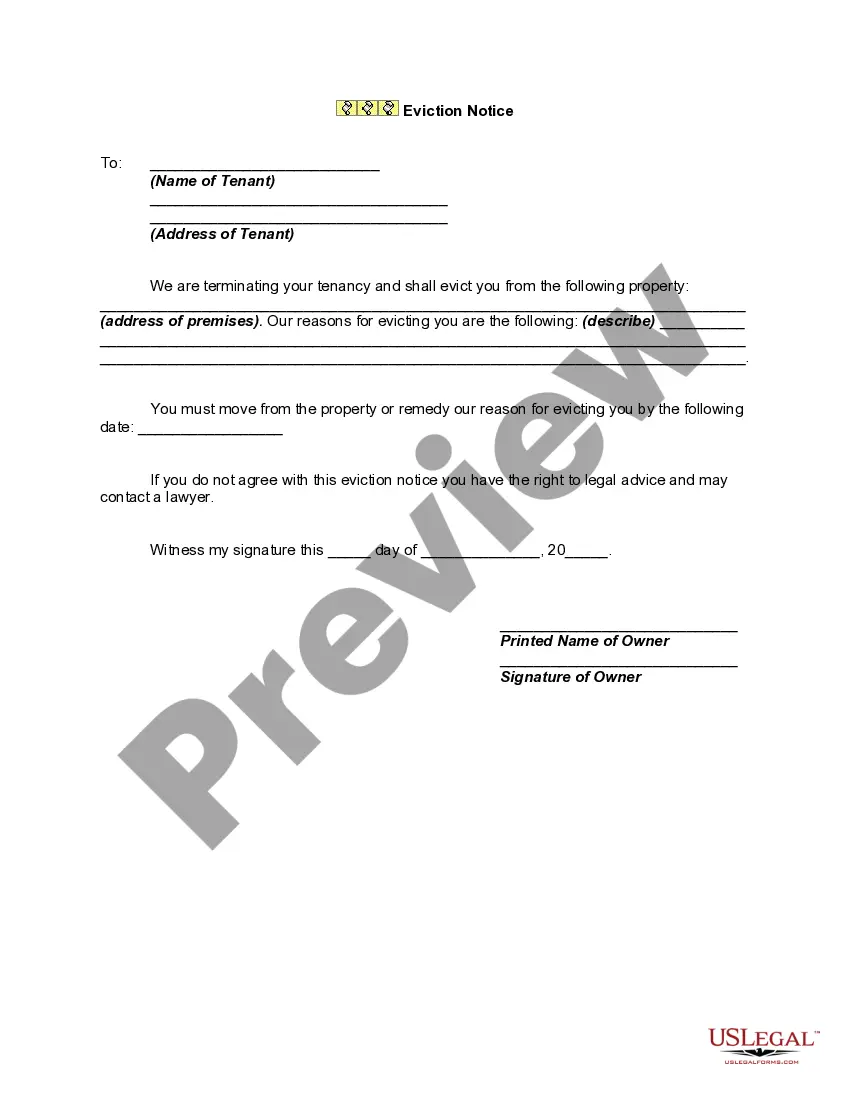
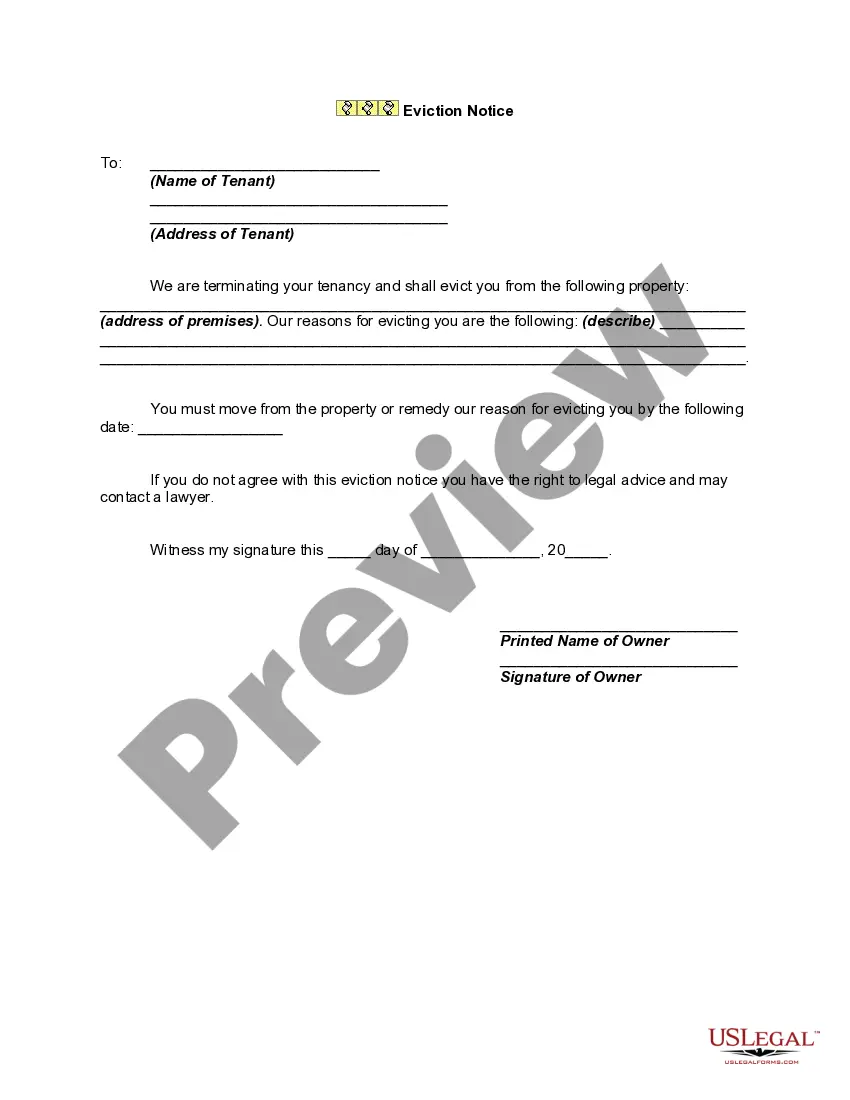
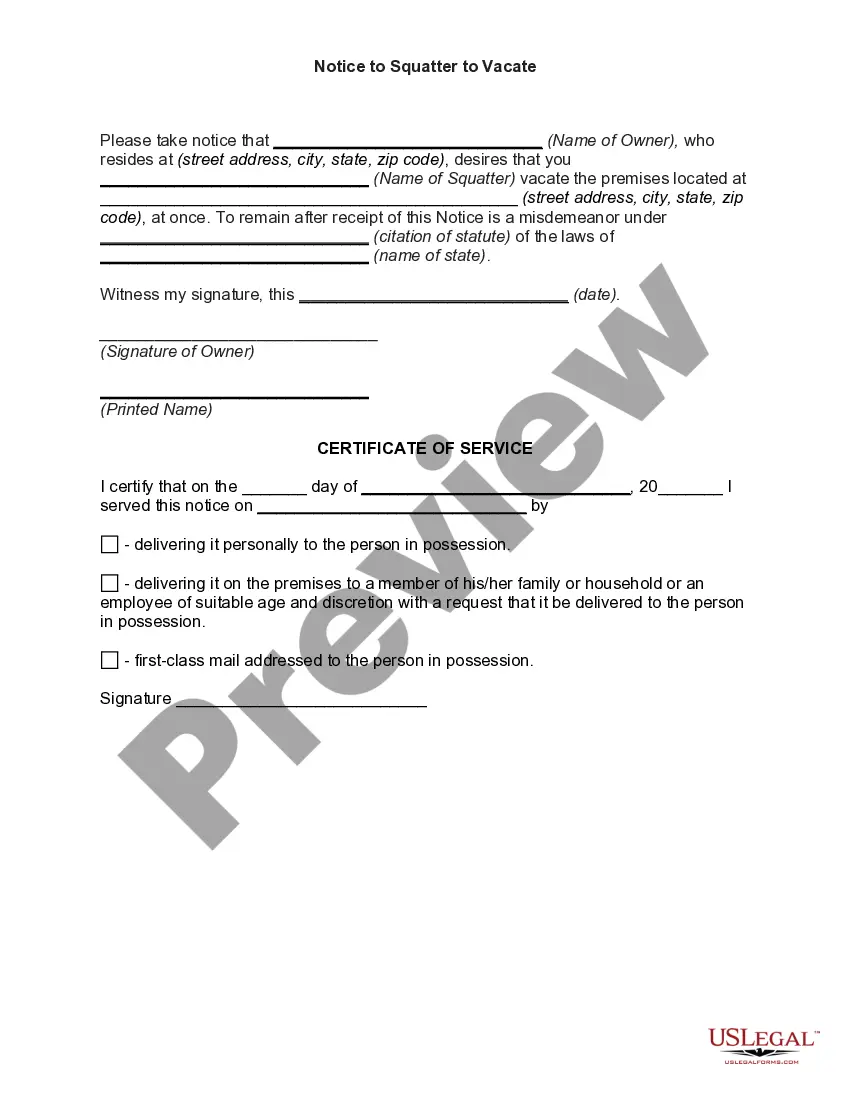
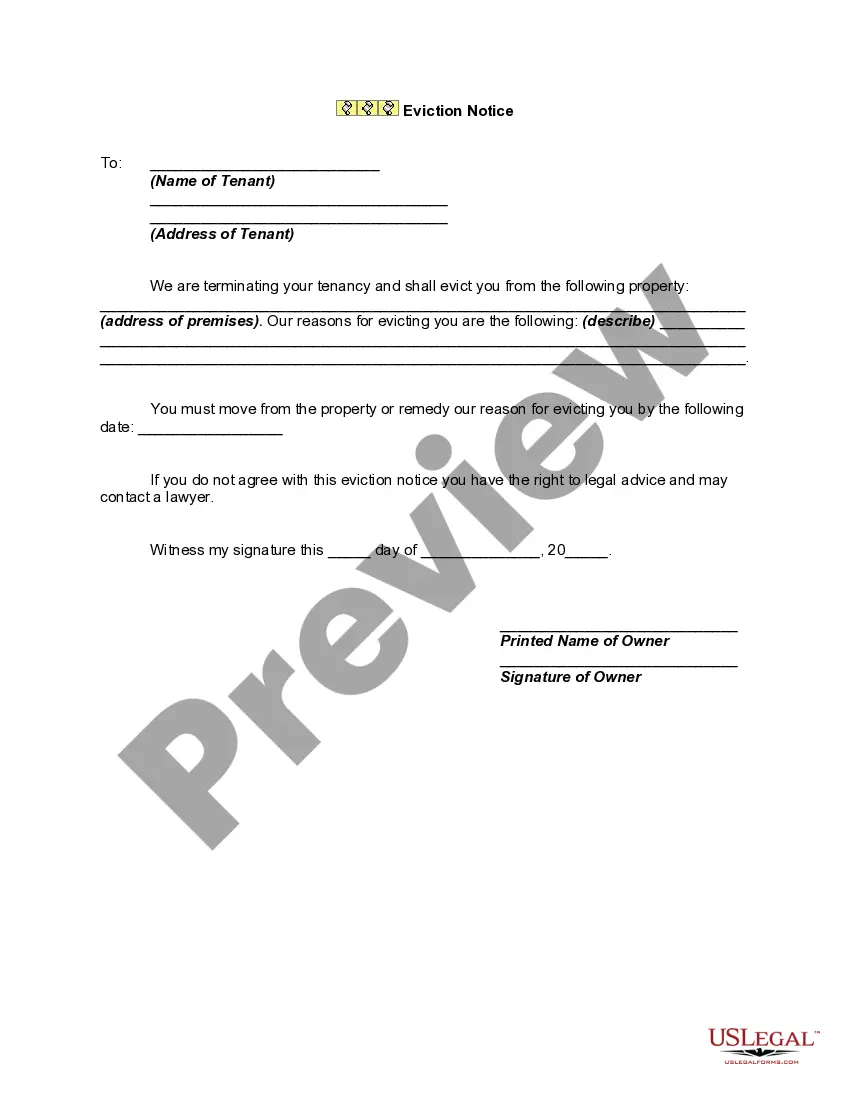


How to fill out Eviction Notice For Spouse?
US Legal Forms - one of the largest collections of legal documents in the USA - offers a range of legal document templates that you can download or print. By using the website, you can find thousands of forms for business and personal use, categorized by types, states, or keywords. You can access the most recent versions of forms like the Guam Eviction Notice for Spouse in moments.
If you already have an account, Log In and download the Guam Eviction Notice for Spouse from the US Legal Forms library. The Download button will appear on every form you view. You can access all previously saved forms in the My documents section of your account.
To use US Legal Forms for the first time, here are simple steps to help you get started: Ensure you have selected the correct form for your locality/state. Click the Review button to examine the form’s content. Read the form description to confirm that you have chosen the right form. If the form does not meet your requirements, utilize the Search box at the top of the screen to find one that does. If you are satisfied with the form, confirm your choice by clicking the Get now button. Next, select the pricing plan you prefer and provide your information to register for an account. Complete the transaction. Use your credit card or PayPal account to finalize the transaction. Choose the format and download the form to your device. Make changes. Fill out, edit, and print and sign the saved Guam Eviction Notice for Spouse. Every template you add to your account has no expiration date and belongs to you indefinitely. Therefore, if you want to download or print another version, simply go to the My documents section and click on the form you need. Access the Guam Eviction Notice for Spouse with US Legal Forms, the most extensive collection of legal document templates. Utilize thousands of professional and state-specific templates that meet your business or personal needs and requirements.
You can find thousands of forms for business and personal use, categorized by types, states, or keywords.
Access the Guam Eviction Notice for Spouse with US Legal Forms, the most extensive collection of legal document templates.
- US Legal Forms.
- largest collections.
- legal documents.
- download or print.
- business and personal use.
- recent versions.
Form popularity
FAQ
Guam is a community property jurisdiction. This means that under most circumstances the judge will divide the property and debts down the middle. If the grounds of mental and/or physical cruelty or adultery are proven, the judge can grant an unequal distribution of assets and debts, but is not required to do so.
If you have been residing on Guam for at least 7 days and both parties agree with the divorce, you qualify for a Guam divorce. How long will my divorce take? The process usually takes 4 to 6 weeks once the finalized documents are filed with the courthouse.
The nine community property states in the U.S. are Arizona, California, Idaho, Louisiana, Nevada, New Mexico, Texas, Washington, and Wisconsin. In community property states, all assets and debts acquired during the marriage are considered joint property and are divided equally between spouses in the event of a divorce.
Hawaii is not a community property state, which means the judge will decide how property is divided on the basis of the skills and employability of each spouse, any special medical (or other financial) needs, and the value of unpaid work such as raising children and maintaining the home, for instance.
Neither of you has a legal right to kick the other out. You can request that the other person leave, but he or she doesn't have to. If your spouse changes the locks, or somehow prevents you from entering the home, you can call the police.
In Guam, you can get a no-fault divorce or a fault-based divorce. A no-fault divorce is when you file for divorce without saying that your spouse is responsible for the end of the marriage because there are ?irreconcilable differences,? which means there are substantial reasons the marriage should not continue.
Community property does not include assets owned by either spouse prior to the marriage or acquired after a legal separation. Gifts or inheritances received by one spouse during the marriage are also excluded.
Additionally, Alaska, Florida, Kentucky, and Tennessee are elective community property states, and of the five inhabited US territories, Puerto Rico and Guam are community property jurisdictions.