Guam Confidential Information Exchange Agreement
Description
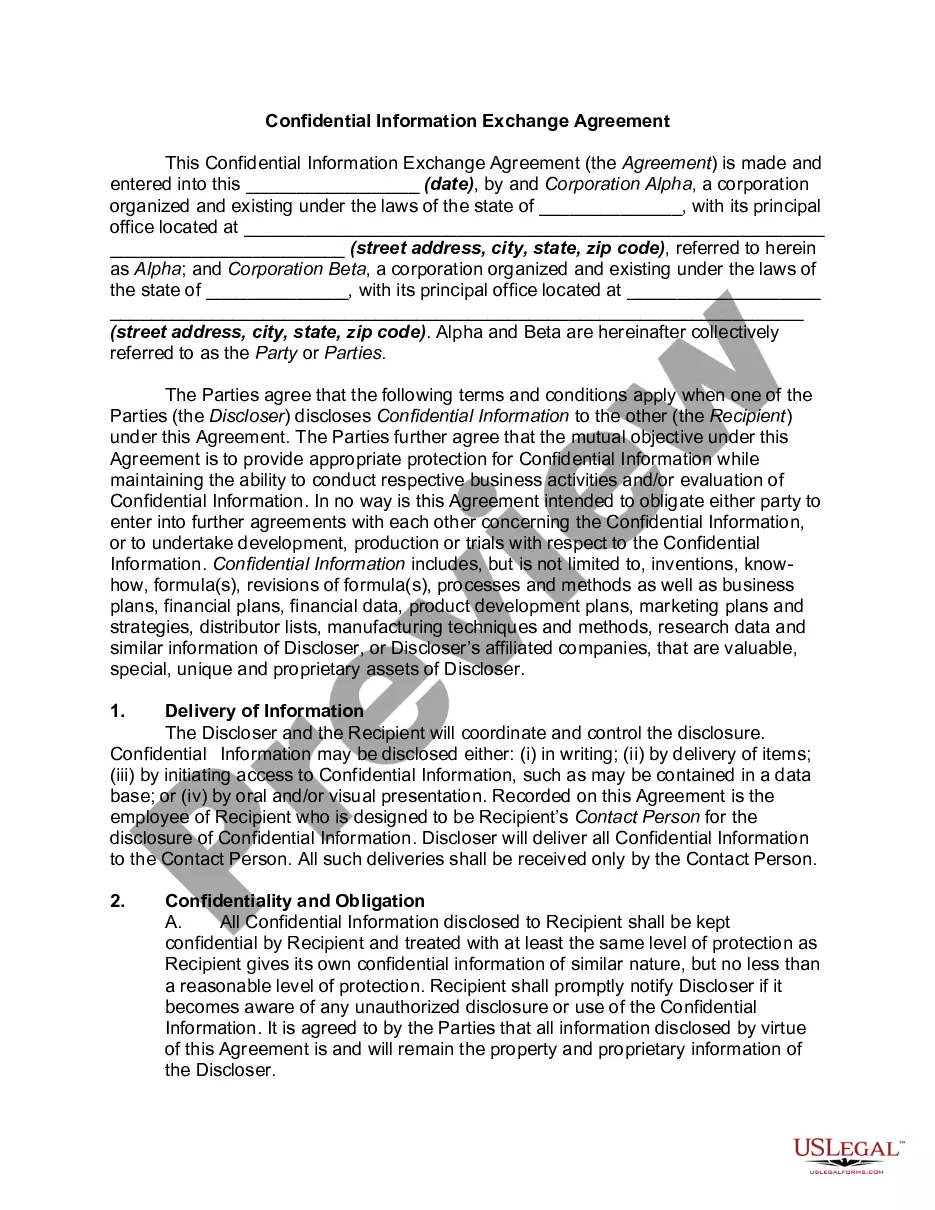
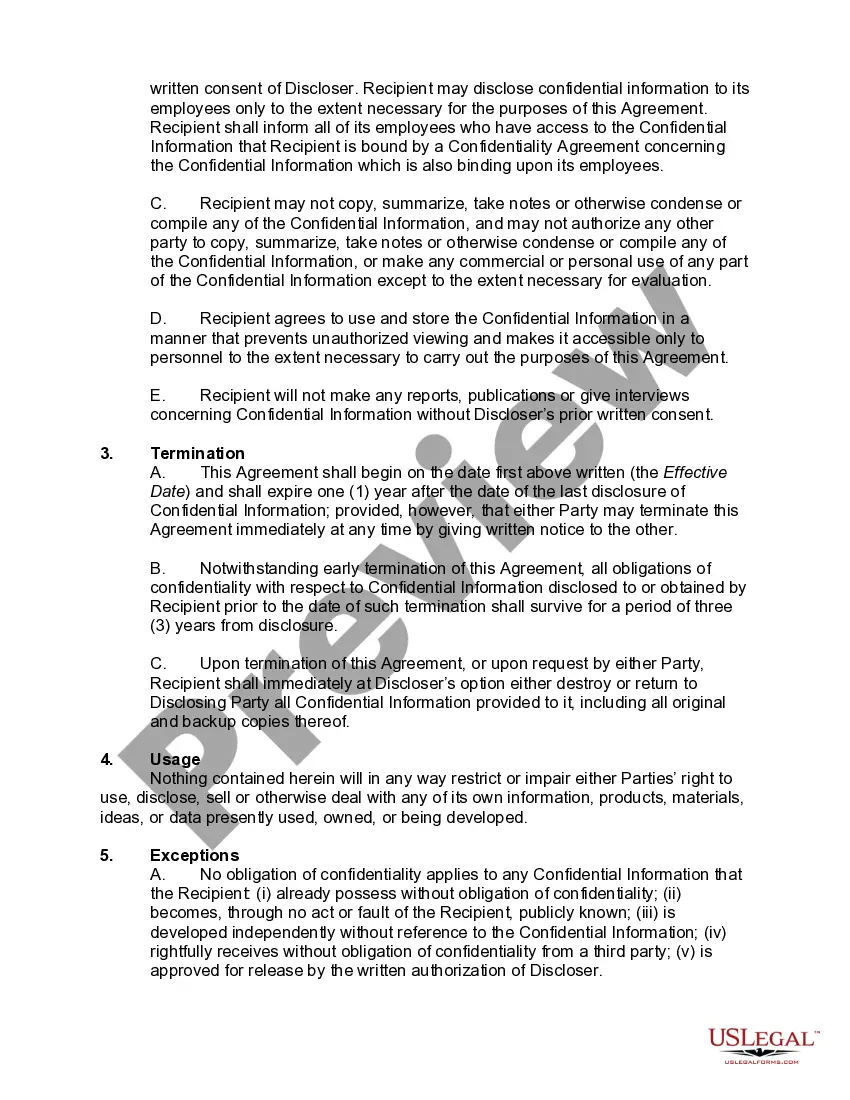
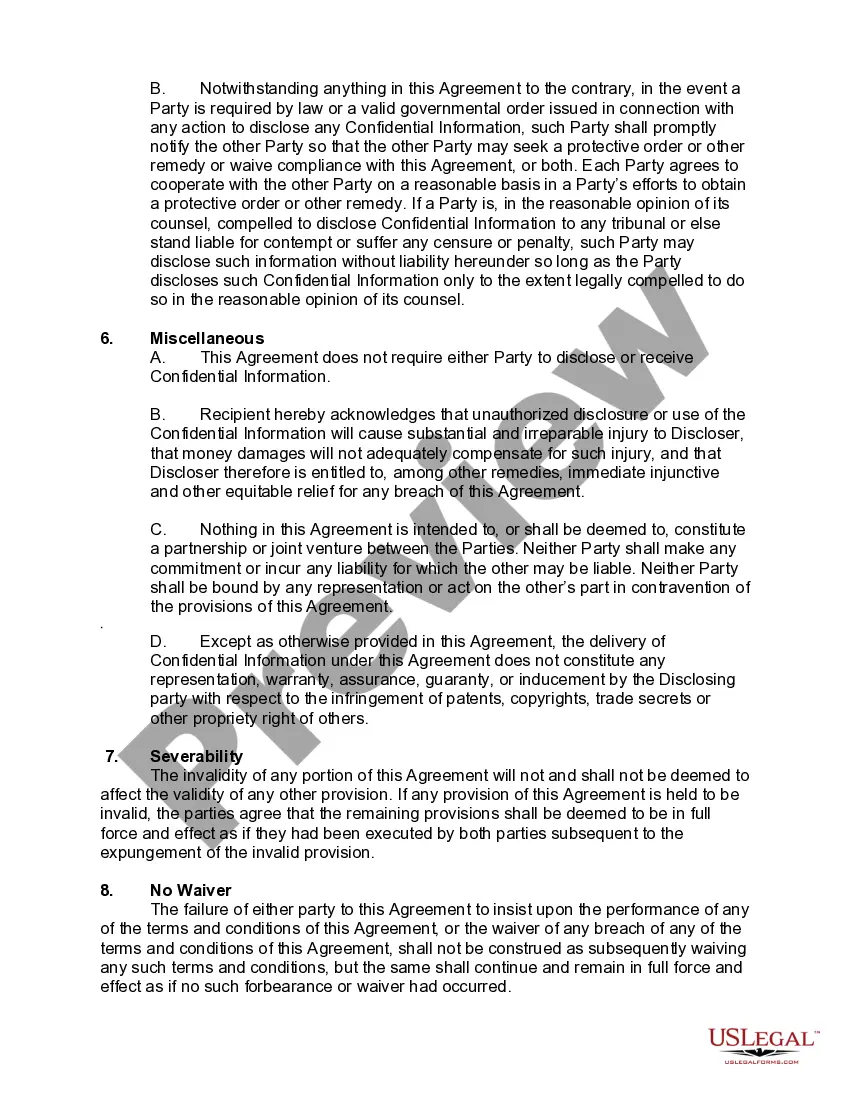
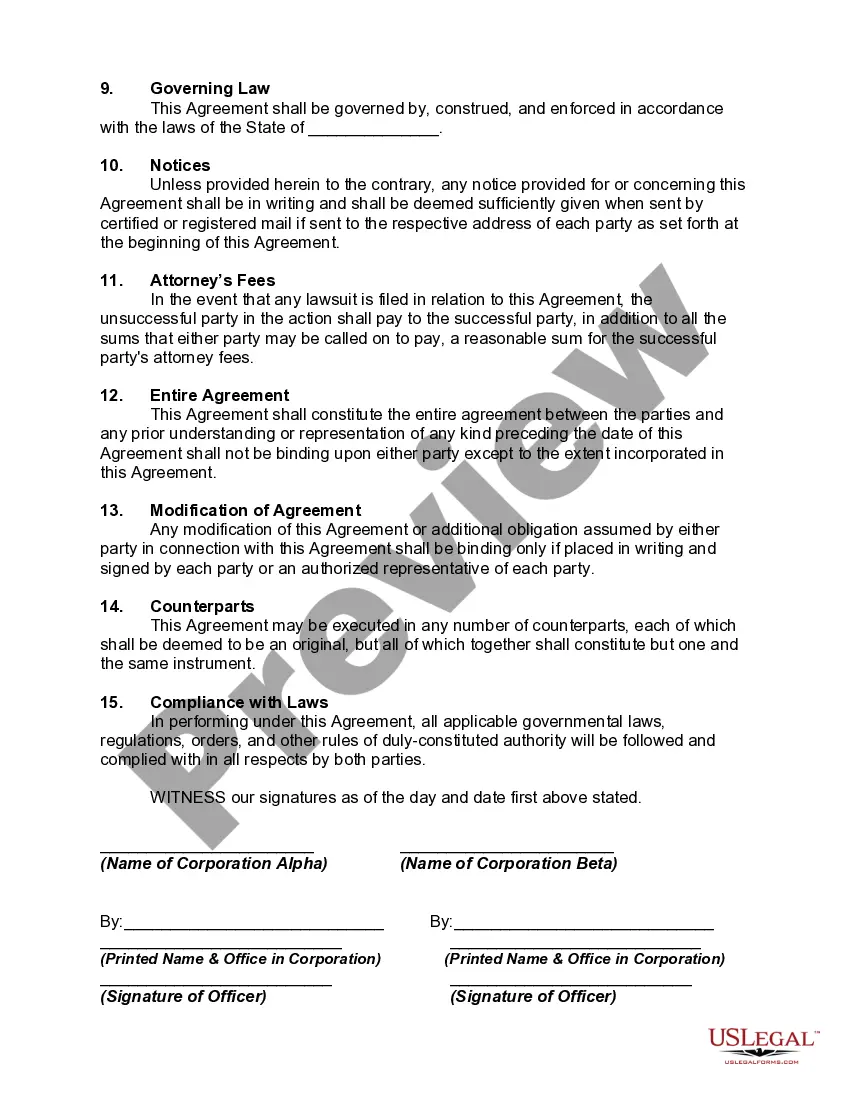

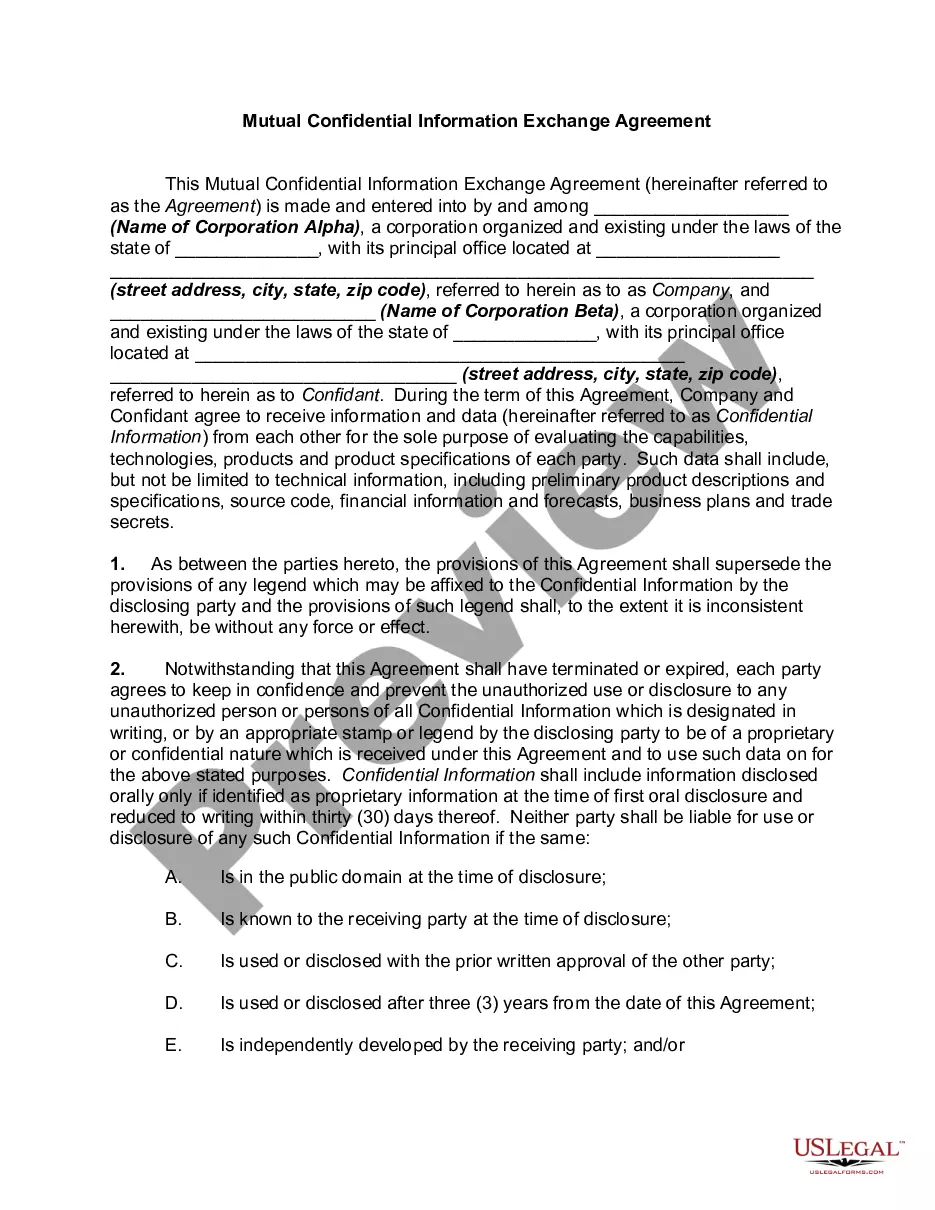
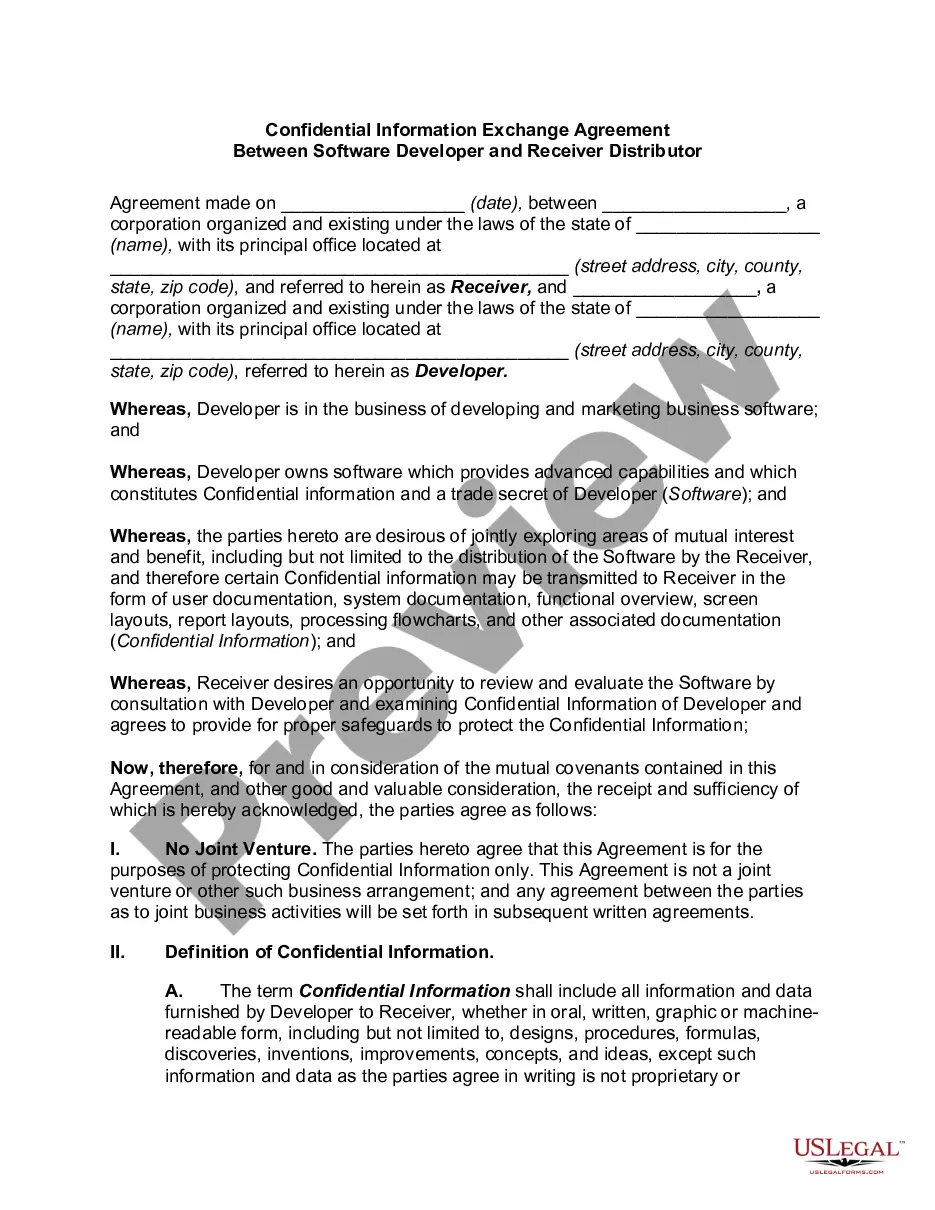
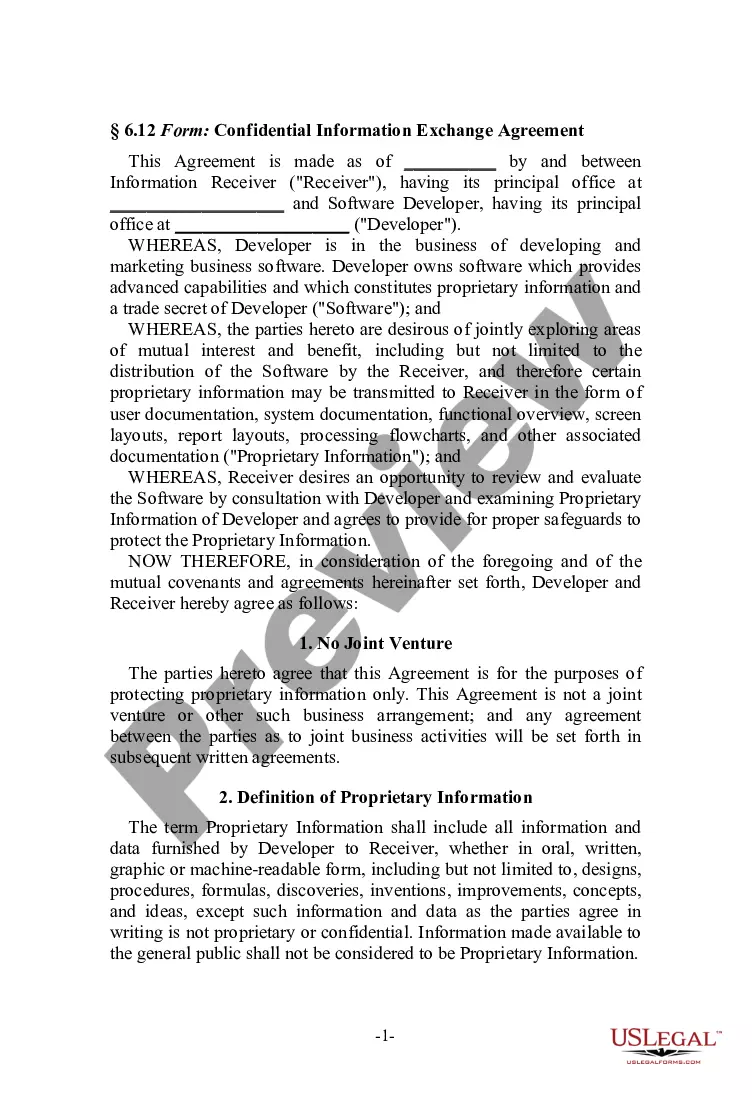




How to fill out Confidential Information Exchange Agreement?
Are you currently in a situation where you require documents for occasional business or personal purposes nearly every day.
There are numerous legitimate document templates available online, but finding ones you can rely on is not easy.
US Legal Forms provides a vast array of form templates, including the Guam Confidential Information Exchange Agreement, which are designed to comply with federal and state regulations.
Once you find the right form, click Acquire now.
Choose the pricing plan you prefer, fill in the required information to create your account, and pay for your order using your PayPal or Visa or Mastercard.
- If you are already familiar with the US Legal Forms website and have an account, simply Log In.
- Then, you can download the Guam Confidential Information Exchange Agreement template.
- If you do not have an account and wish to start using US Legal Forms, follow these steps.
- Select the form you need and ensure it is for the correct city/state.
- Utilize the Preview button to review the form.
- Check the description to confirm you have chosen the correct form.
- If the form isn’t what you’re looking for, use the Search field to find the form that fits your needs.
Form popularity
FAQ
Public Law 28-45 focuses on the protection of individual privacy and the responsible use of personal data in Guam. This law enhances legal protections and encourages transparency in data handling practices. When entering into a Guam Confidential Information Exchange Agreement, familiarity with this law can assist in adhering to legal requirements and building trust among stakeholders.
Public Law 31-127 addresses privacy rights and the confidentiality of sensitive information in Guam. This law establishes standards for handling confidential data and reinforces the importance of data integrity. Understanding this law is essential for parties entering into a Guam Confidential Information Exchange Agreement, as it helps ensure that all participants uphold privacy standards.
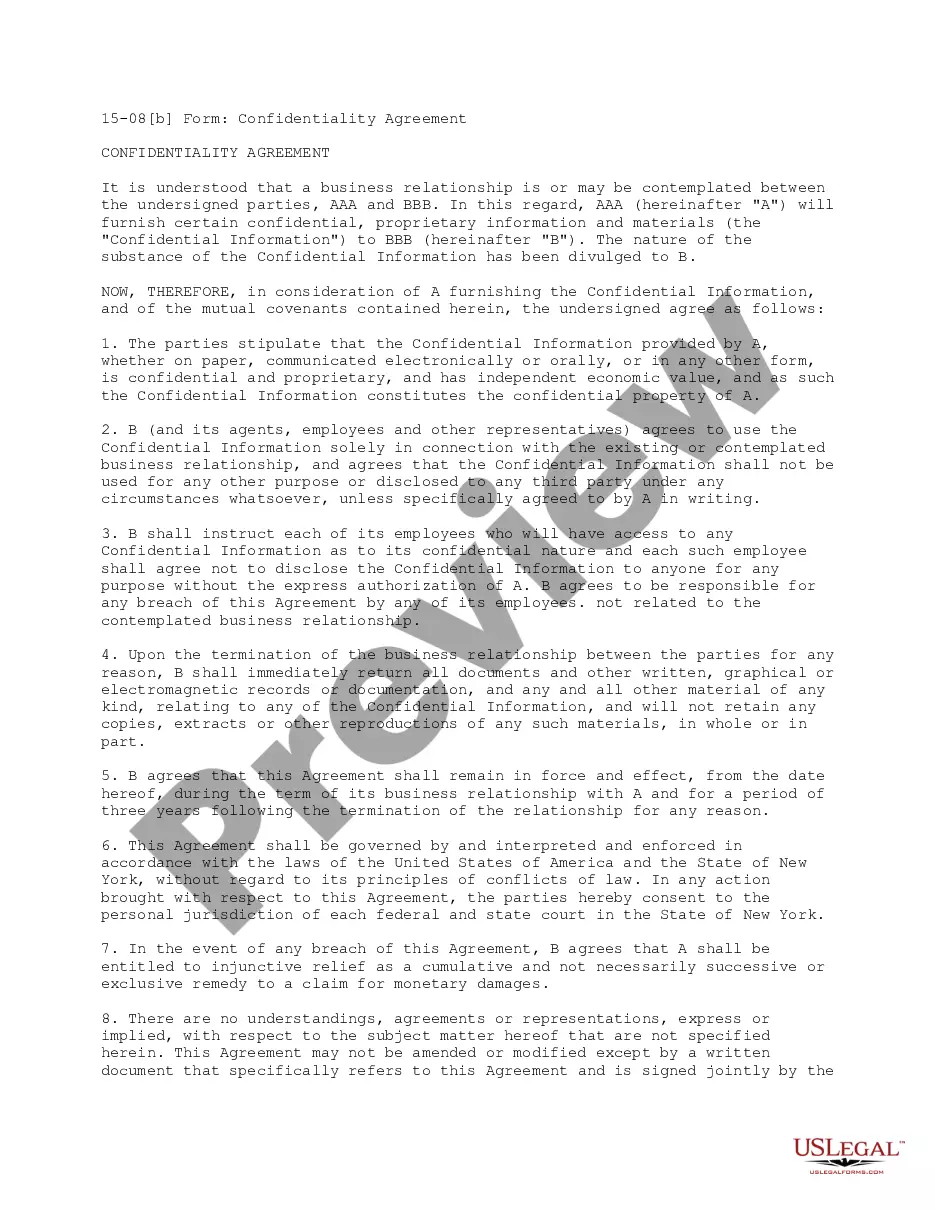
An agreement for the exchange of confidential information is a legal document that outlines the terms under which sensitive data can be shared between parties. This agreement specifies the obligations of each party regarding data protection and confidentiality. When drafting a Guam Confidential Information Exchange Agreement, utilizing tools from platforms like uslegalforms can help ensure compliance and enhance data security.
Public Law 28-126 relates to the establishment of a comprehensive data-sharing framework in Guam. This legislation emphasizes the importance of confidentiality and sets forth the rules for exchanging information among government and private entities. For those involved in a Guam Confidential Information Exchange Agreement, understanding this law is vital, as it governs the parameters of data sharing.
The law of Guam is a unique blend of federal, local, and customary laws that govern the territory. It includes statutes enacted by the Guam Legislature, as well as federal laws that apply to the island. Familiarity with these laws is beneficial when engaging in agreements like the Guam Confidential Information Exchange Agreement, as it provides a legal framework for data protection and sharing.
Public Law 12-226 in Guam addresses the management and protection of confidential information. This law establishes guidelines for the handling of sensitive data, which is essential for maintaining privacy. Understanding the implications of this law is crucial for organizations entering into a Guam Confidential Information Exchange Agreement, as it ensures compliance and safeguards your data.
Absolutely, the IRS shares critical tax information with state tax authorities for compliance and enforcement purposes. This sharing ensures that states can enforce their tax laws and hold residents accountable. The Guam Confidential Information Exchange Agreement is crucial in supporting these information exchanges, which are key to maintaining fair taxation across jurisdictions.
Yes, if you are a resident or have income sourced from Guam, you must file a Guam tax return. Even if you reside in the U.S. mainland, your Guam income may necessitate reporting obligations under the Guam tax system. Seeking assistance through platforms like uslegalforms can help navigate these requirements effectively, especially concerning the Guam Confidential Information Exchange Agreement.
An information exchange agreement is a formal arrangement between jurisdictions that allows the sharing of tax-related information. These agreements enhance compliance and facilitate cooperation to prevent tax evasion. The Guam Confidential Information Exchange Agreement exemplifies this concept, ensuring that both the IRS and Guam are aligned in reporting and tax transparency.
The IRS does share information from 1099 forms with state tax agencies to help them verify taxpayer income. This information is vital for states to assess tax liabilities accurately and ensure compliance. By utilizing the Guam Confidential Information Exchange Agreement, states can access necessary data to maintain oversight effectively.