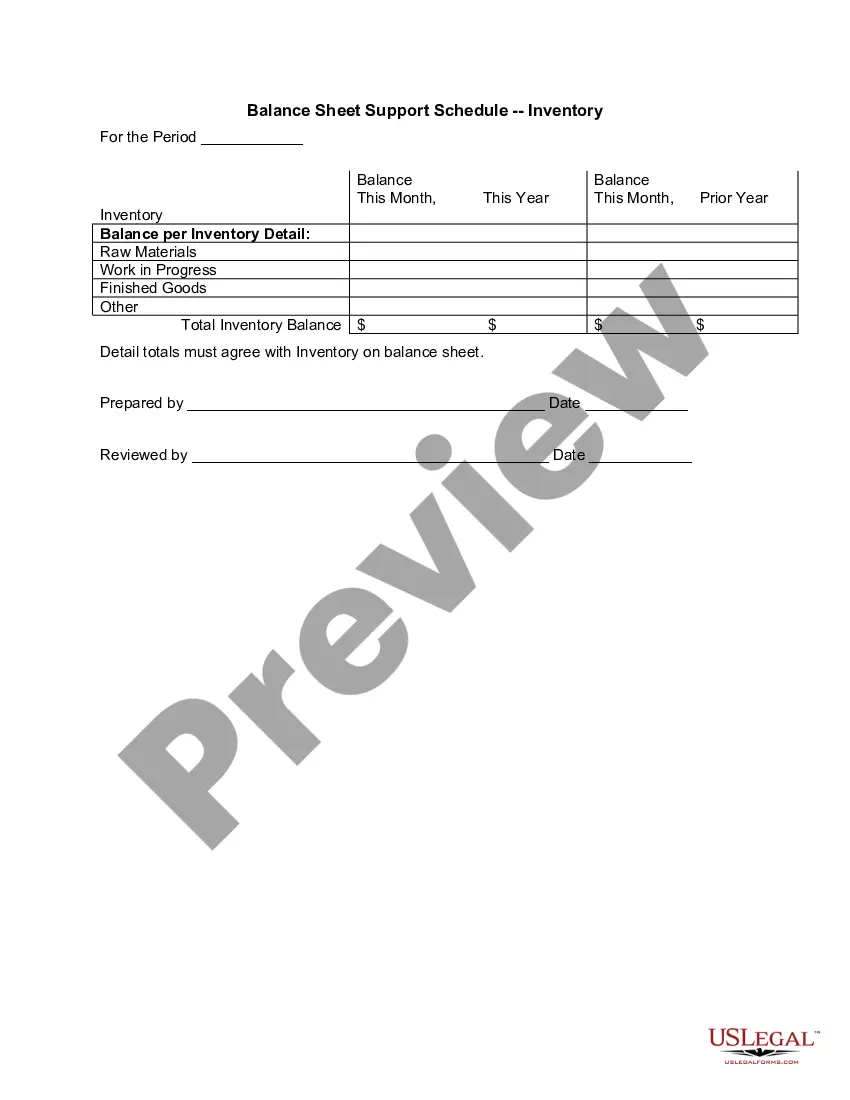
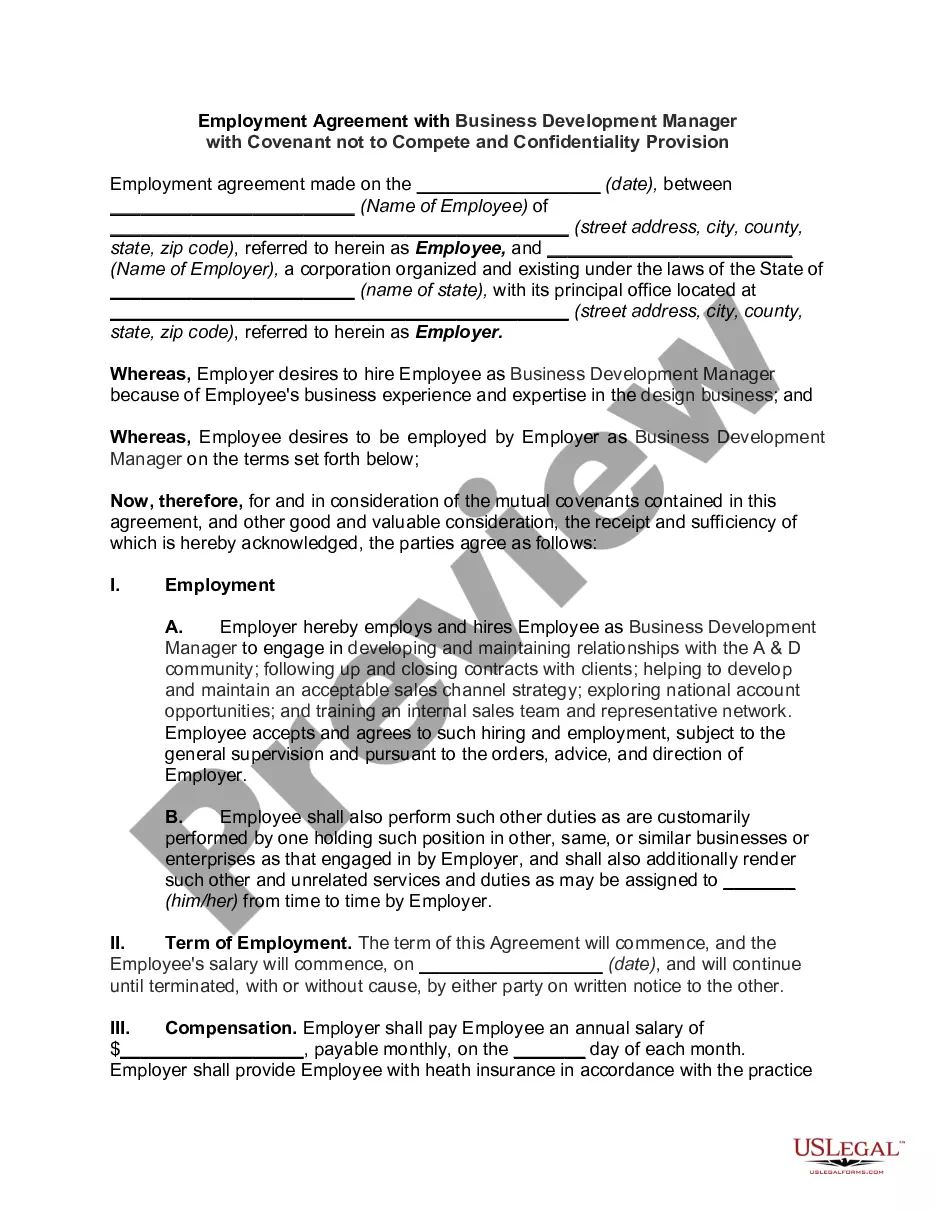
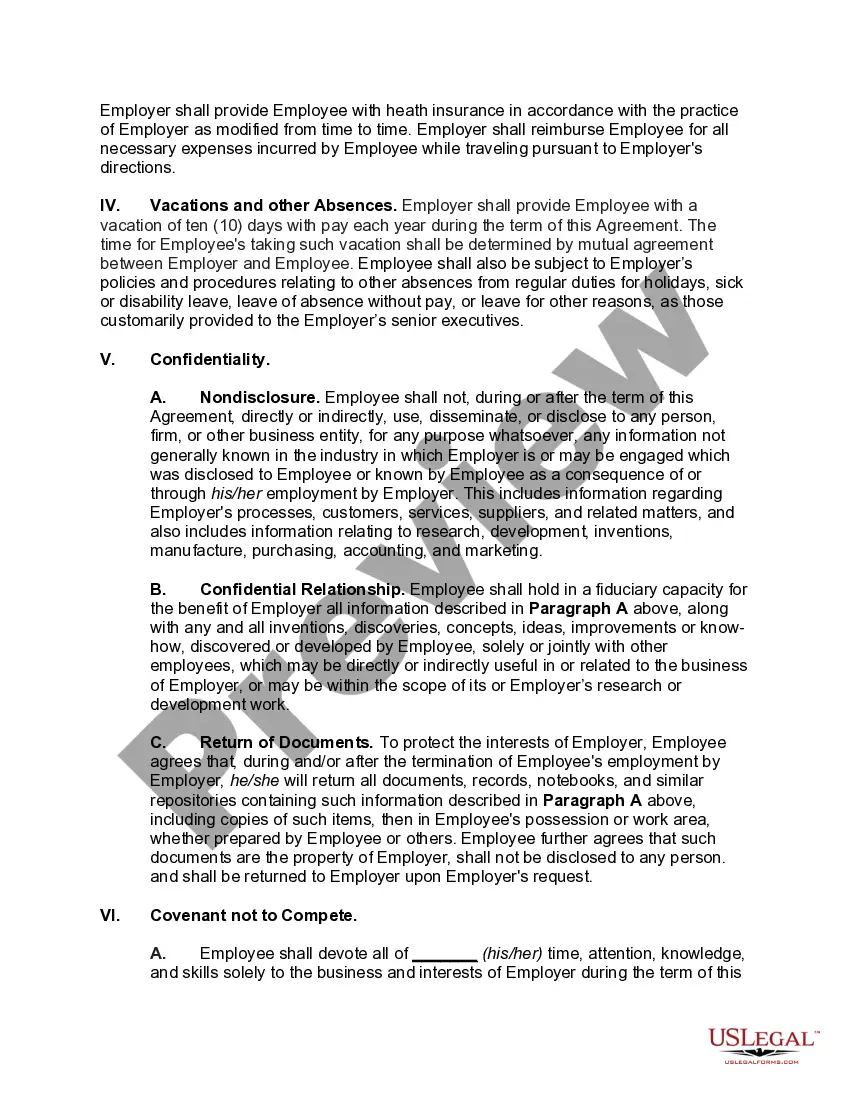
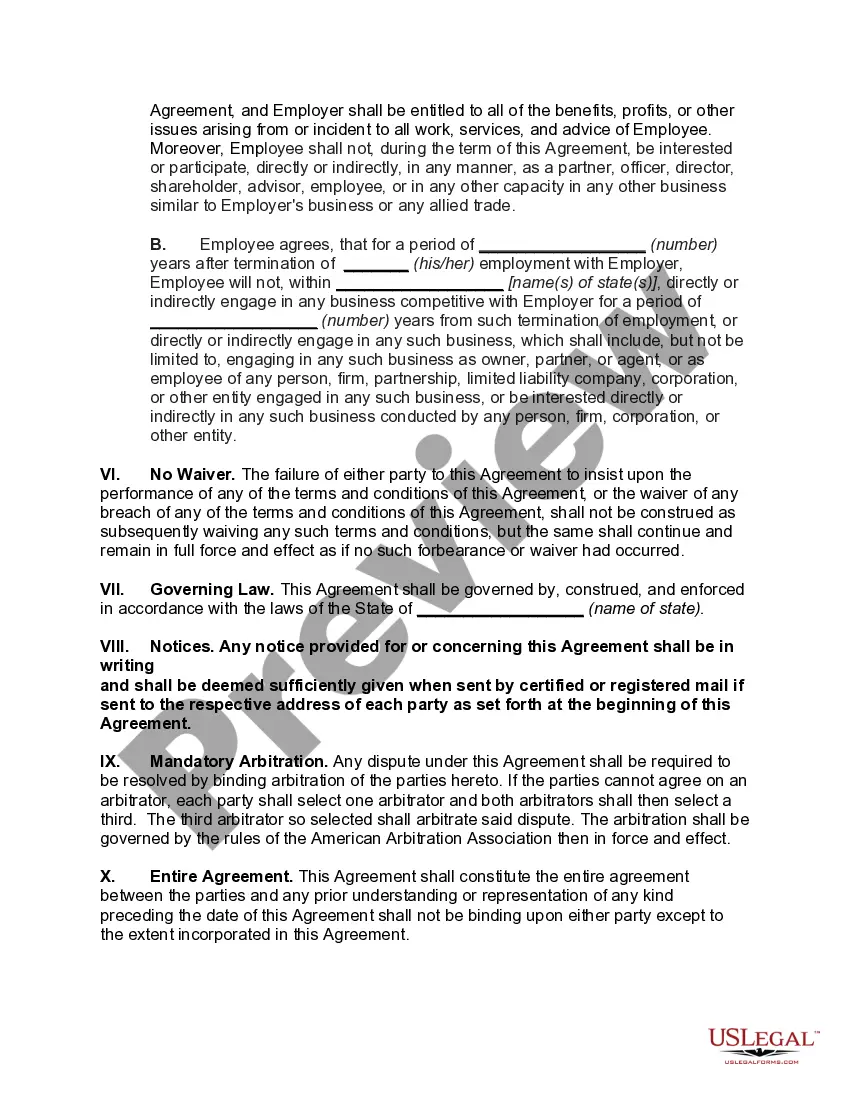
Guam Employment Agreement with Business Development Manager with Covenant not to Compete
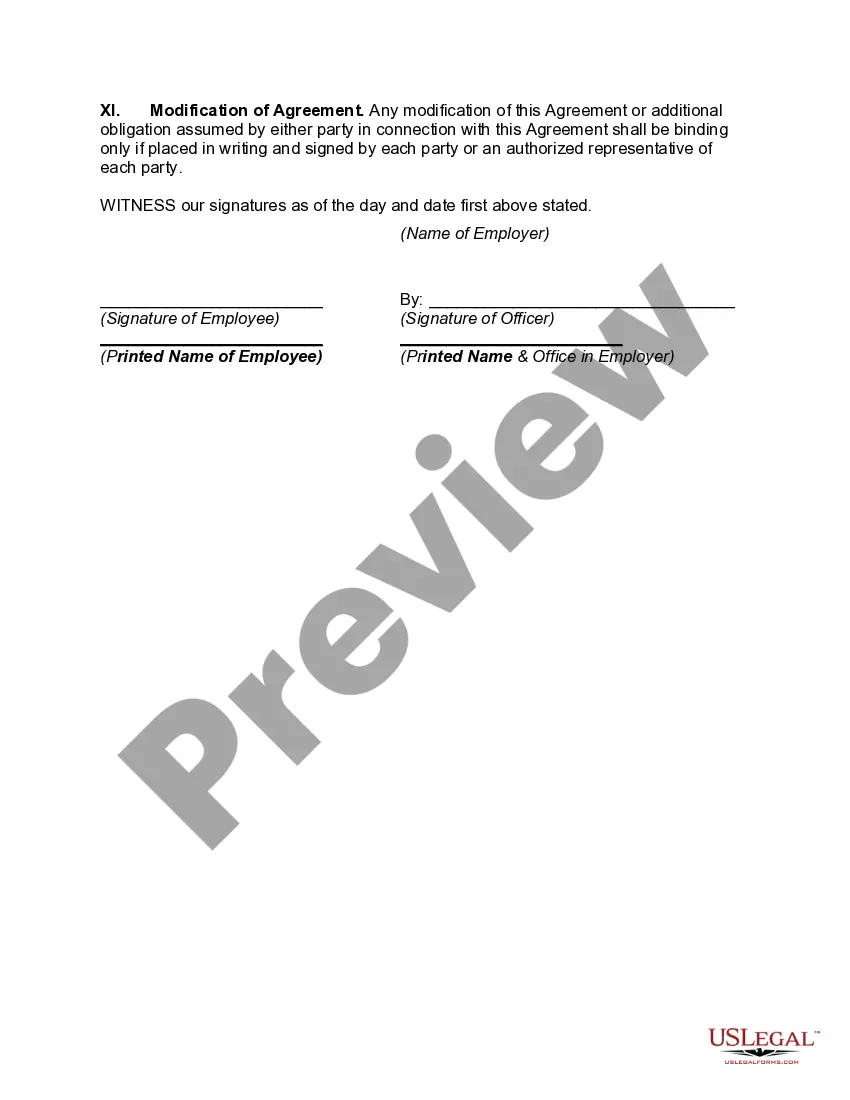
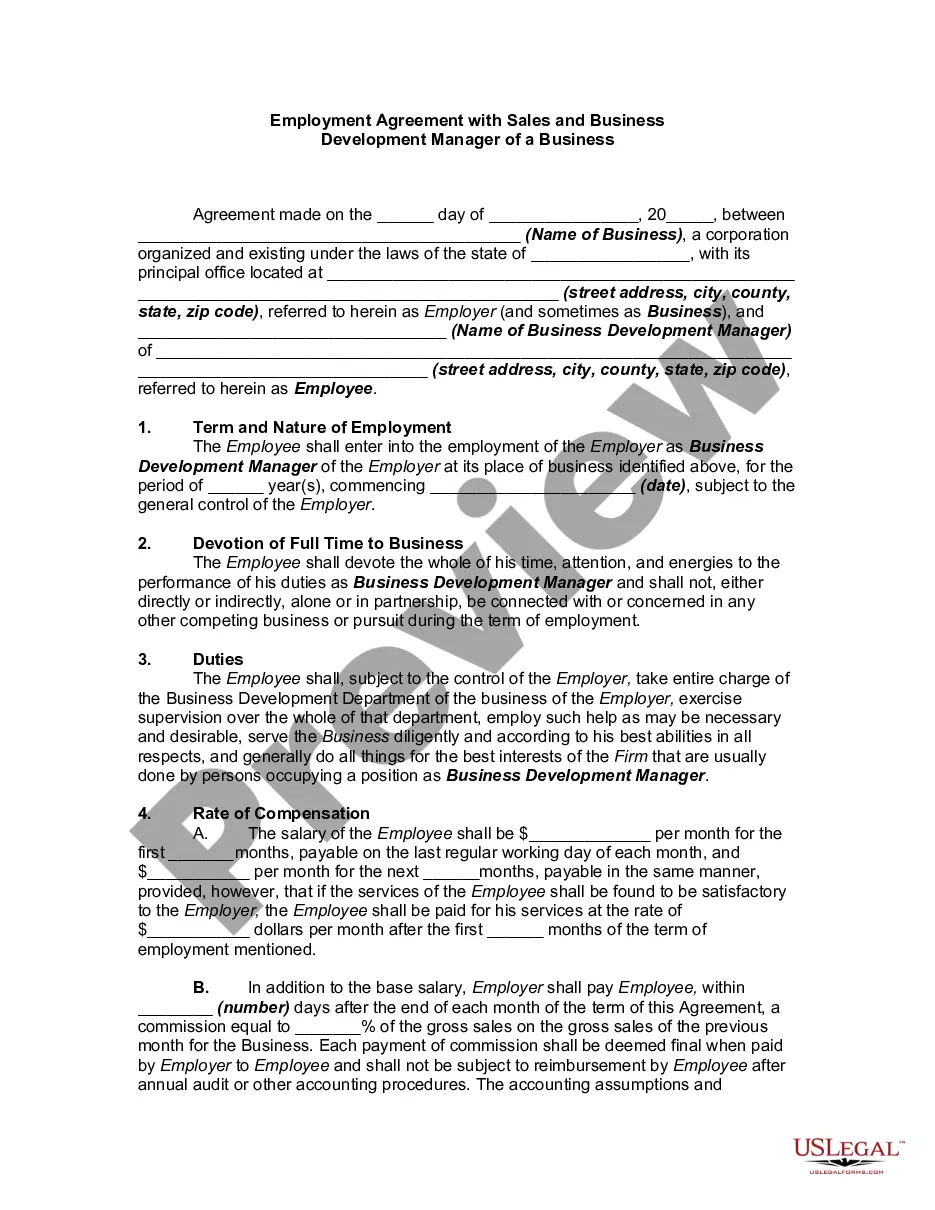
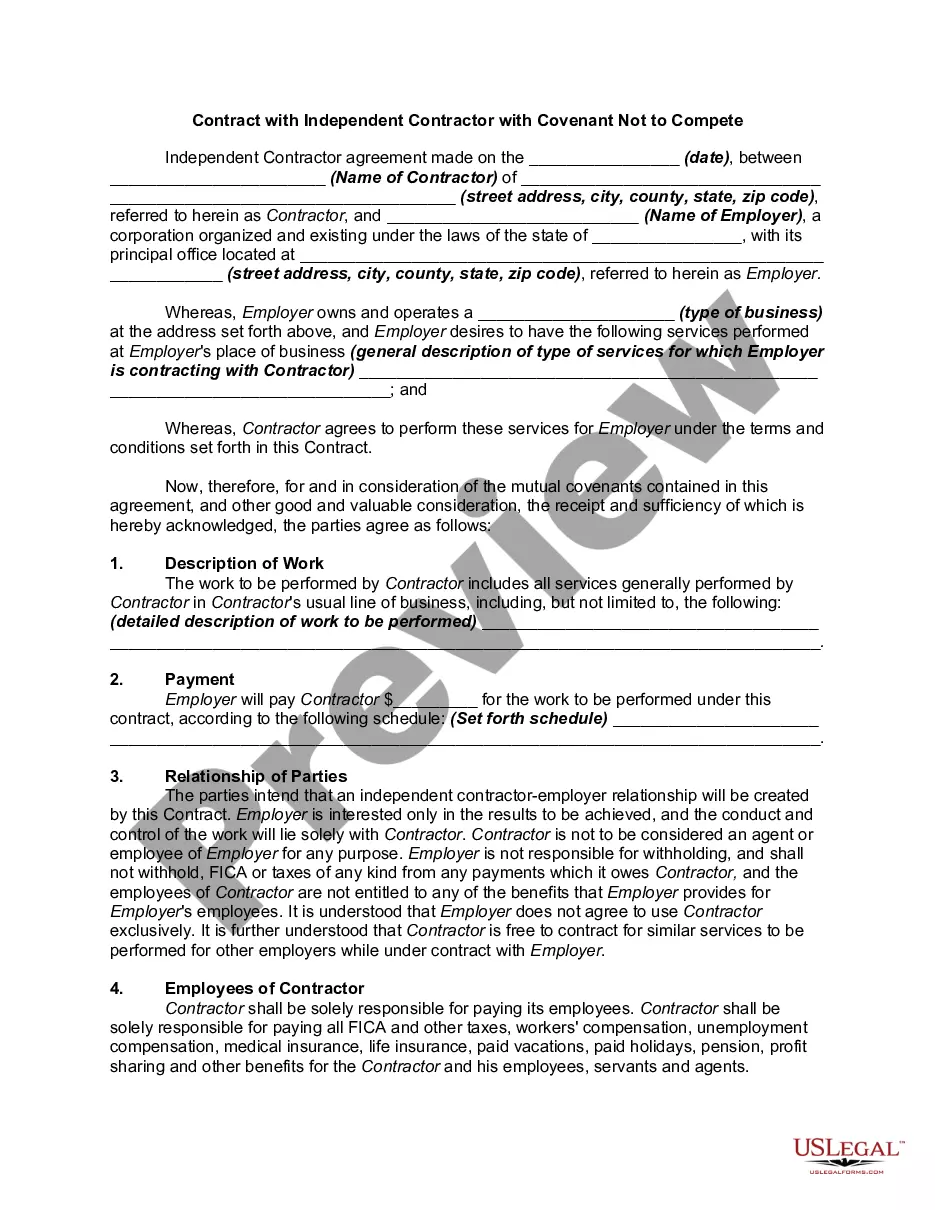
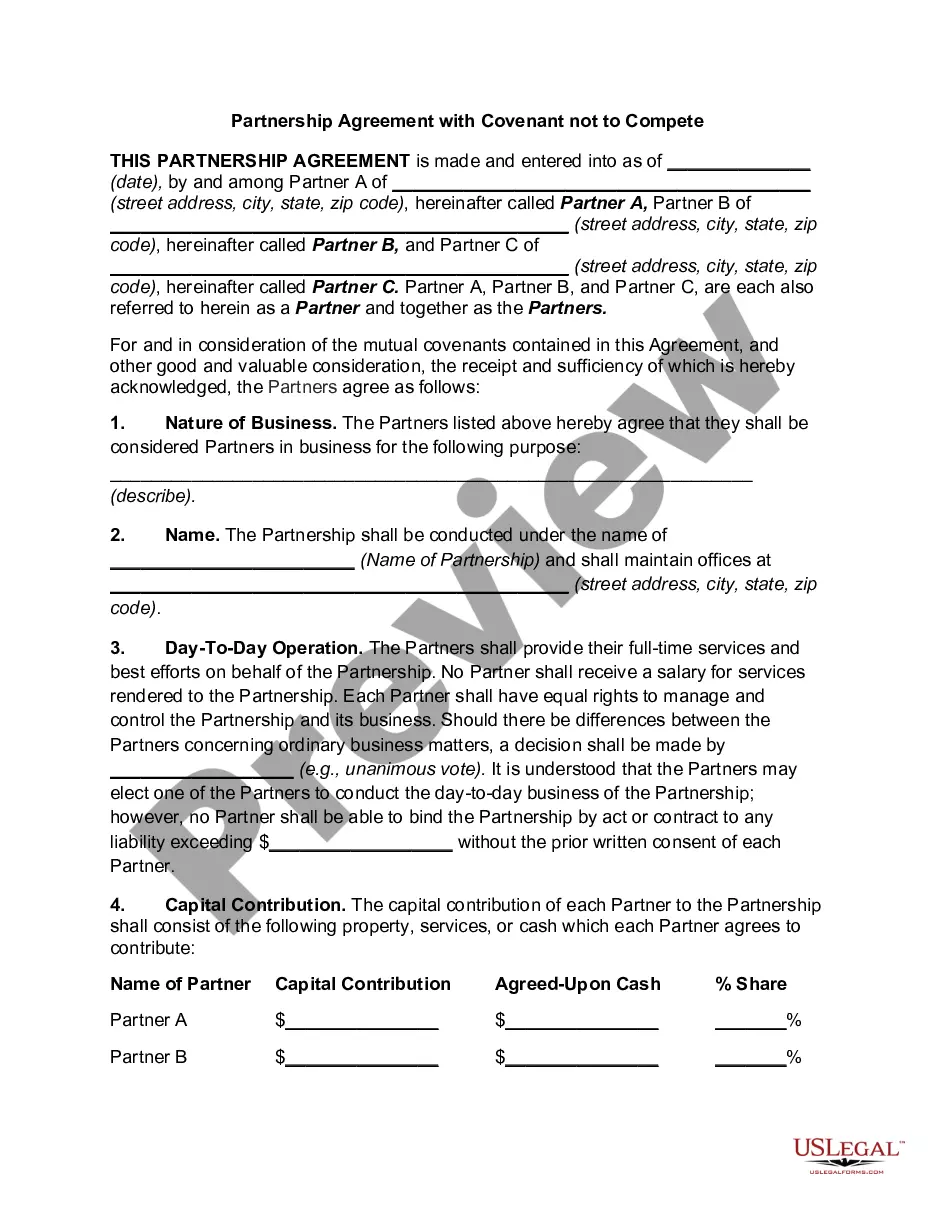
Description
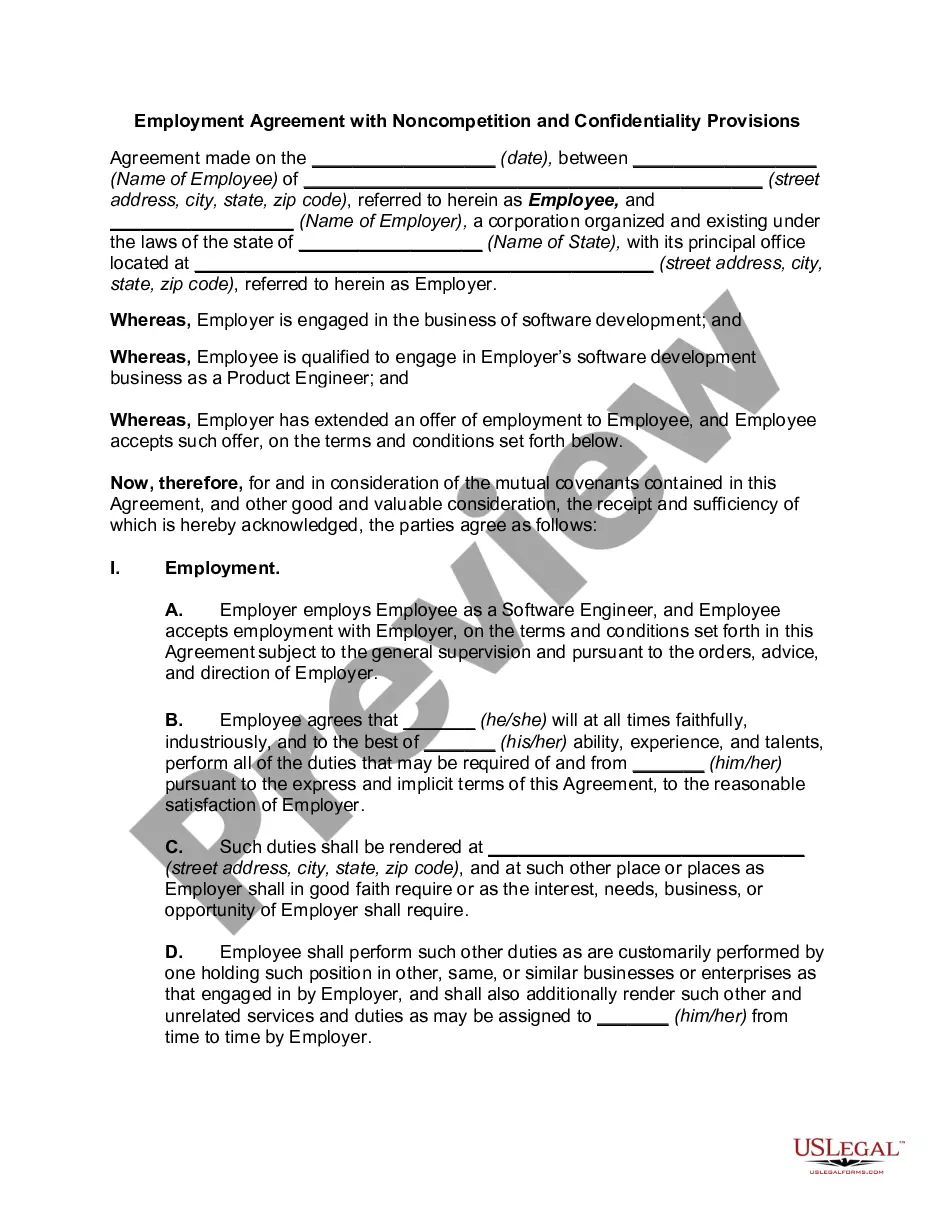
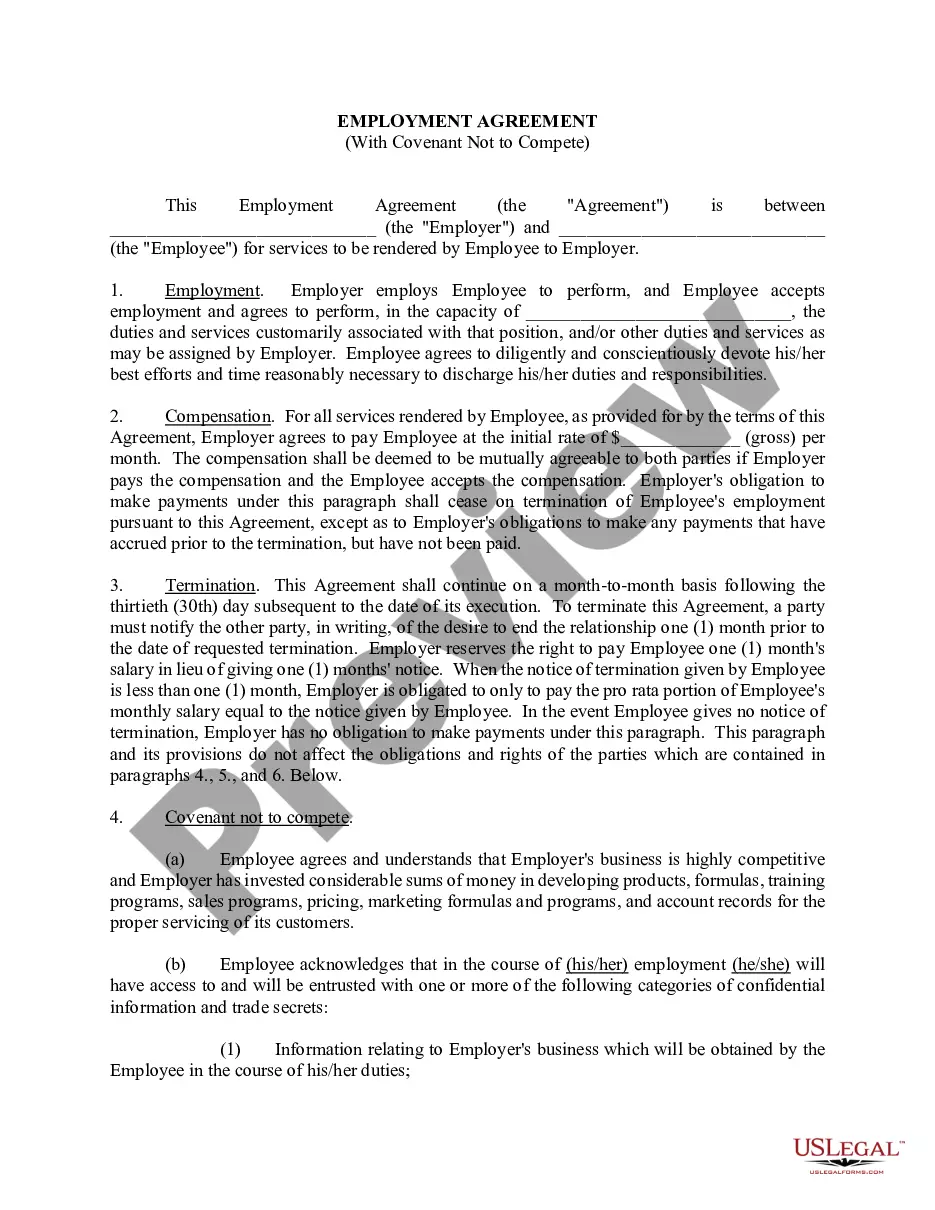
Get your form ready online
Our built-in tools help you complete, sign, share, and store your documents in one place.
Make edits, fill in missing information, and update formatting in US Legal Forms—just like you would in MS Word.
Download a copy, print it, send it by email, or mail it via USPS—whatever works best for your next step.
Sign and collect signatures with our SignNow integration. Send to multiple recipients, set reminders, and more. Go Premium to unlock E-Sign.
If this form requires notarization, complete it online through a secure video call—no need to meet a notary in person or wait for an appointment.
We protect your documents and personal data by following strict security and privacy standards.

Make edits, fill in missing information, and update formatting in US Legal Forms—just like you would in MS Word.

Download a copy, print it, send it by email, or mail it via USPS—whatever works best for your next step.

Sign and collect signatures with our SignNow integration. Send to multiple recipients, set reminders, and more. Go Premium to unlock E-Sign.

If this form requires notarization, complete it online through a secure video call—no need to meet a notary in person or wait for an appointment.

We protect your documents and personal data by following strict security and privacy standards.
Looking for another form?

How to fill out Employment Agreement With Business Development Manager With Covenant Not To Compete?
Selecting the appropriate legal document template can be quite a challenge.
Certainly, there are numerous templates accessible online, but how can you locate the legal form you require? Use the US Legal Forms website.
The service offers thousands of templates, including the Guam Employment Agreement with Business Development Manager with Covenant not to Compete, which you can utilize for both business and personal purposes.
You can preview the document using the Preview button and review the document description to confirm it is suitable for you.
- All of the documents are reviewed by experts and comply with state and federal regulations.
- If you are already registered, Log In to your account and click the Acquire button to locate the Guam Employment Agreement with Business Development Manager with Covenant not to Compete.
- Utilize your account to browse through the legal documents you have purchased previously.
- Proceed to the My documents section of your account and obtain another copy of the document you need.
- If you are a new user of US Legal Forms, here are straightforward guidelines that you can follow.
- Firstly, ensure you have chosen the correct form for your locality/county.
Form popularity
FAQ
Typically, the only way to fight a non-compete agreement is to go to court. If you are an employee (or former employee) who signed such an agreement, this means you must violate the agreement and wait to be sued. It may be that your former employer has never sued another employee to enforce the non-compete agreement.
Duration: Long-term noncompete agreements rarely hold up in court. Typical agreements are two years or less, the most common being six months to a year. They can also include a severance option if the employee is terminated.
A covenant not to compete, also called a "nompete agreement" or "non compete clause," is an agreement where one party promises not to compete with the other party in a specified area for a certain period of time. A covenant not to compete can be found in an employment contract or a sale of business contract.
You Can Void a Non-Compete by Proving Its Terms Go Too Far or Last Too Long. Whether a non-compete is unenforceable because it covers too large of a geographical area or it lasts too long can depend on many factors. Enforceability can depend on your industry, skills, location, etc.
In order to be considered valid, a non-competition agreement must: Be supported by consideration at the time it is signed. Protect a legitimate business interest of the employer. Be reasonable in scope, geography, and time.
Important Terms to Include in Non-Compete AgreementsTime and Geographic Scope.Tolling of Non-Compete Period.Protectable Interests, Injunctive Relief, Attorneys' Fees, and Costs.Choice of Law and Forum Selection.Assignment.Material Job Changes.Right to Inform New Employer.
A traditional non-compete stops an employee from working for a competitor in a certain geographical area for a certain amount of time after leaving the company. A non-solicitation agreement prevents an employee from poaching customers, contracts or other employees from the company that first hired them.
No matter what's in your contract, your old employer can't stop you taking a new job unless it could lose them money. For example if you might: take customers to your new employer when you leave. start a competing business in the same local area.
Non-compete agreements are typically considered enforceable if they: Have reasonable time restrictions (generally less than one year) Are limited to a certain geographic area (specific cities or counties, rather than entire states)