Hawaii Transfer on Death Quitclaim Deed from Individual to Individual
What this document covers
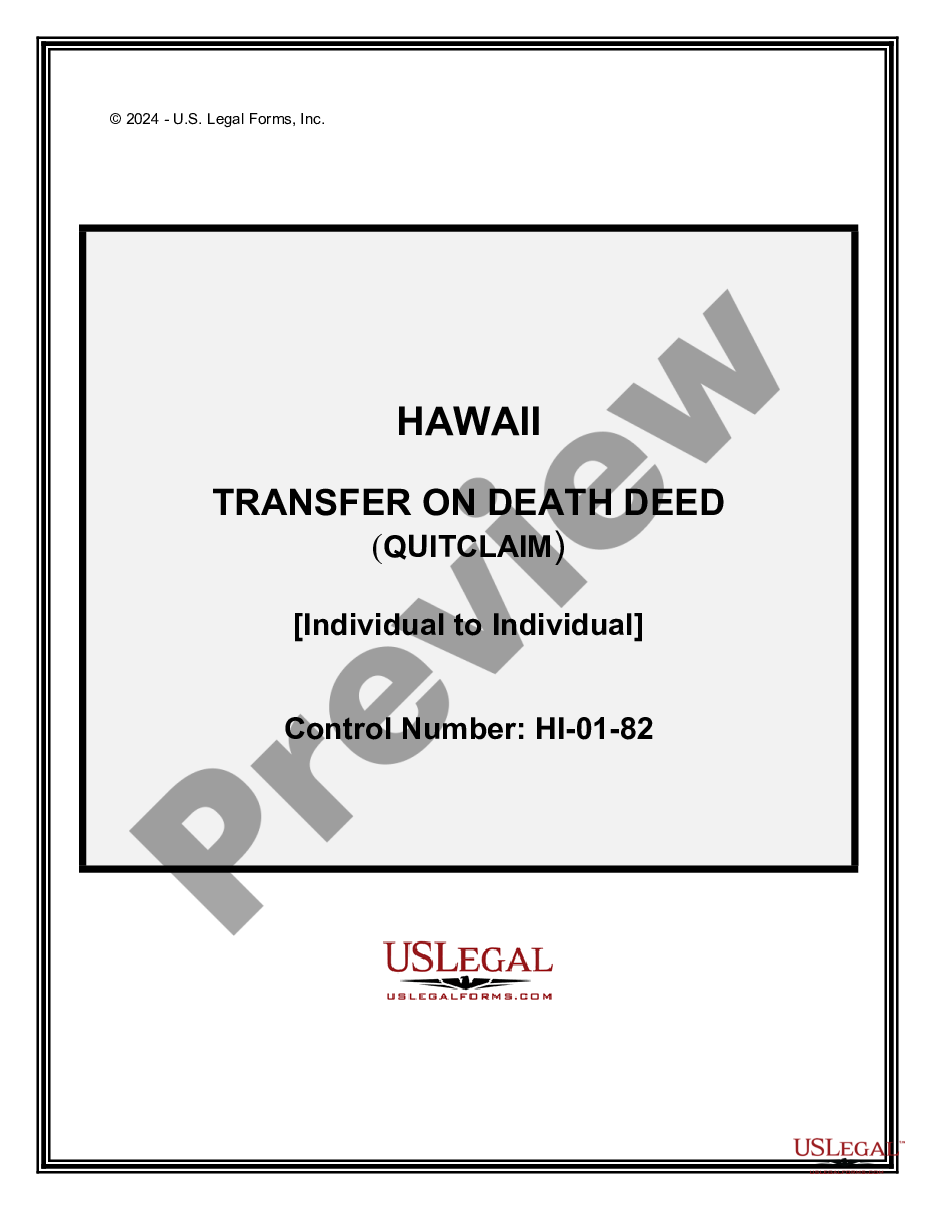
The Transfer on Death Quitclaim Deed is a legal document that allows an individual (the Grantor) to transfer ownership of property to another individual (the Grantee) upon the Grantor's death. This deed is revocable during the Grantor's lifetime, ensuring they can change their mind or alter the deed as needed. It is particularly useful for estate planning, ensuring that property is passed on without going through probate, and complies with state laws, making it a secure choice for transferring property rights.
What’s included in this form
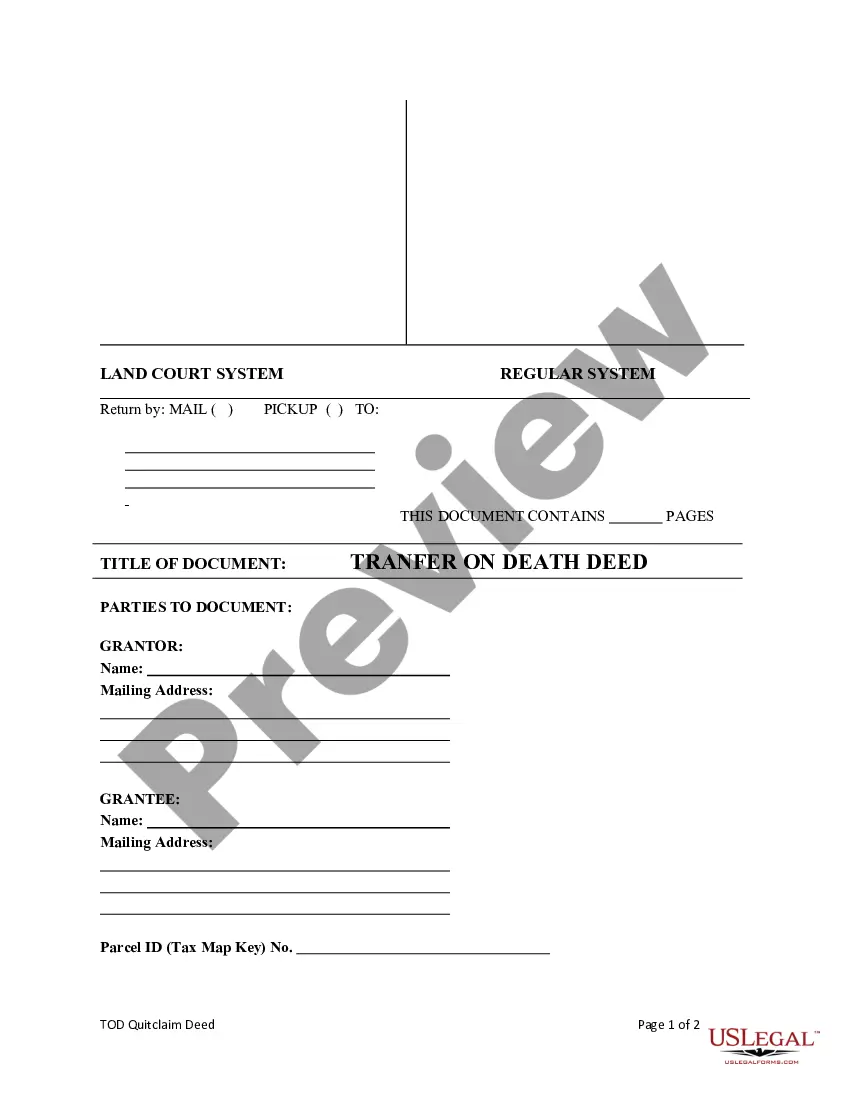
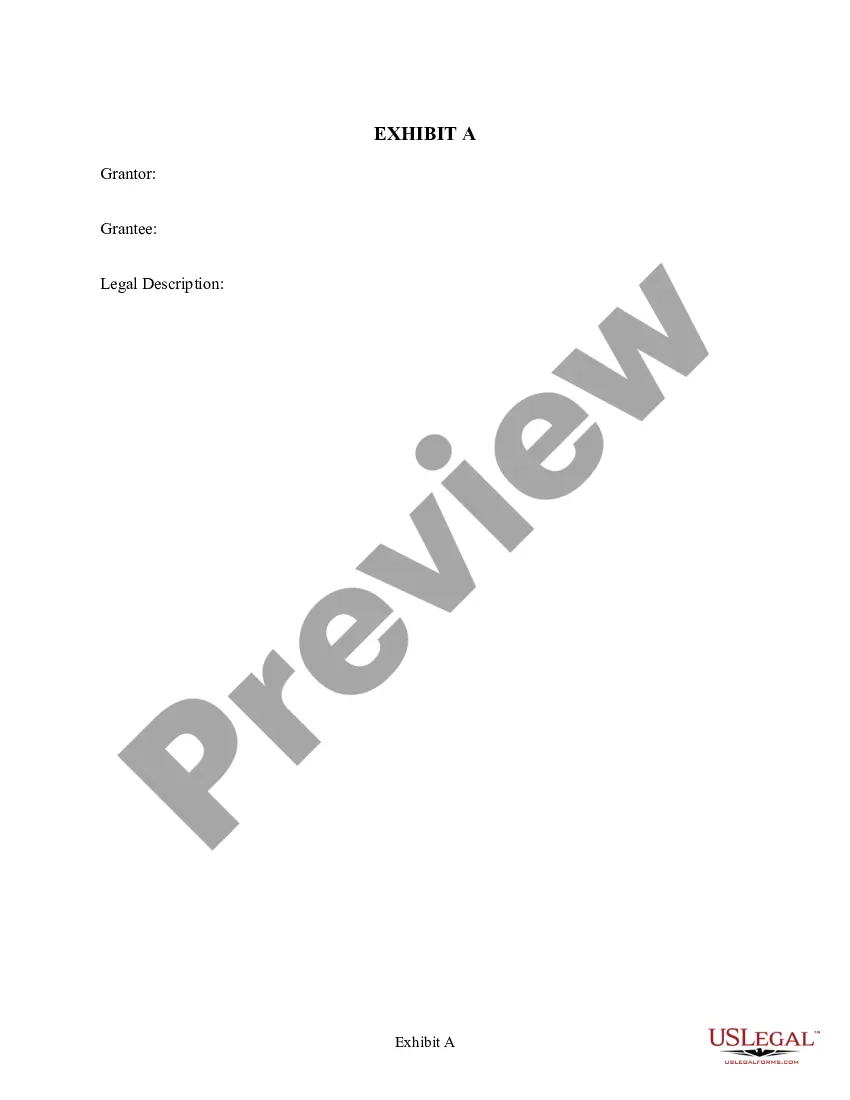
- Grantor and Grantee information sections.
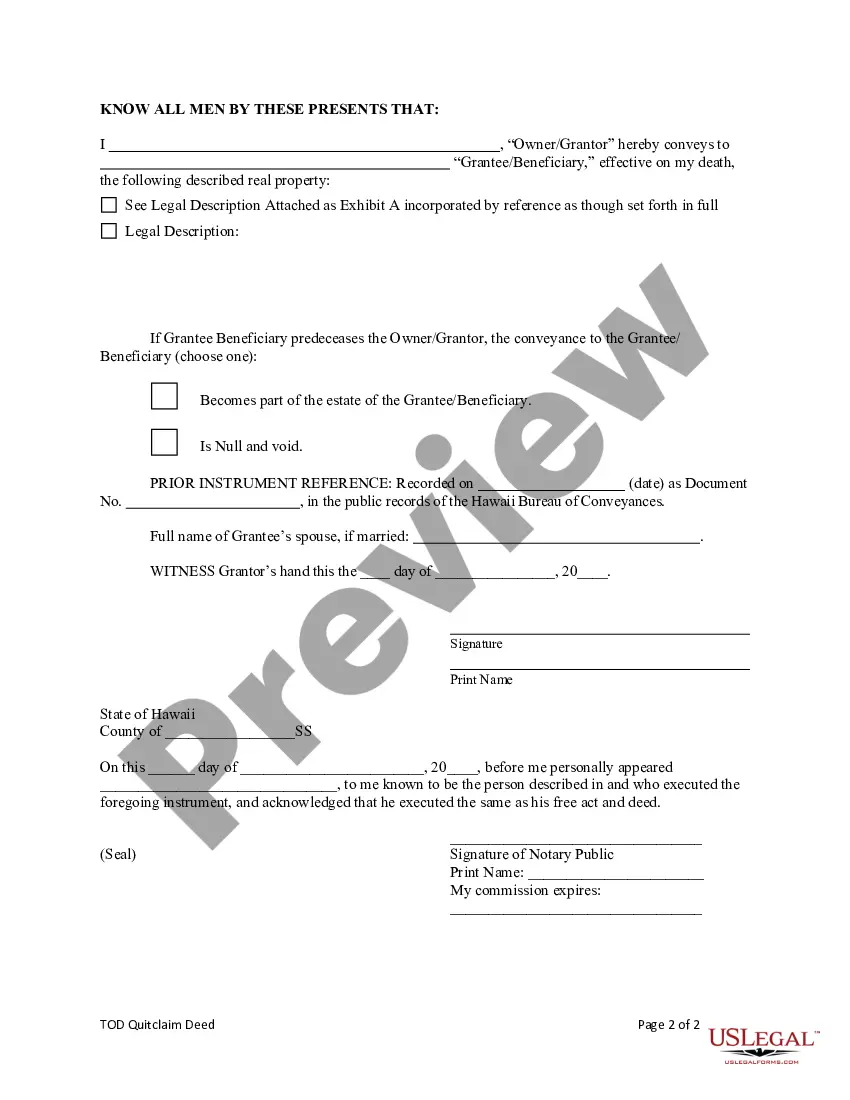
- Description of the property being transferred.
- Revocation clause explaining the Grantor's rights during their lifetime.
- Execution section for signatures and dates.
- Legal jurisdiction statement to confirm compliance with state laws.




Common use cases
You should use this form when you want to ensure that your property is automatically transferred to a designated individual upon your death, without going through probate. This form is beneficial for individuals looking to simplify the transfer of property and avoid complications for their heirs.
Who should use this form
- Individuals wanting to designate a specific person to inherit property upon their death.
- Homeowners planning their estate and aiming to avoid probate.
- People who are removing property from their estate for estate planning purposes.
Instructions for completing this form
- Identify the parties involved by entering the names of the Grantor and Grantee.
- Provide a detailed description of the property being transferred, including its legal address.
- Specify any conditions under which the deed may be revoked during the Grantor's lifetime.
- Enter the date of execution and provide the necessary signatures of the Grantor and witnesses, if applicable.
Notarization requirements for this form
This form must be notarized to be legally valid. US Legal Forms provides secure online notarization powered by Notarize, allowing you to complete the process through a verified video call.
Get your form ready online
Our built-in tools help you complete, sign, share, and store your documents in one place.
Make edits, fill in missing information, and update formatting in US Legal Forms—just like you would in MS Word.
Download a copy, print it, send it by email, or mail it via USPS—whatever works best for your next step.
Sign and collect signatures with our SignNow integration. Send to multiple recipients, set reminders, and more. Go Premium to unlock E-Sign.
If this form requires notarization, complete it online through a secure video call—no need to meet a notary in person or wait for an appointment.
We protect your documents and personal data by following strict security and privacy standards.

Make edits, fill in missing information, and update formatting in US Legal Forms—just like you would in MS Word.

Download a copy, print it, send it by email, or mail it via USPS—whatever works best for your next step.

Sign and collect signatures with our SignNow integration. Send to multiple recipients, set reminders, and more. Go Premium to unlock E-Sign.

If this form requires notarization, complete it online through a secure video call—no need to meet a notary in person or wait for an appointment.

We protect your documents and personal data by following strict security and privacy standards.
Common mistakes
- Failing to accurately describe the property being transferred.
- Not including all required signatures, which could invalidate the deed.
- Overlooking the revocation clause, leading to unintended consequences.
Why complete this form online
- Convenient access to the form anytime, from anywhere.
- Editable format allows for easy customization before printing.
- Reliability of professionally drafted documents, ensuring legal compliance.
Looking for another form?
Form popularity
FAQ
The strongest form of deed is typically a warranty deed, which offers the highest level of protection for the buyer. However, when considering a Hawaii Transfer on Death Quitclaim Deed from Individual to Individual, it serves its unique purpose by ensuring a smooth transition of ownership after death. Each type of deed serves different needs, and understanding these can help you choose the right fit for your property needs. If you want clarity and security in your property's future, explore our options at uslegalforms.
The Hawaii Transfer on Death Quitclaim Deed from Individual to Individual provides specific advantages over a traditional quitclaim deed. Primarily, it allows property owners to transfer assets directly to beneficiaries upon their death, avoiding probate. In contrast, a quitclaim deed can only transfer the current ownership interest and might not have the same protective benefits. For families seeking a straightforward transfer process, this option offers peace of mind.
To fill out a transfer on death designation affidavit for a Hawaii Transfer on Death Quitclaim Deed from Individual to Individual, start by obtaining the correct form from a reputable source. Fill in the names and addresses of the individuals involved, ensuring accuracy to avoid legal issues later. Clearly specify the property details, including the parcel number and legal description, to help identify the property unambiguously. Once completed, sign the affidavit in the presence of a notary public and file it with the appropriate county office to ensure it becomes legally binding.
One disadvantage of a Transfer on Death Deed is that it does not address any debts associated with the property, which could impact your beneficiary. Additionally, if you change your mind about the transfer, you must revoke the deed formally. It’s wise to carefully consider whether the Hawaii Transfer on Death Quitclaim Deed from Individual to Individual fits your estate planning needs.
While you are not required to hire a lawyer for a Transfer on Death Deed, consulting one can be beneficial. A lawyer can provide tailored advice based on your specific situation and ensure that all legal requirements are met. This can be particularly helpful when drafting the Hawaii Transfer on Death Quitclaim Deed from Individual to Individual to avoid potential pitfalls.
Creating a Transfer on Death Deed in Hawaii involves filling out the appropriate form and having it notarized. It is essential to ensure that the deed clearly identifies the property and the intended beneficiary. For guidance, you can use platforms like US Legal Forms to access detailed templates that help in preparing the Hawaii Transfer on Death Quitclaim Deed from Individual to Individual accurately.
Yes, Hawaii does allow Transfer on Death Deeds, which are an effective way to transfer property without the complexities of probate. This option is beneficial for individuals looking to streamline the transfer of ownership after their passing. Utilizing the Hawaii Transfer on Death Quitclaim Deed from Individual to Individual can simplify the process and provide peace of mind.
To transfer ownership of a property in Hawaii, you typically start by preparing a deed, such as a quitclaim deed or a transfer on death deed. Using the Hawaii Transfer on Death Quitclaim Deed from Individual to Individual, you can designate a beneficiary who will receive the property after your passing. You must then file the completed deed with the appropriate county office to finalize the transfer. Platforms like US Legal Forms can guide you through the necessary steps to ensure your deed is properly prepared and recorded.
A quitclaim deed transfers ownership rights in a property without guaranteeing clear title, while a transfer on death deed allows you to pass property to a beneficiary upon your death, without going through probate. Essentially, the Hawaii Transfer on Death Quitclaim Deed from Individual to Individual provides a method to ensure your property goes directly to your designated heir. This approach can simplify the process and provide peace of mind for both you and your loved ones.