Hawaii Transfer on Death Quitclaim Deed from Individual to Two Individuals or Husband and Wife
About this form
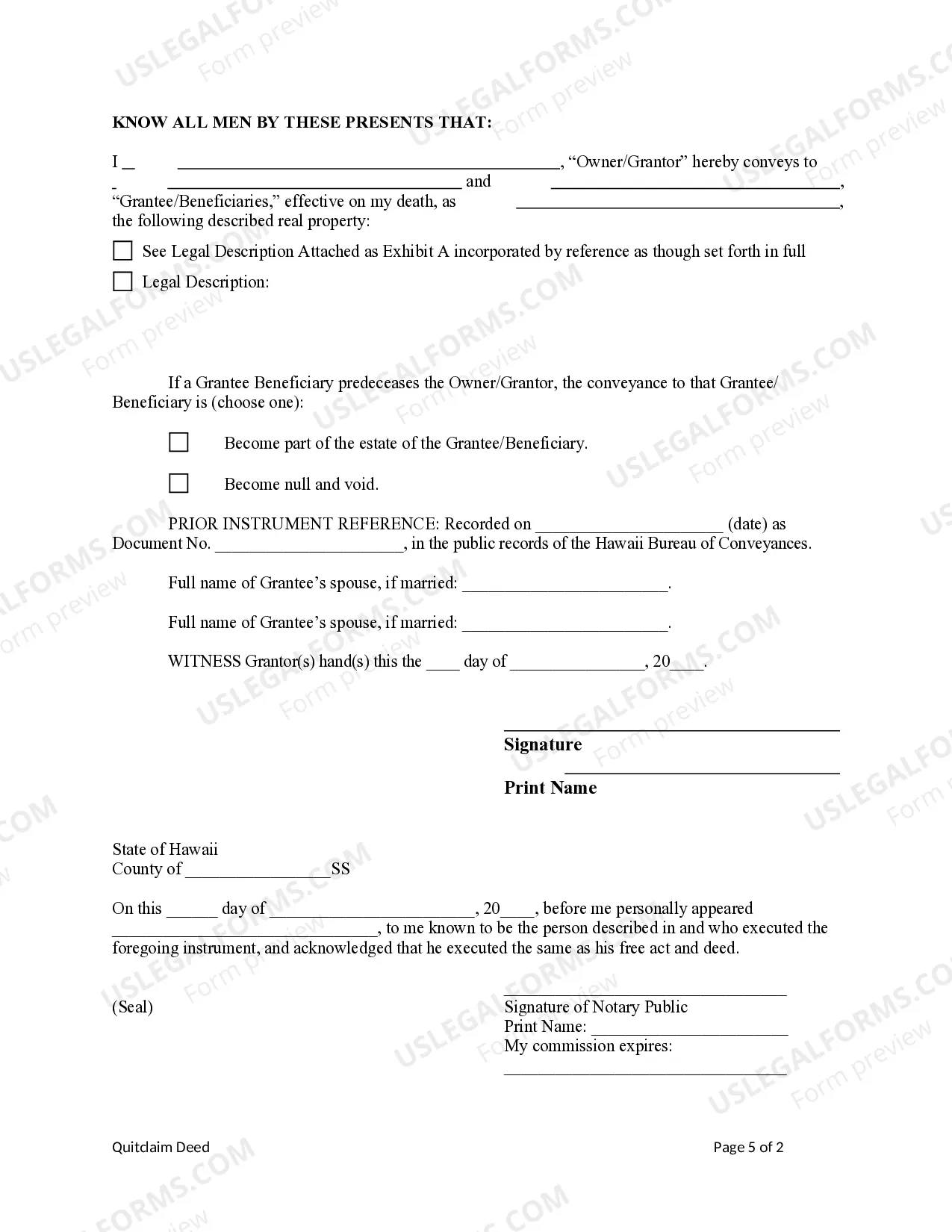
This form is a Transfer on Death Quitclaim Deed that allows an individual (the Grantor) to transfer real property to two individuals or a married couple (the Grantees). This deed remains revocable by the Grantor during their lifetime and takes effect only upon the death of the Grantor. This form is essential for estate planning and offers a straightforward way to transfer ownership without the property going through probate, distinguishing it from a standard quitclaim deed.
What’s included in this form
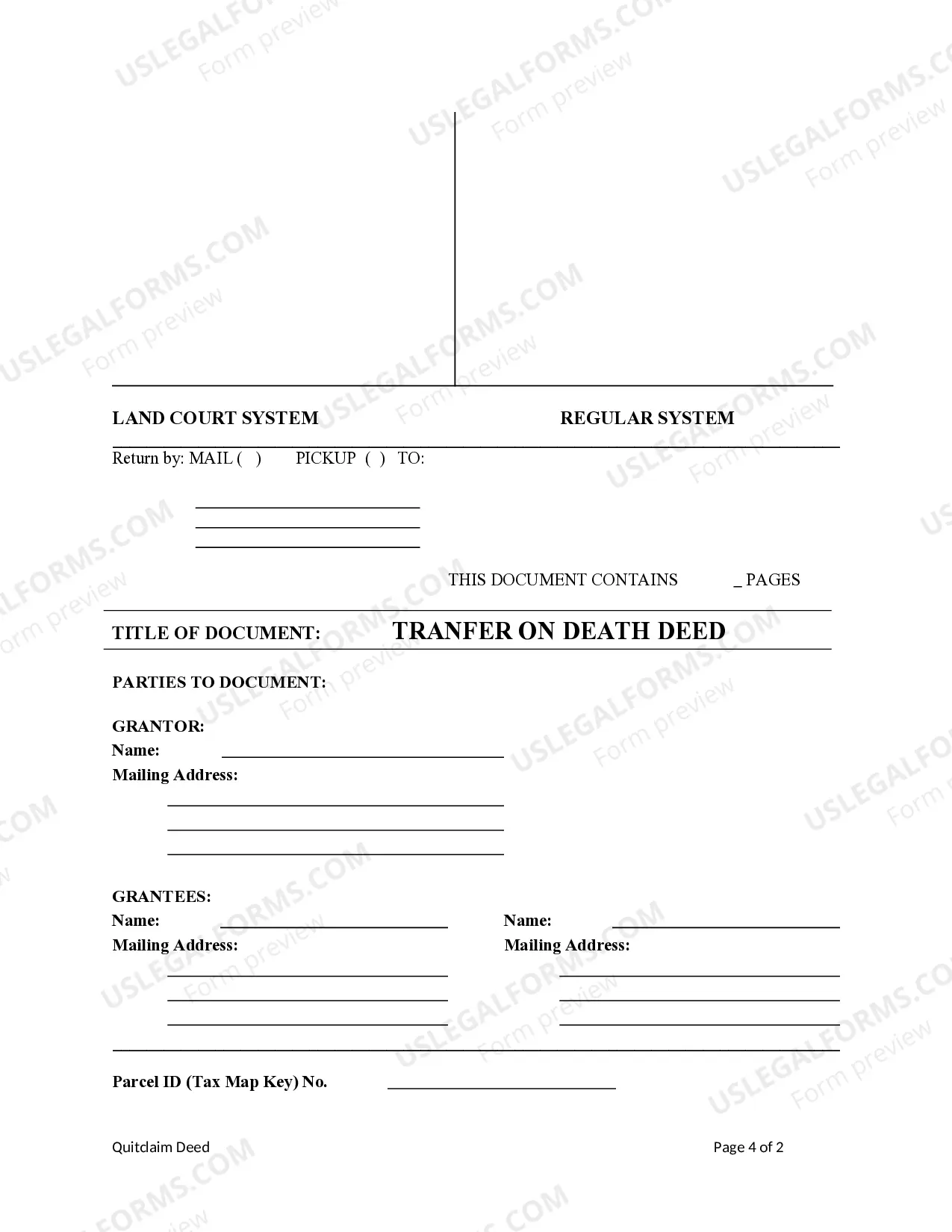
- Grantor information: Details about the individual transferring the property.
- Grantees information: Names of the two individuals or spouses receiving the property.
- Property description: Clear identification of the property being transferred.
- Testamentary clauses: Statement of intent regarding the transfer on death.
- Signature fields: Lines for the Grantor's signature and notarization, if required.
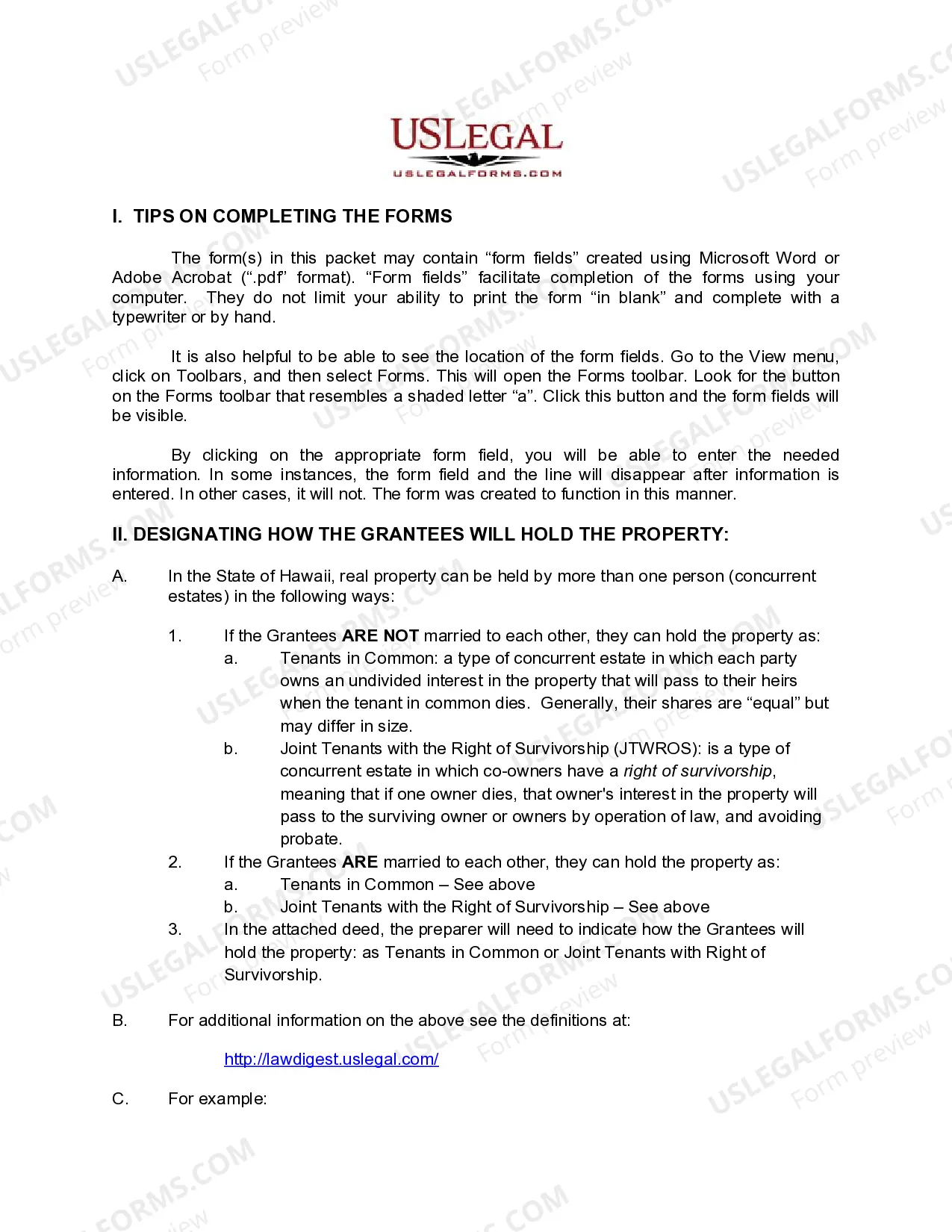
- Method of holding: Options for how Grantees will hold the title (e.g., joint tenants or tenants in common).





When this form is needed
This form should be used when an individual wishes to ensure their property is automatically transferred to two individuals or a spouse upon their death. It is particularly useful in estate planning for avoiding probate and ensuring that property passes directly to the intended beneficiaries without complications.
Intended users of this form
- Individual property owners wishing to designate heirs.
- Couples looking to jointly hold property with a right of survivorship.
- Individuals planning their estate and seeking a revocable transfer option.
Completing this form step by step
- Identify the Grantor: Fill in the full name and address of the individual transferring the property.
- Specify the Grantees: Enter the names of the two individuals or spouses who will receive the property.
- Detail the property: Provide a clear and complete description of the property being transferred.
- Indicate holding method: Choose whether the Grantees will hold the property as tenants in common or joint tenants with the right of survivorship.
- Sign and date: The Grantor should sign and date the form in the presence of a notary if required.
Does this document require notarization?
This form must be notarized to be legally valid. US Legal Forms provides secure online notarization powered by Notarize, allowing you to complete the process through a verified video call.
Get your form ready online
Our built-in tools help you complete, sign, share, and store your documents in one place.
Make edits, fill in missing information, and update formatting in US Legal Forms—just like you would in MS Word.
Download a copy, print it, send it by email, or mail it via USPS—whatever works best for your next step.
Sign and collect signatures with our SignNow integration. Send to multiple recipients, set reminders, and more. Go Premium to unlock E-Sign.
If this form requires notarization, complete it online through a secure video call—no need to meet a notary in person or wait for an appointment.
We protect your documents and personal data by following strict security and privacy standards.

Make edits, fill in missing information, and update formatting in US Legal Forms—just like you would in MS Word.

Download a copy, print it, send it by email, or mail it via USPS—whatever works best for your next step.

Sign and collect signatures with our SignNow integration. Send to multiple recipients, set reminders, and more. Go Premium to unlock E-Sign.

If this form requires notarization, complete it online through a secure video call—no need to meet a notary in person or wait for an appointment.

We protect your documents and personal data by following strict security and privacy standards.
Mistakes to watch out for
- Failing to include a complete property description.
- Not specifying how the Grantees will hold the property.
- Neglecting to sign the document before a notary when required.
- Using an outdated version of the form that may not comply with current legal standards.
Why complete this form online
- Convenience of completing the form from home or any device.
- Editable format allows for easy corrections and adjustments.
- Access to reliable legal templates compliant with state laws, reducing the risk of errors.
Looking for another form?

Form popularity
FAQ
Filling out a Quitclaim Deed to add a spouse involves specific steps, including correctly identifying the current property owner and the new co-owner. You will need to include details about the property and specify that the deed is transferring interest to both individuals as joint owners. When utilizing the Hawaii Transfer on Death Quitclaim Deed from Individual to Two Individuals or Husband and Wife, consider consulting uslegalforms for templates and guidance to ensure your paperwork aligns with local laws and requirements, making the process seamless.
Yes, Hawaii does allow transfer on death deeds, which can be a beneficial estate planning tool. This option enables property owners to designate one or more beneficiaries who will automatically receive the property upon the owner's death. The Hawaii Transfer on Death Quitclaim Deed from Individual to Two Individuals or Husband and Wife can streamline the process and minimize legal hurdles for your heirs, making it a practical choice for many homeowners.
Choosing between a Hawaii Transfer on Death Quitclaim Deed from Individual to Two Individuals or Husband and Wife and designating beneficiaries involves careful consideration. A TOD deed effectively avoids probate and distributes property directly to designated individuals, while a traditional beneficiary designation may offer more flexibility. Depending on your family situation and estate plans, it can be valuable to consult with professionals to determine the best route for you.
With a Hawaii Transfer on Death Quitclaim Deed from Individual to Two Individuals or Husband and Wife, one key negative is the limited control over the property during the owner's lifetime. The owner cannot change beneficiaries without executing a new deed, which can be a barrier in changing circumstances. Furthermore, such deeds may not account for complex family dynamics, potentially leading to unintended conflicts.
One issue with TOD accounts is that they can create confusion about ownership and asset distribution. With a Hawaii Transfer on Death Quitclaim Deed from Individual to Two Individuals or Husband and Wife, the intentions of the original owner may not be clear, leading to potential disputes among heirs. Moreover, if the named beneficiaries predecease the owner, the deed may need to be revised, which can be cumbersome.
A Hawaii Transfer on Death Quitclaim Deed from Individual to Two Individuals or Husband and Wife does not necessarily avoid inheritance tax in Hawaii. While the deed helps bypass the probate process, the property may still be subject to taxation based on its value at the time of transfer. It is essential to consult with a tax professional to understand the tax implications of transferring property in this manner.
A Hawaii Transfer on Death Quitclaim Deed from Individual to Two Individuals or Husband and Wife might not be suitable for everyone. One potential disadvantage is that it does not protect the property from creditors. Additionally, it can complicate the process of obtaining loans against the property since lenders may hesitate to extend credit on a property with a TOD deed in place.
One disadvantage of a transfer on death deed is that it cannot be revoked or changed easily once executed, which may create challenges if your circumstances or intentions change. Additionally, a Hawaii Transfer on Death Quitclaim Deed from Individual to Two Individuals or Husband and Wife does not offer protection against creditors, meaning that your beneficiaries might have to deal with outstanding debts after your passing. It's crucial to weigh these potential drawbacks against the benefits before proceeding.
Yes, Hawaii does permit transfer on death deeds, providing a way for individuals to leave property directly to beneficiaries without going through probate. This can be particularly beneficial for those looking to simplify the transfer of assets, such as a Hawaii Transfer on Death Quitclaim Deed from Individual to Two Individuals or Husband and Wife. It's essential to follow state regulations to ensure that the deed is valid and enforceable.
You don’t need a lawyer to create a transfer on death deed in Hawaii, but seeking legal assistance can ensure your deed is correctly drafted and recorded. A Hawaii Transfer on Death Quitclaim Deed from Individual to Two Individuals or Husband and Wife must meet specific requirements to be effective, and a lawyer can help avoid common pitfalls. Using legal forms from platforms like UsLegalForms can also streamline the process and ensure compliance.