Iowa Public Ingress-Egress Easement
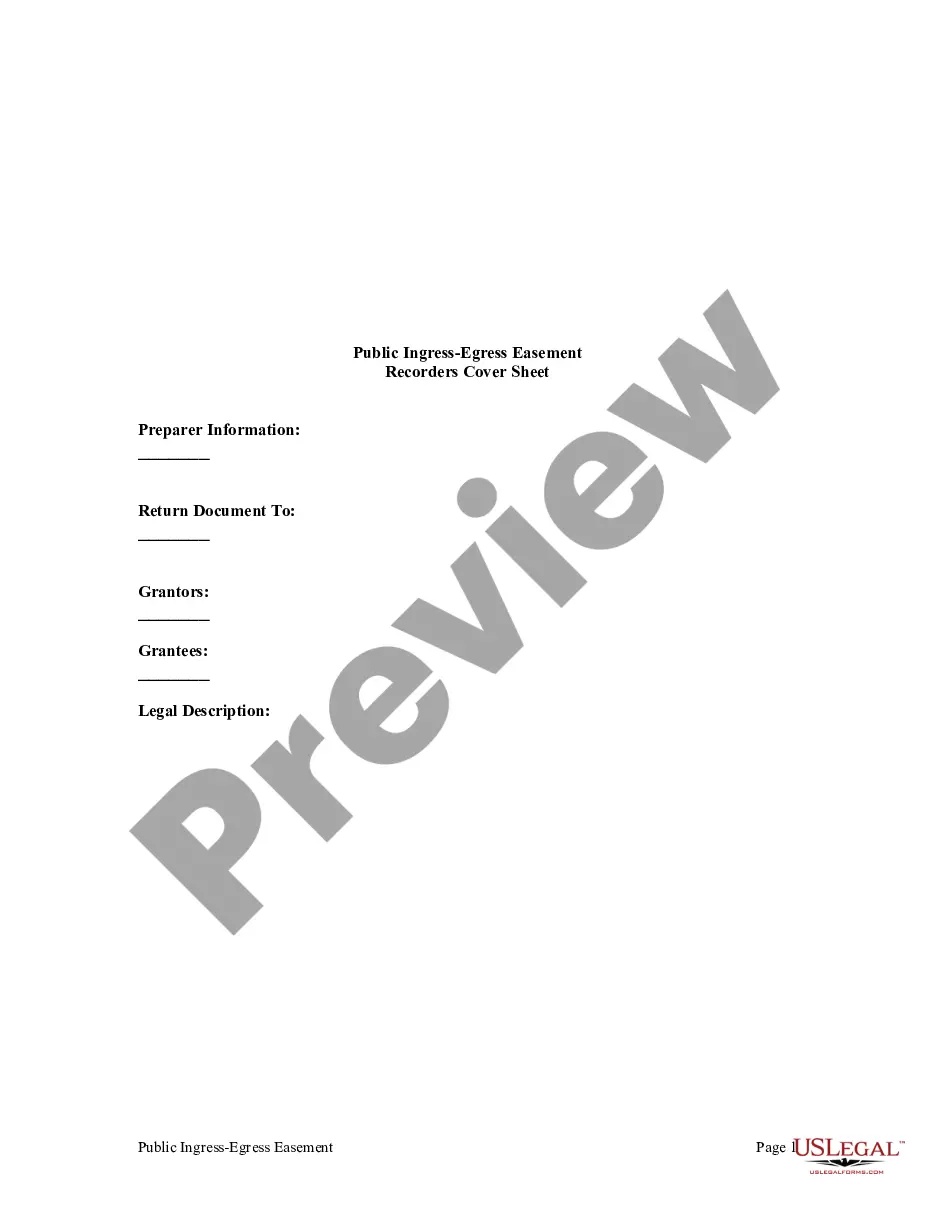
Overview of this form
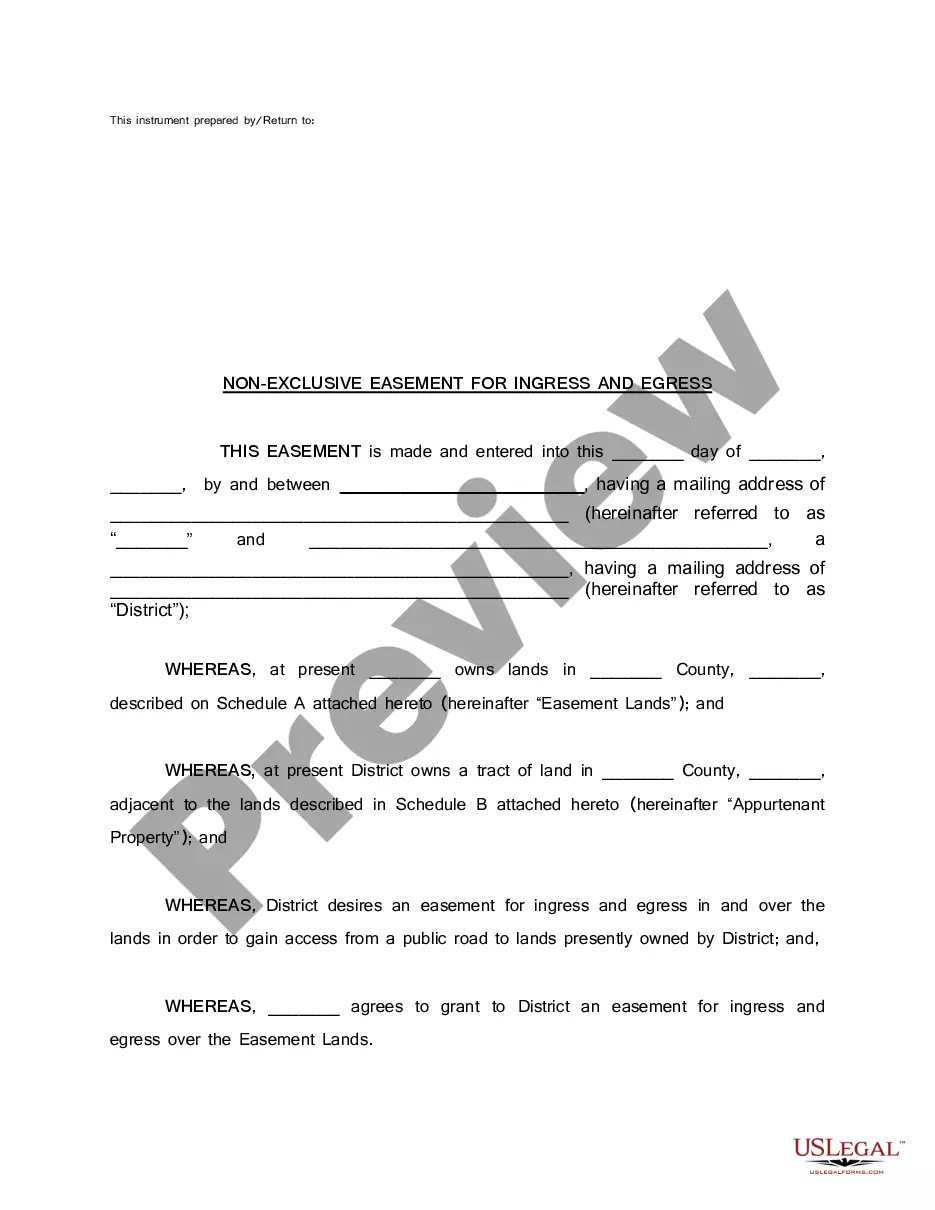
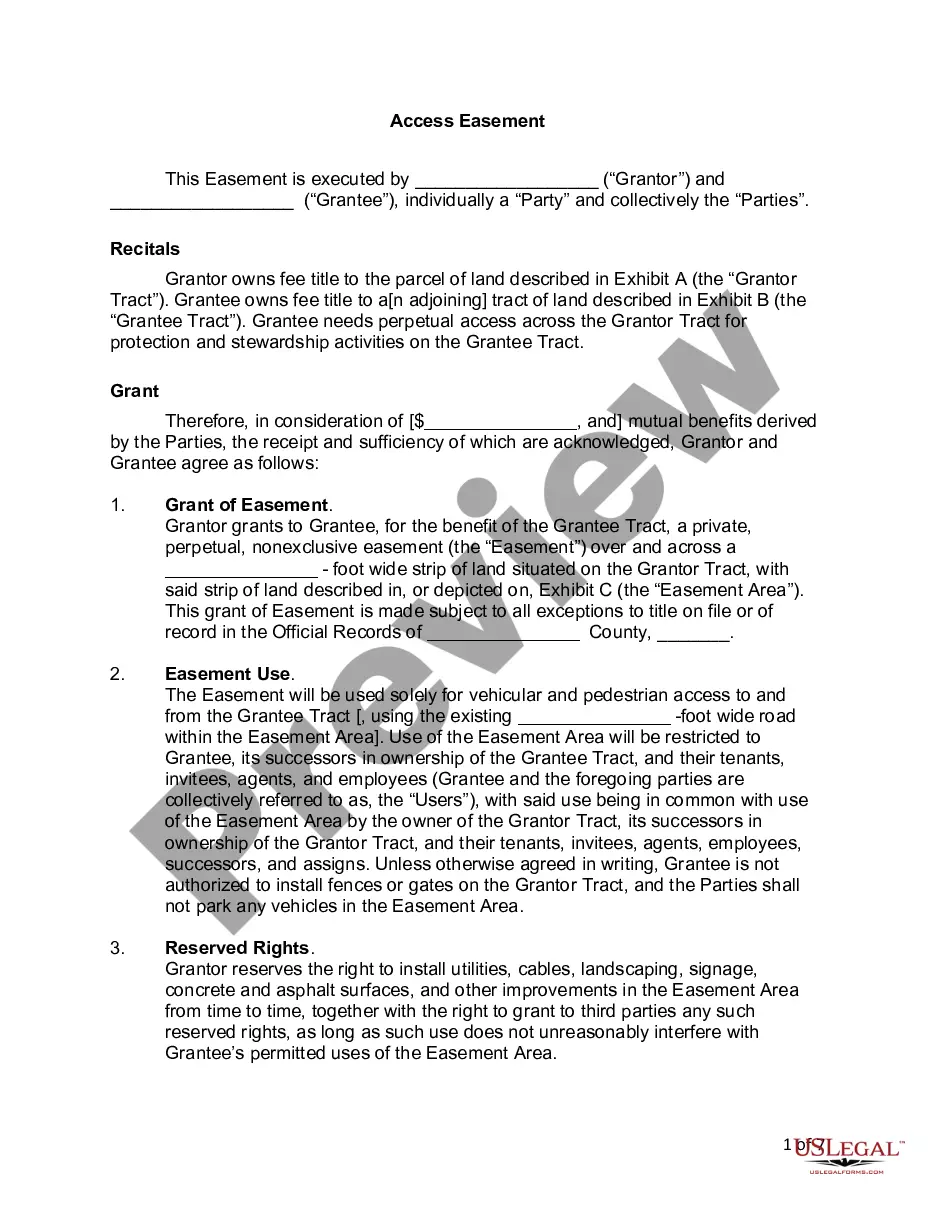
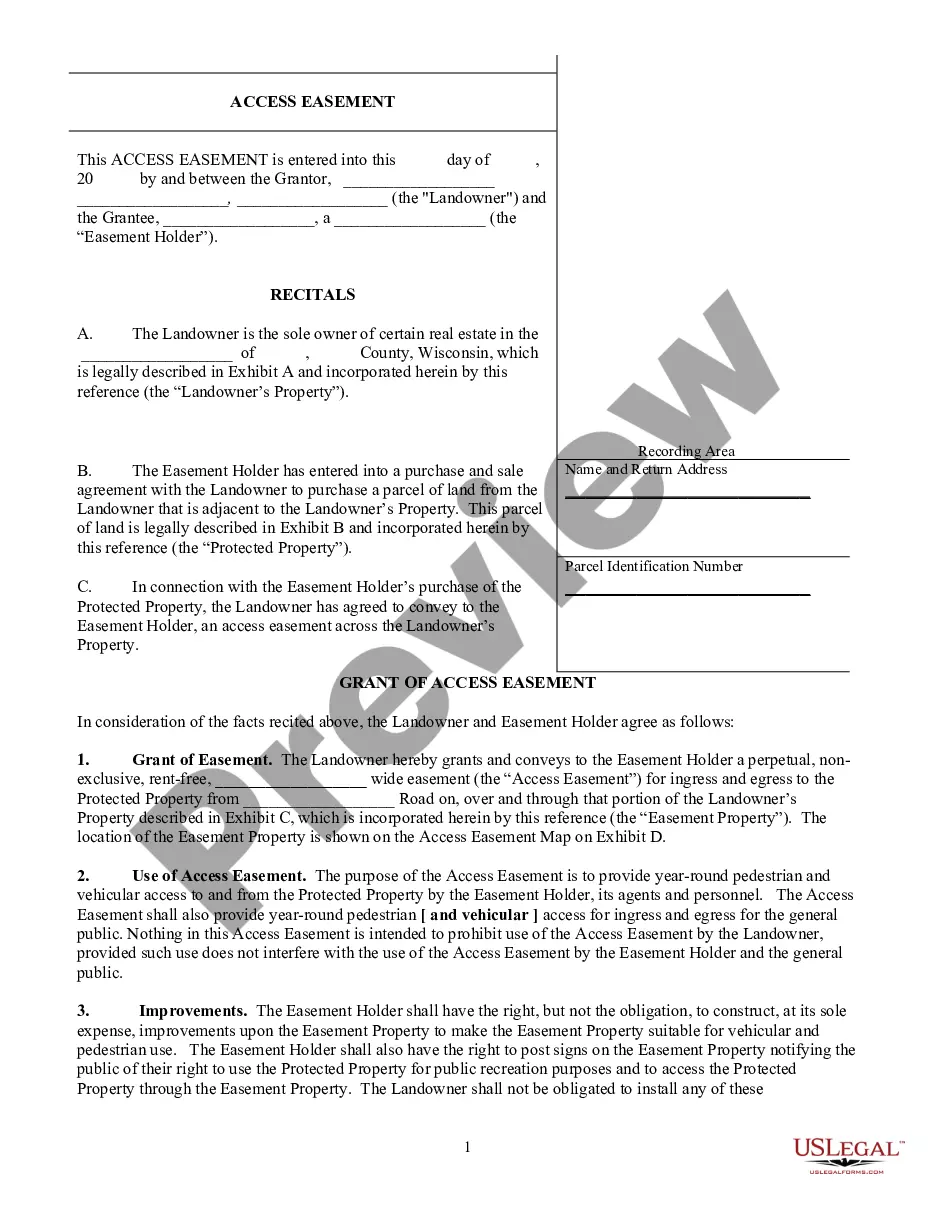
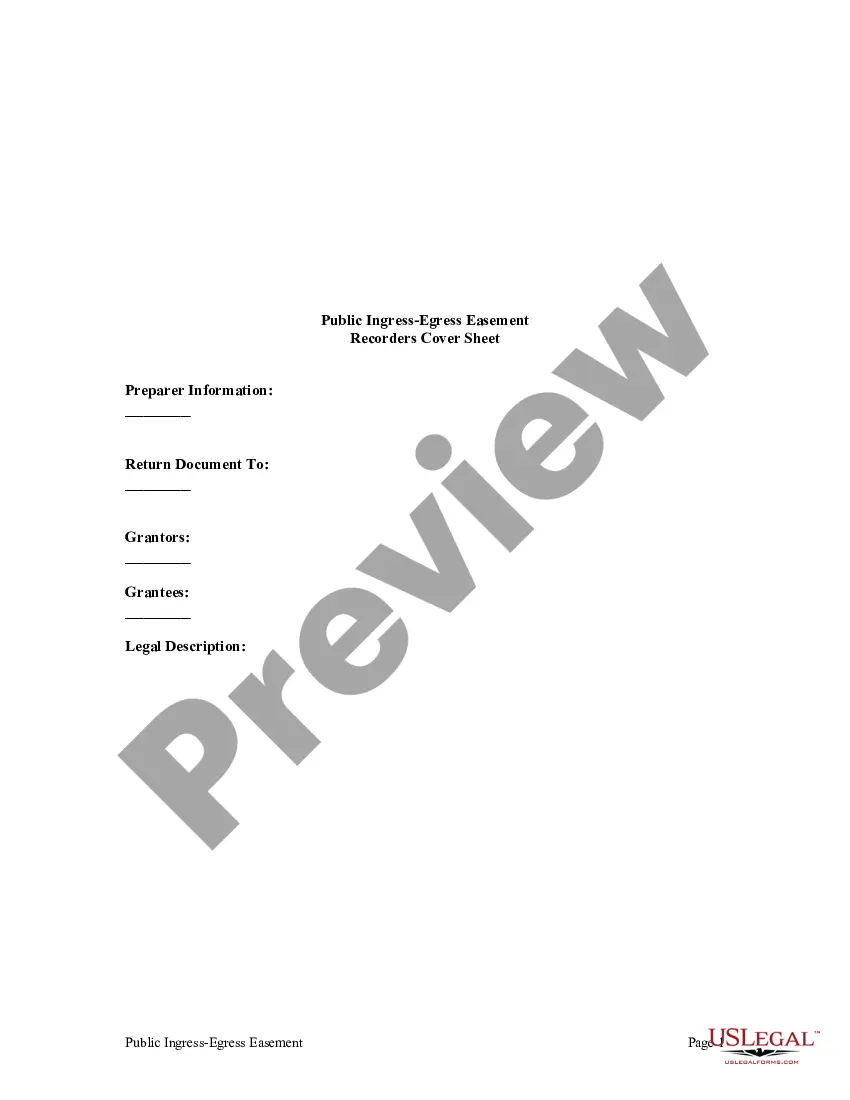
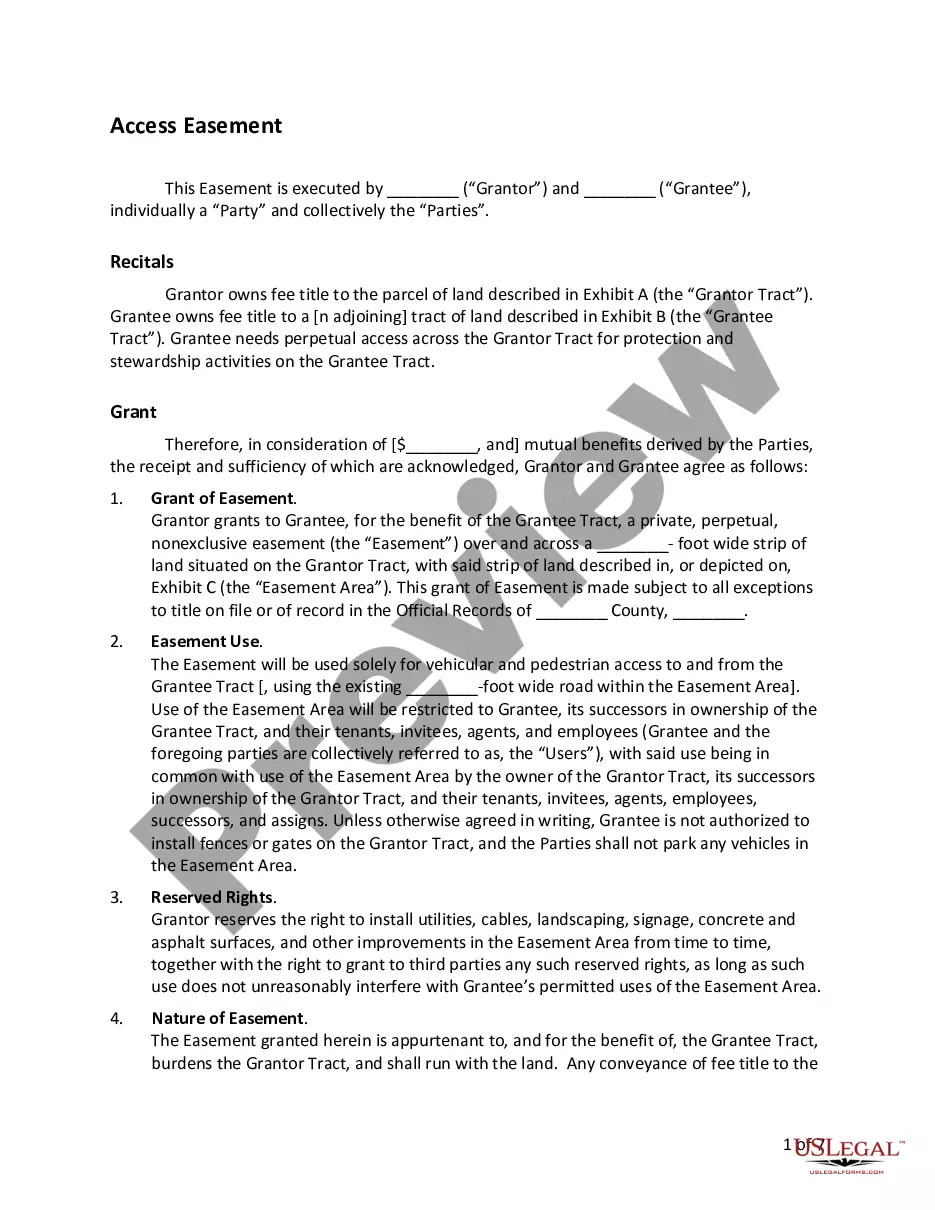
The Public Ingress-Egress Easement form is a legal document that establishes an agreement granting another party the right to access a specific tract of land for designated purposes. This easement is particularly useful for municipalities or public utilities to ensure public access without transferring property ownership. Unlike other easements, such as drainage or utility easements, this form focuses specifically on allows ingress and egress across the land, ensuring that the public can navigate through the designated areas safely and legally.
Form components explained
- Grantors and Grantees: Identification of the parties involved in the easement agreement.
- Legal Description: A detailed description of the property affected by the easement.
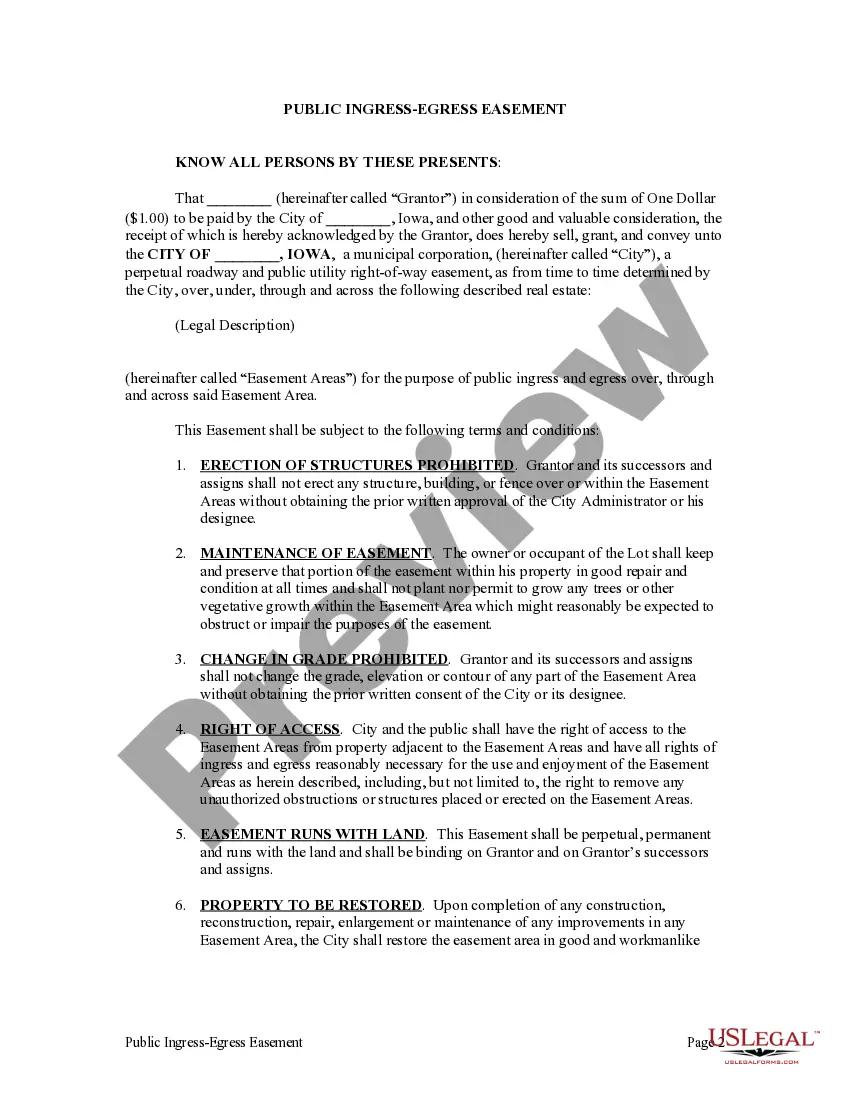
- Erection of Structures Prohibited: Clause preventing the construction of buildings or fences within the easement areas.
- Maintenance of Easement: Outlines responsibilities for upkeep within the easement area.
- Right of Access: Rights granted to the City and the public for accessing the easement areas.
- Easement Runs with Land: Establishes that the easement is perpetual and binds future landowners.
- Restoration of Property: Specifies the obligation to restore the easement area once work is completed.
Situations where this form applies
This form is typically used when a municipality or public utility needs to ensure access over a private tract of land for public purposes, such as roadways, utilities, or other essential services. If there is a need for continuing access across private property but without transferring ownership, the Public Ingress-Egress Easement is ideal. This form helps to clarify the rights and obligations of the parties involved while also protecting the interests of both the landowner and the public entities.
Intended users of this form
This form is intended for:
- Landowners who wish to grant access across their property for public use.
- Municipalities seeking to establish legal rights for public roadways or utility access.
- Property developers needing to ensure access to their sites while retaining ownership.
- Legal professionals requiring a standardized form for ingress and egress easements.
Instructions for completing this form
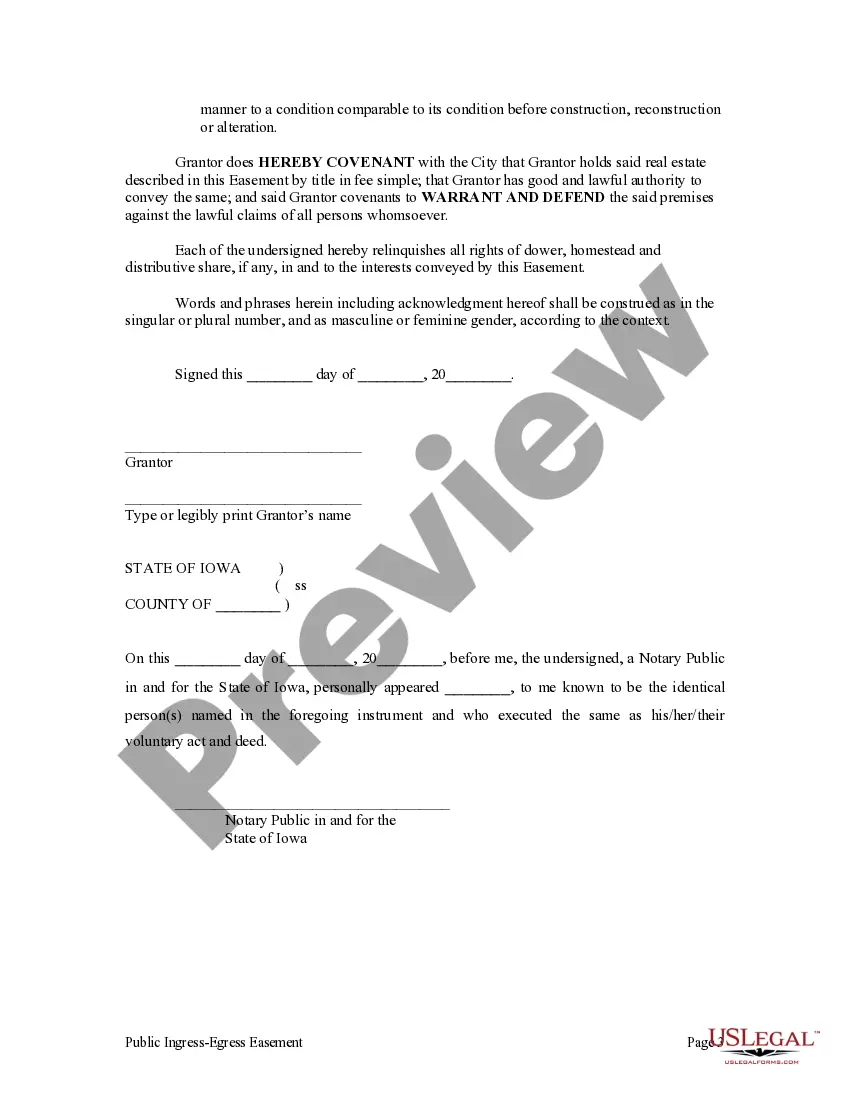
- Identify the Grantor and Grantee by providing their names and contact information.
- Enter the legal description of the property that will be subject to the easement.
- Fill in the date of signing and any specific details regarding the easement area.
- Ensure both parties sign and date the form to validate the agreement.
- Have the document notarized to authenticate the signatures and the legality of the agreement.
Notarization guidance
Yes, this form must be notarized to be legally valid. It requires the signatures of the parties involved to be acknowledged by a notary public, ensuring the authenticity of the agreement. US Legal Forms offers integrated online notarization services available 24/7, providing a secure video call for notarization that is convenient and legally recognized.
Get your form ready online
Our built-in tools help you complete, sign, share, and store your documents in one place.
Make edits, fill in missing information, and update formatting in US Legal Forms—just like you would in MS Word.
Download a copy, print it, send it by email, or mail it via USPS—whatever works best for your next step.
Sign and collect signatures with our SignNow integration. Send to multiple recipients, set reminders, and more. Go Premium to unlock E-Sign.
If this form requires notarization, complete it online through a secure video call—no need to meet a notary in person or wait for an appointment.
We protect your documents and personal data by following strict security and privacy standards.

Make edits, fill in missing information, and update formatting in US Legal Forms—just like you would in MS Word.

Download a copy, print it, send it by email, or mail it via USPS—whatever works best for your next step.

Sign and collect signatures with our SignNow integration. Send to multiple recipients, set reminders, and more. Go Premium to unlock E-Sign.

If this form requires notarization, complete it online through a secure video call—no need to meet a notary in person or wait for an appointment.

We protect your documents and personal data by following strict security and privacy standards.
Common mistakes
- Failing to provide a clear legal description of the property.
- Not obtaining the necessary signatures from all parties involved.
- Overlooking the requirement for notarization.
- Ignoring local laws that may affect the enforceability of the easement.
Benefits of using this form online
- Convenience of accessing the form from anywhere and anytime.
- Editable fields allow users to customize the document to their needs.
- Immediate availability ensures timely compliance for legal requirements.
Looking for another form?
Form popularity
FAQ
In Iowa, the rights of an easement are defined by state law and the specific terms outlined in the easement agreement. With an Iowa Public Ingress-Egress Easement, rights typically include access for maintenance and travel, ensuring that the easement holder can effectively utilize the property. It is crucial to understand these rights to avoid potential legal issues and ensure compliance with local regulations.
One notable disadvantage of an easement is the potential for land use restrictions. For example, an Iowa Public Ingress-Egress Easement may limit the property owner's ability to develop or modify their land freely. Such constraints can sometimes lead to conflicts between landowners and easement holders, necessitating open communication and legal understanding.
The rights of ingress and egress relate to the legal privileges of entering and exiting a property. In the context of an Iowa Public Ingress-Egress Easement, these rights ensure that landowners can access their property without obstruction. This legal framework protects individuals from potential disputes and promotes clarity regarding access routes.
Easement rights refer to the legal allowance for one party to use another party's land for a specific purpose. In the case of an Iowa Public Ingress-Egress Easement, these rights typically include access routes that enable individuals to enter and exit a property. This arrangement benefits both the property owner and the easement holder, as it clarifies usage expectations and promotes mutual cooperation.
To file an easement in Iowa, you typically need to submit a legal document to the county recorder's office where the property is located. This process usually involves preparing a written easement agreement that outlines the rights and responsibilities associated with the easement. Keeping a clear record is vital for the enforcement of an Iowa Public Ingress-Egress Easement. For assistance with drafting and filing the necessary paperwork, consider using US Legal Forms for streamlined legal solutions.
An ingress egress refers specifically to the rights that allow individuals to enter and exit a property, while an easement is a broader legal concept that grants someone the right to use another's land for a defined purpose. Thus, all ingress egress rights are easements, but not all easements are ingress egress. When dealing with property access in Iowa, it is essential to understand the context of Iowa Public Ingress-Egress Easement. For comprehensive legal documents and guidance, US Legal Forms is a great resource.
Iowa’s easement law allows property owners to grant others the right to use their land for specific purposes. This includes both ingress and egress easements, which facilitate access to properties. Understanding Iowa Public Ingress-Egress Easement is crucial, as it helps you navigate the legal framework surrounding property access. If you have questions about your rights or how to establish an easement, consider using US Legal Forms for reliable resources.
An Iowa Public Ingress-Egress Easement is typically owned by the person or entity that has the right granted to use the easement, known as the easement holder. The underlying property owner maintains ownership of the land but must allow the easement holder to access it as specified in the easement agreement. Therefore, both parties have rights in different contexts regarding the easement.
No, a property owner cannot block access to an Iowa Public Ingress-Egress Easement once it is established. Access is a legal right granted to the easement holder, ensuring they can reach their property without hindrance. Any blockade could lead to legal disputes, and it’s advisable to respect the terms of the easement.
A property owner cannot block an Iowa Public Ingress-Egress Easement designated for another party's use. Doing so may result in legal consequences, as the easement serves a specific purpose of ensuring access. If you believe the easement is being misused, it is advisable to consult a legal expert to explore your options.