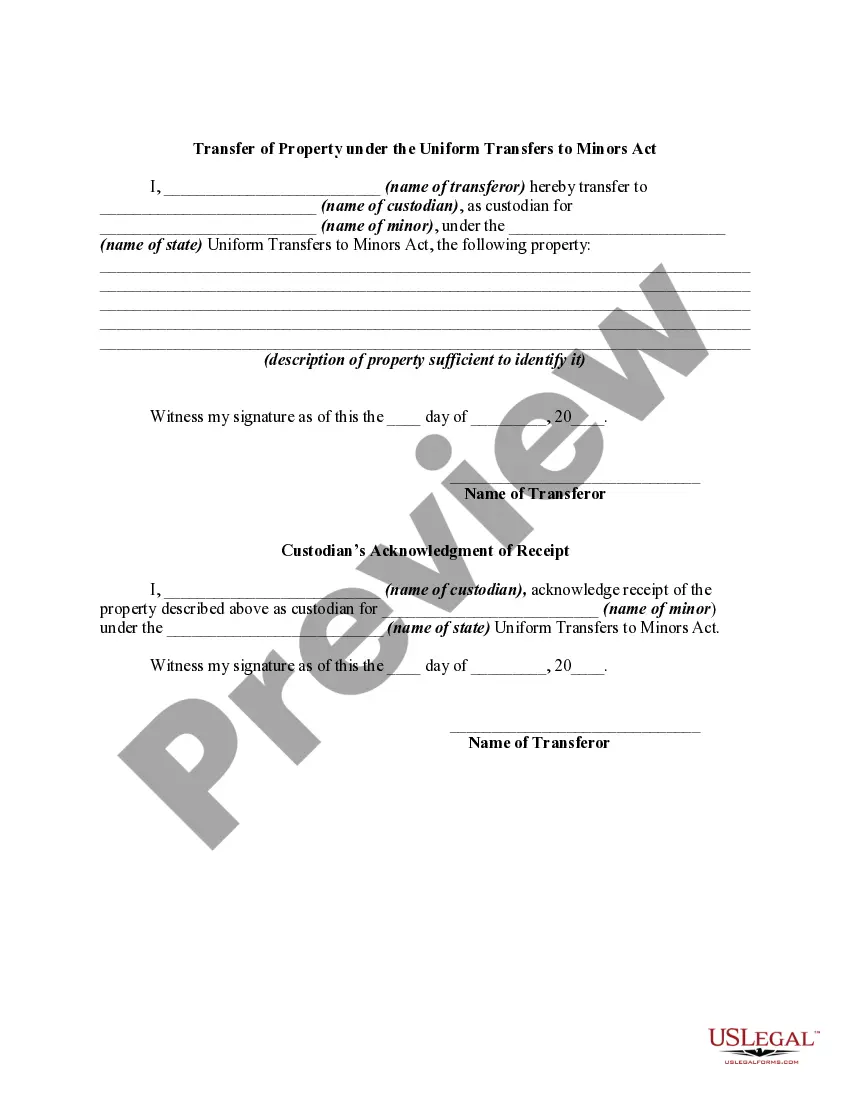
Iowa Transfer of Property under the Uniform Transfers to Minors Act
Description
Get your form ready online
Our built-in tools help you complete, sign, share, and store your documents in one place.
Make edits, fill in missing information, and update formatting in US Legal Forms—just like you would in MS Word.
Download a copy, print it, send it by email, or mail it via USPS—whatever works best for your next step.
Sign and collect signatures with our SignNow integration. Send to multiple recipients, set reminders, and more. Go Premium to unlock E-Sign.
If this form requires notarization, complete it online through a secure video call—no need to meet a notary in person or wait for an appointment.
We protect your documents and personal data by following strict security and privacy standards.

Make edits, fill in missing information, and update formatting in US Legal Forms—just like you would in MS Word.

Download a copy, print it, send it by email, or mail it via USPS—whatever works best for your next step.

Sign and collect signatures with our SignNow integration. Send to multiple recipients, set reminders, and more. Go Premium to unlock E-Sign.

If this form requires notarization, complete it online through a secure video call—no need to meet a notary in person or wait for an appointment.

We protect your documents and personal data by following strict security and privacy standards.
Looking for another form?
How to fill out Transfer Of Property Under The Uniform Transfers To Minors Act?
Have you ever found yourself in a situation where you require documents for either business or personal reasons almost every day.
There are numerous legal document templates accessible online, but finding reliable ones can be challenging.
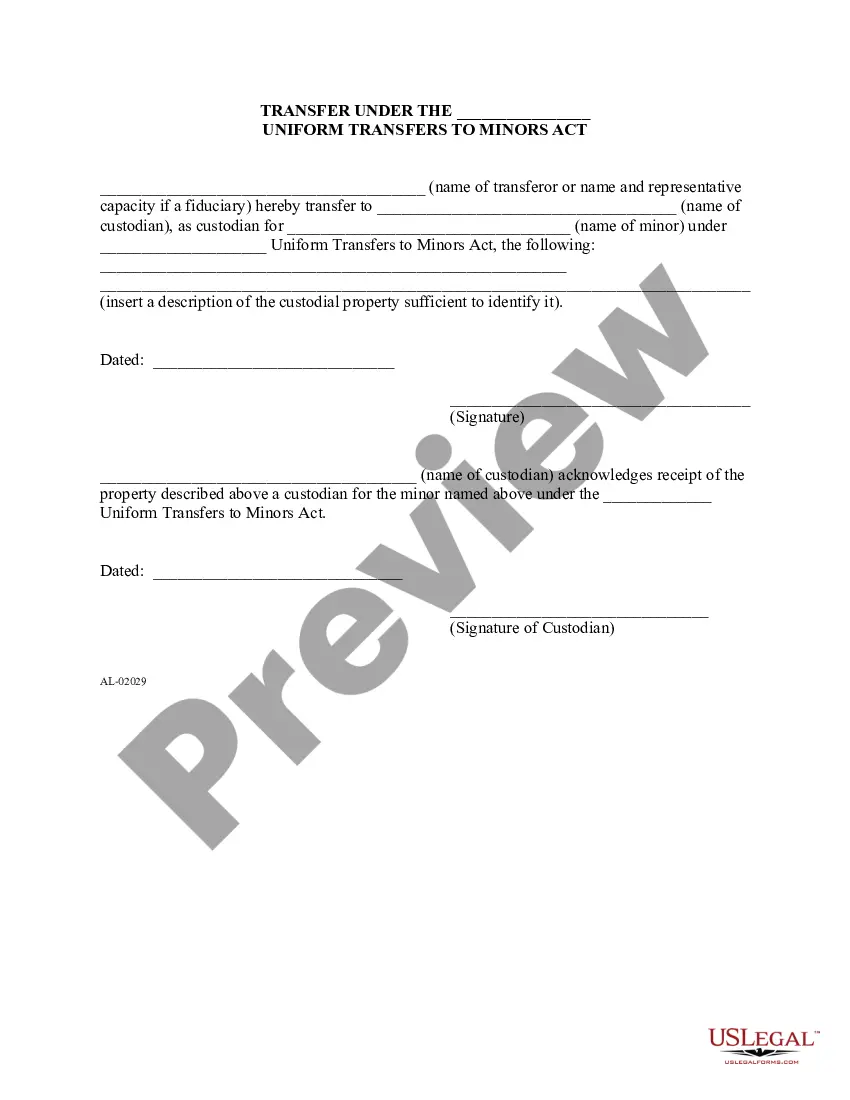
US Legal Forms offers a vast array of form templates, such as the Iowa Transfer of Property under the Uniform Transfers to Minors Act, which are designed to comply with federal and state regulations.
Choose the pricing plan you prefer, fill out the necessary information to create your account, and complete the purchase using your PayPal or credit card.
Select a convenient document format and download your copy. Access all the document templates you have purchased in the My documents menu. You can obtain an additional copy of the Iowa Transfer of Property under the Uniform Transfers to Minors Act at any time if needed. Just choose the required form to download or print the document template. Utilize US Legal Forms, one of the most extensive collections of legal forms, to save time and avoid mistakes. The service provides professionally crafted legal document templates that can be used for various purposes. Create your account on US Legal Forms and start simplifying your life.
- If you are already familiar with the US Legal Forms site and have an account, simply Log In.
- Then, you can download the Iowa Transfer of Property under the Uniform Transfers to Minors Act template.
- If you do not have an account and wish to start using US Legal Forms, follow these steps.
- Find the form you need and ensure it is for the correct state/region.
- Use the Preview button to review the form.
- Examine the details to confirm that you have selected the right form.
- If the form isn’t what you’re looking for, use the Search section to find the form that meets your needs and requirements.
- Once you find the correct form, click Buy now.
Form popularity
FAQ
Iowa Admin. Code r. 781-9.31 - Claims to custodial property under the Iowa UTMA or similar Acts. (1) A claim to custodial property may be made by the custodian of the property, or the legal representative thereof, provided that the minor has not yet reached the age of 21 years.
Transferring a UTMA account to a child is simple. You can do so with most financial or investment institutions. You can also consult a tax or business lawyer to help you set up the legal structure, although most financial institutions can do this for you.
The term Uniform Transfers to Minors Act (UTMA) refers to a law that allows a minor to receive gifts without the aid of a guardian or trustee. Gifts can include money, patents, royalties, real estate, and fine art.
?Limited guardianship? means a guardianship that grants the guardian less than all powers available under this chapter or otherwise restricts the powers of the guardian. 9. ?Minor? means an unmarried and unemancipated person under the age of eighteen years.
Children under the age of 18 typically cannot own property, and parents may have various reasons to delay an inheritance for children over the age of 18. To solve both of these issues, parents can place property in a trust for their children until they reach a certain age.
Age of Majority in Iowa State minor laws dictate the age at which a minor child is considered an adult in the eyes of the law, also known as the "age of majority." The default age under most circumstances is 18, but minors under the age of 18 may still retain certain rights and responsibilities in certain situations.
You can legally buy property when you reach the age of majority, which in most states is 18 years old. (There are three exceptions: In Alabama and Nebraska the age of majority is 19, and in Mississippi, it's 21.) Before you reach the age of majority, you are legally considered a minor.
For a child at least 16 years old and able to make his or her own adult decisions, a legal emancipation may be an option. An emancipated child can make decisions on where they will live. The child would also be held responsible for any contracts signed and any actions taken.