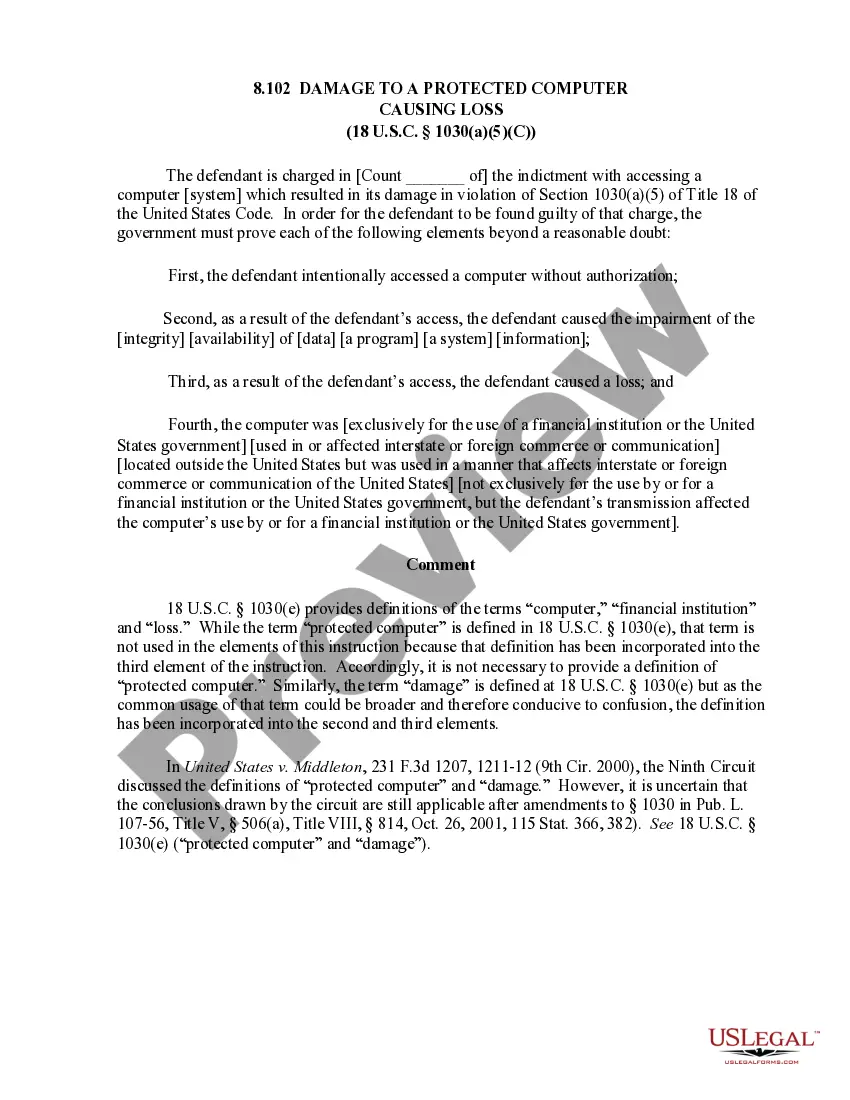
Federal Pro Se [Non-prisoner] Complaint Form:
** THIS IS NOT A FEDERAL PRO SE COMPLAINT FORM *****
Iowa Federal Pro Se - Non-Prisoner - Complaint Form
Category:
State:
Multi-State
Control #:
US-01991
Format:
Word;
Rich Text
Instant download
Description
Free preview

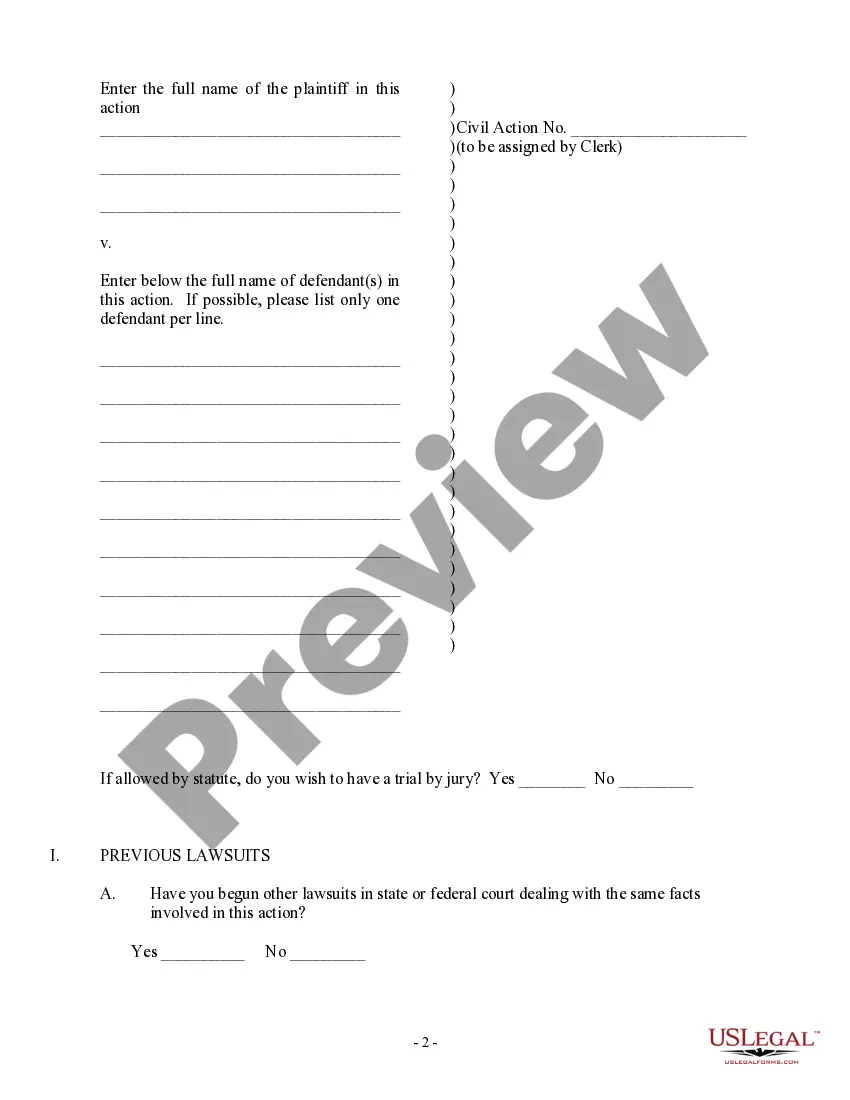
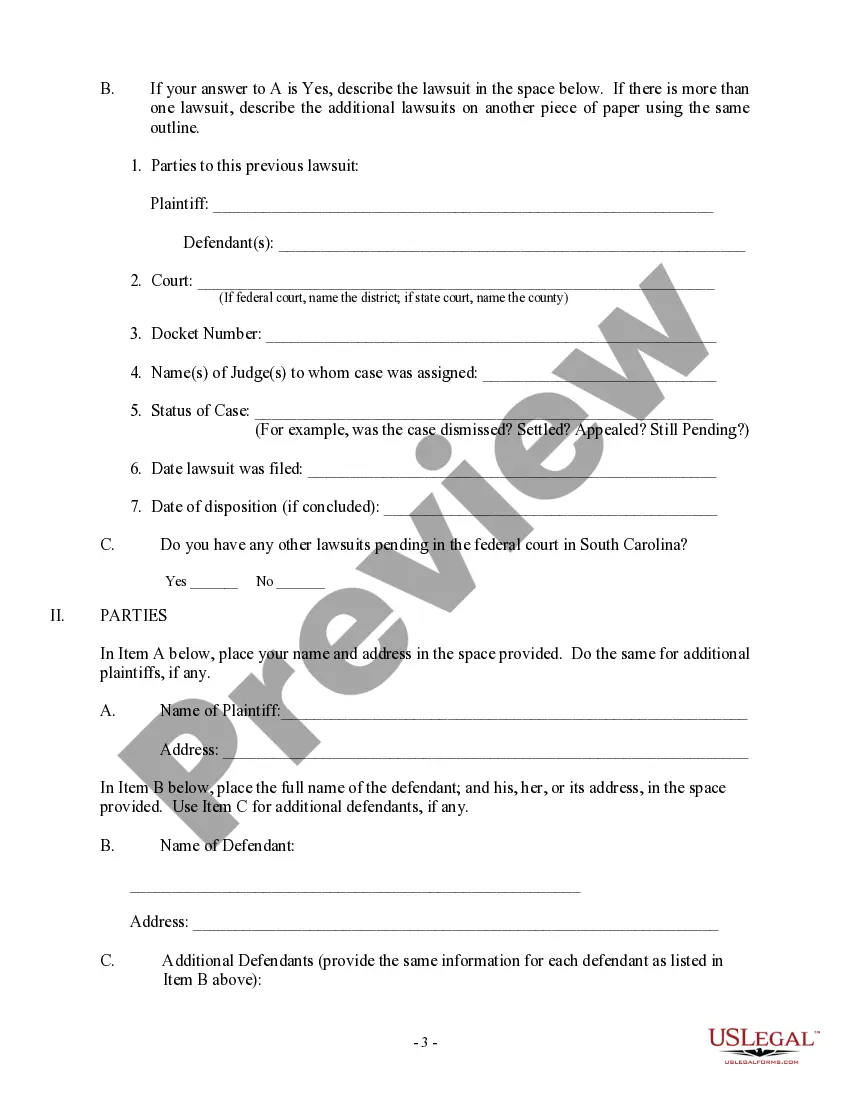
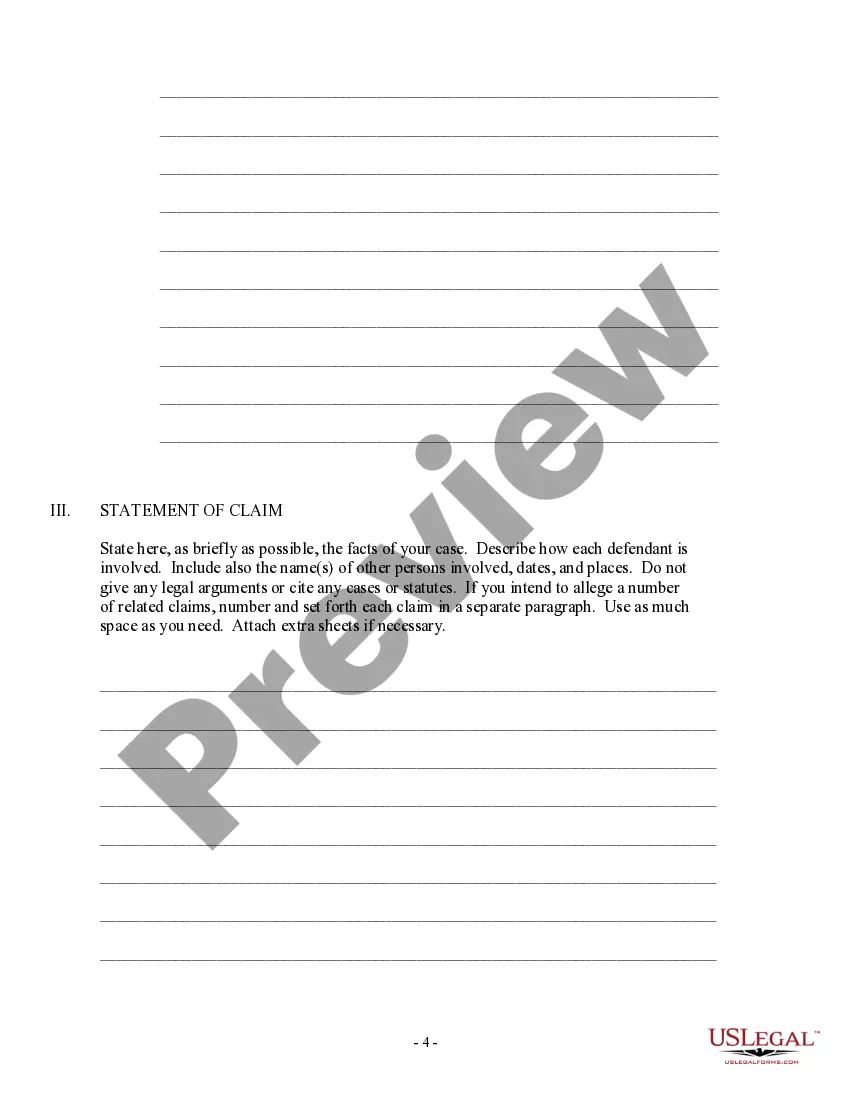
How to fill out Federal Pro Se - Non-Prisoner - Complaint Form?
It is feasible to spend multiple hours online looking for the legal document template that meets the federal and state requirements you desire.
US Legal Forms offers thousands of legal forms that can be reviewed by professionals.
You can easily download or print the Iowa Federal Pro Se - Non-Prisoner - Complaint Form from the service.
If available, utilize the Preview option to browse through the document template as well. If you wish to obtain another version of the form, use the Search field to find the template that fits your needs and specifications. Once you have found the template you require, click Obtain now to proceed. Select the pricing plan you desire, input your credentials, and register for your account on US Legal Forms. Complete the transaction. You can utilize your credit card or PayPal account to pay for the legal form. Choose the format of the document and download it to your device. Make adjustments to the document if necessary. You can complete, modify, sign, and print the Iowa Federal Pro Se - Non-Prisoner - Complaint Form. Obtain and print thousands of document templates using the US Legal Forms website, which provides the largest collection of legal forms. Utilize professional and state-specific templates to address your business or personal needs.
- If you possess a US Legal Forms account, you can Log In and click on the Obtain option.
- Then, you can complete, modify, print, or sign the Iowa Federal Pro Se - Non-Prisoner - Complaint Form.
- Every legal document template you obtain is yours indefinitely.
- To request another copy of any purchased form, navigate to the My documents tab and click on the appropriate option.
- If you are using the US Legal Forms website for the first time, follow the simple instructions below.
- First, ensure that you have chosen the correct document template for the region/town of your choice.
- Review the form details to confirm you have selected the right form.
Form popularity
FAQ
A 1983 form refers to the legal document used to file a complaint under 42 USC 1983, which addresses civil rights violations. When using the Iowa Federal Pro Se - Non-Prisoner - Complaint Form, you are essentially submitting this type of complaint. This form helps individuals assert their rights against government officials who have acted unlawfully. Understanding this form can empower you to seek justice effectively.
Formatting your federal complaint is crucial for its acceptance. Use the Iowa Federal Pro Se - Non-Prisoner - Complaint Form as your guide, ensuring that you clearly state the facts, legal claims, and the relief you seek. Maintain a professional tone, use clear headings, and number your paragraphs for easy reference. Proper formatting helps your complaint stand out in court.
Civil rights are rights that citizens have to ensure political and social freedom and equality. An individual citizen can sue a government employee for violating their civil rights under 42 U.S.C. § 1983, also known as the Civil Rights Act of 1871, a federal law. A 1983 lawsuit is a nickname for a civil rights lawsuit.
This claim must be filed in federal court, and you will need to show that the violation occurred while the officer was acting under color of law. You will also need to show that the violation resulted in some kind of harm, such as physical injury, emotional distress, or financial damages.
A Missouri lawsuit starts by filing a petition. A petition states the facts of a dispute, which are typically briefly described in chronological order in numbered paragraphs. The petition must state enough facts to show that the plaintiff has a viable cause of action against the defendant.
Whether you deliver or mail your complaint to the court, you must submit (i) an original of the complaint, (ii) a completed cover sheet, a copy of which can be obtained from the clerk's office, and (iii) the $402 filing fee. filing fee and any costs to have the complaint served in installments.
The fee for filing a § 1983 action is $402 ($350 filing fee plus $52 administrative fee), to be paid at the time of filing. If you are unable to pay the full fee when you file your complaint, you may petition the court to proceed in forma pauperis, using the forms provided by the clerk.
You must electronically file this Appearance and Answer using EDMS at unless you obtain from the court an exemption from electronic filing requirements.
To state a Section 1983 claim, the plaintiff is required to allege that (1) the conduct complained of was committed by a person acting under the color of state law; and (2) the conduct deprived the plaintiff of a constitutional right.
What are the elements of a section 1983 claim? a person subjected the plaintiff to conduct that occurred under color of state law, and. this conduct deprived the plaintiff of rights, privileges, or immunities guaranteed under the U.S. Constitution or federal law.