Iowa Written Revocation of Will
About this form
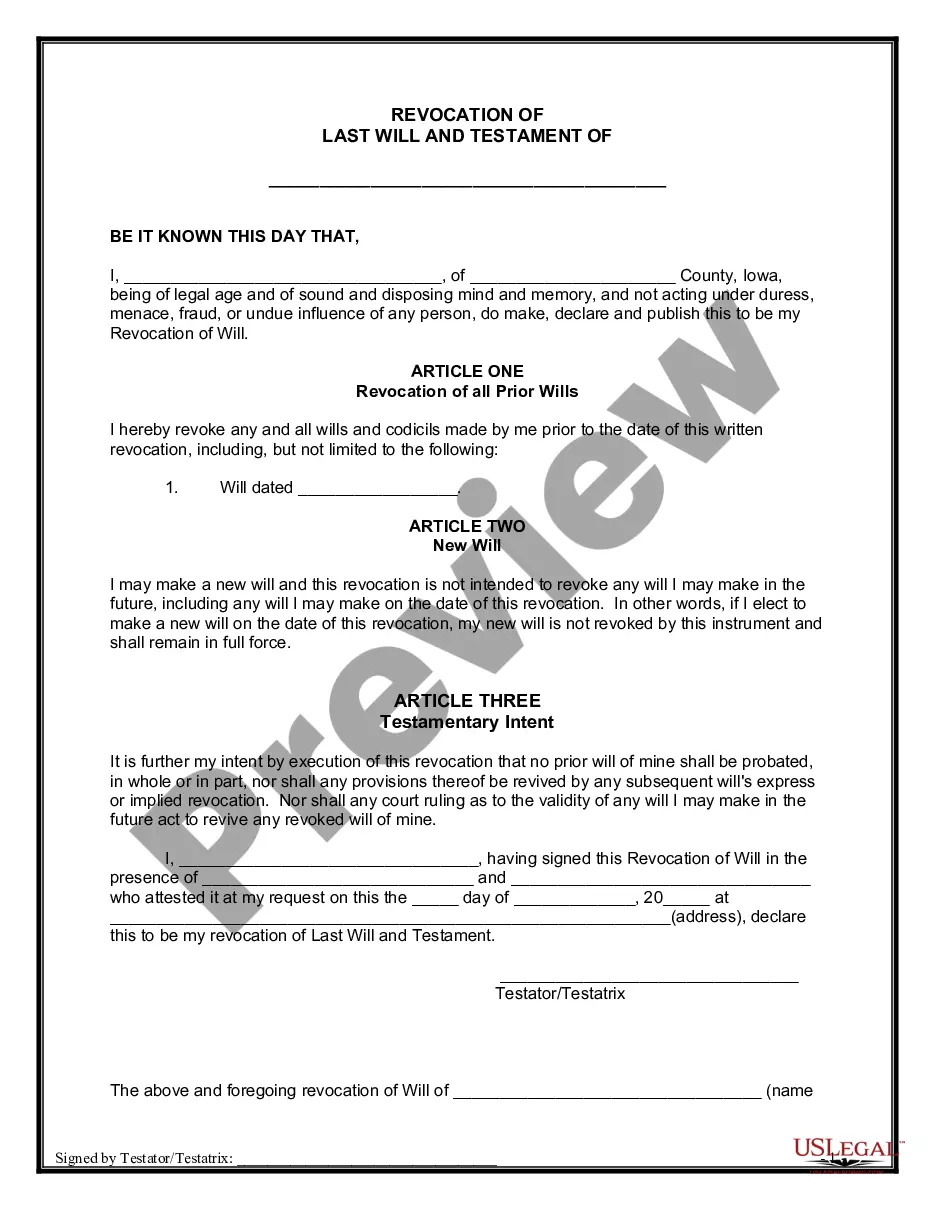
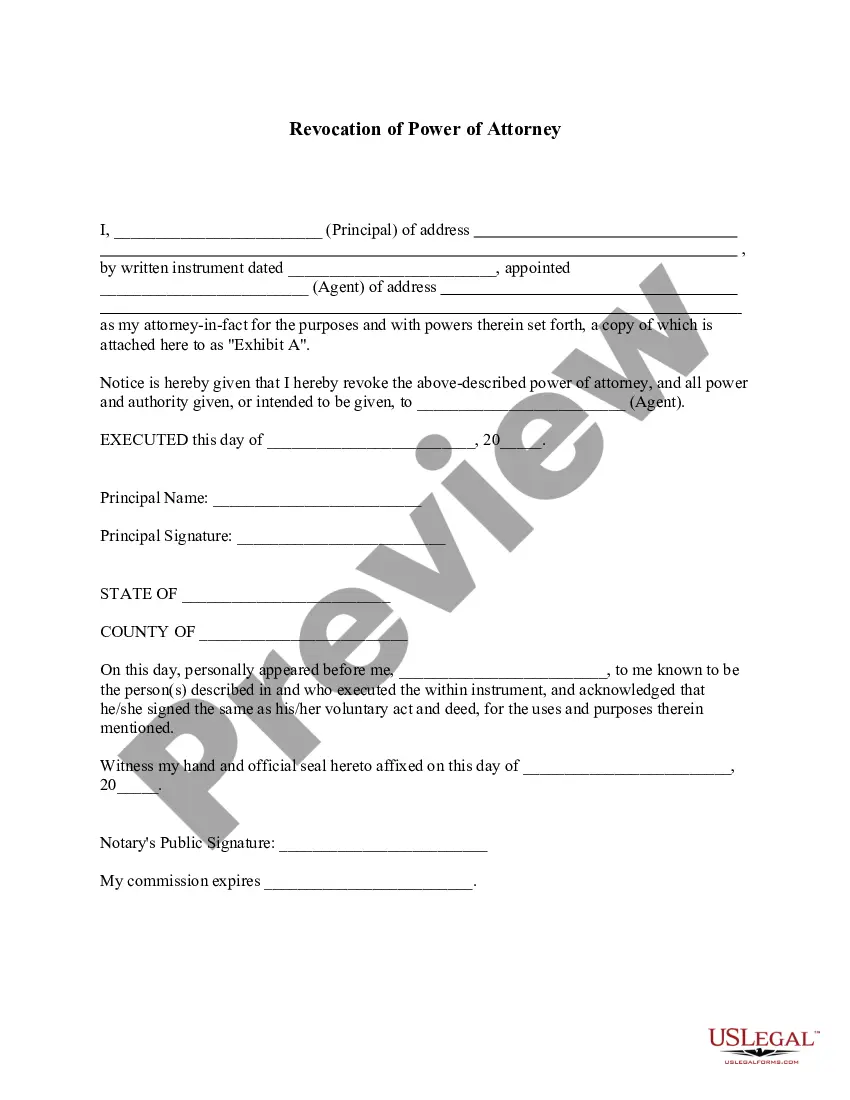
The Written Revocation of Will is a legal document used to formally revoke a prior will. Unlike a new will that usually includes a revocation clause, this stand-alone document clarifies the testator's intent to invalidate any previous wills, ensuring that they are not considered during probate. This is important for preventing any confusion or conflict among heirs regarding which will should be recognized.
Form components explained
- Revocation Clause: Clearly states that all prior wills and codicils are revoked.
- New Will Provision: Affirms that any future wills made remain valid and are not revoked by this document.
- Testamentary Intent: Ensures no prior will shall be probated, reinforcing the revocation's validity.
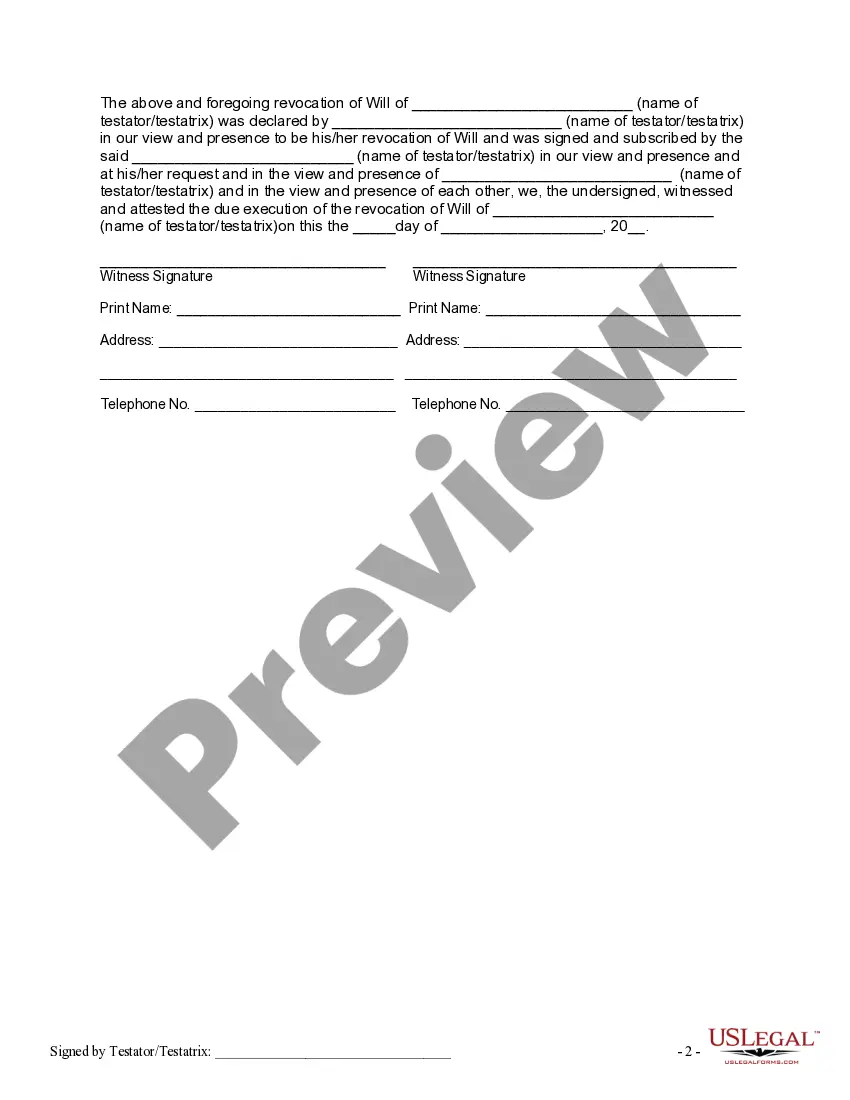
- Witness Signatures: Includes space for witnesses to attest the execution of the revocation.
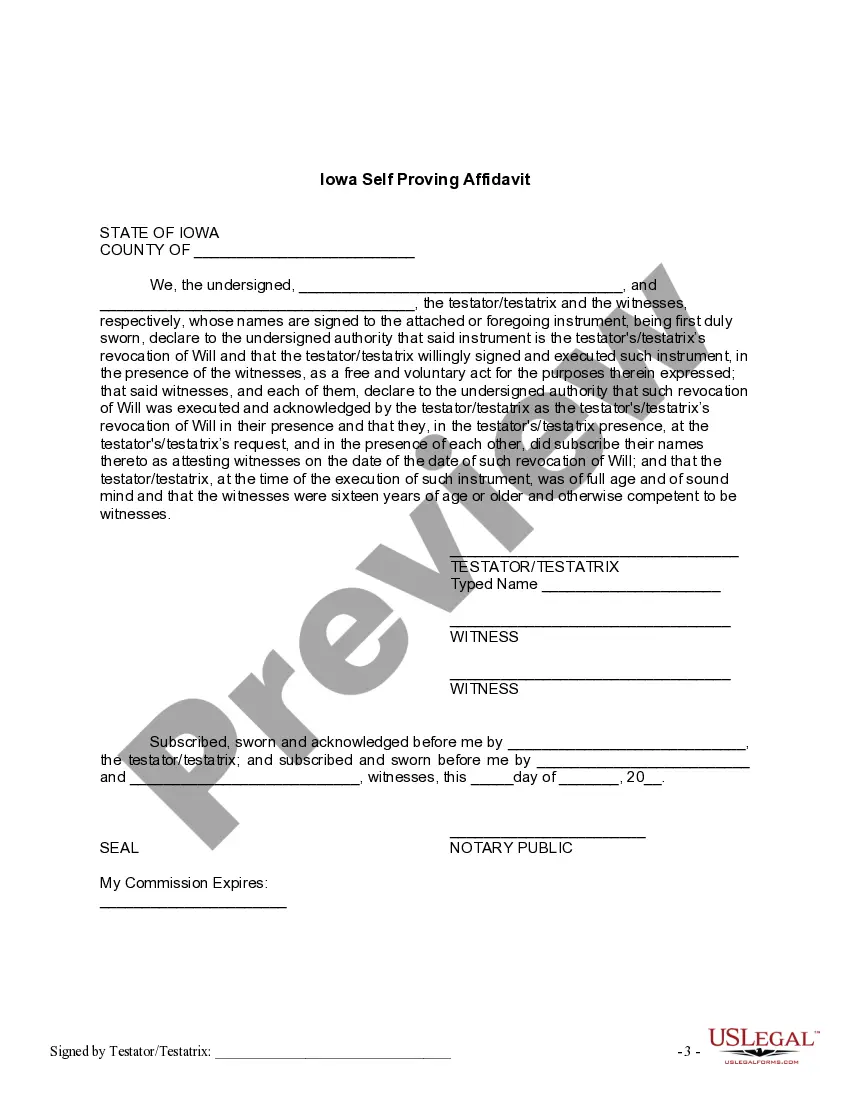
- Notary Section: Provides for notarization to enhance the legal standing of the document.

When this form is needed
This form is applicable when you want to ensure that a previously created will is no longer valid. Situations may include getting remarried and wanting to revoke a previous spouse's will, or if you have made significant changes to your estate plan that require the old will to be rendered ineffective. Using this form eliminates doubts among heirs about which will to follow.
Who should use this form
- Individuals who have previously written a will and wish to revoke it.
- Testators who want to clarify their estate planning intentions to avoid disputes among heirs.
- Persons undergoing major life changes, such as divorce or marriage, affecting their previous will.
How to prepare this document
- Identify yourself by entering your name and county of residence.
- State the date of your previous will you intend to revoke.
- Sign the form in the presence of at least two witnesses who will attest to your signature.
- Have your witnesses sign and print their names along with their addresses and phone numbers.
- If required, complete the notary section to acknowledge the document's legitimacy.
Notarization requirements for this form
This document requires notarization to meet legal standards. US Legal Forms provides secure online notarization powered by Notarize, allowing you to complete the process through a verified video call, available 24/7.
Get your form ready online
Our built-in tools help you complete, sign, share, and store your documents in one place.
Make edits, fill in missing information, and update formatting in US Legal Forms—just like you would in MS Word.
Download a copy, print it, send it by email, or mail it via USPS—whatever works best for your next step.
Sign and collect signatures with our SignNow integration. Send to multiple recipients, set reminders, and more. Go Premium to unlock E-Sign.
If this form requires notarization, complete it online through a secure video call—no need to meet a notary in person or wait for an appointment.
We protect your documents and personal data by following strict security and privacy standards.
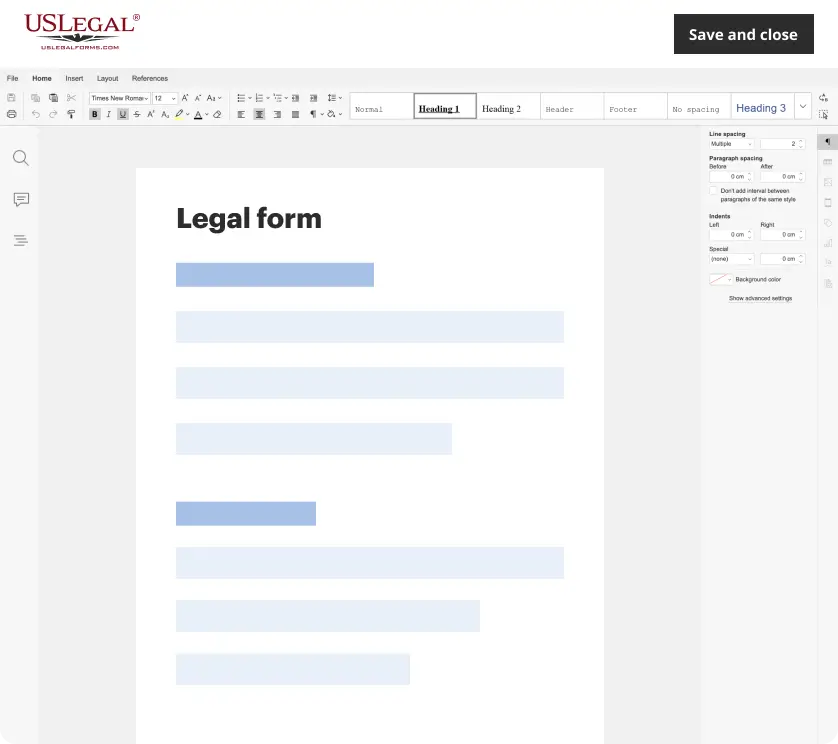
Make edits, fill in missing information, and update formatting in US Legal Forms—just like you would in MS Word.
Download a copy, print it, send it by email, or mail it via USPS—whatever works best for your next step.
Sign and collect signatures with our SignNow integration. Send to multiple recipients, set reminders, and more. Go Premium to unlock E-Sign.
If this form requires notarization, complete it online through a secure video call—no need to meet a notary in person or wait for an appointment.
We protect your documents and personal data by following strict security and privacy standards.
Avoid these common issues
- Failing to have the document witnessed correctly, which could invalidate the revocation.
- Not specifying the date of the prior will being revoked, leading to ambiguity.
- Overlooking notarization, which may be necessary for legal acceptance in some cases.
Benefits of completing this form online
- Convenient access anytime, allowing for quick updates to your estate plan.
- Editable templates that ensure you can customize the form according to your specific needs.
- Reliability backed by attorneys ensuring that the form complies with current legal standards.
Looking for another form?


Form popularity
FAQ
Yes, a handwritten will can be valid in Iowa, provided it meets specific criteria. It must be clearly written by the testator, and it must include their signature. Though this type of will is permissible, using an Iowa Written Revocation of Will to clearly invalidate earlier wills can help to avoid confusion among heirs.
Destroy It Tearing, burning, shredding or otherwise destroying a will makes it null and void, according to the law office of Barrera Sanchez & Associates. The testator might do this personally or order someone else to do it while he witnesses the act.
If you have a Will, either type-written or handwritten, and you make changes to it later on by crossing out provisions, overwriting them, inserting new words or sentences, or any other edits to the text, and you do not do so in front of two witnesses who watch you re-sign each change, then the will probably will not be
Generally, you can revoke a will by (1) destroying the old will, (2) creating a new will or (3) making changes to an existing will. In some circumstances, simply giving away all or your property and assets before you die can have the effect of revoking a will (subject to estate tax penalties).
A will can also be declared invalid if someone proves in court that it was procured by undue influence. This usually involves some evil-doer who occupies a position of trust -- for example, a caregiver or adult child -- manipulating a vulnerable person to leave all, or most, of his property to the manipulator instead
Alberta Wills can be changed at any time simply by visiting your lawyer.In some situations, wills are automatically revoked, such as when you get married. Consider making an entirely new will when you need to make major changes and using a codicil for small changes.
You are allowed to make handwritten changes on the face of the will. However, this is generally not a good idea, unless the amendment is very minor, as it can cause your wishes to be uncertain or invalid. Generally, handwritten changes should not be considered for anything more than correcting a spelling or address.
Self-written wills are typically valid, even when handwritten, as long as they're properly witnessed and notarized, or proven in court. A handwritten will that is not witnessed or notarized is considered a holographic will. Not all states accept holographic wills .
Iowa does not permit handwritten wills.