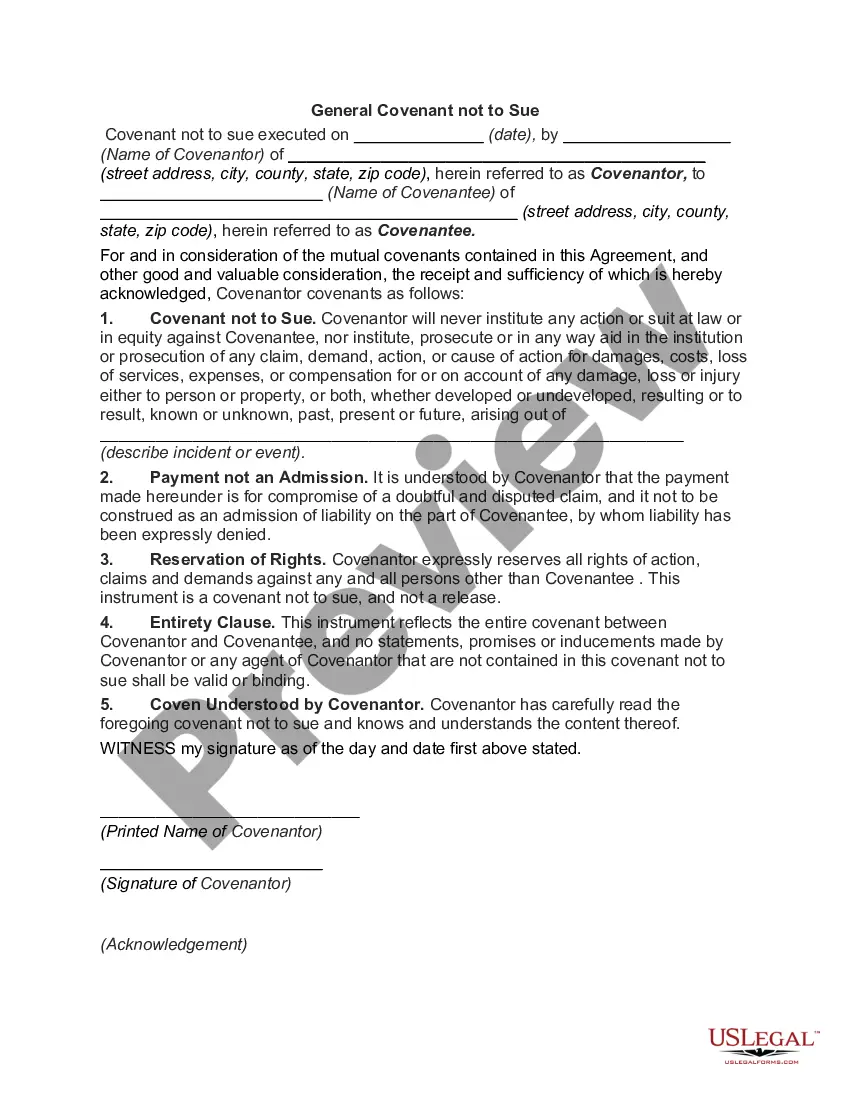
Idaho General Covenant Not to Sue
Description

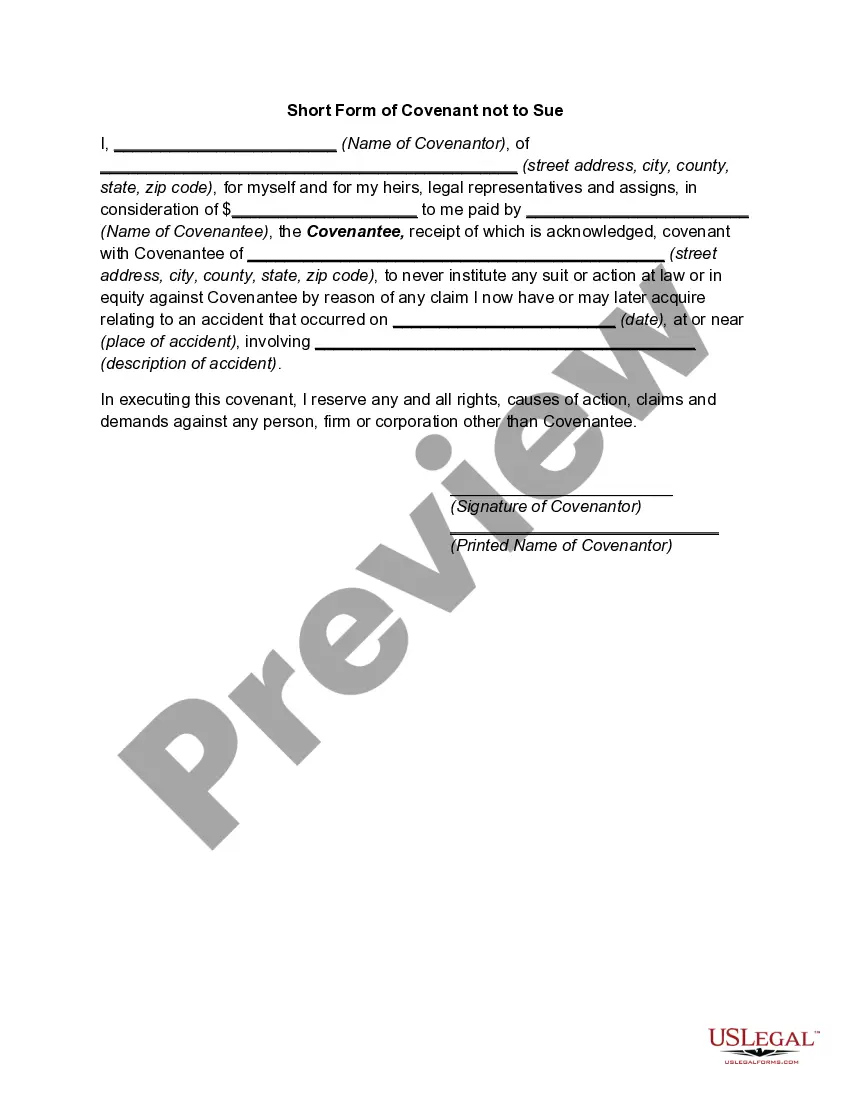
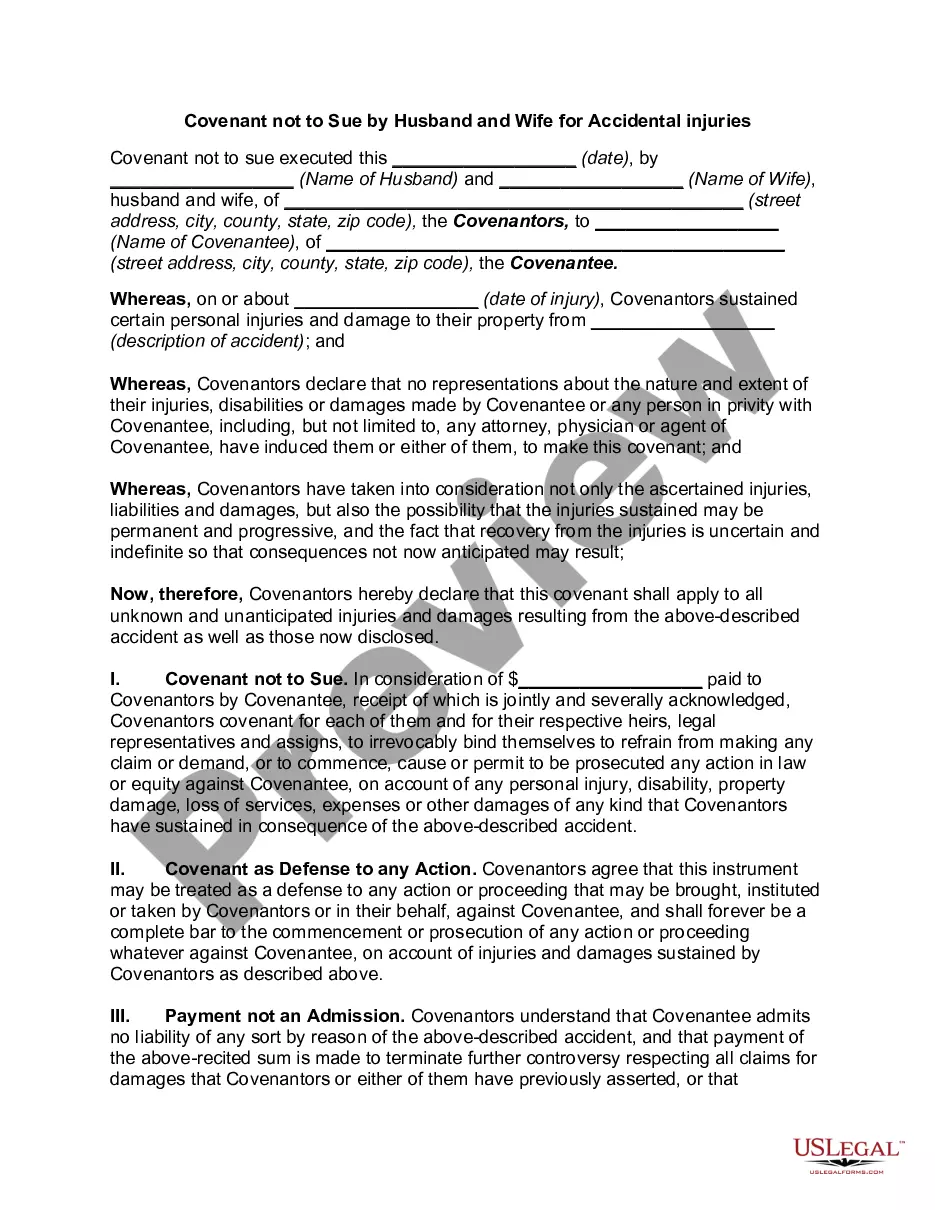
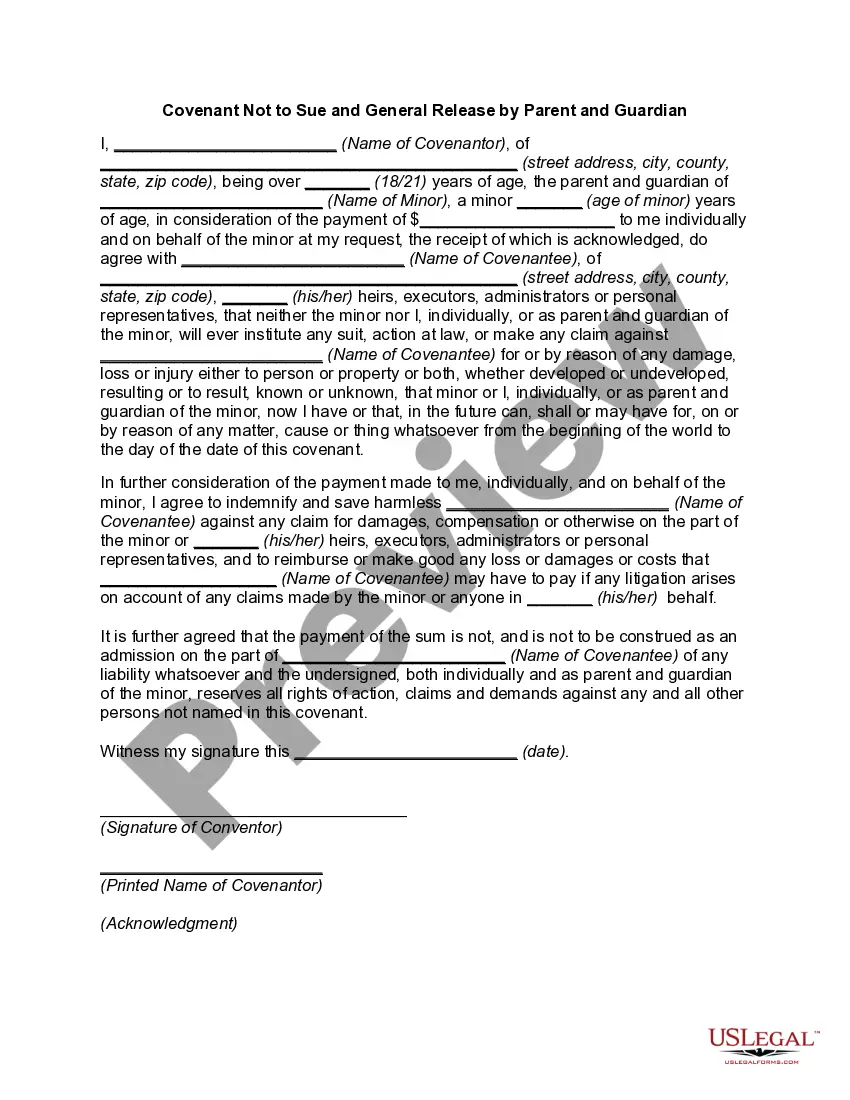
How to fill out General Covenant Not To Sue?
Are you currently in a scenario where you require documents for either professional or personal purposes nearly every day.
There are numerous legal document templates accessible online, but finding ones that you can rely on is not easy.
US Legal Forms provides a vast array of form templates, such as the Idaho General Covenant Not to Sue, which are designed to comply with federal and state regulations.
Once you have found the correct form, click Purchase now.
Choose the pricing plan you prefer, enter the necessary information to create your account, and complete your purchase using your PayPal or credit card.
- If you are already familiar with the US Legal Forms website and possess an account, simply Log In.
- Next, you can download the Idaho General Covenant Not to Sue template.
- If you do not have an account and wish to start using US Legal Forms, follow these steps.
- Find the form you need and make sure it is for the correct city/county.
- Utilize the Review button to evaluate the form.
- Check the summary to ensure that you have selected the right document.
- If the form does not match what you're looking for, use the Search feature to locate the document that fits your needs and requirements.
Form popularity
FAQ
The covenant is made explicitly between two parties, and any third party that wants to make a claim is legally allowed to do so. Covenants not to sue are used to settle specific legal issues outside of the court system. Parties may enter into this type of agreement to prevent a protracted, expensive lawsuit.
Under Idaho's statute of repose, however, any negligence cause of action against a contractor for damages resulting from latent defects in an improvement to real property accrues six years from final completion of the project if it has not previously accrued.
A covenant is a spiritual agreement rather than a legally enforceable contract. A covenant is a promise whereas a contract is a binding agreement between two or more parties. A covenant is a long-term guarantee, but a contract is a one-time commitment that may be broken.
A covenant not to execute is a contract where a defendant admits to liability and a set amount of damages, and the plaintiff agrees not to seek a judgment against the defendant based on that admission.
Overall a covenant is a better way to build relationships both in business and in life. In a contract, if a person does not fulfill his obligation, then it gives the other party to back out as well. The same is not true in a covenant. You must hold up your promise even if others do not hold up their pledge.
An agreement not to sue, also called a covenant not to sue, in which the party seeking damages agrees not to sue the party that it has cause against. A covenant not to sue may indicate that the potential claimant will never sue or it may indicate that the claimant will postpone a lawsuit for a defined period of time.
The state of Idaho imposes a two-year limit for personal injury claims and medical malpractice, while fraud, injury to personal property, and trespassing carry a three-year statute of limitations. Written contracts carry a five-year limit, but oral contracts have a four-year limit.
In Idaho, as well as in every other state, a contract can be either in writing or oral. In other words, a contract does NOT have to be in writing to be enforceable. However, there are far more problems that can arise with an oral contract than can arise with a written contract. The reason for this is obvious.
Legally, one party's failure to fulfill any of its contractual obligations is known as a "breach" of the contract.
The statute of repose terminates liability within a set time after completion of a construction project; specifically: i Eight (8) years for a tort claim, which is six (6) years of repose and two (2) years for the applicable statute of limitations as set forth under Idaho Code § 5-219.