Idaho Relocation Expense Agreement
Description
Get your form ready online
Our built-in tools help you complete, sign, share, and store your documents in one place.
Make edits, fill in missing information, and update formatting in US Legal Forms—just like you would in MS Word.
Download a copy, print it, send it by email, or mail it via USPS—whatever works best for your next step.
Sign and collect signatures with our SignNow integration. Send to multiple recipients, set reminders, and more. Go Premium to unlock E-Sign.
If this form requires notarization, complete it online through a secure video call—no need to meet a notary in person or wait for an appointment.
We protect your documents and personal data by following strict security and privacy standards.

Make edits, fill in missing information, and update formatting in US Legal Forms—just like you would in MS Word.

Download a copy, print it, send it by email, or mail it via USPS—whatever works best for your next step.

Sign and collect signatures with our SignNow integration. Send to multiple recipients, set reminders, and more. Go Premium to unlock E-Sign.

If this form requires notarization, complete it online through a secure video call—no need to meet a notary in person or wait for an appointment.

We protect your documents and personal data by following strict security and privacy standards.
Looking for another form?
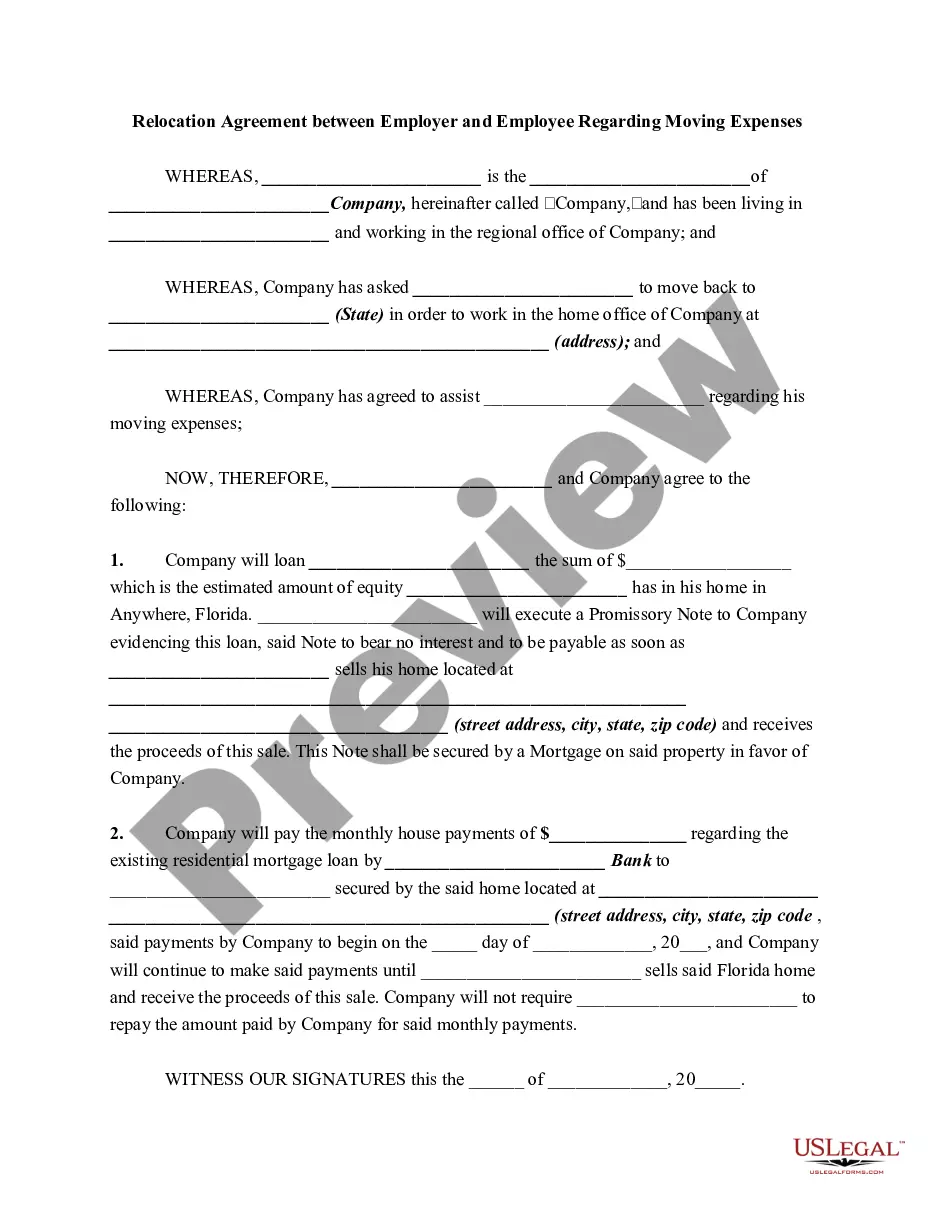
How to fill out Relocation Expense Agreement?
Have you ever been in a situation where you require documentation for both business or personal uses almost every single day.
There are numerous legitimate document templates available online, but finding ones you can trust is not easy.
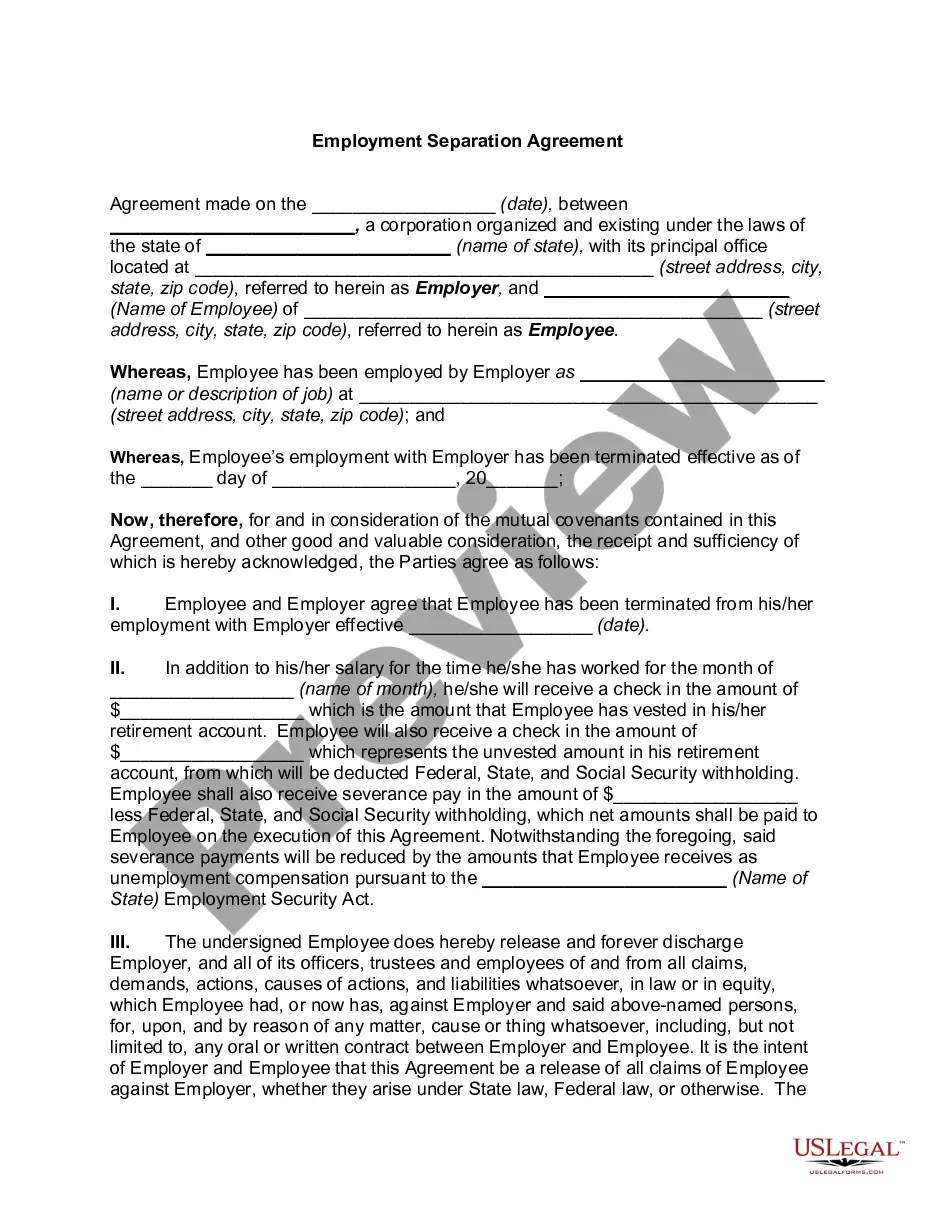
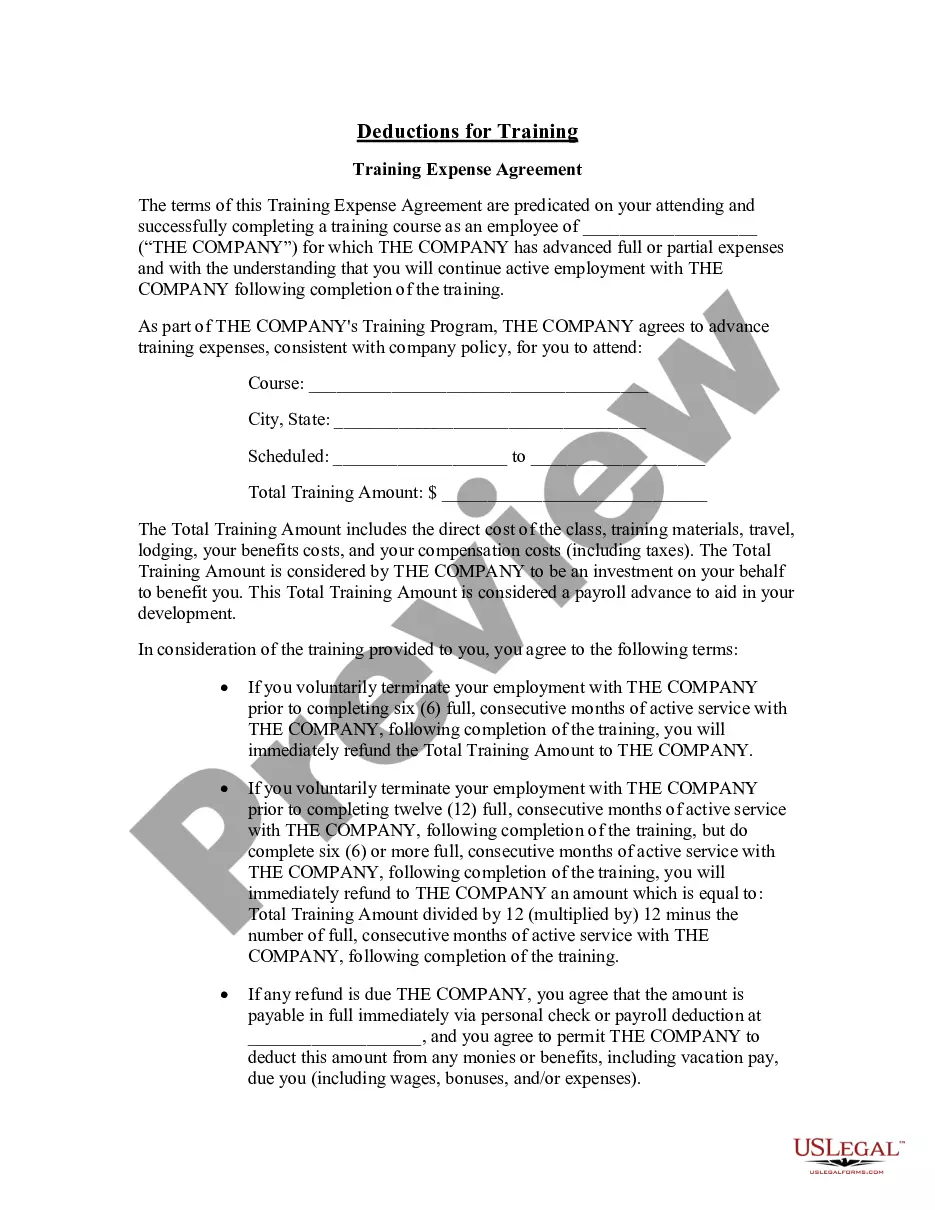
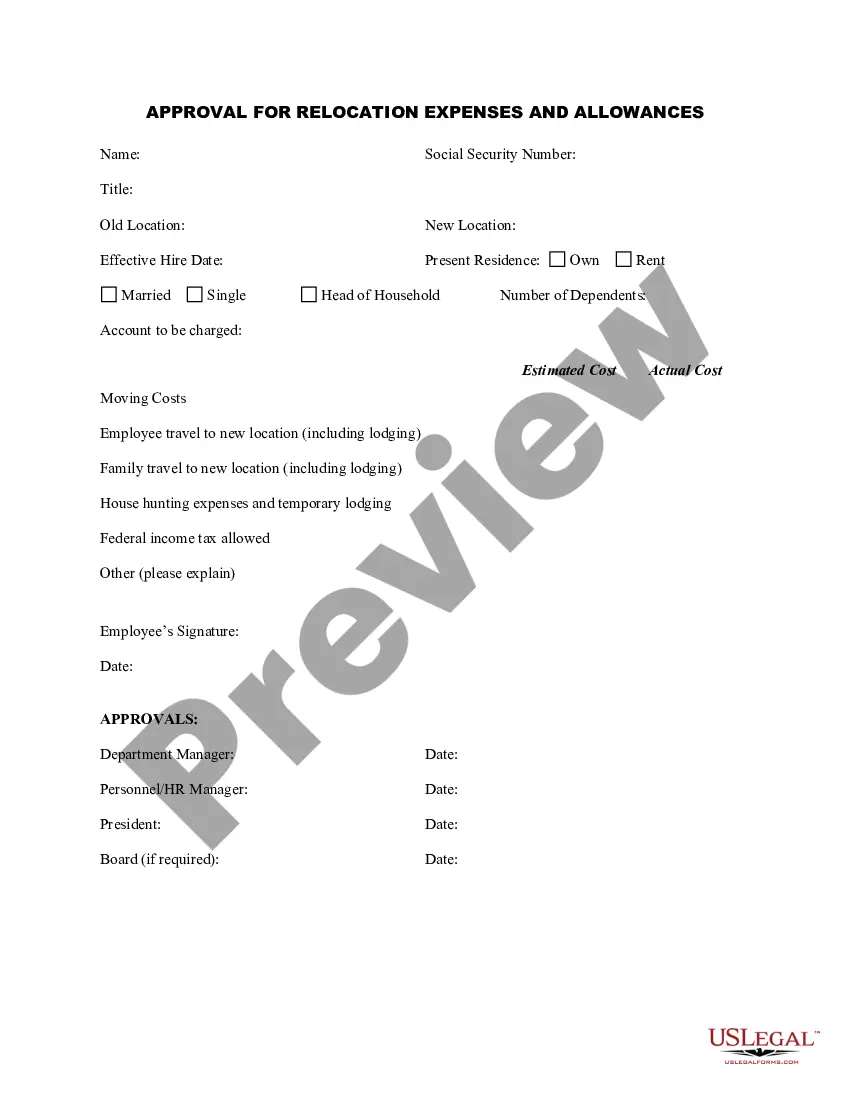
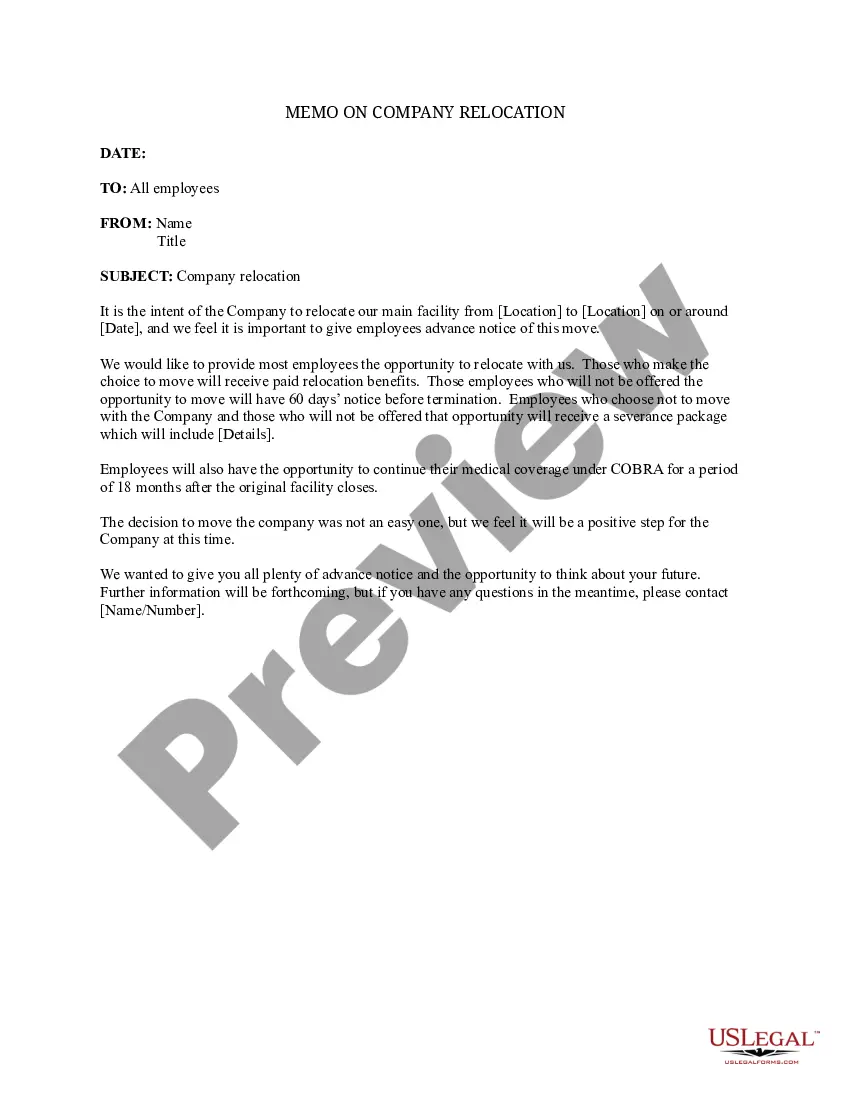
US Legal Forms offers a vast collection of document templates, including the Idaho Relocation Expense Agreement, specifically designed to meet federal and state regulations.
Select the pricing plan you prefer, fill in the required details to create your account, and pay for your order using PayPal or Visa or MasterCard.
Choose a convenient file format and download your copy. Access all the document templates you have purchased in the My documents section. You can obtain an additional copy of the Idaho Relocation Expense Agreement at any time, as needed. Just select the required form to download or print the document template. Use US Legal Forms, the most extensive collection of legal forms, to save time and avoid errors. The service provides properly designed legal document templates that can be used for various purposes. Create your account on US Legal Forms and start making your life easier.
- If you are already familiar with the US Legal Forms website and have an account, simply Log In.
- Then, you can download the Idaho Relocation Expense Agreement template.
- If you do not have an account and wish to start using US Legal Forms, follow these steps.
- Locate the form you need and ensure it is for the correct city/region.
- Use the Preview button to view the form.
- Read the description to confirm you have chosen the proper document.
- If the document isn't what you’re looking for, utilize the Search section to find the form that fits your needs and criteria.
- Once you find the appropriate form, click Purchase now.
Form popularity
FAQ
Five states have passed legislation to make moving expenses deductible or excludable.Arizona.Hawaii.Iowa.New York.Virginia.
How much do employers spend on employee relocation options?Travel to the new location.Packing and moving service costs.Moving insurance.Short-term housing.Storage units or other temporary storage solutions.Home sale or purchase.Tax gross up for benefits.Relocation taxes.
For most taxpayers, moving expenses are no longer deductible, meaning you can no longer claim this deduction on your federal return. This change is set to stay in place for tax years 2018-2025.
The short answer is yes. Relocation expenses for employees paid by an employer (aside from BVO/GBO homesale programs) are all considered taxable income to the employee by the IRS and state authorities (and by local governments that levy an income tax).
A typical relocation package usually covers the costs of moving and storing furnishings, household goods, assistance with selling an existing home, costs incurred with house-hunting, temporary housing, and all travel costs by the employee and family to the new location.
These include: The cost of packing, crating and transporting household goods of the employee and family. This includes cars and pets. The cost of connecting or disconnecting utilities.
Accordingly, as of July 2019, only seven states still allowed a moving tax deduction and/or continued to exclude moving reimbursements from income:Arkansas.California.Hawaii.Massachusetts.New Jersey.New York.Pennsylvania.
The State Board of Examiners has established State Moving Policy and Procedures. This policy allows reimbursement of moving expenses for a current or newly hired employee.
Under the Tax Cuts and Jobs Act of 2017, all expenses paid to or on behalf of an employee for moving expenses are treated as taxable income to the employee.
If your moving expenses were paid in a year after the year of your move, you can claim them on your return for the year you paid them against employment or self-employment income earned at the new work location. This may apply if your old home did not sell until after the year of your move.