Illinois Public Sale of Real Estate for the Non - Payment of Taxes
What this document covers
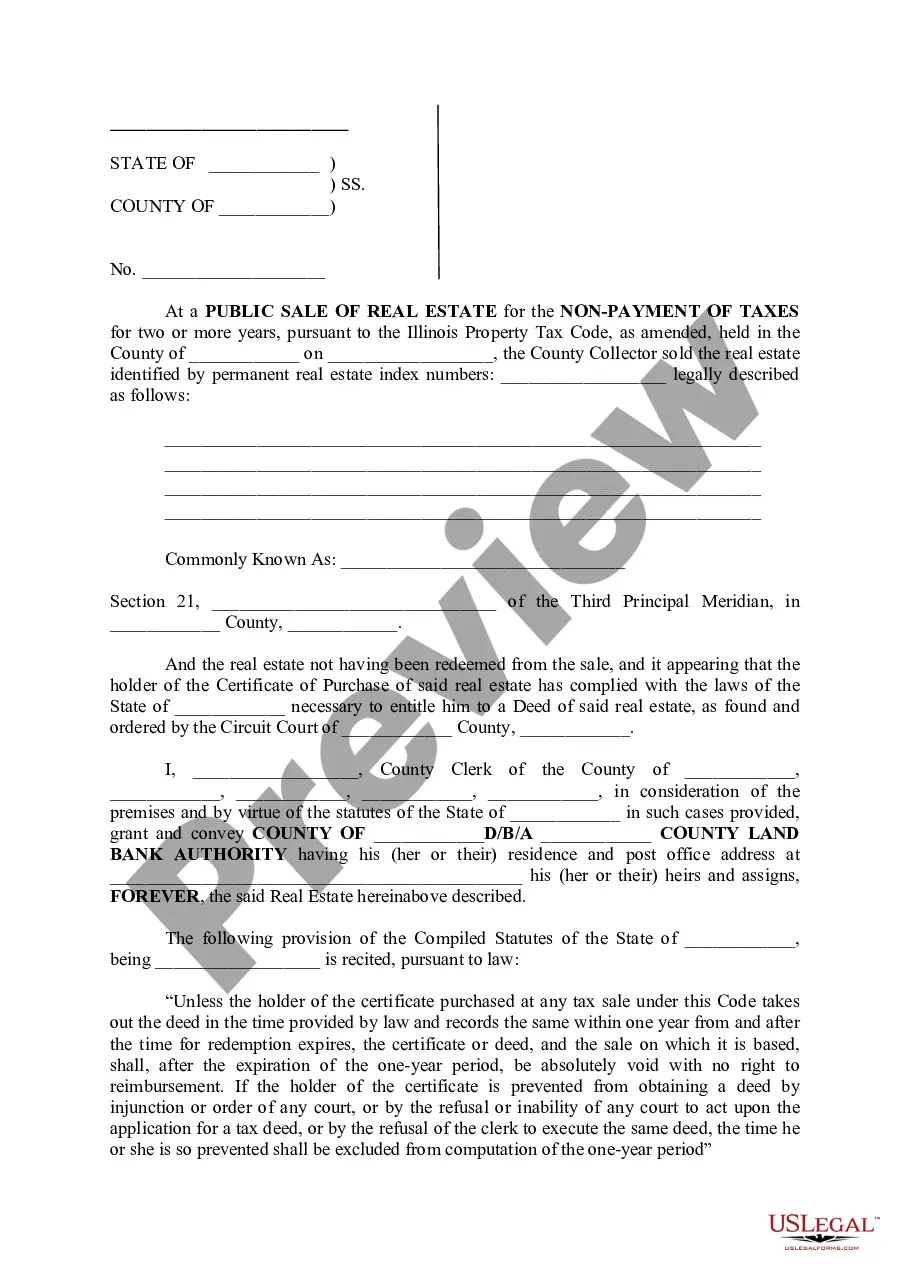
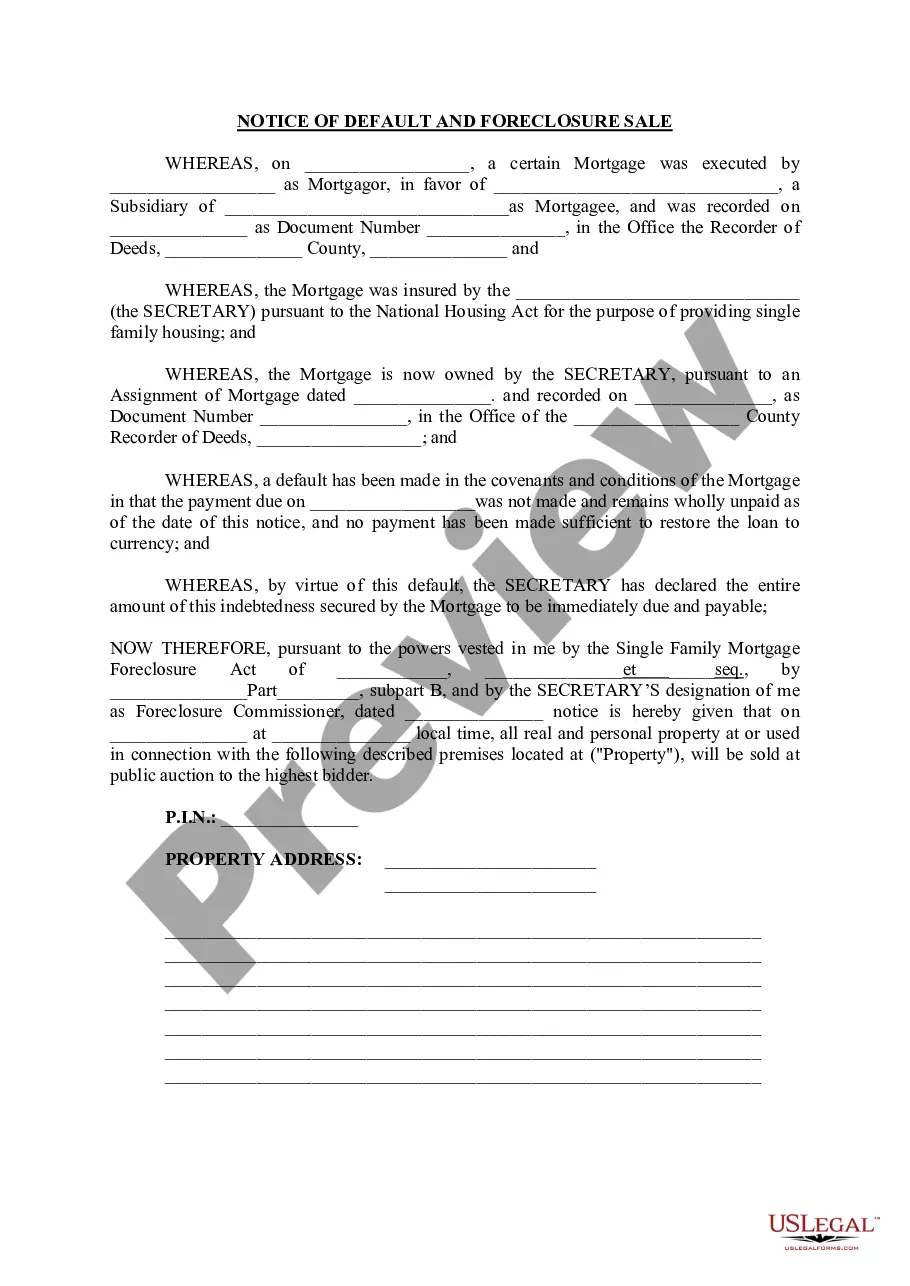
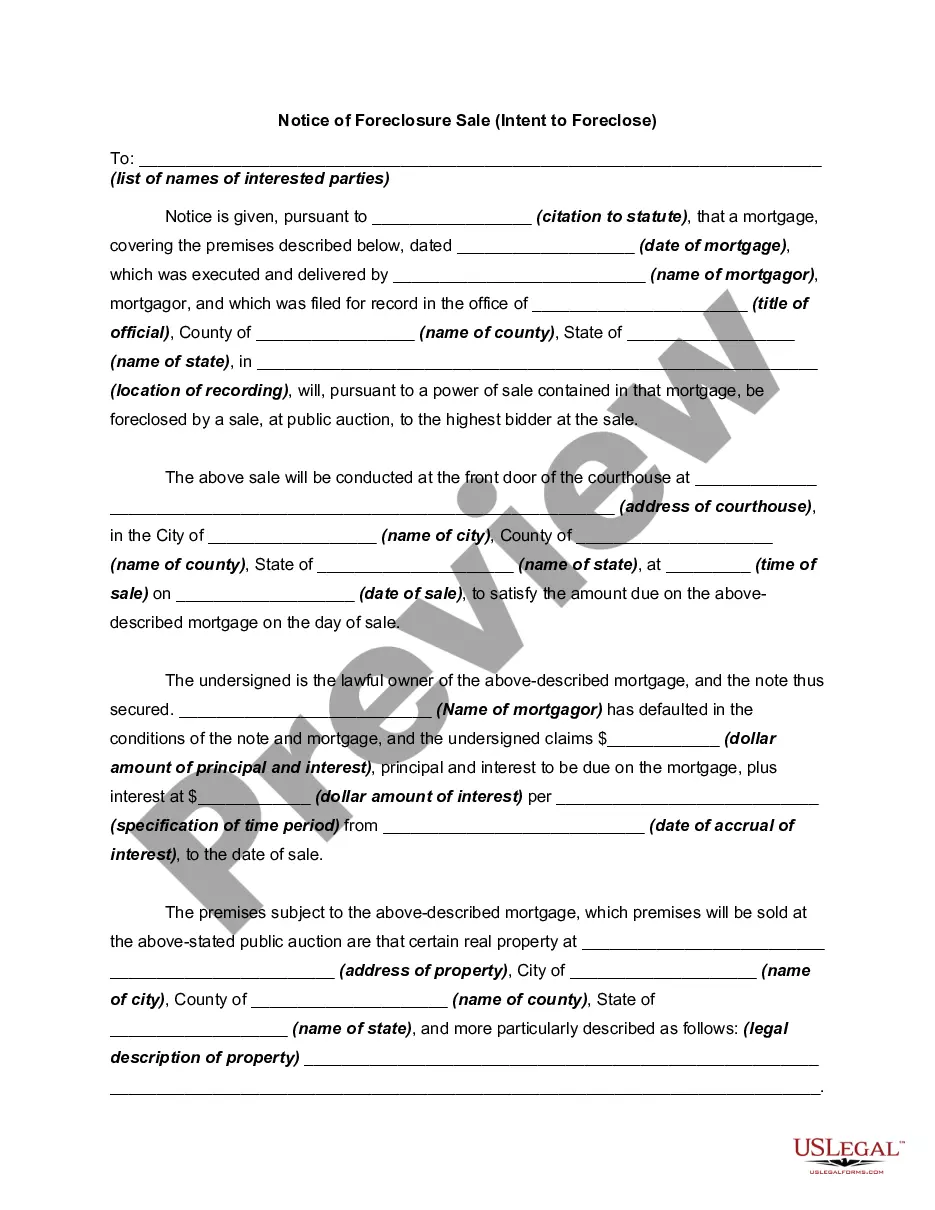
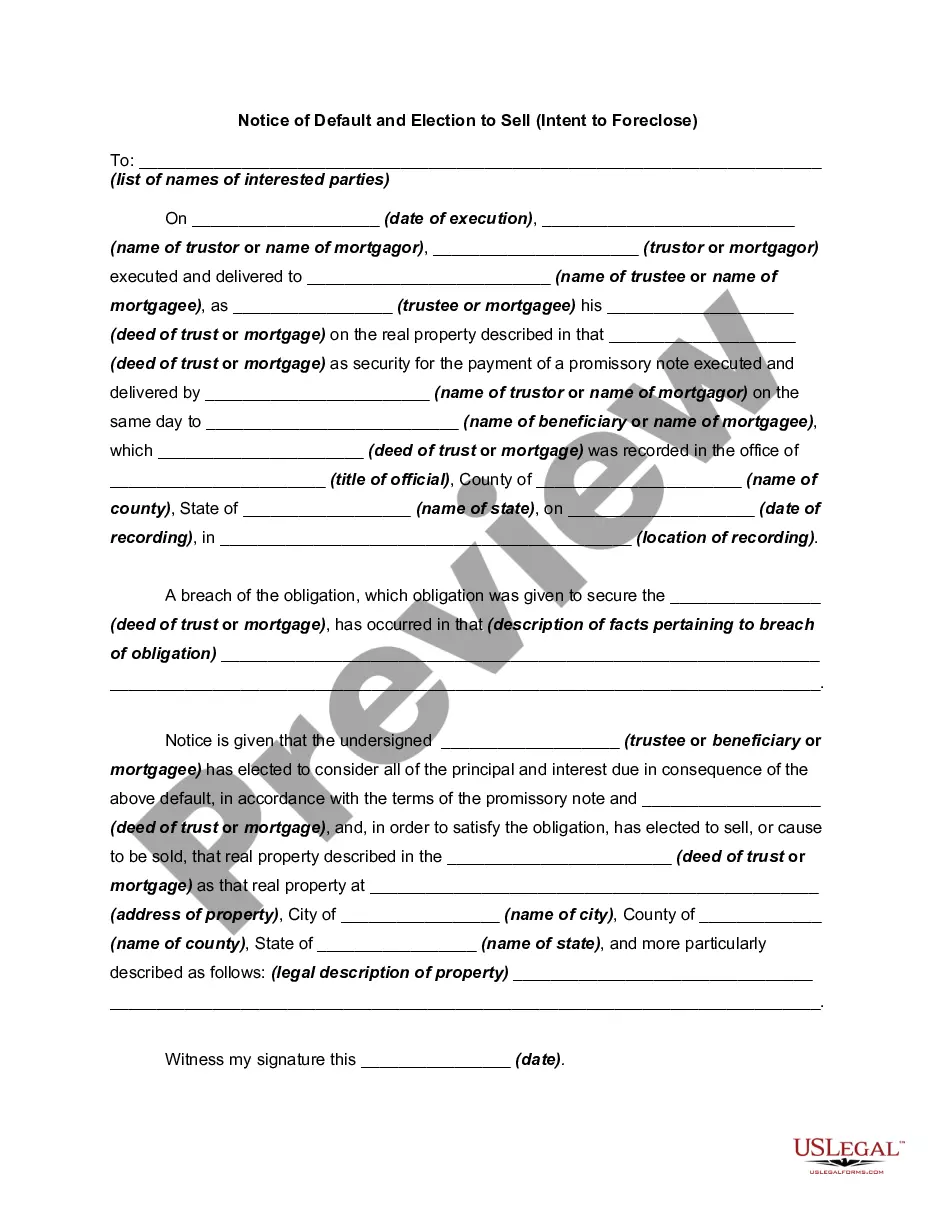
The Public Sale of Real Estate for the Non-Payment of Taxes is a legal document used to formalize the sale of real estate when property taxes have not been paid for two or more years. This form is essential for property collectors in Illinois, as it provides a legal mechanism for transferring ownership of the property in accordance with state law. It differs from other real estate forms by specifically addressing the process related to delinquent taxes and the public sale procedure.
What’s included in this form
- Identification of the public sale details, including the county and date of sale.
- Description of the real estate being sold, including permanent index numbers and legal descriptions.
- Statement regarding non-redemption of the property by its owner.
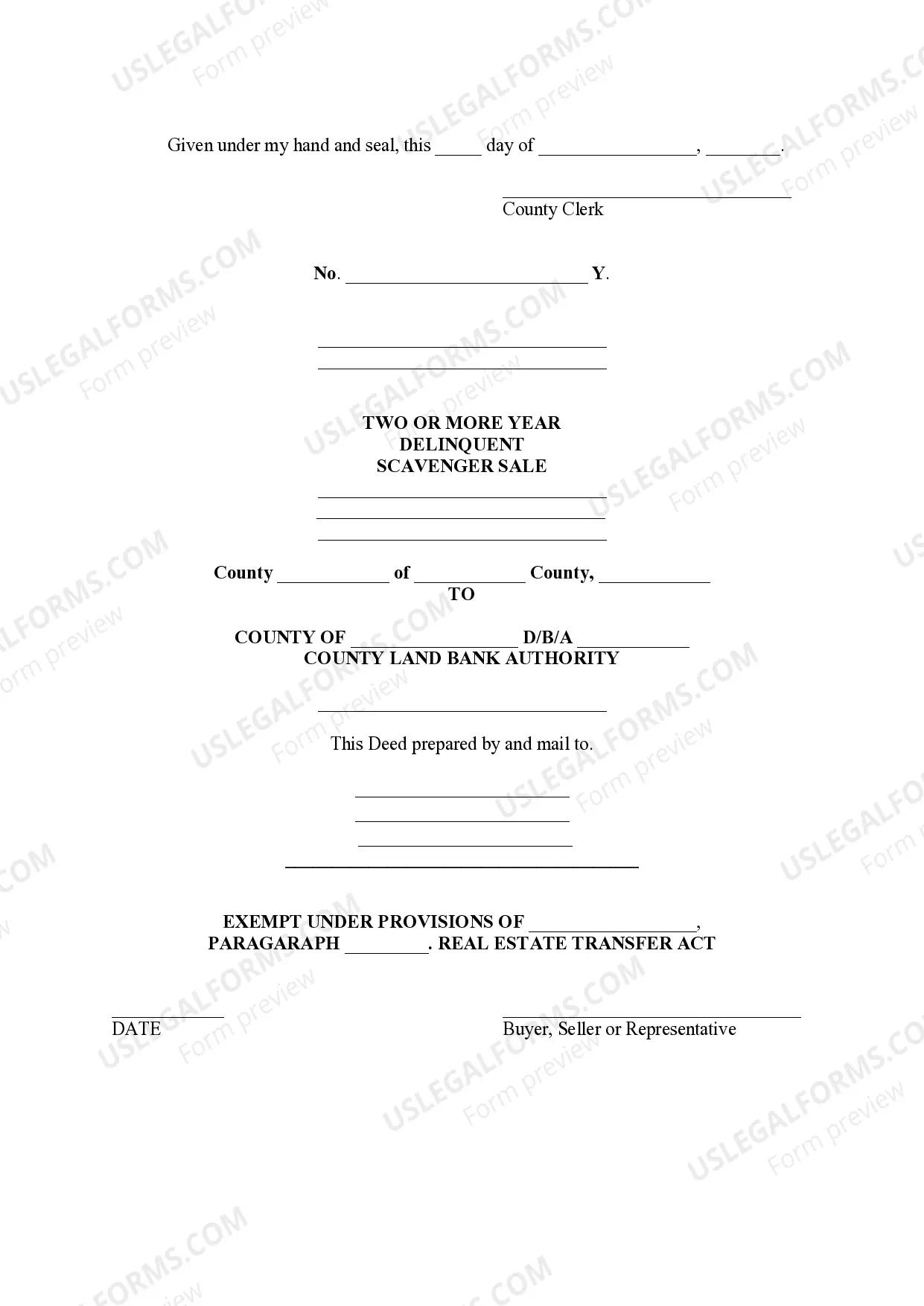
- Granting of the property deed by the County Clerk to the County Land Bank Authority.
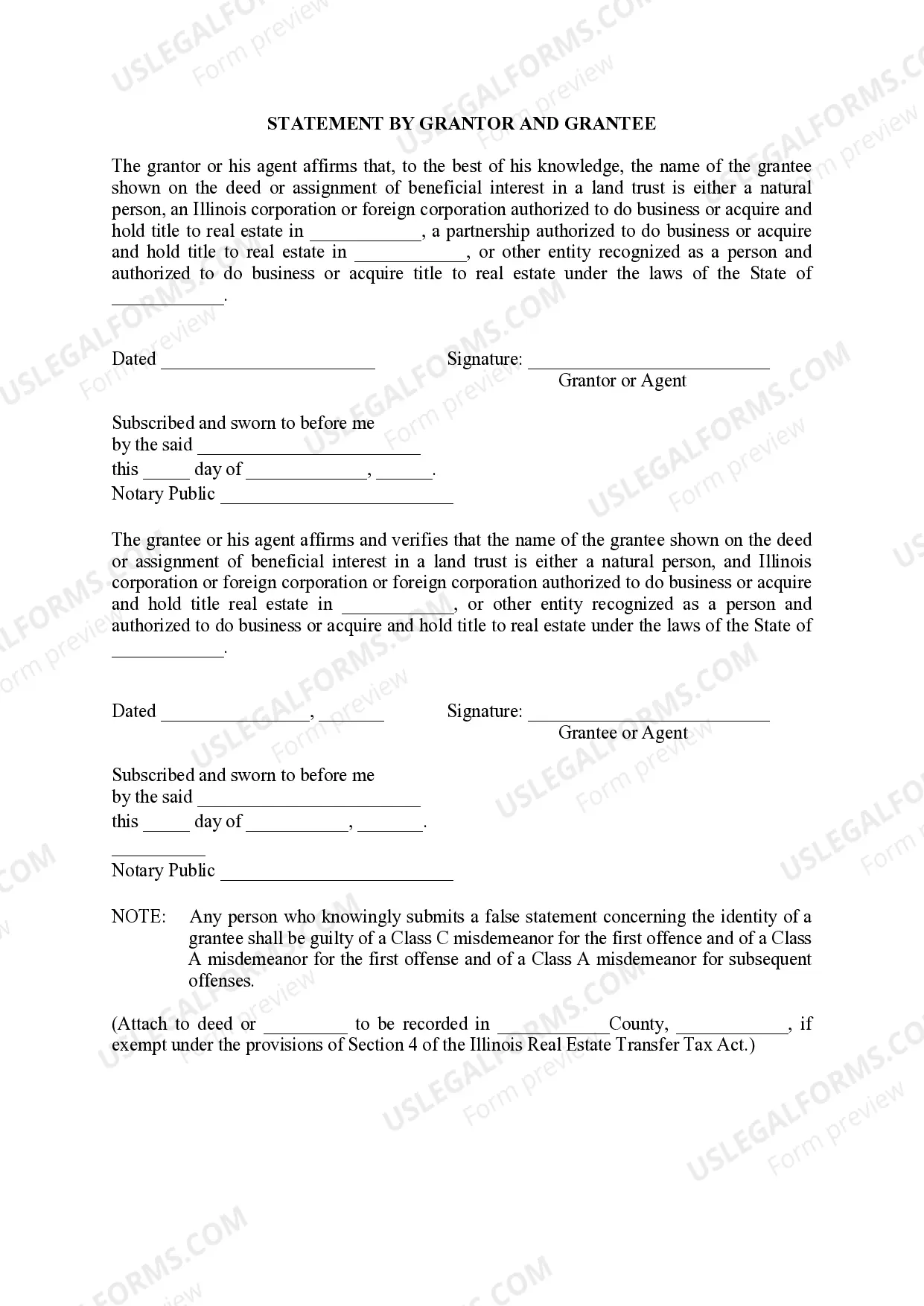
- Affirmations by the grantor and grantee regarding their eligibility and the information on the deed.
Common use cases
This form should be used when a property owner has failed to pay their property taxes for two or more years, leading to the county collector holding a public sale of the real estate. If you are involved in the buying or selling process after such a sale, you will need this document to legally finalize the transfer of ownership.
Intended users of this form
- County collectors managing tax delinquency sales.
- Buyers purchasing real estate at a tax lien auction.
- Sellers or grantors seeking to complete the sale of tax-delinquent properties.
- Heirs or assigns of the property wishing to finalize ownership post-sale.
Steps to complete this form
- Enter the state and county where the sale is taking place.
- Fill in the date of the public sale and the associated permanent real estate index numbers.
- Provide a detailed legal description of the real estate being sold.
- Complete the sections regarding the grantor and grantee, including signatures and notarization, if required.
- Ensure all parties involved have provided their correct information before final submission.
Does this form need to be notarized?
Yes, this form must be notarized to be legally valid. US Legal Forms offers integrated online notarization, allowing you to complete this process through secure video calls without the need for travel.
Get your form ready online
Our built-in tools help you complete, sign, share, and store your documents in one place.
Make edits, fill in missing information, and update formatting in US Legal Forms—just like you would in MS Word.
Download a copy, print it, send it by email, or mail it via USPS—whatever works best for your next step.
Sign and collect signatures with our SignNow integration. Send to multiple recipients, set reminders, and more. Go Premium to unlock E-Sign.
If this form requires notarization, complete it online through a secure video call—no need to meet a notary in person or wait for an appointment.
We protect your documents and personal data by following strict security and privacy standards.

Make edits, fill in missing information, and update formatting in US Legal Forms—just like you would in MS Word.

Download a copy, print it, send it by email, or mail it via USPS—whatever works best for your next step.

Sign and collect signatures with our SignNow integration. Send to multiple recipients, set reminders, and more. Go Premium to unlock E-Sign.

If this form requires notarization, complete it online through a secure video call—no need to meet a notary in person or wait for an appointment.

We protect your documents and personal data by following strict security and privacy standards.
Common mistakes to avoid
- Failing to provide a complete legal description of the property.
- Omitting required signatures from the grantor or grantee.
- Not specifying the correct date or details of the public sale.
- Forgetting to notarize the document if required by local law.
Benefits of completing this form online
- Convenience of completing the form from any location at any time.
- Editability allows users to customize the details as needed.
- Time-saving with instant access to legally-vetted templates.
- Reliability assured by documents drafted by licensed attorneys.
Looking for another form?
Form popularity
FAQ
Property taxes are real estate taxes calculated by local governments and paid by homeowners.You will never be free from property taxes while you own your home, but there are a few simple tricks you can use to lower your property tax bill.
Even if your property taxes are sold, you remain the property owner subject to the discussion below. You must redeem, or pay, the delinquent taxes, and penalties, plus costs, to the county clerk within 30 months of the tax sale. If you do not, the tax buyer can ask the court for a tax deed .
If after the said 36 months you still fail to pay your annual RPT, and the maximum interest of 72 percent had accrued on top of it, then per Section 258: real property subject to such tax may be levied upon through the issuance of a warrant on or before, or simultaneously with, the institution of the civil action for
If you fall behind in making the property tax payments for your home, you might end up losing the place. The taxing authority could sell your home, perhaps through a foreclosure process, to satisfy the debt. Or the taxing authority might sell the tax lien that it holds, and the purchaser might be able to foreclose.
At the sale, the purchaser effectively buys the existing tax lien and gets a certificate, which acts as evidence of the purchaser's interest in the property. If you don't redeem the home after the sale within the allotted time (see below), the purchaser can petition the court for a tax deed to your home.
This process is called redeeming the property. Under Illinois law, the redemption period is typically two years and six months, although the time frame might be different depending on your particular circumstances.
When homeowners fail to pay their property taxes, some tax jurisdictions choose to hold tax deed home sales to make back the money they are owed. Interested buyers can register to participate as a bidder on these homes in a tax deed auction.