Illinois Judicial Sale Deed
Description
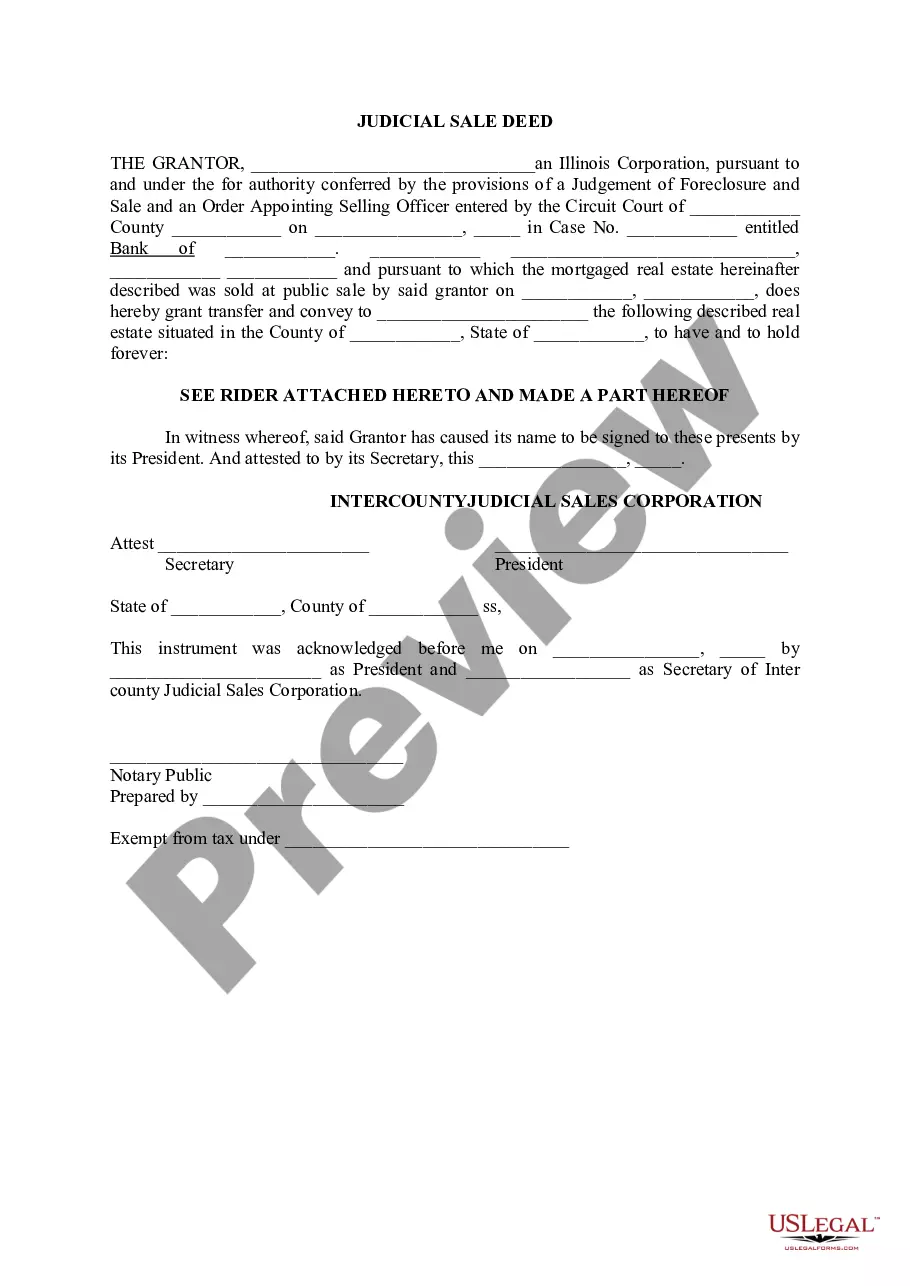
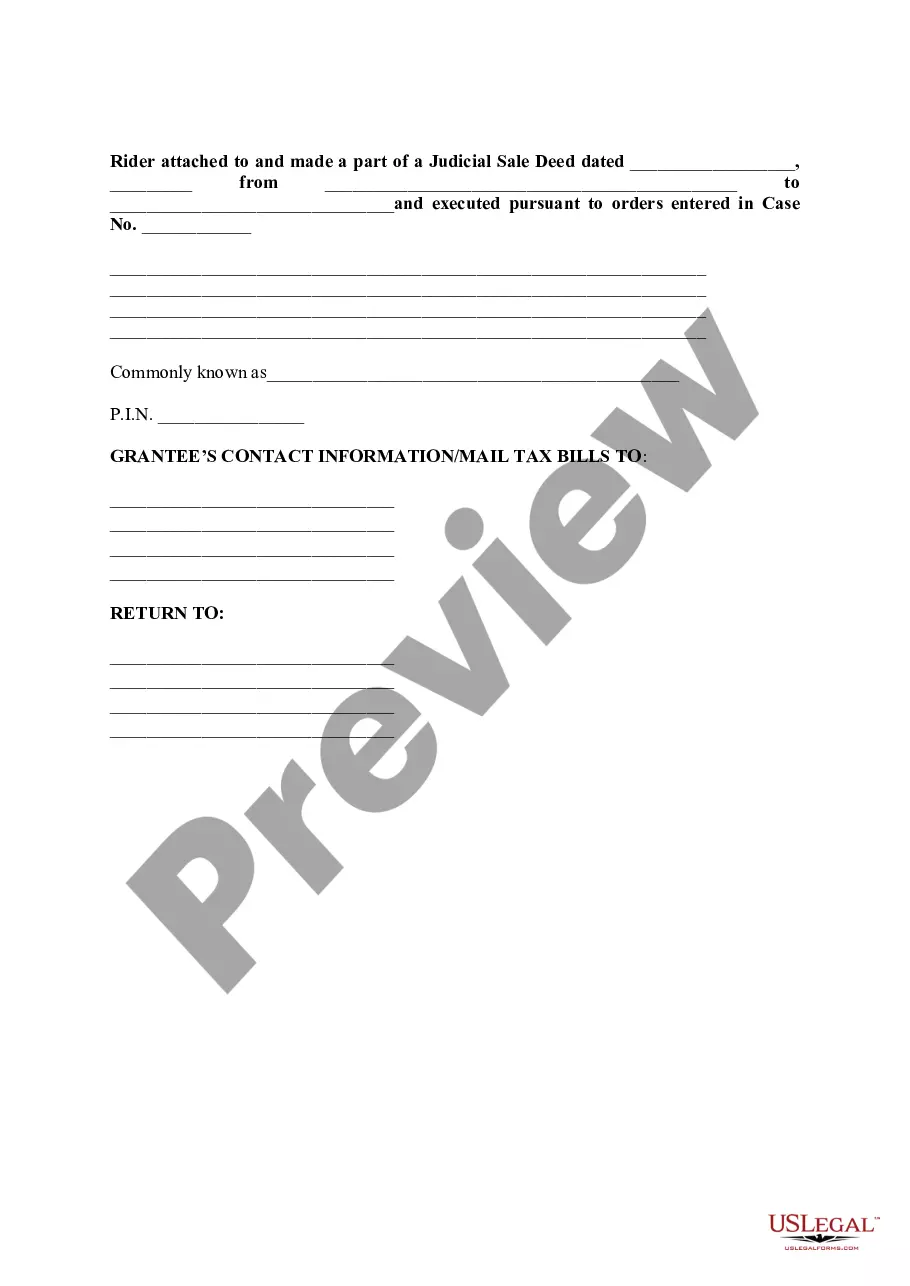
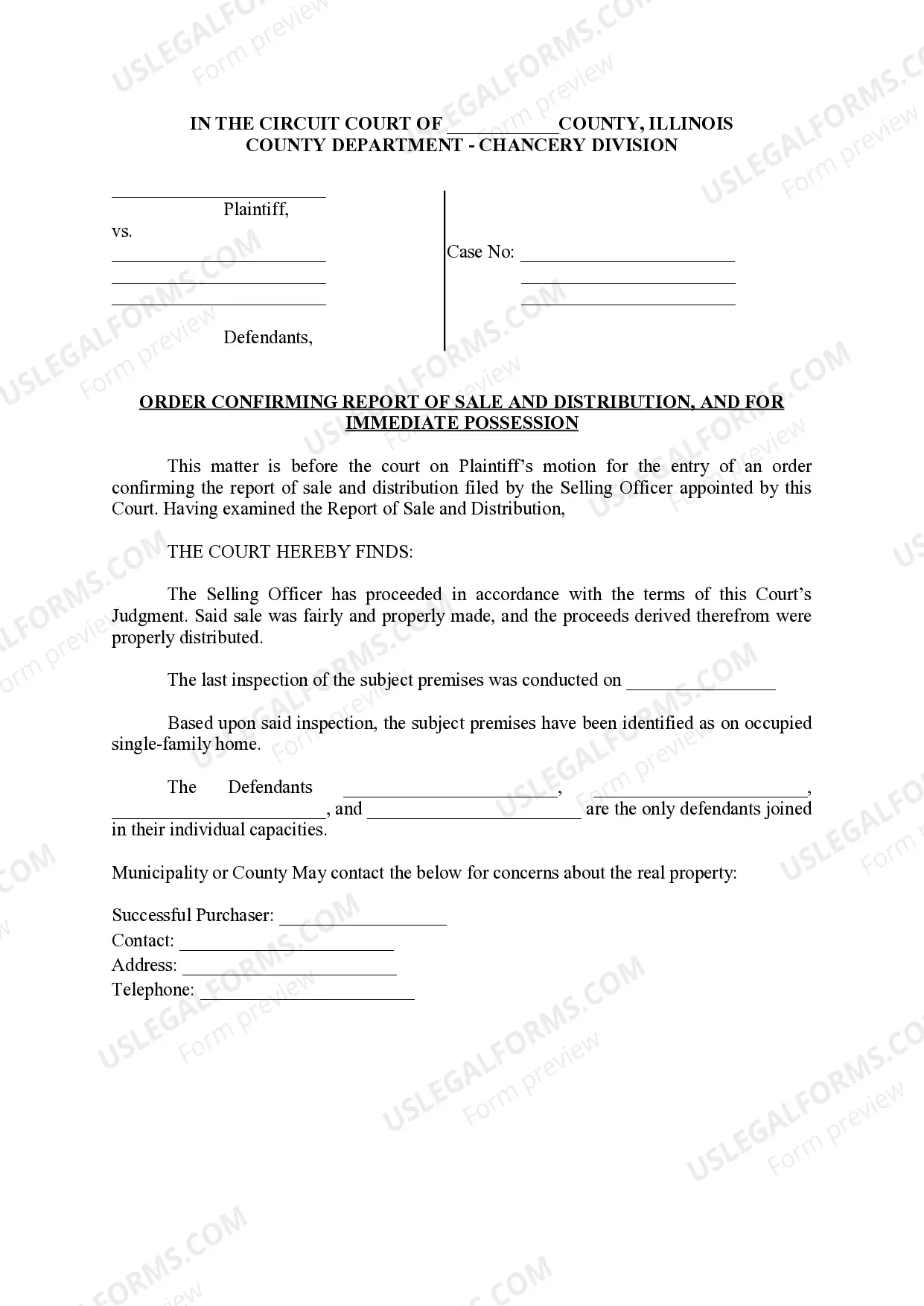
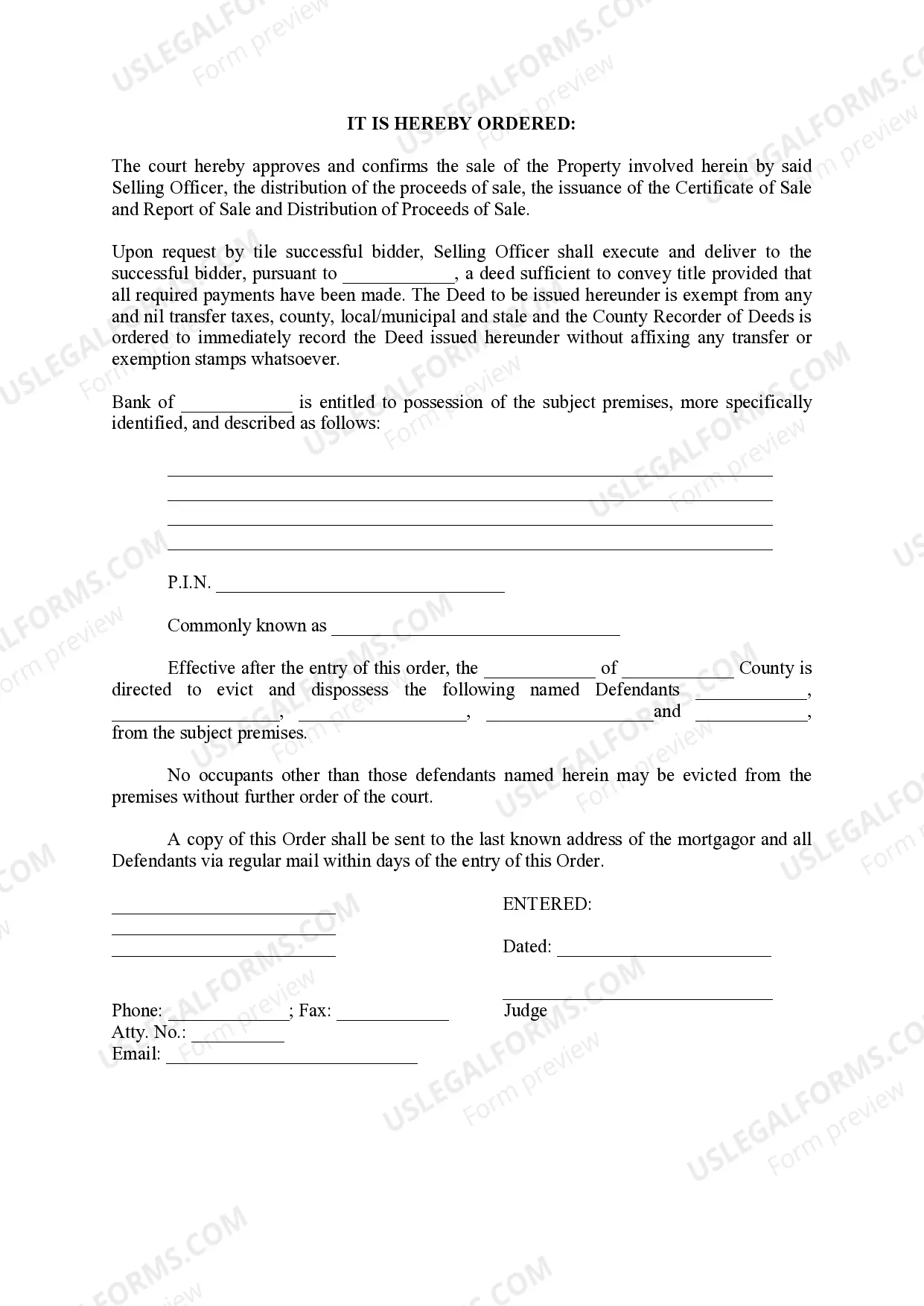

What is a Judicial Sale Deed?
A judicial sale deed is a legal document that transfers property ownership, typically issued as a result of a judicial foreclosure. This process occurs when a court orders the sale of a property after the homeowner fails to meet the obligations of the homeowner contract. The title transfers occur once the court-ordered sale, often conducted by a trial attorney or a judicial sale professional, is finalized.
Key Concepts & Definitions
- Judicial Sale: A sale conducted under the supervision of a court following a judicial foreclosure differing from standard open-market operations.
- Property Appraisal: An assessment of property value by a certified appraiser, typically required during the judicial sale process to determine the asset's fair market value.
- Order Sale: A court order directing the sale of a property as part of the foreclosure process.
- Appraisal Liquidation: Transforming property value into cash equivalent through the process of appraisal followed by liquidation.
- Liquidation Specialist: A professional adept at converting property into liquid funds, often involved in judicial sales to ensure asset values are maximally realized.
Step-by-Step Guide to Understanding Judicial Sale Process
- Notice of Sale: A notice is issued to the public announcing the sale, including the time, date, and place for the auction.
- Property Appraisal: An appraisal is conducted to estimate the property's market value.
- Auction: The property is offered at a public auction, where bidders can participate under court supervision.
- Sale Completion: After the highest bid is accepted, a judicial sale deed is prepared, validating the transfer of property ownership from the homeowner to the buyer.
Risk Analysis in Judicial Sale Deeds
- Market Fluctuations: Property values can fluctuate significantly, impacting the final sale price versus the appraisal pre-sale.
- Legal Complications: The possibility of legal challenges from previous owners or undisclosed liens against the property can lead to complicated and protracted legal disputes.
- Buyer Risk: Buyers may face risks related to property condition and legal title clarity, which might not be comprehensive in judicial sales.
Key Takeaways
Judicial sale deeds are crucial in the context of property sold under court order due to foreclosures. Understanding the procedure and potential risks associated with such property sales is essential for investors, legal professionals, and potential homeowners.
How to fill out Illinois Judicial Sale Deed?
Utilize US Legal Forms to acquire a printable Illinois Judicial Sale Deed.
Our court-acceptable templates are crafted and frequently updated by qualified attorneys.
Ours is the most extensive Forms library available online and offers economical and precise samples for clients, legal professionals, and small to medium-sized businesses.
Select Buy Now if it's the document you require. Create your account and make a payment through PayPal or by card|credit card. Download the form onto your device and feel free to reuse it multiple times. Use the Search engine if you need to find another document template. US Legal Forms provides a vast selection of legal and tax samples and packages for both business and personal requirements, including the Illinois Judicial Sale Deed. Over three million users have effectively utilized our platform. Choose your subscription plan and obtain high-quality forms in just a few clicks.
- The documents are organized into state-specific categories, with some available for preview prior to download.
- To access templates, users are required to have a subscription and to Log In to their account.
- Click Download next to any form you desire and locate it in My documents.
- For individuals without a subscription, follow these suggestions to easily locate and download the Illinois Judicial Sale Deed.
- Ensure you have the appropriate form pertaining to the state where it is required.
- Examine the form by reviewing the description and utilizing the Preview function.
Form popularity
FAQ
The transfer of title to and possession of a debtor's property to another in exchange for a price determined in proceedings that are conducted under a judgment or an order of court by an officer duly appointed and commissioned to do so. A judicial sale is a method plaintiffs use to enforce a judgment.
As part of the lawsuit, the foreclosing party includes a petition for foreclosure that explains why a judge should issue a foreclosure judgment. In most cases, the court will do so, unless the borrower has a defense that justifies the delinquent payments.
Once you are delinquent by 120 days or more, your lender can initiate foreclosure proceedings in court. Illinois is a state in which all foreclosures are judicial foreclosures, which means the court system has jurisdiction over the matter.
In a judicial sale, a property for which a lender provided mortgage funds is in foreclosure and wants it sold to recover their investment. They do not technically own the home but they can still force the sale, which makes such a sale different from a traditional seller client relationship.
Foreclosures are usually nonjudicial in the following states: Alabama, Alaska, Arizona, Arkansas, California, Colorado, District of Columbia (sometimes), Georgia, Idaho, Maryland, Massachusetts, Michigan, Minnesota, Mississippi, Missouri, Montana, Nebraska, Nevada, New Hampshire, New Mexico (sometimes), North Carolina,
The Foreclosure Process In IllinoisIllinois is a judicial foreclosure state, which means that a lawsuit has to be filed and served upon the homeowner, anyone with a recorded lien on the property, and all possible tenants of the property.
Illinois is a judicial foreclosure state, which means that a lawsuit has to be filed and served upon the homeowner, anyone with a recorded lien on the property, and all possible tenants of the property.
In Illinois, it can take approximately 12-15 months for a foreclosure to be completed. Call your lender or a HUD-certified counseling agency as soon as you can.
If tax sale properties are not sold at either of these two sales, the property then goes on the repository list and can be sold by private bid. The upset sale is held every year in the fall.If a property is not sold in this sale, it is sold in the judicial tax sale in the spring.