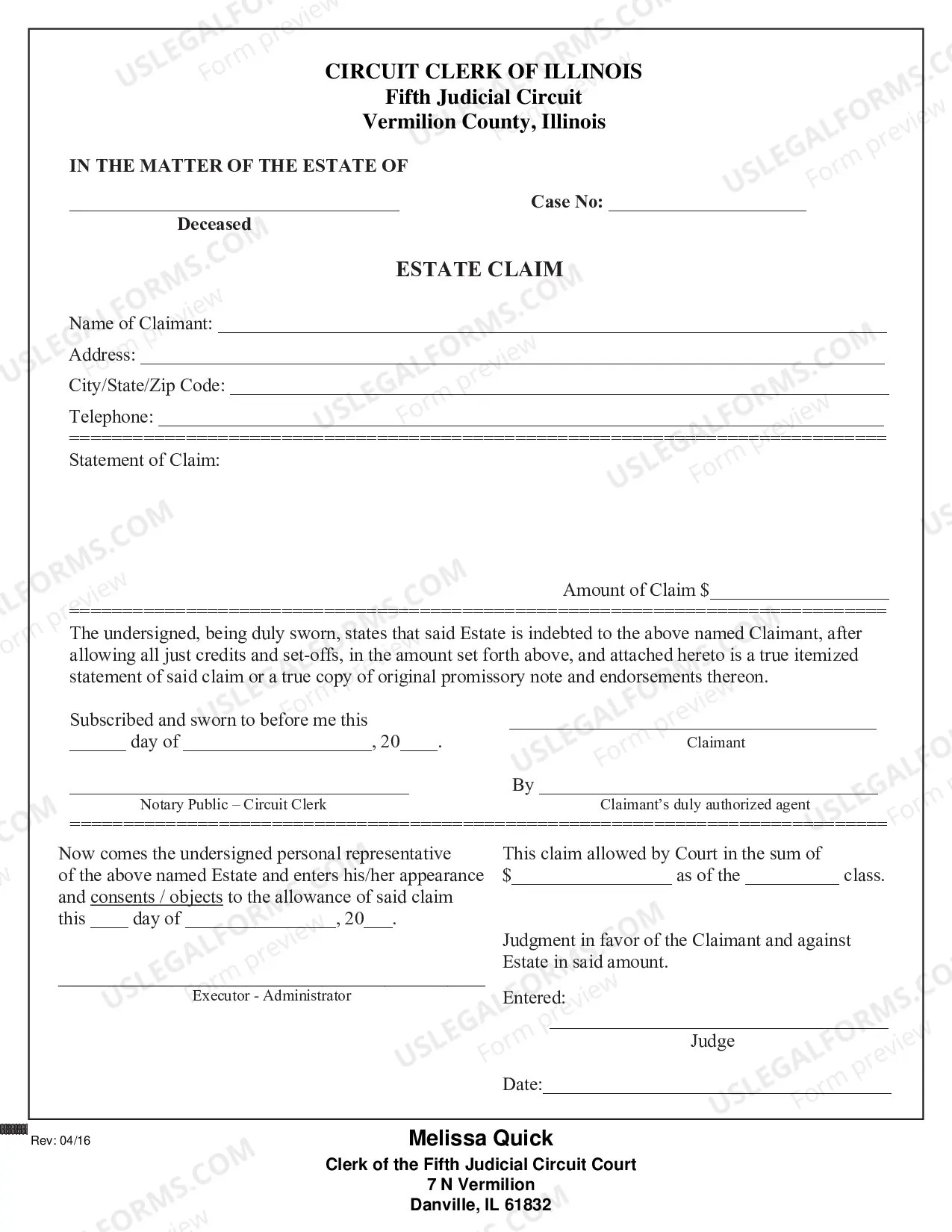
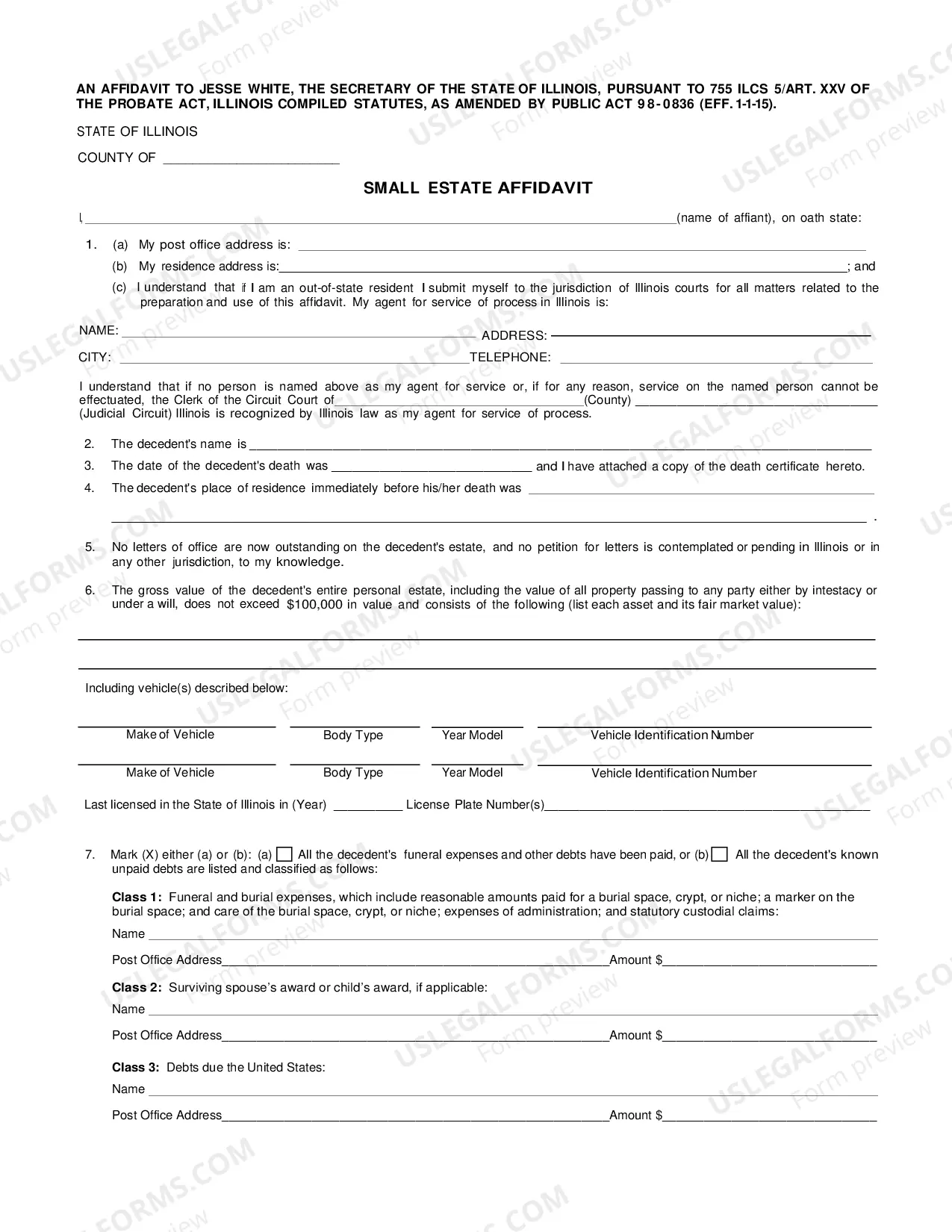
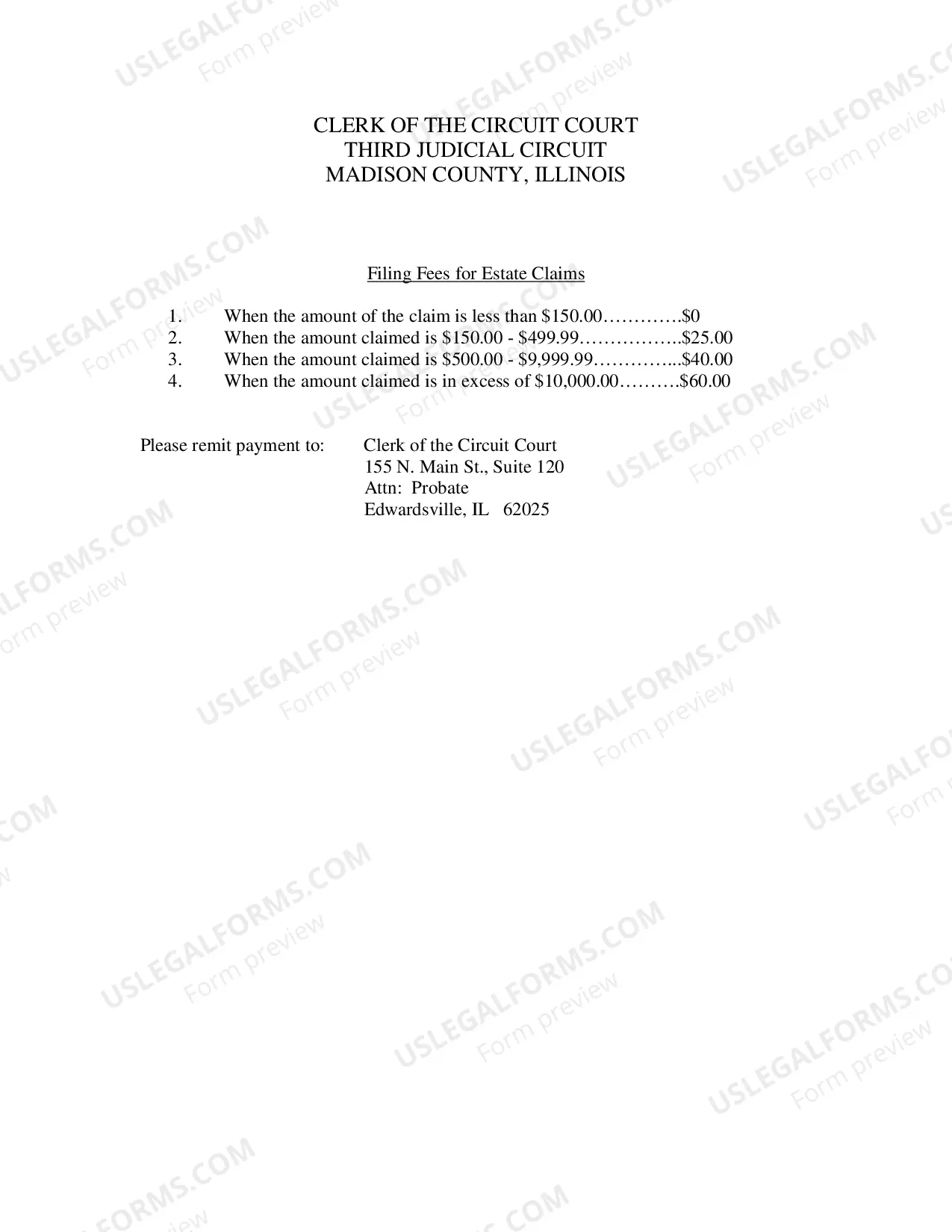
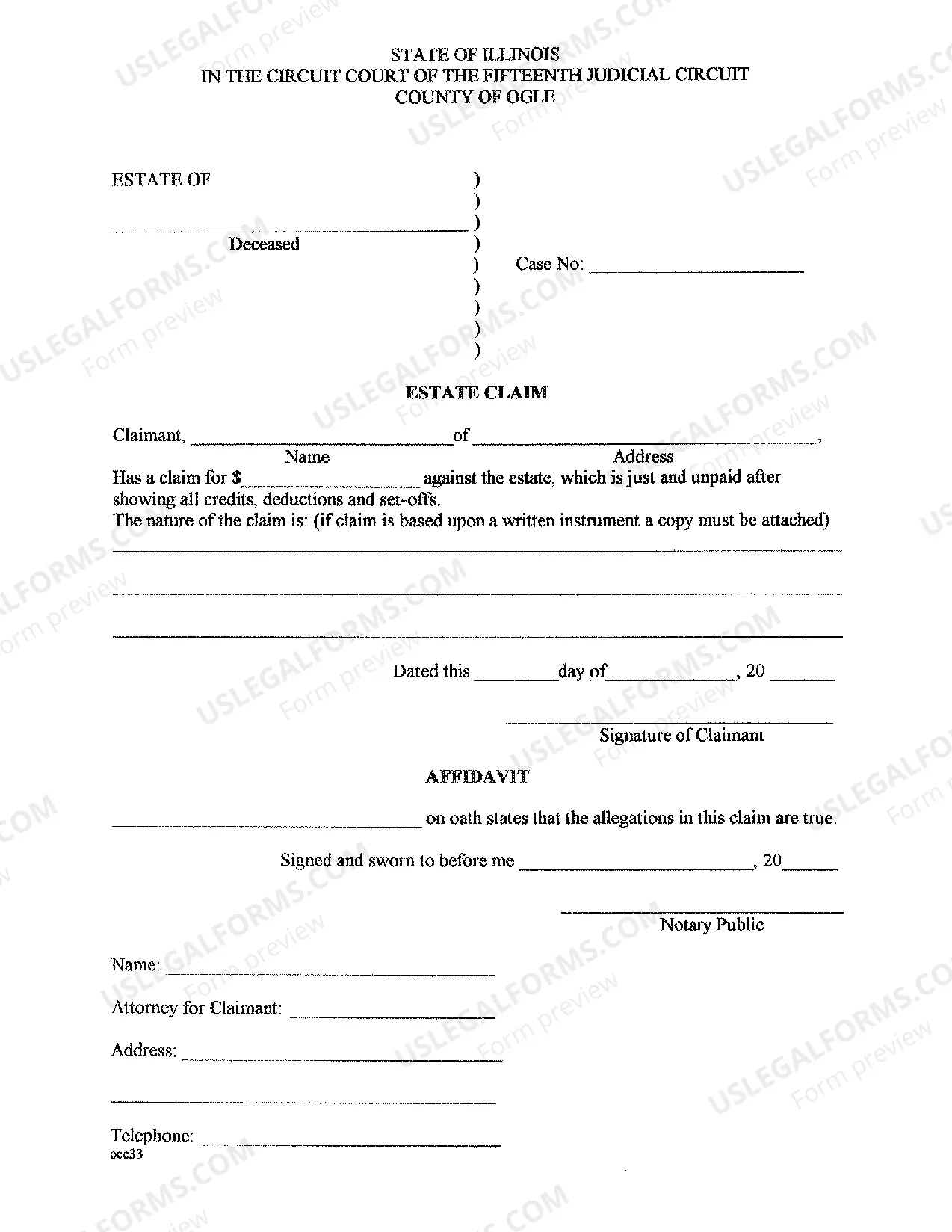
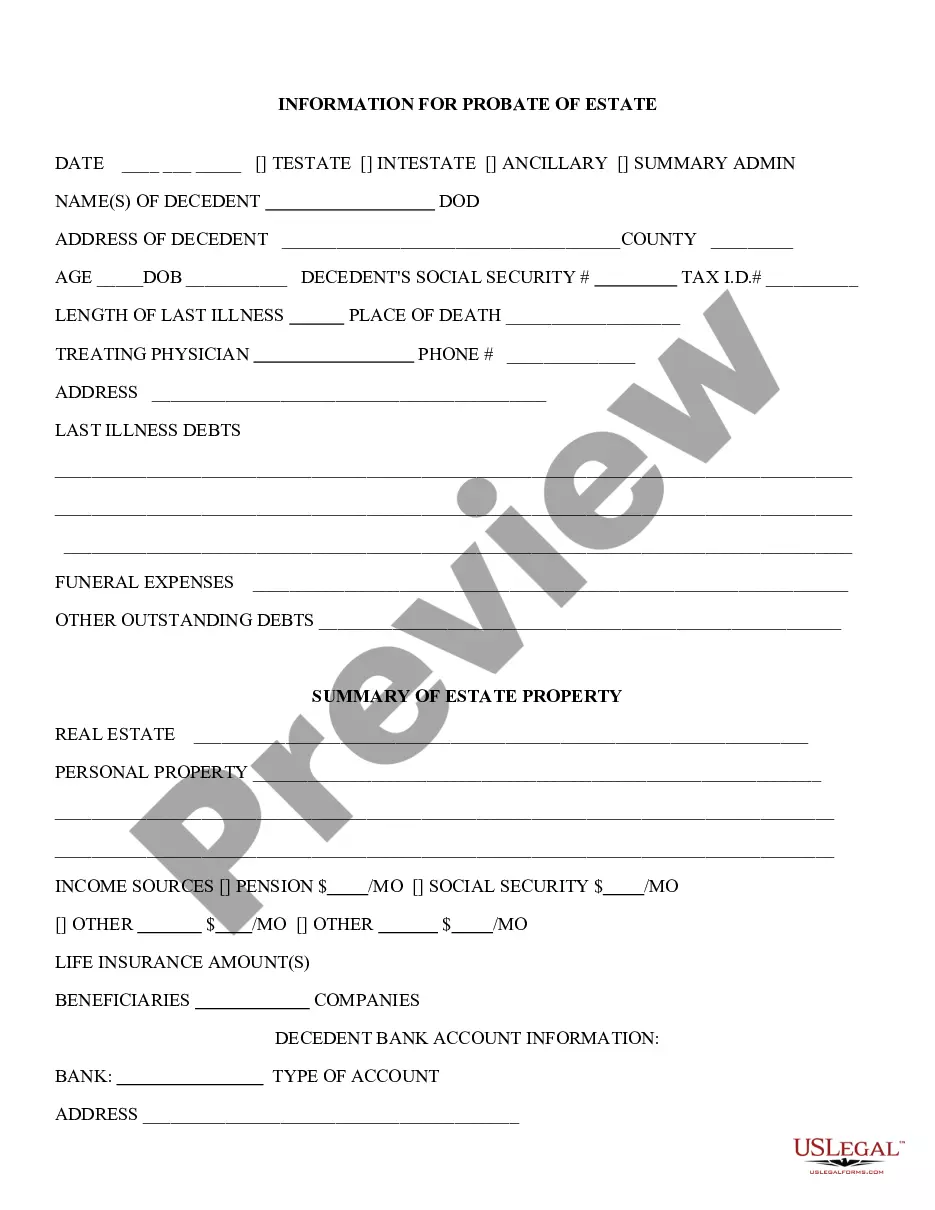
Illinois Estate Claim is a legal process used to recover a deceased person's assets, such as bank accounts, real estate, investments, and other assets. This process is typically initiated by the executor of the deceased's estate, and is done in accordance with the law of the state of Illinois. There are two types of Illinois Estate Claim: a Small Estate Affidavit and a Formal Estate Administration. A Small Estate Affidavit is used to transfer assets of a deceased person who had a small estate, or one with a value of less than $100,000. This type of claim can be initiated by the executor of the estate, and requires some documentation, such as death certificates, proof of authority to act on behalf of the estate, and affidavits of the beneficiaries of the estate. A Formal Estate Administration is used to transfer assets of a deceased person who had a large estate, or one with a value over $100,000. This type of claim requires the appointment of a Personal Representative, or Executor, of the estate and involves a more complex process. The Personal Representative must file an Inventory and Appeasement, Petition for Administration, and other documents with the court, and then distribute the assets of the estate as directed by the court.
Illinois Estate Claim
Description
Get your form ready online
Our built-in tools help you complete, sign, share, and store your documents in one place.
Make edits, fill in missing information, and update formatting in US Legal Forms—just like you would in MS Word.
Download a copy, print it, send it by email, or mail it via USPS—whatever works best for your next step.
Sign and collect signatures with our SignNow integration. Send to multiple recipients, set reminders, and more. Go Premium to unlock E-Sign.
If this form requires notarization, complete it online through a secure video call—no need to meet a notary in person or wait for an appointment.
We protect your documents and personal data by following strict security and privacy standards.
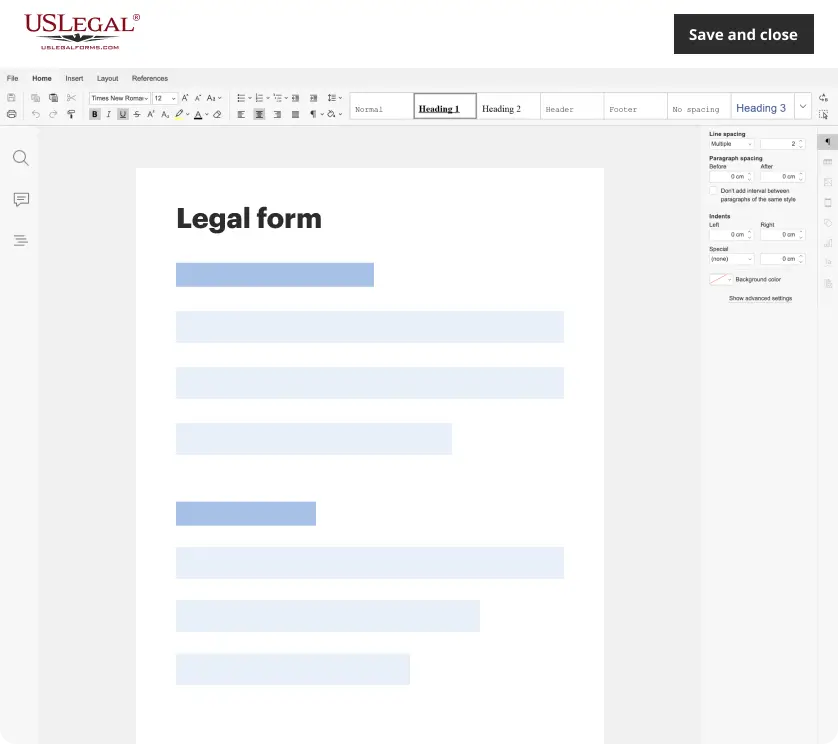
Make edits, fill in missing information, and update formatting in US Legal Forms—just like you would in MS Word.
Download a copy, print it, send it by email, or mail it via USPS—whatever works best for your next step.
Sign and collect signatures with our SignNow integration. Send to multiple recipients, set reminders, and more. Go Premium to unlock E-Sign.

If this form requires notarization, complete it online through a secure video call—no need to meet a notary in person or wait for an appointment.

We protect your documents and personal data by following strict security and privacy standards.
Looking for another form?



How to fill out Illinois Estate Claim?
Dealing with official paperwork demands carefulness, accuracy, and utilizing well-prepared templates.
US Legal Forms has been assisting individuals nationwide with this for 25 years, so when you select your Illinois Estate Claim template from our service, you can be assured it adheres to federal and state laws.
All documents are designed for multiple uses, such as the Illinois Estate Claim you see on this page. If you require them again in the future, you can fill them out without an additional payment - simply access the My documents tab in your profile and complete your document whenever you need it. Experience US Legal Forms and efficiently manage your business and personal legal paperwork!
- Be sure to thoroughly verify the form's content and its alignment with legal standards by previewing it or reviewing its description.
- Look for an alternative official blank if the one you opened does not fit your needs or local regulations (the tab for this can be found at the upper corner of the page).
- Log in to your account and save the Illinois Estate Claim in your preferred format. If it’s your initial time using our site, click Buy now to proceed.
- Create an account, choose your subscription plan, and pay using your credit card or PayPal account.
- Select the format in which you wish to receive your form and click Download. Print the blank or upload it to a professional PDF editor for electronic submission.
Form popularity
FAQ
Deadline to close the estate: 14 months from the date the will is admitted to probate. If the estate remains open after 14 months, the court will expect the representative to account or report to the court to explain why the estate needs to remain open.
Things that aren't part of the deceased person's estate don't have to be handled in settling their estate. Probate is just one way to settle an estate when someone dies. And it's not always required. Illinois law allows a different and simplified procedure for handling small estates.
A valid will must be filed, but it doesn't require a probate case. It can simply be filed at the courthouse, as a public record. Some property never goes into the estate. For example, real estate held in joint tenancy passes directly to the surviving joint tenants.
A claim against the probate estate can either be filed with the court or mailed to the representative of the estate. Once the representative receives notice of the claim, he or she can either allow the claim or send a notice to the claimant informing them that they are ?disallowing? the claim.
When is the Deadline to File a Probate Claim in Illinois? The statute of limitations for probate claims in Illinois provides that creditors have two years from the decedent's death to file a claim against the estate.
When is the deadline for filing a claim? In Illinois, all claims against probate estates are barred if not filed within two years from the date of the decedent's death. The Illinois Probate Act also allows the estate's representative certain ways to shorten this two-year period.
The executor immediately must publish a written notice in a newspaper within the county of the Probate Court to notify potential creditors of the existence of the estate and the necessity for their filing of written claims against the estate. The law in Illinois provides such creditors six months to file those claims.
Illinois law provides that all claims must be in writing. The written document must notify the administrator or executor of the estate as to the nature of the claim and the amount of money that the claimant is seeking. The claimant must also provide copies of documents supporting its claim for money.