Illinois Complaint for Writ of Habeas Corpus
Description

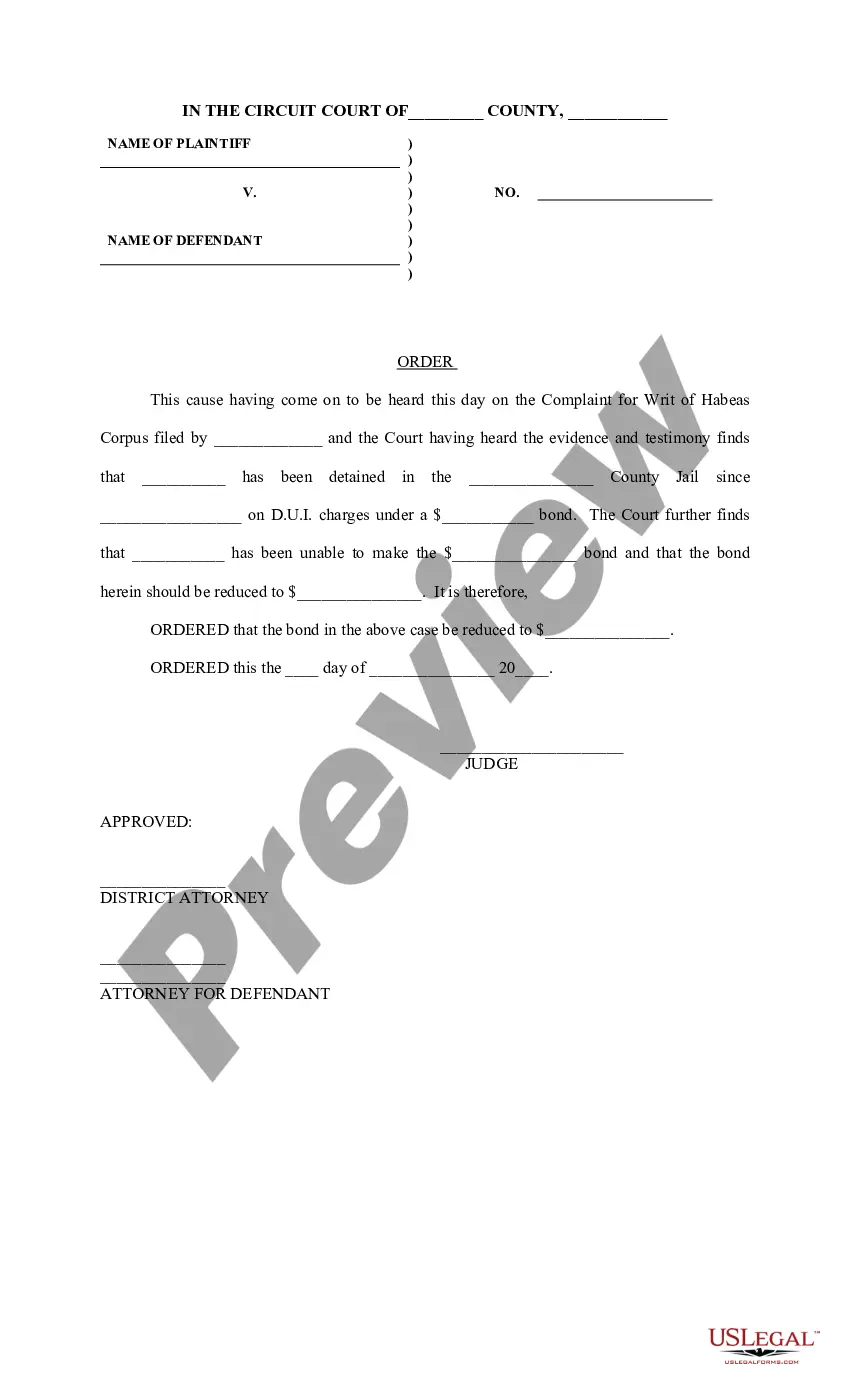
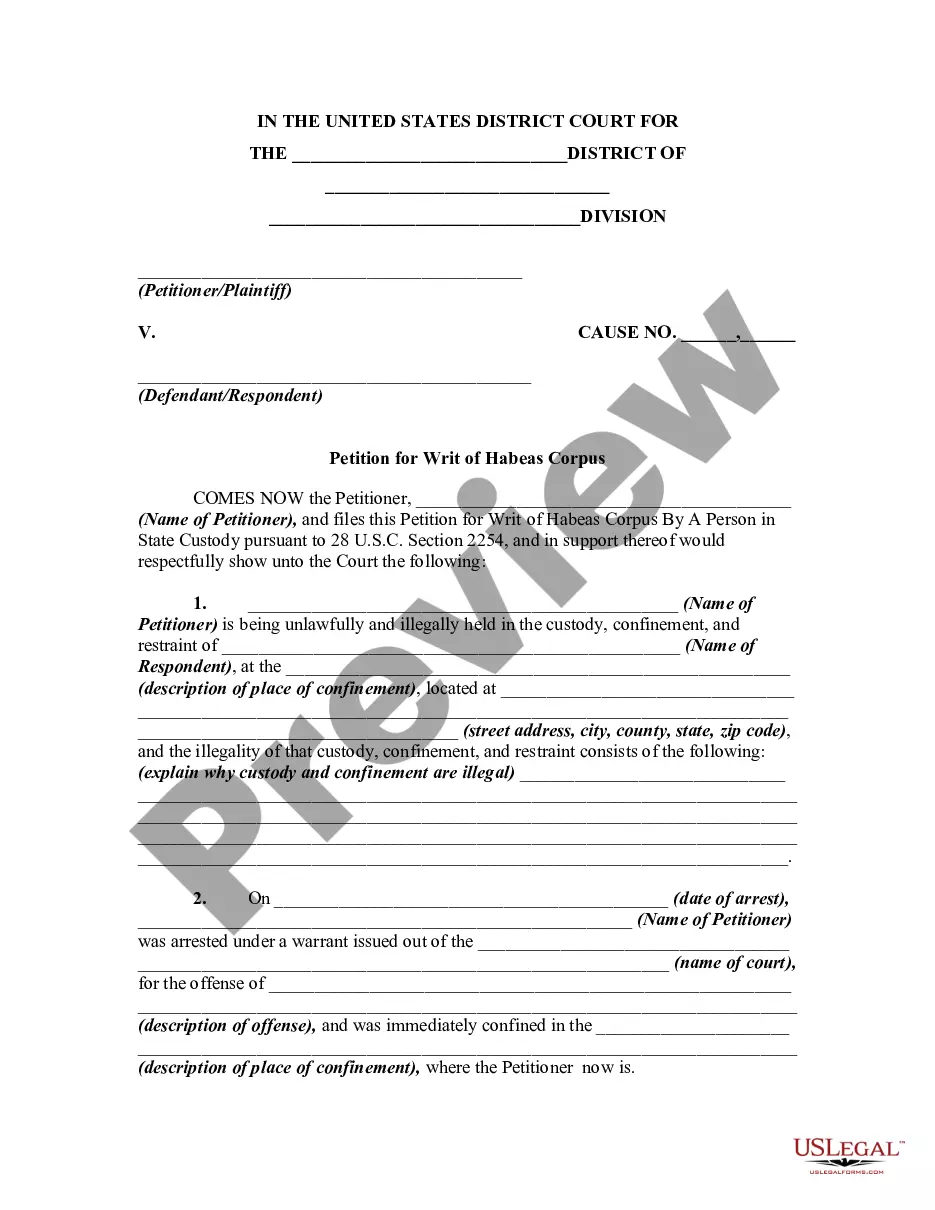
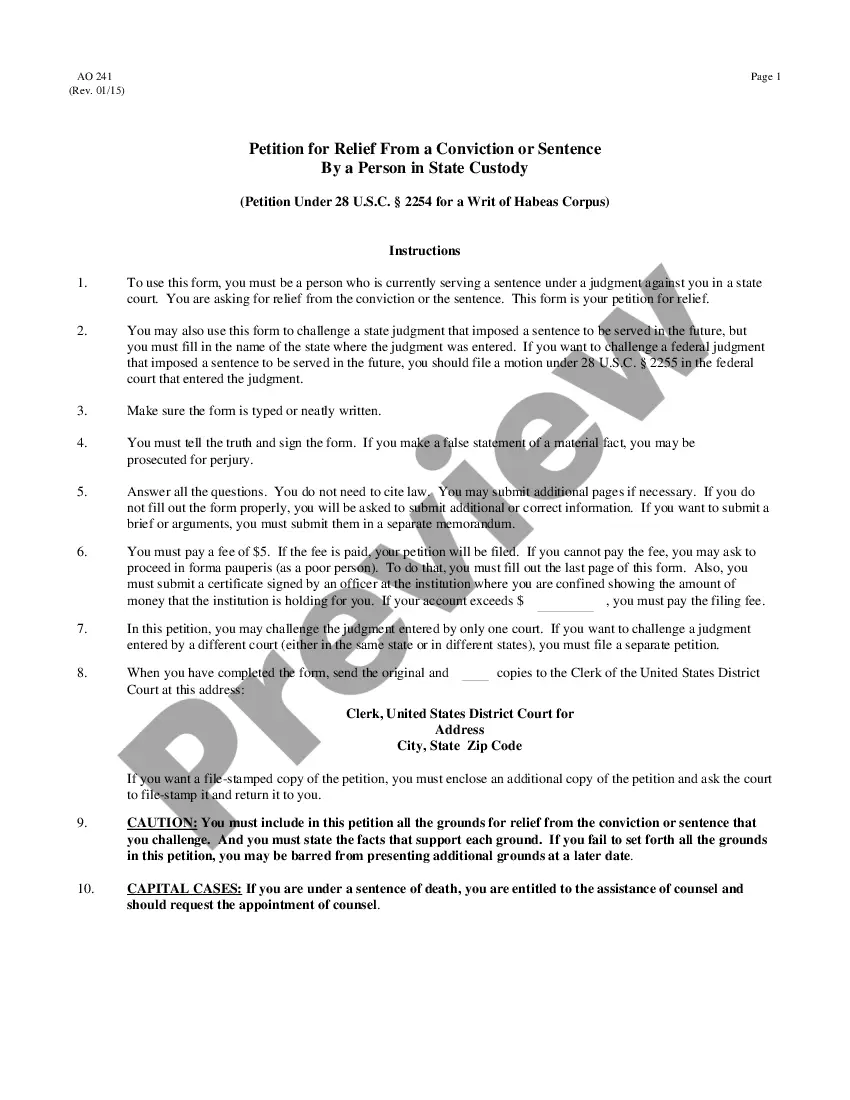
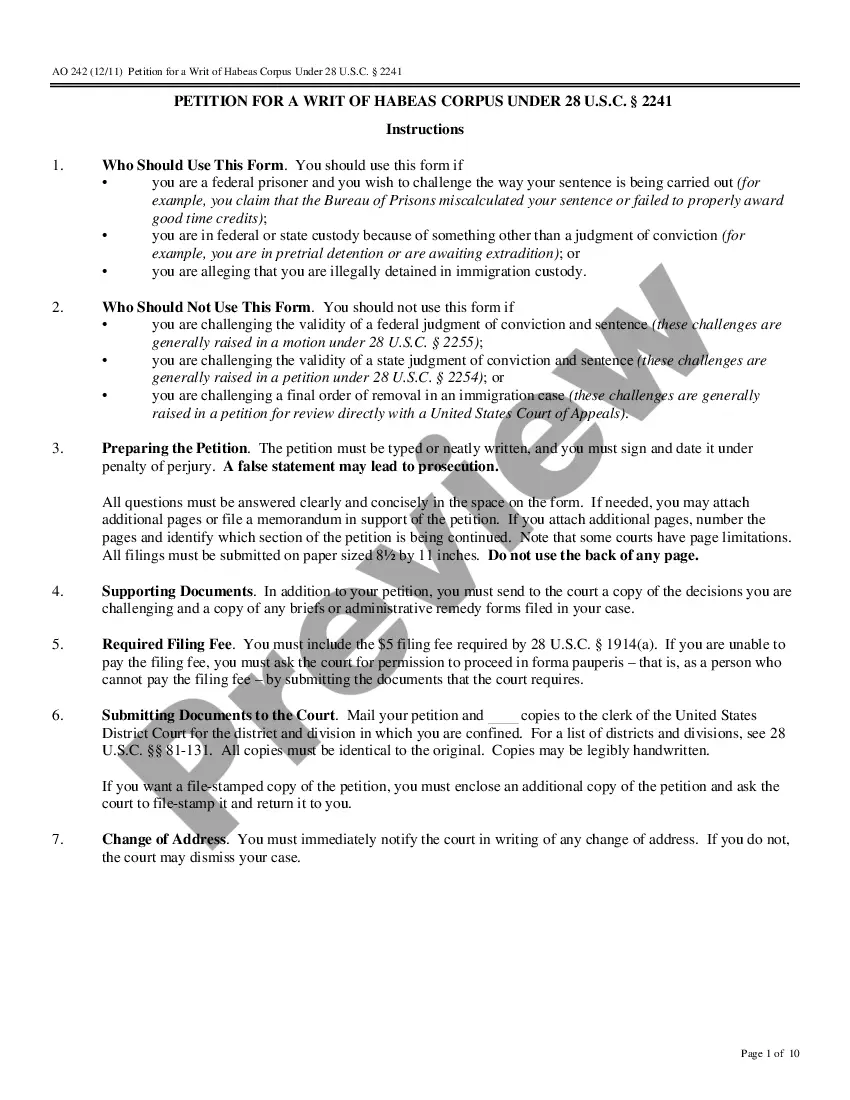



How to fill out Complaint For Writ Of Habeas Corpus?
Are you presently in a situation where you require documents for both business or personal purposes almost every day.
There are numerous legal document templates available online, but locating trustworthy ones can be challenging.
US Legal Forms offers thousands of form templates, including the Illinois Complaint for Writ of Habeas Corpus, which can be customized to comply with state and federal requirements.
Once you locate the correct form, simply click Buy now.
Select the pricing plan you desire, complete the necessary information to create your account, and purchase your order using your PayPal or credit card.
- If you are already familiar with the US Legal Forms site and have an account, simply Log In.
- After that, you can download the Illinois Complaint for Writ of Habeas Corpus template.
- If you do not have an account and wish to start using US Legal Forms, follow these instructions.
- Find the form you need and ensure it is for the correct city/state.
- Utilize the Preview feature to review the form.
- Check the information to confirm that you have selected the accurate form.
- If the form isn't what you are searching for, use the Lookup field to find the form that meets your needs and requirements.
Form popularity
FAQ
Arguments that Can Overturn Convictions. A Writ of Habeas Corpus usually addresses claims of ineffective assistance of counsel, prosecutorial misconduct, newly discovered evidence, jury misconduct, and claims of actual innocence.
The petitioner, typically through an attorney, files a writ of habeas corpus to the relevant court, usually the California Superior Court, and the arguments as to why the petitioner has been illegally detained.
You must pay a filing fee of $5. To do that, you must submit a written motion (a form is available from the Clerk's Office). Also you must submit a certificate signed by an officer at the institution where you are confined showing the amount of money the institution is holding for you.
The ?Great Writ? of habeas corpus is a fundamental right in the Constitution that protects against unlawful and indefinite imprisonment. Translated from Latin it means ?show me the body.? Habeas corpus has historically been an important instrument to safeguard individual freedom against arbitrary executive power.
You will file a Habeas Corpus petition in California if you are arguing that your conviction violated a state law, or that a California law is unconstitutional.
Habeas Corpus petitions are filed in a California court by inmates or, more specifically, their attorneys, claiming they have been unlawfully detained or imprisoned.
The Writ of Habeas Corpus Generally Assuming you are unjustly or wrongfully detained or incarcerated, you can challenge the legal basis of that imprisonment by methodically bringing a Writ of Habeas Corpus. This enables you to challenge the duration and length of your imprisonment and even the manner.
If an inmate meets all the requirements to file a petition for writ of habeas corpus, they will file their petition in the superior court in the court of conviction. Within 60 days, the court will review the petition to determine if the inmate raised a prima facie case entitling them to relief.
