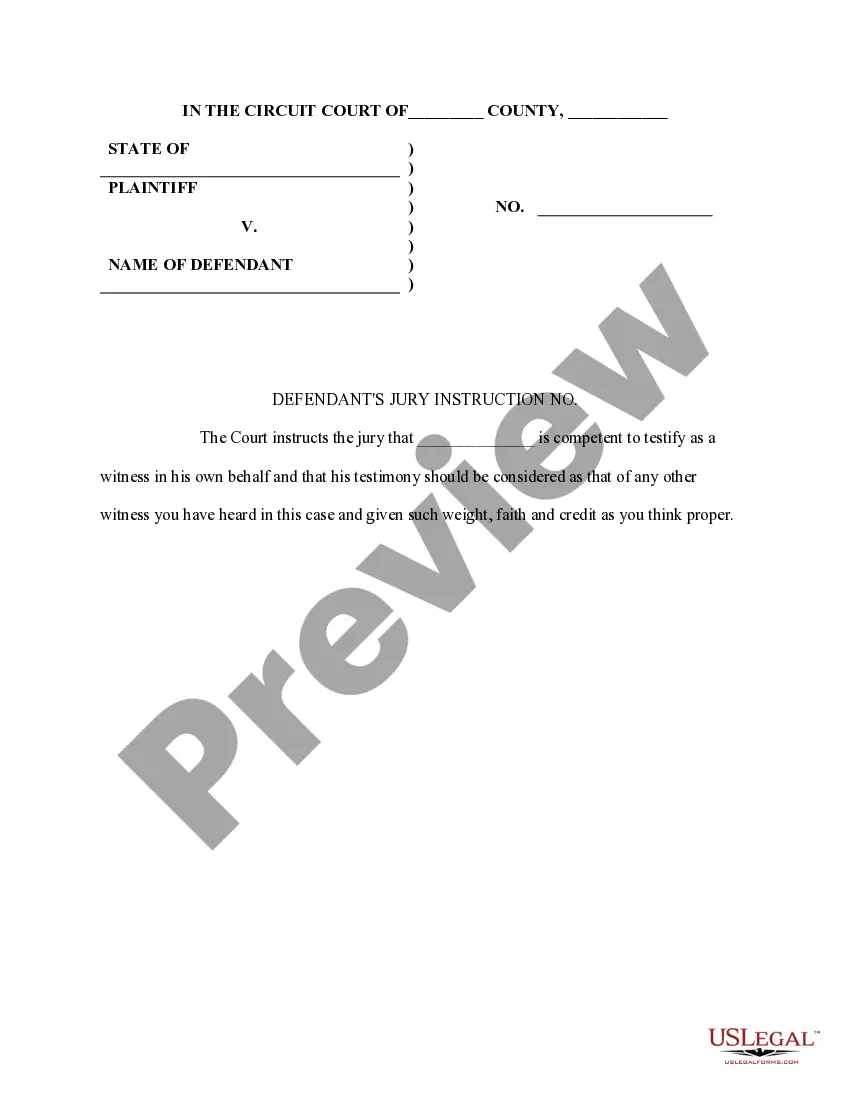
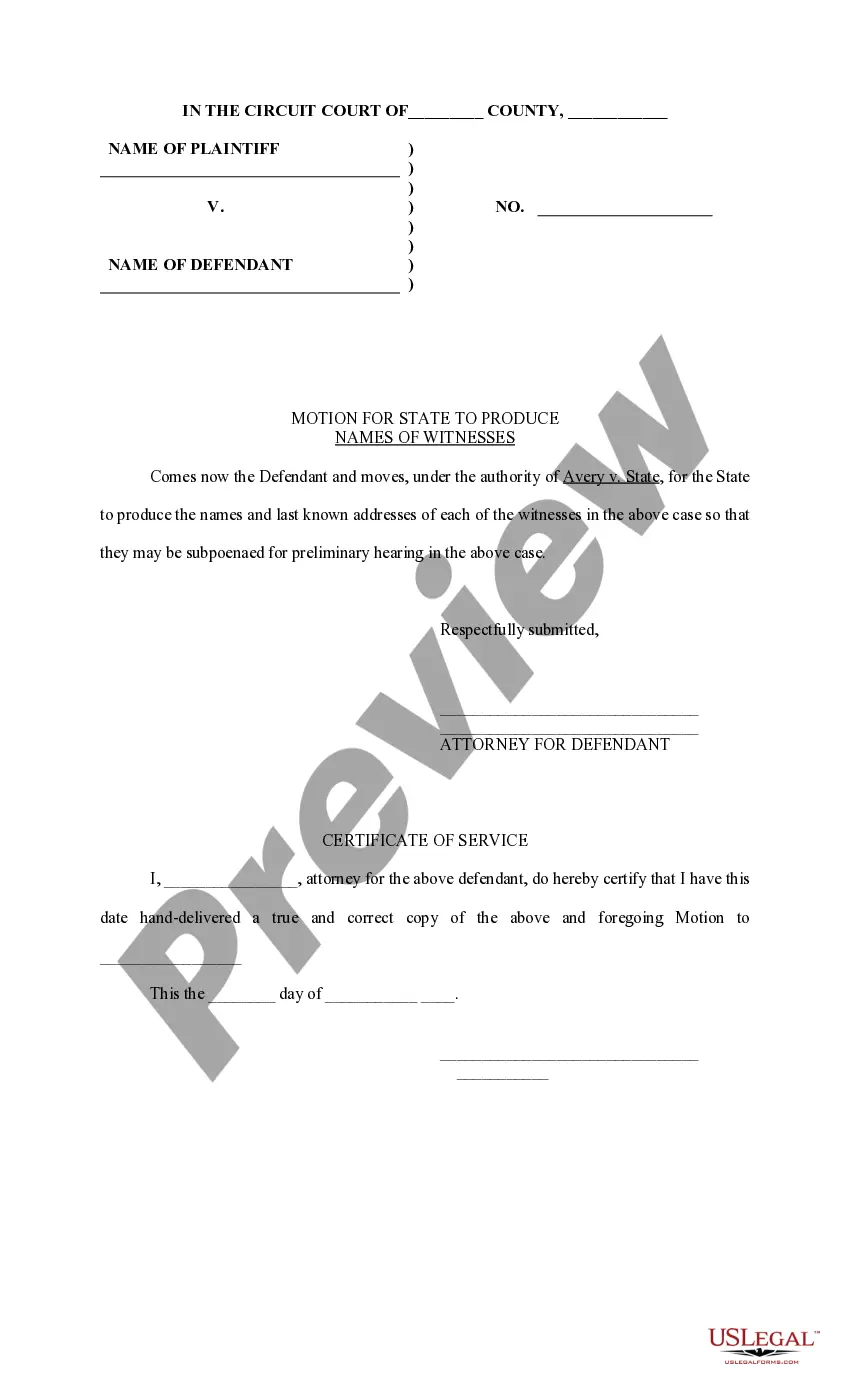
Illinois Defendant as Witness
Description


How to fill out Defendant As Witness?
Are you currently in a situation where you require documents for both professional or personal purposes almost every day? There are numerous legal document templates available online, but finding versions you can trust is challenging. US Legal Forms offers thousands of form templates, including the Illinois Defendant as Witness, which are designed to comply with federal and state regulations.
If you are already familiar with the US Legal Forms website and have an account, simply Log In. Then, you will be able to download the Illinois Defendant as Witness template.
If you do not have an account and wish to start using US Legal Forms, follow these instructions: Find the form you need and ensure it is for the correct city/region. Use the Preview button to view the form. Review the details to confirm that you have selected the right form. If the form is not what you're looking for, use the Search field to find the form that suits your needs and requirements. If you find the right form, click Purchase now. Select the pricing plan you prefer, complete the necessary information to create your account, and pay for the transaction using your PayPal or credit card. Choose a convenient file format and download your copy. Access all the form templates you have purchased in the My documents list. You can obtain an additional copy of the Illinois Defendant as Witness anytime, if needed. Just click on the desired form to download or print the template.
- Utilize US Legal Forms, one of the largest collections of legal documents, to save time and avoid mistakes.
- The service provides well-crafted legal document templates that you can utilize for various purposes.
- Create an account on US Legal Forms and start making your life a bit easier.
Form popularity
FAQ
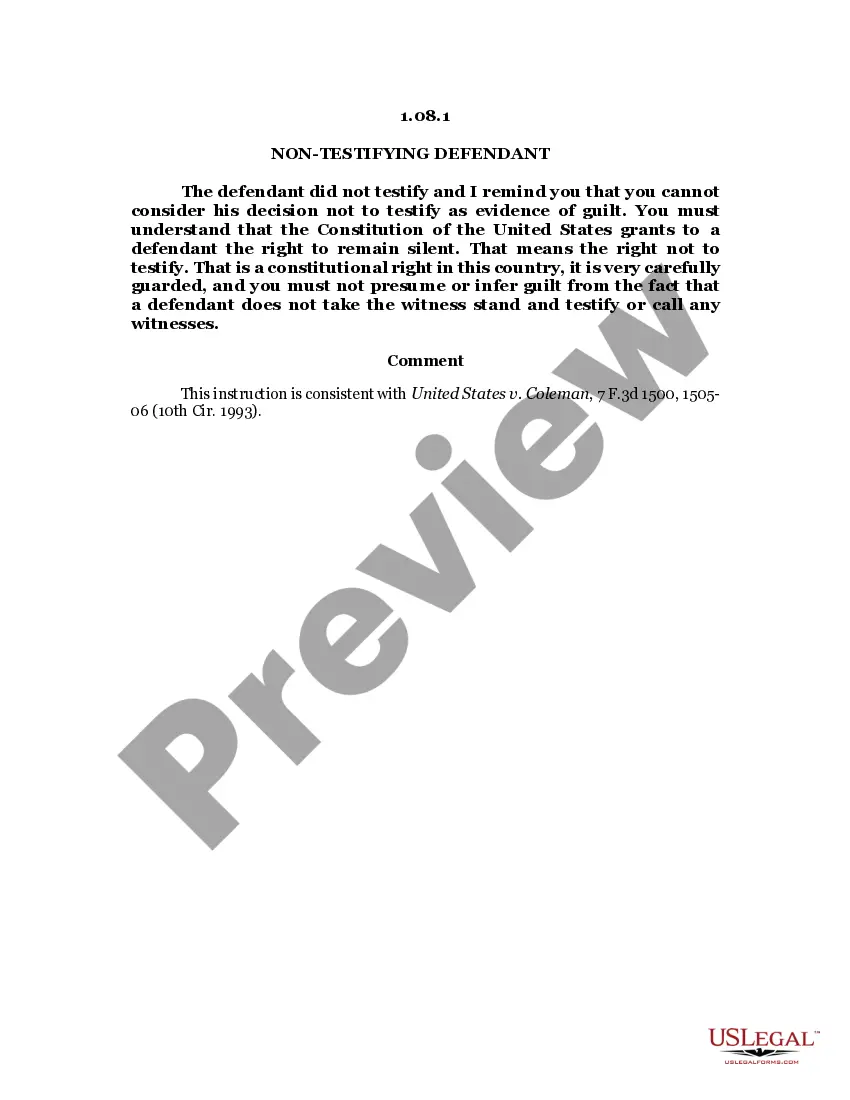
Simply put, a defendant can be a witness in their own criminal case. If you have been charged with a crime, you have the right to testify on your own behalf, and to raise your own defense. However, most criminal defendants don't testify in their criminal trials.
Section 310.230 - Adverse Witness a) Any party or witness may be called as an adverse witness. In such a case, examination of the witness will be allowed as if under cross-examination.
Ingly, criminal defendants are generally advised not to testify in their own defense at trial. One of the great dangers of a defendant testifying in a criminal case is waiver of his right to remain silent which thus subjects him to cross-examination by the prosecution.
California Evidence Code § 930 provides that ?a defendant in a criminal case has a privilege not to be called as a witness and not to testify.? While a defendant can waive this privilege and choose to testify, the prosecutor cannot call the defendant to the stand just to make the defendant explicitly claim the ...
A lawyer may call any (relevant) person as a witness, including someone on the opposite side. That includes the plaintiff's lawyer/prosecutor calling the defendant. This is seldom done because by doing so, you have made this witness "your" witness, thereby meaningfully reducing your options.
A lawyer may call any (relevant) person as a witness, including someone on the opposite side. That includes the plaintiff's lawyer/prosecutor calling the defendant. This is seldom done because by doing so, you have made this witness "your" witness, thereby meaningfully reducing your options.
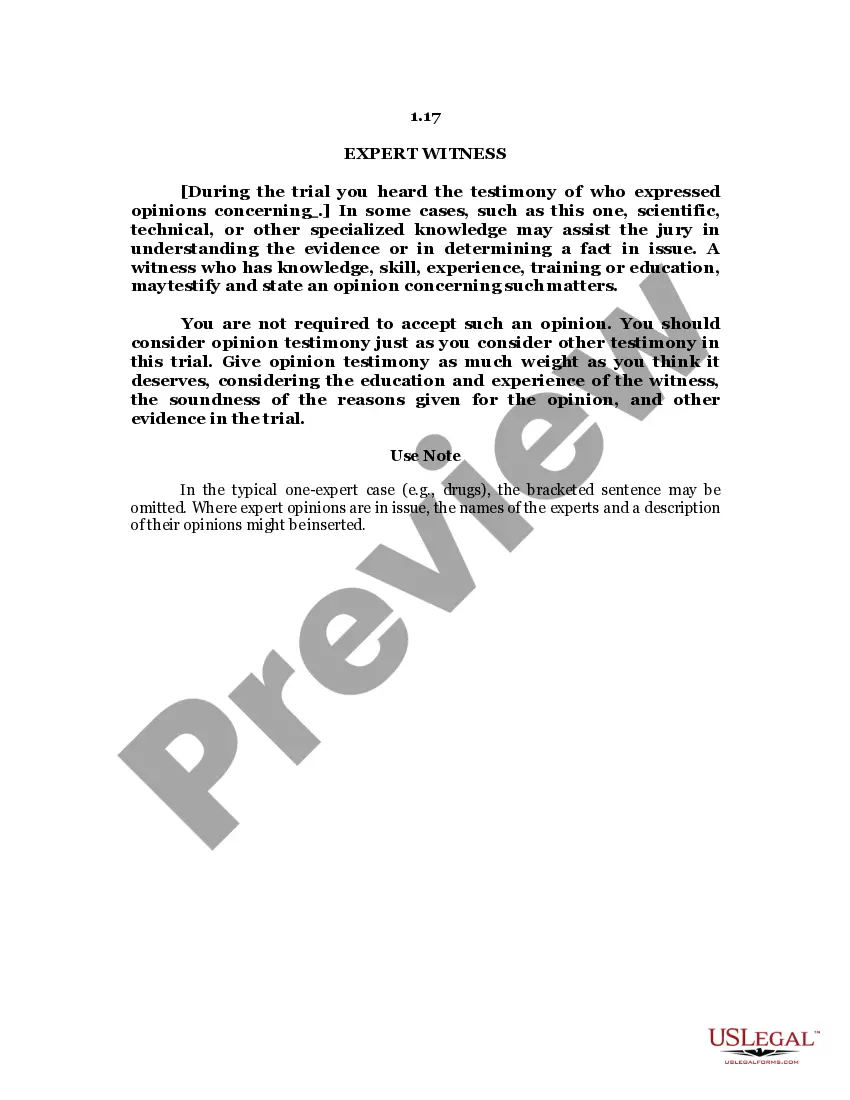
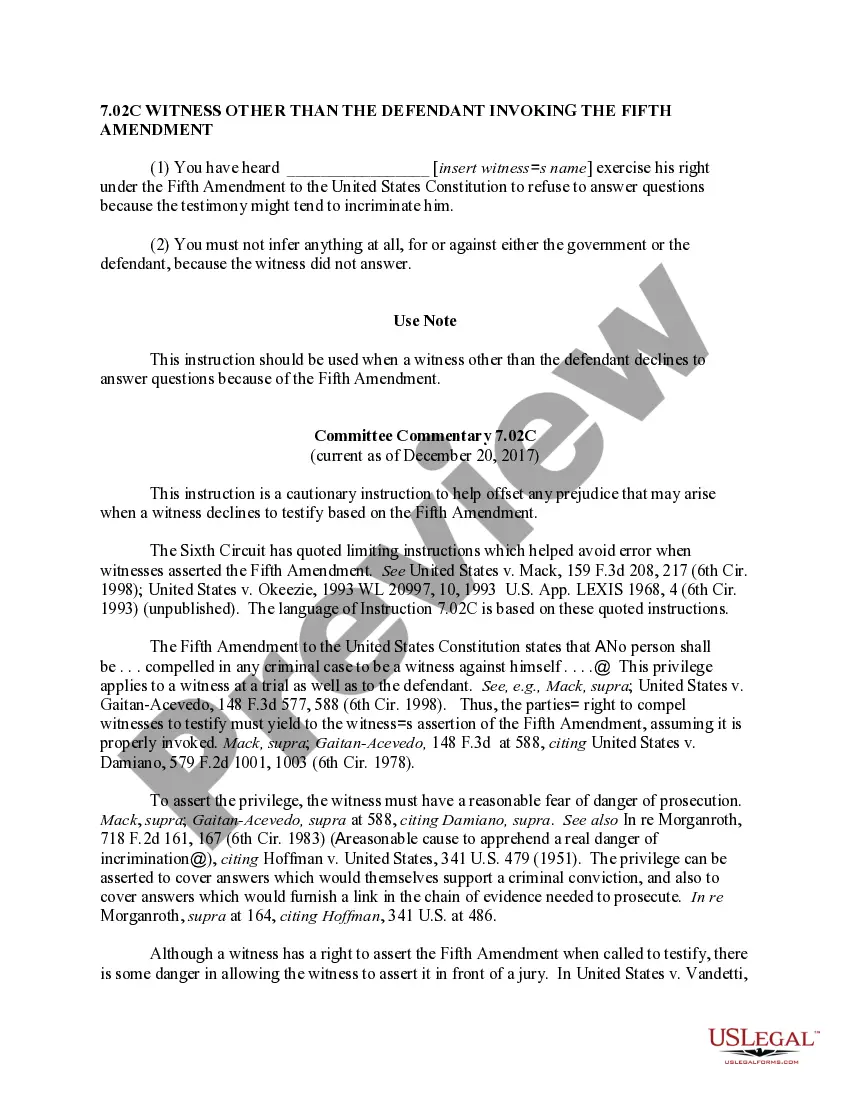
A witness is a person who saw or heard the crime take place or may have important information about the crime or the defendant. Both the defense and the prosecutor can call witnesses to testify or tell what they know about the situation. What the witness actually says in court is called testimony.
Simply put, a defendant can be a witness in their own criminal case. If you have been charged with a crime, you have the right to testify on your own behalf, and to raise your own defense. However, most criminal defendants don't testify in their criminal trials.