Illinois Complaint for Damages and Declaratory Judgment
Description

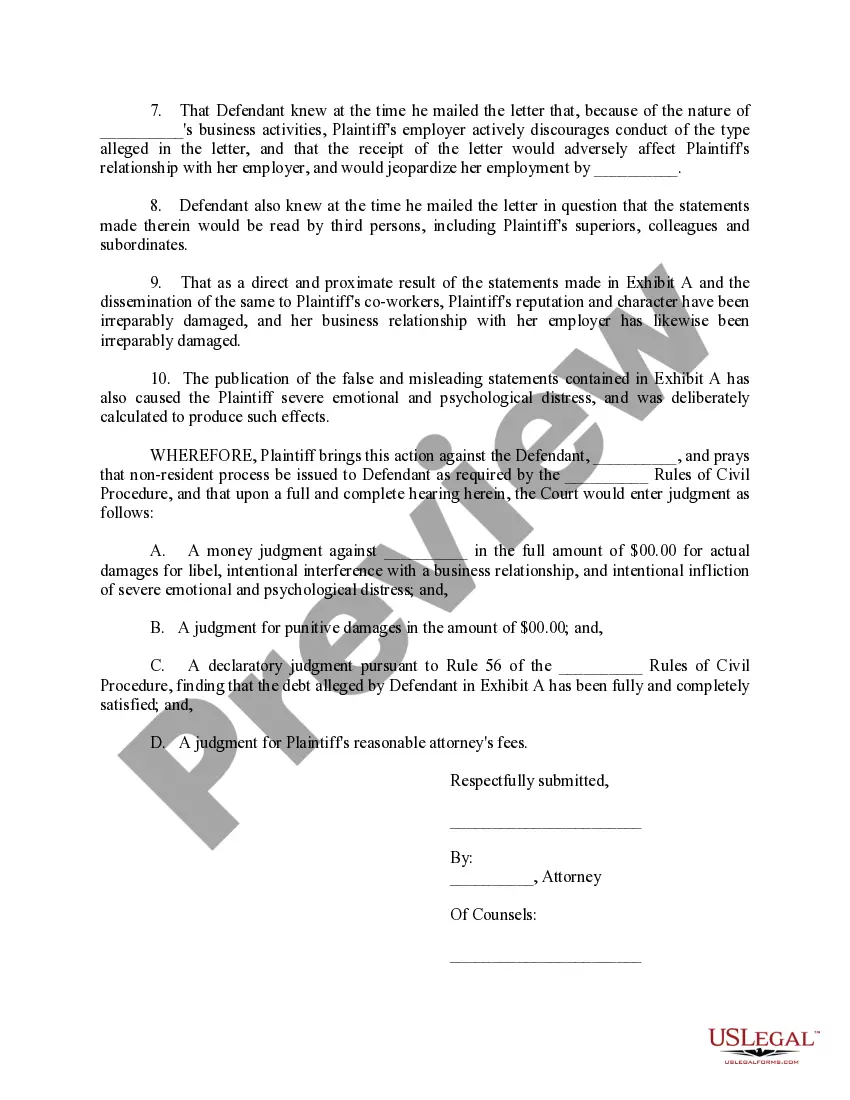

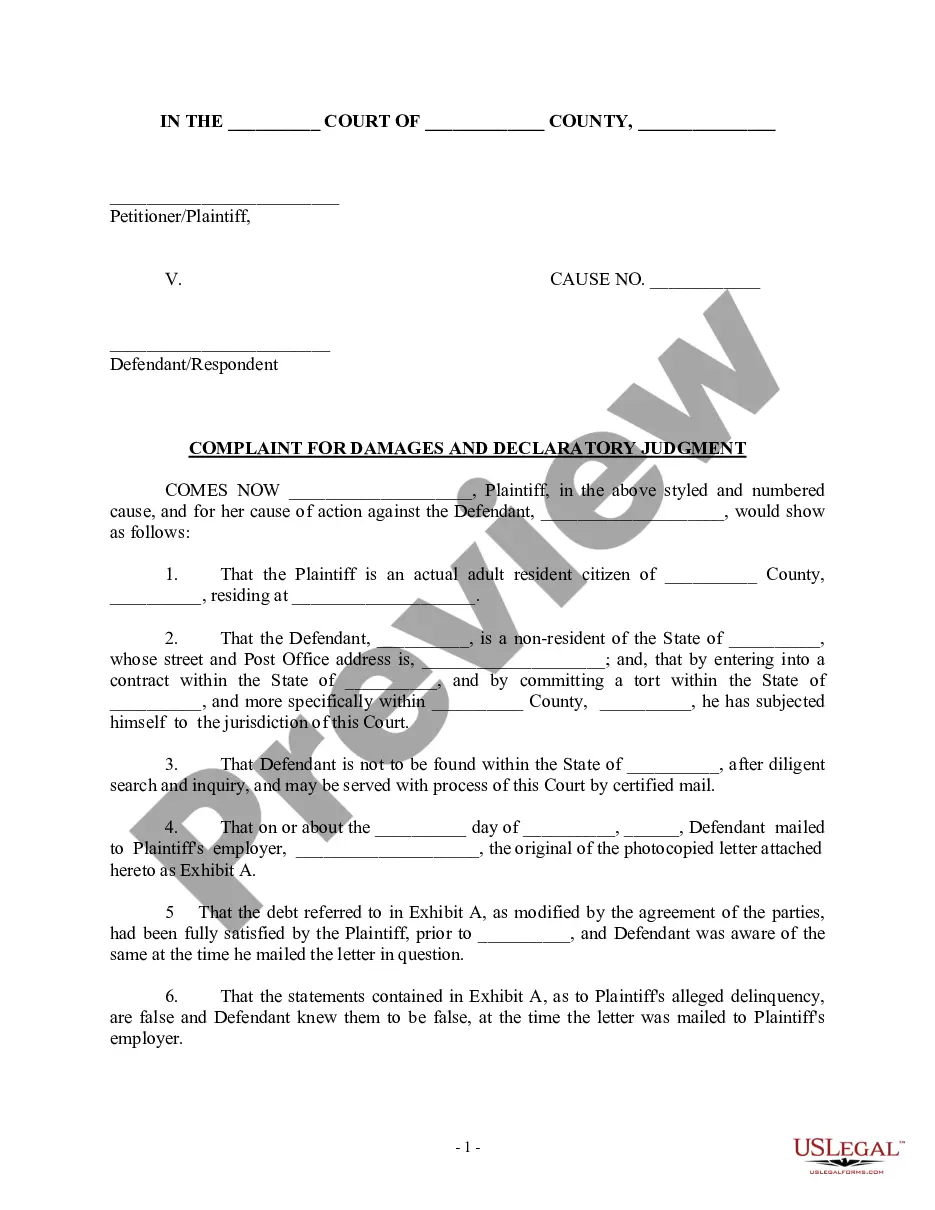
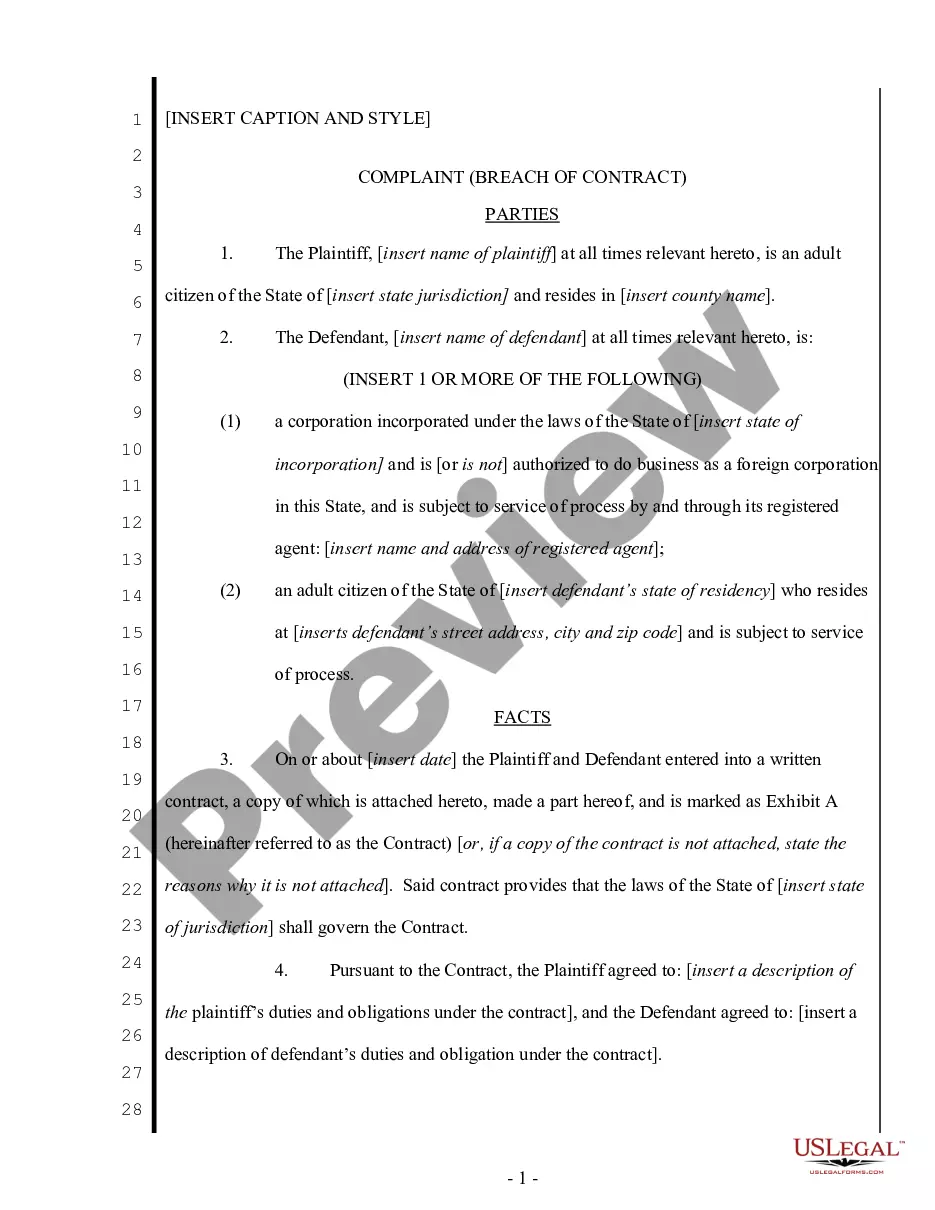

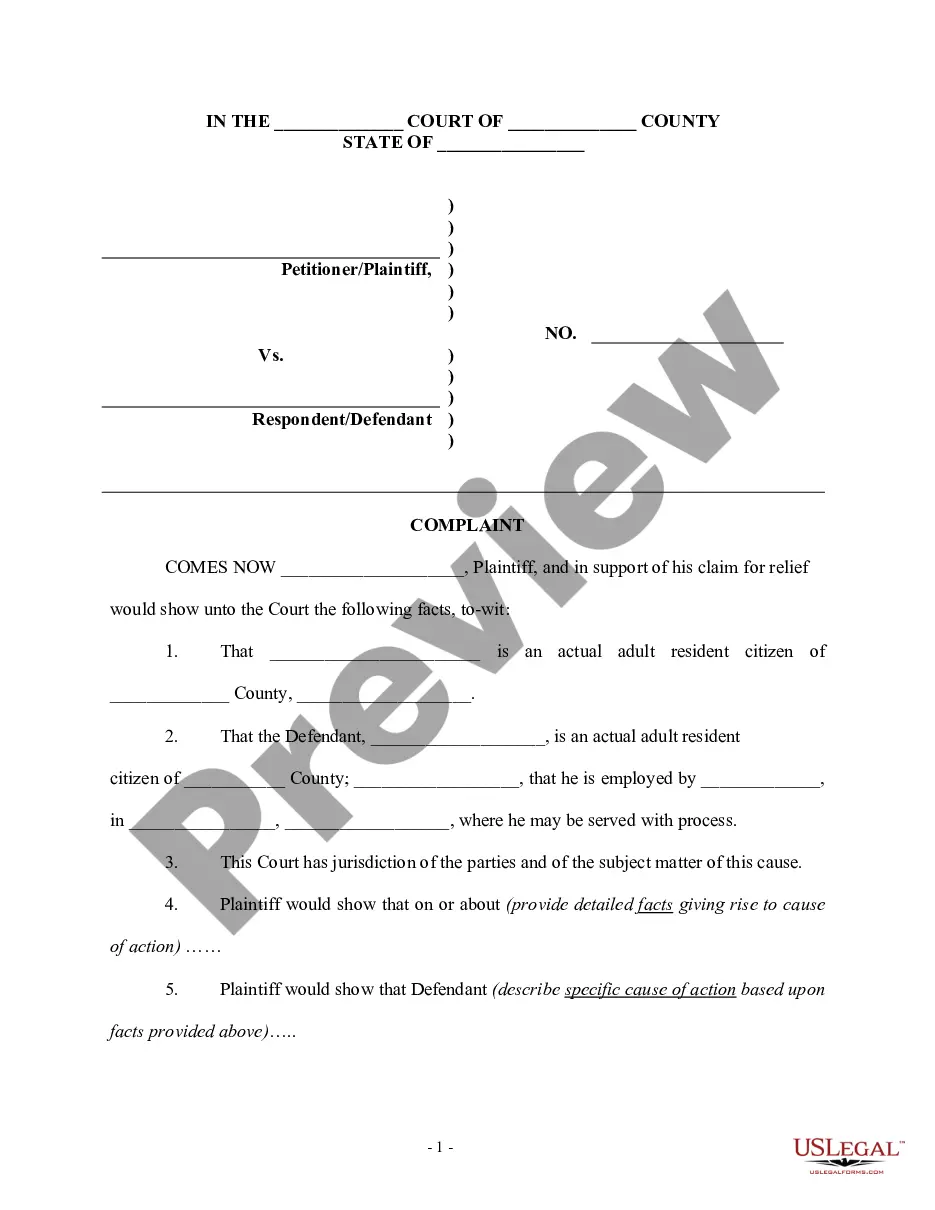
How to fill out Complaint For Damages And Declaratory Judgment?
Are you currently in a location where you require documents for both organizational or personal purposes nearly every business day.
There are numerous legal document templates accessible online, but locating ones you can trust isn’t simple.
US Legal Forms offers a vast collection of form templates, including the Illinois Complaint for Damages and Declaratory Judgment, that are crafted to meet state and federal requirements.
Choose the pricing plan you desire, fill out the required details to create your account, and pay for the transaction using your PayPal or credit card.
Select a convenient document format and download your copy.
- If you are already familiar with the US Legal Forms website and possess an account, simply Log In.
- Then, you can download the Illinois Complaint for Damages and Declaratory Judgment template.
- If you do not have an account and wish to begin using US Legal Forms, follow these steps.
- Obtain the form you need and ensure it is for the correct city/state.
- Utilize the Review button to examine the form.
- Read the outline to confirm that you have selected the appropriate form.
- If the form isn’t what you are looking for, use the Lookup field to find the form that meets your needs and specifications.
- Once you acquire the correct form, just click Acquire now.
Form popularity
FAQ
"The essential requirements of a declaratory judgment action are: (1) a plaintiff with a legal tangible interest; (2) a defendant having an opposing interest; and (3) an actual controversy between the parties concerning such interests. [Citations.]
A declaratory judgment is typically requested when a party is threatened with a lawsuit but the lawsuit has not yet been filed; or when a party or parties believe that their rights under law and/or contract might conflict; or as part of a counterclaim to prevent further lawsuits from the same plaintiff (for example, ...
For an actual controversy to be found, the plaintiff cannot be merely seeking advice from the court, but instead must show that the controversy between parties is substantial, immediate, and real and that the parties have adverse legal interests.
A declaratory judgment is a special type of lawsuit that allows you to seek a court order explaining the legal rights and duties of the parties to the suit. The court's order is as final and enforceable like any other legal judgment.
A plaintiff seeking declaratory relief must show that there is an actual controversy even though declaratory relief will not order enforceable action against the defendant. An actual controversy means there is a connection between the challenged conduct and injury, and redressability that the court could order.
2-701. Declaratory judgments. (a) No action or proceeding is open to objection on the ground that a merely declaratory judgment or order is sought thereby.
Declaratory judgment and injunction Order (Injunctive Relief) are different in nature but same in purpose. The effects and outcomes may be varying ing to situation and requirements. The judgment doesn't award the remedies but the injunctive relief awards the remedies on the temporary or permanent base.
issued declaratory judgment outlines the rights and responsibilities of each involved party. This judgment does not require action or award damages. It helps to resolve disputes and prevent lawsuits.