Illinois Alcohol and Drug Free Workplace Policy
Description
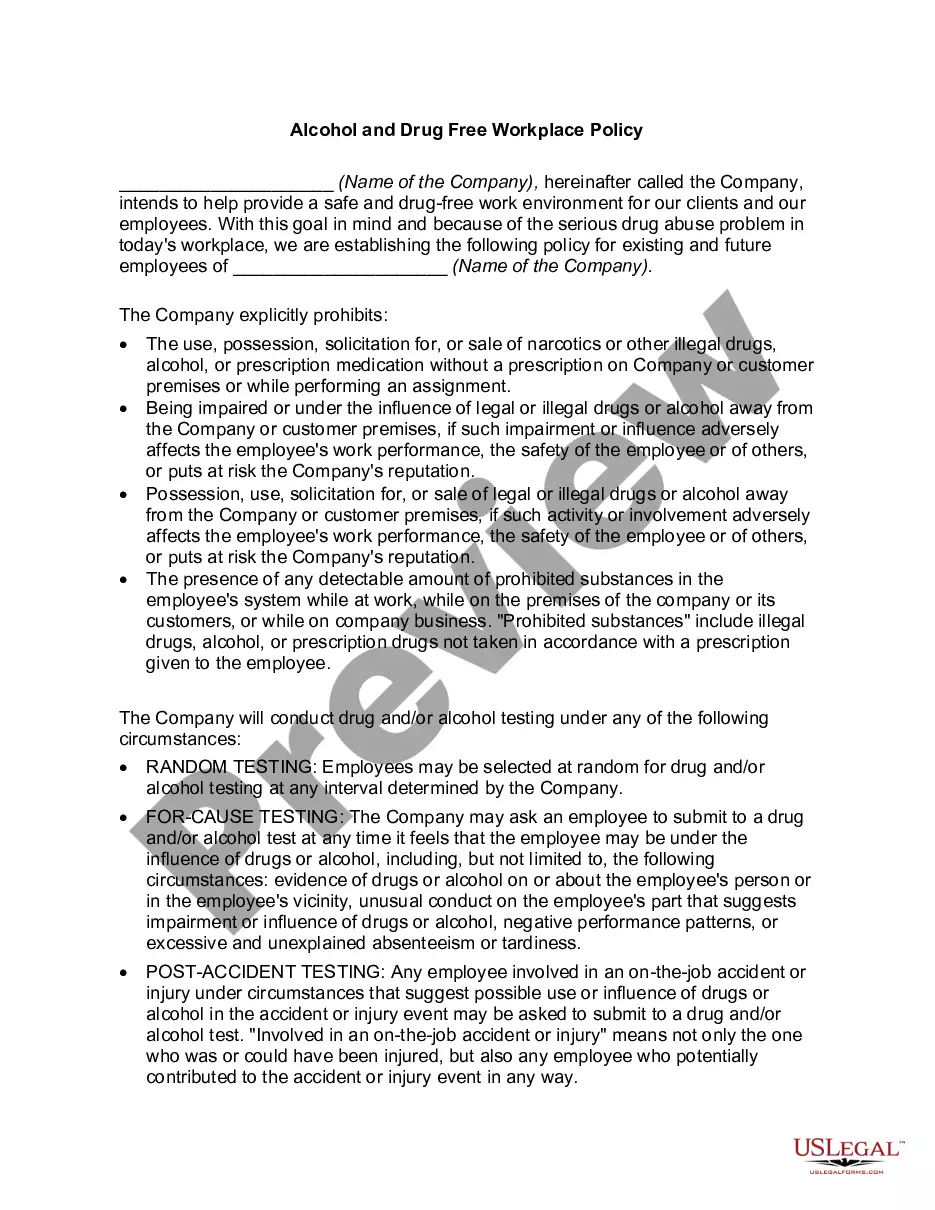
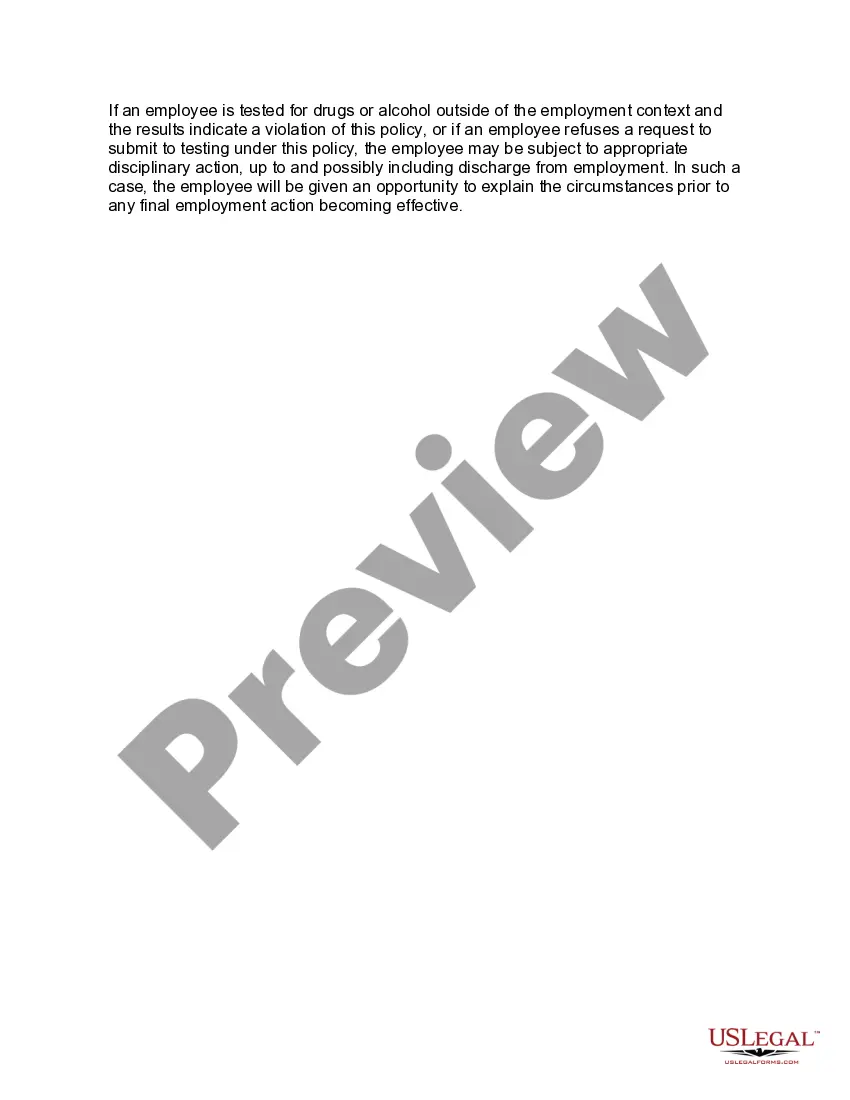
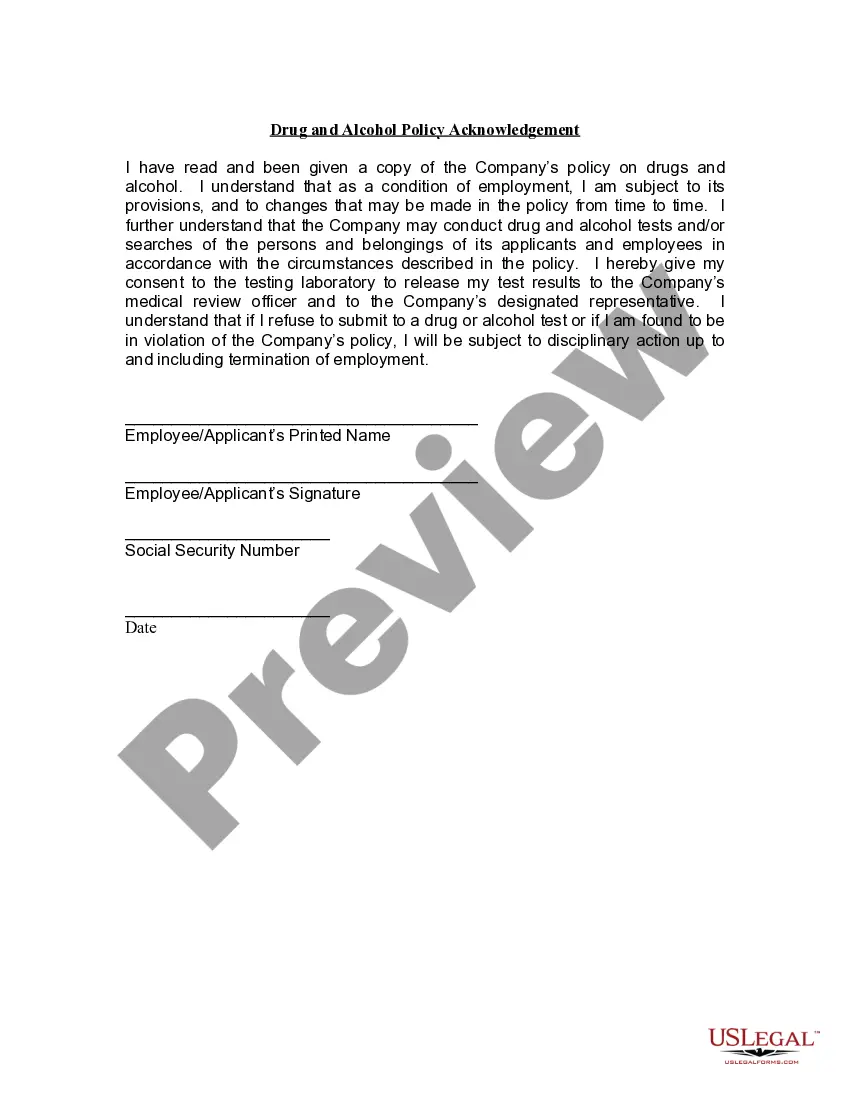
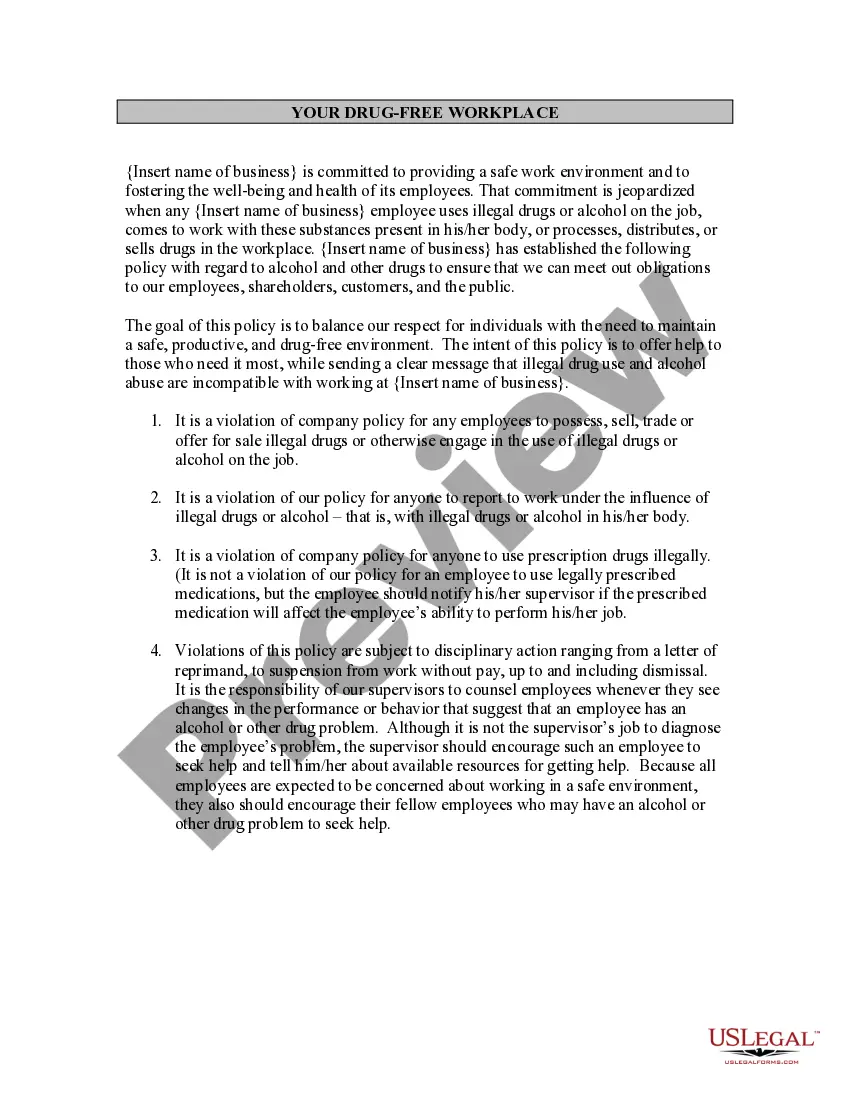
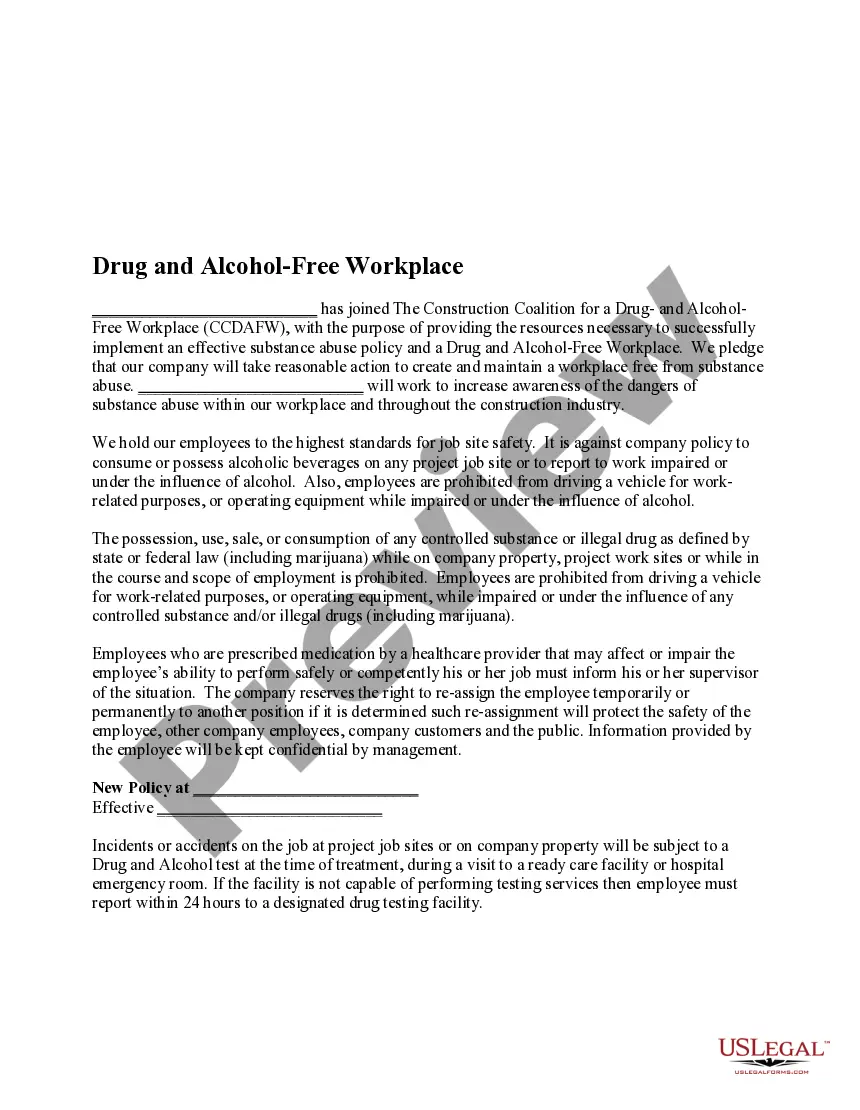
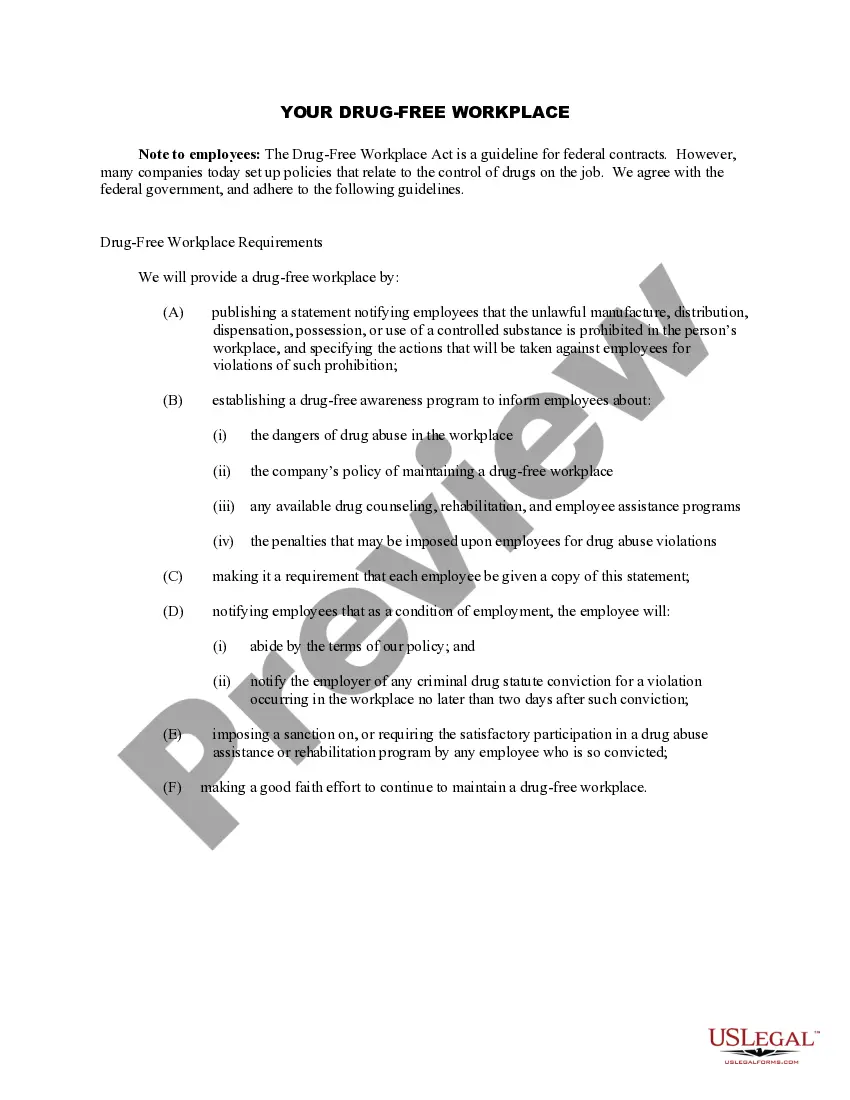
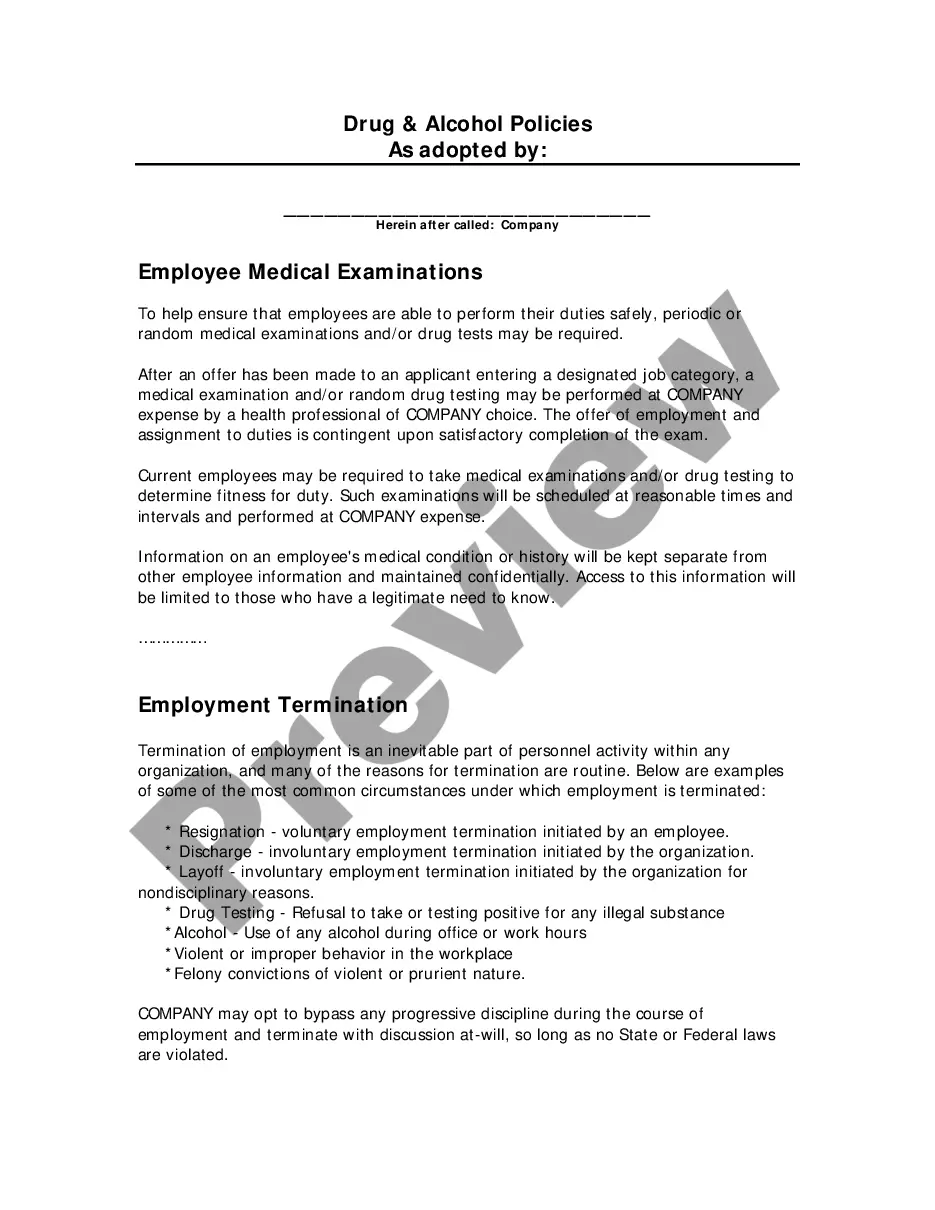
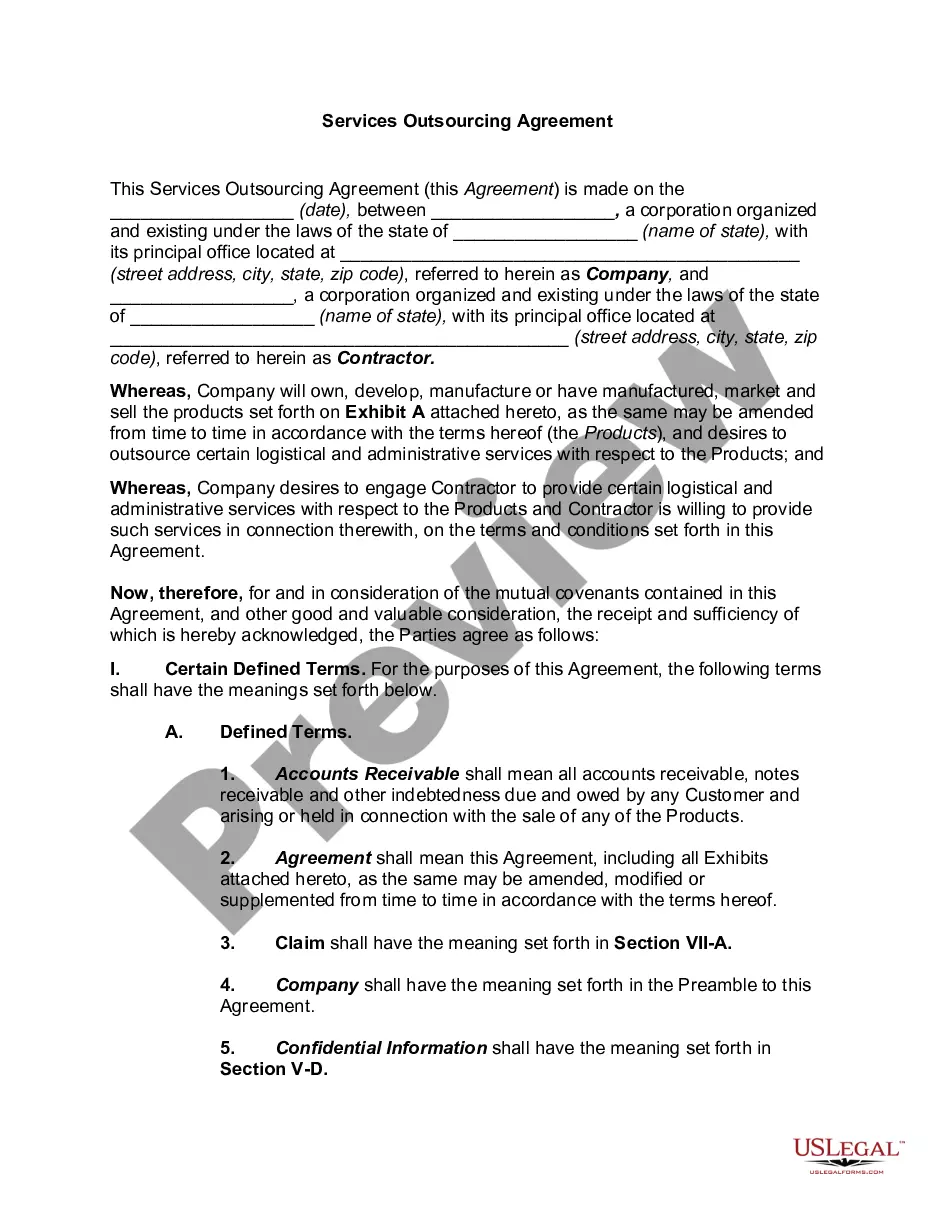

How to fill out Alcohol And Drug Free Workplace Policy?
US Legal Forms - one of the premier repositories of legal documents in the United States - offers a broad selection of legal document templates available for download or printing.
On the website, you can discover thousands of templates for business and personal purposes, organized by categories, states, or keywords. You can find the latest versions of forms like the Illinois Alcohol and Drug Free Workplace Policy in moments.
If you already have a membership, Log In and retrieve the Illinois Alcohol and Drug Free Workplace Policy through the US Legal Forms library. The Download button will appear on every form you view. You can access all previously downloaded forms from the My documents tab in your account.
Complete the transaction. Use your credit card or PayPal account to finalize the payment.
Choose the format and download the form to your device. Edit. Fill out, modify, print, and sign the downloaded Illinois Alcohol and Drug Free Workplace Policy. Every template saved in your account does not expire and is yours indefinitely. So, if you wish to download or print another copy, just navigate to the My documents section and click on the form you need. Access the Illinois Alcohol and Drug Free Workplace Policy with US Legal Forms, the most extensive library of legal document templates. Utilize a vast array of professional and state-specific templates that meet your business or personal needs and requirements.
- Make sure you have chosen the correct form for your city/state.
- Click the Preview button to check the form's content.
- Read the form description to ensure you have selected the correct document.
- If the form doesn’t meet your requirements, use the Search field at the top of the screen to find one that does.
- If you are satisfied with the form, confirm your selection by clicking the Get Now button.
- Then, select your desired pricing plan and provide your details to register for an account.
Form popularity
FAQ
Most successful drug-free workplace programs have five key components:A written policy.Employee education.Supervisor training.An employee assistance program (EAP)Drug testing.
Benefits of a Good Drug Free Workplace ProgramImproved Productivity. A drug free workplace is more productive workplace.Safer Workplace. A drug free workplace is also a safer workplace.Higher-Quality Employees. A drug-free workplace program starts with the hiring process.Workers' Compensation Insurance Incentives.
What is a zero-tolerance drug and alcohol policy? In most cases, the term zero-tolerance is used to refer to a drug and alcohol policy which sets cut-off levels, and stipulates that testing which reveals a breach of the policy will result in disciplinary action.
A person may develop tolerance to a drug when the drug is used repeatedly. For instance, when morphine or alcohol is used for a long time, larger and larger doses must be taken to produce the same effect.
Tolerance typically is divided into three functional categories (acute, rapid, and chronic), but determining precisely which molecular underpinning underlies which class of tolerance (or if they are exclusive) can be difficult.
Make sure to consider management and worker points of view. Expectations and prohibitions Prohibited substances should be clearly identified. Specify expected employee behavior, unacceptable behavior with regard to illegal and prescription drugs, circumstances that require drug testing, and procedures to be used.
Zero tolerance describes a perspective on drug use according to which it is maintained that the use of any amount of illicit drugs is harmful to the individual and society and that the goal of drug policy should be to prohibit any and all illicit drug use.
What is a "Drug Free Workplace?" It is an employment setting where all employees adhere to a program of policies and activities designed to provide a safe workplace, discourage alcohol and drug abuse and encourage treatment, recovery and the return to work of those employees with such abuse problems.
The Board shall ensure that the workplace policies and programs on the prevention and control of dangerous drugs, including drug testing, shall be disseminated to all officers and employees. The employer shall obtain a written acknowledgement from the employees that the policy has been read and understood by them.
Listen to pronunciation. (... TAH-leh-runts) A condition that occurs when the body gets used to a medicine so that either more medicine is needed or different medicine is needed.