Indiana Motion to Dismiss Proceeding supplemental Pursuant to T. R. 41e
What is this form?
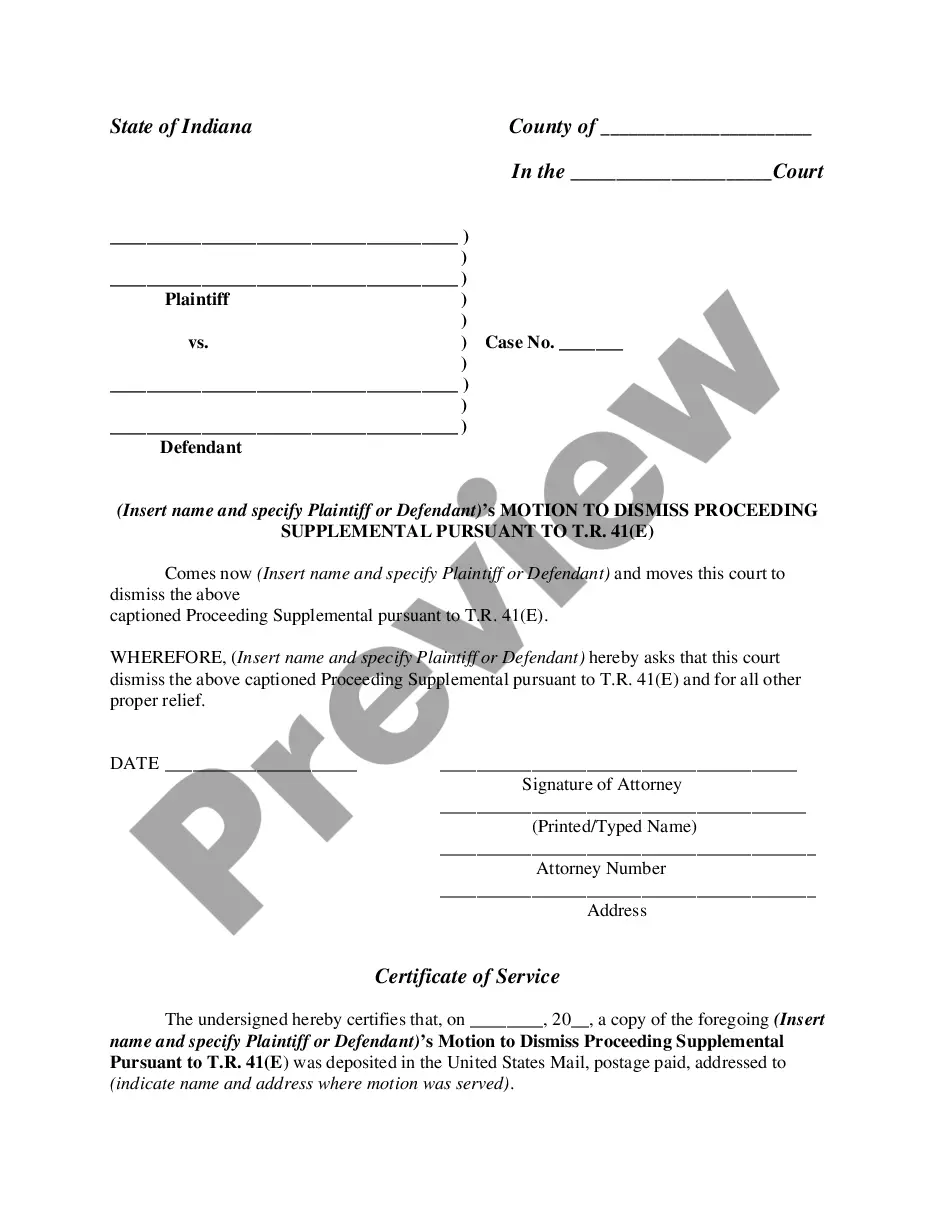
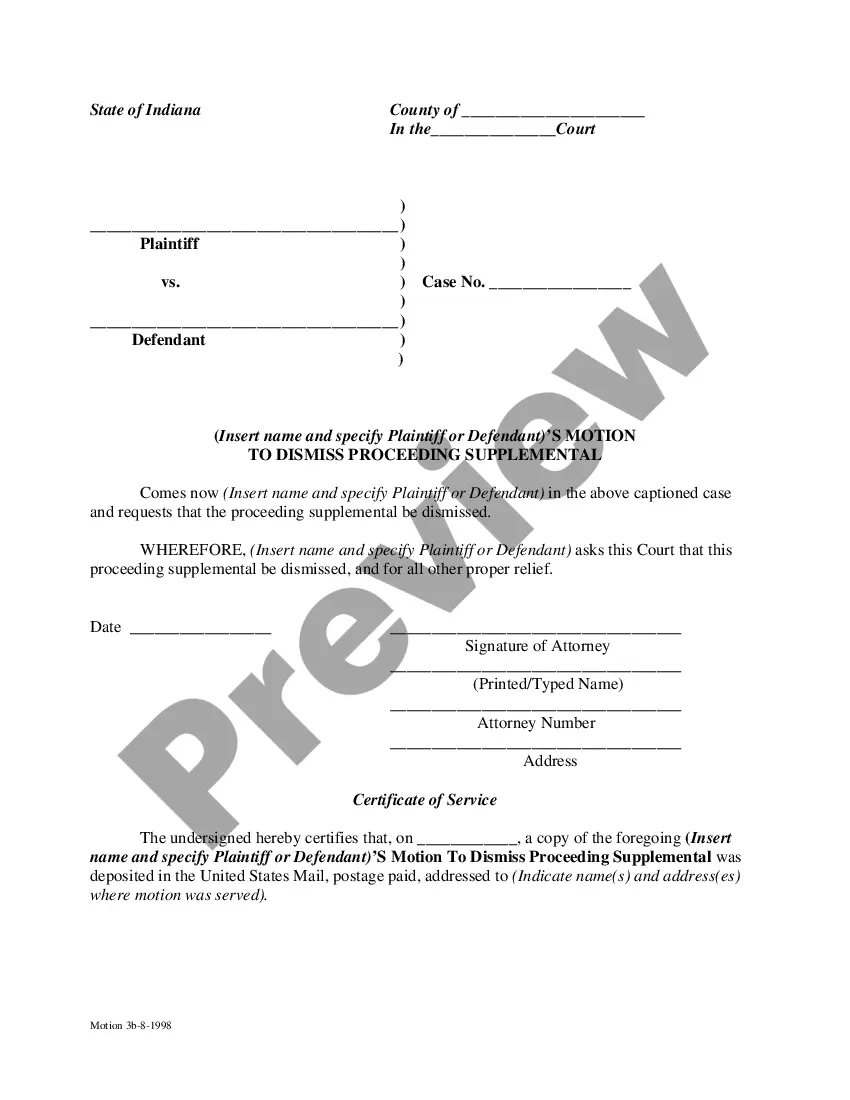
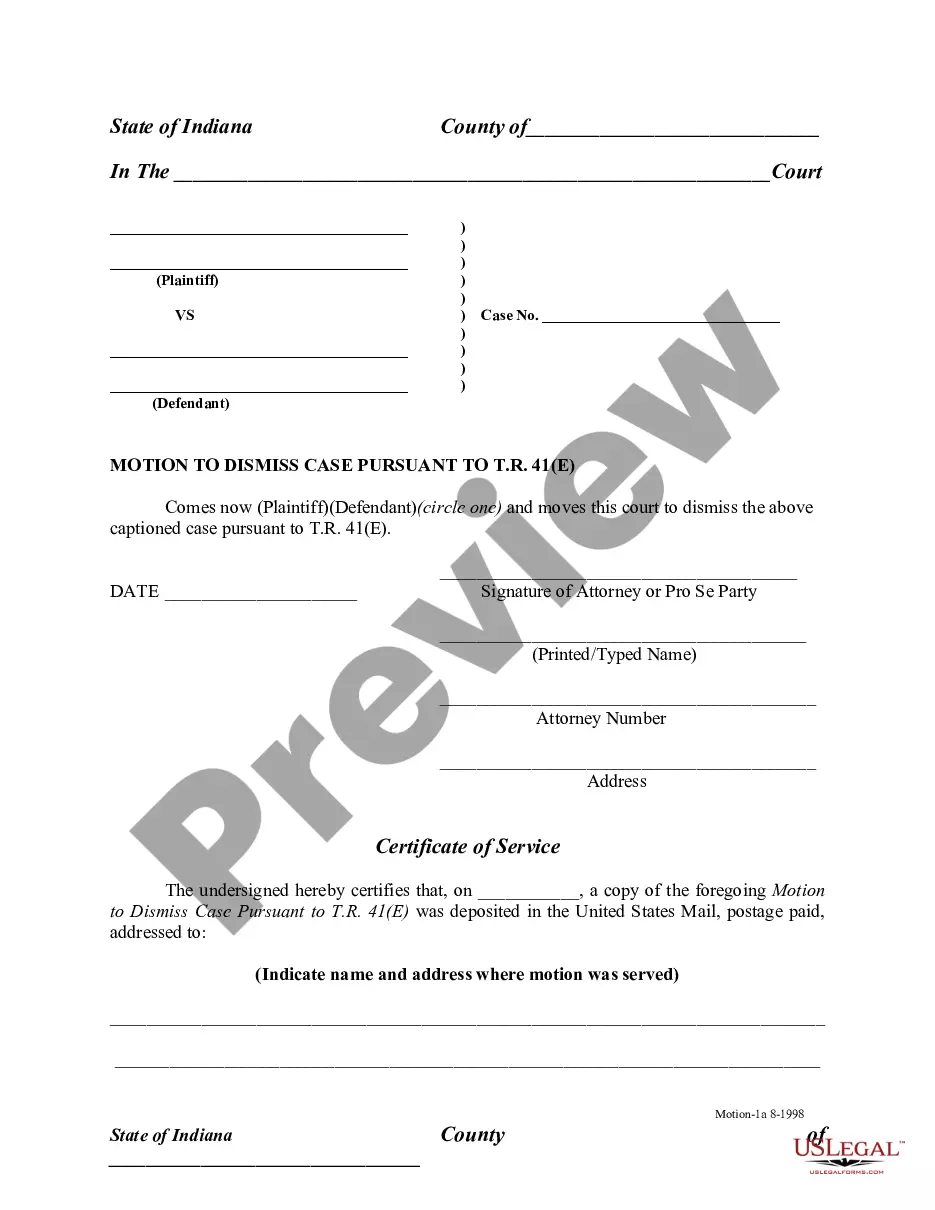
The Motion to Dismiss Proceeding Supplemental Pursuant to T.R. 41e is an official Indiana legal document used to request the dismissal of a supplementary proceeding in court. This form is critical for parties seeking to terminate legal actions that may be deemed unnecessary or irrelevant to the case at hand. Unlike other motions, this specific form adheres to the procedural rules established by Indiana law and is essential for ensuring compliance with legal standards.
Key parts of this document
- Case Information: Section to input the details of the court and the case number.
- Parties Involved: Fields to specify the names and roles of the Plaintiff and Defendant.
- Motion Request: A declaration requesting the dismissal of the proceeding under T.R. 41(E).
- Signature Line: Section for the attorney's signature, printed name, and attorney number.
- Certificate of Service: Area to confirm that the motion has been served to other involved parties.

When to use this document
This form should be used when a party involved in a legal proceeding believes that the supplemental proceeding is unwarranted and wishes to formally request its dismissal. Common situations include cases where the claims have been resolved, the information is outdated, or the proceeding lacks sufficient basis to continue.
Who can use this document
- Plaintiffs or defendants involved in a supplementary proceeding in Indiana.
- Attorneys representing clients in matters where a dismissal is desired.
- Individuals seeking to understand their legal options in the context of court proceedings.
Instructions for completing this form
- Identify the case: Fill in the name of the court and the case number at the top of the form.
- Specify the parties: Clearly state the names of the Plaintiff and Defendant involved.
- Articulate the motion: Clearly articulate your request for dismissal under T.R. 41(E) in the appropriate section.
- Sign the document: The attorney must sign and print their name along with their attorney number in the designated area.
- Complete the certificate of service: Indicate the names and addresses of all parties served with the motion.
Is notarization required?
This form does not typically require notarization unless specified by local law. However, it's important to review any specific requirements that may apply to your situation in Indiana.
Get your form ready online
Our built-in tools help you complete, sign, share, and store your documents in one place.
Make edits, fill in missing information, and update formatting in US Legal Forms—just like you would in MS Word.
Download a copy, print it, send it by email, or mail it via USPS—whatever works best for your next step.
Sign and collect signatures with our SignNow integration. Send to multiple recipients, set reminders, and more. Go Premium to unlock E-Sign.
If this form requires notarization, complete it online through a secure video call—no need to meet a notary in person or wait for an appointment.
We protect your documents and personal data by following strict security and privacy standards.

Make edits, fill in missing information, and update formatting in US Legal Forms—just like you would in MS Word.

Download a copy, print it, send it by email, or mail it via USPS—whatever works best for your next step.

Sign and collect signatures with our SignNow integration. Send to multiple recipients, set reminders, and more. Go Premium to unlock E-Sign.

If this form requires notarization, complete it online through a secure video call—no need to meet a notary in person or wait for an appointment.

We protect your documents and personal data by following strict security and privacy standards.
Common mistakes
- Failing to clearly identify the parties involved in the action.
- Omitting the case number or court name.
- Not signing the motion or providing incomplete attorney information.
- Neglecting to complete the certificate of service properly.
Why complete this form online
- Convenience: Easily access and download the form from anywhere.
- Editability: Tailor the form directly to your needs before finalizing.
- Reliable: Get a legally compliant document drafted by licensed attorneys.
Looking for another form?
Form popularity
FAQ
'Dismissed with prejudice' means that a case is permanently closed and cannot be brought back to court. This type of dismissal often indicates that the court believes the case lacks merit or that the party has failed to adhere to procedural rules. Knowing this term can have significant implications for your strategy in an Indiana Motion to Dismiss Proceeding supplemental Pursuant to T. R. 41e.
'Dismissed without prejudice' in Indiana means that a case is closed, but the party retains the right to refile the claim later. This type of dismissal offers flexibility and allows the party to reconsider their legal strategies or to gather more evidence. If you are navigating a legal issue, understanding this distinction is vital for your Indiana Motion to Dismiss Proceeding supplemental Pursuant to T. R. 41e.
No, because "for the purposes of Rule 15(a), a Rule 12(b)(6) motion to dismiss is not a responsive pleading and thus does not itself terminate plaintiff's unconditional right to amend a complaint under Rule 15(a)." Op.
When a defendant files a motion to dismiss, he asks the Court to throw out all or part of the plaintiff's case.The parties (well, their lawyers) will come to court, explain their positions on the motion to dismiss, and answer any questions posed by the judge. Finally, the judge will decide to grant or deny the motion.
You have 14 days to respond to a motion to dismiss.
Complaint. A lawsuit begins when a plaintiff (the party suing) files a complaint against a defendant (the party being sued.) Answer. The answer is the defendant's written response to the plaintiff's complaint. Counterclaim. Cross-claim. Amended Pleadings.
A pleading demands that the other party do something, while a motion requests that the judge in the case do something. These documents can be filed with the court before, during, or after the trial, though pleadings are typically filed at or near a case's outset.
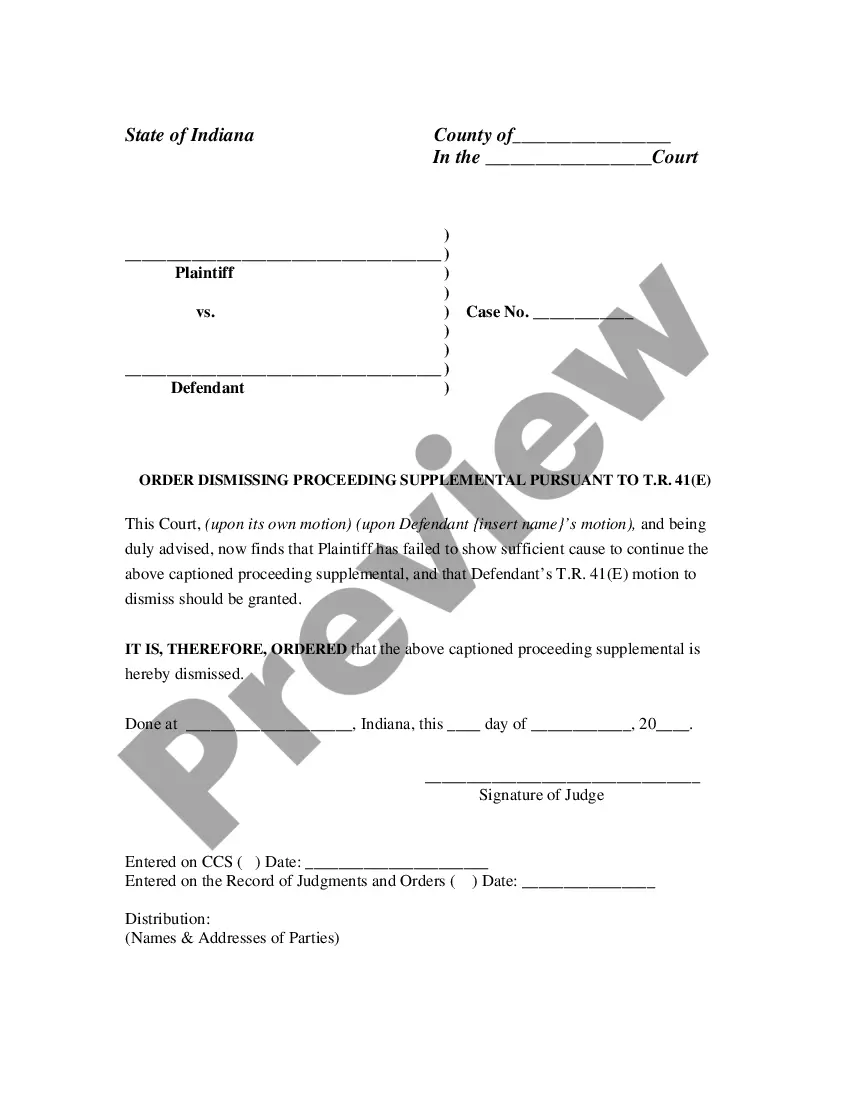
The court shall enter an order of dismissal at plaintiff's costs if the plaintiff shall not show sufficient cause at or before such hearing. The purpose of this rule is to ensure that plaintiffs will diligently pursue their claims.
The most common type of pre-answer motion is the motion to dismiss. A pre-answer motion to dismiss may be made on any of the grounds listed in FRCP 12(b). Courts may also consider other grounds for dismissal raised in a pre-answer motion to dismiss, including immunity or failure to exhaust administrative remedies.
A responsive pleading required under these rules, shall be served within twenty 20 days after service of the prior pleading. Unless the court specifies otherwise, a reply shall be served within twenty 20 days after entry of an order requiring it.