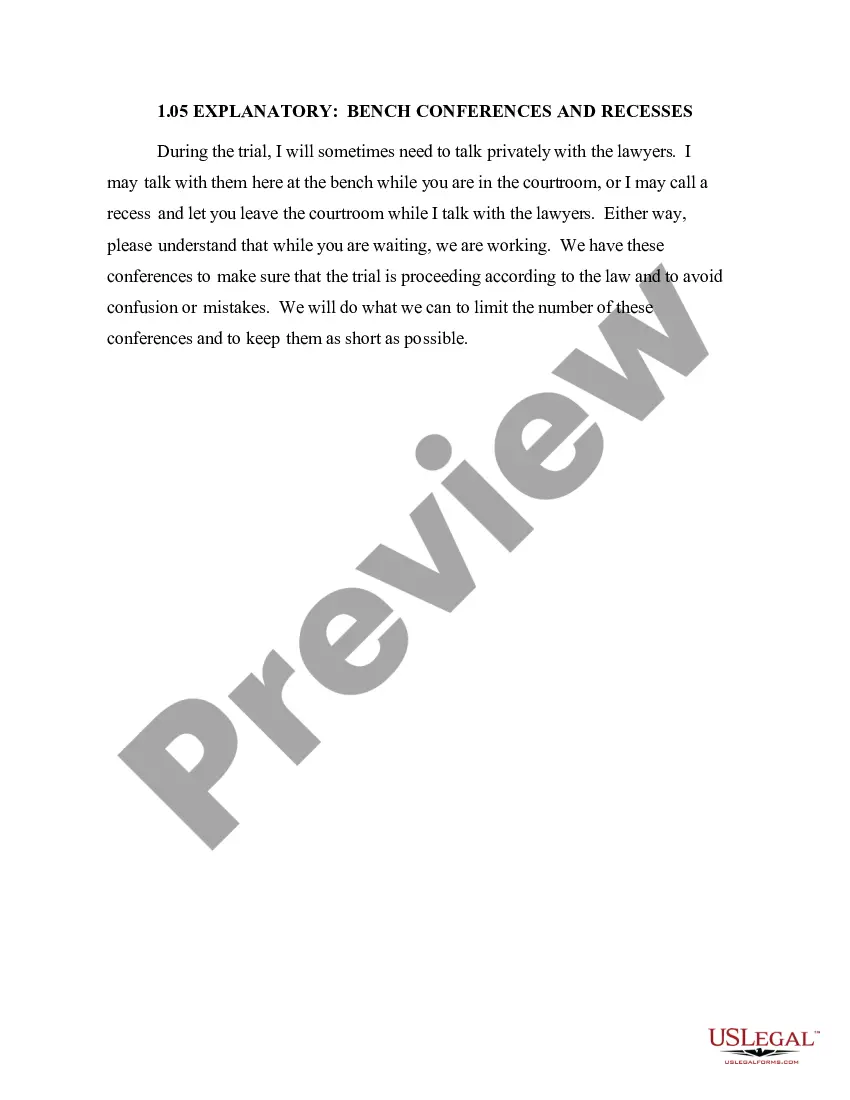
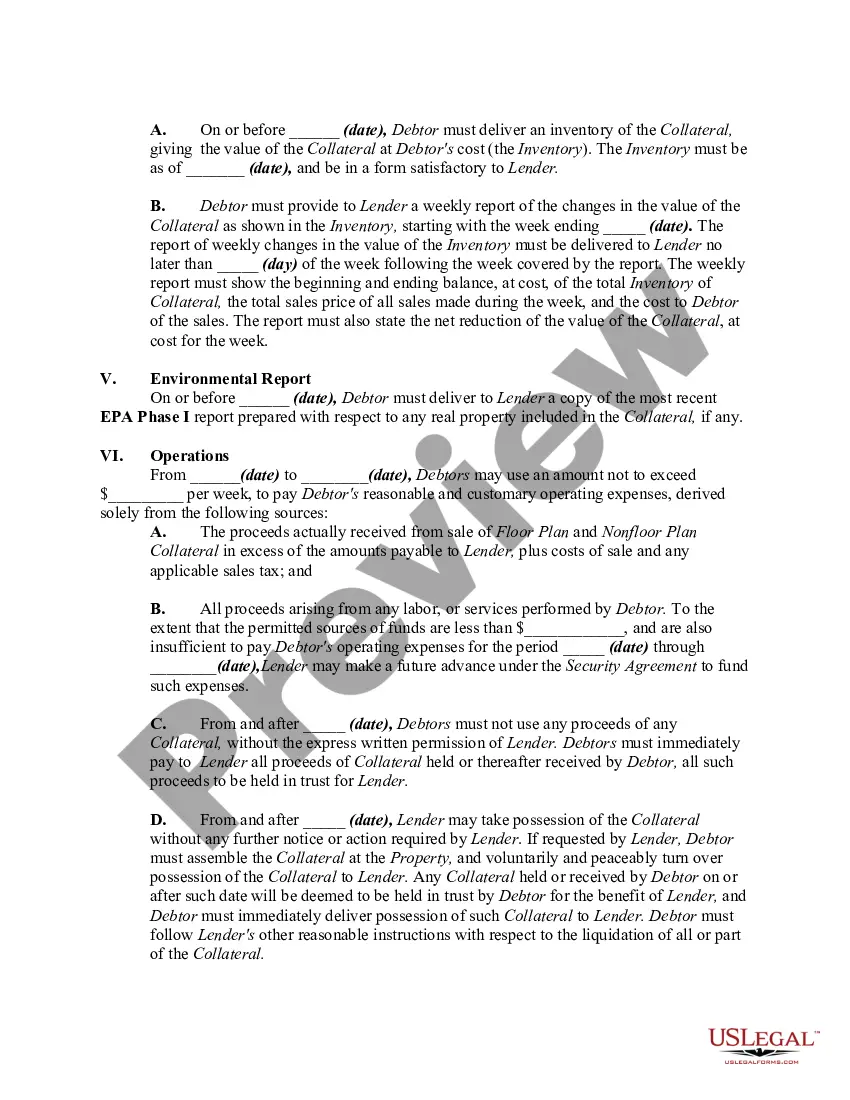
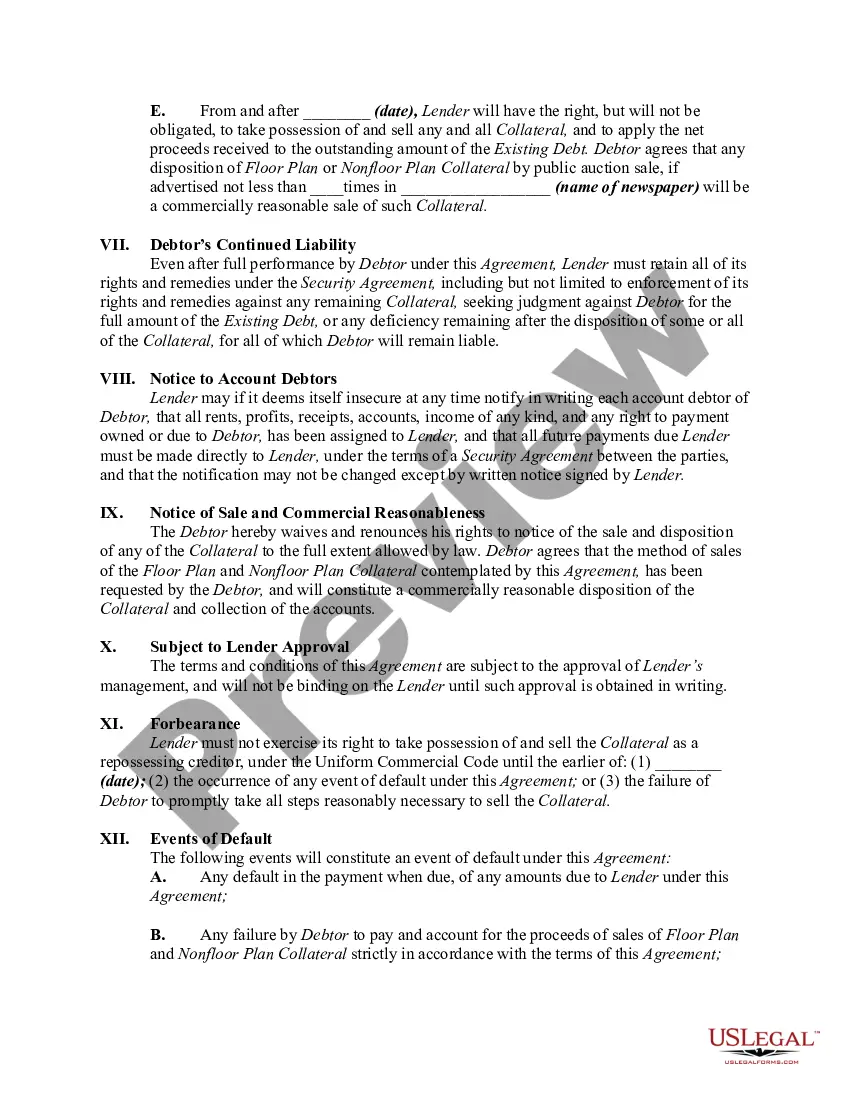
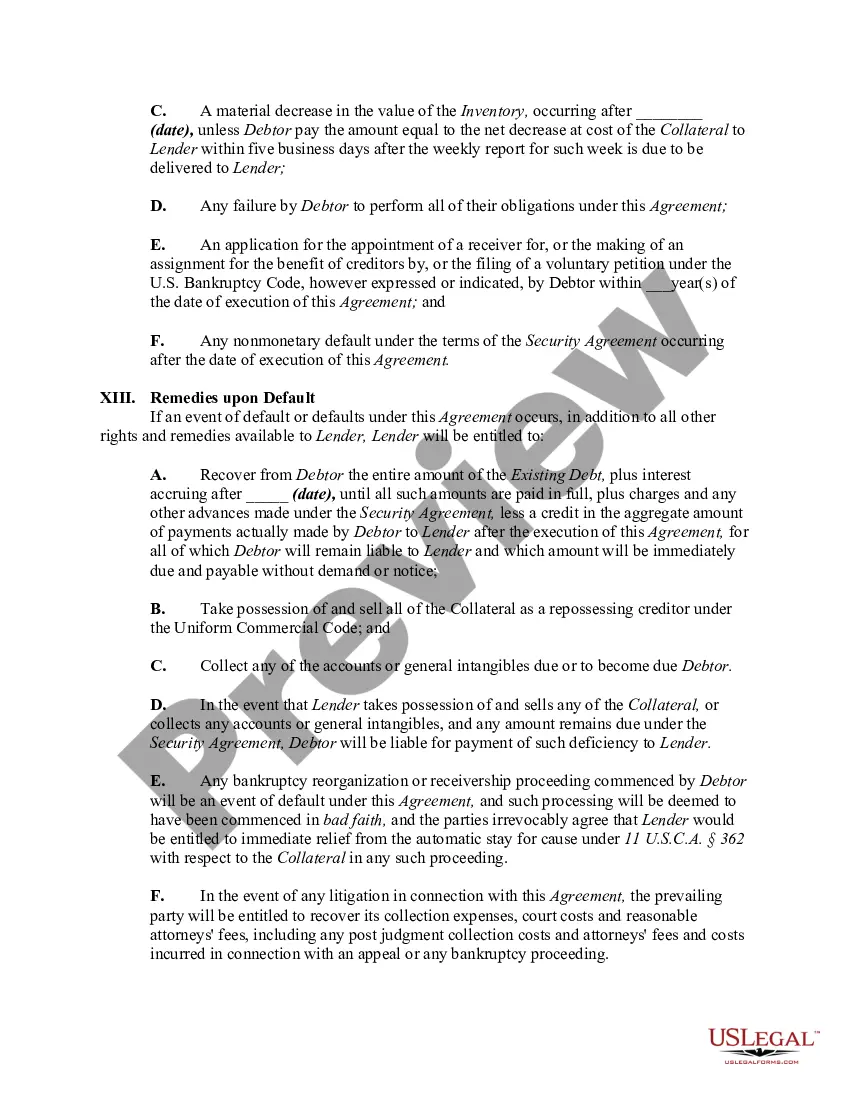
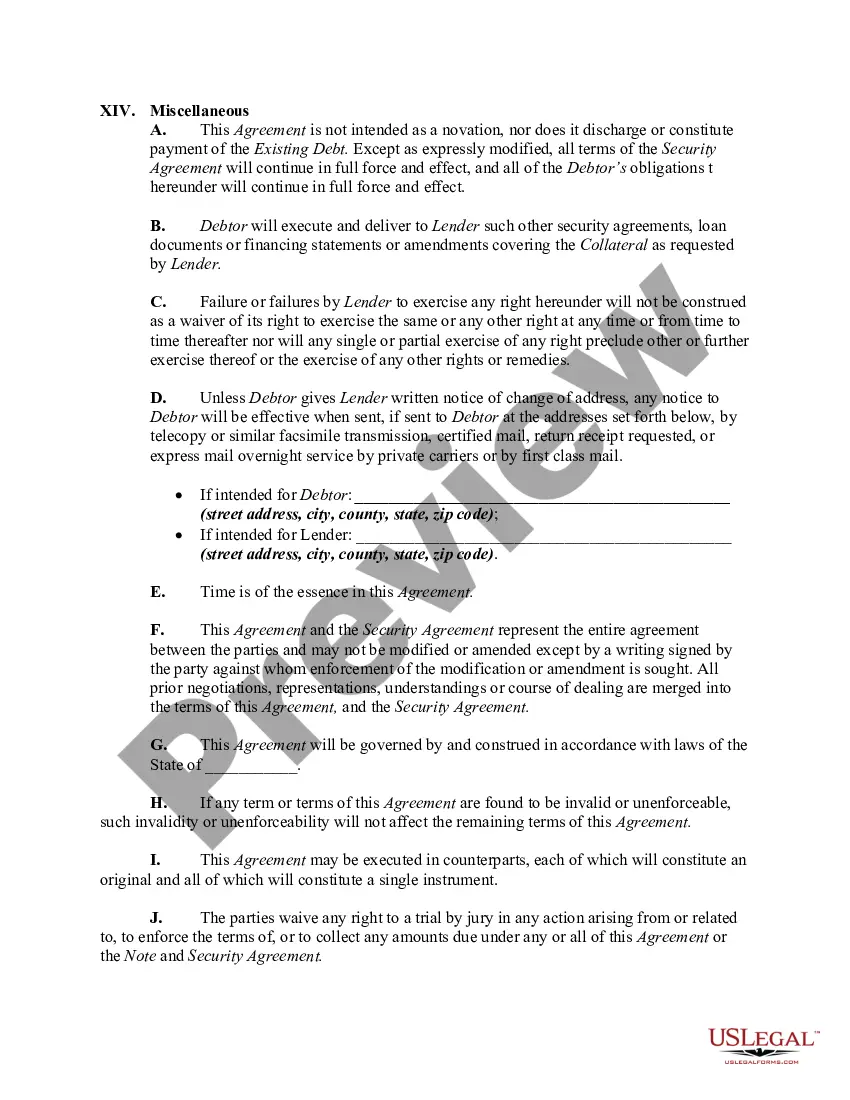
Indiana Liquidation Agreement regarding Debtor's Collateral in Satisfaction of Indebtedness
Description
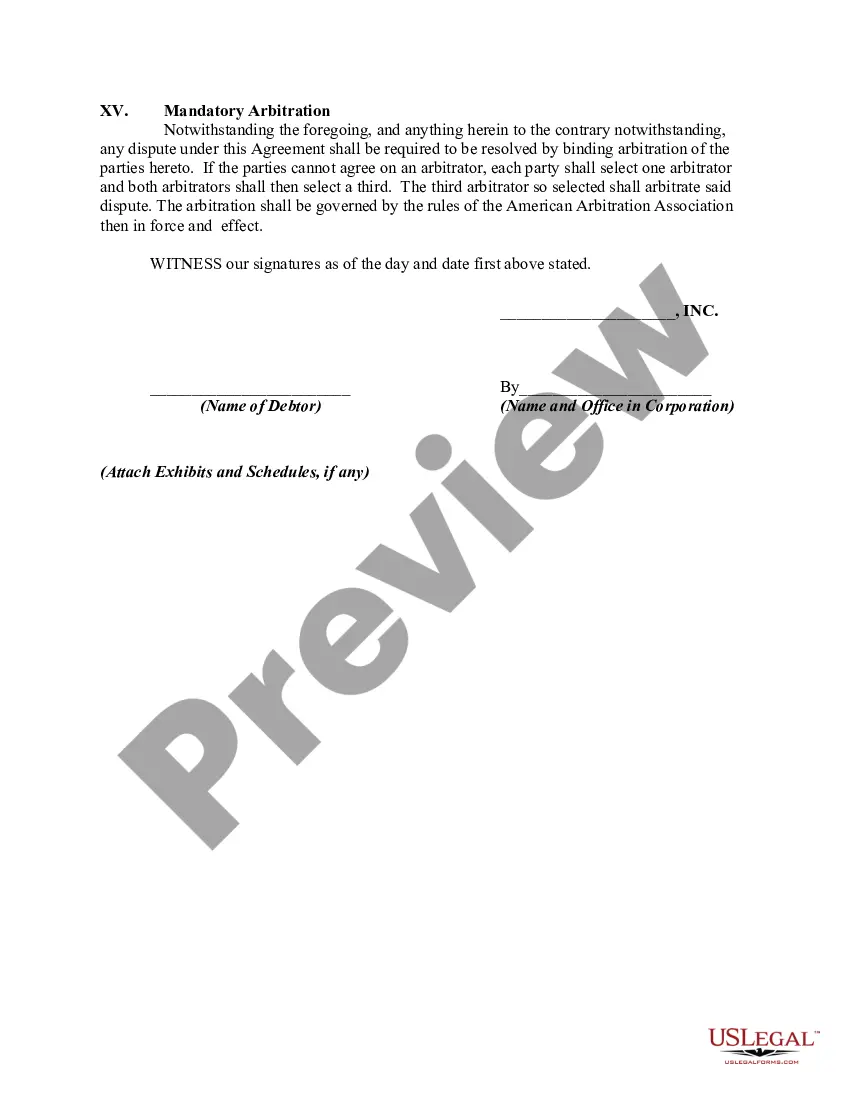
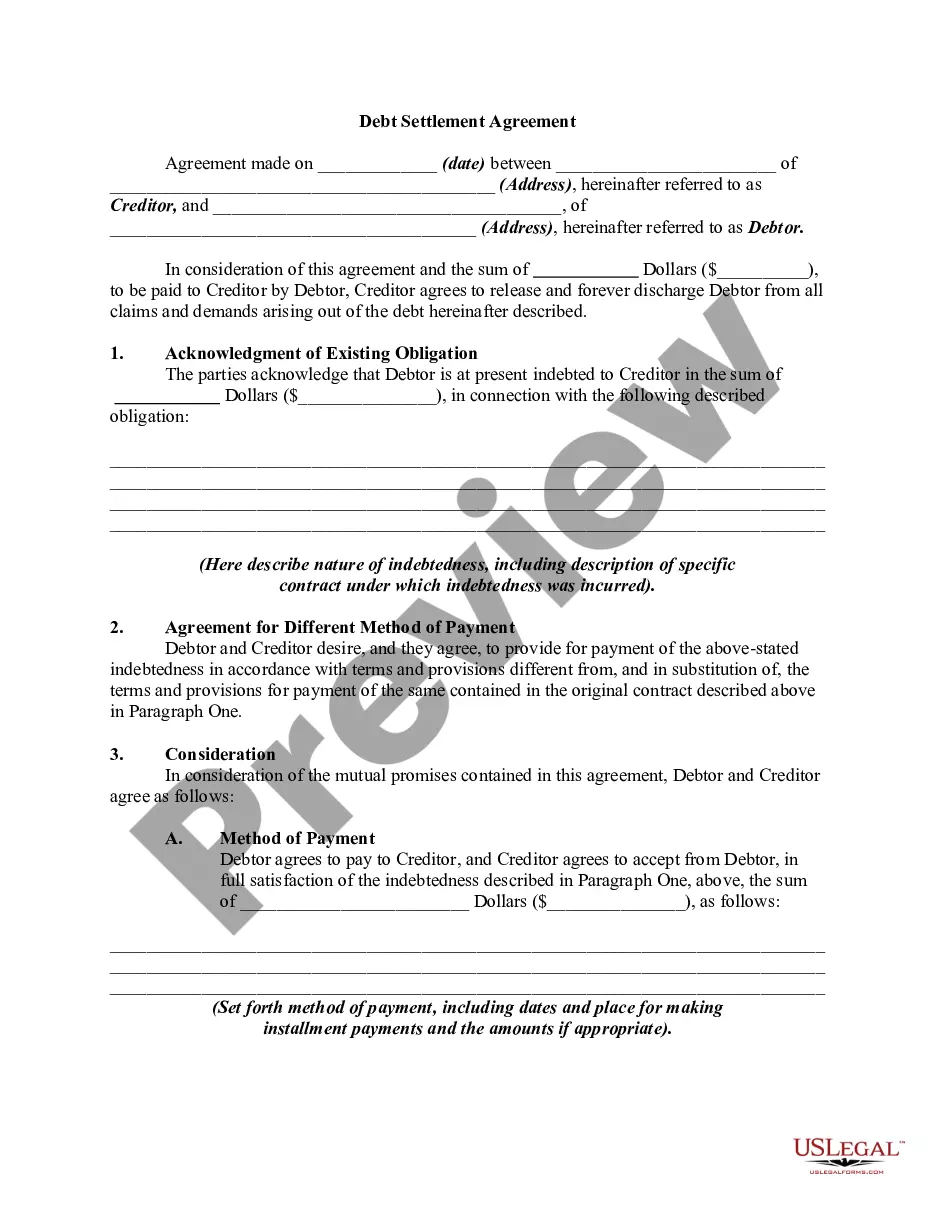
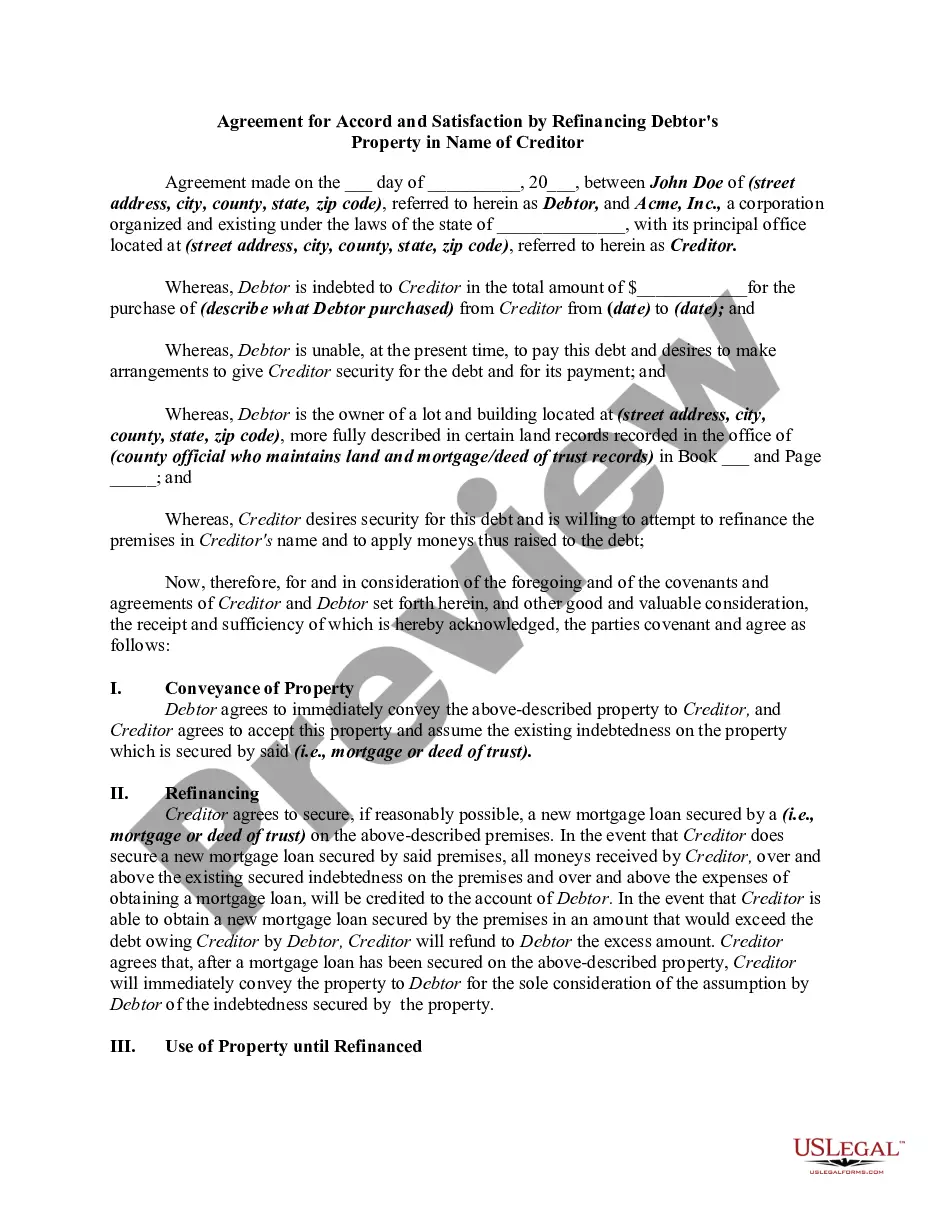
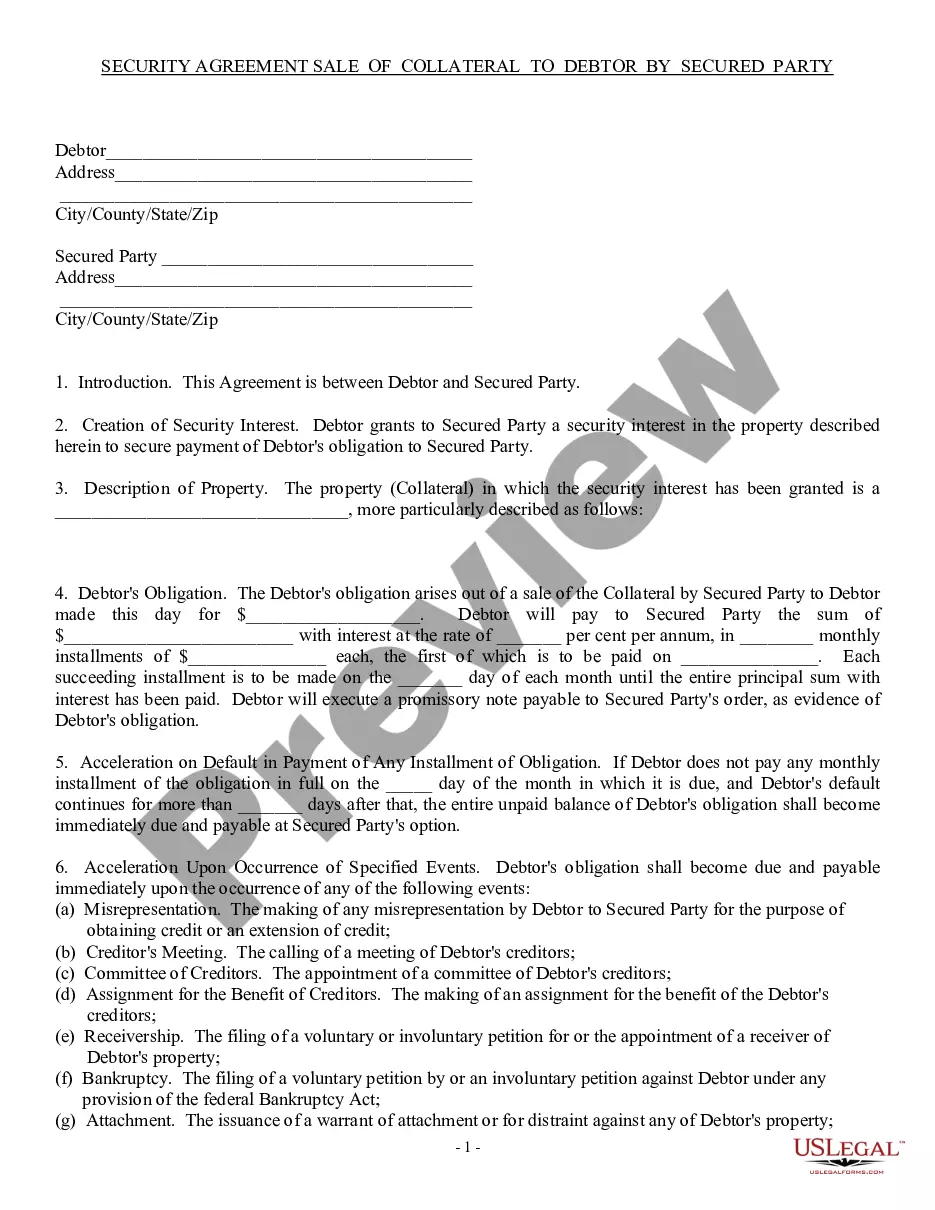
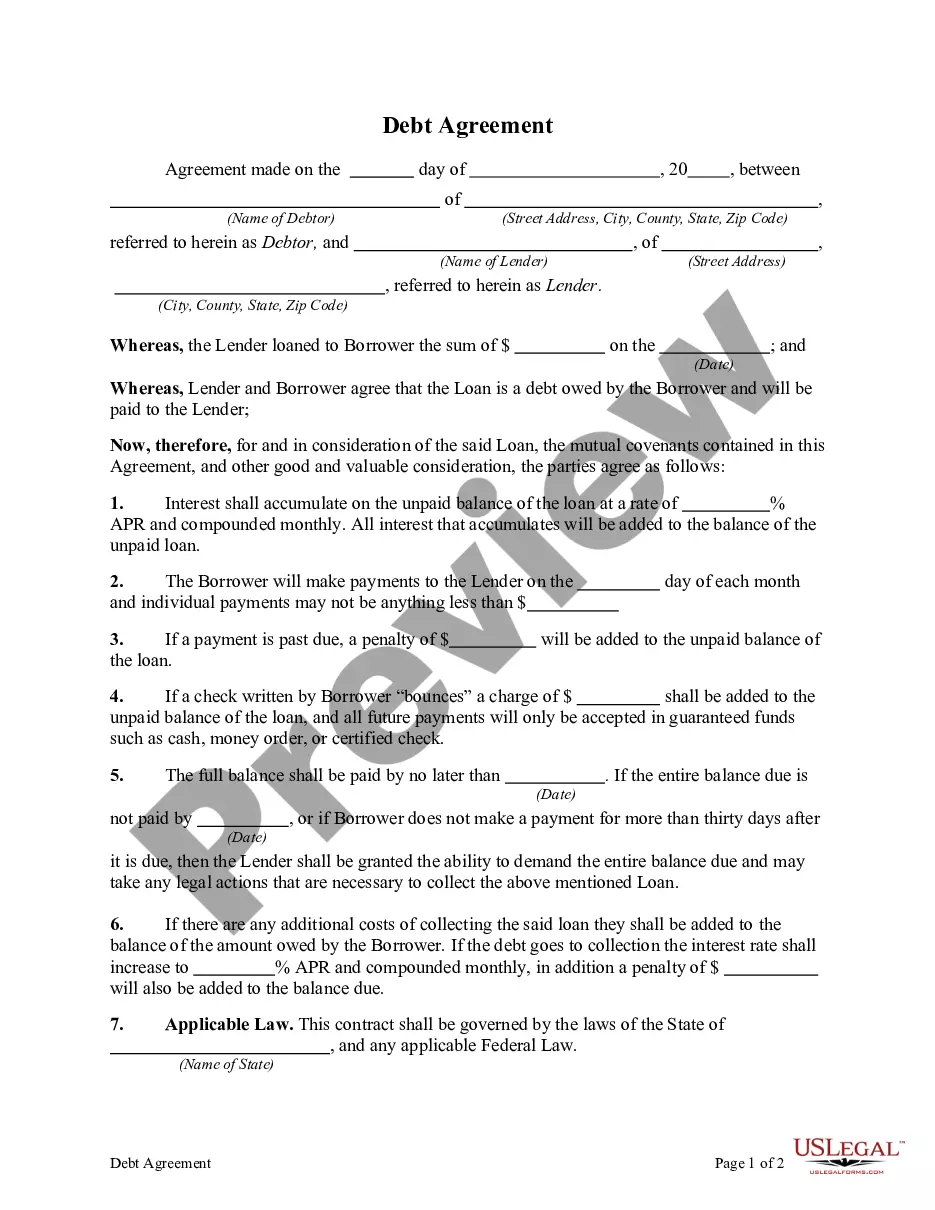
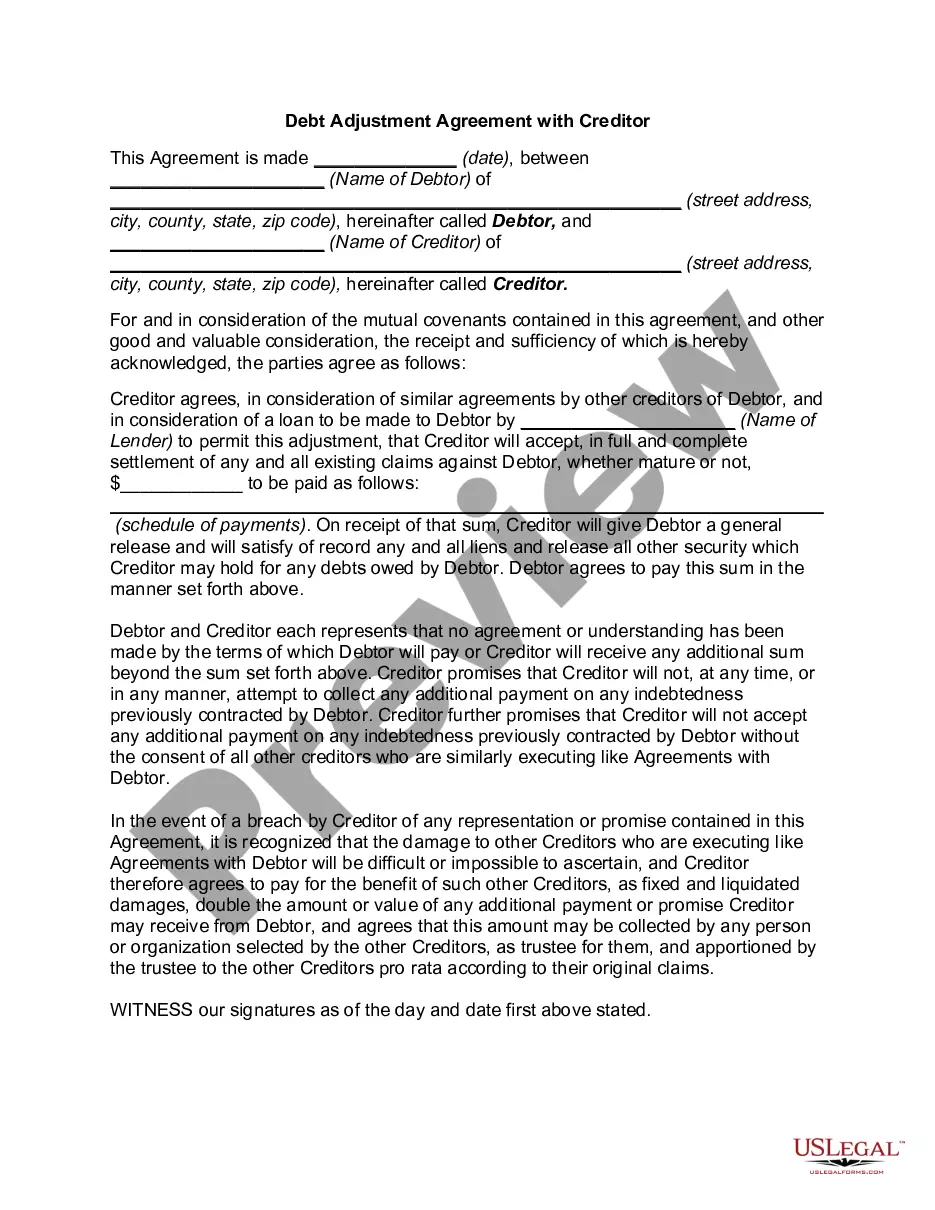
Get your form ready online
Our built-in tools help you complete, sign, share, and store your documents in one place.
Make edits, fill in missing information, and update formatting in US Legal Forms—just like you would in MS Word.
Download a copy, print it, send it by email, or mail it via USPS—whatever works best for your next step.
Sign and collect signatures with our SignNow integration. Send to multiple recipients, set reminders, and more. Go Premium to unlock E-Sign.
If this form requires notarization, complete it online through a secure video call—no need to meet a notary in person or wait for an appointment.
We protect your documents and personal data by following strict security and privacy standards.

Make edits, fill in missing information, and update formatting in US Legal Forms—just like you would in MS Word.

Download a copy, print it, send it by email, or mail it via USPS—whatever works best for your next step.

Sign and collect signatures with our SignNow integration. Send to multiple recipients, set reminders, and more. Go Premium to unlock E-Sign.

If this form requires notarization, complete it online through a secure video call—no need to meet a notary in person or wait for an appointment.

We protect your documents and personal data by following strict security and privacy standards.
Looking for another form?
How to fill out Liquidation Agreement Regarding Debtor's Collateral In Satisfaction Of Indebtedness?
Locating the appropriate authentic document template can be a challenge. Naturally, there are numerous templates accessible online, but how can you identify the correct format you need? Make use of the US Legal Forms website. The service provides a multitude of templates, such as the Indiana Liquidation Agreement regarding Debtor's Collateral in Satisfaction of Indebtedness, which you can utilize for business and personal purposes. All forms are verified by professionals and comply with federal and state regulations.
If you are already registered, sign in to your account and click on the Download button to access the Indiana Liquidation Agreement regarding Debtor's Collateral in Satisfaction of Indebtedness. Use your account to review the legal forms you have previously acquired. Navigate to the My documents section of your account and download another copy of the document you need.
If you are a new user of US Legal Forms, here are simple instructions for you to follow: First, ensure that you have selected the correct form for your location/state. You can preview the form using the Review button and examine the form details to confirm it is suitable for you. If the form does not meet your needs, use the Search field to find the appropriate template. Once you are confident that the form is correct, select the Purchase now button to acquire the form. Choose the payment plan you prefer and enter the required information. Create your account and pay for the order using your PayPal account or credit card. Choose the file format and download the legal document template to your device. Complete, modify, print, and sign the obtained Indiana Liquidation Agreement regarding Debtor's Collateral in Satisfaction of Indebtedness.
By using US Legal Forms, you ensure that you are accessing reliable and compliant legal documents tailored to your needs.
- US Legal Forms is the largest repository of legal templates where you can find various document layouts.
- Utilize the service to obtain professionally crafted documents that adhere to state requirements.
- Make sure to follow the registration process for new users.
- Review your selected forms carefully before proceeding with the purchase.
- Always keep a copy of your downloaded documents for future reference.
- Utilize the search function effectively to quickly find the needed forms.
Form popularity
FAQ
Secured party is a lender, seller, or other person in whose favor a security interest exists. Debtor is the person who owes payment or performance of the obligation that is secured. Security agreement is the agreement between the secured party and the debtor that creates or provides for a security interest.
It does not matter whether the agreement is between individuals or companies. A security agreement must contain a description of the collateral that reasonably identifies it; "all the debtor's assets" does not reasonably identify the collateral.
Your failure to perfect a security interest may result in a secured creditor with a blanket lien or a bankruptcy trustee or debtor-in-possession obtaining title to your property.
Ing to UCC Section 9-504, a financ- ing statement ?sufficiently indicates the collateral that it covers? if the financing statement provides (1) a description of the collateral pursuant to UCC Section 9-108, or (2) a generic description of all assets or all personal property of the debtor if the description of ...
At a minimum, a valid security agreement consists of a description of the collateral, a statement of the intention of providing security interest, and signatures from all parties involved. Most security agreements, however, go beyond these basic requirements.
Default occurs when the debtor either fails to make a payment when due or violates his or her security agreement. After a debtor defaults, the secured party may obtain possession or control of the collateral by written consent of the debtor or by obtaining an order from the tribal court.
Collateral can include business-related items such as inventory, business furniture, accounts receivable, or some business savings accounts. If a borrower defaults, the security agreement allows the lender to collect the borrower's collateral and either sell it or hold onto it until the loan is repaid.
A security agreement that identifies all the debtor's assets is insufficient under the UCC because it does not reasonably identify the collateral. A security agreement must contain a description of the collateral that reasonably identifies it.