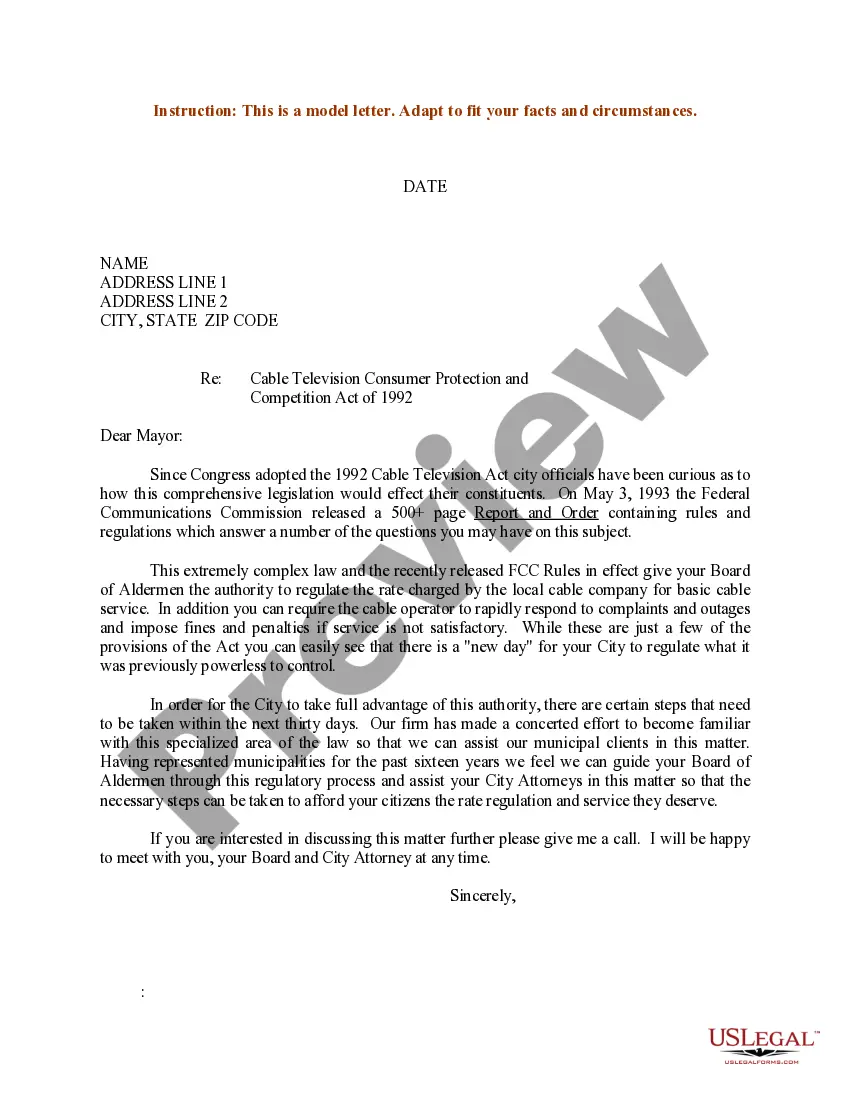
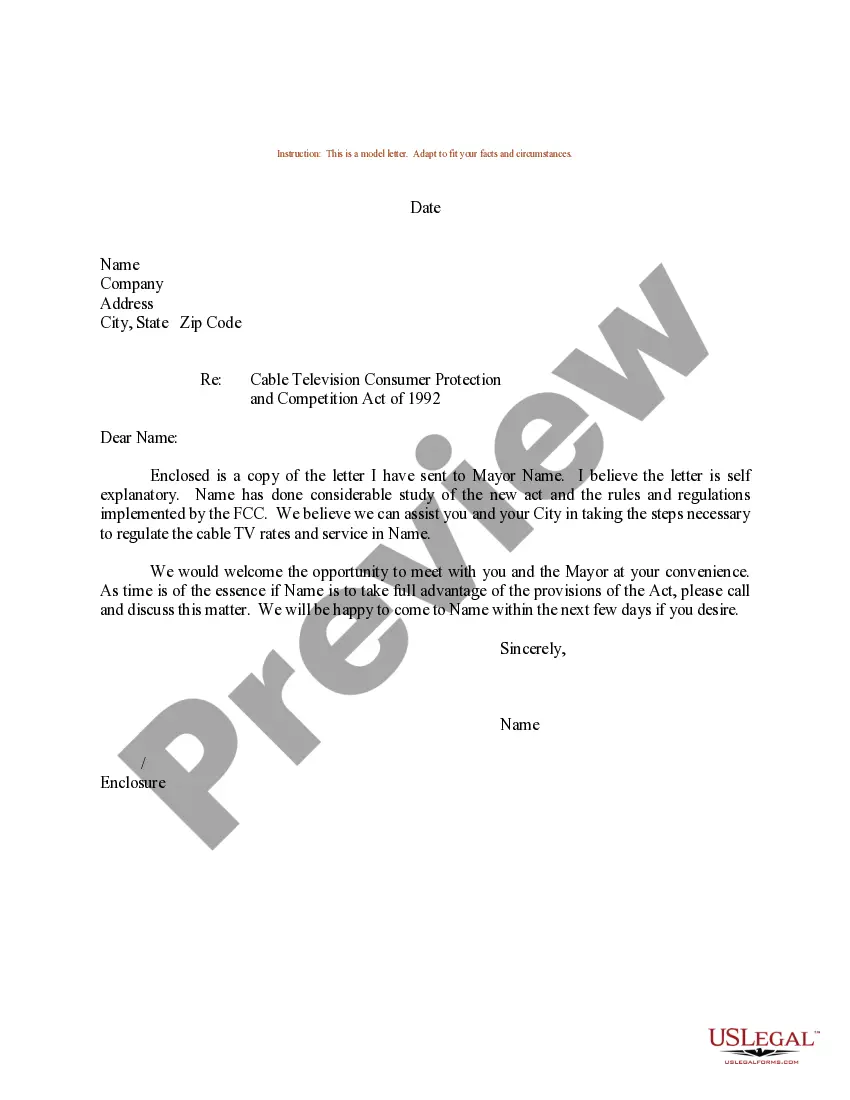
Indiana Sample Letter to Mayor concerning Cable Television Consumer Protection and Competition Act of 1992
Description
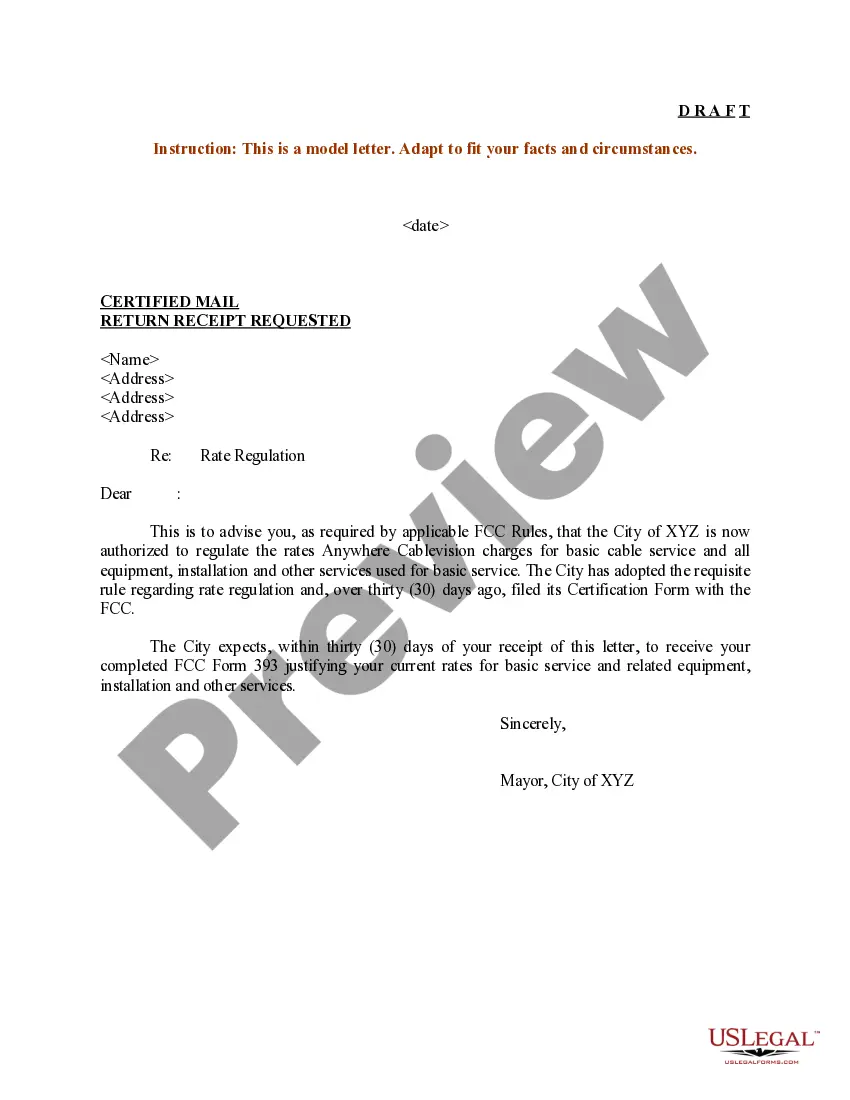
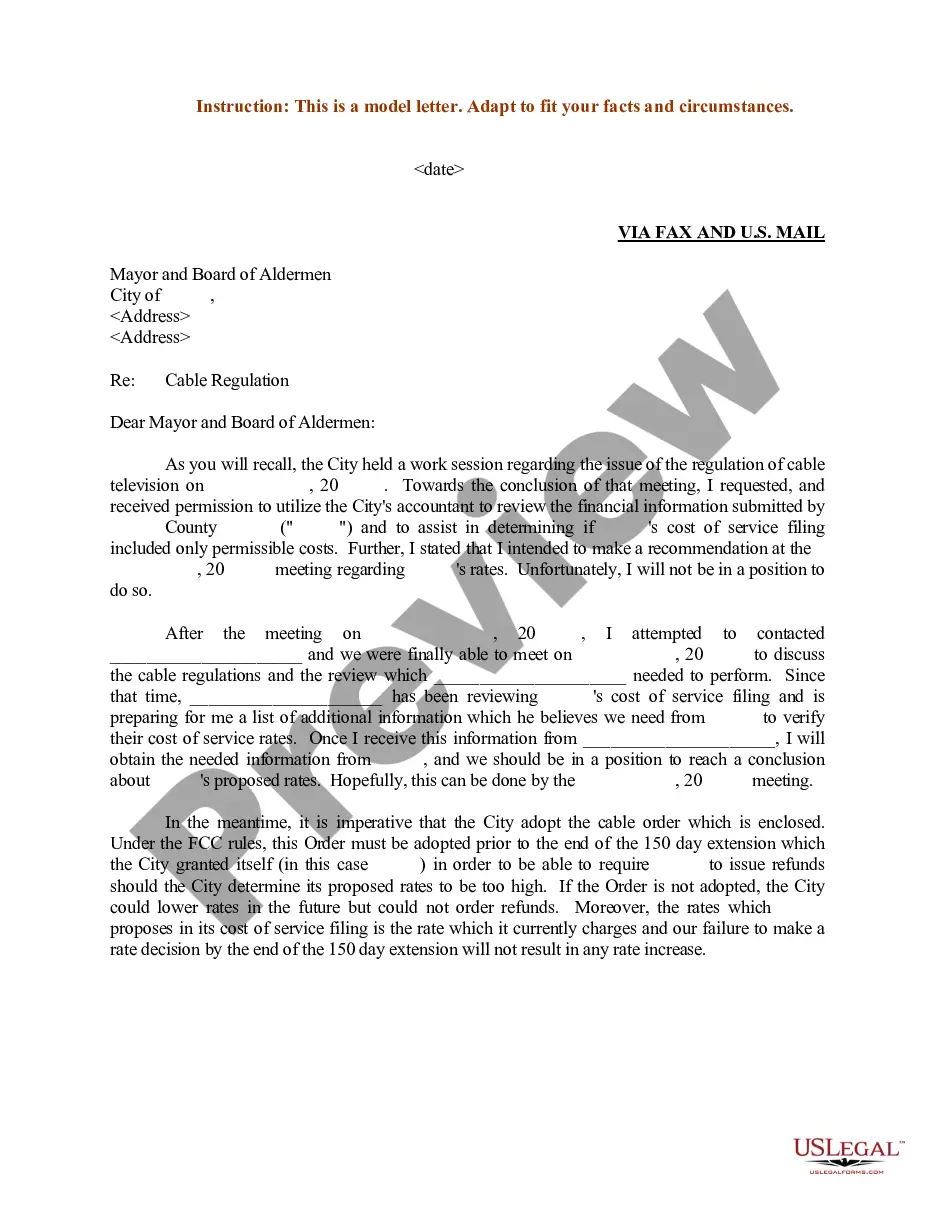
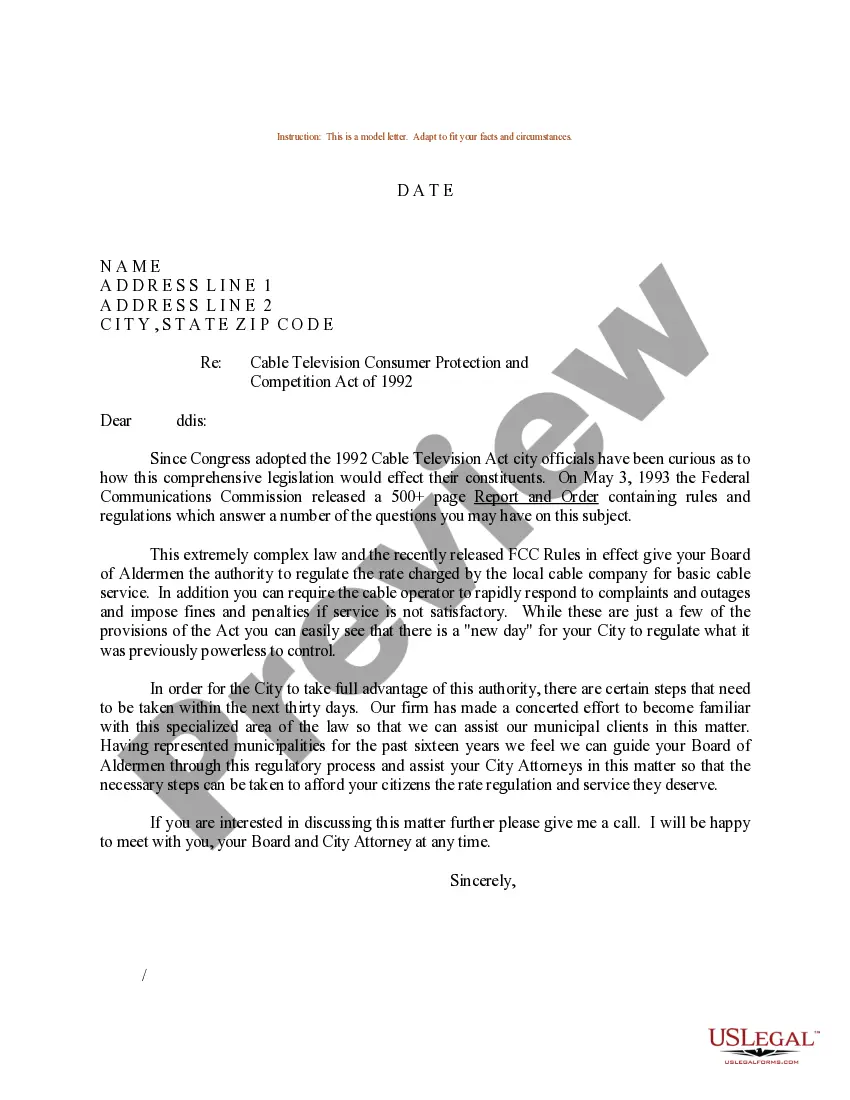

How to fill out Sample Letter To Mayor Concerning Cable Television Consumer Protection And Competition Act Of 1992?
US Legal Forms - one of the largest repositories of authorized documents in America - offers a vast selection of legal paper templates that you can download or print.
Utilizing the website, you can discover numerous forms for business and individual purposes, organized by type, state, or keywords. You will find the latest versions of forms such as the Indiana Sample Letter to Mayor regarding the Cable Television Consumer Protection and Competition Act of 1992 in just moments.
If you possess a subscription, Log In and download the Indiana Sample Letter to Mayor concerning the Cable Television Consumer Protection and Competition Act of 1992 from the US Legal Forms library. The Download button will be visible on each form you view. You can access all previously downloaded forms in the My documents tab of your account.
Process the transaction. Use your Visa or Mastercard or PayPal account to complete the purchase.
Choose the format and download the form to your device. Edit. Fill out, modify, and print and sign the downloaded Indiana Sample Letter to Mayor concerning the Cable Television Consumer Protection and Competition Act of 1992. Each template you add to your account has no expiration date and is yours permanently. Therefore, to download or print another copy, simply visit the My documents section and click on the form you need. Access the Indiana Sample Letter to Mayor regarding the Cable Television Consumer Protection and Competition Act of 1992 with US Legal Forms, one of the most comprehensive collections of legal document templates. Utilize a multitude of professional and state-specific templates that cater to your business or personal needs and requirements.
- Ensure you have selected the correct form for your area/region.
- Click the Preview button to review the form's details.
- Read the form description to confirm that you have chosen the right one.
- If the form does not meet your needs, use the Search field at the top of the screen to find the one that does.
- If you are satisfied with the form, confirm your selection by clicking the Purchase now button.
- Then, select the payment plan you prefer and provide your information to register for an account.
Form popularity
FAQ
In theory the law was designed to grant women their own national identity; however, in practice, as it still retained vestiges of coverture, tying a woman's legal identity to her husband's, it had to be amended multiple times before it granted women citizenship in their own right.
In response, the Congress passed the 1992 Cable Act, which established a combination of must carry and retransmission consent provisions. Stations were given the right to either require cable operators to carry their signal at no cost, or negotiate with cable operators for carriage fees that the latter could refuse.
The Cable Television Consumer Protection and Competition Act of 1992 (also known as the 1992 Cable Act) is a United States federal law which required cable television systems to carry most local broadcast television channels and prohibited cable operators from charging local broadcasters to carry their signal.
In adopting the 1992 Cable Act, Congress stated that it wanted to promote the availability of diverse views and information, to rely on the marketplace to the maximum extent possible to achieve that availability, to ensure cable operators continue to expand their capacity and program offerings, to ensure cable ...
The Telecommunications Act of 1996?Between 1984 and 1996, cable rules continue to change Telecommunications Act of 1996: Brought cable under federal rules ?Rules that had long governed the telephone, radio, and TV industries Phone companies, long-distance carriers, and cable operators could enter one another's markets ...
The words and images that come via cable are not through public, broadcast airwaves, or what someone can get on a TV with an antenna. The FCC's regulation only applies to licensed, local broadcast outlets that transmit through the airwaves. This is largely because of the way these regulations came to be.