Indiana Defined-Benefit Pension Plan and Trust Agreement
Description
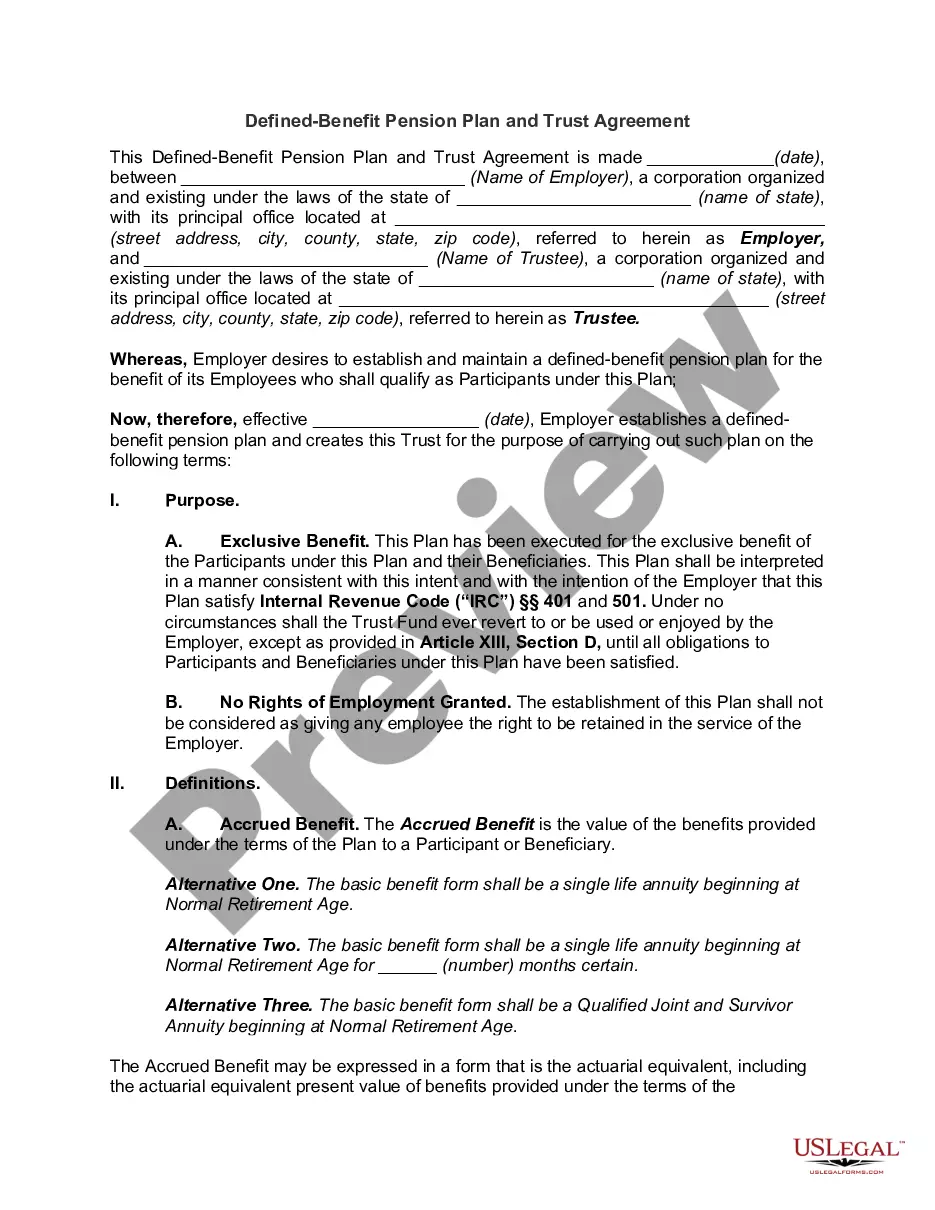
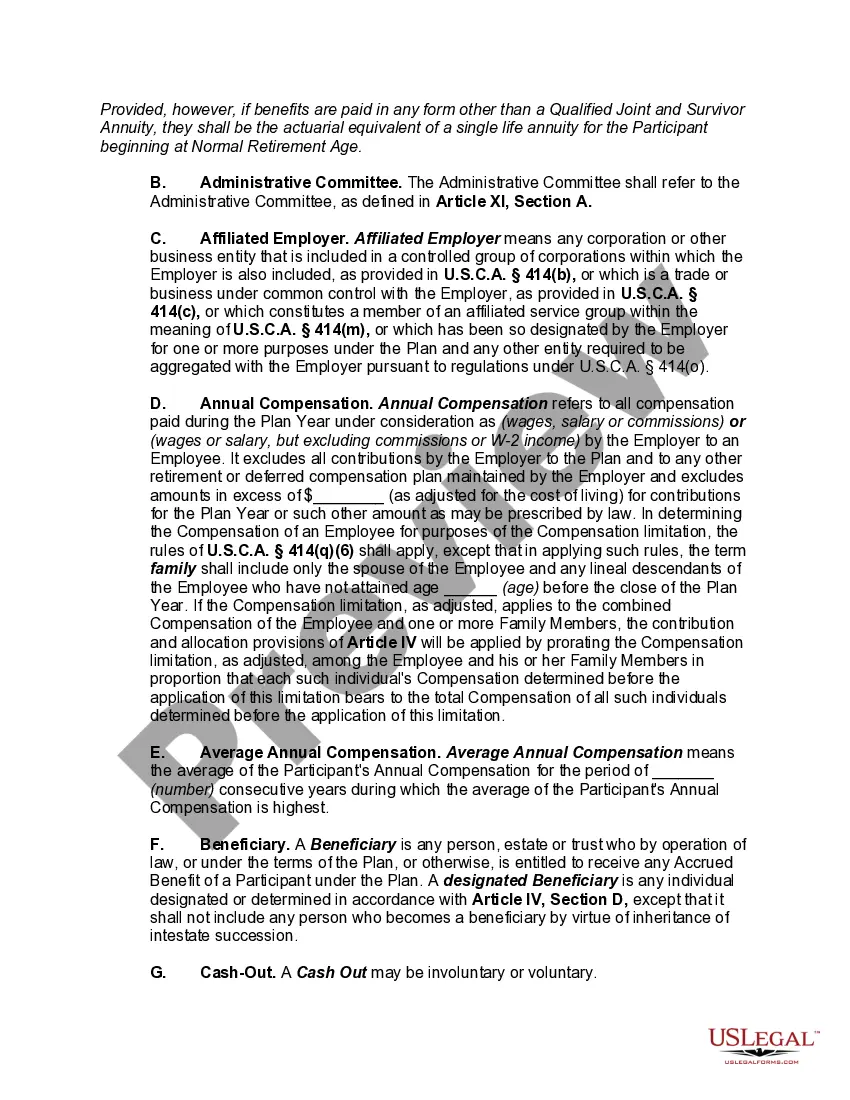
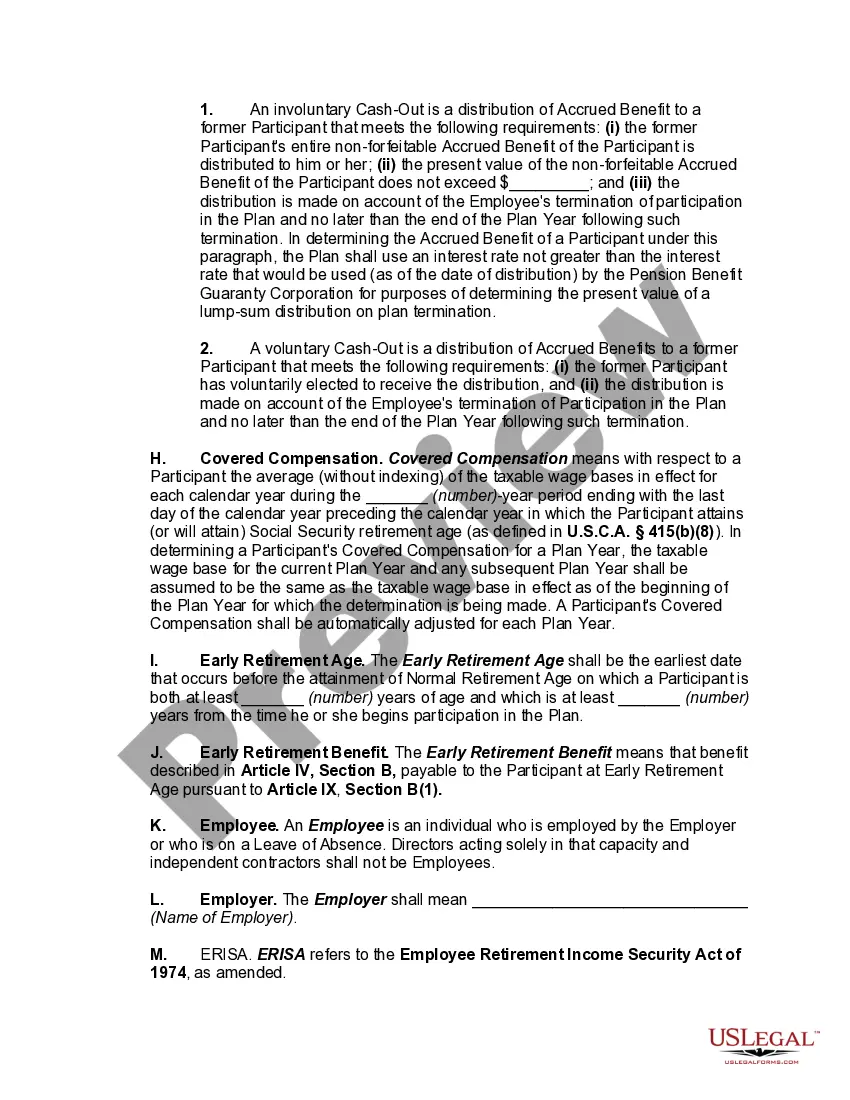
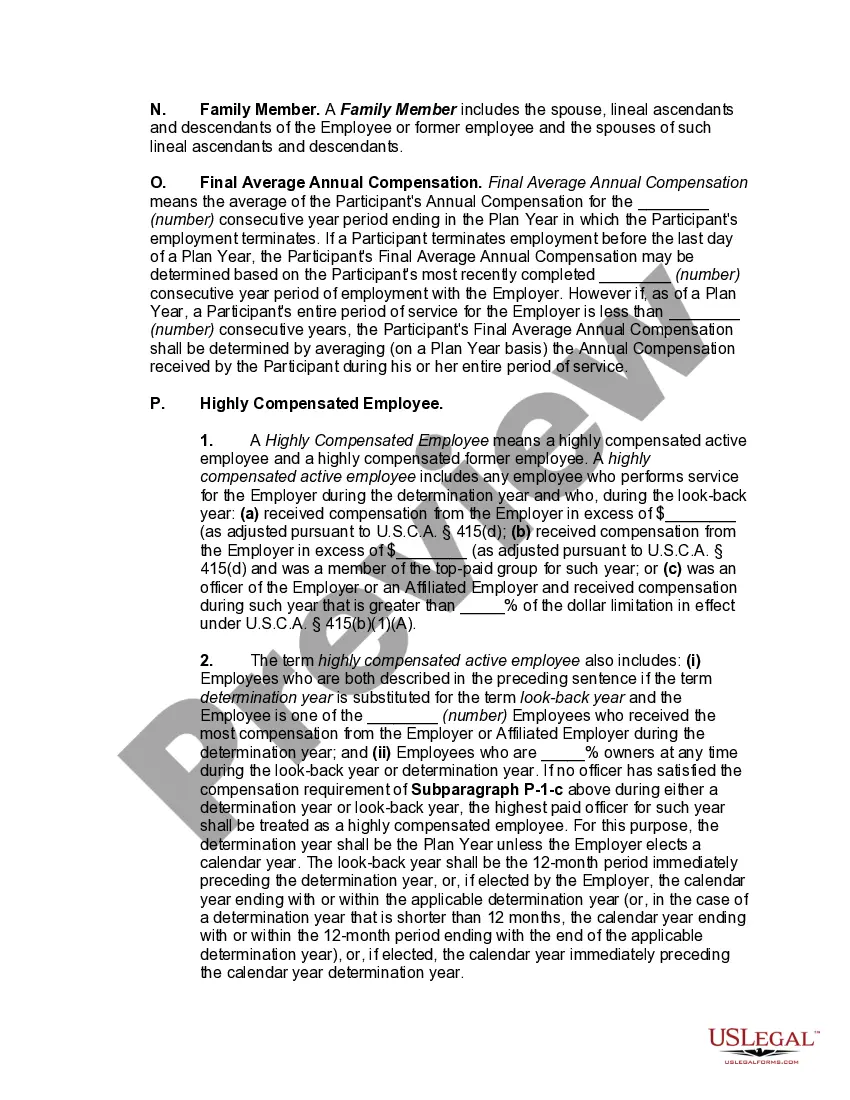
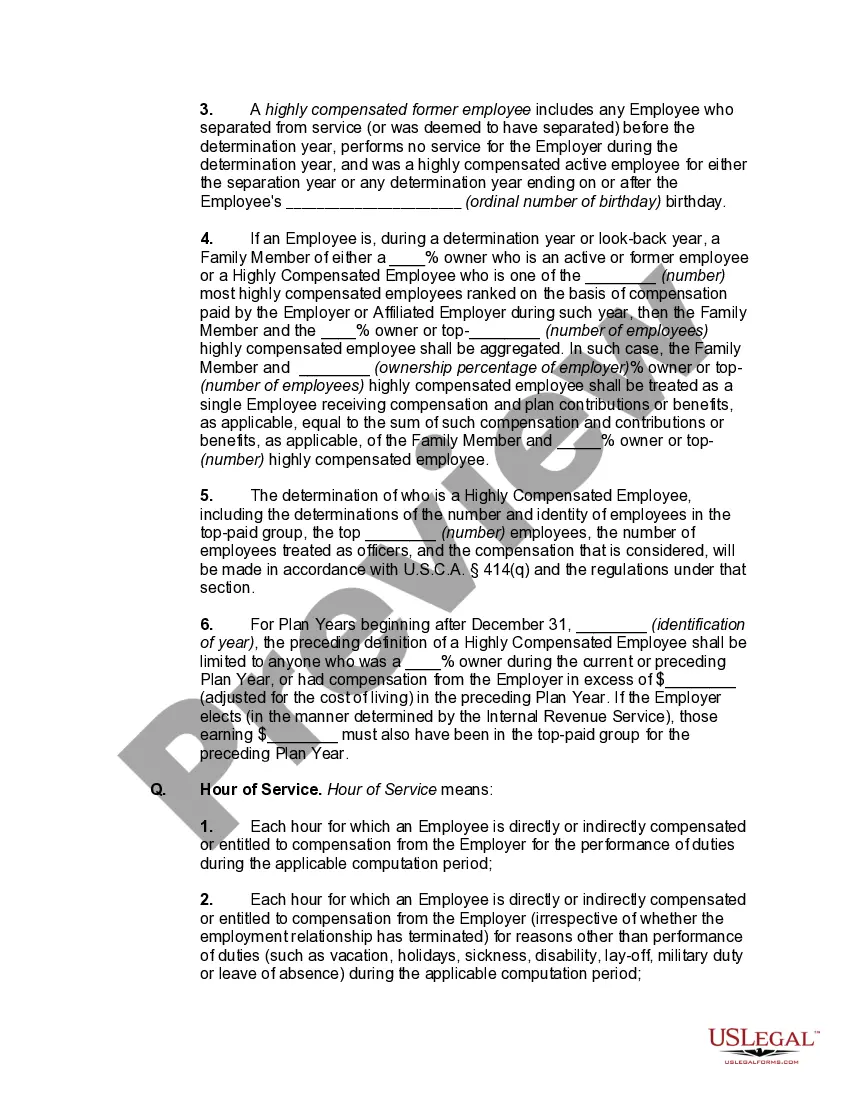
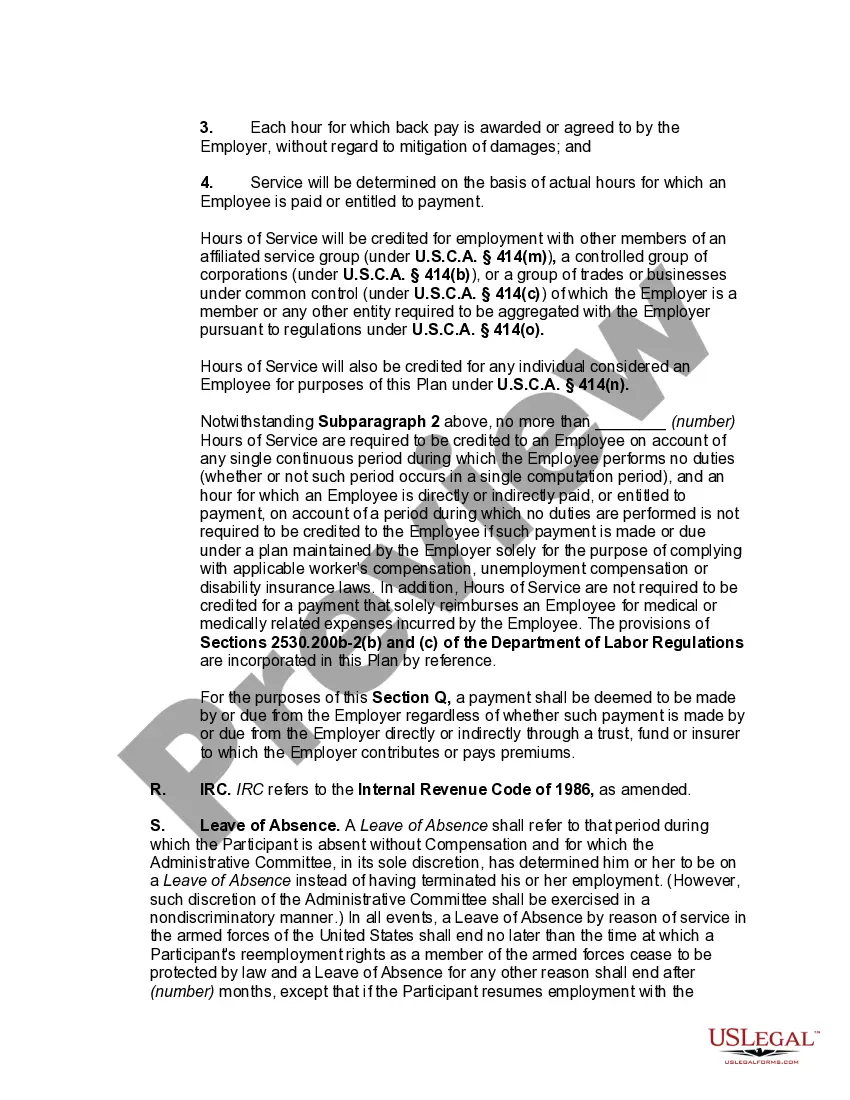
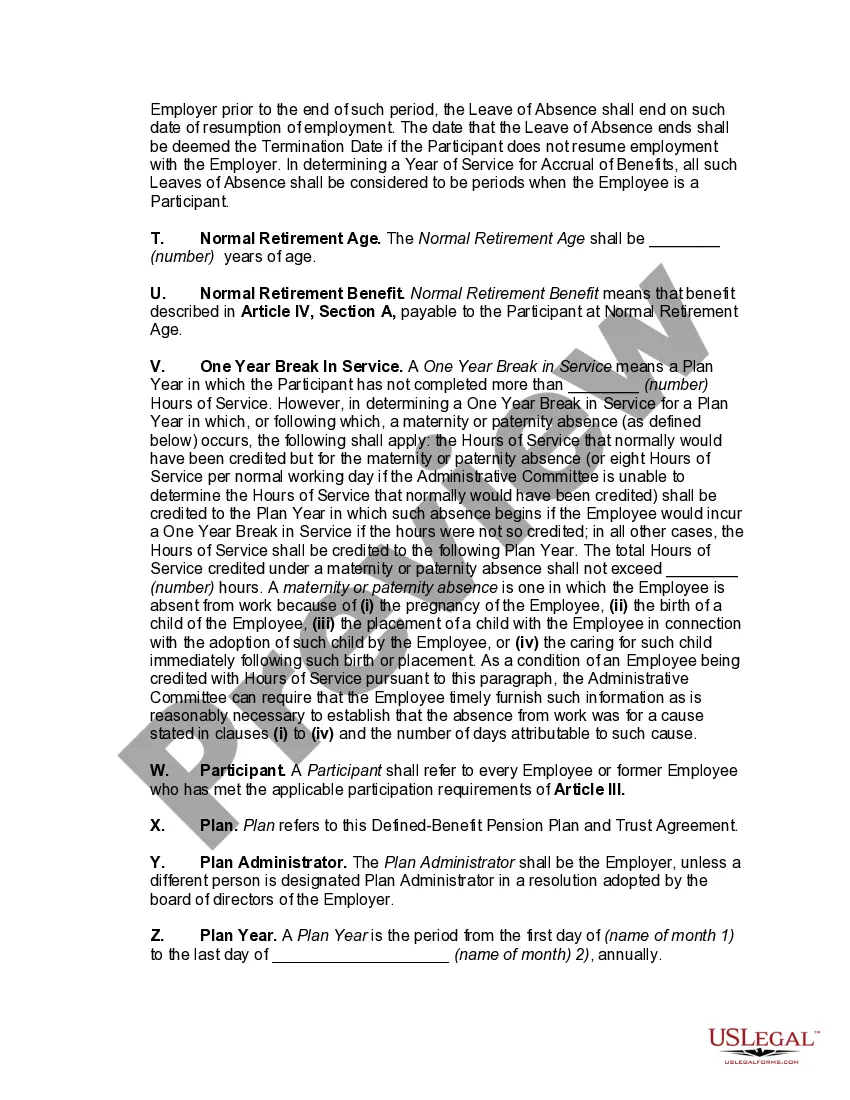
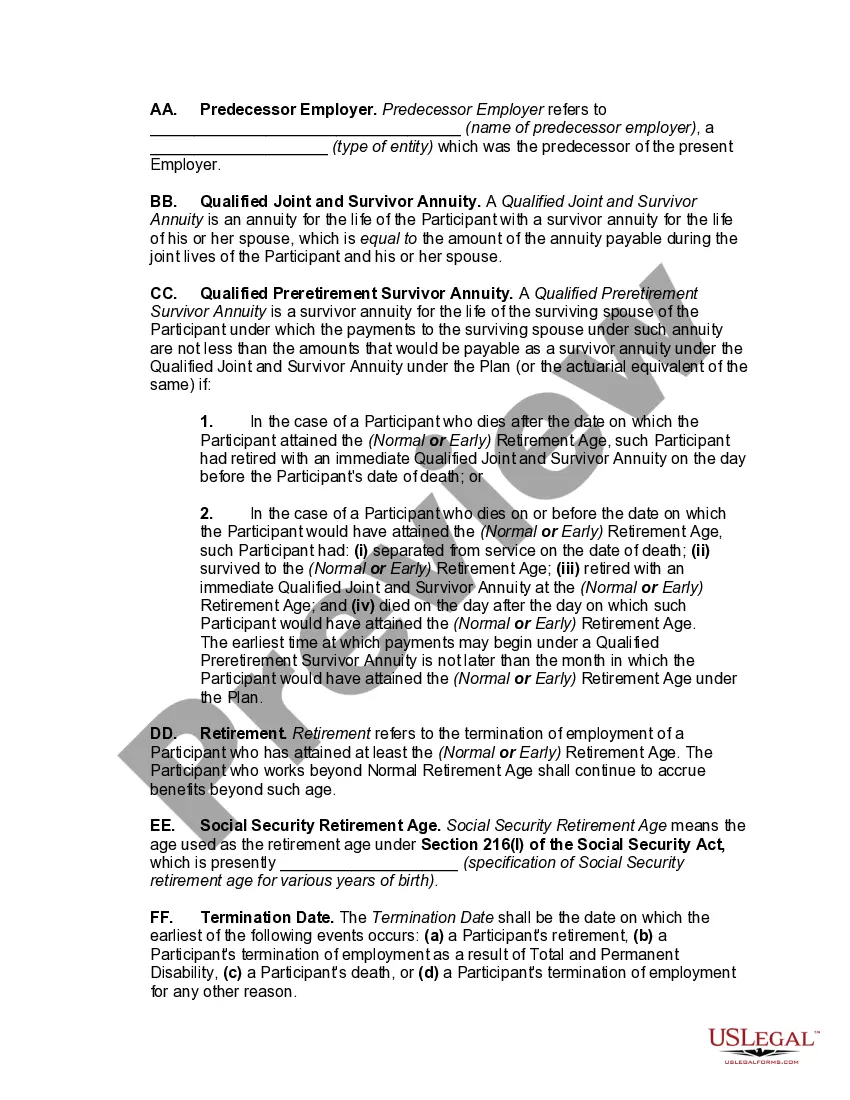
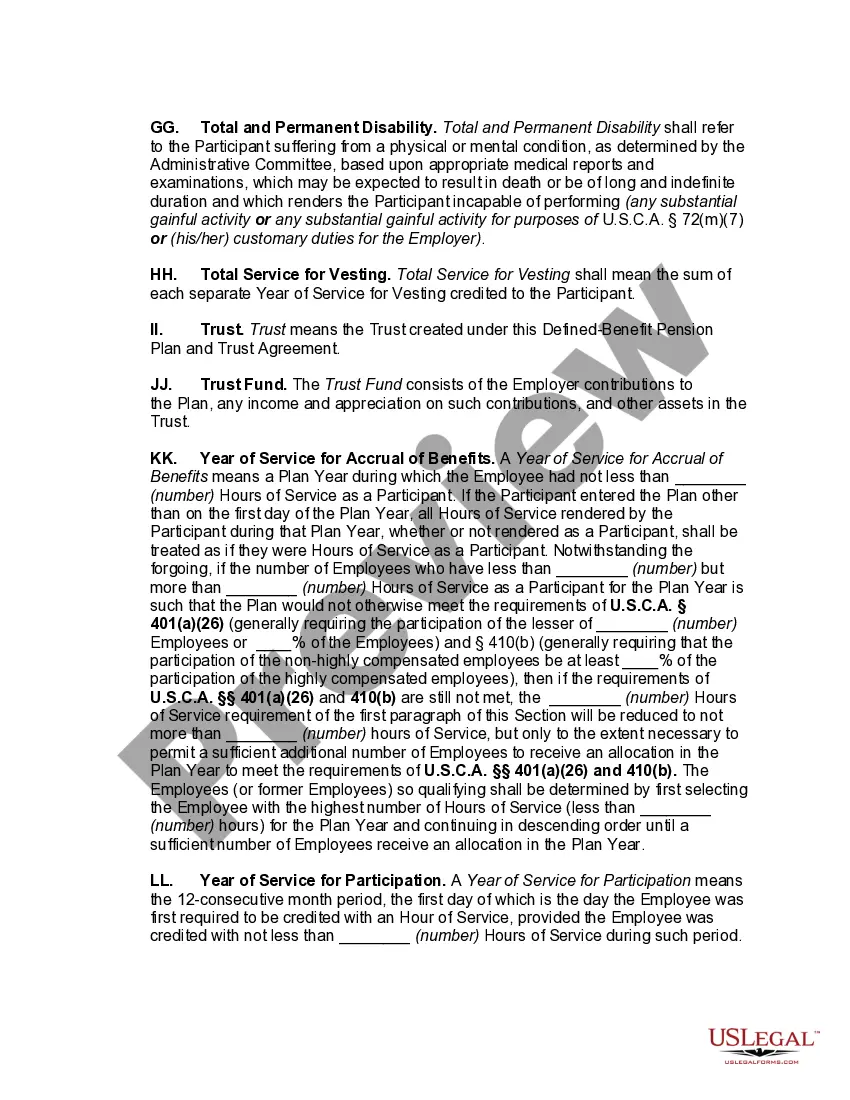
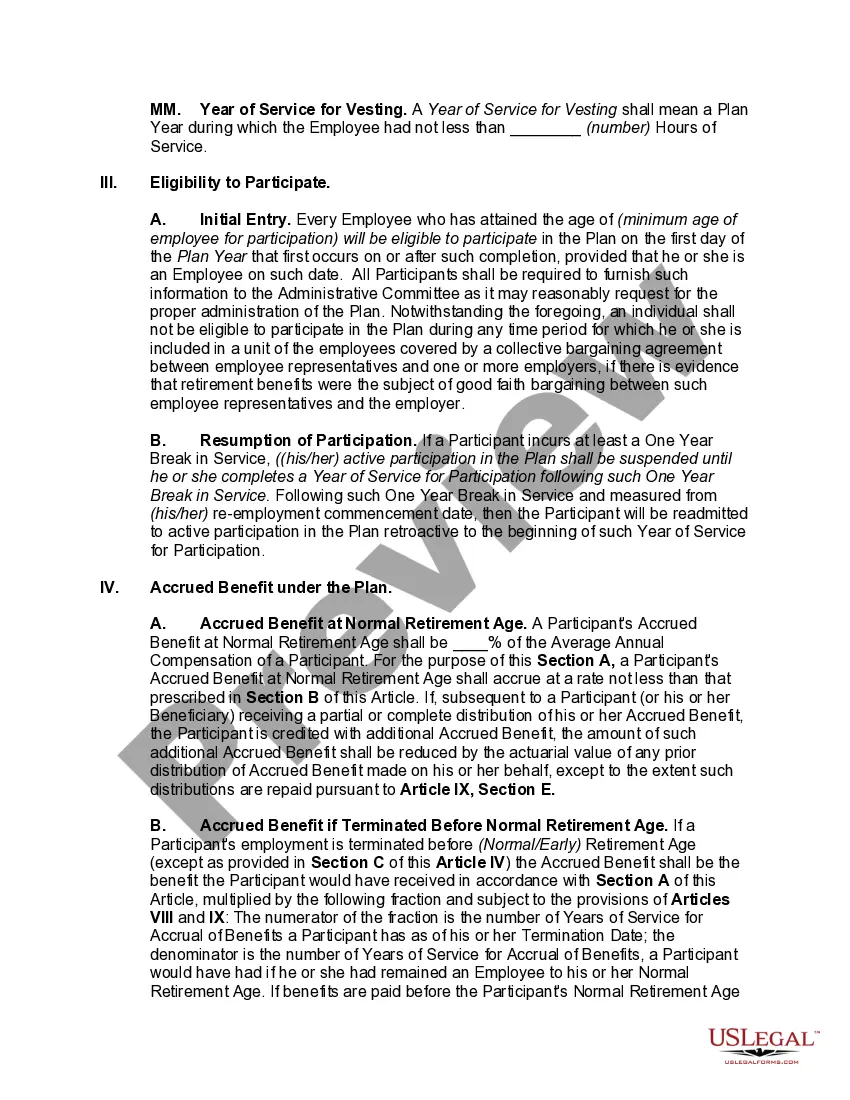

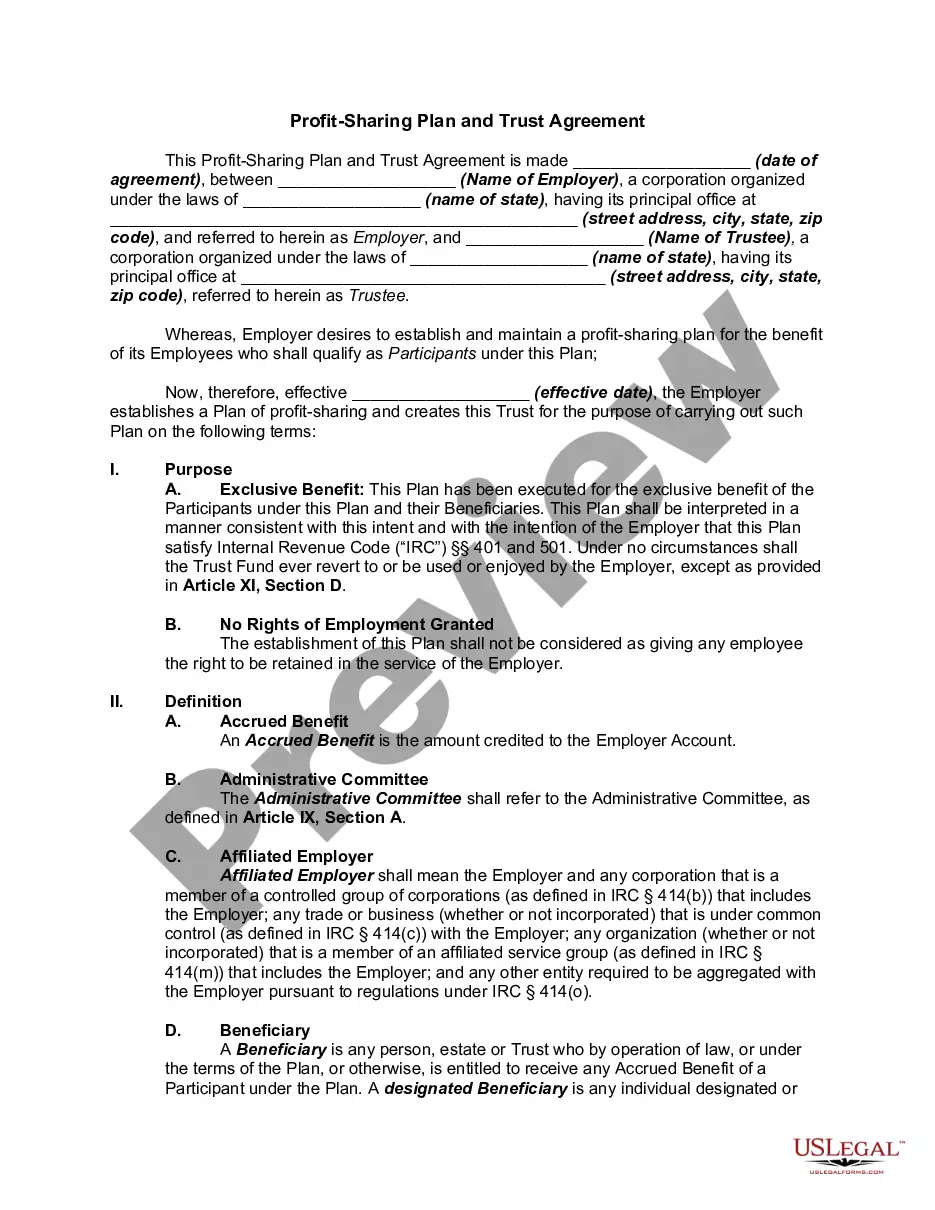
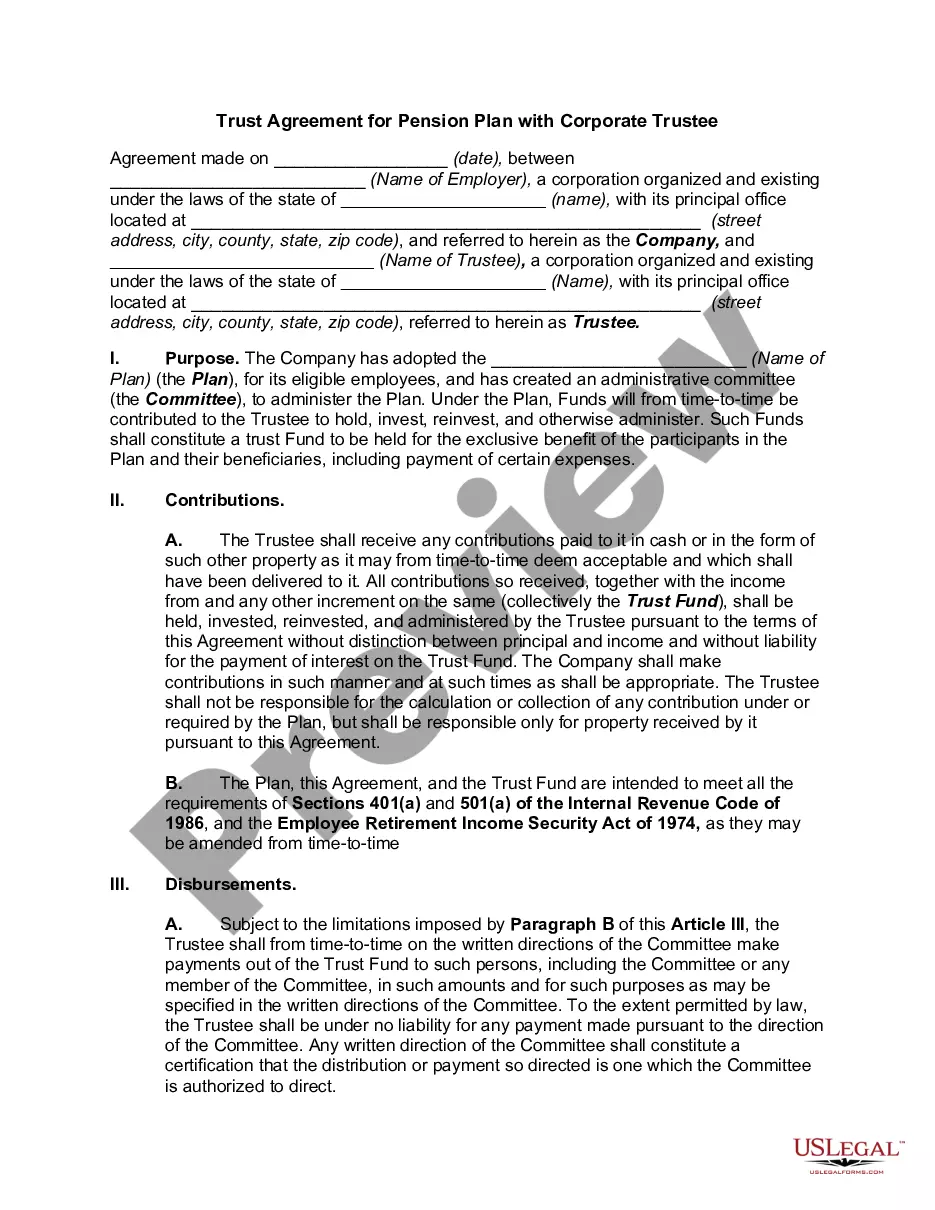
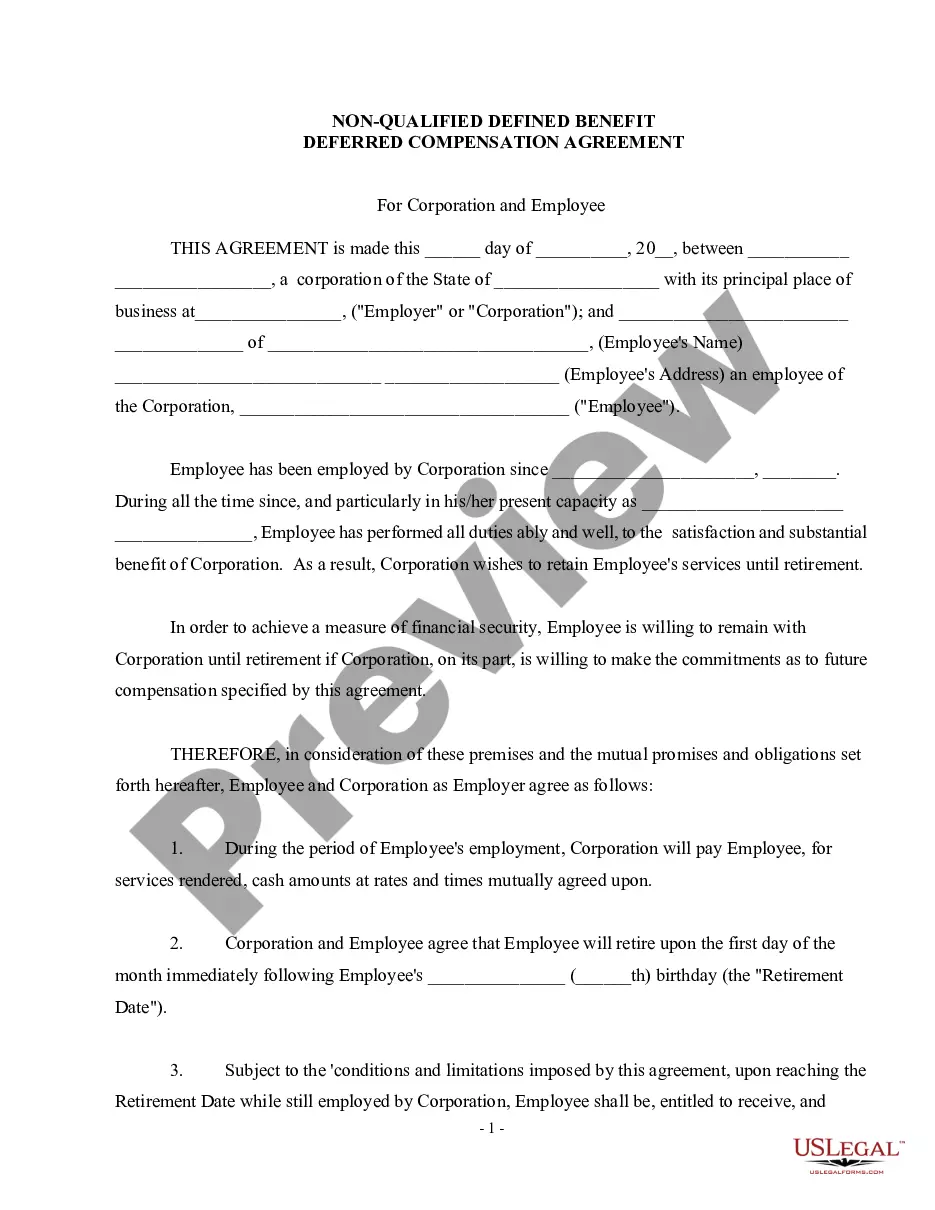
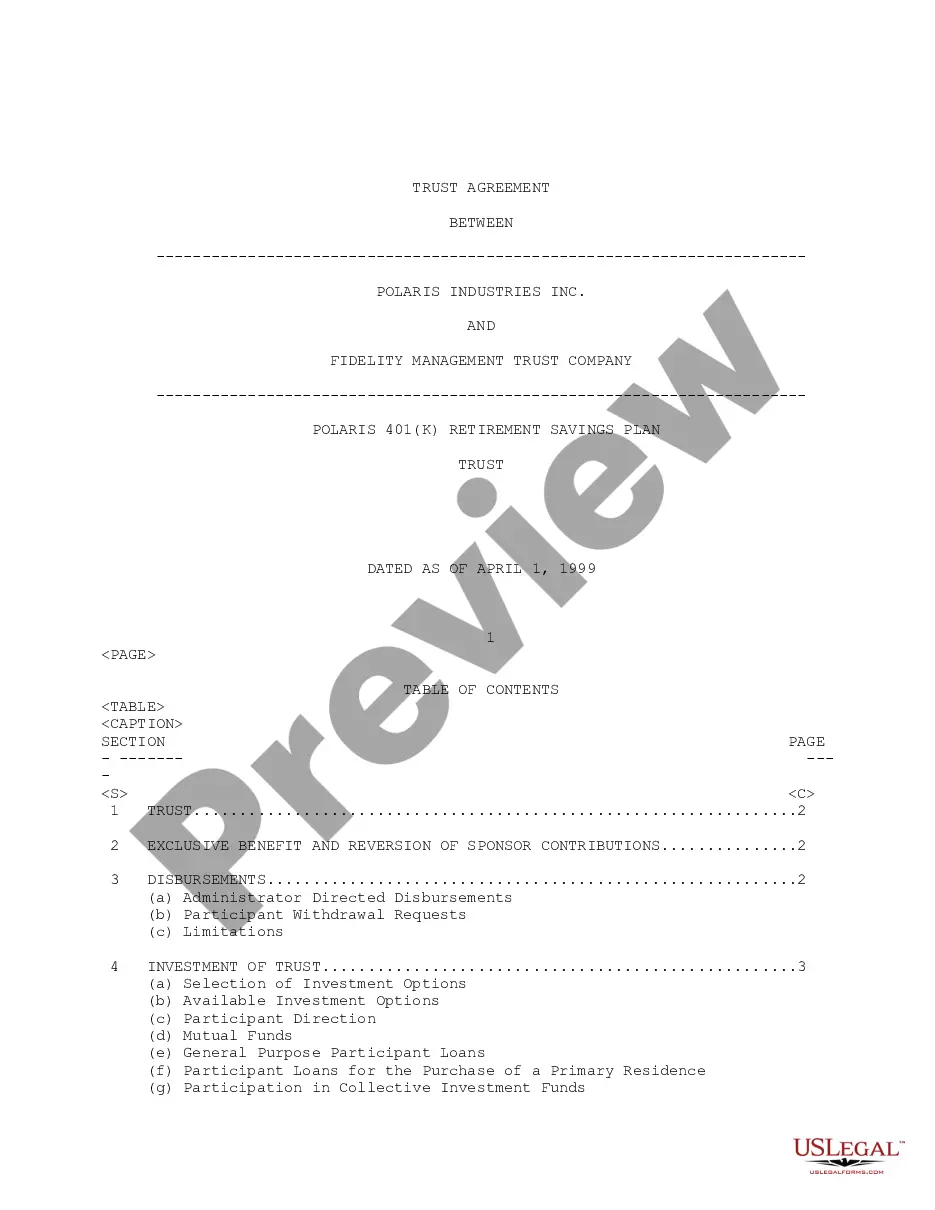
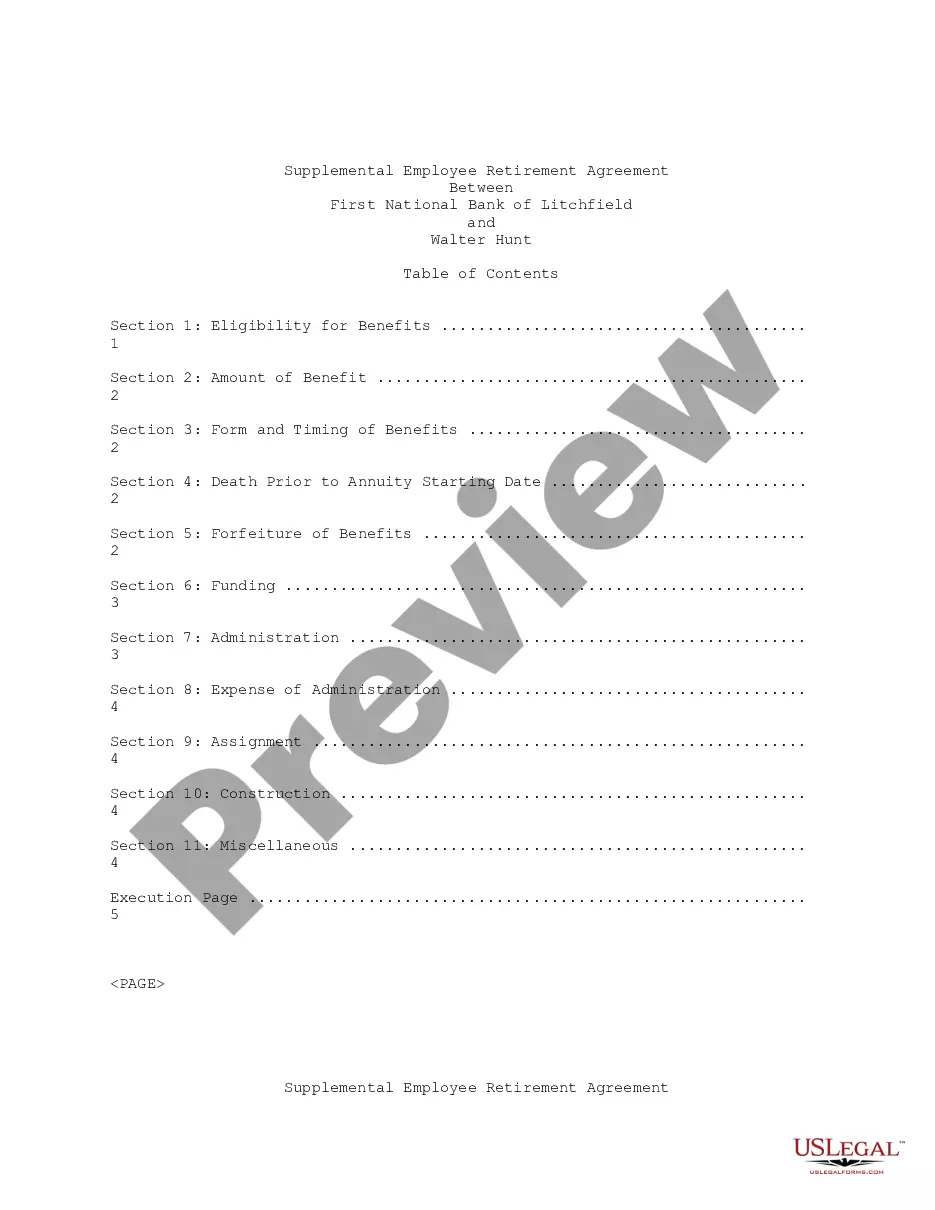
How to fill out Defined-Benefit Pension Plan And Trust Agreement?
Finding the appropriate legal document design can pose a challenge.
Clearly, there are numerous templates accessible online, but how do you acquire the legal form you desire.
Utilize the US Legal Forms website. The platform provides an extensive collection of templates, including the Indiana Defined-Benefit Pension Plan and Trust Agreement, suitable for both business and personal requirements.
You can browse the form using the Review button and examine the form summary to confirm it is indeed the correct one for you.
- All of the forms are vetted by experts and comply with federal and state regulations.
- If you are currently registered, Log In to your account and click the Obtain button to locate the Indiana Defined-Benefit Pension Plan and Trust Agreement.
- Utilize your account to browse through the legal forms you may have previously purchased.
- Navigate to the My documents section of your account and obtain another copy of the documents you need.
- If you are a new user of US Legal Forms, here are straightforward steps for you to follow.
- Initially, ensure you have selected the correct form for your specific area/state.
Form popularity
FAQ
25aa The Indiana Public Retirement System (INPRS) manages approximately $34.2 billion in assets, as. of June 30, 2018. 25aa INPRS is among the largest 100 pension funds in the. United States.
A pension plan is an employee benefit plan established or maintained by an employer or by an employee organization (such as a union), or both, that provides retirement income or defers income until termination of covered employment or beyond.
4 Types Of Pension Plans Most Preferred For Retirement PlanningNPS. Regulated by Pension Fund Regulatory and Development Authority (PFRDA), the National Pension Scheme or NPS is a popular option if you want to receive a regular pension after retirement.Pension Funds.Annuity Plans.Pension Plans with Life Cover.
CalPERS offers a defined benefit plan where retirement benefits are based on a formula, rather than contributions and earnings to a savings plan. Retirement benefits are calculated based on a member's years of service credit, age at retirement, and final compensation (average salary for a defined period of employment).
A pension plan is an employee benefit that commits the employer to make regular contributions to a pool of money that is set aside in order to fund payments made to eligible employees after they retire. Traditional pension plans have become increasingly rare in the U.S. private section.
INPRS: Public Employees' Retirement Fund (PERF) Member Forms.
A 401(k) and a pension are both employer-sponsored retirement plans. The most significant difference between the two is that a 401(k) is a defined-contribution plan, and a pension is a defined-benefit plan.
Pension plans require your employer to contribute money to your plan as you work. Once you retire, you earn the accrued pension money divided into monthly checks. In most cases, a formula determines the amount you receive. Some of the formula variables include your age, compensation and years of service to the company.
Member ContributionsPERF-covered employees are required by state law to contribute three percent of their gross wages (regular and overtime pay) to the Fund. Effective July 1, 1986, Indiana law required the state of Indiana to pay the three percent contributions for state employees as part of a wage adjustment.