Indiana Codicil to Will Form for Amending Your Will - Testamentary Pet Trust
About this form
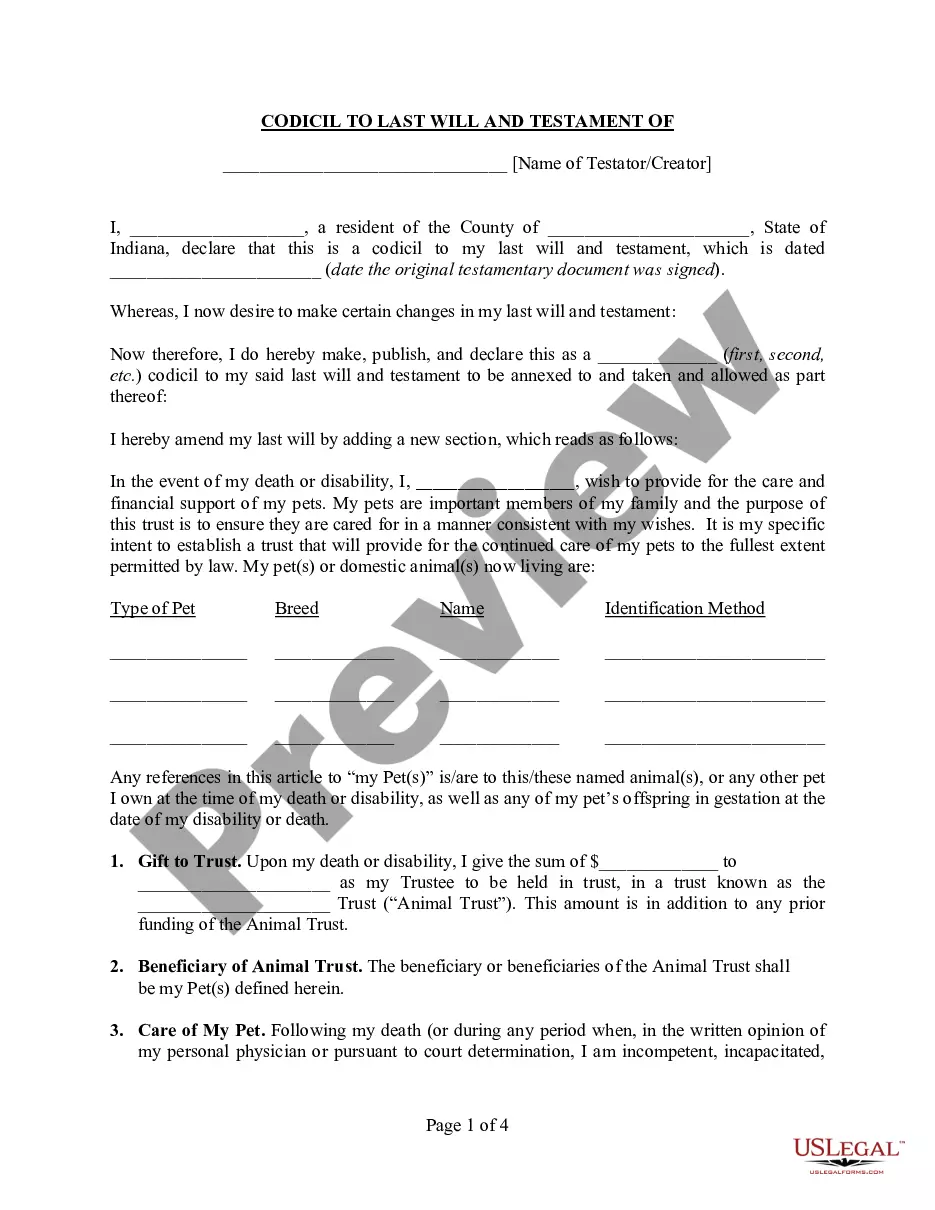
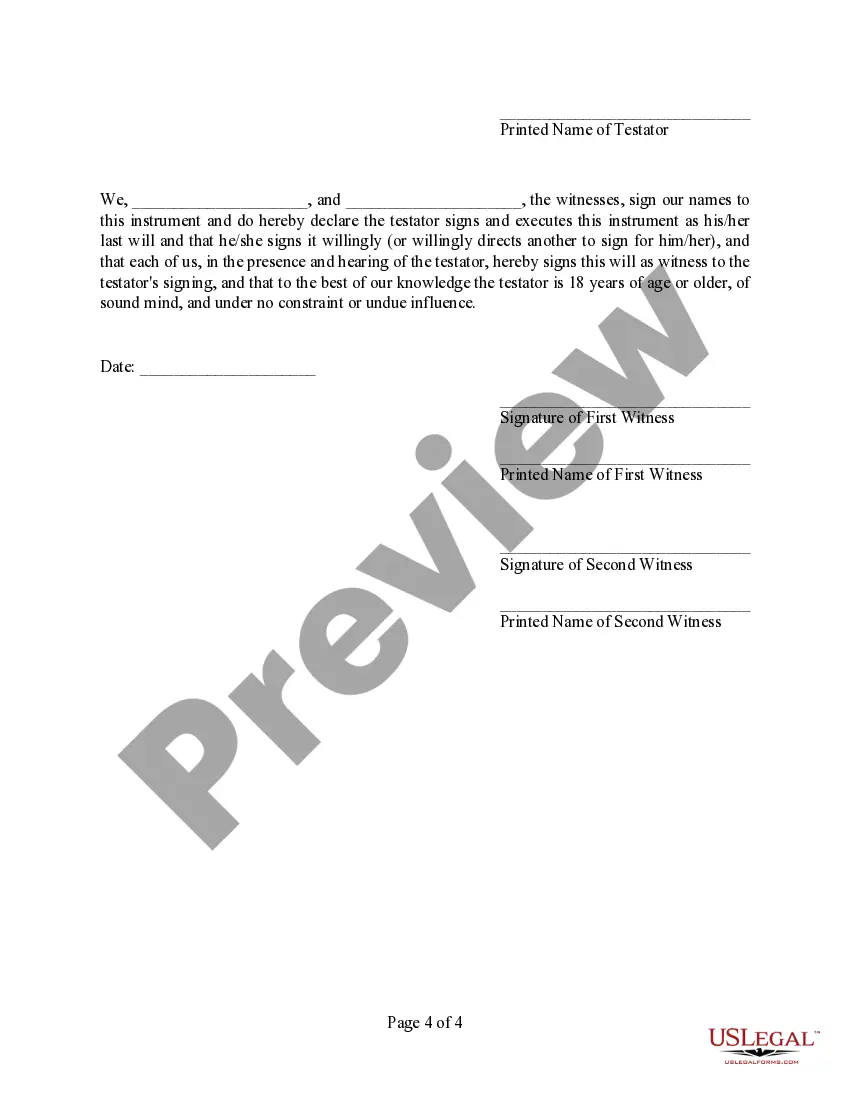
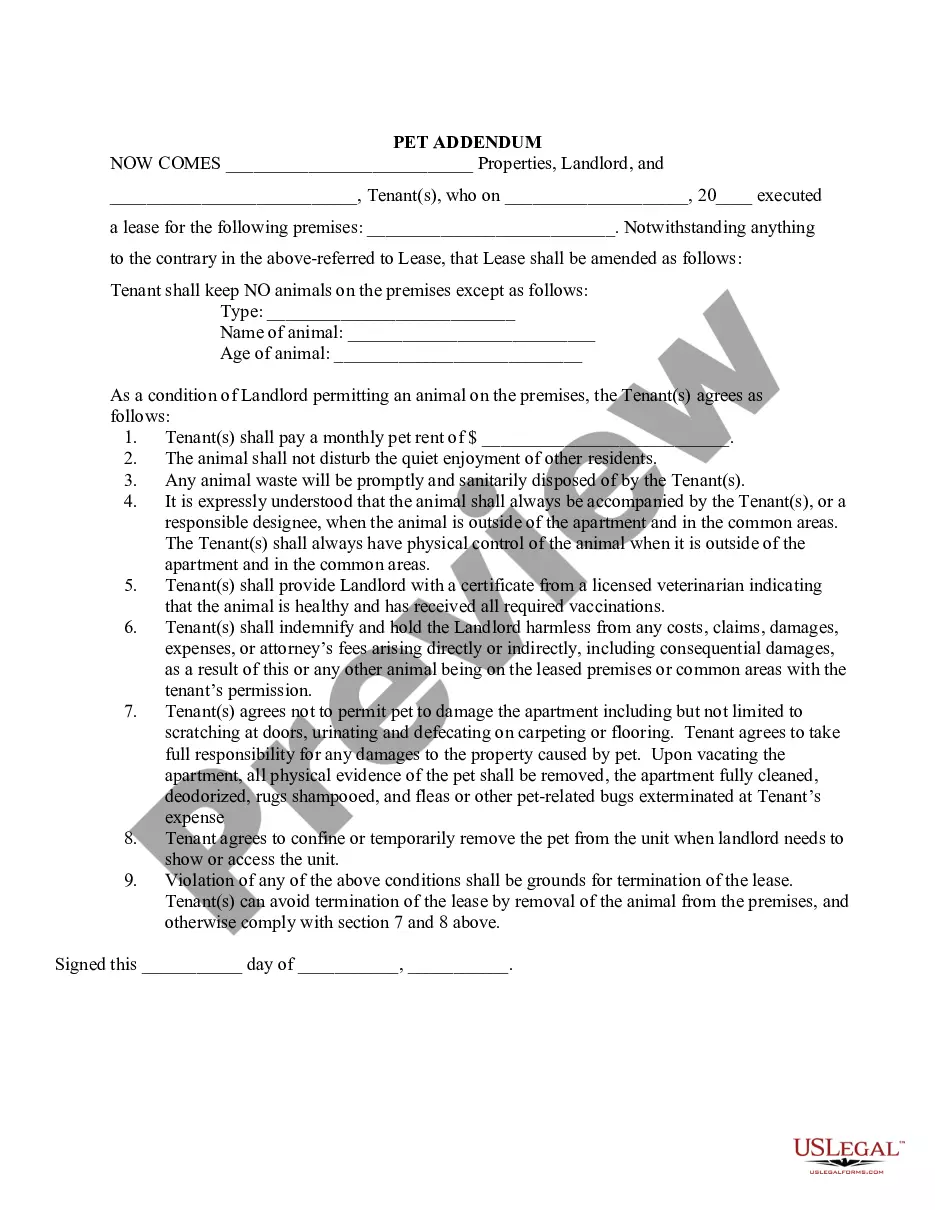
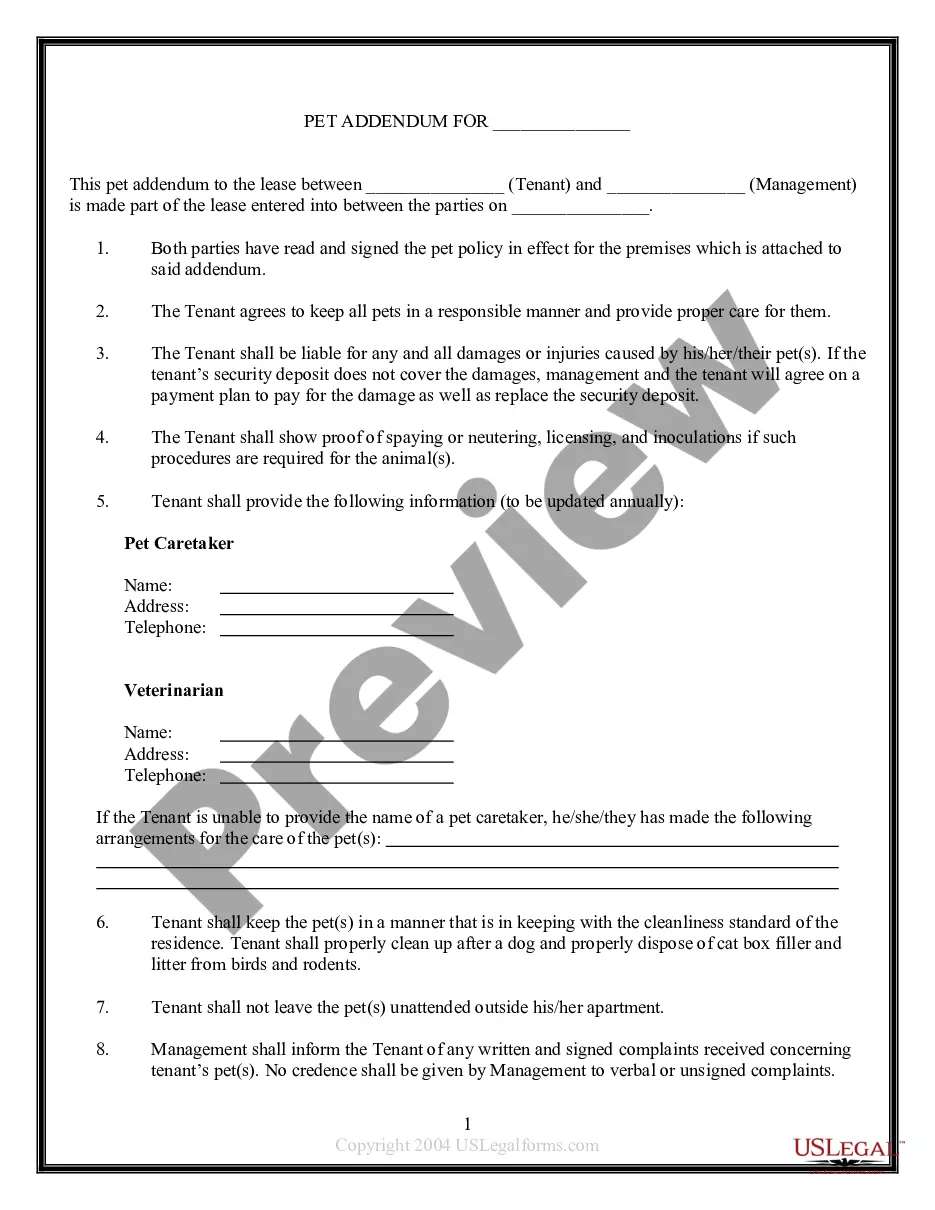
The Codicil to Will Form for Amending Your Will - Testamentary Pet Trust is a legal document designed to modify your existing last will and testament. This form specifically enables you to create a testamentary trust for the care of your pets, ensuring they are looked after according to your wishes after your passing. Unlike a standard will, which outlines the distribution of your assets, this codicil focuses on establishing provisions specifically for the wellbeing of your pets, highlighting their importance in your family.
Main sections of this form
- Name of Testator/Creator and date of original will.
- Identification and description of pets for whom care is provided.
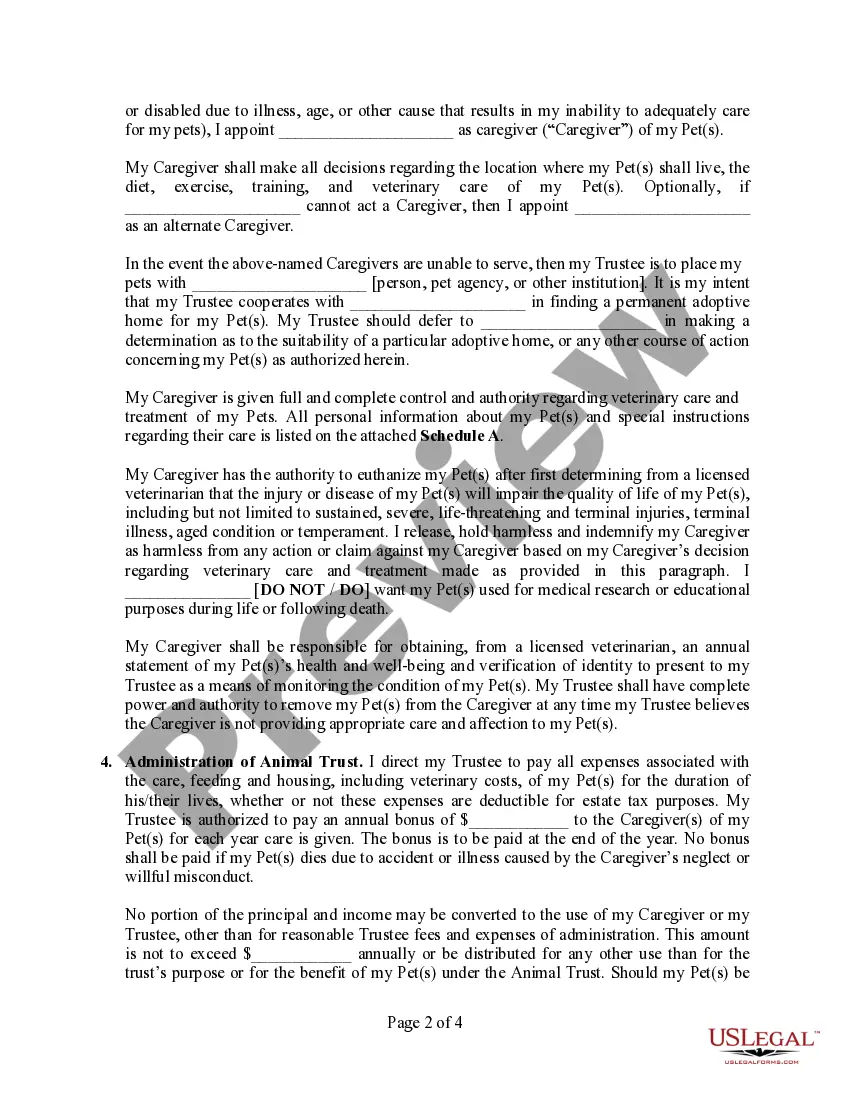
- Appointment of a trustee and caregiver for managing the pet trust.
- Financial provisions for pet care and associated expenses.
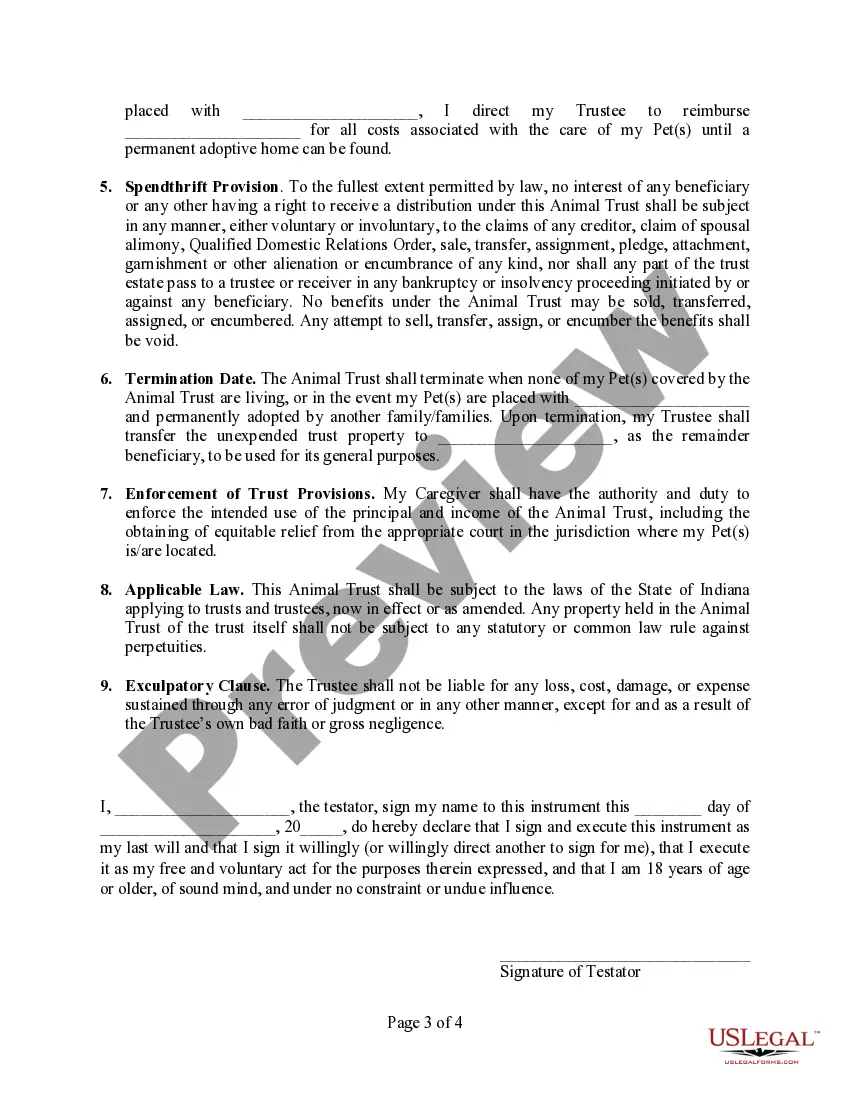
- Instructions regarding veterinary care and potential euthanasia decisions.
- Termination conditions of the trust and distribution of remaining funds.



When this form is needed
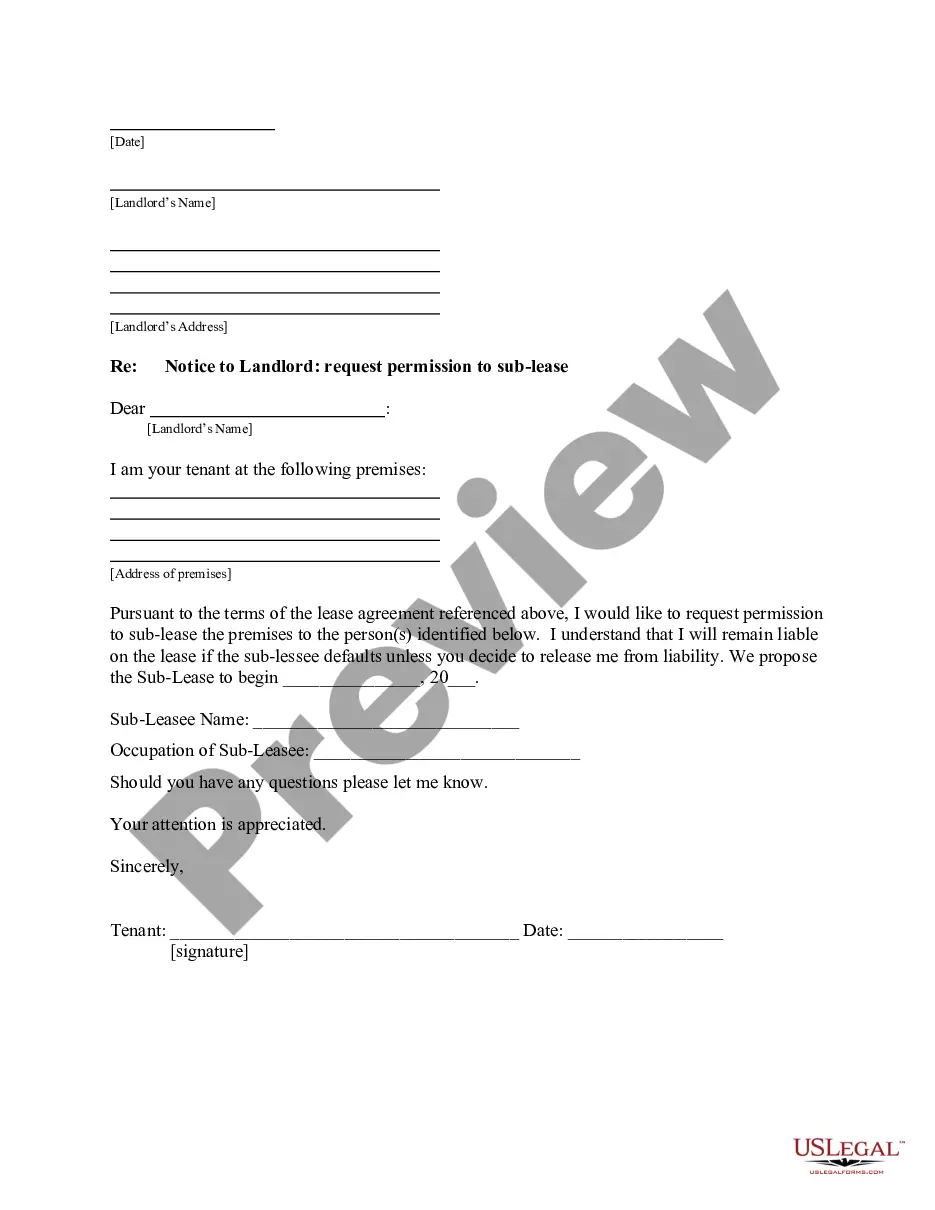
This codicil is essential if you want to ensure that your pets are cared for according to your specific instructions after your death or if you become incapacitated. It should be used when you have an existing will and wish to amend it by adding provisions that ensure the ongoing care and financial support for your pets.
Who this form is for
- Individuals with existing wills who want to specify pet care arrangements.
- Petsâ owners wishing to establish a trust specifically for their animals.
- Those concerned about the future wellbeing of their pets in the event of their death or incapacity.
- Pet owners who desire legal assurance that their pets will be cared for according to their wishes.
Steps to complete this form
- Begin by filling in your full name and the date of your original will.
- Identify each pet you are naming in the trust, including type, breed, and name.
- Designate a trustee who will manage the trust and a caregiver who will oversee the pets' needs.
- Specify the financial amount allocated to the trust for pet care, along with any bonus for the caregiver.
- Include any instructions about the care and handling of your pets, especially regarding veterinary decisions.
- Sign the document in the presence of witnesses, ensuring all legal requirements are met.
Notarization guidance
This form does not typically require notarization unless specified by local law. However, it is important to ensure that your will and any amendments, including this codicil, follow your stateâs requirements for proper execution and validity.
Get your form ready online
Our built-in tools help you complete, sign, share, and store your documents in one place.
Make edits, fill in missing information, and update formatting in US Legal Forms—just like you would in MS Word.
Download a copy, print it, send it by email, or mail it via USPS—whatever works best for your next step.
Sign and collect signatures with our SignNow integration. Send to multiple recipients, set reminders, and more. Go Premium to unlock E-Sign.
If this form requires notarization, complete it online through a secure video call—no need to meet a notary in person or wait for an appointment.
We protect your documents and personal data by following strict security and privacy standards.

Make edits, fill in missing information, and update formatting in US Legal Forms—just like you would in MS Word.

Download a copy, print it, send it by email, or mail it via USPS—whatever works best for your next step.

Sign and collect signatures with our SignNow integration. Send to multiple recipients, set reminders, and more. Go Premium to unlock E-Sign.

If this form requires notarization, complete it online through a secure video call—no need to meet a notary in person or wait for an appointment.

We protect your documents and personal data by following strict security and privacy standards.
Mistakes to watch out for
- Failing to update the original will with the codicil document.
- Not accurately identifying all pets or including omitted pets.
- Neglecting to appoint a reliable caregiver or trustee.
- Forgetting to specify financial provisions clearly.
- Not following proper witnessing procedures for the document.
Benefits of completing this form online
- Convenient access to customizable templates tailored to your needs.
- Editable forms that allow you to update your wishes easily as circumstances change.
- Secure and reliable process to ensure your legal documents are in order.
- Guidance from licensed attorneys to ensure compliance with state laws.
Looking for another form?
Form popularity
FAQ
Making changes to your will You cannot amend your will after it's been signed and witnessed. The only way you can change a will is by making an official alteration called a codicil. You must sign a codicil and get it witnessed in the same way as witnessing a will.
Determine what you want to change, add, or delete from your original will. Create a codicil or a new will. Execute the codicil or new will with the legal formalities required in your state. Keep the codicil with the original will. Notify your nominated personal representative.
You can change your living trust, usually without incurring lawyer bills.Because you and your spouse made the trust together, you should both sign the amendment, and when you sign it, get your signatures notarized, just like the original. Another way to go is to create a "restatement" of your trust.
Of course you can, however, "Codicil" is an amendment to a will. Amending a trust called "Amendment" to the trust, even if it is just amending a trustee's name. It needs to be notarized and some specific language to be sufficient.
You cannot amend your will after it's been signed and witnessed. The only way you can change a will is by making an official alteration called a codicil. You must sign a codicil and get it witnessed in the same way as witnessing a will. There's no limit on how many codicils you can add to a will.
You can either make a codicil to your existing will or make a new will. Both require your signature and the signatures of two witnesses.You can have a lawyer write your codicil for you, or you can make one yourself. However, in most cases it makes more sense just to make a new will.
How do I write a Codicil? You can handwrite or type a Codicil. It should state at the top it is a codicil, and make reference to the document it is altering. You should then describe the clause to be changed, and explain the changes.
Identify the section and content you want to change. The first step in amending your will is to review it. Type up the changes. Take the time to type up the codicil. Sign and date the codicil. Store your codicil in a safe place.