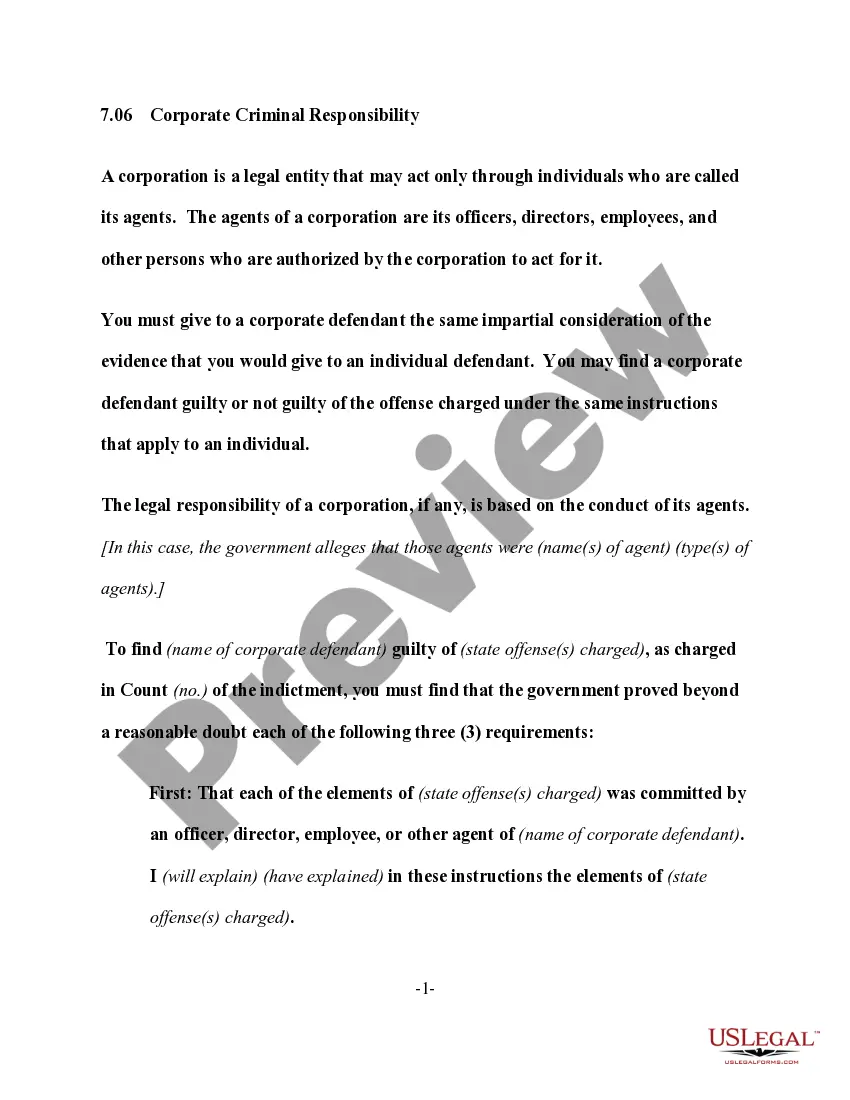
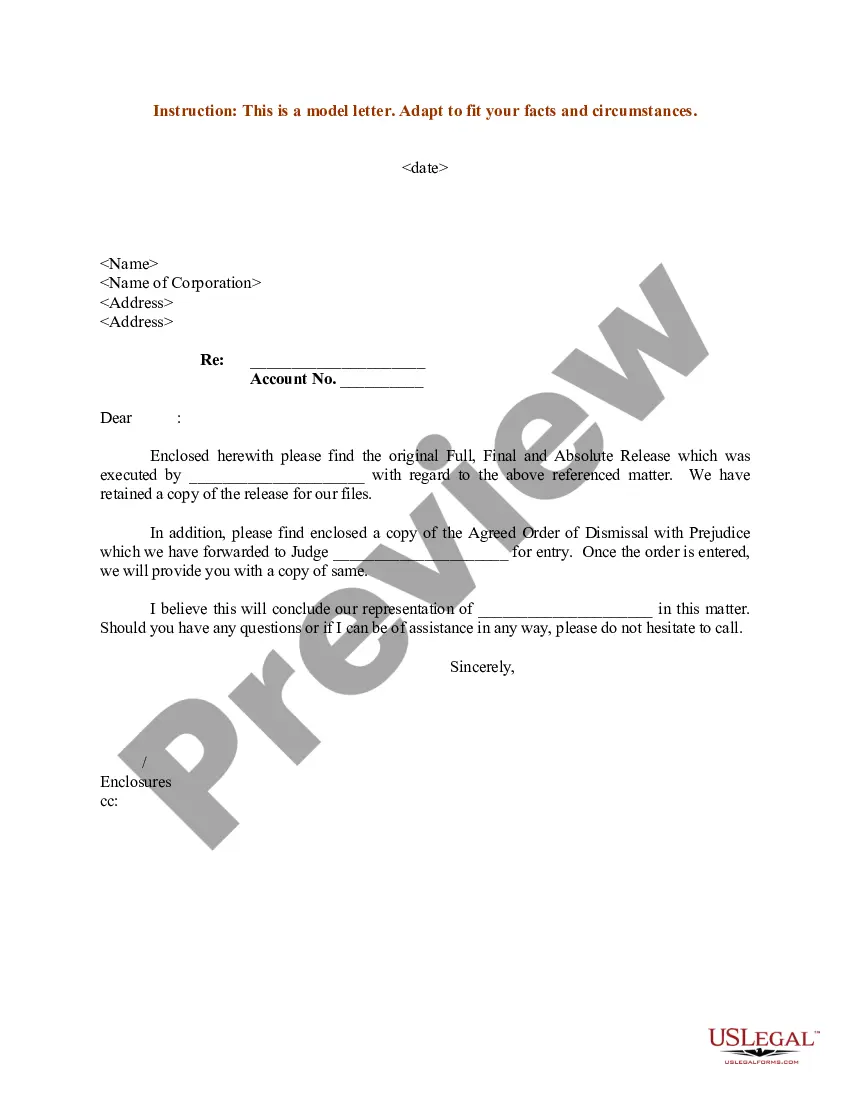
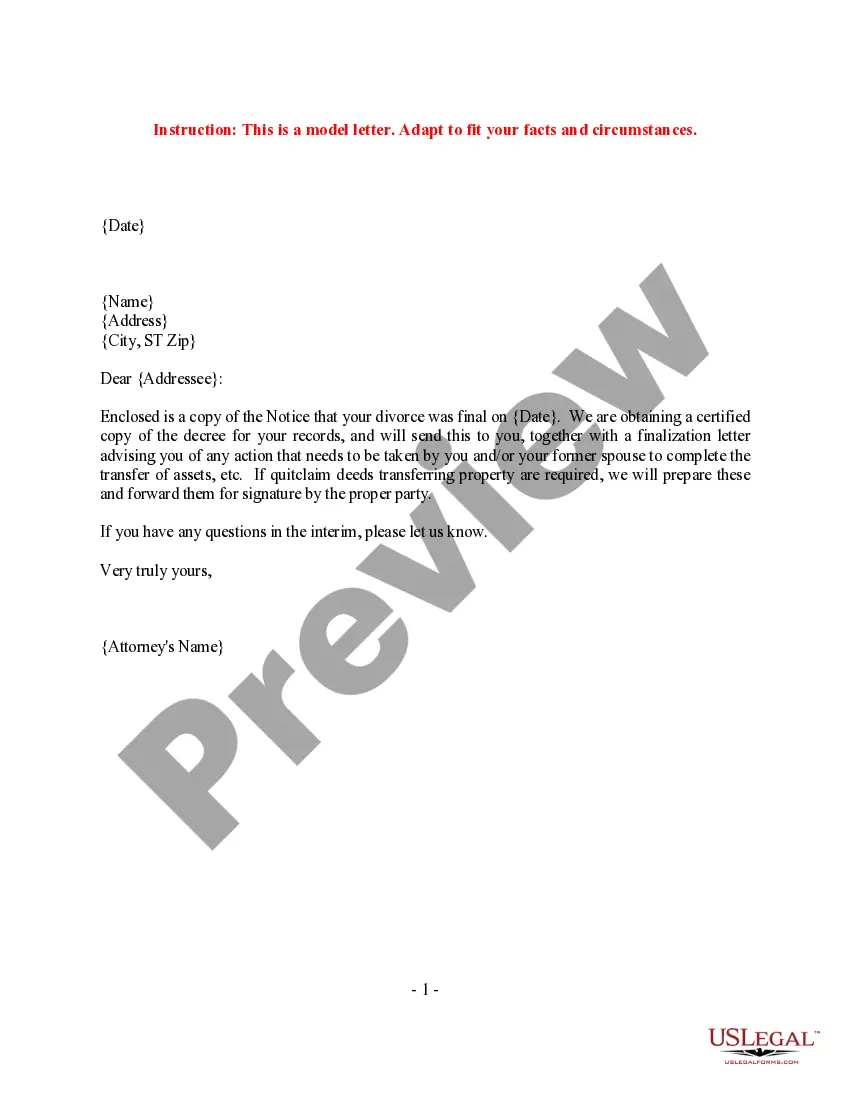
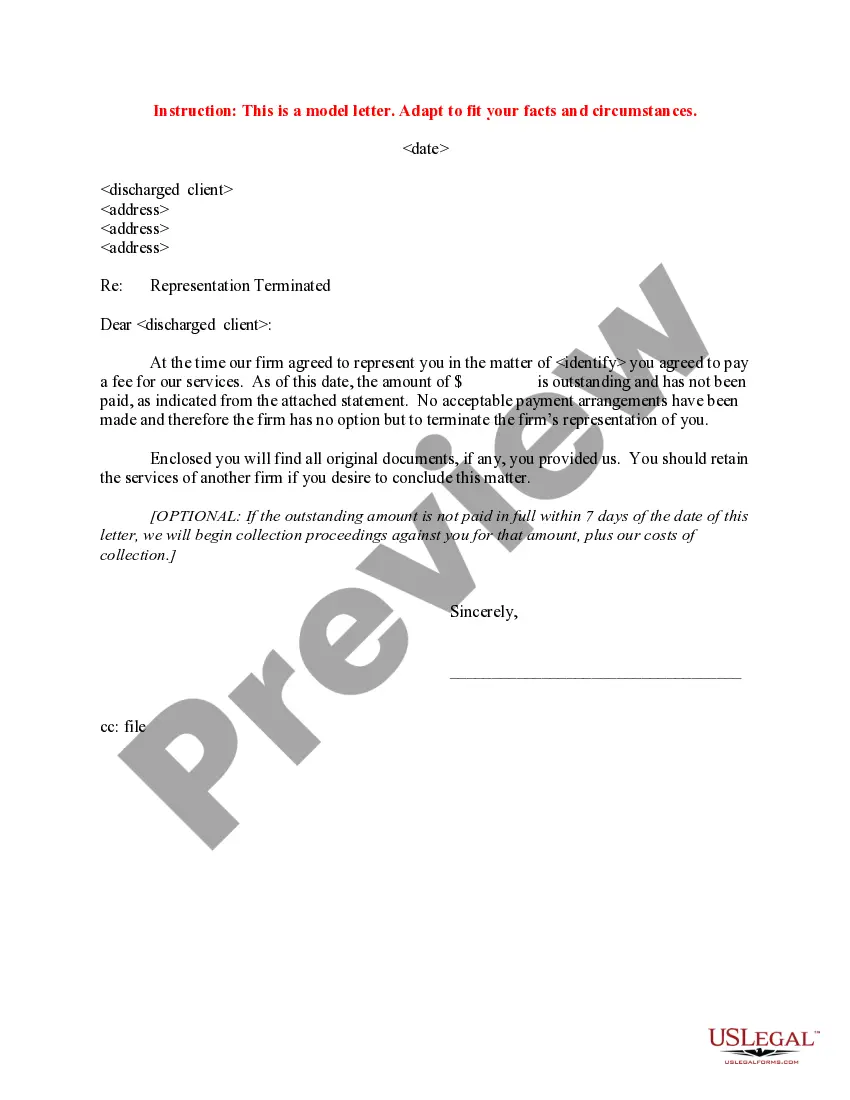
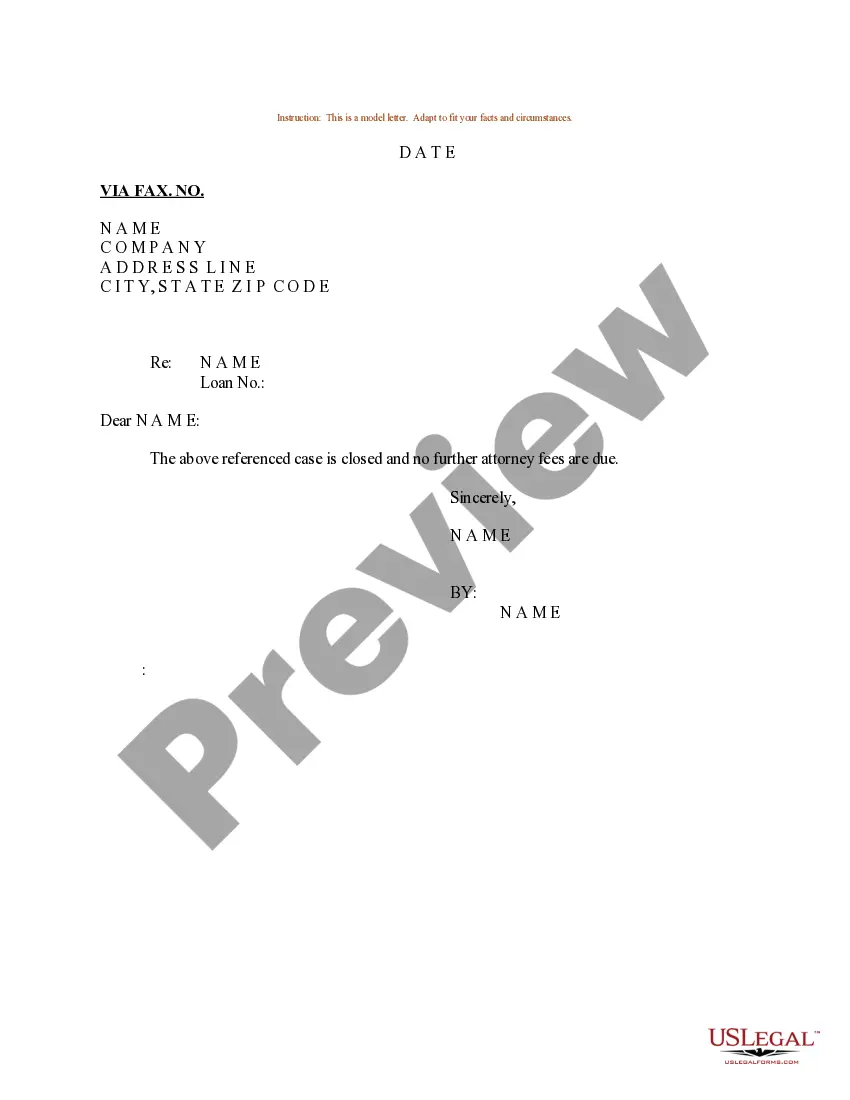
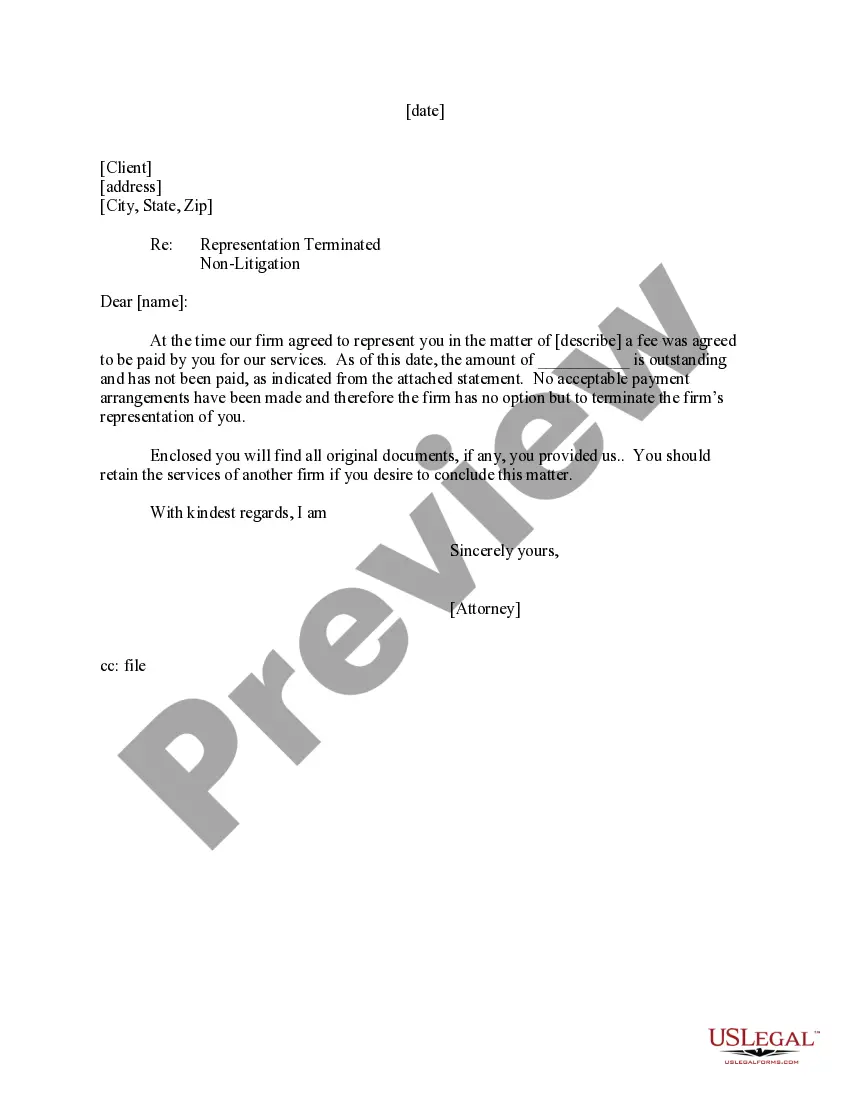
Kansas Sample Letter for Conclusion of Client Representation
Description

Get your form ready online
Our built-in tools help you complete, sign, share, and store your documents in one place.
Make edits, fill in missing information, and update formatting in US Legal Forms—just like you would in MS Word.
Download a copy, print it, send it by email, or mail it via USPS—whatever works best for your next step.
Sign and collect signatures with our SignNow integration. Send to multiple recipients, set reminders, and more. Go Premium to unlock E-Sign.
If this form requires notarization, complete it online through a secure video call—no need to meet a notary in person or wait for an appointment.
We protect your documents and personal data by following strict security and privacy standards.

Make edits, fill in missing information, and update formatting in US Legal Forms—just like you would in MS Word.

Download a copy, print it, send it by email, or mail it via USPS—whatever works best for your next step.

Sign and collect signatures with our SignNow integration. Send to multiple recipients, set reminders, and more. Go Premium to unlock E-Sign.

If this form requires notarization, complete it online through a secure video call—no need to meet a notary in person or wait for an appointment.

We protect your documents and personal data by following strict security and privacy standards.
Looking for another form?
How to fill out Sample Letter For Conclusion Of Client Representation?
US Legal Forms - one of the largest collections of legal forms in the United States - offers a diverse selection of legal document templates that you can download or print. By using the site, you can access thousands of forms for business and personal purposes, organized by categories, states, or keywords. You can find the latest versions of forms such as the Kansas Sample Letter for Conclusion of Client Representation in just a few minutes.
If you already have a membership, Log In and download the Kansas Sample Letter for Conclusion of Client Representation from the US Legal Forms collection. The Download button will appear on each document you view. You can access all previously acquired forms in the My documents section of your account.
If you are using US Legal Forms for the first time, here are simple instructions to get started: Make sure you have selected the correct form for your city/state. Click the Preview button to review the content of the form. Check the form summary to confirm that you have selected the right template. If the form does not meet your requirements, use the Search field at the top of the screen to find one that does. If you are satisfied with the form, confirm your choice by clicking the Buy now button. Then, select the payment plan you prefer and provide your details to register for an account. Process the purchase. Use a credit card or PayPal account to complete the transaction. Choose the format and download the form to your device. Make modifications. Fill out, edit, print, and sign the downloaded Kansas Sample Letter for Conclusion of Client Representation. Every template you added to your account does not have an expiration date and is yours permanently. Therefore, if you want to download or print another copy, simply go to the My documents section and click on the form you need.
- Access the Kansas Sample Letter for Conclusion of Client Representation with US Legal Forms, one of the most extensive collections of legal document templates.
- Utilize thousands of professional and state-specific templates that fulfill your business or personal requirements and specifications.
Form popularity
FAQ
Write a social media post and email messages that explain your intent to close, your plans to fulfill outstanding orders, and the date on which you'll cease operations. Keep your messages brief and leave out any details or subtext that might may your audience uncomfortable.
How to End a Letter The preferred letter ending phrases for formal, social, or business correspondence are ?Sincerely,? ?Sincerely yours,? ?Very sincerely,? or ?Very sincerely yours.? ?Kind(est) regards,? and ?Warm(est) regards? fill a nice gap between formal and more intimate closings.
1. Use a purposeful final sentence I look forward to hearing from you soon. I appreciate your input on this matter. Thank you for your understanding, and I will contact you next week with more details. If you have any further questions, please do not hesitate to contact me. I await your reply with interest.
Date the letter and specify when the case has concluded. The reason for the end of representation. Briefly note the reason why you will no longer be representing the client on the matter at hand?whether it's because the case has concluded or there's another reason (for example, if your practice is closing).
Include an introduction that outlines the purpose of the representation letter and how it will be used. Identify the parties involved in the agreement. Provide a full description of the agreement, including any conditions or restrictions. Identify any potential risks or liabilities associated with the agreement.
One of the teaching points is to end correspondence with ?Yours sincerely? or a similar phrase when writing to someone by name. ?Yours sincerely?, ?Sincerely yours? and ?Sincerely? are all possible. ?Yours sincerely? is the most common. ?Sincerely? is one often used by lawyers.
We wish to take this opportunity to thank you for allowing us to represent you in the [describe] matter. In order to tie up all the loose ends, we will [outline any final matters you will take care of]. In addition, you will need to [outline everything the client is responsible for at this time].
What to include in a closing letter to clients Specifics about the case and its status. ... The date. ... The reason for the end of representation. ... The status of any client documents. ... Next steps. ... A feedback request. ... A note of appreciation.