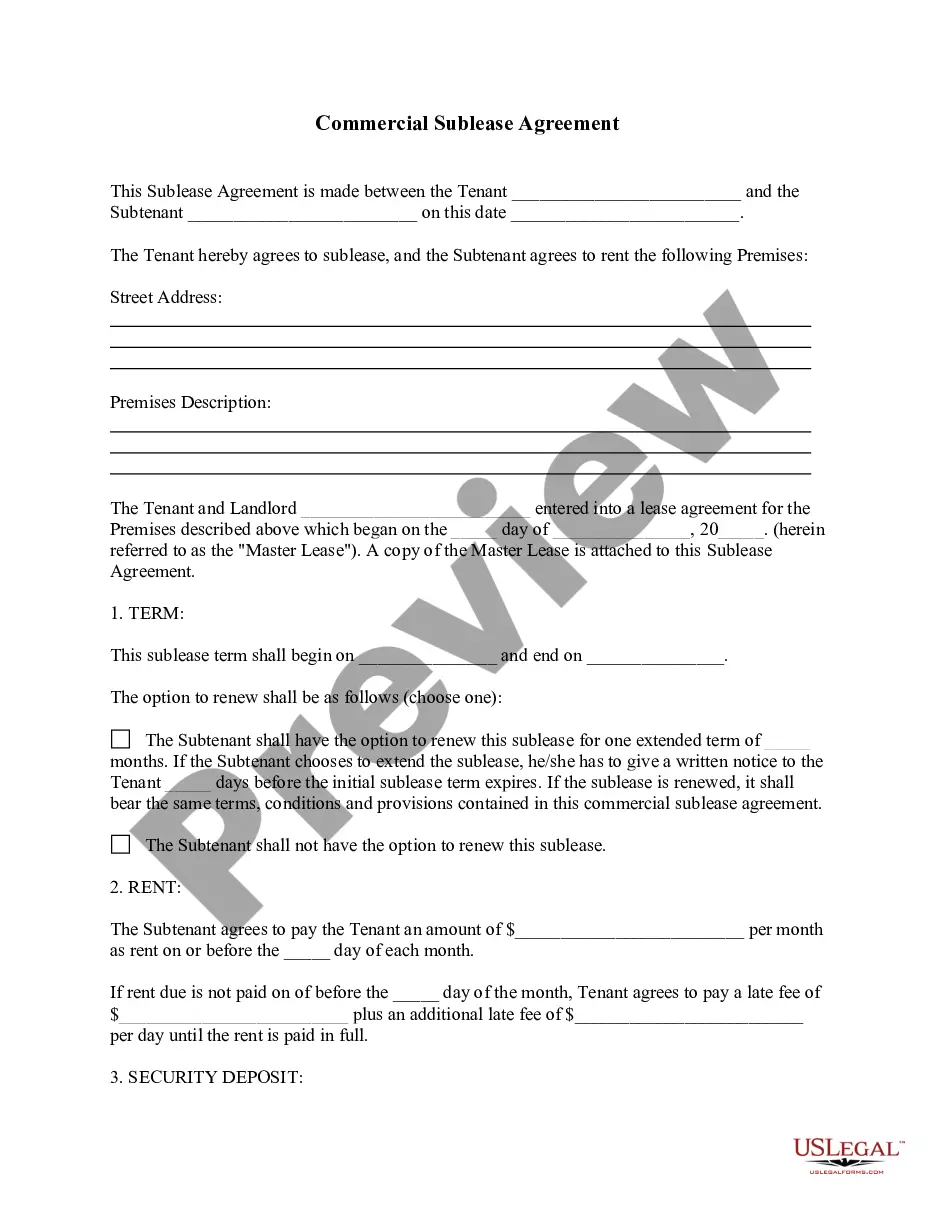
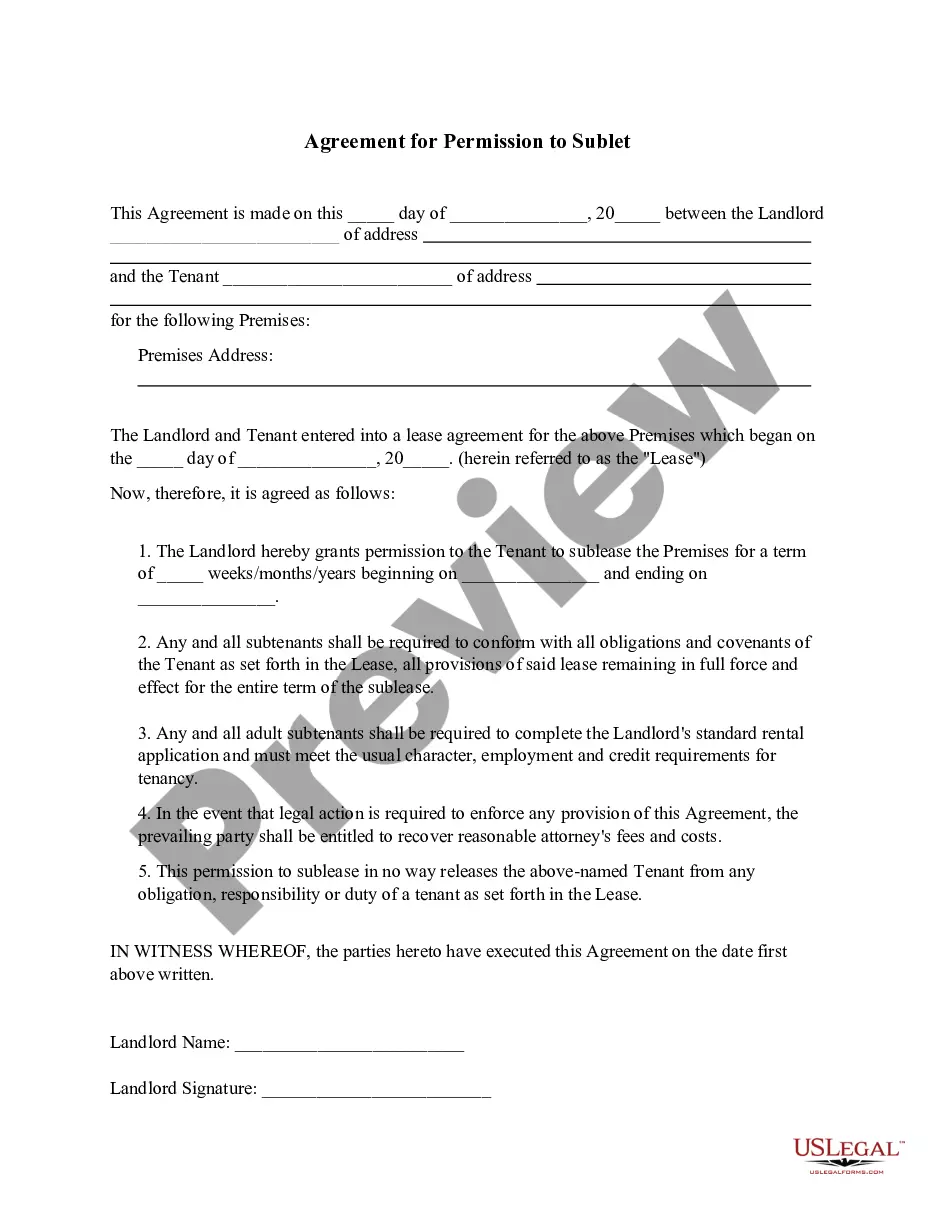
Kansas Merchandise License Agreement
Description

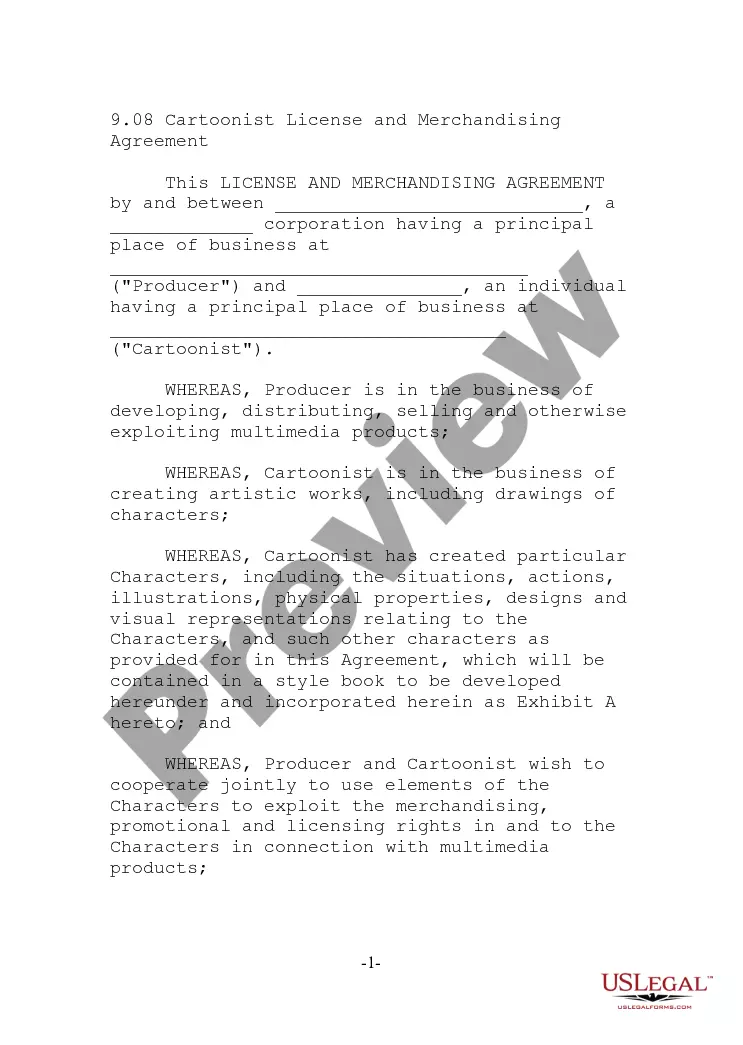
How to fill out Merchandise License Agreement?
Are you situated in a position where you require documentation for either corporate or individual activities nearly every business day.
There are numerous legal document templates accessible online, but finding versions you can rely on isn't simple.
US Legal Forms offers a vast array of form templates, such as the Kansas Merchandise License Agreement, designed to meet state and federal regulations.
Select the pricing plan you prefer, provide the necessary information to create your account, and pay for the transaction using your PayPal or credit card.
Choose a convenient file format and download your version. Access all the document templates you have purchased in the My documents section. You can download another copy of the Kansas Merchandise License Agreement anytime, if needed. Just follow the required form to acquire or print the document template. Use US Legal Forms, the most comprehensive collection of legal forms, to save time and avoid errors. The service provides professionally crafted legal document templates you can utilize for various purposes. Create an account on US Legal Forms and start simplifying your life.
- If you are already familiar with the US Legal Forms website and have an account, simply Log In.
- Then, you can download the Kansas Merchandise License Agreement template.
- If you don't have an account and want to start using US Legal Forms, follow these instructions.
- Obtain the form you need and ensure it is for the correct city/county.
- Use the Review button to check the form.
- Read the details to confirm you have selected the right form.
- If the form isn’t what you’re looking for, use the Search section to find the form that fits your needs and requirements.
- Once you locate the right form, simply click Buy now.
Form popularity
FAQ
A licensing agreement, such as a Kansas Merchandise License Agreement, typically allows the licensee to produce, distribute, and sell products under the licensor's trademark. It grants permission to utilize the brand's name, logo, and any associated intellectual property. Additionally, it often outlines the terms for royalty payments, ensuring that both parties benefit financially from the arrangement.
A licensing agreement allows one party (the licensee) to use and/or earn revenue from the property of the owner (the licensor). Licensing agreements generate revenues, called royalties, earned by a company for allowing its copyrighted or patented material to be used by another company.
Any individual, organization or company wishing to use the name or identifying marks of the NCAA and/or any of the NCAA's Championship Events must obtain a license. This includes manufacturers or service providers who use the NCAA name or logo on products (including premiums for promotions) or in advertising.
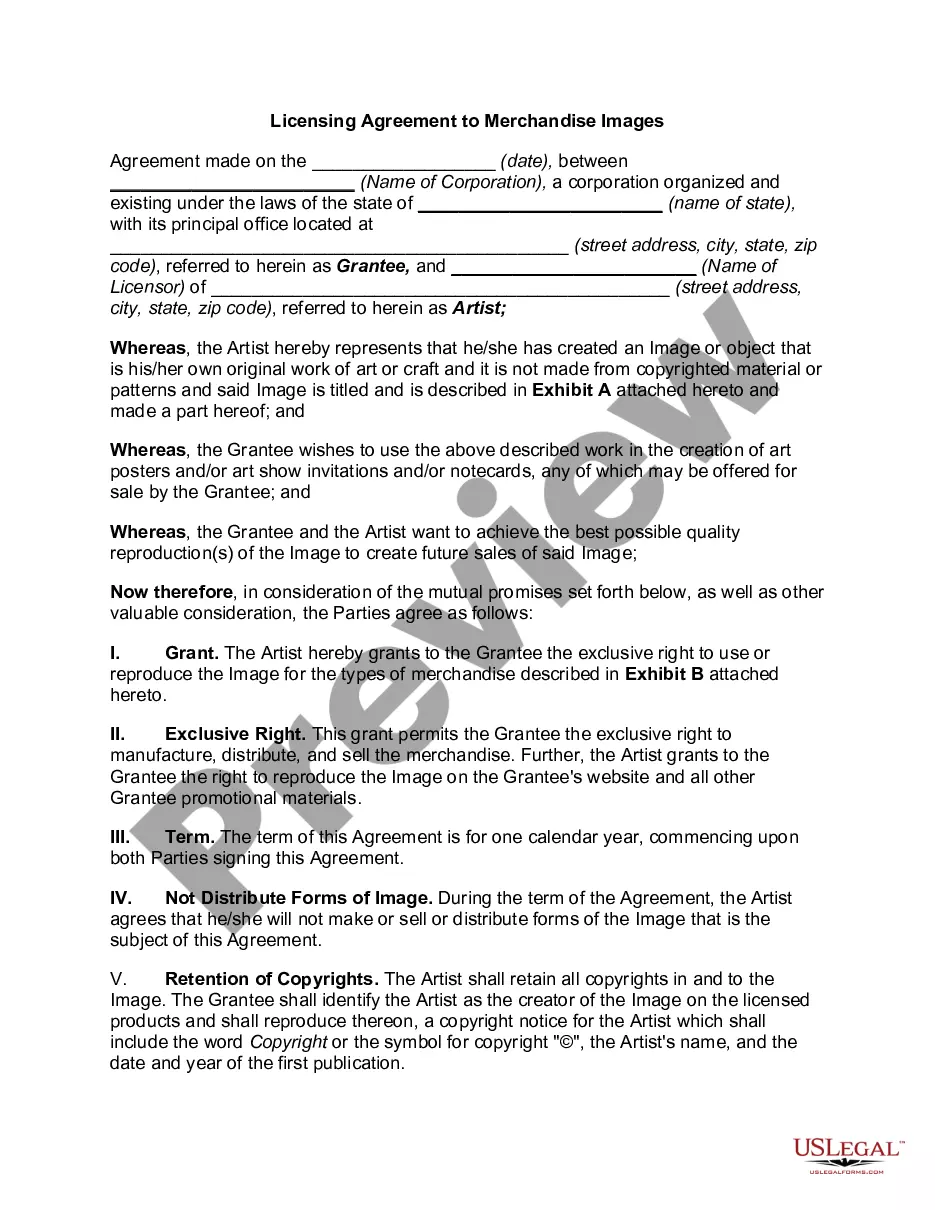
A merchandising agreement is a legal contract between two parties in which the first party agrees to sell specific goods or services to the second party. In this case, "merchandise" refers not only to physical items but also intangible products such as intellectual property.
The contract stipulates the type of agreement, the length of the relationship, payments and royalties that are due and when, and the extent to which licensing is allowed. Licensing also allows both parties to retain control over certain facets of the deal, including exclusivity and how a product or service is marketed.
Practitioners and licensing executives often refer to three basic types of voluntary licenses: non-exclusive, sole, and exclusive. A non-exclusive licence allows the licensor to retain the right to use the licensed property and the right to grant additional licenses to third parties.
The licensee is the party that receives a license, while the licensor is the party that grants the license. For instance, when a bar owner gets a liquor license from the state where he operates his business, the owner is the licensee and the government that issued the license is the licensor.
A licensing agreement is a legal contract between two parties, known as the licensor and the licensee. In a typical licensing agreement, the licensor grants the licensee the right to produce and sell goods, apply a brand name or trademark, or use patented technology owned by the licensor.
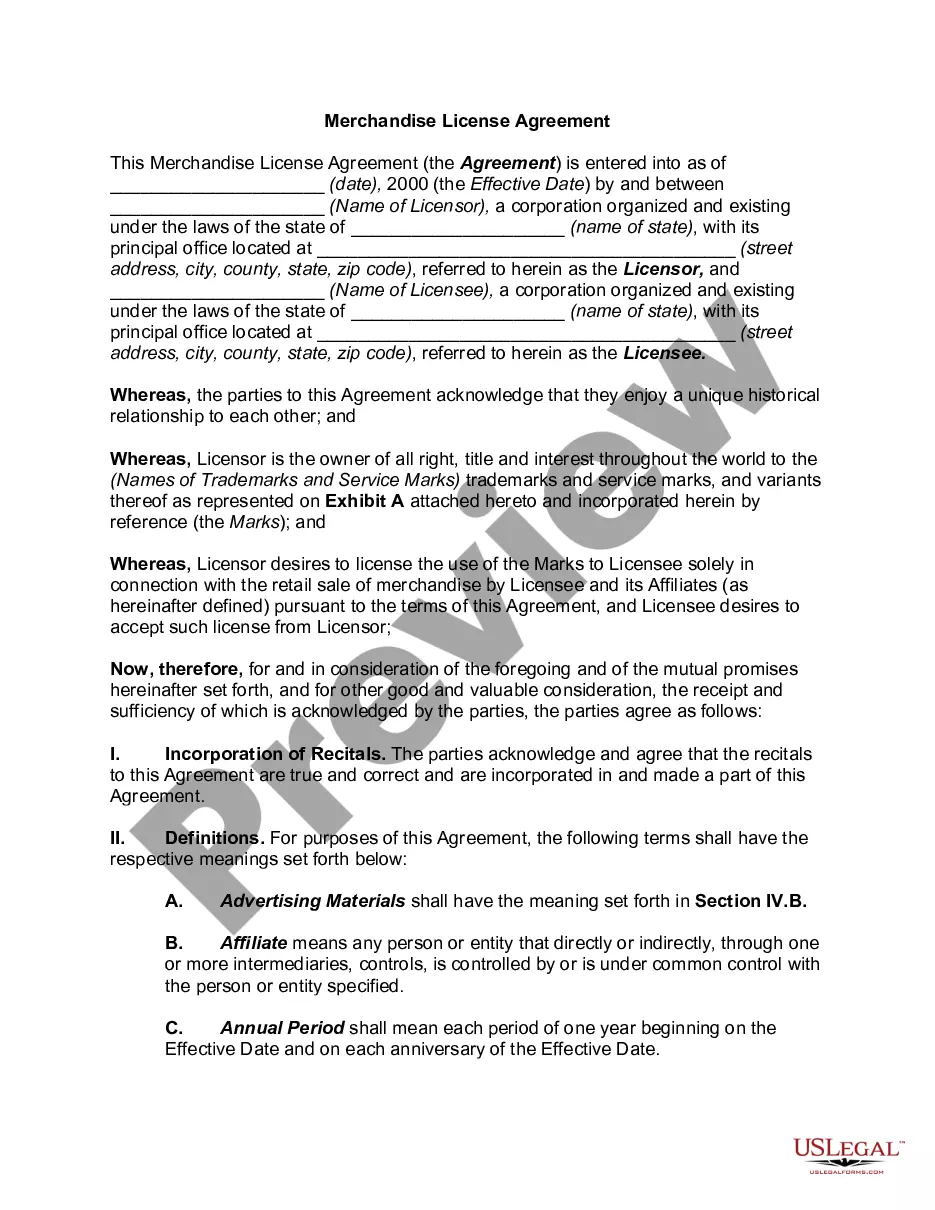
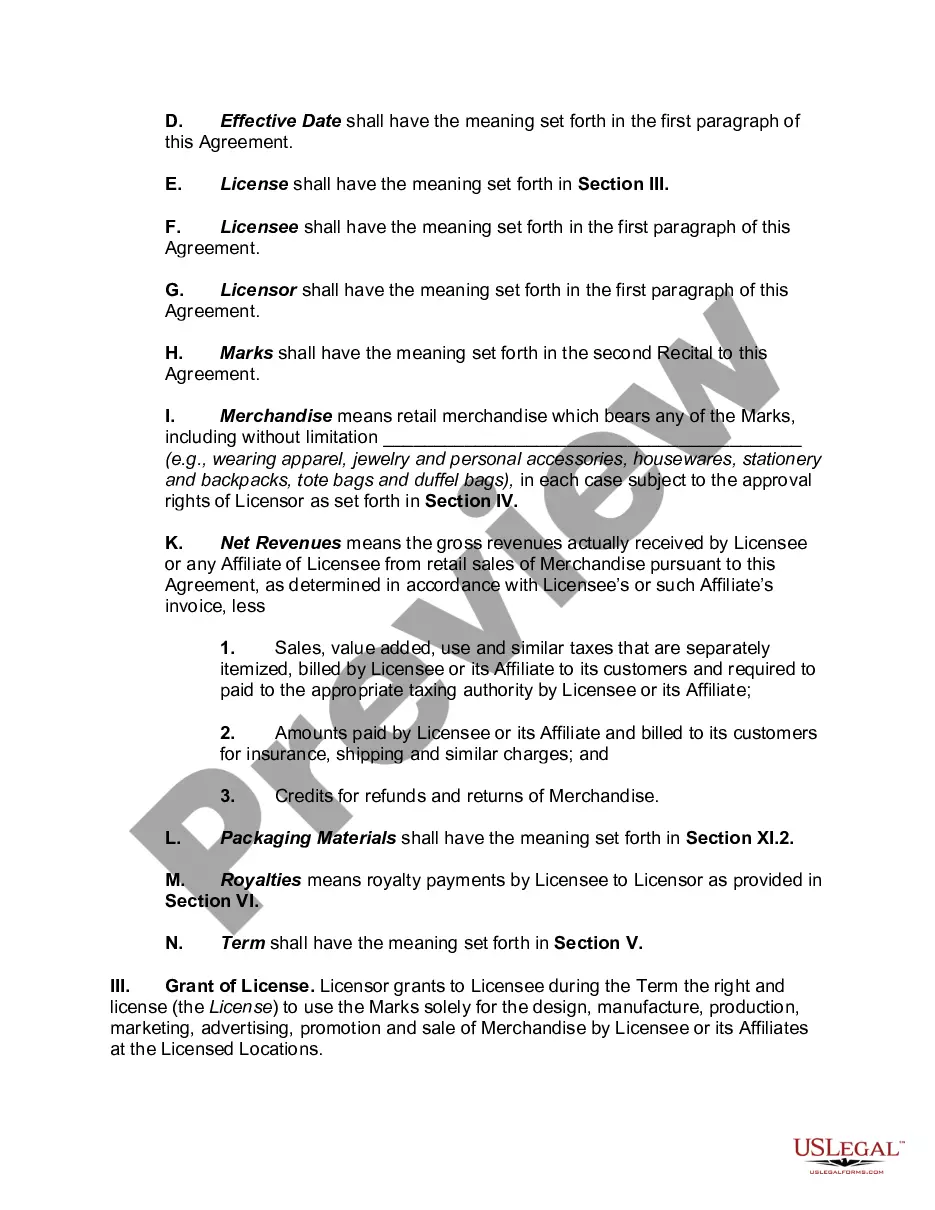
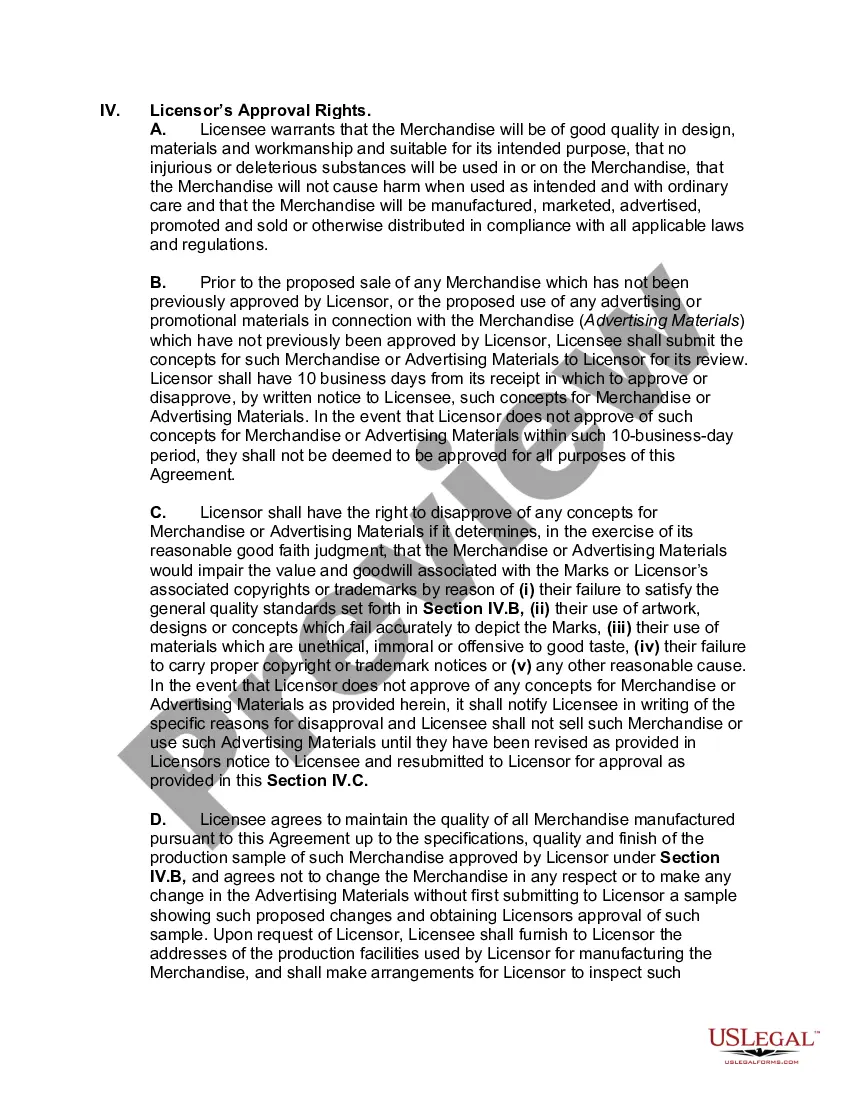
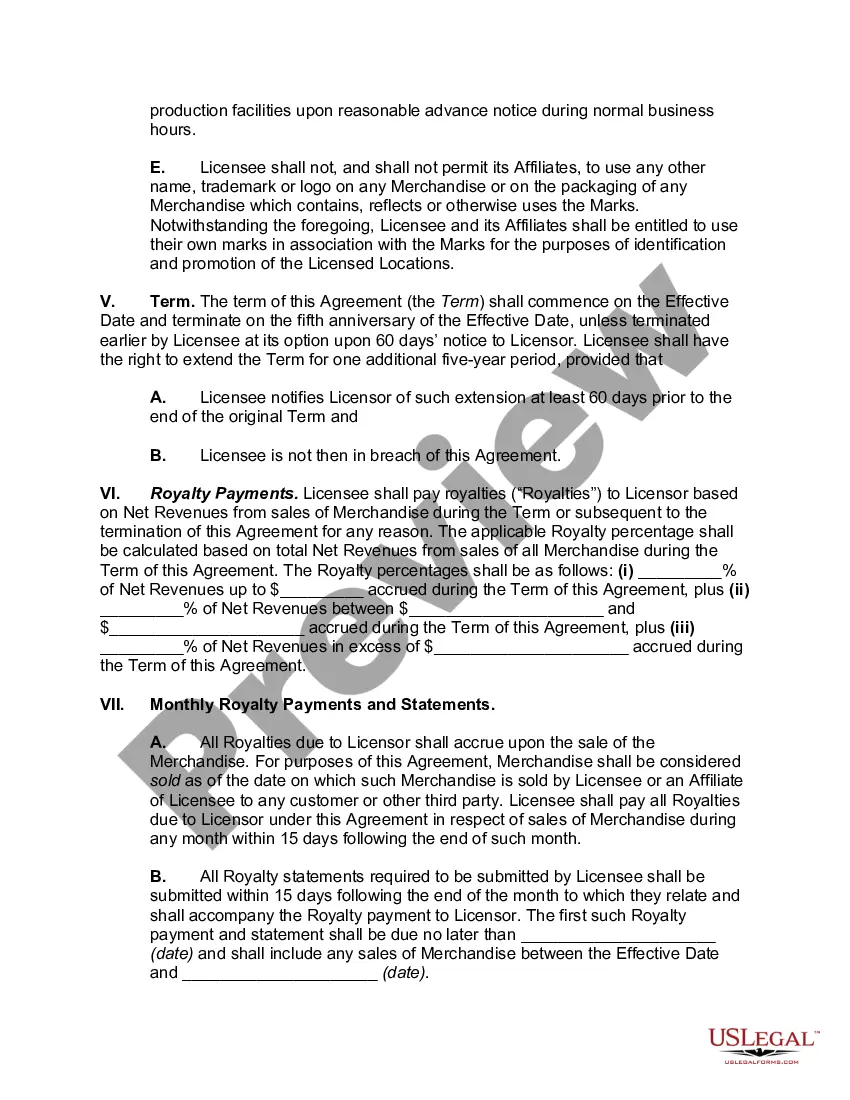
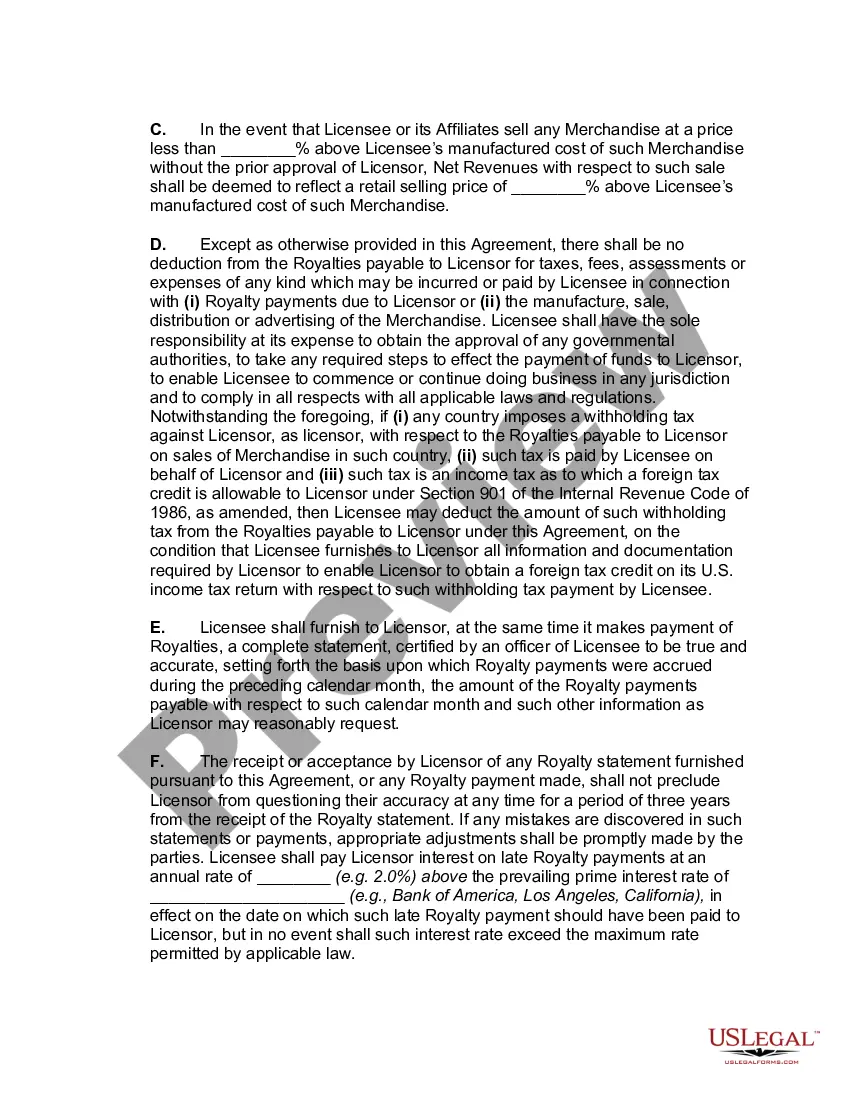
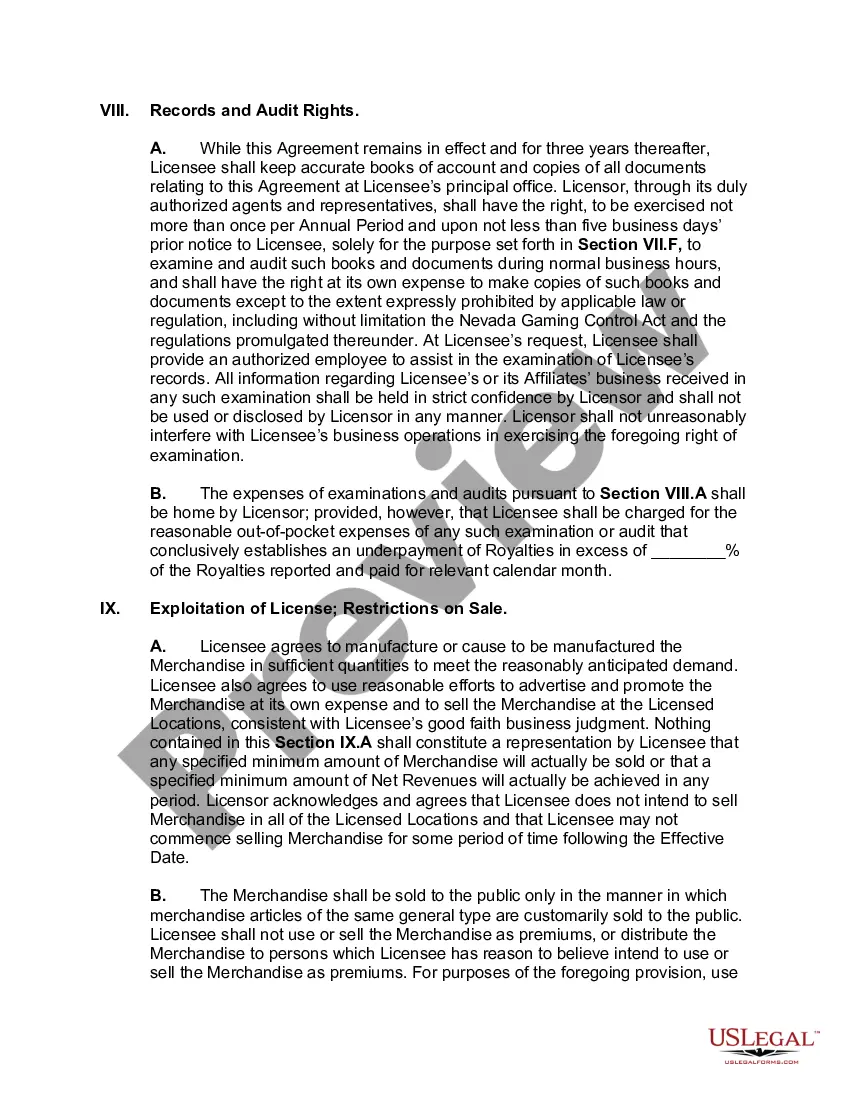
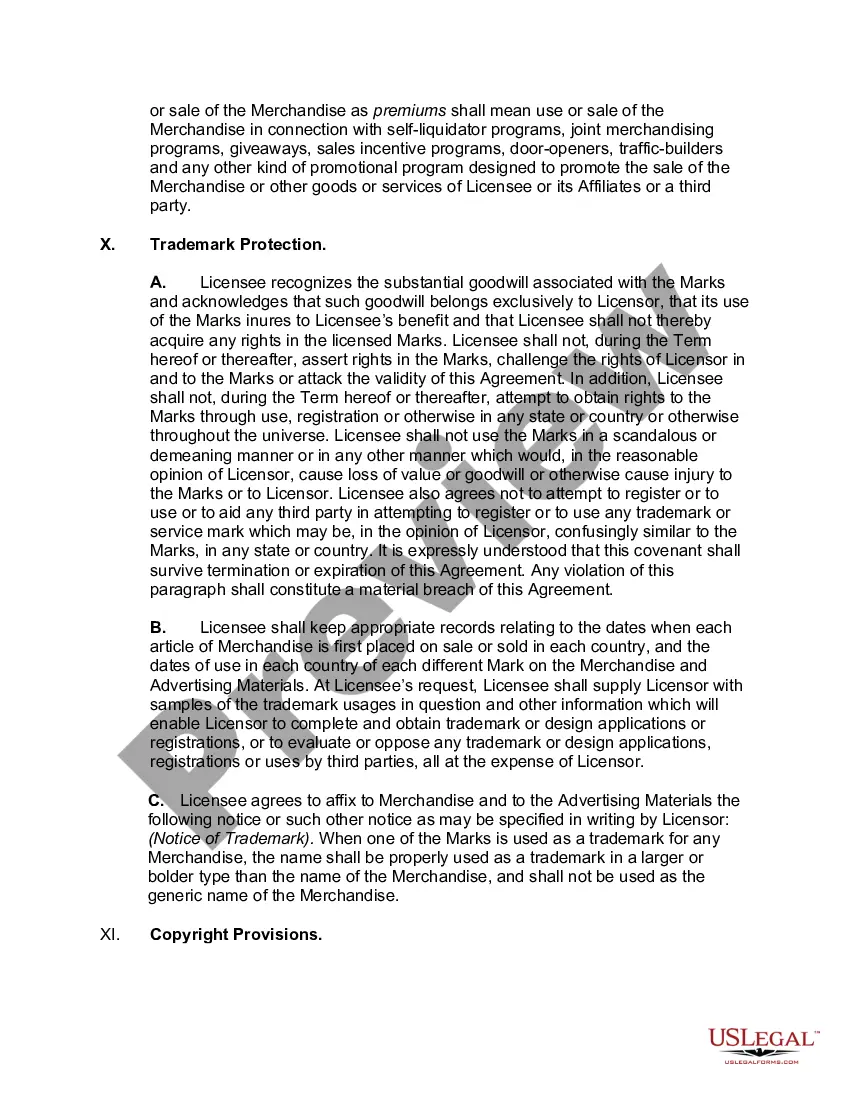
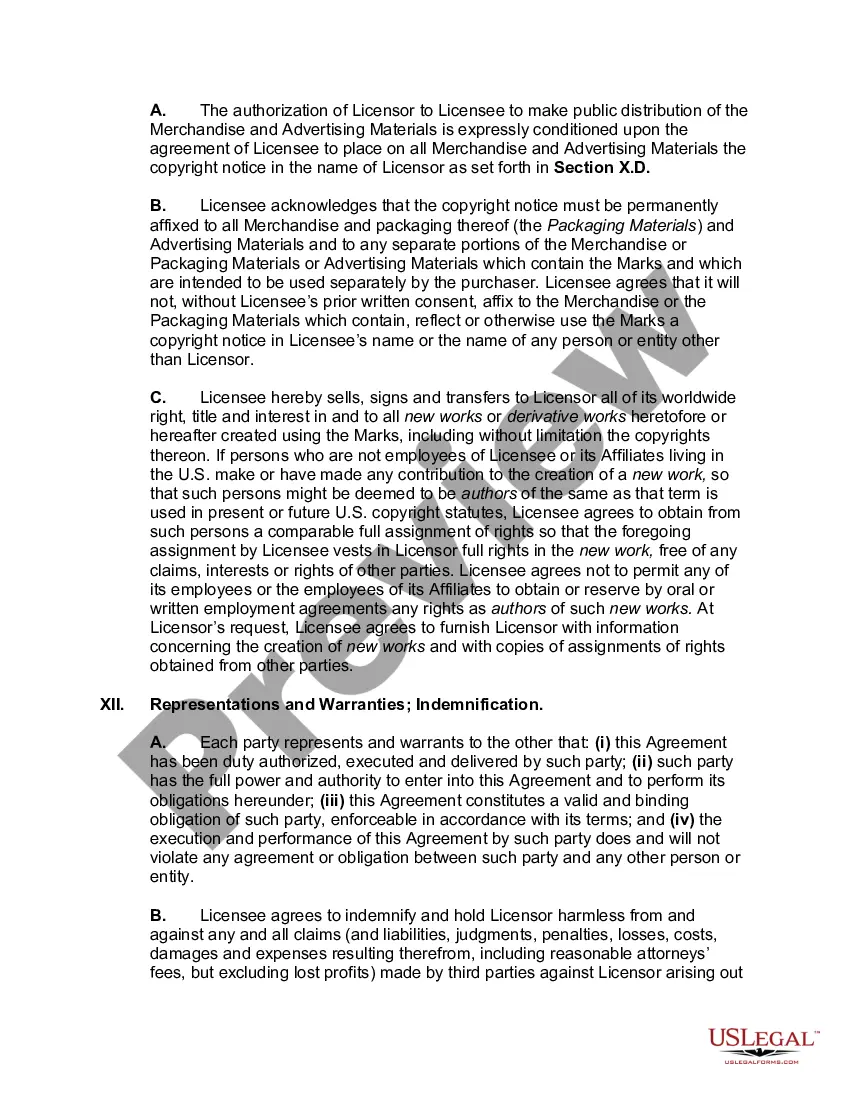
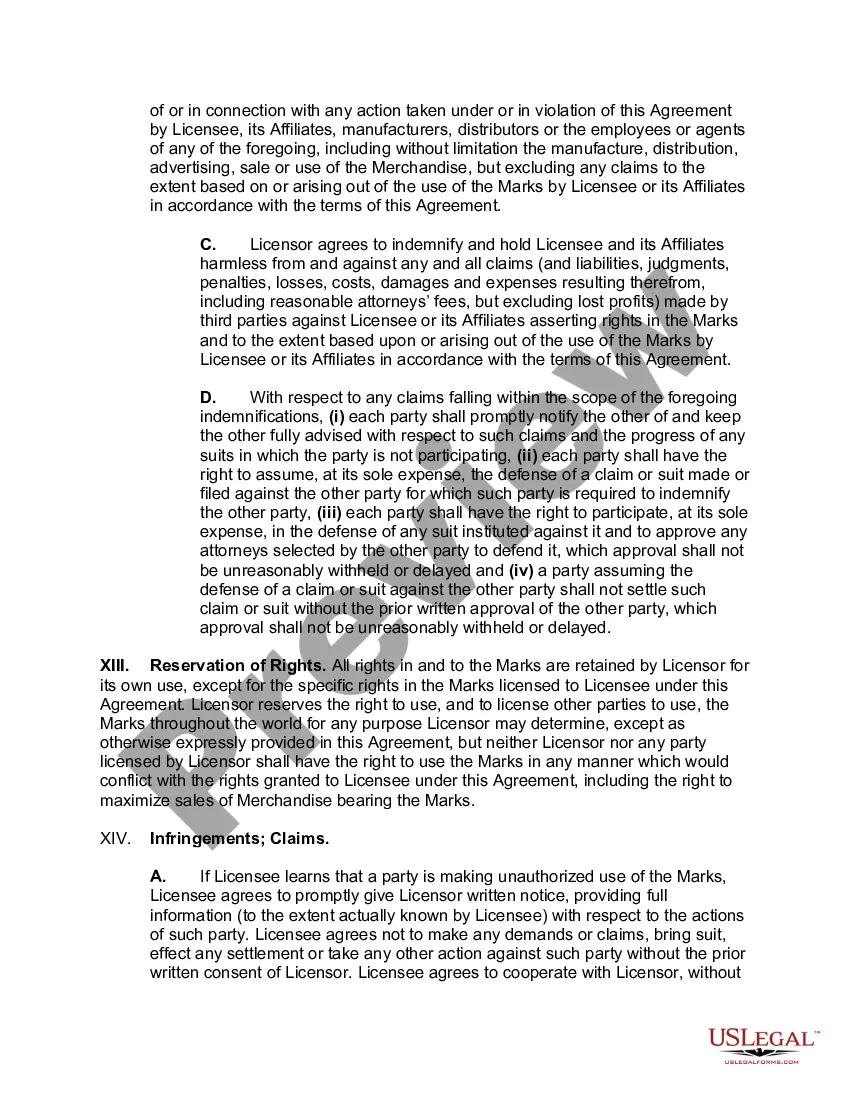
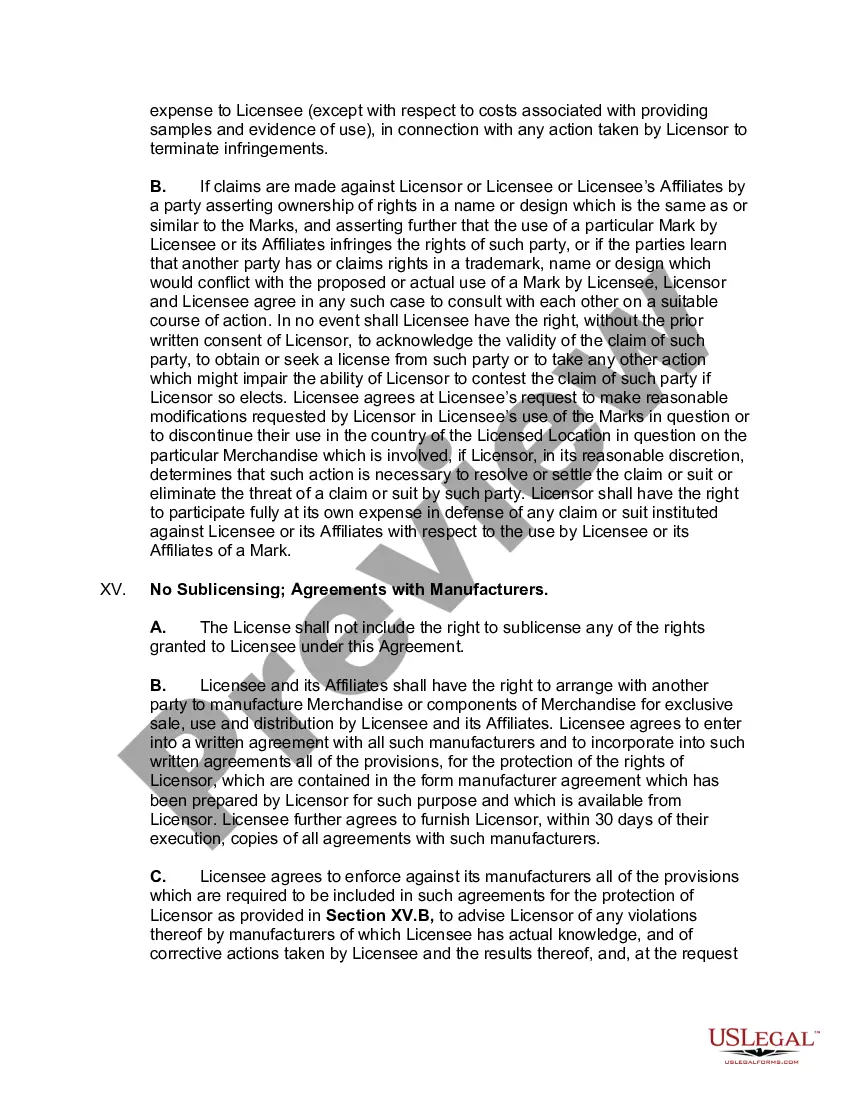
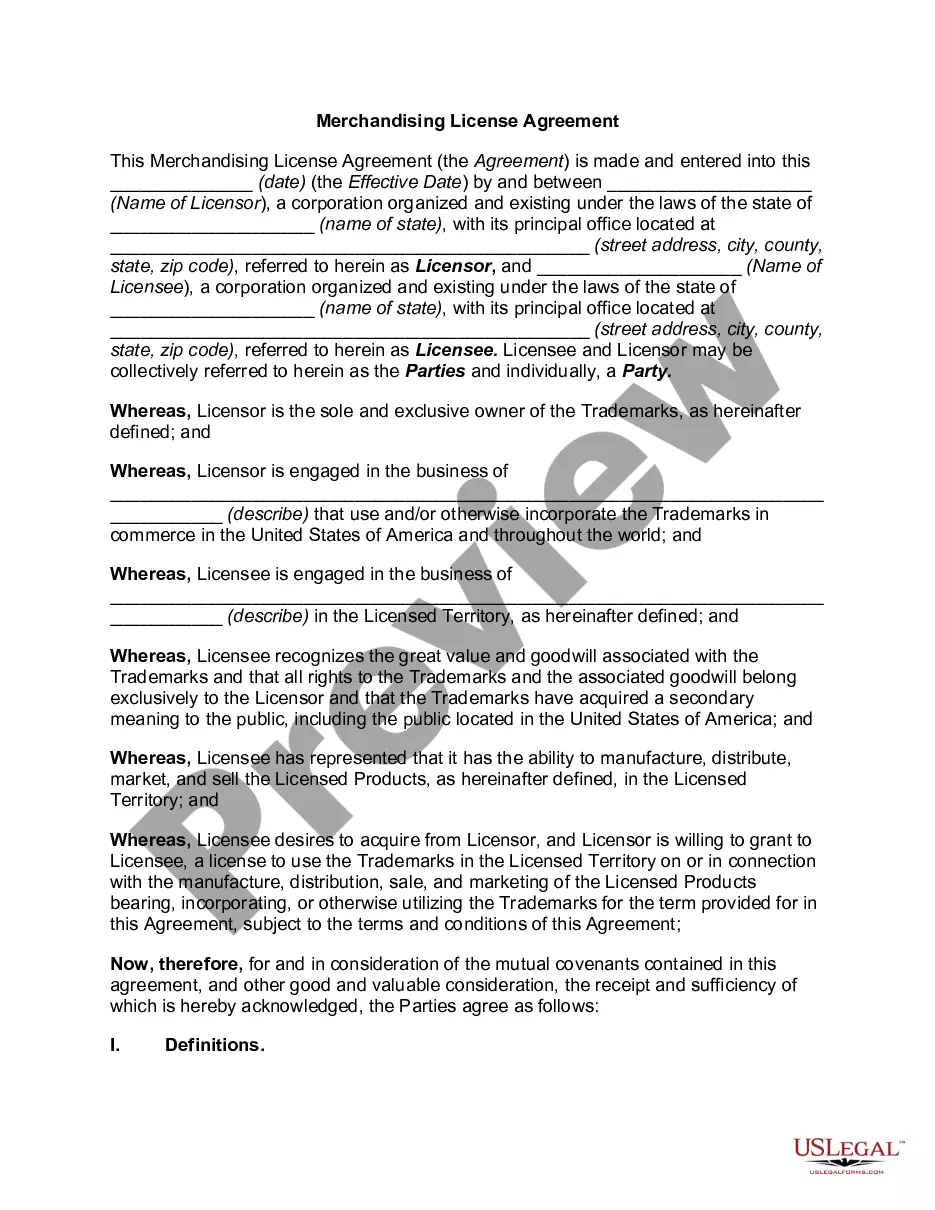
A merchandise license agreement describes the terms through which the owner of intellectual property, notably in the form of a trademark, service mark or copyright, grants a party, called the licensee, the right to use the property for distribution, marketing, and sale.
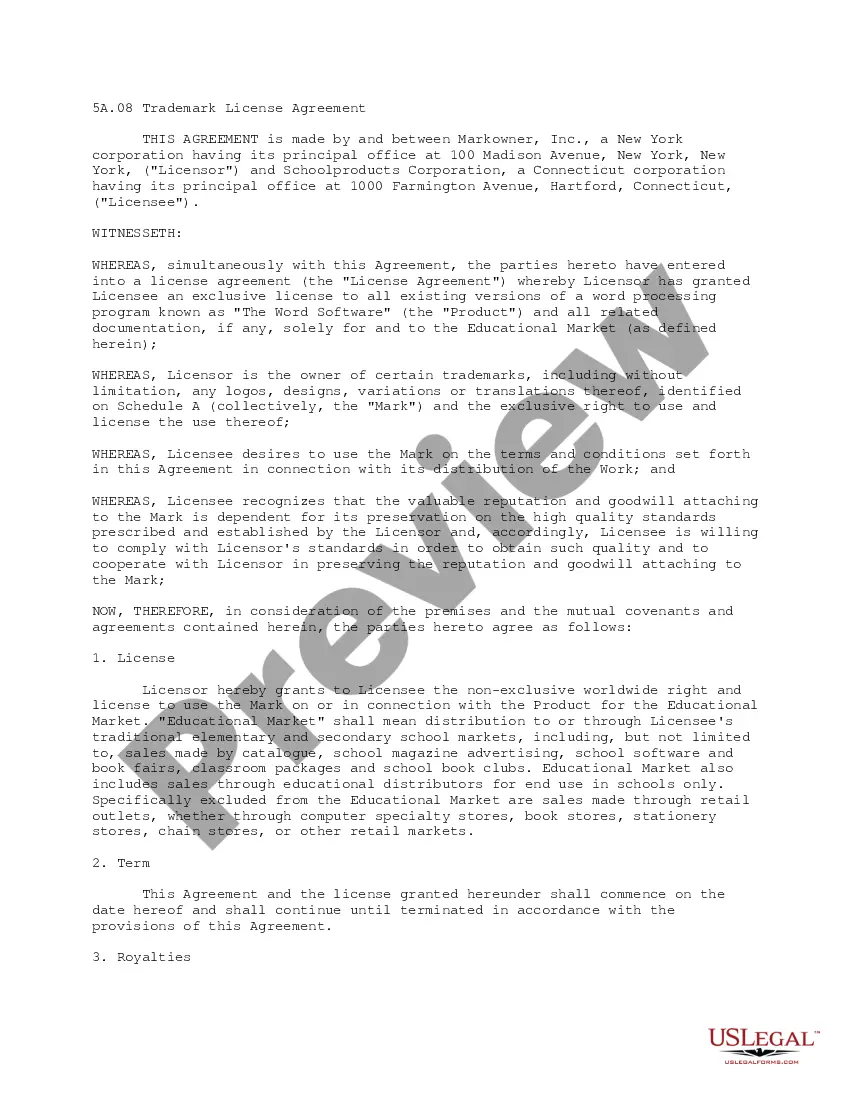
In a Trademark licence agreement the proprietor (Licensor) of a registered trademark gives authorization to another company (Licensee) to manufacture and distribute products under this trademark.